Get 50% OFF All Premium 3D & STL Models!

The landscape of film and television production is undergoing a profound transformation, driven by the relentless innovation of real-time rendering technology. At the forefront of this revolution stands Unreal Engine, a powerhouse tool that is reshaping how cinematic content is conceived, created, and delivered. For automotive visualization, in particular, Unreal Engine offers an unparalleled suite of features that empower filmmakers and TV producers to achieve photorealistic results, streamline workflows, and unlock creative possibilities once deemed impossible or prohibitively expensive.
Gone are the days when high-fidelity CGI required immense render farms and lengthy post-production cycles. Today, real-time engines enable instant feedback, interactive virtual sets, and in-camera visual effects, democratizing access to high-end production values. This article delves into the comprehensive workflows and advanced techniques that leverage Unreal Engine for film and TV production, with a specific focus on integrating high-quality 3D car models. We’ll explore everything from project setup and asset optimization to cinematic rendering, interactive experiences, and the cutting edge of virtual production, equipping you with the knowledge to harness Unreal Engine’s full potential for your next automotive-centric film or TV project.
Embarking on any film or TV project with Unreal Engine begins with meticulous project setup and the efficient ingestion of assets. This foundational stage is critical, especially when dealing with highly detailed 3D car models, as it directly impacts performance, visual fidelity, and the smoothness of subsequent production phases. Proper configuration ensures that your engine environment is optimized for cinematic rendering, allowing you to maximize the visual quality of your automotive subjects.
When creating a new project, select the ‘Film, Television & Live Events’ template, as it pre-configures many settings for high-quality output, including appropriate post-processing volumes and render settings. Pay close attention to scalability settings; while you’ll aim for high fidelity, understanding the performance trade-offs is crucial for smooth iteration during production. It’s often beneficial to start with mid-level scalability settings for general development and then ramp up to Cinematic for final renders. Furthermore, integrate version control from day one, using systems like Perforce or Git Large File Storage, to manage changes to heavy assets like 3D car models and ensure collaborative workflows are seamless.
Beyond template selection, several core engine configurations are paramount for automotive cinematic projects. Enabling plugins such as ‘Movie Render Queue,’ ‘OpenColorIO,’ ‘Virtual Camera,’ and ‘Datasmith’ is often a first step. Datasmith, in particular, is invaluable for importing complex scenes and CAD data, maintaining hierarchies and metadata. For color management, OpenColorIO ensures a consistent color pipeline from scene creation to final output, critical for matching real-world footage or achieving specific cinematic looks. For optimal performance, especially with large scene files and complex geometry, consider adjusting editor preferences for texture streaming and asset loading. Setting up a robust folder structure early on, separating levels, blueprints, materials, textures, and static meshes (like your imported 3D car models), keeps your project organized and streamlines asset management as the production scales.
Another crucial best practice is to define a clear naming convention for all assets. This not only aids organization but also facilitates easier searching and referencing within Blueprints and Sequencer. For instance, prefixes like ‘SM_’ for Static Meshes, ‘M_’ for Materials, and ‘T_’ for Textures are standard. Consistency in scale is also vital; ensure that your 3D car models and environment assets are modeled and imported to real-world scale (centimeters in Unreal Engine) to prevent scaling issues with physics, lighting, and camera properties. For more details on project setup, consult the official Unreal Engine documentation on project settings and best practices.
The quality of your 3D car models is paramount for achieving photorealistic results. When sourcing assets from marketplaces like 88cars3d.com, you typically receive models optimized for Unreal Engine, featuring clean topology, proper UV mapping, and PBR-ready materials. However, further optimization upon import is often necessary for film and TV pipelines where extreme fidelity and performance are key.
The primary method for importing static meshes is via FBX. During import, ensure settings like ‘Combine Meshes’ are deselected if your car model comes in separate parts (body, wheels, interior) that you might want to animate or texture independently. ‘Generate Missing Collision’ can be useful for initial setups, but for high-fidelity physics or interactive elements, custom collision meshes are always preferred. For extremely high-polygon models, enabling ‘Build Nanite’ at import is a game-changer, allowing you to bring in millions of polygons without performance concerns, a feature we will delve into further. Post-import, always inspect the mesh in the Static Mesh Editor. Verify smoothing groups, tangent space, and UV channels. Correctly assigned UVs are essential for lightmaps (if using baked lighting) and PBR textures. Overlapping UVs or incorrect tangent space can lead to visual artifacts and lighting inconsistencies. For models that are exceptionally dense even for Nanite (e.g., millions of polygons per tire), consider using the ‘Simplify’ tool or creating manual Level of Detail (LOD) meshes for distances where Nanite’s full resolution isn’t strictly necessary, though Nanite generally handles this effectively.
Achieving breathtaking visual fidelity for automotive subjects in film and TV hinges on a deep understanding of material authoring, advanced lighting techniques, and the robust rendering capabilities of Unreal Engine. A stunning 3D car model can only truly shine when bathed in realistic light and adorned with meticulously crafted materials that faithfully replicate the properties of real-world surfaces. This section explores how to leverage Unreal Engine’s powerful rendering pipeline to create cinematic quality visuals, focusing on the nuanced interplay of light and surface.
Unreal Engine’s physically based rendering (PBR) system is designed to simulate how light interacts with materials in the real world, ensuring that your automotive surfaces look correct under any lighting condition. Combined with its advanced global illumination and reflection systems like Lumen and real-time ray tracing, artists have unprecedented control over the final look. The goal is not just to make objects look “good,” but to make them look “believable,” which requires careful attention to detail in every aspect of material and light interaction. This includes understanding the impact of fresnel, roughness, metallic values, and clear coat layers on car paint, glass, and chrome surfaces.
Photorealistic materials are fundamental to showcasing high-quality 3D car models. Car paint, in particular, is one of the most complex materials to reproduce due to its multi-layered structure (base coat, clear coat, metallic flakes). In Unreal Engine’s Material Editor, a typical car paint material often involves a blend of standard PBR inputs and advanced features. The base color, metallic, roughness, and normal maps are your starting point, but for true realism, you’ll utilize the ‘Clear Coat’ material input. This allows you to simulate a separate, transparent layer over the base paint, providing realistic reflections and specular highlights. The ‘Clear Coat Roughness’ and ‘Clear Coat Normal’ inputs provide additional control over this layer’s appearance.
For metallic flake effects common in modern car paints, you can employ custom shader logic using a texture map or procedural noise to drive subtle variations in color and specular response within the base layer, beneath the clear coat. Parameters like fresnel are inherently handled by the PBR system, but understanding how they influence reflections at glancing angles is crucial. Glass materials require careful attention to transmission, refraction, and thickness. Using thin translucent materials for windows is often a good starting point, but for more accurate refraction, especially with ray tracing, a dedicated ‘Opaque’ material with a normal map and careful use of the ‘Refraction’ input (which becomes accessible with specific material domain settings and ray tracing enabled) is ideal. When acquiring assets from 88cars3d.com, their models typically come with carefully authored PBR texture sets, providing an excellent foundation for these detailed material setups.
Unreal Engine offers unparalleled flexibility in lighting. For real-time film and TV production, Lumen and Hardware Ray Tracing are indispensable. Lumen, Unreal Engine’s real-time global illumination and reflections system, dynamically calculates indirect lighting and reflections, reacting instantly to changes in light sources or scene geometry. This means moving a car, opening a door, or changing the time of day immediately updates the overall lighting, making iteration incredibly fast.
For automotive visualization, Lumen excels at capturing the nuanced interplay of light bouncing off the car body and illuminating the environment. Combine Lumen with ‘Hardware Ray Tracing’ for the highest fidelity. Ray Tracing in Unreal Engine provides pixel-perfect reflections, refractions, shadows, and ambient occlusion. For instance, ray-traced reflections on car paint and chrome surfaces are virtually indistinguishable from reality, capturing subtle environmental details. Ray-traced shadows offer razor-sharp accuracy, eliminating traditional shadow map artifacts. When setting up your scene, use a combination of directional lights (for sun), skylights (for ambient outdoor illumination), and strategically placed rectangular or sphere lights to simulate studio lighting setups or bounce light. Experiment with light temperature, intensity, and source radius. For high-quality shadow contact, ensure your light sources have a small ‘Source Radius’ or ‘Source Length’ for crisp shadows, or larger values for softer, more diffused shadows. Post-processing volumes play a critical role here, allowing fine-tuning of exposure, color grading, bloom, and depth of field, all essential for achieving a cinematic look. Leveraging these tools effectively ensures your Unreal Engine project will deliver stunning visuals suitable for any high-end production.
Once your scene is lit and materials are perfected, the Movie Render Queue (MRQ) is your ultimate tool for generating high-quality cinematic output from Unreal Engine. Unlike the legacy Matinee or standard Play-in-Editor recording, MRQ is specifically designed for film and television, offering advanced features for anti-aliasing, motion blur, and frame consistency that are crucial for professional post-production workflows.
Key features of MRQ include temporal super-sampling (TSS) for incredibly clean anti-aliasing, often superior to traditional methods, as well as frame-consistent motion blur that correctly calculates motion vectors across frames. This eliminates the ‘shimmer’ or ‘jitter’ often seen in real-time rendered sequences. MRQ also supports outputting multi-pass EXR files, providing individual render passes such as diffuse, specular, normals, depth, and custom stencil masks. These passes are invaluable for compositing in external software like Nuke or After Effects, allowing artists to fine-tune specific elements of the rendered image without re-rendering the entire sequence. You can define custom render warm-up frames to ensure effects like Lumen and Niagara simulations are fully initialized before recording begins, guaranteeing consistent quality from the very first frame. MRQ also allows for precise control over output resolutions, frame rates, and codec choices, ensuring compatibility with virtually any professional post-production pipeline. For detailed configuration and usage, consult the Unreal Engine documentation on the Movie Render Queue for specific settings recommendations.
Beyond static beauty shots, film and television demand motion and narrative. Unreal Engine’s powerful animation toolset, centered around Sequencer, allows you to choreograph complex automotive scenes, animate characters, cameras, and environmental elements, and breathe life into your 3D car models. This section explores how to leverage Sequencer for cinematic storytelling, integrate dynamic physics, and create compelling visual narratives for your film and TV productions.
Sequencer is a multi-track editor similar to non-linear editing software, enabling you to animate almost any property of an actor in your scene over time. From the subtle glint of a car’s paintwork as it passes under streetlights to high-octane chase sequences, Sequencer provides the precision and flexibility needed for cinematic control. It’s the central hub for combining all your animated elements—cameras, vehicles, characters, visual effects, and audio—into a cohesive sequence, making it an indispensable tool for any film or TV project utilizing Unreal Engine.
Sequencer is the heart of cinematic creation in Unreal Engine. It allows you to create detailed timelines, where you can animate cameras, lights, effects, and your imported 3D car models. To begin, create a new Level Sequence asset. Within this sequence, you can add ‘Track’ for various elements: Camera Cut Track for switching between different cameras, Spawnables (for actors you want to create and destroy within the sequence, like a car that drives into the scene), and Possessables (for actors already present in your level, like a parked car you want to animate opening its doors).
For animating a car’s movement, you can add the car’s root component to Sequencer and keyframe its transform (location, rotation, scale). For more complex paths, use a ‘Spline Track’ to define the car’s trajectory, allowing you to animate it along a predefined curve with smooth interpolation. You can also control properties like material parameters (e.g., changing the car’s paint color or roughness over time), skeletal animations (for characters getting in/out of the car), and even trigger Blueprint events at specific points in the timeline. The camera animation within Sequencer is equally powerful, offering options for cinematic camera settings like focal length, aperture (for depth of field), and cinematic post-processing. Combining precise camera movements with dynamic car animations allows for truly immersive storytelling. You can even import external motion capture data or pre-animated FBX sequences directly into Sequencer for character performances or intricate mechanical animations, making it a versatile tool for any scale of production.
While Sequencer offers precise animation control, integrating realistic physics and vehicle dynamics adds an unparalleled layer of authenticity to automotive scenes. Unreal Engine provides several options for physics simulation, from basic rigid body dynamics to advanced vehicle components. For film and TV, where realism is paramount, leveraging the Chaos physics engine is a powerful choice.
For simple interactions, like a car door gently swinging open, you can enable physics simulation on individual components of your 3D car model (provided it’s a skeletal mesh or has separate static mesh components with constraints). For full vehicle dynamics, Unreal Engine’s built-in ‘Chaos Vehicle’ system is robust. It allows you to create complex vehicle setups with realistic suspension, tire friction, and engine characteristics. By defining tire radii, suspension forces, engine torque curves, and gear ratios, you can simulate a car’s behavior with remarkable accuracy. While primarily designed for interactive gameplay, the Chaos Vehicle system can be driven by AI or controlled via Blueprint in a Sequencer timeline, allowing you to create believable driving sequences where the car reacts naturally to the terrain and its own physics. For instance, a vehicle driving over uneven terrain will exhibit realistic body roll and suspension compression. This level of physical accuracy, especially when combined with high-fidelity car models from sources like 88cars3d.com, greatly enhances the realism of your film and TV productions. Even if you ultimately animate specific paths in Sequencer, understanding vehicle physics helps inform more believable manual animation, providing crucial reference for acceleration, braking, and cornering characteristics.
Unreal Engine’s capabilities extend beyond linear cinematic rendering. Its real-time nature makes it an ideal platform for developing interactive automotive experiences, such as virtual configurators, immersive showrooms, and interactive product demonstrations for film sets or marketing. Moreover, the techniques honed for these interactive applications are directly transferable and vital for preparing assets for modern virtual production workflows, where real-time interaction on set is critical. This section explores how to harness Blueprint visual scripting to create dynamic user experiences and how to optimize 3D car models for these high-performance, real-time scenarios.
Interactive experiences allow viewers to engage with your automotive creations in ways traditional media cannot. Imagine a prospective buyer customizing a car’s color and interior in real-time or a director exploring different lighting scenarios on a virtual car model directly on a film set. These applications demand not only visual fidelity but also robust performance and intuitive interaction. Mastering these aspects opens up new avenues for pre-visualization, marketing, and even live broadcast integration.
Blueprint visual scripting is Unreal Engine’s powerful node-based system for creating gameplay mechanics, interactive elements, and complex logic without writing a single line of code. For an automotive configurator, Blueprint is indispensable. You can use it to create user interfaces (UI) that allow a viewer to change the car’s paint color, swap wheel designs, alter interior trim, or even open and close doors in real-time.
The core logic involves setting up ‘Event Dispatchers’ or direct function calls linked to UI widgets (buttons, dropdowns, sliders). For example, a “Change Color” button might trigger a Blueprint function that finds the car’s material and sets a ‘Vector Parameter Value’ (for base color) or ‘Scalar Parameter Value’ (for metallic/roughness) in a dynamic material instance. For swapping entire components, like different wheel sets, you would use Blueprint to toggle the visibility of static mesh components or swap out an entire skeletal mesh. Advanced configurators might integrate ‘Variant Manager’ for managing complex configurations, allowing you to save and load different car setups with a single click. Blueprint can also be used to drive animations (e.g., a door opening when clicked), trigger sound effects, or even integrate data from external databases for pricing or specifications. When designing such systems, ensure your underlying 3D car models from 88cars3d.com have appropriately separated meshes and PBR materials that are set up to be parameterized, allowing for easy modification via Blueprint.
Deploying automotive experiences on AR/VR platforms or dedicated real-time demo kiosks introduces stringent performance requirements. While cinematic renders can afford extremely high polygon counts and complex shaders, interactive applications demand lean, optimized assets and efficient rendering techniques to maintain high frame rates (e.g., 90 FPS for comfortable VR). This is where strategic asset preparation becomes critical.
First, revisit your 3D car models. Even with Nanite, for AR/VR, traditional LODs (Level of Detail) are often still crucial for non-Nanite-supported platforms or for distant objects where Nanite’s overhead might be overkill. Ensure your models have 3-5 LOD levels, progressively reducing polygon count while maintaining visual integrity. Target polygon counts for car bodies in VR might range from 150,000-300,000 for LOD0, dropping significantly for further LODs. Texture resolutions should be optimized; while 4K or 8K textures are great for cinematics, 2K or even 1K might be sufficient for less critical surfaces in AR/VR to reduce memory footprint. Texture compression settings are also vital. Materials should be simplified; reduce the number of instructions and avoid expensive features like complex clear coat setups if a simpler blend provides acceptable visual quality. For AR, ensure your car model is correctly scaled and has a defined origin point for easy placement in the real world. Leveraging features like ‘Forward Shading’ and ‘Mobile HDR’ can further boost performance for mobile AR/VR devices, as these rendering paths are optimized for lower-end hardware. Ultimately, continuous profiling and optimization are key to delivering smooth, high-fidelity interactive automotive experiences.
Even with the most powerful hardware, producing high-fidelity film and TV content in Unreal Engine demands meticulous attention to performance and scalability. While real-time rendering offers immense speed advantages over offline rendering, maintaining smooth frame rates during iteration and ensuring efficient final output requires a deep understanding of optimization strategies. This section focuses on leveraging Unreal Engine’s advanced features, such as Nanite and strategic LOD management, to handle complex 3D car models and environments without compromising visual quality or production timelines.
The goal is to achieve cinematic quality without crippling performance, allowing artists and directors to work interactively. This balance is especially critical when dealing with highly detailed automotive assets, where every curve, reflection, and material property contributes to the overall realism. By implementing smart optimization techniques, producers can create richer, more immersive worlds and stunning vehicle shots that meet the exacting standards of film and television, all while maintaining a productive real-time workflow.
Nanite, Unreal Engine’s virtualized geometry system, is a paradigm shift for handling extremely high-polygon meshes, making it an indispensable tool for film and TV production, especially with intricate 3D car models. Traditional real-time rendering struggled with models exceeding a few hundred thousand polygons, but Nanite can render models with millions, even billions, of triangles with exceptional performance. This means artists can import CAD data or highly detailed sculpted models directly without labor-intensive retopology or baking normal maps.
When importing your 3D car models, simply enable ‘Build Nanite’ in the FBX import options or convert existing Static Meshes to Nanite in the Static Mesh Editor. Nanite intelligently streams and renders only the necessary detail for each pixel on screen, scaling geometric complexity dynamically based on distance and screen space. This eliminates the need for manual LOD creation for Nanite-enabled meshes, saving significant artist time. For automotive projects, this allows for unparalleled detail on car bodies, intricate interiors, and complex engine components. However, it’s important to note that Nanite currently has some limitations: it doesn’t support skeletal meshes, morph targets, or translucent materials directly (though workarounds exist). For parts like animated doors or characters, traditional skeletal meshes are still required. For translucent glass, use a separate, non-Nanite mesh. Despite these caveats, Nanite fundamentally changes the asset pipeline, empowering artists to focus on artistic detail rather than polygon budgets, making it a cornerstone for high-fidelity automotive visualization in Unreal Engine for film and TV.
While Nanite handles geometry brilliantly, strategic Level of Detail (LOD) management remains crucial for non-Nanite assets (like skeletal meshes, foliage, and transparent objects) and for optimizing scenes where Nanite might not be the most efficient solution for every element. LODs reduce the geometric complexity of objects as they get further from the camera, significantly improving performance without a noticeable drop in visual quality. For film and TV, precise LOD management can make the difference between a smooth real-time experience and a stuttering mess.
Manually creating LODs for complex assets like non-Nanite 3D car models involves generating simpler versions of the mesh. Unreal Engine’s Static Mesh Editor provides tools to automatically generate LODs, but for critical assets, manual creation offers greater artistic control. Typically, 3-5 LODs are sufficient for most assets, with LOD0 being the full detail and subsequent LODs progressively reducing polygon count by 50-75% each. Set appropriate ‘Screen Size’ thresholds for each LOD to dictate when it switches. Beyond geometry, optimize texture resolutions. Use smaller texture maps (e.g., 1K or 2K instead of 4K) for less prominent objects or distant backgrounds. Implement texture streaming to ensure only necessary mip levels are loaded into memory. For large open environments, utilize ‘World Partition’ to stream parts of the level in and out, reducing memory footprint. Occlusion Culling and Frustum Culling are automatically handled by Unreal Engine but ensure your assets’ bounding boxes are tight and accurate. Finally, always profile your scene using the ‘Stat GPU’ and ‘Stat FPS’ commands, along with the ‘Session Frontend’ profiler, to identify bottlenecks and guide your optimization efforts. A well-optimized scene allows for higher frame rates, enabling faster iteration and more complex real-time effects for film and TV production.
Virtual production (VP) represents the cutting edge of filmmaking, seamlessly blending physical sets with real-time rendered virtual environments. Unreal Engine is at the heart of this revolution, enabling filmmakers to shoot actors against LED volumes displaying photorealistic digital backgrounds, all in-camera. This workflow drastically reduces reliance on green screens, offers immediate visual feedback, and empowers directors to make creative decisions on set with full context. For automotive visualization, virtual production opens up unparalleled possibilities, allowing 3D car models to be integrated into stunning virtual locations or used as interactive props within virtual sets.
The ability to see the final composite shot live on set—actors interacting with a virtual car in a virtual environment—transforms the production pipeline. It saves time and money in post-production, as many visual effects are captured in-camera. Furthermore, it allows for creative freedom that traditional methods couldn’t provide, from dynamic lighting changes driven by the virtual environment to exploring different camera angles in real-time. This section explores the technical underpinnings of real-time virtual production, with a focus on how automotive assets are leveraged in these groundbreaking workflows.
The magic of virtual production lies in its ability to perform real-time, in-camera compositing. This involves rendering a virtual environment (often featuring highly detailed 3D car models) in Unreal Engine and displaying it on a large LED volume that wraps around the physical set. A tracked camera on set sends its position and orientation data to Unreal Engine, which then renders the virtual world from the exact perspective of the physical camera. This rendered image is then sent back to the LED volume, creating a seamless background that reacts realistically to camera movement.
Key technologies enabling this include nDisplay for distributing the Unreal Engine render across multiple screens (the LED panels) and tracking systems (like Mo-Sys, Stype, or Ncam) for precise camera data. The real-time nature means that reflections from the LED wall light the physical set and actors, naturally blending them into the virtual environment. For automotive scenes, this means a physical car (or even a partial car buck) on set can be lit by the dynamic virtual environment displayed on the LED, with the virtual version of the car interacting realistically with the digital background. Imagine a physical car placed in front of a giant LED screen displaying a bustling virtual city; the reflections on the car’s paintwork will dynamically update as the virtual traffic moves, creating an incredibly immersive and believable effect that would be difficult and expensive to achieve with traditional green screen techniques. The efficiency and immediacy of this workflow make it a game-changer for film and TV production, especially for complex automotive sequences where dynamic environments and realistic lighting are paramount.
High-quality 3D car models are indispensable in virtual production environments, serving multiple roles from hero vehicles in a scene to environmental dressing and interactive elements. In an LED volume workflow, a virtual car can be fully integrated into the Unreal Engine environment, allowing it to be present in the background plates displayed on the LED wall. This means the reflections and lighting from the virtual car will affect the overall light on the physical set, subtly influencing the actors and props. For extreme close-ups or scenes where a physical vehicle isn’t available or practical, a virtual car can be seamlessly integrated into the foreground, rendered and composited in real-time.
Beyond being background elements, virtual cars can act as interactive props. Using Unreal Engine’s Virtual Camera system, a director or DP can “scout” a virtual car in a virtual location, moving around it, changing camera angles, and experimenting with lighting before ever stepping onto a physical set. This pre-visualization power saves immense time and resources. Furthermore, for in-camera visual effects, a highly detailed 3D car model from a platform like 88cars3d.com can be overlaid onto a green screen car buck or even a static placeholder, with Unreal Engine handling the real-time compositing. This allows for instant review of the final shot, ensuring proper perspective, lighting, and performance. The fidelity and flexibility of these digital assets are critical, as they must hold up under the scrutiny of a high-resolution camera lens and seamlessly integrate with live-action elements. The ability to iterate on car design, paint schemes, and environmental interactions instantly within the virtual set dramatically accelerates the creative process and elevates the quality of the final production.
Unreal Engine has firmly established itself as a transformative force in film and television production, particularly for automotive visualization. From meticulous project setup and the ingestion of high-fidelity 3D car models to mastering advanced PBR materials, dynamic Lumen lighting, and precision animation with Sequencer, the engine provides an end-to-end solution for cinematic content creation. We’ve explored how Nanite revolutionizes geometry handling, enabling unprecedented detail, and how strategic optimization ensures smooth performance even in the most complex scenes. Moreover, the integration of Blueprint scripting empowers interactive experiences and the cutting-edge realm of virtual production, allowing real-time, in-camera visual effects on LED volumes.
The journey with Unreal Engine is one of continuous learning and boundless creative opportunity. By embracing its powerful features and adhering to best practices, filmmakers and TV producers can unlock new levels of visual fidelity, streamline their workflows, and achieve cinematic results that were once the exclusive domain of traditional, time-consuming pipelines. As the industry continues to evolve, Unreal Engine remains at the forefront, pushing the boundaries of what’s possible in real-time storytelling. To begin your own automotive cinematic journey, consider sourcing high-quality, optimized Unreal Engine ready 3D car models from trusted platforms like 88cars3d.com, providing you with the perfect foundation for your next masterpiece. Dive in, experiment, and let your creativity drive the future of film and television.
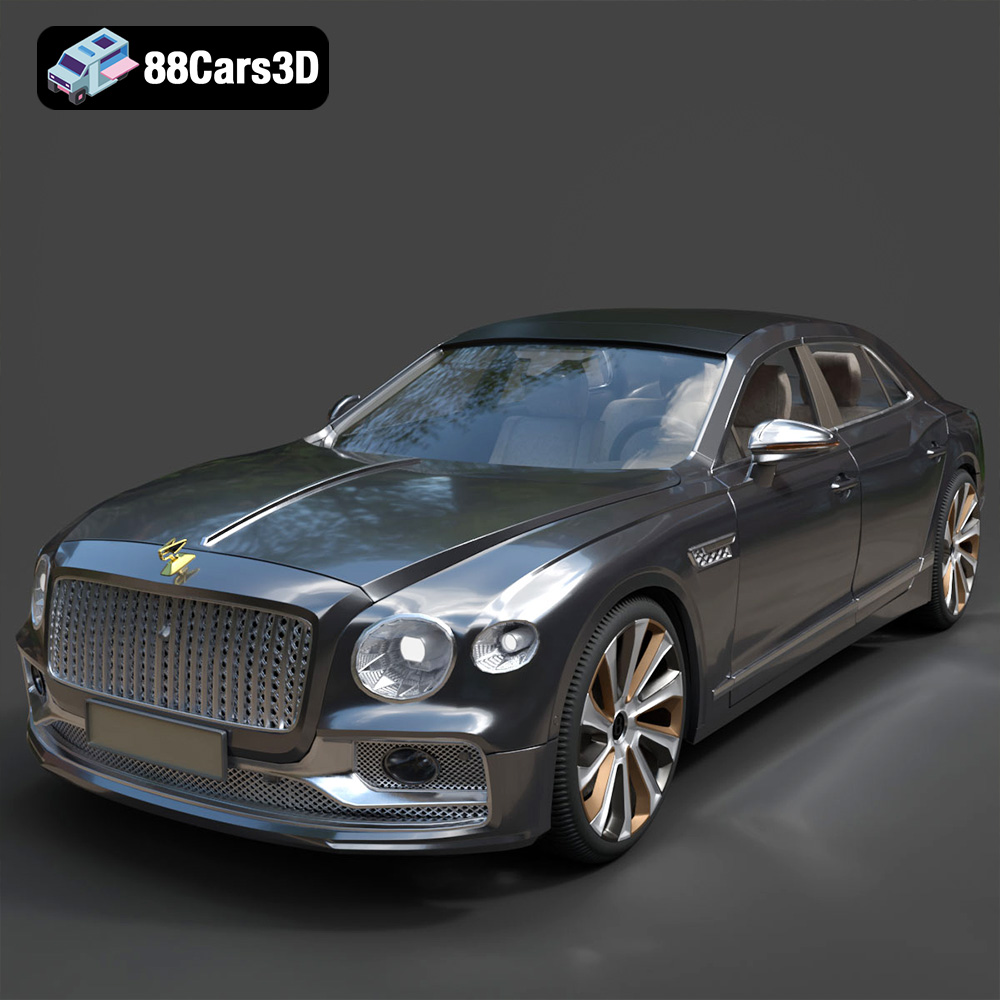
Texture: Yes | Material: Yes Download the ultra-high-detail Bentley Flying Spur Mulliner 2022 3D Model (2.94M Triangles). Features the bespoke Double Diamond grille, a fully modeled diamond-quilted interior, and exquisite luxury styling. Perfect for high-end ArchViz, VFX, and cinematic rendering. Includes .blend, .fbx, .obj, .glb, .stl, and .max formats.
Price: $19.90
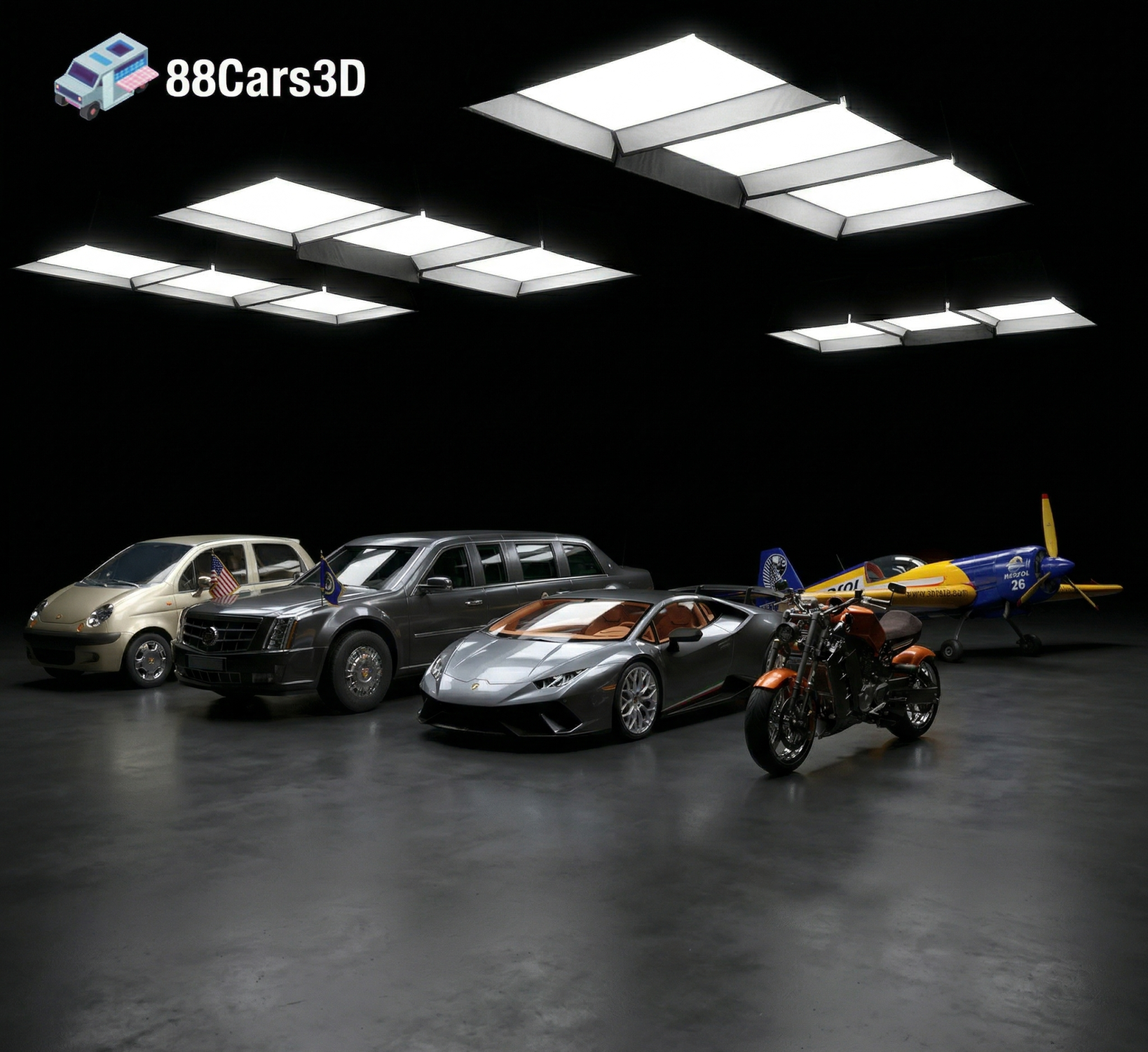
Texture: Yes | Material: Yes | 3D Printable: Yes. Download the Ultimate Creators’ Showcase featuring 5 premium 3D models: Lamborghini Huracan, ZAV Concept Motorcycle, Sukhoi SU-26, Presidential Limousine, and Daewoo Damas. Optimized for 4K CGI rendering and 3D printing. Save massive with this exclusive multi-category bundle!
Price: $99.99

Texture: Yes | Material: Yes | 3D Printable: Yes. Download the Italian Thoroughbreds Bundle featuring 5 iconic 3D models: Lamborghini Huracán Performante, Ferrari 458 Italia, Lamborghini Urus, Diablo SV, and Maserati GT. Optimized for 4K rendering and 3D printing (STL included). Save 50% with this ultimate Italian vehicle collection.
Price: $199.99

Download the Elite Future Mobility Bundle featuring 4 highly optimized 3D models: Tesla Model S, Avatr 11, Li L9, and Zoox Robotaxi. Perfect for ArchViz, Smart City renders, and game dev. Optimized for Unreal Engine and Blender. Includes .fbx, .obj, and .max formats.
Price: $99

🚗 5 Iconic German Cars (BMW M4 G82, M5 CS, X3, 1 Series & Mercedes E-Class). ✅ Optimized for ArchViz: Ready for Corona & V-Ray. 💰 Save €71 with this limited-time collection! 🚀 Instant Download after purchase.
Price: $119

Download the Extreme Off-Road & Survival 3D Models Bundle! Includes the Brabus 800 Adventure, Dodge Ram Bigfoot, Spec Truck, and a Caravan. Save over €210 on this premium 4-in-1 off-grid vehicle pack for ArchViz and game development.
Price: $149.99

Download the Heavy Duty & Commercial Logistics 3D Models Bundle! Includes the Ford Sterling, Caterpillar CT680, Mercedes Citaro Bus, and Vito Van. Save over €130 on this massive, game-ready 4-in-1 industrial vehicle pack.
Price: $109.99

Download the Ultimate Custom Motorcycles 3D Models Bundle. Includes a Custom Chopper, Ducati 916 Café Fighter, Harley XR1200X, and BMW K100. Perfect premium props for luxury ArchViz garages. Save over €250 today!
Price: $159.99

Download the ultimate JDM Street Racing 3D Models Bundle! Includes the Nissan GT-R, Toyota Supra, Mazda RX-7, Lancer Evo IX, and Honda NSX. Save big on this highly optimized, game-ready 5-in-1 Japanese legend car pack.
Price: $129.99

Download the ultimate American Muscle & Cinematic Classics 3D Models Bundle! Includes the Dodge Charger ’68, Mustang Eleanor GT500, Camaro Z28 ’79, and a custom ’69 Mustang. Save over €240 on this game-ready, premium 4-in-1 pack.
Price: $149.99

