Get 50% OFF All Premium 3D & STL Models!

In the fast-paced world of 3D visualization, automotive design, and game development, the foundation of any outstanding project lies in the quality of its assets. A meticulously crafted 3D model doesn’t just represent an object; it embodies countless hours of precision engineering, artistic vision, and technical mastery. Whether you’re aiming for a photorealistic render that blurs the line with reality, an immersive game environment, or an interactive AR/VR experience, the right 3D models are indispensable. They provide the intricate details, accurate proportions, and optimized structures necessary to bring digital worlds to life.
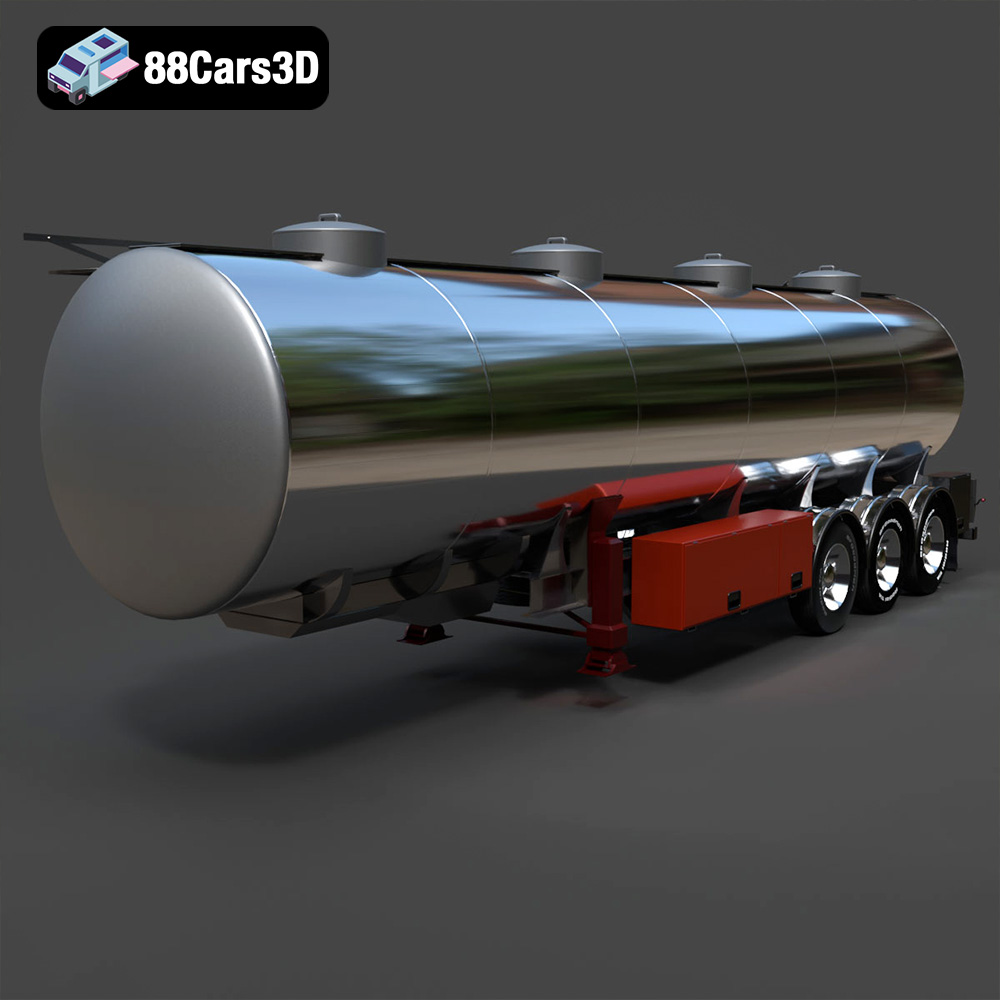
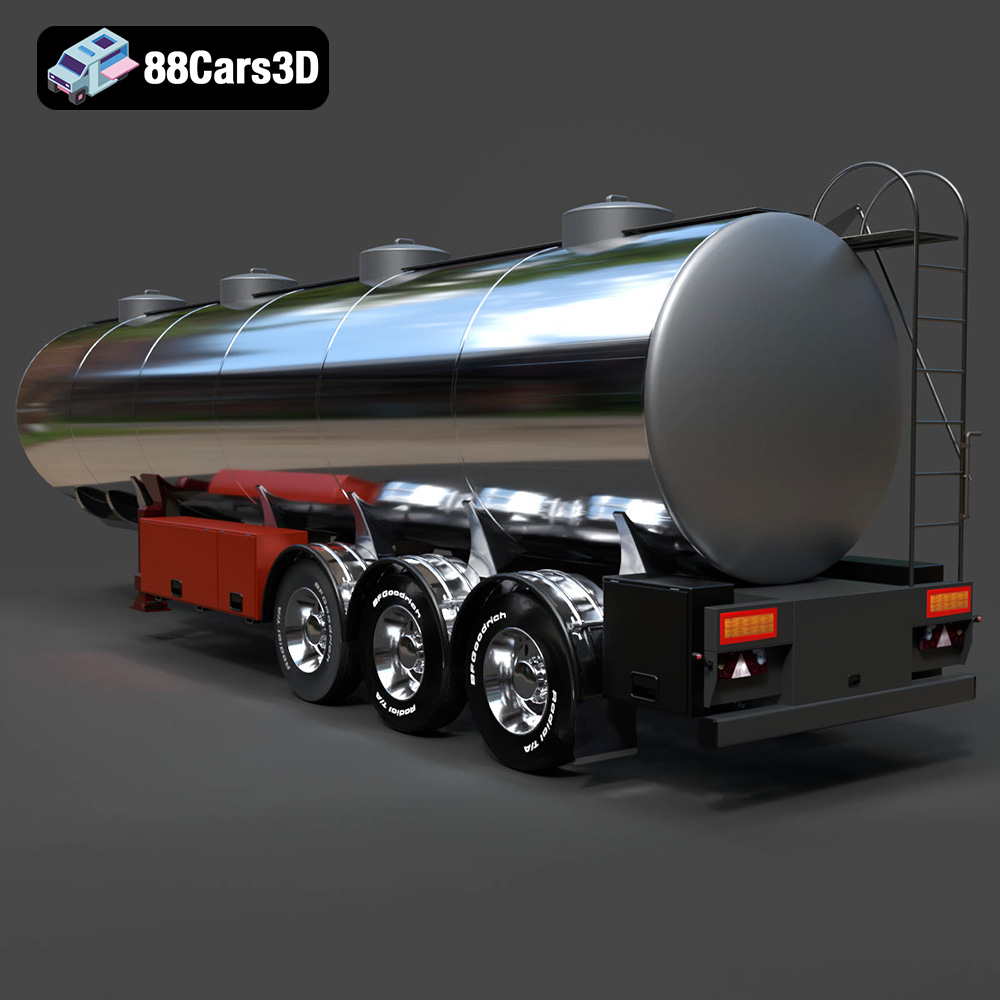
Today, we’re taking a closer look at an exceptional example of industrial realism: the Fuel Tank Trailer 3D Model. This high-detail digital recreation, available on 88cars3d.com, is more than just a model; it’s a versatile toolkit designed for professionals across various industries. From its accurate cylindrical tank body to its reinforced chassis and functional components, this asset is built to integrate seamlessly into diverse workflows, offering unparalleled realism and technical advantages. Let’s explore how such a specialized 3D asset elevates projects from conceptualization to compelling visual narratives.
Choosing the right file format for your 3D model is as crucial as selecting the model itself. Each format offers distinct advantages, catering to specific workflows, software compatibilities, and end-use applications. The Fuel Tank Trailer 3D Model from 88cars3d.com comes with a comprehensive suite of formats, ensuring maximum flexibility for any professional pipeline. Understanding these formats is key to leveraging your assets effectively.
The .blend format is native to Blender, the powerful open-source 3D creation suite. When you receive a .blend file, you’re getting a fully editable Blender scene, complete with materials, textures, lighting setups, and potentially even animation data. This format is ideal for users working primarily in Blender who require full control over the model’s properties. You can easily modify geometry, adjust shaders, re-rig components, or bake new textures. For the Fuel Tank Trailer, the .blend file would provide artists with the complete project setup, allowing for deep customization of its industrial paint finish, hazard decals, and even the internal tank segmentation for multi-compartment versions.
As Autodesk’s proprietary format, .fbx has become an industry standard for exchanging 3D data between various software applications, especially in game development and animation. It efficiently stores not only mesh data (geometry) but also crucial elements like materials, textures, animations, and camera information. The .fbx format is ideal for Unreal, Unity, and other real-time pipelines due to its robust support for skeletal animations and optimization features. When bringing the Fuel Tank Trailer into a game engine, .fbx ensures that separate elements like the wheels and chassis maintain their hierarchy and pivot points, ready for animation and physics simulation.
The .obj (Wavefront Object) format is one of the most widely supported and universal formats for cross-software compatibility. It primarily stores geometry data – vertices, normals, UV coordinates, and faces – making it excellent for transferring static mesh information. While it supports material references (via an accompanying .mtl file), it doesn’t typically carry complex animations or scene data. The .obj format for the Fuel Tank Trailer ensures that almost any 3D software can import its intricate structure, making it a reliable choice for foundational modeling and rendering tasks where robust geometry is paramount.
.glb (GLB/glTF Binary) is an increasingly popular format, especially for modern applications like augmented reality (AR), virtual reality (VR), and browser-based display. It’s designed for efficient transmission and loading of 3D scenes and models, encapsulating geometry, materials, textures, and animations into a single, self-contained binary file. Its optimization for real-time applications makes it perfect for displaying the Fuel Tank Trailer interactively on websites, in AR apps for fleet demonstrations, or within immersive VR training simulations, where file size and load times are critical.
The .stl (Stereolithography) format is the de facto standard for 3D printing. It represents a 3D model as a series of connected triangles, describing only the surface geometry of an object without color, texture, or other attributes. For the Fuel Tank Trailer, the .stl file would be meticulously prepared to ensure a watertight, manifold mesh, ready for slicing software. This allows users to convert the digital model into a physical scale tanker trailer model, complete with accurate proportions and structural details suitable for display or prototyping.
The .ply (Polygon File Format) is another common format for storing 3D data, particularly useful for scanned data, CAD, and scientific applications where precision and a detailed representation of point clouds or polygonal meshes are needed. It can store various properties beyond just geometry, such as color, transparency, normals, and even confidence values for scanned points. While less common for general rendering, the .ply format for the Fuel Tank Trailer offers a robust representation for engineering analysis or integration into specialized CAD workflows.
The .unreal format, or more broadly, the native asset structure within Unreal Engine, signifies an engine-ready asset. This isn’t a single file you import but rather implies the model has been optimized and structured specifically for Unreal Engine’s workflow, potentially including pre-configured materials, collision meshes, LODs (Levels of Detail), and blueprint integration. For the Fuel Tank Trailer, having an “.unreal” optimized version means it’s prepared to drop directly into a project, taking advantage of Unreal’s advanced rendering capabilities and real-time performance for truck simulators or industrial visualizations.
Finally, the .max format is the native project file for Autodesk 3ds Max, a powerful 3D modeling, animation, and rendering software. Similar to .blend, a .max file contains the complete scene, including geometry, materials, textures, lights, cameras, and animation data. This format offers full editability for 3ds Max users, allowing them to dissect, modify, and extend the Fuel Tank Trailer model with all its original settings intact. It’s ideal for high-end rendering and detailed animation projects, where the flexibility of a native scene file is invaluable.
This diverse range of formats ensures that the Fuel Tank Trailer 3D Model is not just a beautiful asset, but a practical and adaptable tool for any digital artist or developer, regardless of their preferred software or project requirements.
Crafting a convincing industrial vehicle in 3D requires an acute understanding of real-world mechanics and aesthetics. The Fuel Tank Trailer 3D Model exemplifies this, offering a digital recreation that prioritizes both visual fidelity and functional accuracy. Its design reflects the demanding requirements of logistics and hazardous material transport, making it an invaluable asset for various professional applications.
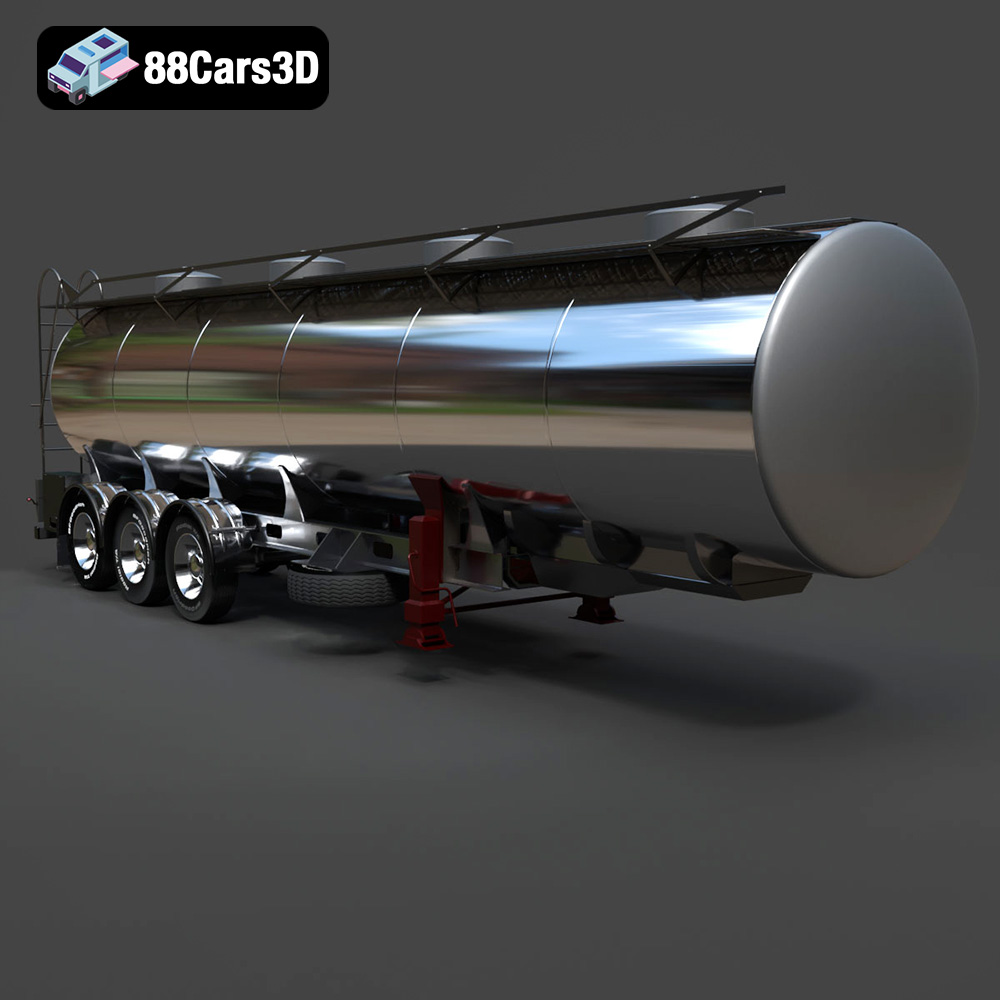
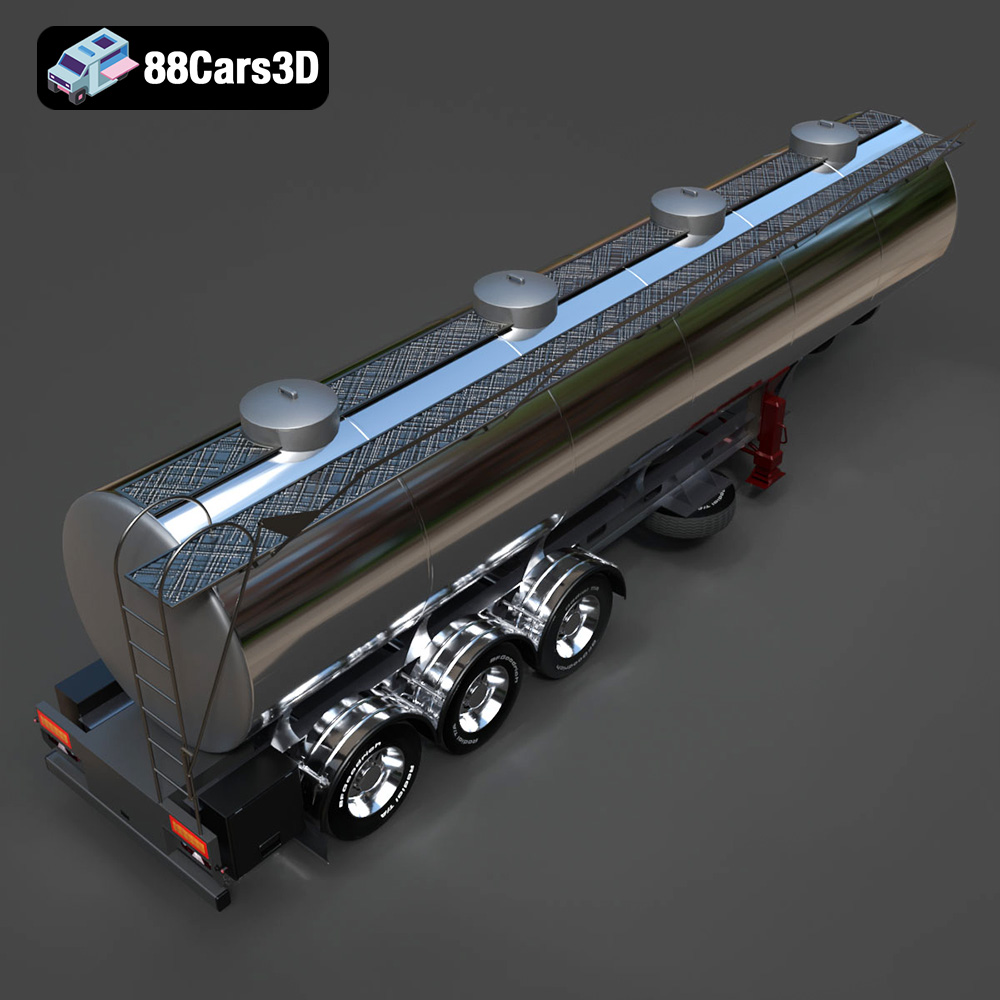
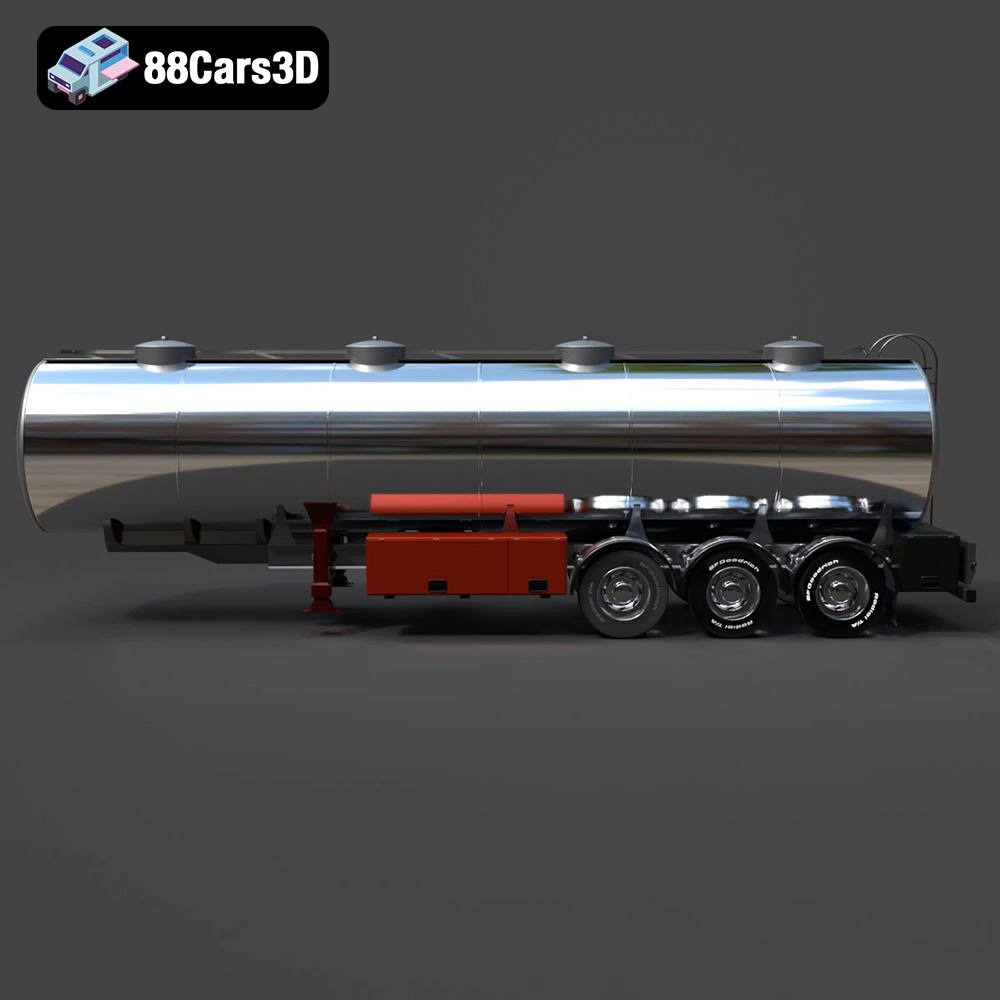
The most striking feature of the Fuel Tank Trailer is its accurate cylindrical tank body proportions, meticulously modeled to reflect common designs in petroleum distribution. Beyond the primary tank, the model includes a detailed chassis frame and support structure, providing a sturdy foundation. Every element, from the realistic axle configuration with its suspension system to the essential safety features like rear ladder access, top safety railing, mudguards, reflectors, and safety markings, has been carefully integrated. The model also features accurately represented fuel discharge valves and piping systems, along with hose storage compartments, all crucial for realistic industrial scenes. The attention to detail extends to functional elements such as separate wheels with proper pivot setups, enabling seamless animation and rotation for dynamic simulations and animations.
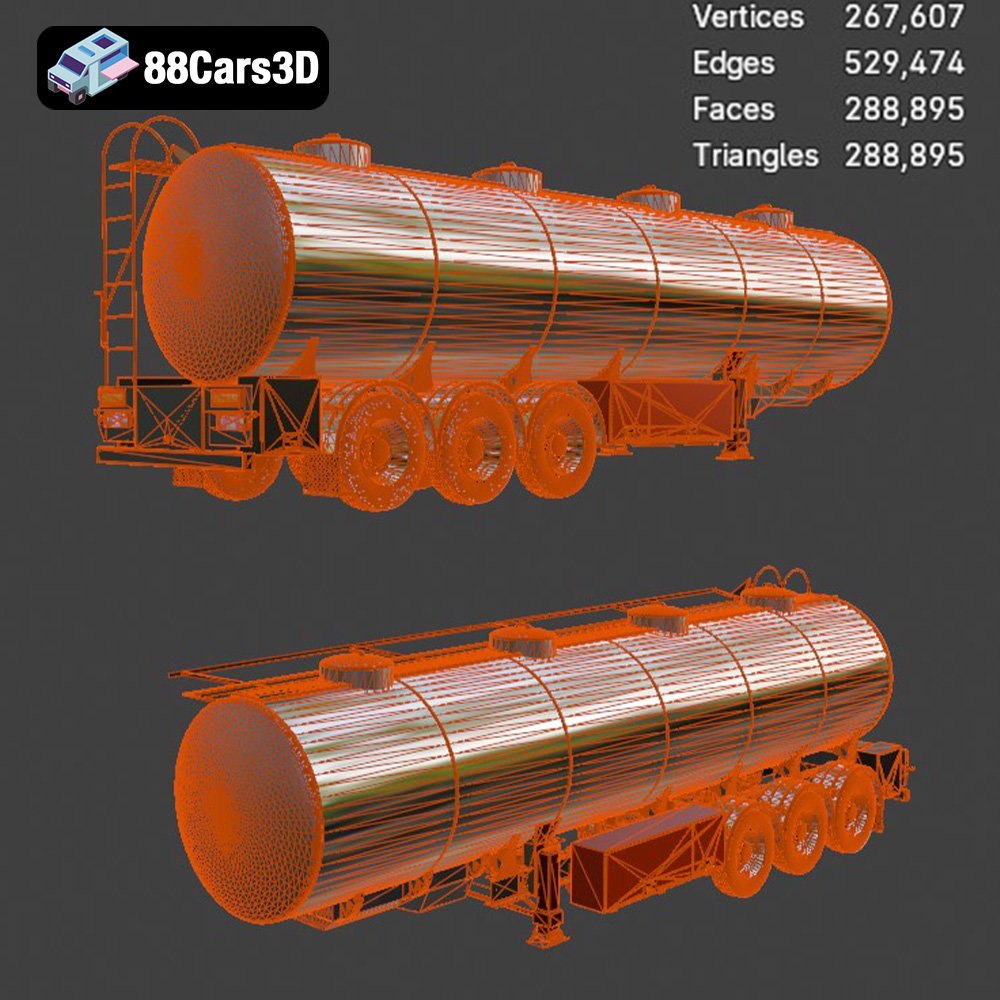
While often unseen in a final render, the underlying structural details significantly contribute to a model’s realism and versatility. The Fuel Tank Trailer includes provisions for internal tank segmentation, a crucial feature for representing multi-compartment versions used in real-world logistics. Reinforced mounting brackets and realistic connection points for tractor attachment ensure that the model behaves credibly within larger vehicle assemblies. Furthermore, the geometry is optimized not just for high-quality renders but also for real-time engines. This means a clean, well-organized mesh structure with efficient polygon flow, balancing visual fidelity with performance, which is a hallmark of professional 3D car models.
Photorealistic automotive rendering is an art form that blends technical proficiency with an keen eye for detail. The Fuel Tank Trailer 3D Model provides an excellent foundation for achieving stunning visualizations, whether for advertising, simulations, or cinematic projects.
Achieving a compelling render begins with effective lighting and material setup. In software like 3ds Max or Blender, artists can leverage sophisticated render engines such as V-Ray, Corona, or Cycles. For the Fuel Tank Trailer, setting up studio lighting often involves a combination of area lights, HDRI environments, and targeted spot lights to highlight key features like the reflective surfaces of the tank or the intricate details of the valve assemblies. The model’s clean UVs (assumed for a high-quality model) facilitate the application of Physically Based Rendering (PBR) materials. This involves creating realistic metallic shaders for the tank body and chassis, rubber for tires, and various plastics for safety components, ensuring accurate light interaction and reflections that mimic real-world physics.
To push the boundaries of photorealism, fine-tuning render settings is paramount. In renderers like V-Ray, Cycles, or Octane, global illumination, subsurface scattering (for certain materials), and depth of field can add significant realism. Environmental considerations are also key: placing the Fuel Tank Trailer in a well-conceived scene, such as a fuel depot at dawn or a highway under a stormy sky, can dramatically enhance the final output. Weathering effects, which can be easily customized, play a vital role in grounding the model in reality, depicting the wear and tear consistent with a heavy-duty industrial vehicle. This meticulous approach ensures that renders of the Fuel Tank Trailer are not just images, but believable narratives.
For game developers and creators of interactive experiences, the demands on 3D assets are unique. Performance, optimization, and engine compatibility are just as important as visual quality. The Fuel Tank Trailer 3D Model is specifically designed to excel in these demanding real-time scenarios.
When integrating the Fuel Tank Trailer into game engines like Unreal Engine or Unity, optimization is a primary concern. The model features optimized geometry for real-time environments, meaning a balanced polygon count that provides visual fidelity without taxing the engine. Professionals typically generate multiple Levels of Detail (LODs) for game assets, allowing the engine to dynamically switch to simpler versions of the model when it’s further from the camera, significantly improving performance. The included .fbx and .unreal formats are crucial here, providing a streamlined workflow for importing the model with correct hierarchies, materials, and pivot points. Separate wheels for animation and proper pivot setup enable easy implementation of physics and rotation for dynamic gameplay in truck simulators or open-world logistics games.
Beyond visual representation, a robust 3D model like the Fuel Tank Trailer can greatly enhance game logic and simulation. For instance, collision meshes can be generated for accurate physical interactions, allowing players to realistically navigate the trailer through environments. The ability to customize elements such as tank color, fuel branding, company logos, and hazard markings provides game developers with the flexibility to create diverse fleets and scenarios. In a simulation context, the model’s detailed components—like fuel discharge valves and hose compartments—can be used as interactive elements for training modules, such as those simulating hazardous material transport or fuel loading operations, adding a layer of realism and educational value.
Augmented Reality (AR), Virtual Reality (VR), and advanced simulation platforms are transforming how industries visualize, train, and operate. The Fuel Tank Trailer 3D Model offers a compelling asset for these cutting-edge applications, providing immersive and interactive experiences.
For industries involved in logistics and petroleum distribution, the Fuel Tank Trailer model becomes a powerful tool for immersive training simulations. In a VR environment, trainees can interact with the trailer, practice safety protocols, or simulate fuel transfer operations without the risks associated with real-world scenarios. This model is perfect for interactive fleet demonstrations in AR, allowing potential clients or stakeholders to virtually place the trailer in their real-world environment, inspect its features, and understand its scale and specifications. This capability is invaluable for sales and marketing, offering a dynamic and engaging way to present commercial fleet assets.
Beyond training, AR/VR and simulation are transforming technical reviews and virtual prototyping. Engineers and designers can utilize the Fuel Tank Trailer 3D Model to conduct virtual walkthroughs, evaluate design modifications (e.g., axle configurations), and identify potential issues before physical production. The ability to add safety decals, reflective strips, and adjust weathering allows for a comprehensive visualization of the trailer in various operational conditions. The .glb format, optimized for web and AR/VR, facilitates easy deployment of these interactive experiences across a range of devices, from enterprise-grade VR headsets to mobile AR applications, making technical communication more intuitive and engaging.
The Fuel Tank Trailer 3D Model’s versatility extends beyond digital screens, offering the exciting possibility of transforming into a physical object through 3D printing. This capability opens doors for scale models, prototypes, and unique collectibles.
For 3D printing, the model’s geometry needs to be prepared specifically for additive manufacturing. The included .stl file is designed to be manifold and watertight, which are critical properties for successful 3D prints. The recommended scales (1:32 / 1:24 / 1:18 / 1:14) provide options for various display and miniature purposes. Key print settings are provided to guide users, such as a layer height of 0.12–0.20 mm for FDM printers, and a wall thickness of 2–3 mm to ensure structural integrity. Supports will be required for intricate parts like the ladder, railings, and valve assemblies to prevent drooping during printing. Thoughtful print orientation, such as printing the tank horizontally and the chassis flat, maximizes stability and minimizes support structures.
Once printed, the physical model benefits from careful post-processing. This typically includes sanding to smooth layer lines, applying primer for an even surface, and then painting with industrial finishes to match real-world tanker aesthetics. Optional hazard decals can be added to complete the realistic look. The customization options that were available digitally, like changing tank color, adding company logos, or modifying axle configurations, translate seamlessly into physical customization. With separately printed wheels, assembly and painting become more manageable, allowing for a higher level of detail and finish on the final scale model. This transformation from a digital asset to a tangible object showcases the incredible breadth of utility offered by high-quality 3D models.
The journey through the capabilities and applications of the Fuel Tank Trailer 3D Model underscores a fundamental truth in digital content creation: professional-grade assets are a cornerstone of excellence. This model, with its high-detail realism, optimized geometry, and comprehensive file format support, is a prime example of an asset that empowers artists, developers, and engineers across automotive rendering, game development, AR/VR, and even 3D printing.
Whether you’re crafting a photorealistic advertisement for a logistics company, designing an immersive truck simulator, or building an interactive training module for industrial safety, the Fuel Tank Trailer provides the technical foundation and visual fidelity you need. Its careful construction and versatile nature reduce development time, enhance visual quality, and ensure compatibility across a broad spectrum of software and platforms. For those seeking to elevate their projects with meticulously crafted 3D car models and industrial assets, exploring the offerings at 88cars3d.com, including this exceptional Fuel Tank Trailer, is a step towards achieving unparalleled digital realism and efficiency.
The Fuel Tank Trailer 3D Model is a high-detail digital recreation of a heavy-duty tanker trailer designed for transporting fuel and liquid petroleum products. Engineered for realism and industrial accuracy, this model reflects the structural integrity and cylindrical tank design commonly used in logistics, petroleum distribution, and hazardous material transport operations. This 3D model accurately represents the elongated cylindrical tank body, reinforced chassis frame, axle system, rear ladder access, safety railings, hose compartments, and fuel discharge valves. Designed with clean topology and real-world proportions, it is ideal for rendering, animation, simulation, game development, and AR/VR industrial visualization. Perfect for highway transport scenes, fuel depot environments, logistics simulations, industrial yards, refinery visuals, and commercial fleet presentations.
$4.99
.arvr
.blend
.fbx
.fueltanktrailer
.fueltransport
.gameasset
.glb
.industrialvehicle
.logisticsvehicle
.max
.obj
.petroleumtransport
.ply
.rendering
.simulation
.stl
.tankertrailer
.trucktrailer
.unreal