Get 50% OFF All Premium 3D & STL Models!

In the realm of high-performance automotive design, few vehicles capture the imagination quite like the Gumpert Apollo Intensa Emozione. A hypercar engineered for raw emotion and unparalleled track performance, its aggressive aerodynamics, exposed carbon fiber, and naturally aspirated V12 engine represent the pinnacle of automotive artistry and engineering. Translating such a masterpiece into the digital domain requires an extraordinary level of precision and technical expertise.
For 3D artists, game developers, architectural visualizers, and even hobbyists, acquiring a meticulously crafted 3D model of a vehicle like the Gumpert Apollo IE is not just a convenience; it’s a necessity. It serves as the foundation for stunning visualizations, immersive game environments, compelling marketing campaigns, and even physical collectibles. The Gumpert Apollo Intensa Emozione 2019 3D Model available on 88cars3d.com exemplifies this dedication to detail, offering a versatile asset ready for a multitude of professional applications. From hyperrealistic rendering to real-time engine integration and even 3D printing, a well-structured model of this caliber opens up a world of creative possibilities.
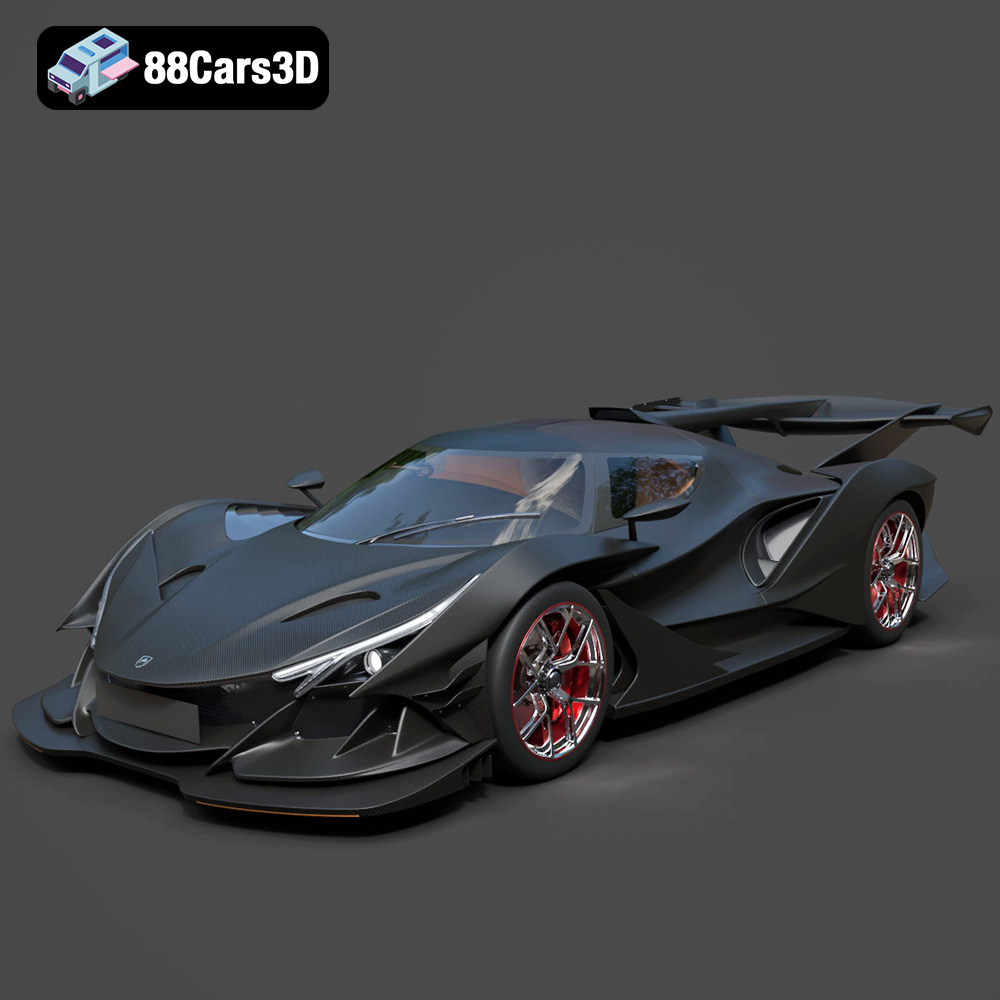
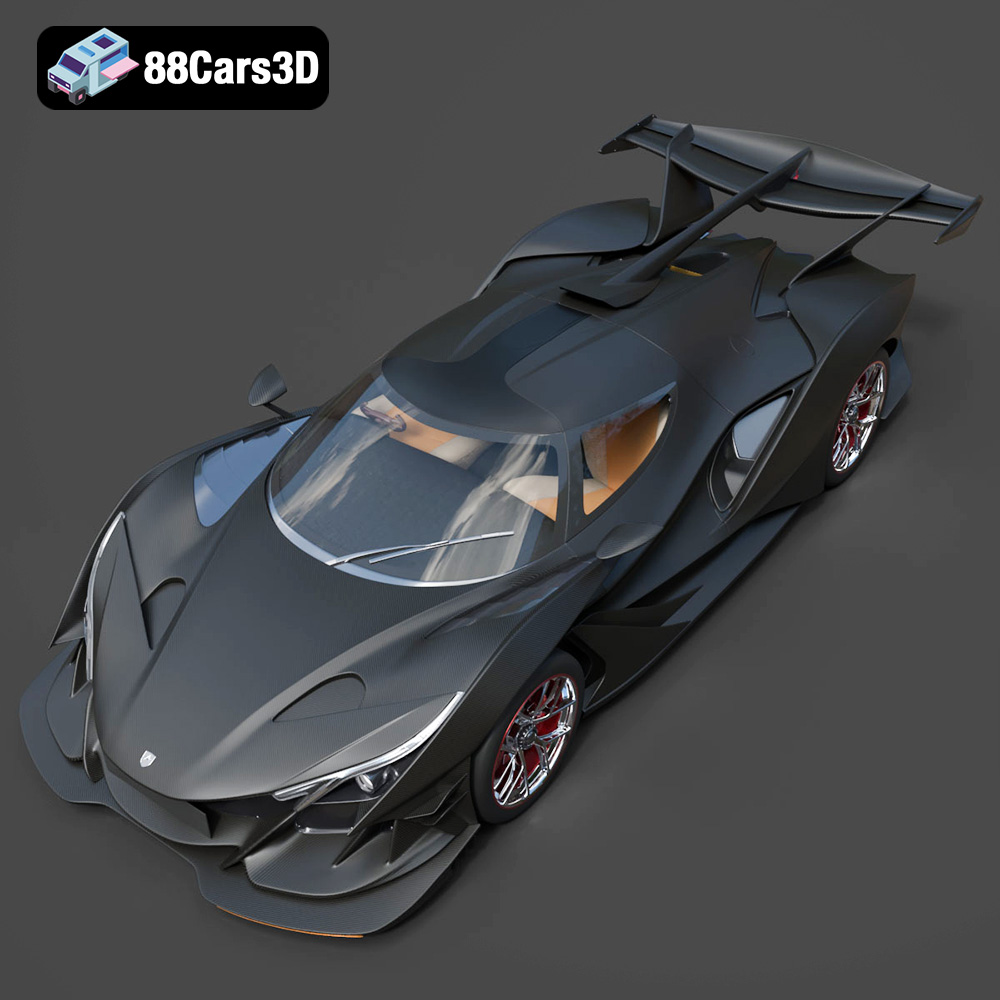
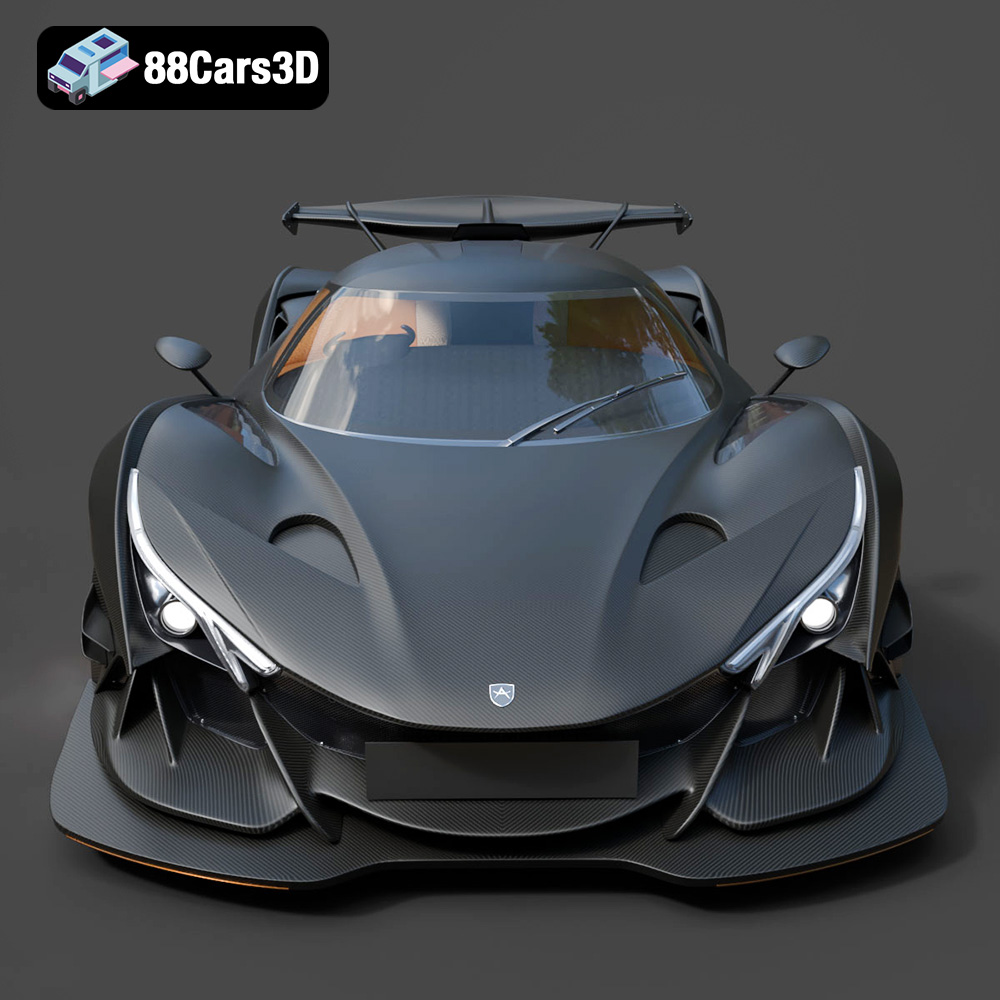
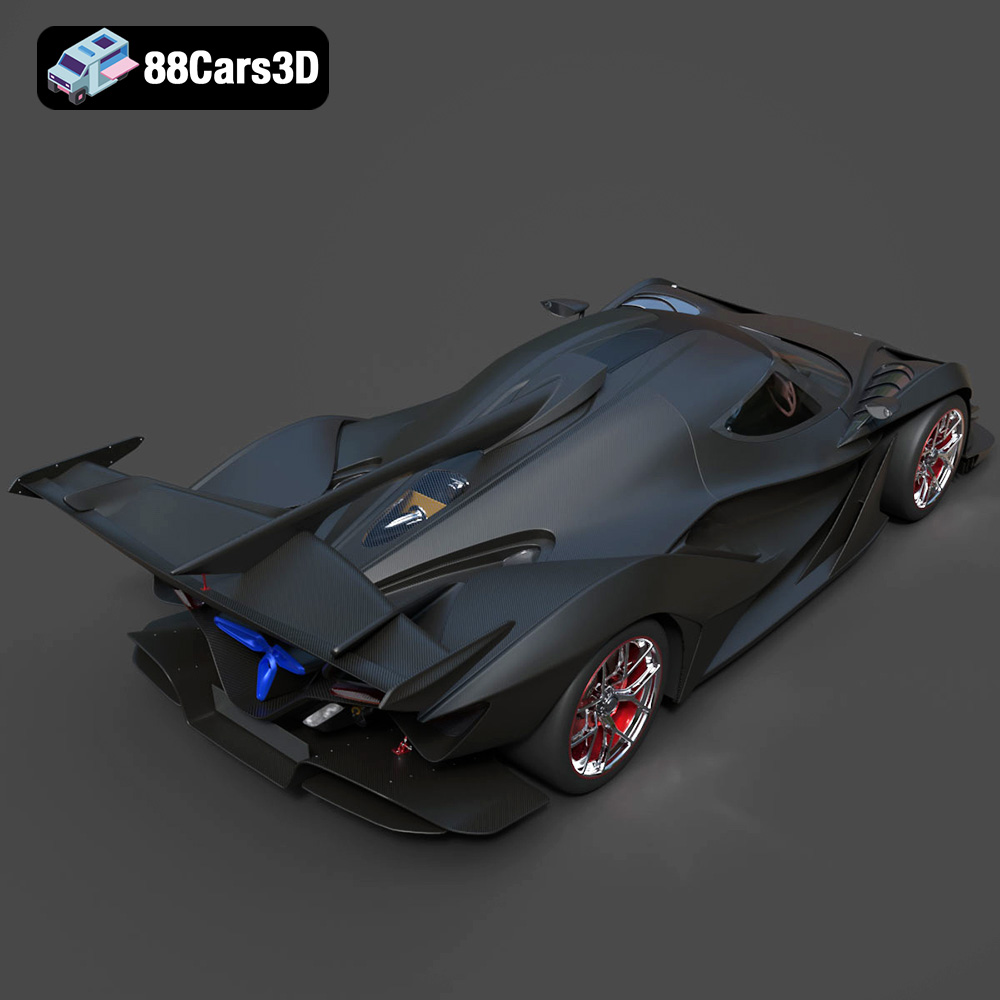
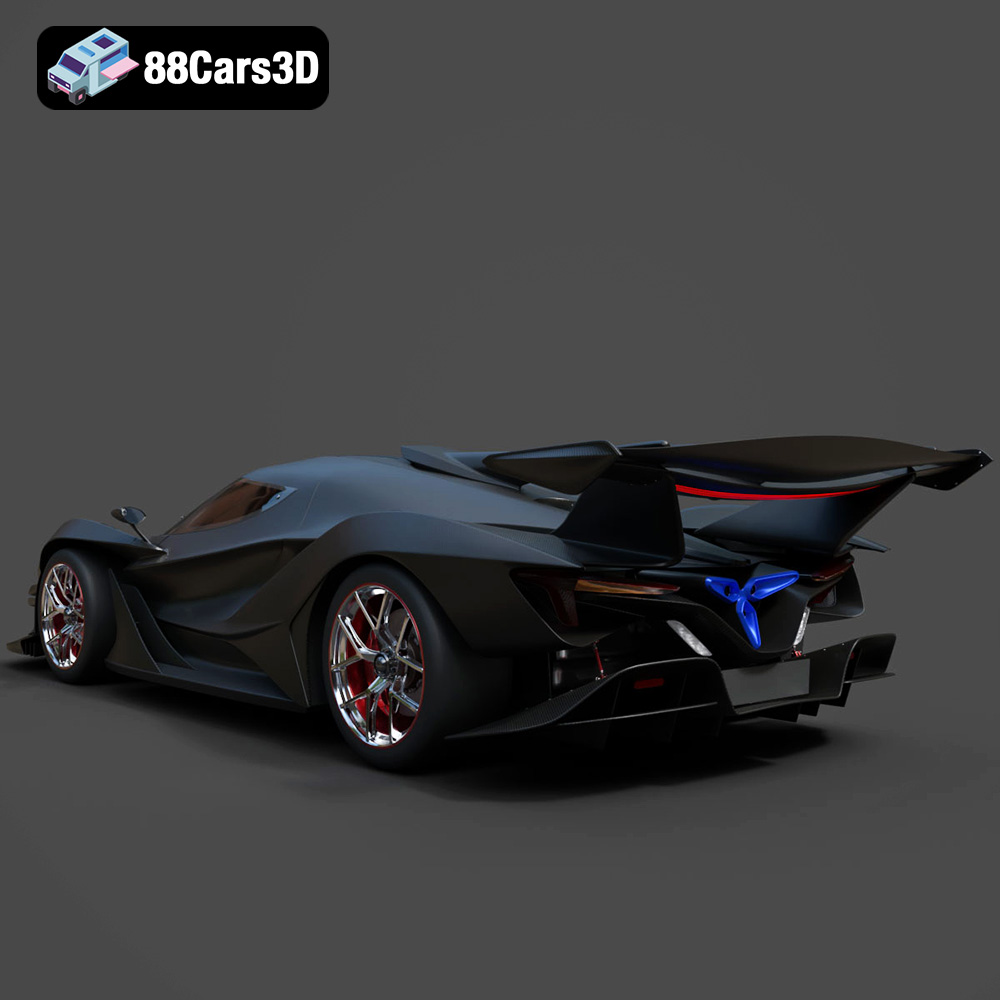
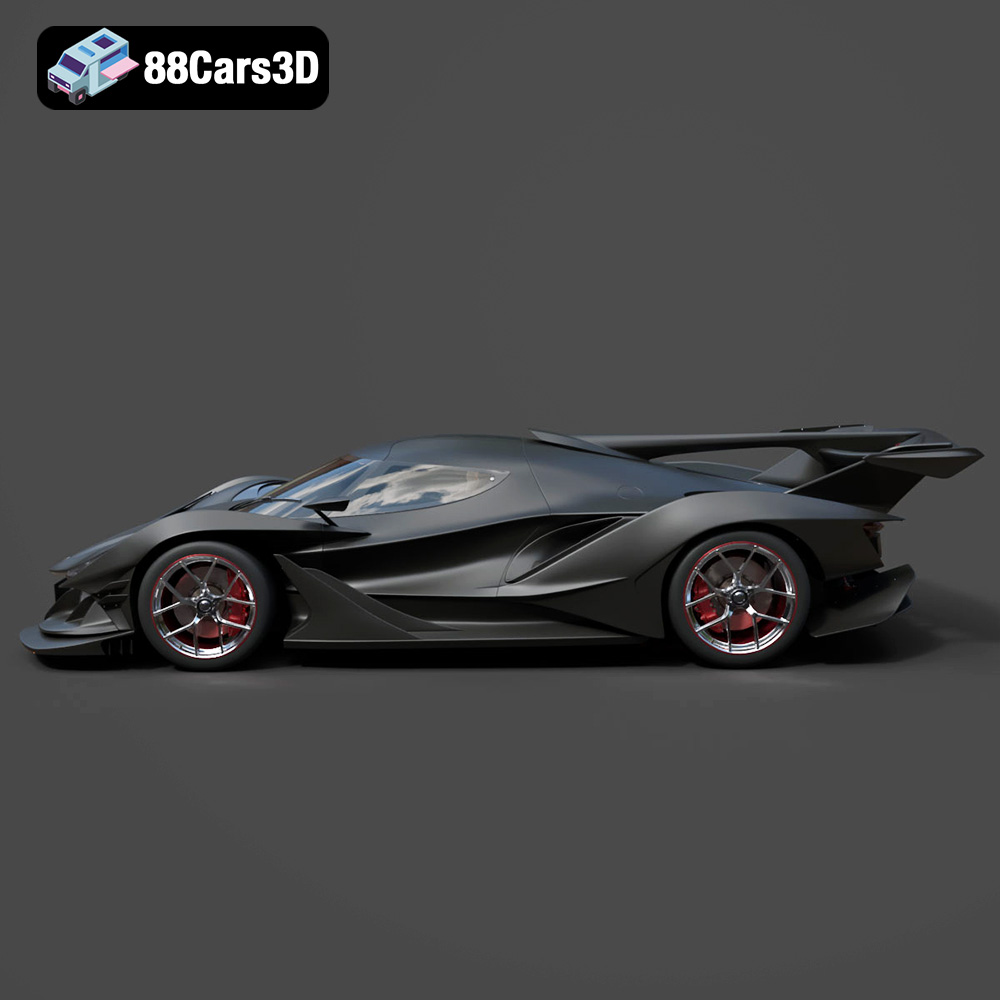
Creating a compelling 3D car model begins with an unwavering commitment to accuracy. For the Gumpert Apollo Intensa Emozione 2019 3D Model, this means capturing every curve, vent, and sharp edge that defines its extreme aesthetic. The product description highlights accurate 2019 Apollo IE body proportions, detailed aerodynamic components like the front splitter and side canards, and the massive adjustable rear wing. These aren’t just cosmetic details; they are functional elements that define the vehicle’s purpose and visual identity. The digital recreation must reflect this with clean topology, ensuring smooth surfaces and proper light reflection.
Beyond the exterior, the model extends into the race-inspired cockpit. Features such as the carbon fiber dashboard, digital instrument cluster, sport steering wheel with control buttons, and racing bucket seats with harness setups are all meticulously modeled. This level of internal detail is crucial for projects requiring interior shots, virtual tours, or even first-person game perspectives. The separation of wheels and steering components for animation further demonstrates the foresight in its design, catering to dynamic presentations and interactive simulations right out of the box.
The versatility of a 3D car model is significantly enhanced by the range of file formats it supports. Each format serves a specific purpose, offering different levels of compatibility, data integrity, and optimization for various stages of a professional workflow. The Gumpert Apollo Intensa Emozione 2019 3D Model from 88cars3d.com impressively provides a comprehensive suite of formats, ensuring its utility across diverse software and platforms. Understanding these formats is key to maximizing the value of your 3D assets.
The .blend file format is Blender’s native project file. It encapsulates an entire Blender scene, including the 3D model, materials, textures, lighting, cameras, animations, and even physics simulations. This format is ideal for users working primarily in Blender, as it offers a fully editable and self-contained environment. When you open a .blend file, you gain access to every aspect of the model’s construction, allowing for easy modifications, custom rigging, or integration into existing Blender projects. Its efficiency in storing all scene data makes it a powerful choice for collaborative Blender-based workflows and detailed scene development.
The .fbx (Filmbox) format is a proprietary file format owned by Autodesk, but it has become an industry standard for 3D data exchange, particularly between different 3D software packages and game engines like Unreal Engine and Unity. FBX files can store not just geometry, but also materials, textures, rigging, skinning, and animation data. Its robust support for animation makes it incredibly valuable for game development and real-time pipelines where movement and interaction are critical. When transferring complex animated 3D car models, .fbx often provides the most reliable and complete data transfer. However, materials might need re-setup in the target software due to differences in shader definitions.
The .obj (Wavefront OBJ) format is one of the oldest and most widely supported 3D file formats. It’s a universal format known for its simplicity and excellent cross-software compatibility. OBJ files primarily store geometric data (vertices, normals, texture coordinates, and faces) and can reference external material files (.mtl) for basic color and texture information. While it doesn’t support animation or advanced scene data like rigging, its widespread compatibility makes it an excellent choice for transferring static mesh data between virtually any 3D application. It’s often used as a fallback when other formats encounter compatibility issues, ensuring the core geometry can always be accessed.
The .glb (GL Transmission Format Binary) is the binary version of the glTF format, designed to be an efficient, interoperable format for the transmission and loading of 3D scenes and models by engines and applications. It is particularly optimized for Augmented Reality (AR), Virtual Reality (VR), and browser-based display because it packs all necessary assets (geometry, textures, animations, and PBR materials) into a single, compact file. This “all-in-one” characteristic makes .glb incredibly convenient for sharing 3D content on websites, social media, and AR/VR platforms, ensuring consistent visual fidelity across different devices.
The .stl (Stereolithography) format is the de facto standard for 3D printing. It represents a 3D model as a series of connected triangles (a triangulated surface mesh) without color, texture, or other CAD attributes. Its primary function is to define the surface geometry of a 3D object for manufacturing processes like additive manufacturing. For 3D printing a scale model of the Gumpert Apollo IE, an .stl file is essential. The model needs to be “manifold” (watertight) for successful printing, meaning there are no holes, gaps, or overlapping faces in the mesh.
The .ply (Polygon File Format or Stanford Triangle Format) is another widely used format for storing 3D data. Similar to OBJ, it primarily stores geometry, but it can also include additional properties like color, transparency, normals, texture coordinates, and even reliability information for each vertex and face. This makes .ply particularly useful for scanning data, CAD applications, and scientific analysis where precise mesh information and additional attributes are important. It offers more flexibility than .stl for data storage while remaining relatively straightforward.
The .unreal format refers to assets specifically configured and optimized for use within the Unreal Engine. While not a standalone file extension in the same way as .fbx or .obj, it implies that the asset has been exported or set up to be drag-and-drop ready for Unreal projects. This typically means proper scaling, collision setups, material instances using Unreal’s physically-based rendering (PBR) system, and potentially LODs (Levels of Detail) for performance optimization. An Unreal-ready asset significantly streamlines the integration process for game developers and real-time visualization specialists.
The .max format is the native file format for Autodesk 3ds Max. Like Blender’s .blend, it contains all the scene data, including geometry, lights, cameras, materials, textures, animation, modifiers, and plugin-specific data within a 3ds Max project. This format is crucial for users who wish to work directly within 3ds Max, allowing for complete control over the model, its rigging, and further development within this powerful animation and rendering suite. It offers the highest fidelity when working within the 3ds Max ecosystem.
The availability of the Gumpert Apollo Intensa Emozione 2019 3D Model in all these formats ensures maximum compatibility and adaptability, catering to a broad spectrum of professional demands, from high-end cinematic rendering to functional 3D printing and real-time interactive experiences.
The journey of a high-quality 3D car model from concept to production-ready asset is a testament to meticulous craftsmanship. For an exotic hypercar like the Gumpert Apollo Intensa Emozione, this process demands a deep understanding of automotive design, physics, and the intricacies of 3D software. The model available at 88cars3d.com embodies these principles, serving as a robust starting point for diverse projects.
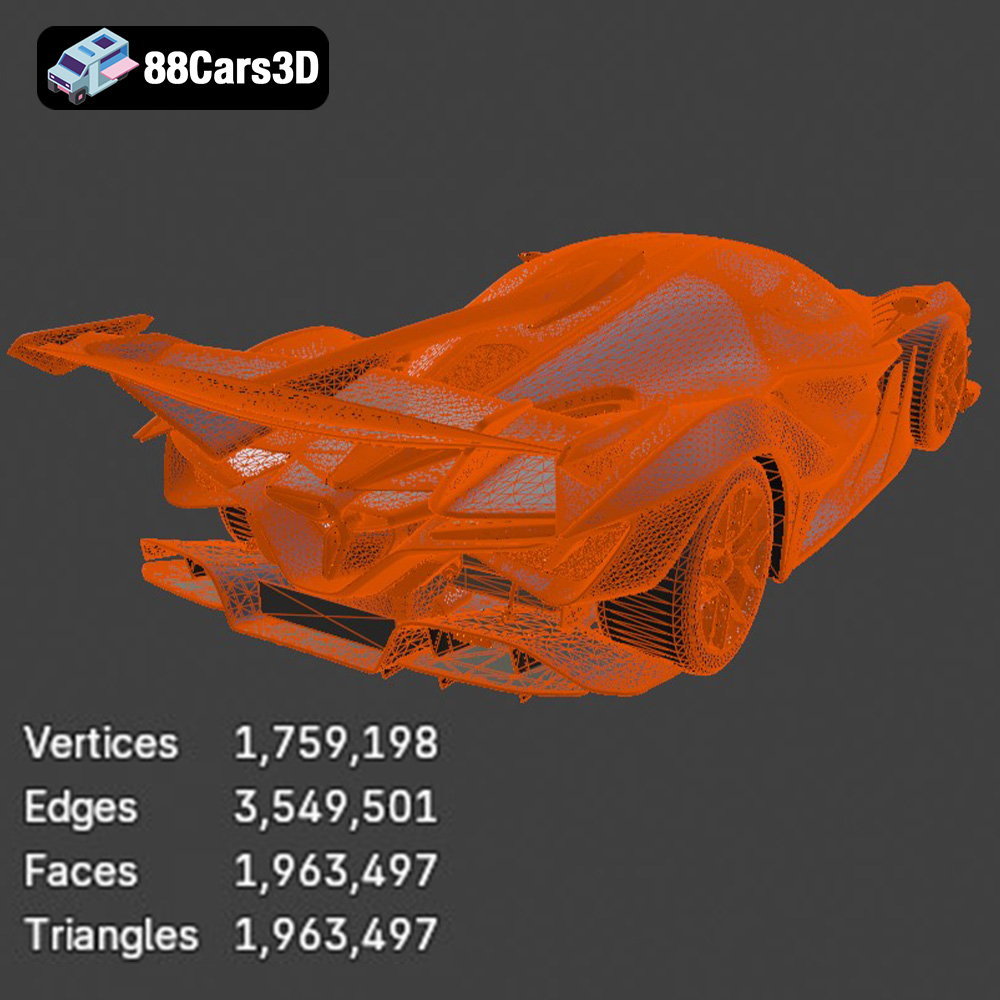
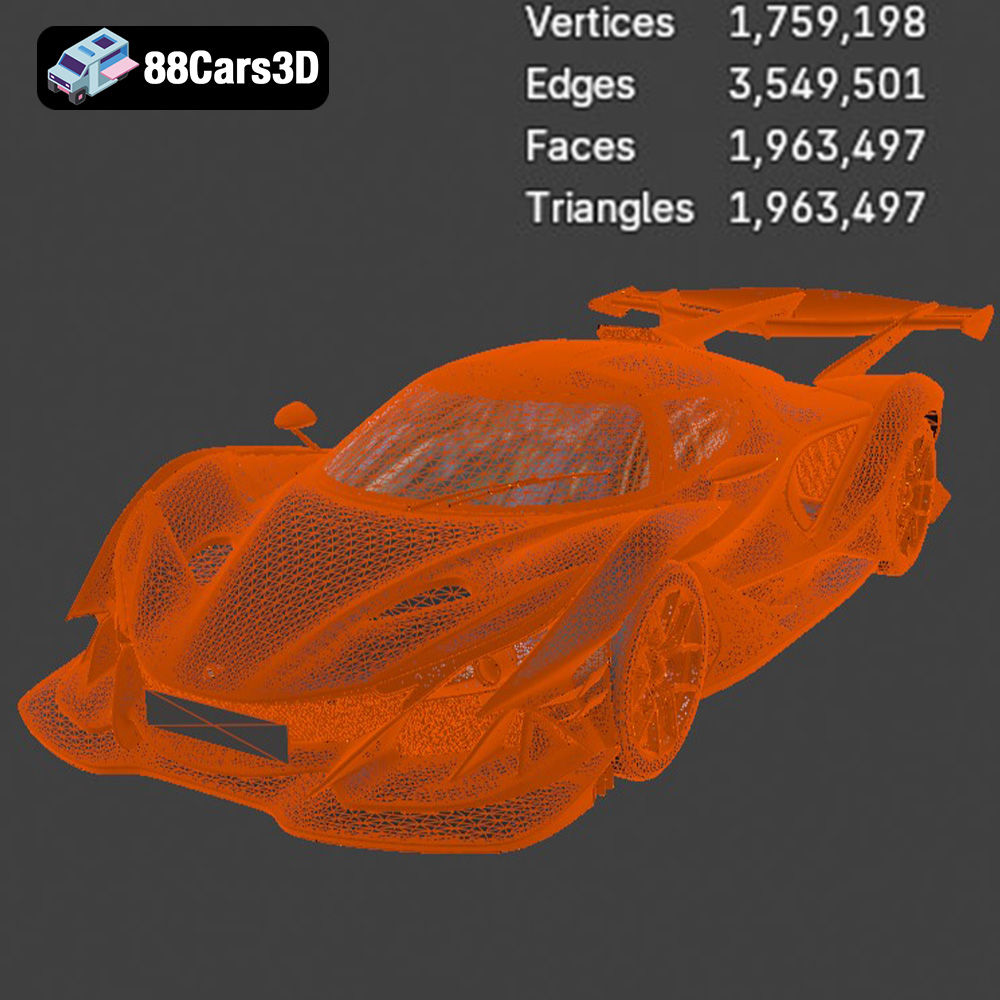
The foundation of any exceptional 3D car model is its geometry. The Gumpert Apollo IE 2019 3D Model boasts a “clean and well-organized mesh structure” and “optimized polygon flow,” which are critical for both realism and performance. Clean topology means that the polygons flow smoothly across the surface, avoiding pinching, stretching, or other artifacts that can appear during rendering or deformation. This is particularly vital for the sleek, aerodynamic surfaces of a hypercar, where even minor imperfections become glaring.
The model’s exterior features, such as the “detailed aerodynamic front splitter and side canards,” the “large adjustable rear wing assembly,” and “sculpted carbon fiber body panels,” are all rendered with real-world scale accuracy. This precision ensures that the model looks correct from any angle and under any lighting condition, whether in a static render or a dynamic simulation. Similarly, the interior features like the “carbon fiber dashboard,” “digital instrument cluster,” and “racing bucket seats” are modeled with an equally high level of detail, making the model versatile for a range of visualizations.
Beyond static beauty, the ability to animate and simulate movement is paramount for automotive projects. The Gumpert Apollo IE 3D Model is designed with “proper pivot setup for steering and wheel rotation,” and “separate wheels and steering components for animation.” This seemingly small detail is incredibly important. It means the model isn’t just a static sculpture; it’s engineered for motion.
In 3ds Max or Blender, artists can easily link the wheels to a chassis rig and animate complex driving sequences. For game developers, these separated components simplify the integration of physics-based wheel and steering systems, ensuring realistic vehicle dynamics within Unreal Engine or Unity. The ability to manipulate these elements independently allows for expressive storytelling, whether it’s a car drifting around a corner in a cinematic or navigating a challenging track in a racing simulator.
High-quality 3D car models are the lifeblood of compelling automotive rendering and visualization. They allow designers, marketers, and filmmakers to showcase vehicles in ways that photography simply cannot, offering complete control over environments, lighting, and camera angles.
Achieving photorealistic renders of the Gumpert Apollo IE requires a combination of excellent model quality and sophisticated rendering techniques. With a model like this from 88cars3d.com, artists working in 3ds Max can leverage powerful renderers like V-Ray or Corona. The clean mesh and real-world scale provide an ideal canvas. Users can apply advanced PBR (Physically Based Rendering) materials to accurately simulate the look of carbon fiber, metallic paint, glass, and rubber. Setting up realistic lighting using HDRI (High Dynamic Range Image) environment maps combined with targeted area lights can mimic anything from a sun-drenched track to a moody studio photoshoot.
Blender users, similarly, can achieve stunning results with Cycles or Eevee. The .blend file format ensures that materials, if provided, are already set up within the native environment, requiring minimal adjustments. Techniques like volumetric lighting to create atmospheric haze, depth of field for cinematic focus, and meticulous post-processing in software like Photoshop or GIMP elevate renders from good to breathtaking. The Gumpert Apollo Intensa Emozione’s aggressive lines and intricate details make it an exceptional subject for these high-fidelity rendering exercises.
The applications for such detailed 3D car models extend directly into cinematic projects and luxury automotive marketing. Imagine a virtual commercial where the Apollo IE races through a stylized environment, its carbon fiber glinting under the lights, or a product configurator where potential buyers can explore every angle of the hypercar in stunning detail.
These models are ideal for “hypercar marketing visuals, automotive advertisements, and high-end promotional media.” They enable creators to tell a story around the vehicle, highlighting its performance, design philosophy, and emotional appeal without the logistical complexities and immense costs of a real-world photoshoot. The flexibility to change body color, add custom liveries, or adjust wing angles—as mentioned in the product’s customization options—means an unlimited number of scenarios can be explored from a single digital asset.
The real-time demands of game development and immersive experiences require 3D models that are not only visually striking but also highly optimized for performance. The Gumpert Apollo IE 3D Model is engineered to meet these rigorous requirements, making it a valuable asset for virtual worlds.
For game developers, the availability of formats like .fbx and specific .unreal assets is a game-changer. When importing the Gumpert Apollo Intensa Emozione 2019 3D Model into Unreal Engine or Unity, the “optimized geometry for real-time engines” becomes crucial. This often means careful polygon reduction (creating Levels of Detail, or LODs), efficient UV mapping for texture atlases, and robust material setup using the engine’s PBR shaders.
The “clean and well-organized mesh structure” of the model simplifies the process of creating collision meshes and implementing physics-based damage systems. With proper pivot setups for steering and wheels, integrating the car into a vehicle blueprint in Unreal Engine or a driving script in Unity becomes a much smoother process. This allows the Gumpert Apollo IE to be seamlessly incorporated into racing simulators, open-world environments, or even futuristic combat games, ensuring it performs well while looking incredible.
Augmented Reality (AR) and Virtual Reality (VR) are transforming how we interact with digital content, and automotive applications are at the forefront of this revolution. High-quality 3D car models are indispensable for creating “immersive showroom experiences and interactive hypercar demonstrations.”
The .glb format, included with the Gumpert Apollo IE 3D Model, is particularly well-suited for AR/VR. Its compact, single-file nature makes it easy to deploy on web-based AR viewers or lightweight VR applications, offering quick loading times and consistent visual quality across devices. Imagine a potential buyer using an AR app to place a life-sized Gumpert Apollo IE in their driveway, exploring its interior, and even changing its color in real-time. This level of interaction is possible only with well-optimized, versatile 3D car models like those found on 88cars3d.com.
Beyond the digital screen, 3D printing offers an exciting avenue to bring the Gumpert Apollo IE into the physical world. Creating scale models or collectibles from a high-quality 3D asset provides a unique way to appreciate its design and engineering.
The inclusion of the .stl format in the Gumpert Apollo Intensa Emozione 2019 3D Model package is vital for 3D printing. The product description explicitly states its suitability for “collectible hypercar scale models and display miniatures.” For successful 3D printing, the model must have “manifold geometry,” meaning it is a watertight mesh without any gaps or inversed normals.
The recommended 3D print settings provided, such as “Recommended scale: 1:32 / 1:24 / 1:18 / 1:12,” “Layer height: 0.08–0.16 mm,” and “Wall thickness: 1.5–2.5 mm,” offer crucial guidance. These parameters ensure that the intricate details of the Apollo IE, from its aggressive splitter to its massive rear wing, are accurately reproduced. The advice to print supports for delicate areas like the wing, splitter, mirrors, and diffuser is practical and helps prevent print failures, especially when working with FDM or even resin printers for finer details. The recommendation for “Print orientation: Body printed angled for smooth aerodynamic surfaces; wing printed separately” highlights an expert understanding of print optimization for aesthetics.
A raw 3D print is just the beginning. The “post-processing: sanding, primer, gloss or carbon fiber finish, optional racing decals” steps are essential to transform a printed object into a museum-quality replica. After removing supports, careful sanding smooths layer lines. A good primer ensures paint adhesion and highlights any remaining imperfections.
The choice of finish is critical: a high-gloss automotive paint can replicate the hypercar’s factory look, while meticulous application of carbon fiber decals or textures can mimic the exposed carbon fiber panels. Adding optional racing decals, detailed brake caliper painting, or even custom weathering can elevate the model to an art piece. This process, enabled by a high-fidelity STL base model, allows enthusiasts and model makers to craft truly unique and stunning physical representations of the Gumpert Apollo IE.
The true measure of a high-quality 3D asset lies in its adaptability. The Gumpert Apollo Intensa Emozione 2019 3D Model is designed with customization in mind, ensuring it can seamlessly integrate into various professional workflows and client requirements.
The customization options listed for the Gumpert Apollo IE 3D Model directly address the needs of artists and designers. The ability to “Change body color and carbon fiber exposure” allows for endless creative interpretations, from classic factory finishes to unique bespoke liveries. This is invaluable for marketing campaigns that need to showcase multiple colorways or for artistic renders exploring different aesthetic possibilities.
Adding “custom racing livery or number decals” transforms the hypercar into a personalized track monster, perfect for game mods, racing simulations, or event-specific promotional material. Modifying “wheel finish and brake caliper colors” provides another layer of detail, allowing artists to match branding or create unique stylistic choices. Even subtle adjustments like “adjusting wing angle configuration” can convey different states of performance or aggression, adding to the dynamic storytelling. Furthermore, the option to “configure lighting for track day, showroom, or cinematic night scenes” underscores the model’s readiness for diverse visual narratives, catering to specific moods and atmospheres.
For any professional in 3D modeling, game development, or visualization, time is a precious commodity. Starting a project with a pre-made, high-quality 3D car model like the Gumpert Apollo Intensa Emozione significantly reduces development cycles and production costs. Instead of spending weeks or months modeling a complex vehicle from scratch, artists can focus on the creative aspects: scene composition, animation, lighting, and rendering.
Platforms like 88cars3d.com provide an invaluable resource by offering a curated selection of such detailed and versatile 3D car models. They serve as foundational assets that can be easily integrated, customized, and leveraged across a broad spectrum of projects, from commercial advertisements and interactive experiences to passion projects and educational simulations. The technical advantages—clean mesh, real-world scale, optimized polygon flow, and multi-format compatibility—ensure that the Gumpert Apollo IE 3D Model is not just a visual treat, but a robust and reliable tool in any digital creator’s arsenal.
The Gumpert Apollo Intensa Emozione is more than just a car; it’s a statement of extreme engineering and emotional design. Translating such an iconic vehicle into a high-fidelity 3D model, as seen with the Gumpert Apollo Intensa Emozione 2019 3D Model from 88cars3d.com, opens up a universe of creative possibilities. From crafting breathtaking photorealistic renders and developing immersive game experiences to fabricating tangible 3D-printed collectibles, the technical precision and versatility of this model are truly remarkable.
We’ve explored how this digital asset, available in a comprehensive array of file formats including .blend, .fbx, .obj, .glb, .stl, .ply, .unreal, and .max, empowers professionals across various industries. Its clean topology, real-world scale, animation-ready components, and optimization for both high-end rendering and real-time engines make it an indispensable tool. Whether you’re a seasoned 3D artist aiming for cinematic quality, a game developer building the next-gen racing simulator, or an enthusiast seeking to 3D print a stunning replica, this model provides the quality and flexibility you need to bring your vision to life.
Investing in high-quality 3D car models is an investment in efficiency, realism, and boundless creative potential. The Gumpert Apollo Intensa Emozione 2019 3D Model stands as a testament to what’s possible when technical excellence meets artistic passion. Explore this exceptional model and more at 88cars3d.com to elevate your next project.
The Gumpert Apollo Intensa Emozione 2019 3D Model is a high-detail digital recreation of the extreme track-focused hypercar engineered for maximum aerodynamic performance and raw driving emotion. Known for its aggressive styling, exposed carbon fiber construction, and naturally aspirated V12 power, the Apollo IE represents cutting-edge automotive engineering. This 3D model accurately captures the sharp aerodynamic bodywork, massive rear wing, aggressive front splitter, sculpted air intakes, race-inspired cockpit, and carbon fiber detailing. Designed with clean topology and real-world scale accuracy, it is ideal for rendering, animation, automotive visualization, game development, and AR/VR experiences. Convert to .stl format for collectible hypercar scale models and display miniatures.
$99.99
.2019car
.apolloie
.arvr
.automotive
.blend
.car3dmodel
.fbx
.gameasset
.glb
.gumpert
.hypercar
.intensaemozione
.max
.obj
.ply
.racingcar
.rendering
.simulation
.stl
.supercar
.unreal