Get 50% OFF All Premium 3D & STL Models!

The roar of an engine, the glint of chrome under the sun, the perfect curve of a fuel tank – these are the elements that define legendary vehicles. For automotive enthusiasts, designers, game developers, and visualization artists, recreating this magic in the digital realm is a pursuit of passion and precision. High-quality 3D car models are the bedrock of stunning visuals, immersive simulations, and even tangible physical reproductions. They bridge the gap between imagination and reality, offering unparalleled control over every detail.
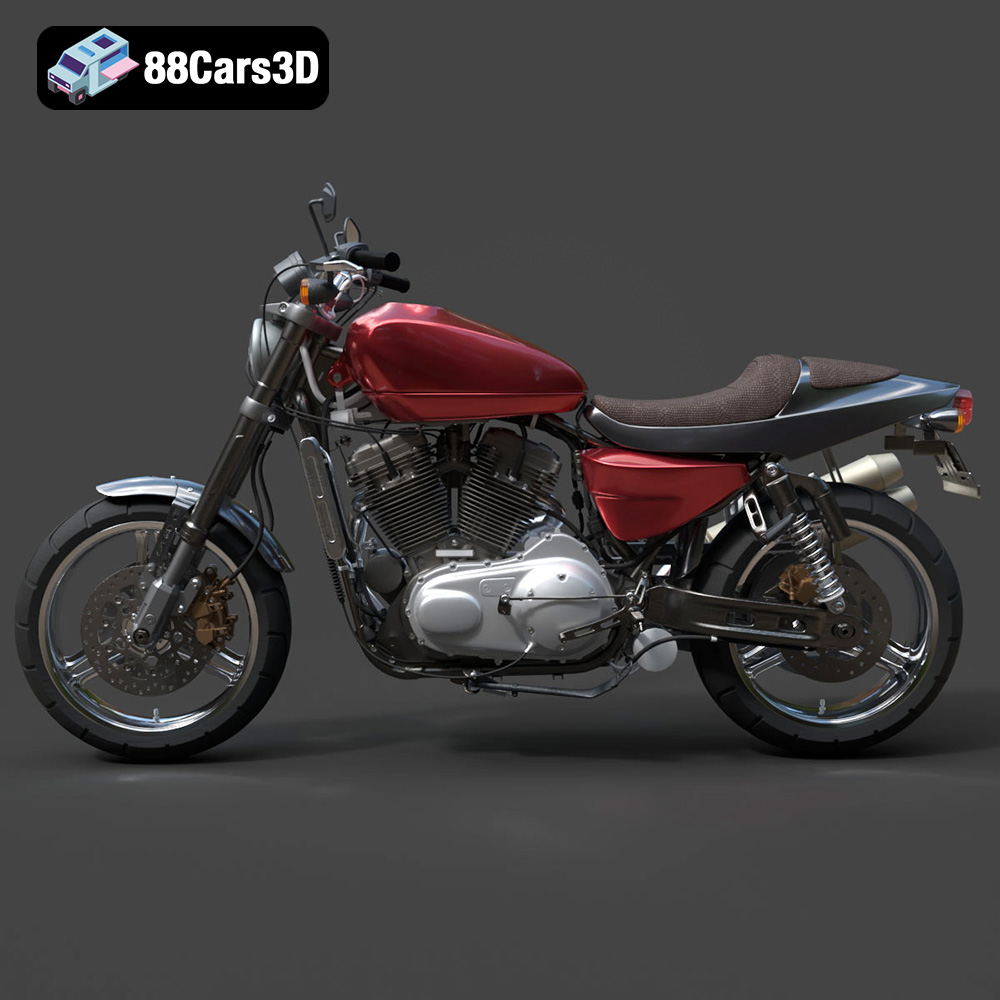
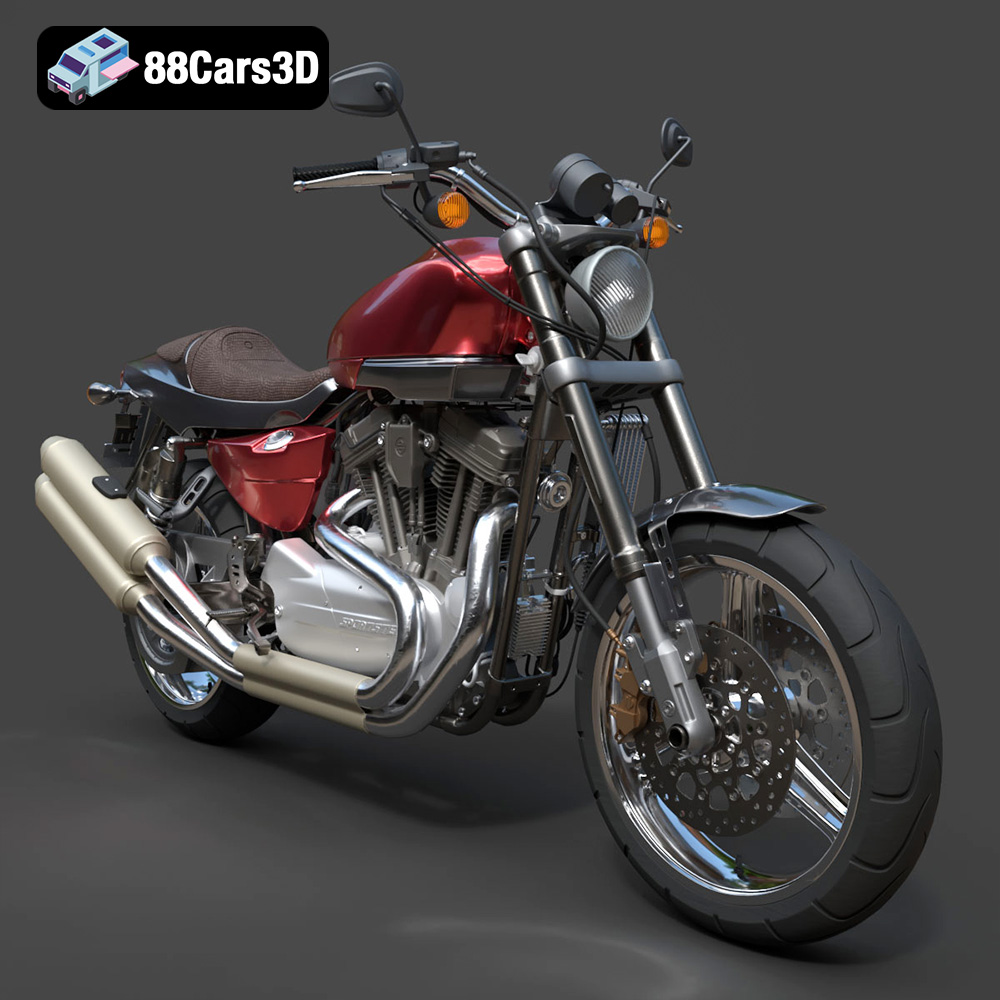
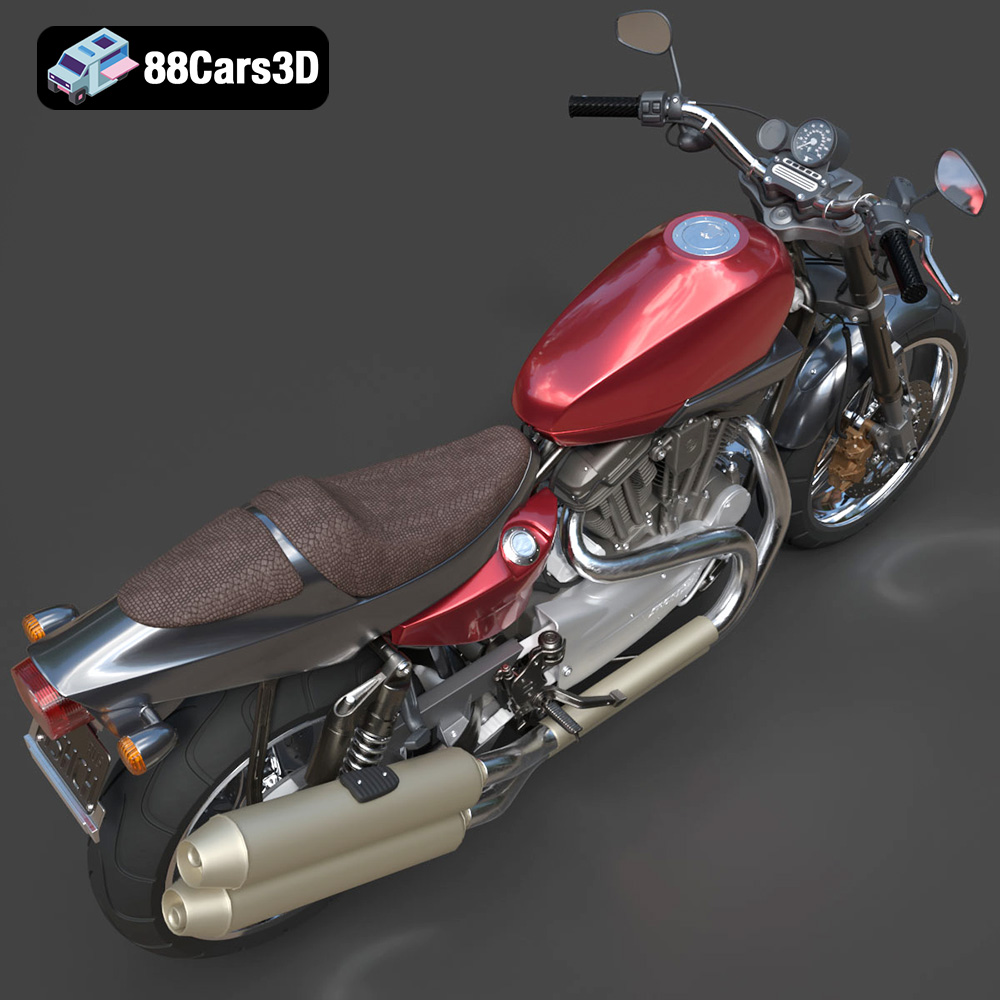
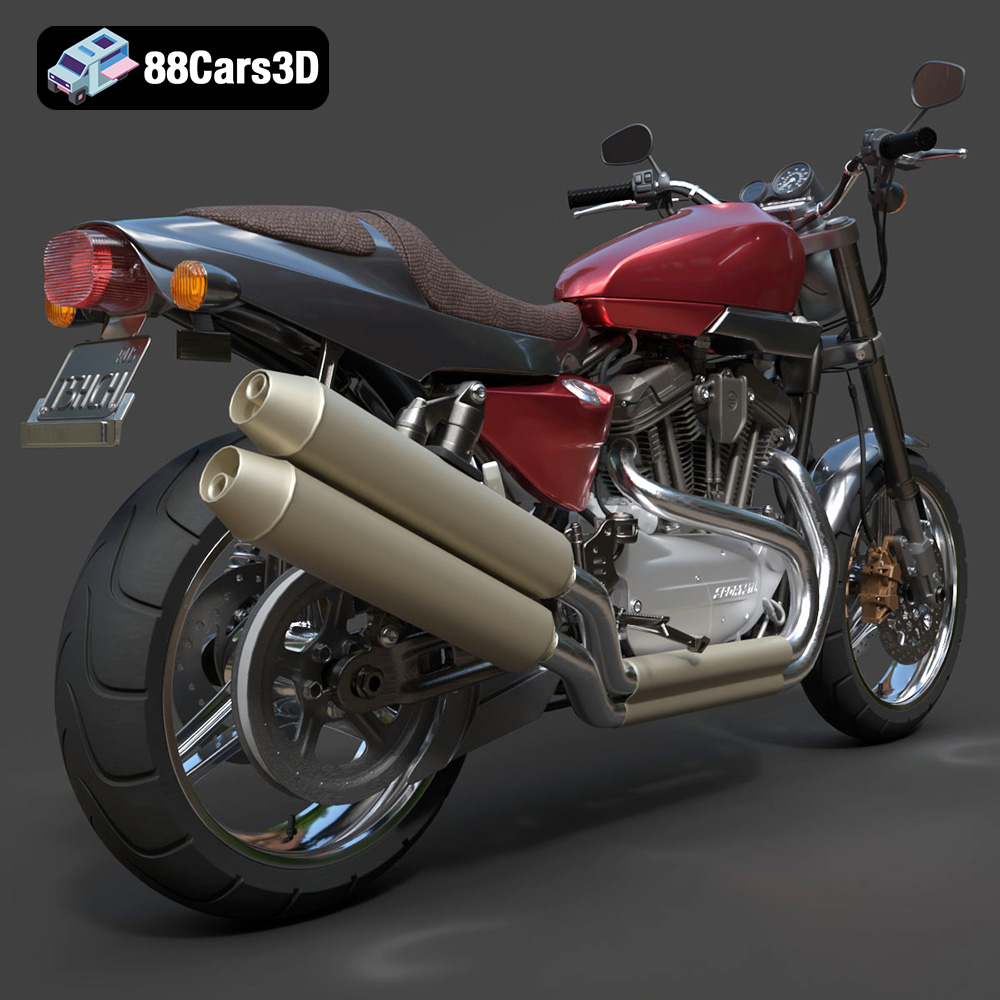
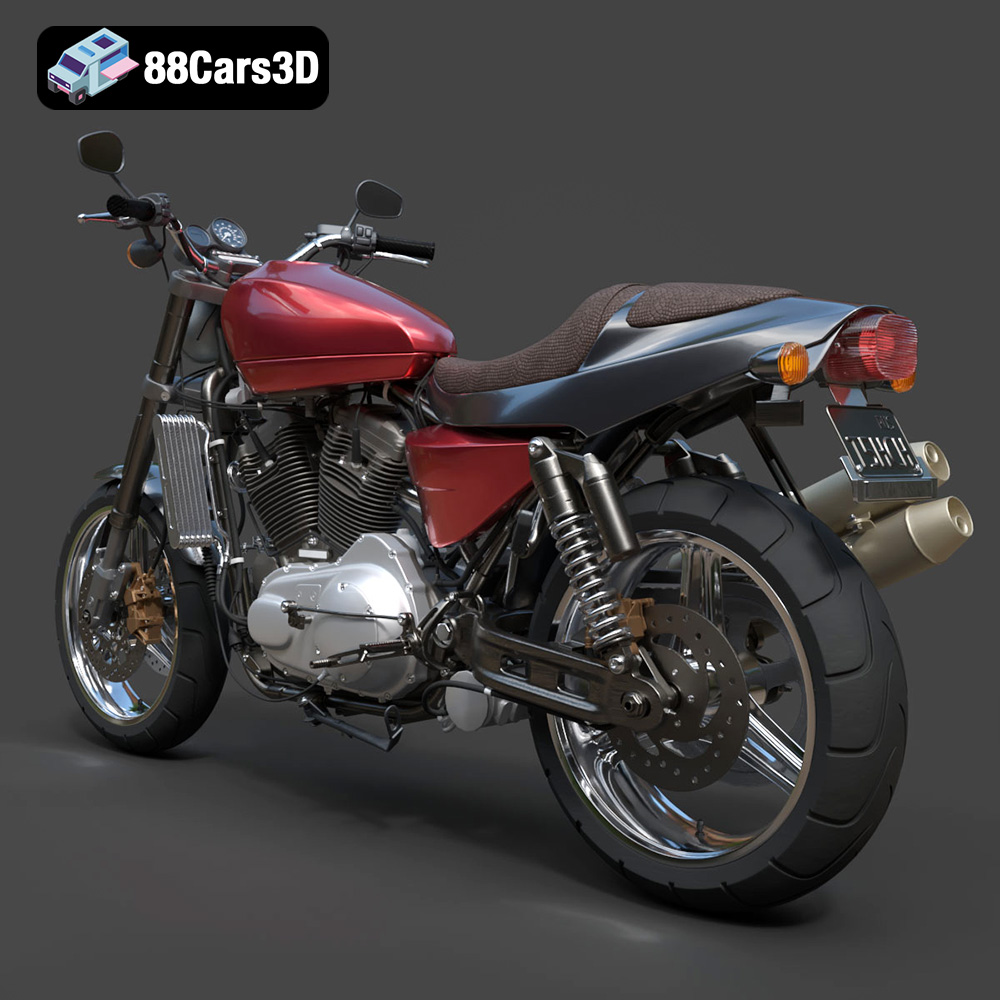
Today, we delve into the intricate world of advanced 3D modeling through the lens of a truly iconic machine: the **Harley-Davidson XR1200X 3D Model**. This particular model, available on 88cars3d.com, is far more than just a digital representation; it’s a masterclass in capturing the spirit and engineering prowess of a performance-focused legend. Inspired by Harley-Davidson’s storied XR750 flat-track racing heritage, the XR1200X was engineered for exhilaration, featuring a blacked-out Evolution V-Twin engine, upgraded Showa suspension, and an aggressive dirt-tracker aesthetic. This 3D model faithfully translates that ethos into a digital asset, built for maximum visual fidelity in even the most demanding professional workflows.
Creating a truly accurate and visually compelling 3D model of a vehicle, especially one with the complex mechanical features and rich history of a Harley-Davidson, requires a blend of artistic skill and technical understanding. It’s about translating real-world physics, material properties, and design philosophy into a digital canvas.
The journey from a physical vehicle to a high-fidelity 3D model begins with meticulous research. This involves studying blueprints, photographic references, and often, direct measurement of the actual vehicle. Every curve, every bolt, every weld line must be considered. For a model like the Harley-Davidson XR1200X, this level of scrutiny is applied to its distinctive flat-track style tail section, wide handlebars, and the intricate cooling fins of its 1200cc Evolution V-Twin engine. The challenge lies not just in replicating the overall shape, but in capturing the subtle nuances that give a vehicle its character. This demands a high-polygon approach, where geometric detail is paramount, ensuring that even extreme close-ups reveal no loss of authenticity.
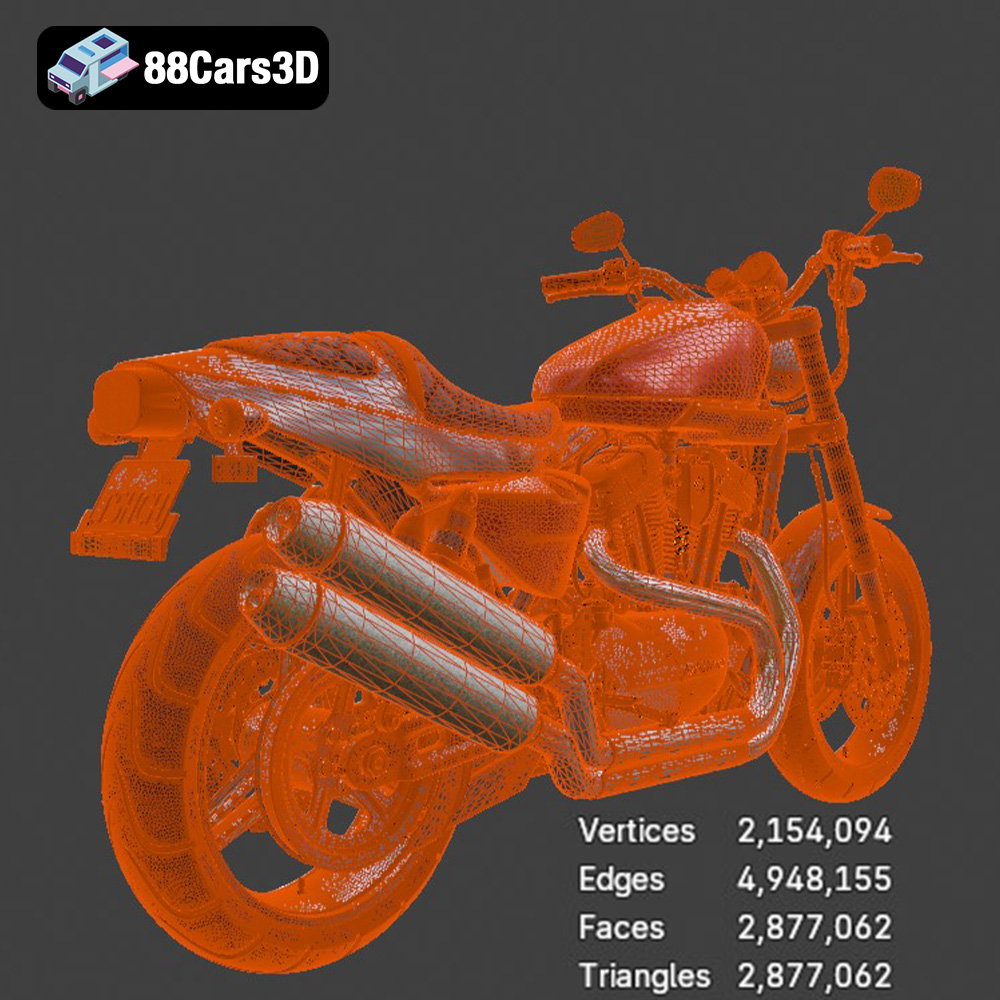
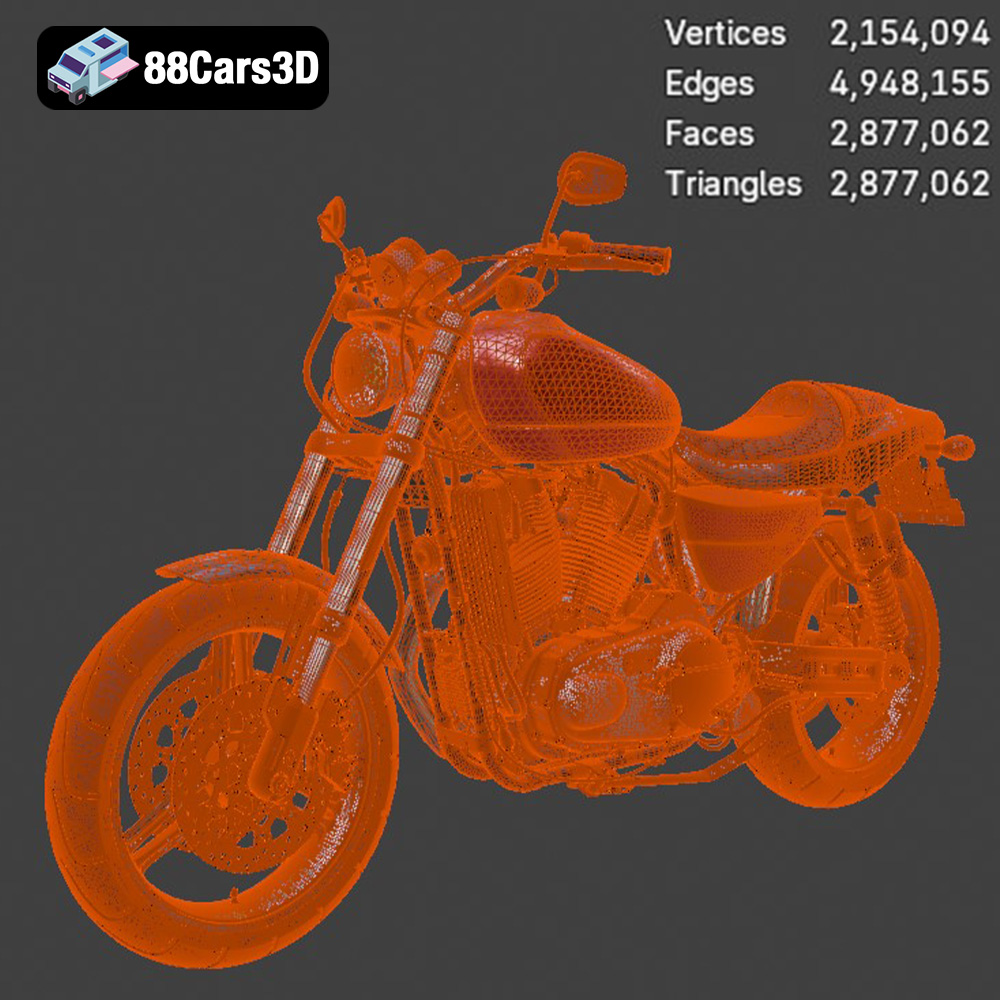
The **Harley-Davidson XR1200X 3D Model** exemplifies this commitment to detail. With nearly 2.9 million triangles, it falls into the category of an “ultra-high-poly hero asset.” This immense polygon count is strategically utilized to replicate features that would otherwise be lost in lower-detail models. Consider the fully adjustable piggyback rear shocks, the dual front disc brakes with detailed Nissin calipers and braided lines, or the signature upswept exhaust system – each component is geometrically accurate, built with an uncompromising topology. This level of detail isn’t just for show; it’s crucial for achieving photorealistic renders, where light interacts with every surface, curvature, and edge with true-to-life accuracy, essential for professional automotive rendering and cinematic visualization.
The world of 3D modeling is vast, and a critical aspect of working with digital assets is understanding the various file formats available. Each format serves a specific purpose, offering different levels of functionality, compatibility, and optimization for various applications. The **Harley-Davidson XR1200X 3D Model** is provided in a comprehensive suite of formats, ensuring its versatility across a wide range of professional workflows. Knowing when and why to use each one is key to efficient project management.
When you acquire a 3D model in its native software format, you gain maximum flexibility and editable control.
.blend: This is Blender’s native file format. It’s a powerhouse, storing not just the mesh data, but also materials, textures, lighting setups, cameras, animation data, and even the complete scene hierarchy. For artists working primarily in Blender, or those who wish to delve deep into the model’s construction, materials, and potential rigging, the .blend file for the Harley-Davidson XR1200X is invaluable. It allows for full customization, scene integration, and leverages Blender’s powerful rendering engines like Cycles and Eevee. This is often the starting point for modifications or complex animations within a Blender pipeline.
.max: As the native file format for Autodesk 3ds Max, .max files offer similar comprehensive scene data as .blend files, but within the 3ds Max environment. This includes geometries, materials (often V-Ray or Corona specific), textures, cameras, lighting, and animation tracks. For professionals entrenched in 3ds Max for architectural visualization, product rendering, or cinematic sequences, the .max file provides direct access to the model’s full setup, allowing for immediate integration into existing scenes, rendering with preferred engines, and leveraging 3ds Max’s robust modeling and animation toolsets. The Harley-Davidson XR1200X’s .max file would contain its full high-poly detail, ready for advanced rendering.
These formats are designed for broad compatibility across different 3D applications, acting as reliable bridges for asset transfer.
.fbx (Filmbox): Developed by Autodesk, FBX is arguably the most widely used interchange format in the 3D industry, particularly for game development and animation. It supports not only geometry but also materials, textures (though sometimes requiring manual re-linking), bone animations, and blend shapes. Its robust support for hierarchical data makes it excellent for exporting complex, articulated models like the Harley-Davidson XR1200X with its separate wheels, steering, and suspension components, directly into game engines like Unreal and Unity. While versatile, it’s often best paired with a native format if extensive modifications are needed.
.obj (Wavefront OBJ): This is one of the oldest and most universal 3D file formats. It’s highly compatible across virtually all 3D software and primarily focuses on storing geometric data (vertices, normals, texture coordinates, and faces). Materials are typically referenced in a separate .mtl file. While it doesn’t support animation or complex scene data, its simplicity makes it incredibly reliable for transferring clean mesh data. For the Harley-Davidson XR1200X, the .obj format ensures that its intricate geometry can be opened and worked on in almost any 3D package, making it a foundational choice for cross-software pipelines.
.glb (GL Transmission Format Binary): GLB is the binary version of glTF (Graphics Library Transmission Format), an open-standard format for 3D scenes and models. It’s specifically designed for efficient transmission and loading of 3D models in web applications, augmented reality (AR), virtual reality (VR), and other real-time environments. A .glb file packages everything into a single file: geometry, materials, textures, and even animations. Its optimization for lightweight, performant delivery makes it ideal for showcasing the Harley-Davidson XR1200X in interactive web viewers or AR experiences, albeit often requiring some decimation due to its high poly count for real-time applications.
.ply (Polygon File Format): Also known as the Stanford Triangle Format, PLY is primarily used for storing 3D data from 3D scanners, supporting properties like color, transparency, and texture coordinates per vertex or face. It’s a precise mesh format often used in scientific, CAD, or analysis applications where raw geometric integrity and per-vertex data are critical. While less common for general artistic asset exchange, its inclusion for the Harley-Davidson XR1200X ensures maximum data fidelity for highly specialized technical pipelines or reverse engineering.
These formats cater to very specific end-use applications, optimizing for their respective domains.
.stl (Stereolithography): STL is the de facto standard format for 3D printing. It describes only the surface geometry of a 3D object using a tessellation of triangles. It contains no color, texture, or material information, focusing solely on manifold geometry necessary for physical fabrication. The Harley-Davidson XR1200X’s availability as an .stl file makes it an “absolutely incredible base” for highly detailed, large-scale custom resin prints, enabling motorcycle hobbyists and model makers to bring the digital model into the physical world. This format is crucial for manufacturing workflows.
.unreal: While not a standalone file format in the same vein as .fbx or .obj, “unreal” typically refers to an asset that has been specifically prepared and optimized for direct import into Unreal Engine, often as an FBX or a series of assets within an Unreal project structure. This implies that materials might be set up using Unreal’s physically based rendering (PBR) pipeline, and possibly includes LODs (Levels of Detail) or collision meshes, making it an engine-ready asset. For the ultra-high-poly Harley-Davidson XR1200X, an “unreal” package would mean it’s been processed, though likely still needing optimization (retopology, baking) for efficient use as a drivable vehicle due to its initial ~2.87M polycount, but ready for cinematic quality renders within the engine.
This comprehensive selection of formats for the Harley-Davidson XR1200X 3D Model underscores its versatility, allowing professionals across different industries to integrate this high-quality asset into their preferred software and workflows seamlessly.
The ultimate goal for many 3D artists, especially in automotive design and advertising, is to create images so realistic they are indistinguishable from photographs. The **Harley-Davidson XR1200X 3D Model** is tailor-made for this pursuit, offering the geometric fidelity required for breathtaking photorealism.
Achieving photorealism is a combination of exceptional model detail, realistic materials, and sophisticated lighting. In software like 3ds Max and Blender, artists can construct virtual photo studios.
The ultra-high poly count of the Harley-Davidson XR1200X means that these sophisticated lighting and material setups have ample geometric data to interact with, resulting in rich, deep reflections and accurate shadow casting that truly sell the realism.
Beyond static images, 3D models are indispensable for creating cinematic sequences. Imagine the XR1200X carving through a winding canyon road or showcasing its powerful engine in a dramatic slow-motion shot. The model’s separate wheels, steering components, and suspension are explicitly designed for animation, allowing for realistic motion. Animators can rig the model to articulate naturally, capturing the dynamic lean of a motorcycle, the compression of its Showa Big Piston front forks, or the precise rotation of its wheels. The extreme detail ensures that even in close-up, slow-motion shots, the bike holds up to scrutiny, making it perfect for pre-rendered cinematic sequences in commercials, films, or high-end product visualizations.
A polygon count of nearly 2.9 million triangles, as seen in this **Harley-Davidson XR1200X 3D Model**, signifies a commitment to uncompromised geometric accuracy. This level of detail eliminates the need for complex normal mapping tricks to simulate surface variations, instead providing genuine displacement and intricate edge flow. This is particularly advantageous for:
This makes the XR1200X a true “hero asset,” one that can stand at the forefront of any visual project without compromise.
While rendering brings digital models to life on screen, 3D printing offers a different kind of tangibility. It allows enthusiasts and professionals to transform virtual assets into physical objects, creating custom collectibles, prototypes, or detailed scale models. The **Harley-Davidson XR1200X 3D Model** is not only optimized for rendering but also stands out as an exceptional candidate for high-quality 3D printing, specifically designed with the .stl format in mind.
3D printing requires models to be “manifold,” meaning they must be solid and watertight, with no gaps or intersecting geometry. The integrity of the mesh in a high-quality 3D model like the XR1200X is crucial for successful 3D printing. The raw detail, including every engine fin, suspension spring, and the intricate dual front disc brakes, translates directly into a physical representation. When exporting to STL, the software converts the complex mesh into a triangulated surface, maintaining geometric accuracy. This process ensures that the printer has a precise blueprint to follow, layer by layer. The precision built into the digital model directly impacts the fidelity of the final physical print, making the XR1200X an ideal base for collectors and model makers seeking unparalleled accuracy.
To truly leverage the detail of the Harley-Davidson XR1200X 3D model for physical production, specific printing settings are recommended:
The ability to 3D print the **Harley-Davidson XR1200X 3D Model** opens up a world of possibilities for custom collectibles and prototyping. Hobbyists can create bespoke display pieces, perhaps depicting the bike in a specific racing livery, or even designing custom accessories to fit the precise digital model before printing. Designers can use it as a high-fidelity prototype for custom parts or modifications, testing fit and aesthetic before committing to expensive manufacturing processes. This bridge from digital to physical makes the asset from 88cars3d.com exceptionally valuable, transforming a virtual asset into a tangible work of art.
Modern game engines and interactive platforms demand visually stunning assets that also run efficiently in real-time. While the **Harley-Davidson XR1200X 3D Model** is a true “hero asset” built for cinematic detail, integrating such a high-poly model into game development or AR/VR requires strategic optimization.
Game engines like Unreal Engine thrive on efficiency. A model with nearly 2.9 million triangles, while perfect for pre-rendered cinematics, is generally too heavy for a drivable vehicle in an interactive, real-time environment where dozens, if not hundreds, of other assets and complex systems are simultaneously at play.
The workflow for optimizing the XR1200X for Unreal typically involves:
The provided “.unreal” file format suggests a level of preparation for this engine, but given the listed poly count, further manual optimization would be expected for a fully performant, drivable in-game asset. However, for static background elements, prop placement in virtual environments, or high-fidelity cutscenes rendered within the engine, the base high-poly model serves as an excellent foundation.
Let’s break down the essential steps for converting the detailed Harley-Davidson XR1200X into a game-ready asset using popular 3D software:
This rigorous process ensures that the aesthetic quality of the original high-detail **3D car models** is maintained while meeting the strict performance requirements of game engines.
Augmented Reality (AR) and Virtual Reality (VR) applications also benefit immensely from high-quality 3D assets. While real-time performance is still a concern, the Harley-Davidson XR1200X, even in its optimized forms, can significantly elevate the immersion. The .glb format, included with the model, is particularly optimized for AR/VR and web-based displays, allowing for interactive product showcases or virtual showroom experiences. Imagine placing a lifelike Harley-Davidson XR1200X in your living room via AR, or exploring every angle of its detailed Evolution V-Twin engine in a VR dealership experience. The foundational detail present in the original model ensures that even after optimization, the visual integrity remains, creating compelling and believable interactive experiences.
In the competitive landscape of 3D production, time is money, and quality is paramount. Sourcing pre-made, high-quality 3D assets can dramatically streamline workflows and elevate the final output of any project. This is precisely where platforms like 88cars3d.com provide immense value.
The **Harley-Davidson XR1200X 3D Model** is a prime example of the kind of precision and detail that sets professional assets apart. The “ultra-high-polygon topology” and “uncompromising geometric accuracy” aren’t marketing buzzwords; they represent countless hours of skilled modeling work. For a professional studio, replicating this level of detail from scratch for every project would be prohibitively expensive and time-consuming. Purchasing a ready-made asset like this from 88cars3d.com means acquiring a foundation that is already production-ready for high-end rendering and visualization. It means designers can focus on creative direction, lighting, and composition rather than getting bogged down in the intricacies of modeling every bolt and engine fin.
The comprehensive nature of the **Harley-Davidson XR1200X 3D Model**, including its array of file formats (.blend, .fbx, .obj, .glb, .stl, .ply, .unreal, .max), directly translates into an accelerated production pipeline. Whether you are:
Having access to professionally crafted **3D car models** saves weeks, if not months, of development time. It guarantees a baseline of quality that is difficult to achieve on a tight schedule, allowing teams to deliver superior results faster and more efficiently. 88cars3d.com curates these high-quality assets, ensuring that artists and developers have access to the best tools to realize their visions.
The world of 3D modeling continues to push the boundaries of visual fidelity and interactive experience. From breathtaking cinematic renders to intricate 3D prints and immersive game environments, the quality of your foundational assets dictates the success of your project. The **Harley-Davidson XR1200X 3D Model** stands as a testament to the power of meticulous digital craftsmanship, offering unparalleled detail and versatility for a wide array of professional applications.
Its ultra-high-polygon count and careful attention to the legendary XR1200X’s performance-focused design make it an ideal hero asset for demanding automotive rendering, cinematic visualization, and high-resolution 3D printing. Furthermore, with its comprehensive suite of file formats, including .blend, .fbx, .obj, .glb, .stl, .ply, .unreal, and .max, it provides the flexibility needed to integrate seamlessly into diverse workflows, whether you’re working in Blender, 3ds Max, Unreal Engine, or preparing for physical fabrication.
For professionals seeking to elevate their projects with truly exceptional **3D car models**, investing in assets of this caliber from trusted marketplaces like 88cars3d.com is a smart strategic move. It’s about acquiring not just a model, but a robust foundation for creativity, efficiency, and uncompromising visual excellence. Whether you’re a seasoned pro or an ambitious hobbyist, the Harley-Davidson XR1200X 3D Model offers the detail and versatility to bring your digital and physical visions to life.
The Harley-Davidson XR1200X 3D Model is an ultra-high-detail digital recreation of the American brand’s legendary performance-focused Sportster. Deeply inspired by Harley-Davidson’s dominant XR750 flat-track racing heritage, the XR1200X was built for handling and speed, featuring a blacked-out Evolution V-Twin engine, upgraded Showa suspension, and aggressive dirt-tracker styling. This 3D model meticulously captures the sport-tuned geometry of the original bike, featuring the distinctive flat-track style tail section, wide handlebars, dual front disc brakes, fully adjustable piggyback rear shocks, and the signature upswept exhaust system. Built with an uncompromising, ultra-high-polygon topology (nearly 2.9 million triangles), it delivers absolute photorealism and maximum visual fidelity for extreme close-up studio rendering, cinematic automotive visualization, and high-end 3D printing. Perfect for flat-track racing scenes, dynamic canyon-carving renders, premium automotive galleries, and cinematic productions.
$9.99
.blend
.fbx
.obj
.rendering
.stl
.xr1200x
2m-polygons
3d printing
evolution-engine
flat-tracker
harley-davidson
hero-asset
high poly
motorcycle-3d-model
sportster
xr1200