Get 50% OFF All Premium 3D & STL Models!

“`html
The world of 3D printing offers incredible possibilities, from creating intricate prototypes to bringing your favorite car models to life. However, a successful print hinges on a crucial first step: ensuring your STL file is error-free. STL files, the backbone of 3D printing, can often contain hidden imperfections that lead to print failures, wasted filament, and frustration. This comprehensive guide will equip you with the knowledge and techniques to identify and repair common STL file errors, ensuring your 3D prints are flawless every time. Whether you’re a seasoned maker or just starting your 3D printing journey, mastering STL file repair is an essential skill. We’ll delve into the structure of STL files, explore common error types, and provide step-by-step solutions using popular software tools. Get ready to unlock the full potential of your 3D printer and create stunning, accurate prints from platforms like 88cars3d.com.
The STL (Stereolithography) file format is the de facto standard for 3D printing. It represents the surface geometry of a 3D object as a collection of triangles. While seemingly simple, this representation can be prone to errors if not handled carefully. Understanding the fundamental structure of an STL file is the first step in identifying and correcting potential problems.
An STL file describes the surface of a 3D model using a mesh of interconnected triangles. Each triangle is defined by three vertices (points in 3D space) and a normal vector (a vector perpendicular to the triangle’s surface, indicating its outward direction). The accuracy of the STL file directly impacts the final printed object. A higher triangle count generally results in a smoother surface, but it also increases file size and processing time. For car models, such as those available on 88cars3d.com, a balance between detail and file size is crucial.
STL files can be stored in two formats: ASCII and binary. ASCII STL files are human-readable, listing the coordinates of each vertex and the normal vector of each triangle as plain text. Binary STL files, on the other hand, store the same information in a more compact, machine-readable format. Binary STL files are generally smaller in size and faster to process, making them the preferred choice for most 3D printing applications. For large and complex models, the difference in file size and processing speed can be significant.
Several types of errors can plague STL files, each with its own set of consequences for the 3D printing process. Identifying these errors early is crucial to preventing print failures and ensuring the final product matches your design. Here, we’ll explore the most common error types and how they manifest in your prints.
Non-manifold geometry is perhaps the most common and problematic type of STL file error. It refers to situations where the mesh violates the basic rules of surface definition. Examples include edges shared by more than two triangles, zero-area faces, and faces that intersect themselves. Non-manifold geometry can cause slicing software to misinterpret the model, leading to unexpected holes, missing features, or even complete print failure. Imagine trying to print a closed container with a hole in the bottom – that’s the kind of problem non-manifold geometry can create.
Inverted normals occur when the normal vector of a triangle points inward instead of outward. This tells the slicer that the “inside” of the model is actually the “outside,” and vice versa. The result can be a hollow print, a print with missing walls, or a completely distorted shape. While some slicing software can attempt to automatically correct inverted normals, it’s always best to fix the problem at the source.
Holes and gaps in the mesh represent areas where the surface is incomplete. These can be caused by errors in the original 3D modeling process or by data corruption during file transfer. Small holes might be ignored by the slicer, but larger gaps can lead to missing sections in the print or structural weaknesses. Imagine printing a car model where the entire roof is missing; this is the kind of issue caused by significant holes.
Fortunately, a variety of software tools are available to help you identify and repair STL file errors. These tools range from free and open-source options to commercial packages with advanced features. Choosing the right tool depends on your needs and budget.
Meshmixer, a free software from Autodesk, is a popular choice for STL file repair. It offers a robust set of tools for analyzing and correcting mesh errors, including automatic repair functions, smoothing algorithms, and mesh editing capabilities. Meshmixer is particularly useful for fixing non-manifold geometry, filling holes, and optimizing the mesh for 3D printing. To repair an STL file in Meshmixer, import the file and use the “Analysis” tool to identify errors. Then, use the “Make Solid” function to automatically repair the mesh. You can adjust the “Solid Type” and “Accuracy” settings to optimize the repair process. For example, setting the “Solid Type” to “Accurate” will prioritize geometric accuracy, while setting it to “Fast” will prioritize speed. Typical workflow involves importing the STL, navigating to `Analysis > Inspector`, then clicking “Auto Repair All”.
Netfabb Basic (also an Autodesk product, though sometimes requiring a license depending on your use case) is another powerful tool for STL file repair. It offers a comprehensive suite of features for analyzing, repairing, and optimizing STL files. Netfabb is known for its advanced mesh editing capabilities and its ability to handle complex models. To repair an STL file in Netfabb, import the file and use the “Repair” tool to identify and fix errors. Netfabb offers various repair options, including automatic repair, manual repair, and surface healing. The “Automatic Repair” function often handles most common issues effectively. If specific problems persist, use the “Manual Repair” tools for targeted fixes.
Blender, a free and open-source 3D creation suite, can also be used for STL file repair. While not specifically designed for this purpose, Blender offers a range of modeling tools that can be used to manually correct mesh errors. This requires a deeper understanding of 3D modeling principles but provides more control over the repair process. In Blender, after importing the STL file, use the “Edit Mode” to access the mesh data. Select problematic vertices, edges, or faces, and use tools like “Merge by Distance” to remove duplicate vertices, “Fill” to close holes, and “Recalculate Normals” to correct inverted normals. Blender’s flexibility makes it suitable for complex repairs but demands a steeper learning curve.
Let’s walk through a practical example of repairing an STL file using Meshmixer. This step-by-step guide will demonstrate how to identify and fix common errors, ensuring your model is ready for 3D printing.
First, launch Meshmixer and import the STL file you want to repair. Once the file is loaded, navigate to the “Analysis” section in the left-hand toolbar and select “Inspector.” Meshmixer will automatically analyze the mesh and highlight any errors in red, pink, or yellow. Red markers typically indicate non-manifold edges, pink markers indicate intersections, and yellow markers indicate small, potentially problematic faces. Carefully examine the model to understand the location and nature of each error. For a detailed car model, such as those found on 88cars3d.com, pay close attention to intricate areas like grills, lights, and thin body panels, as these are often prone to errors.
After identifying the errors, the easiest way to start is with Meshmixer’s automatic repair function. Go to `Edit > Make Solid`. This tool attempts to convert the surface mesh into a solid, watertight object by filling holes, stitching edges, and correcting non-manifold geometry. Experiment with the “Solid Type” settings, such as “Accurate,” “Smooth Precise,” or “Blocky.” “Accurate” preserves the original geometry as closely as possible but may result in a denser mesh. “Smooth Precise” smooths out the surface while maintaining accuracy. “Blocky” simplifies the geometry, which can be useful for low-resolution prints. Adjust the “Mesh Density” and “Accuracy” sliders to fine-tune the repair process. A higher mesh density will result in a more detailed repair but may increase file size. Clicking “Update” previews the repair before applying it. Then, click “Accept” to apply the changes.
If the automatic repair function doesn’t completely resolve all the errors, you may need to resort to manual repair techniques. Meshmixer offers a variety of tools for editing the mesh directly. The “Sculpt” tools can be used to smooth out rough areas or fill small gaps. The “Edit” tools allow you to select and manipulate individual vertices, edges, and faces. The “Erase & Fill” tool is particularly useful for closing holes and removing unwanted geometry. When performing manual repairs, zoom in close to the area you’re working on and use small, incremental adjustments to avoid introducing new errors. Remember to re-run the “Inspector” after each manual repair to ensure you’ve fixed the problem and haven’t created any new ones.
Repairing STL file errors is just one aspect of preparing your model for 3D printing. Optimizing the file can further improve print quality, reduce print time, and minimize the risk of print failures.
High triangle counts can lead to excessively large STL files and slow slicing times. While a higher triangle count generally results in a smoother surface, it’s often possible to reduce the triangle count without significantly impacting the visual quality of the print. Meshmixer’s “Reduce” tool allows you to simplify the mesh by merging adjacent triangles. Experiment with different reduction algorithms, such as “Edge Collapse” or “Vertex Count,” and adjust the “Target Reduction” percentage to control the level of simplification. Remember to preview the results carefully to ensure that the simplification doesn’t introduce any noticeable artifacts or loss of detail. A reduction of 20-30% is often a good starting point for most models.
For larger prints, hollowing out the model and using infill can significantly reduce material consumption and print time. Hollowing involves removing the interior volume of the model, leaving only a thin outer shell. Infill is a lattice-like structure that fills the interior of the model, providing support and rigidity. Slicing software typically provides options for hollowing and infill. Experiment with different infill patterns and densities to find the optimal balance between strength and material usage. Common infill patterns include “Grid,” “Honeycomb,” and “Gyroid.” A gyroid infill, while more complex to compute, often provides the best strength-to-weight ratio. For FDM printing, an infill density of 15-20% is often sufficient for most models. For resin printing, consider adding drain holes to allow the resin to escape after printing.
The orientation of the model on the print bed can have a significant impact on print quality and support structure requirements. Choose an orientation that minimizes the need for support structures, especially in areas where they would be difficult to remove. Overhanging features require support structures to prevent them from collapsing during printing. Slicing software can automatically generate support structures, but it’s often necessary to manually adjust their placement and density to optimize their effectiveness. Consider using support blockers to prevent supports from generating in areas where they are not needed. Also consider the layer lines and how they will appear on the final print. Orienting a model to minimize visible layer lines will improve the overall aesthetic appeal. For intricate car models from 88cars3d.com, carefully consider the orientation to preserve fine details and minimize support scarring.
Even after carefully repairing and optimizing your STL file, print failures can still occur. Here are some common print failures related to STL errors and how to troubleshoot them.
Missing layers or sections in the print can be caused by incomplete mesh data or errors in the slicing process. Double-check the STL file for holes or gaps in the mesh. Try re-slicing the model with different settings, such as a smaller layer height or a higher infill density. Also, ensure that your 3D printer’s firmware is up to date, as outdated firmware can sometimes cause slicing errors.
Deformed or distorted shapes can be caused by non-manifold geometry or incorrect normal orientations. Re-examine the STL file for these types of errors and repair them using the techniques described earlier. Also, check your 3D printer’s calibration and ensure that the bed is level and the temperature is properly set. Warping can also be caused by poor bed adhesion. Applying a layer of adhesive, such as glue stick or hairspray, can improve bed adhesion and prevent warping.
Weak or brittle prints can be caused by insufficient infill, poor layer adhesion, or incorrect material settings. Increase the infill density to provide more support for the model. Ensure that your 3D printer’s temperature settings are appropriate for the material you’re using. Increase the printing temperature to improve layer adhesion. Also, check the expiration date of your filament, as old or improperly stored filament can become brittle and lead to weak prints.
Repairing and optimizing STL files is a crucial step in ensuring successful 3D prints. By understanding the structure of STL files, identifying common error types, and mastering the techniques described in this guide, you can significantly improve the quality and reliability of your prints. Remember to use the right software tools, such as Meshmixer, Netfabb, or Blender, and to carefully analyze and repair any errors before sending your model to the printer. For those seeking high-quality, print-ready STL files, platforms like 88cars3d.com offer a wide selection of meticulously designed models. Take the time to prepare your files properly, and you’ll be rewarded with stunning, accurate 3D prints every time. As a next step, consider experimenting with different software and repair techniques to find what works best for you and your specific 3D printing setup. Happy printing!
“`
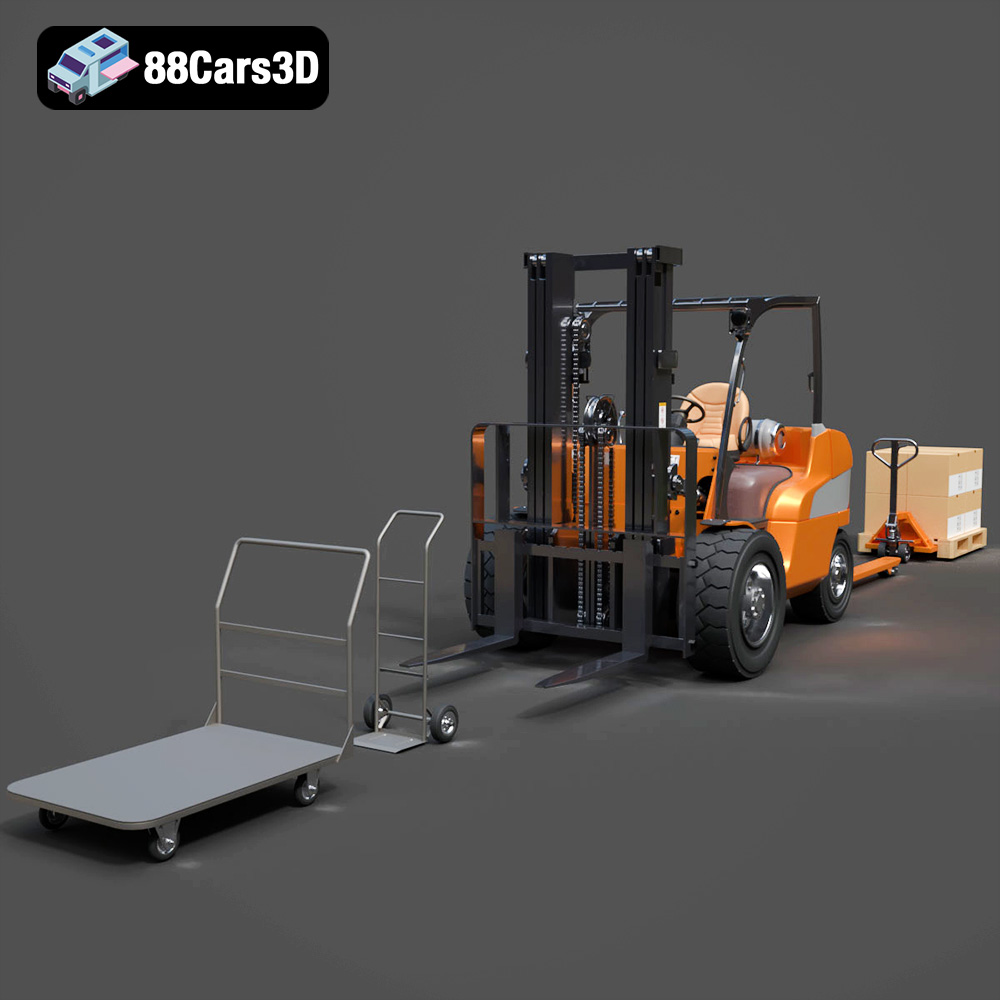
Texture: Yes | Material: Yes Download the highly detailed CAT Manual Loader & Warehouse Carts Kit 3D Model (2.4M Triangles). Features a macro-detailed hydraulic pallet jack, heavy-duty forks, and transport carts. Perfect for industrial ArchViz, factory rendering, and logistics simulations. Includes .blend, .fbx, .obj, .glb, .stl, and .max formats.
Price: $19.99

Texture: Yes | Material: Yes
Download the highly optimized Mazda CX-5 2014 3D Model (294k Triangles). Features the dynamic Kodo design language, signature grille, and a clean interior. Perfectly balanced for ArchViz, background traffic, and game development. Includes .blend, .fbx, .obj, .glb, .stl, and .max formats.
Price: $19.99
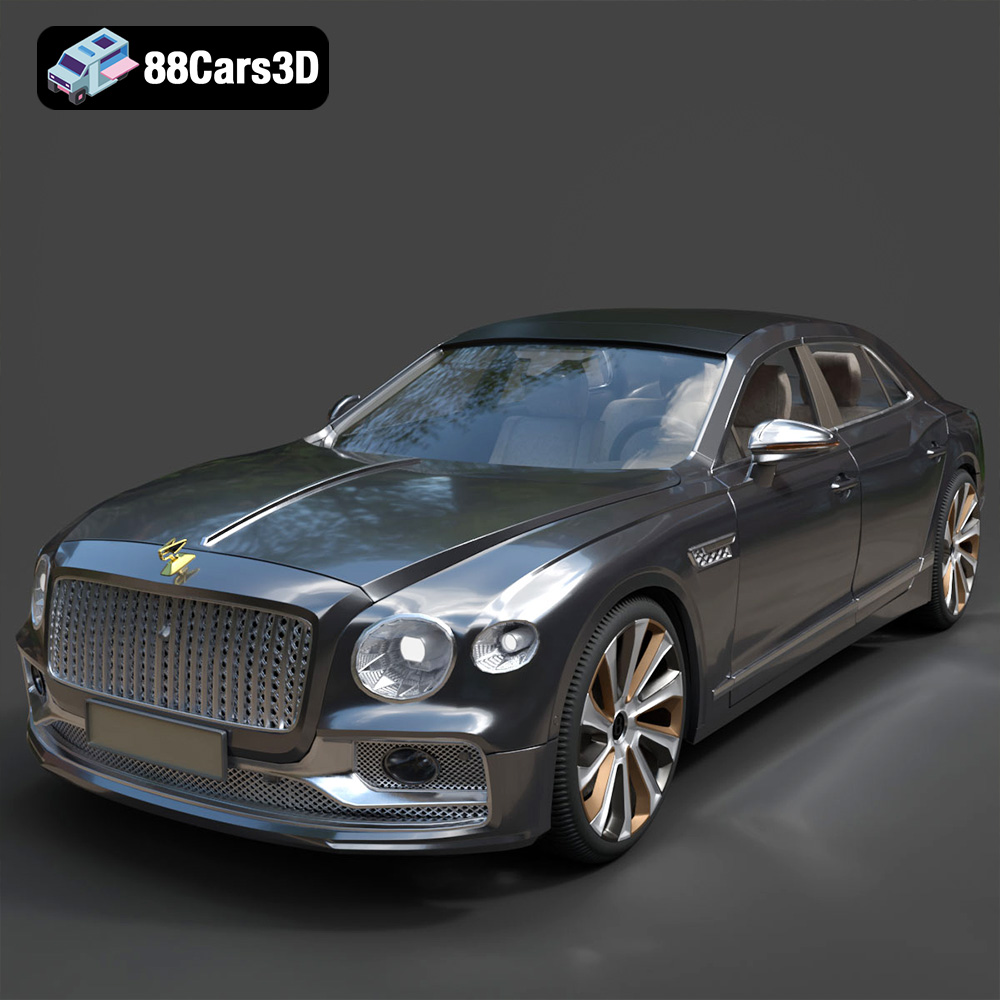
Texture: Yes | Material: Yes Download the ultra-high-detail Bentley Flying Spur Mulliner 2022 3D Model (2.94M Triangles). Features the bespoke Double Diamond grille, a fully modeled diamond-quilted interior, and exquisite luxury styling. Perfect for high-end ArchViz, VFX, and cinematic rendering. Includes .blend, .fbx, .obj, .glb, .stl, and .max formats.
Price: $19.90

Texture: Yes | Material: Yes | 3D Printable: Yes. Download the Ultimate Creators’ Showcase featuring 5 premium 3D models: Lamborghini Huracan, ZAV Concept Motorcycle, Sukhoi SU-26, Presidential Limousine, and Daewoo Damas. Optimized for 4K CGI rendering and 3D printing. Save massive with this exclusive multi-category bundle!
Price: $99.99

Texture: Yes | Material: Yes | 3D Printable: Yes. Download the Italian Thoroughbreds Bundle featuring 5 iconic 3D models: Lamborghini Huracán Performante, Ferrari 458 Italia, Lamborghini Urus, Diablo SV, and Maserati GT. Optimized for 4K rendering and 3D printing (STL included). Save 50% with this ultimate Italian vehicle collection.
Price: $199.99

Download the Elite Future Mobility Bundle featuring 4 highly optimized 3D models: Tesla Model S, Avatr 11, Li L9, and Zoox Robotaxi. Perfect for ArchViz, Smart City renders, and game dev. Optimized for Unreal Engine and Blender. Includes .fbx, .obj, and .max formats.
Price: $99

🚗 5 Iconic German Cars (BMW M4 G82, M5 CS, X3, 1 Series & Mercedes E-Class). ✅ Optimized for ArchViz: Ready for Corona & V-Ray. 💰 Save €71 with this limited-time collection! 🚀 Instant Download after purchase.
Price: $119

Download the Extreme Off-Road & Survival 3D Models Bundle! Includes the Brabus 800 Adventure, Dodge Ram Bigfoot, Spec Truck, and a Caravan. Save over €210 on this premium 4-in-1 off-grid vehicle pack for ArchViz and game development.
Price: $149.99

Download the Heavy Duty & Commercial Logistics 3D Models Bundle! Includes the Ford Sterling, Caterpillar CT680, Mercedes Citaro Bus, and Vito Van. Save over €130 on this massive, game-ready 4-in-1 industrial vehicle pack.
Price: $109.99

Download the Ultimate Custom Motorcycles 3D Models Bundle. Includes a Custom Chopper, Ducati 916 Café Fighter, Harley XR1200X, and BMW K100. Perfect premium props for luxury ArchViz garages. Save over €250 today!
Price: $159.99

