Get 50% OFF All Premium 3D & STL Models!

In the vast landscape of automotive history, few vehicles command the same respect and admiration as the Land Rover Defender 110. A true titan of off-road capability, its utilitarian design and go-anywhere spirit have made it an icon of adventure, exploration, and rugged dependability. From traversing the African savannah to navigating the most remote corners of the globe, the Defender 110 embodies a legacy of resilience.
Today, this legendary vehicle finds new life and purpose in the digital realm. For 3D artists, game developers, architectural visualizers, and product designers, a high-quality 3D car model of the Defender 110 isn’t just an asset; it’s a foundation for countless creative projects. Whether you’re crafting a breathtaking automotive rendering, developing immersive game assets, or even preparing for 3D printing, the precision and detail of such a model are paramount. That’s where a meticulously crafted asset like the Land Rover Defender 110 3D Model from 88cars3d.com truly shines. It’s not merely a static representation; it’s a dynamic tool engineered for performance across a spectrum of professional applications.
This comprehensive guide will delve into the technical advantages, diverse applications, and workflow integrations of a premium 3D vehicle model, using the Land Rover Defender 110 as our prime example. We’ll explore everything from file formats to professional software workflows, ensuring you understand how to leverage such an asset for maximum impact in your projects.
The choice of a 3D model file format is often as critical as the model itself, dictating compatibility, feature retention, and overall workflow efficiency. For professional 3D artists and developers, understanding the nuances of each format is essential. The Land Rover Defender 110 3D Model, for instance, is offered in a wide array of formats, each optimized for specific use cases and software environments.
The .blend format is Blender’s native file type, retaining all aspects of a Blender scene. This includes not just the mesh geometry, but also materials, textures, lighting, cameras, animations, physics simulations, and modifiers. When you download a .blend file, you’re getting a fully editable project, allowing for maximum flexibility. For the Defender 110, this means you can instantly dive into its original material setup, adjust shaders, modify the mesh with non-destructive modifiers, or even re-rig components within Blender’s powerful ecosystem. It’s ideal for users whose primary DCC (Digital Content Creation) tool is Blender, offering the most direct and uncompromised access to the model’s design.
.fbx (Filmbox) is arguably the most widely adopted format for exchanging 3D data between different software applications. Developed by Autodesk, it’s particularly well-suited for transferring models, animations, and skeletal data. Its strength lies in its ability to encapsulate complex scene information while maintaining robust compatibility across platforms like 3ds Max, Maya, Blender, Unreal Engine, and Unity. For the Defender 110, an .fbx file ensures that details like proper pivot points for steering and wheel rotation, as well as basic material assignments, are preserved when imported into game engines or other DCC software, making it an ideal choice for game assets and real-time pipelines.
The .obj (Wavefront OBJ) format is a fundamental and widely supported format primarily used for transferring geometric data – vertices, faces, UV coordinates, and normals. While it doesn’t typically store advanced material properties or animation data directly within the file (these are often referenced in an accompanying .mtl file), its universality makes it an invaluable format for cross-software compatibility. If you need a clean mesh of the Defender 110 for modeling, sculpting, or a custom material setup in virtually any 3D application, .obj is a reliable starting point.
.glb (GL Transmission Format Binary) is the binary version of glTF, a royalty-free specification for the efficient transmission and loading of 3D scenes and models by applications. It’s quickly becoming the “JPEG of 3D” due to its optimization for web-based, AR (Augmented Reality), and VR (Virtual Reality) experiences. A .glb file packages geometry, materials, textures, and animations into a single, compact file, making it perfect for quickly deploying the Defender 110 into interactive web viewers, AR apps on mobile devices, or lightweight VR environments where performance and quick loading are critical.
The .stl (STereoLithography) format is the standard for 3D printing. It represents a 3D model as a series of connected triangles (a triangulated surface mesh), defining only the surface geometry of a 3D object without color, texture, or other CAD attributes. Its simplicity makes it universally compatible with 3D printers and slicing software. When converting the Defender 110 3D Model to .stl, attention to manifold geometry (a watertight mesh without holes or self-intersecting faces) is crucial to ensure a successful physical print, transforming the digital asset into a tangible collectible or prototype.
.ply (Polygon File Format or Stanford Triangle Format) is another format for storing 3D data, particularly useful for scanned data, CAD, and scientific applications where precision and a variety of data types per vertex or face might be needed. While less common for general 3D asset exchange than .fbx or .obj, it can store properties like color, transparency, and normals directly within the mesh data. For certain engineering visualizations or precise geometric analysis of the Defender 110, .ply might be the format of choice.
The .unreal format signifies an asset specifically optimized for Unreal Engine. This often implies not just the raw mesh, but also properly configured materials, collision meshes, LODs (Levels of Detail), and potentially even basic blueprints or animation setups, all prepped to drop directly into an Unreal project. Having the Defender 110 available in this format dramatically accelerates game development and real-time visualization workflows by minimizing the integration effort, ensuring the model performs optimally within the engine’s rendering pipeline.
Similar to .blend for Blender, the .max format is Autodesk 3ds Max’s native file type. It preserves all scene information, including complex material setups, rigging, lighting, animation data, and modifier stacks. For professionals working in 3ds Max, this format offers the highest level of detail and editability for the Defender 110, enabling intricate scene composition, advanced rendering techniques, and comprehensive animation sequences without any data loss from conversion.
The availability of such a wide range of formats ensures that the Land Rover Defender 110 3D Model from 88cars3d.com can seamlessly integrate into virtually any professional pipeline, providing unparalleled flexibility for artists and developers.
Translating an automotive legend like the Land Rover Defender 110 into a high-fidelity 3D model requires meticulous attention to detail and a profound understanding of 3D modeling principles. It’s about capturing the essence of the vehicle while ensuring technical integrity for diverse applications.
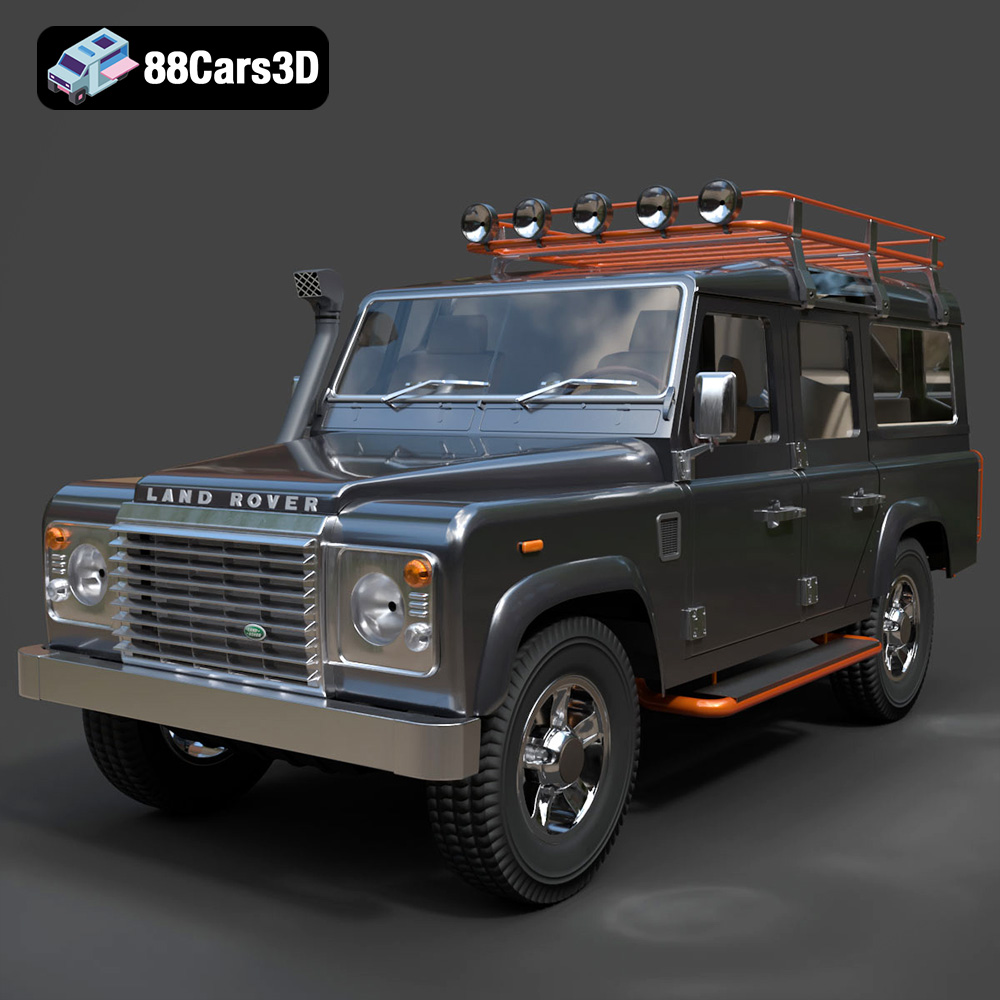
A truly professional 3D car model, especially one representing a vehicle with such a distinct presence, must meticulously replicate both its exterior and interior. The Defender 110 model captures its rugged aesthetic with precision:
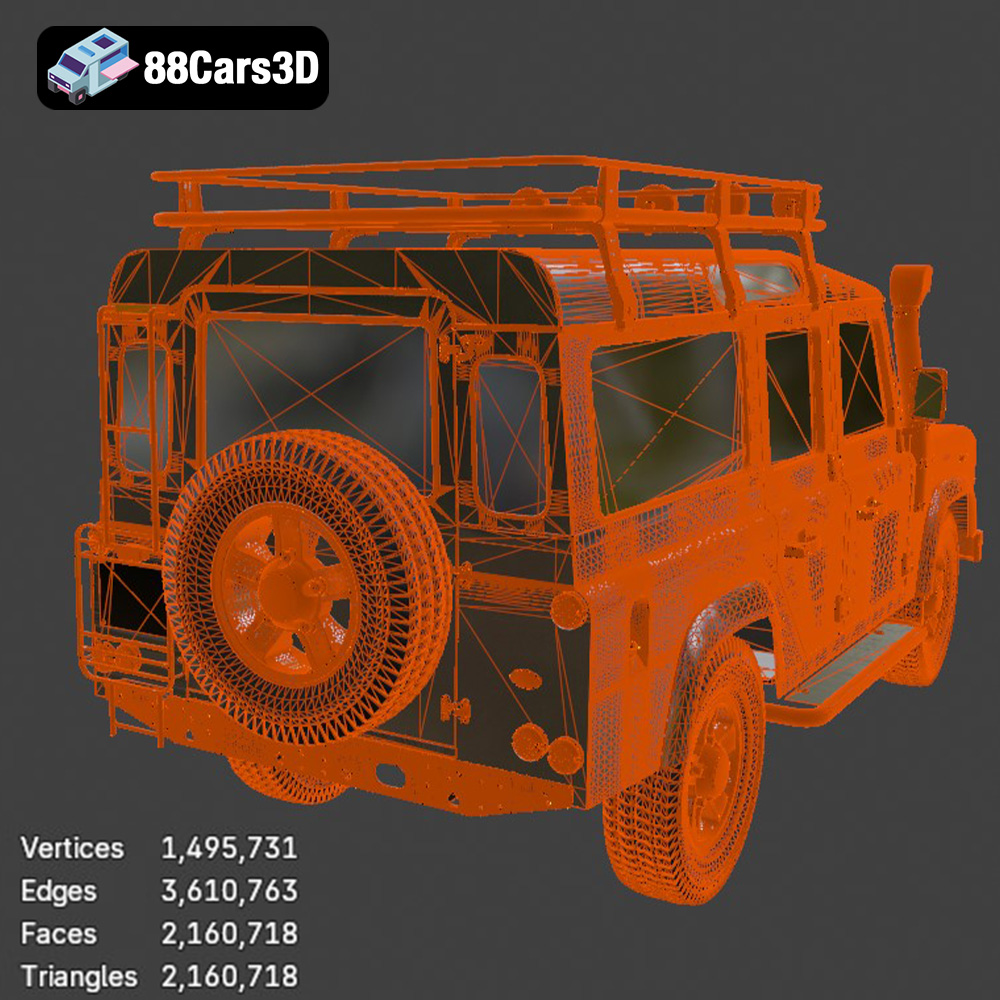
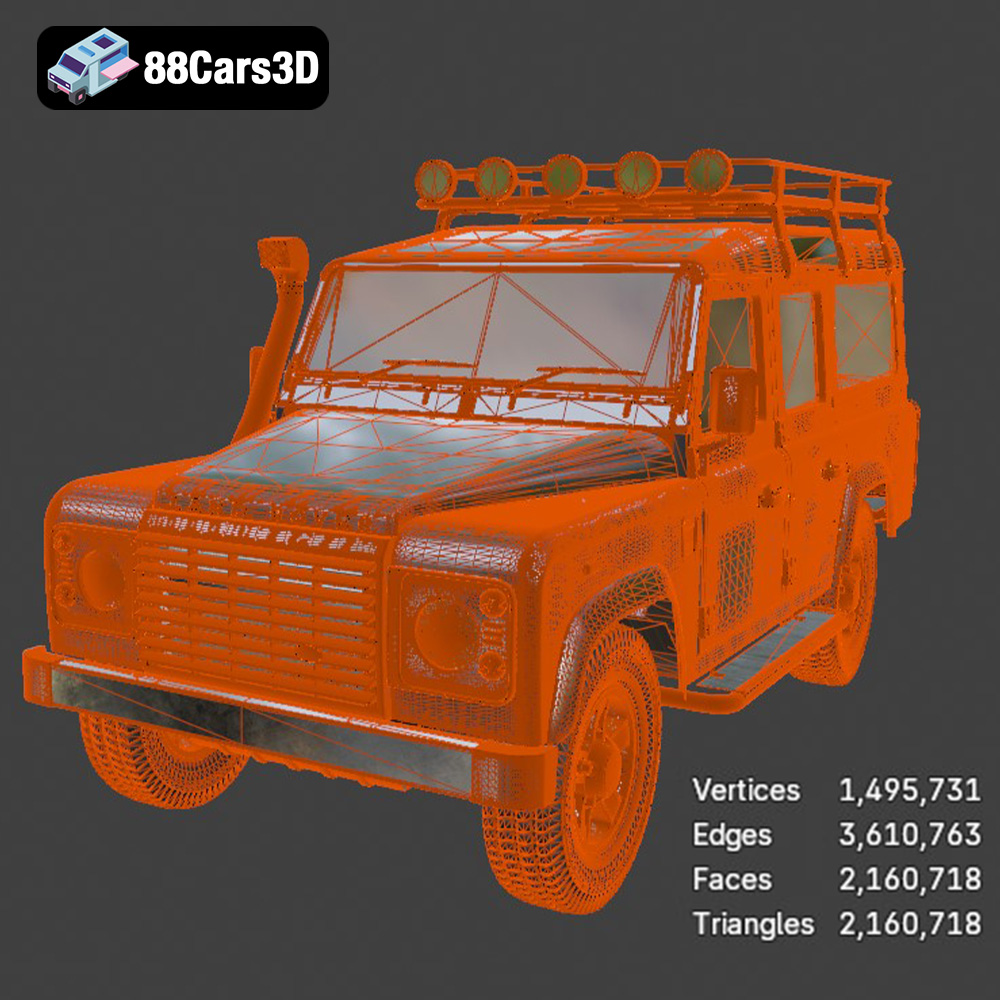
Beyond visual accuracy, the true mark of a quality 3D model lies in its underlying technical specifications and optimization for performance. The Land Rover Defender 110 3D Model is engineered with several key technical advantages:
A versatile 3D car model like the Land Rover Defender 110 is designed to seamlessly integrate into various professional workflows, becoming an indispensable asset for a multitude of creative and technical endeavors.
For high-end automotive rendering and visualization, the Defender 110 model provides a robust foundation. In software like 3ds Max or Blender, artists can take full advantage of the model’s clean geometry and detailed features. The .max and .blend formats offer complete editability, allowing for sophisticated material adjustments, advanced lighting setups, and intricate scene compositions. Artists can experiment with different environments—from dusty off-road trails to pristine studio backdrops—to achieve photorealistic results. The model’s separated components (wheels, steering) facilitate complex animations, such as suspension travel or detailed vehicle dynamics, bringing static renders to life for advertising, marketing campaigns, or cinematic productions.
Achieving breathtaking renders involves:
The Land Rover Defender 110 3D Model is an exceptional asset for creating engaging game assets. Its availability in .fbx and .unreal formats makes it perfectly suited for integration into engines like Unreal Engine and Unity. The optimized polygon flow is critical here, balancing visual fidelity with real-time performance requirements. Developers can implement Levels of Detail (LODs) to ensure the vehicle renders efficiently at varying distances, crucial for open-world exploration games or off-road simulators.
Integrating the model into a game engine involves:
The demand for realistic 3D content in AR/VR experiences and simulations is rapidly growing. The Defender 110 model, particularly in optimized formats like .glb, is ideal for creating immersive expedition simulations or interactive vehicle demonstrations. Its real-world scale and detailed features make it perfect for:
One of the most exciting applications for a high-quality 3D car model is transforming it from a digital asset into a tangible physical object through 3D printing. The Land Rover Defender 110 3D Model is provided in .stl format, making it ready for this fascinating process.
Converting a model for 3D printing isn’t always a straightforward click of a button; it requires careful consideration to ensure a successful print. The .stl format is the industry standard for this, representing the model as a watertight, manifold mesh of triangles. The model’s “clean and well-organized mesh structure” and “optimized polygon flow” are crucial here, as they contribute to a manifold geometry necessary for printing. Non-manifold edges or holes in the mesh can lead to print failures.
Key considerations for preparation include:
The success of a 3D print heavily relies on the correct print settings. The product description provides excellent guidance:
This process demonstrates how the Land Rover Defender 110 3D Model can bridge the gap between digital design and physical reality, offering a unique opportunity for enthusiasts and professionals alike to own a tangible piece of automotive history.
Acquiring a high-quality 3D car model like the Land Rover Defender 110 is just the beginning. Its true value lies in its adaptability and the creative freedom it offers. From bespoke modifications to ensuring peak performance, understanding how to customize and optimize your asset will unlock its full potential across all your projects.
The Land Rover Defender 110, with its legacy of customization for expeditions and utility, is a prime candidate for digital modifications. The model’s clean topology and separate components are designed for this flexibility:
These customization options allow the Land Rover Defender 110 3D Model to serve as a versatile base for an infinite number of creative expressions, ensuring it remains relevant and useful for many projects.
While customization adds aesthetic value, optimization ensures your 3D car model performs efficiently across various platforms, from high-end rendering engines to real-time game environments and AR/VR applications. This is where the technical advantages of the Defender 110 model, such as “optimized polygon flow” and “real-world scale accuracy,” become particularly important.
By understanding and applying these customization and optimization techniques, you can ensure that your investment in the Land Rover Defender 110 3D Model provides long-term value, adapting to the evolving demands of your professional projects.
The Land Rover Defender 110 stands as a monument to engineering and adventure, and its digital counterpart, a high-quality 3D car model, carries that legacy forward into the realm of digital creation. As we’ve explored, such a model is far more than just a visual asset; it’s a versatile tool meticulously crafted for a wide array of professional applications.
From captivating automotive rendering and immersive game development to precise 3D printing and dynamic AR/VR experiences, the Land Rover Defender 110 3D Model provides a foundation of unparalleled detail and technical excellence. Its clean topology, real-world scale, proper pivot setup for animation, and optimized polygon flow ensure seamless integration into diverse workflows, whether you’re working in 3ds Max, Blender, Unreal Engine, or preparing for a physical print.
The availability of multiple file formats—from .blend and .max for native DCC work, to .fbx and .unreal for game engines, and .stl for 3D printing—underscores its adaptability and readiness for any project. This comprehensive approach empowers artists and developers to not only visualize but also customize, animate, and even physically manifest this iconic vehicle with ease and precision.
For those seeking a premium, production-ready 3D car model that truly captures the spirit and technical integrity of this legendary off-roader, the Land Rover Defender 110 3D Model from 88cars3d.com represents an exceptional investment. It’s a testament to the fact that quality assets are the cornerstone of impactful digital creations, allowing you to conquer any digital terrain with confidence and creativity.
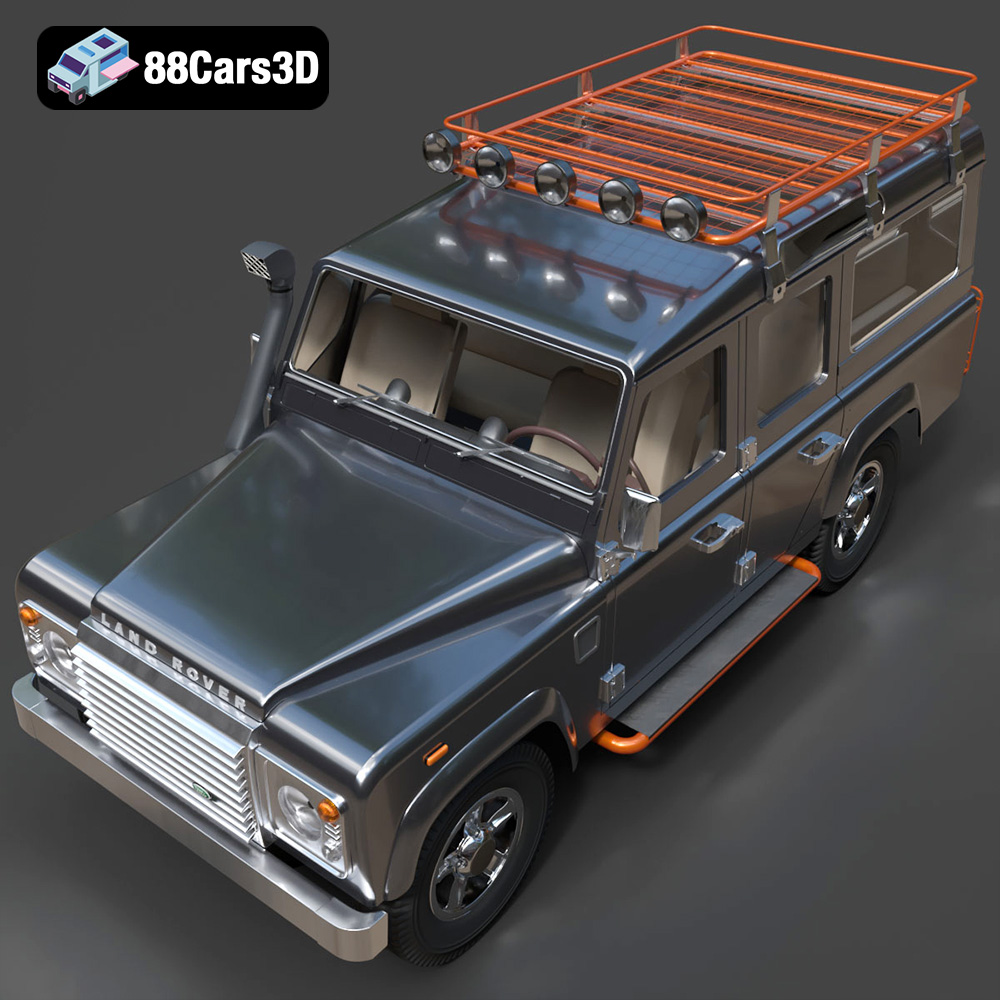
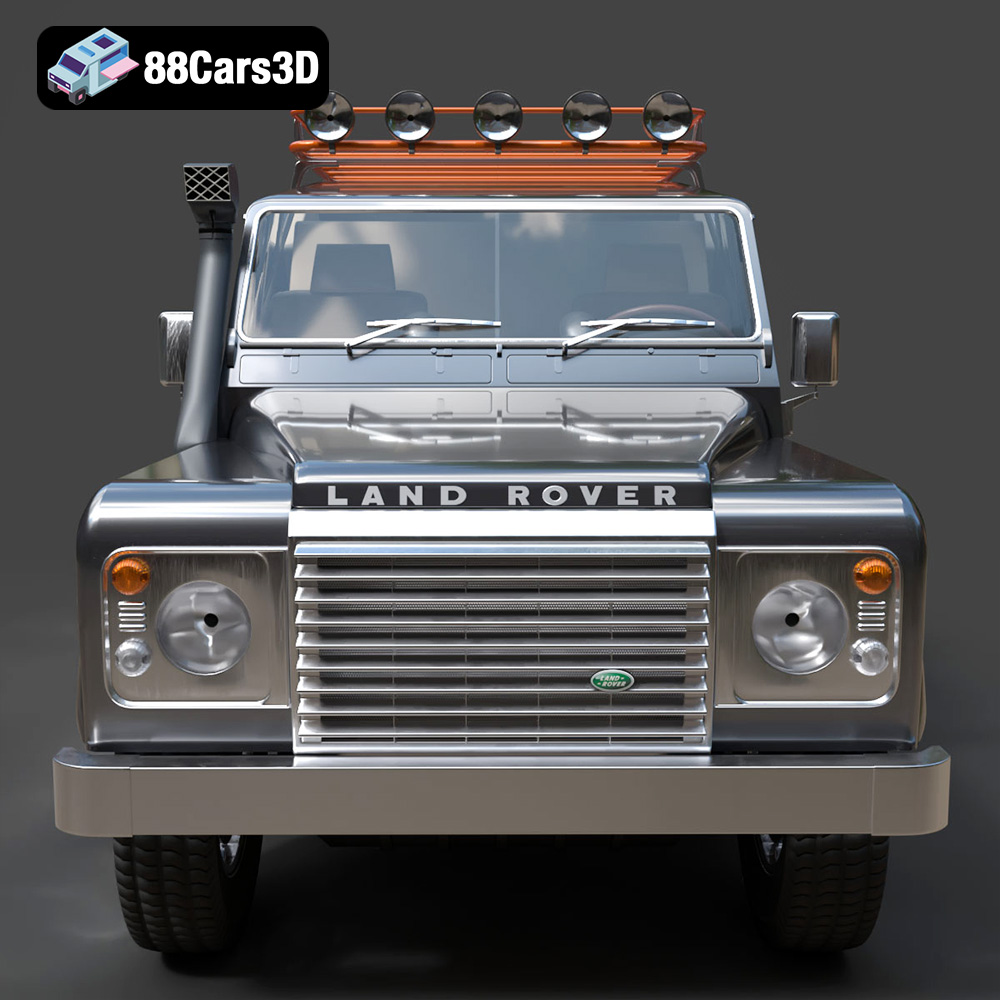
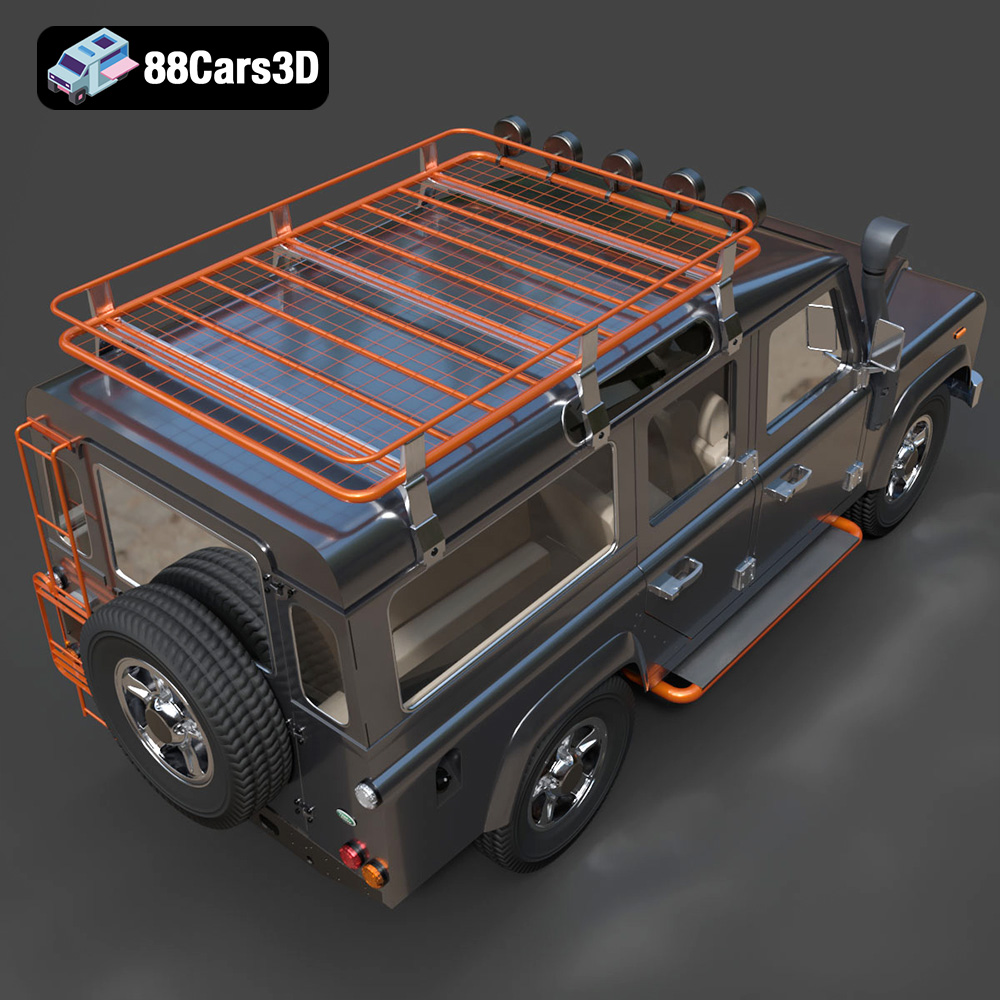
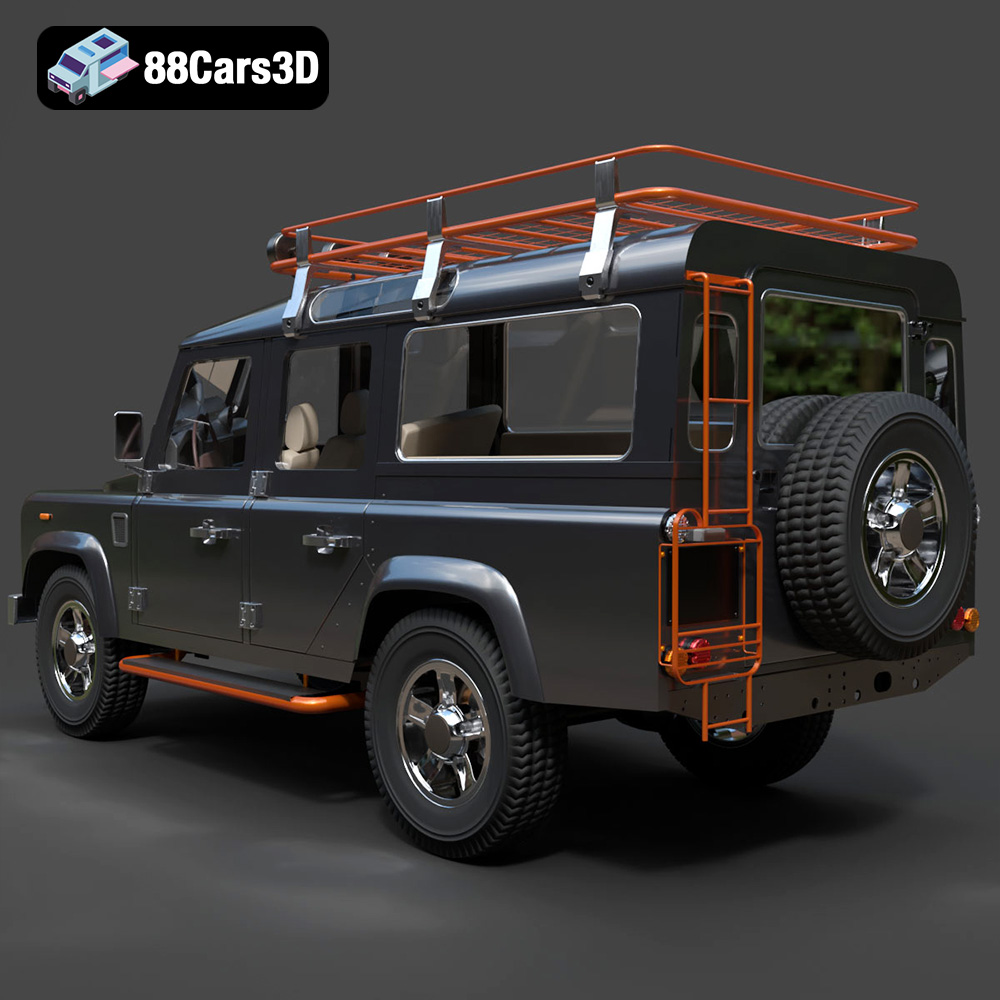
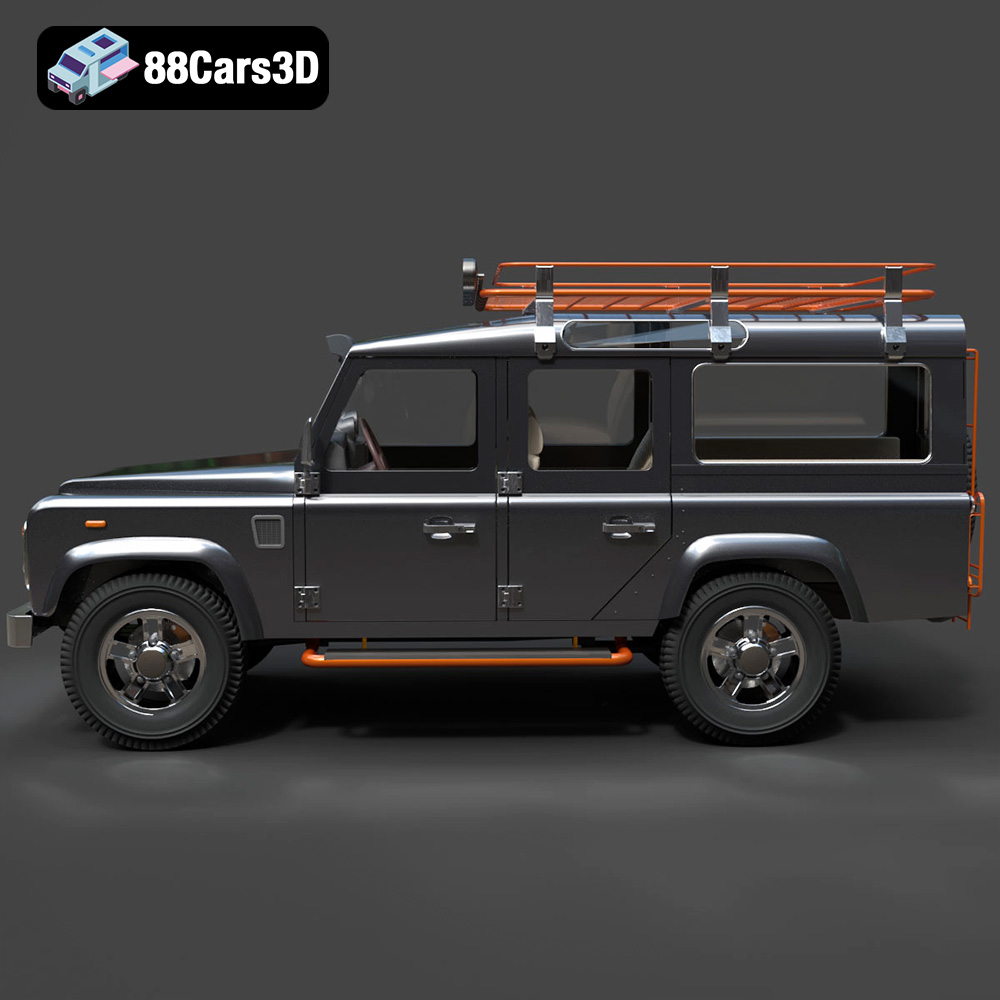
The Land Rover Defender 110 3D Model is a high-detail digital recreation of the legendary long-wheelbase off-road SUV known for its rugged durability, utilitarian design, and global expedition heritage. Built to conquer extreme terrains, the Defender 110 has become an icon of adventure, military service, agriculture, and exploration worldwide. This 3D model accurately captures the boxy body structure, flat hood design, signature front grille, round headlamps, reinforced bumpers, extended wheelbase proportions, roof configuration, exposed hinges, and rear-mounted spare wheel. Designed with clean topology and real-world scale accuracy, it is ideal for rendering, animation, simulation, game development, and AR/VR environments. Perfect for off-road trails, safari landscapes, military scenes, rural environments, expedition visuals, and cinematic productions. Includes .blend, .fbx, .obj, .glb, .stl, .ply, .unreal, and .max formats for rendering, simulation, AR/VR, game development, and 3D printing.
$9.99
.4×4
.arvr
.automotive
.blend
.car3dmodel
.defender110
.expeditionvehicle
.fbx
.gameasset
.glb
.landrover
.max
.obj
.offroadvehicle
.ply
.rendering
.simulation
.stl
.unreal
.utilityvehicle
SUV