Get 50% OFF All Premium 3D & STL Models!

Unreal Engine has revolutionized the landscape of real-time rendering, game development, and high-fidelity visualization, making it an indispensable tool for anyone working with 3D content. For automotive designers, visualization professionals, and game developers, Unreal Engine offers unparalleled opportunities to create stunning, interactive experiences with vehicles. From crafting breathtaking cinematic sequences to developing immersive automotive configurators and driving simulations, Unreal Engine’s powerful feature set, including Nanite, Lumen, and robust Blueprint scripting, transforms static 3D models into dynamic, living assets.
At 88cars3d.com, we understand the critical need for high-quality, optimized 3D car models that seamlessly integrate into Unreal Engine projects. Our marketplace provides assets meticulously prepared with clean topology, realistic PBR materials, and efficient UV mapping, ensuring that artists and developers can hit the ground running. This comprehensive guide delves into the essential workflows, best practices, and advanced techniques for leveraging Unreal Engine to its fullest potential in automotive visualization. Whether you’re a seasoned Unreal Engine developer or just starting, prepare to unlock the secrets to creating photorealistic vehicles and interactive automotive experiences that truly captivate your audience.
We’ll cover everything from initial project setup and efficient model import to crafting stunning materials, implementing real-time lighting, optimizing performance, and building interactive configurators. You’ll learn how to harness the engine’s cutting-edge features for unparalleled visual fidelity and discover strategies for deploying your automotive creations across various platforms, including virtual production setups and AR/VR applications. Let’s dive into the world where automotive design meets the power of Unreal Engine.
Embarking on any significant Unreal Engine project, especially one focused on high-fidelity automotive visualization, requires a meticulous foundation. Proper project setup and an efficient workflow for importing your 3D car models are crucial for ensuring optimal performance, scalability, and visual quality throughout the development cycle. Getting these initial steps right can save countless hours of troubleshooting later on, allowing you to focus on creative iteration rather than technical hurdles. Understanding the specific project configurations that benefit automotive applications, coupled with best practices for asset ingestion, is the first step toward achieving professional-grade results.
When starting a new Unreal Engine project for automotive visualization, selecting the correct template and enabling essential plugins are paramount. The “Games” category often provides suitable starting points, with “Blank” or “Third Person” being flexible options. However, for serious automotive work, consider the “Automotive Product Design” template if available, or manually configure a blank project for maximum control. Key settings in Project Settings (Edit > Project Settings) need attention. Under “Engine > Rendering,” ensure features like Hardware Ray Tracing (if using ray-traced reflections/shadows), Lumen Global Illumination, and Nanite are enabled. These form the backbone of modern, high-fidelity real-time rendering. For accurate color representation, set the “Default Post-processing Settings” to use ACES Tonemapper if your textures are authored in ACEScg or similar wide-gamut spaces. Additionally, explore the “Physics” settings to tune gravity and collision behaviors, which will be essential for realistic vehicle dynamics later. For more detailed insights into rendering features, consult the official Unreal Engine documentation.
The quality of your source 3D car models is a direct determinant of your final output. Platforms like 88cars3d.com offer 3D car models specifically optimized for Unreal Engine, typically provided in FBX or USD formats. When importing an FBX file (File > Import Into Level... or drag-and-drop into Content Browser), several options are critical. Always ensure “Static Mesh” is checked. For automotive models, “Combine Meshes” should generally be unchecked unless you intentionally want the entire vehicle as a single mesh (which is rare for detailed models). “Generate Missing Collision” can be useful for quick bounding box collisions, but for complex vehicle physics, custom collision meshes are superior. Material import options should be set to “Create New Materials” to let Unreal Engine generate placeholders based on the FBX data, which you’ll replace with PBR materials. Pay close attention to “Import Uniform Scale” – if your model was authored in a different unit scale, adjust this to ensure the car appears at a realistic size in Unreal Engine (e.g., 1 unit = 1cm is common for vehicles). After import, drag the static meshes into your level. Ensure their pivots are logically placed, typically at the center of the vehicle’s base, for easier manipulation.
Even high-quality models from marketplaces like 88cars3d.com benefit from initial optimization upon import. The first step involves verifying mesh integrity. Open each static mesh asset (double-click in Content Browser) and inspect its properties. Check the “Triangles” count – extremely high counts for individual components might warrant further optimization like decimation or Nanite (which we’ll cover later). Ensure “Build Adjacency Buffer” is enabled for efficient ray tracing. For non-Nanite meshes, simplify collision geometry. Instead of complex per-poly collisions, generate simple box or convex hull collision shapes. For parts like car bodies, a single complex convex hull or a combination of simple primitives often suffices, significantly reducing physics overhead. Rename your assets clearly and consistently (e.g., `SM_Car_Body`, `M_Tire`, `T_CarPaint_BaseColor`) to maintain a clean Content Browser, which is vital for large projects with numerous components and materials.
The true essence of photorealistic automotive visualization in Unreal Engine lies within its material system. Physically Based Rendering (PBR) materials are the cornerstone of achieving believable surfaces, accurately simulating how light interacts with different properties like metallic sheen, paint reflectivity, and rubber texture. Mastering the Material Editor is essential for transforming raw 3D models into stunning, lifelike vehicles. This section will guide you through the principles of PBR within Unreal Engine, demonstrating how to construct sophisticated car materials and employ advanced techniques for unparalleled visual fidelity.
PBR is a rendering approach that aims to simulate light as accurately as possible, based on real-world physics. In Unreal Engine, this translates primarily to the Base Color, Metallic, Specular, Roughness, and Normal inputs of the default Material. The Unreal Engine documentation provides in-depth explanations of these parameters.
Understanding the interplay of these parameters is crucial for achieving realistic car finishes. For instance, car paint is a dielectric material with a glossy clear coat, requiring a specific combination of base color, low roughness, and no metallic value. Chrome, on the other hand, is metallic with very low roughness.
Creating convincing car materials involves combining textures, parameters, and material functions within the Unreal Engine Material Editor. Let’s take car paint as an example. A typical car paint material might involve:
For tire materials, you’d use a combination of diffuse, normal, and roughness maps derived from sculpted details, often with subsurface scattering to simulate the slight transparency of rubber. Window glass requires a separate material using a translucent shading model, with appropriate tint, roughness, and refraction values. Utilizing Material Functions for common operations (e.g., dirt blending, tri-planar mapping) helps keep your material graphs organized and reusable, enhancing efficiency across multiple car models.
To push the realism further, advanced techniques like material layering and decals are indispensable. Material layering allows you to blend multiple material types on a single mesh, ideal for effects like dirt, grime, or wear and tear on a vehicle’s body. This can be achieved using vertex colors, texture masks, or even procedural masks generated through noise functions. For instance, you could blend a clean car paint material with a dusty, rough material based on a vertex color painted onto the mesh, representing areas prone to accumulating dirt. This approach offers significant flexibility and performance benefits over having separate meshes for every detail.
Decals are another powerful tool for adding specific details like logos, racing stripes, or temporary scuffs without modifying the base mesh or its UVs. Unreal Engine’s Deferred Decal actors project a material onto underlying geometry. You can create decal materials with opacity, normal, and roughness maps to realistically apply these details. For example, a sponsor logo on a racing car can be created as a decal material, projected onto the car body. This workflow is highly efficient for iterative design changes and adding dynamic elements without altering the underlying 3D car models. Ensure decals are set to project correctly and blend seamlessly with the underlying PBR materials for convincing results.
Lighting is the single most critical factor in achieving photorealism in any 3D scene, and automotive visualization in Unreal Engine is no exception. The right lighting setup can accentuate design details, highlight material properties, and evoke specific moods. Unreal Engine offers a sophisticated suite of lighting tools, from dynamic global illumination systems like Lumen to traditional static and stationary light sources. Mastering these tools, combined with strategic post-processing, is essential for creating compelling real-time automotive renders and interactive experiences.
Lumen is Unreal Engine’s default global illumination (GI) and reflections system, providing dynamic, real-time indirect lighting that reacts instantly to changes in light, geometry, and materials. For automotive visualization, Lumen is a game-changer. It accurately simulates light bouncing off the car’s surfaces and the environment, filling dark areas with bounced light and creating realistic ambient occlusion. To enable Lumen, navigate to Project Settings > Engine > Rendering > Global Illumination and Reflections and set them to “Lumen.” For optimal quality, also consider enabling Hardware Ray Tracing in Project Settings if your hardware supports it, as Lumen can leverage ray tracing for even more accurate bounces and reflections. This provides incredibly realistic reflections on glossy car paint and chrome, which are vital for showcase scenarios. Experiment with Lumen’s quality settings within your Post Process Volume (e.g., Lumen > Max Traces, Lumen > Global Illumination > Quality) to balance visual fidelity with performance, especially for real-time interactive applications. For detailed explanations of Lumen’s capabilities and optimization, refer to the official documentation.
While Lumen handles indirect lighting, direct light sources remain crucial.
Combining these light types effectively, along with Lumen, allows for nuanced and physically accurate illumination that showcases your 3D car models in the best possible light. Pay attention to light temperatures, intensities, and shadow sharpness to achieve the desired aesthetic.
Post-processing effects are the final layer of polish that can elevate a scene from good to outstanding. Applied via a Post Process Volume, these effects fine-tune the visual output, mimicking camera lenses and artistic grading techniques.
Experiment with these settings to achieve the perfect balance. Remember that less is often more; subtle post-processing enhances realism without making the scene look artificial. For interactive experiences, be mindful of the performance cost of certain effects, especially on lower-end hardware or for AR/VR applications.
Achieving photorealistic automotive visualizations in real-time demands a delicate balance between visual fidelity and performance. High-polygon car models, intricate PBR materials, and complex lighting can quickly strain even powerful hardware. Unreal Engine provides a robust set of tools, most notably Nanite and Level of Detail (LOD) systems, to manage complexity and ensure smooth frame rates across various platforms. Mastering these optimization techniques is critical for deploying high-quality interactive experiences, from desktop applications to mobile AR/VR and virtual production environments.
Nanite, Unreal Engine 5’s virtualized geometry system, is a revolutionary feature that allows artists to import and render incredibly detailed 3D assets with millions or even billions of polygons without significant performance loss. For automotive visualization, Nanite is a game-changer. You can import highly detailed CAD data or sculpted models directly, avoiding the painstaking process of manual retopology and normal map baking.
By leveraging Nanite, developers can focus more on artistic quality and less on mesh optimization, creating automotive assets with unprecedented visual fidelity. More on Nanite and its limitations can be found in the Unreal Engine documentation.
While Nanite handles detail for its enabled meshes, traditional Level of Detail (LOD) systems remain crucial for non-Nanite geometry and for optimizing overall scene performance. LODs are simplified versions of a mesh that are swapped in at different distances from the camera.
Proper LOD implementation ensures that performance is maintained even when multiple cars or complex environments are present, without sacrificing visual quality up close. When sourcing assets from marketplaces such as 88cars3d.com, inquire about included LODs or be prepared to generate them for non-Nanite components.
Beyond Nanite and LODs, several other strategies are vital for optimizing real-time automotive experiences:
A holistic approach to optimization, combining intelligent asset management with careful scene construction and profiling, is essential for delivering smooth, high-fidelity real-time automotive content.
The true power of Unreal Engine in automotive visualization extends beyond static renders to fully interactive and dynamic experiences. Imagine a customer configuring a car in real-time, changing paint colors, wheel designs, and interior trims with a click. Or experiencing a realistic test drive simulation. This level of interactivity and simulation transforms passive viewing into active engagement. Unreal Engine’s visual scripting system, Blueprint, combined with its physics engine and Niagara particle system, provides the tools to breathe life into your 3D car models.
Blueprint is Unreal Engine’s powerful node-based visual scripting system, allowing developers to create complex gameplay and interactive functionalities without writing a single line of code. For automotive configurators, Blueprint is indispensable.
With Blueprint, even complex configurators featuring hundreds of options can be developed efficiently, providing a highly engaging experience for potential customers or designers. Explore the UMG UI Designer and Blueprint nodes in the Unreal Engine documentation for more advanced techniques.
Simulating realistic vehicle dynamics is crucial for interactive driving experiences and game development. Unreal Engine offers robust physics capabilities, including specific vehicle components.
With careful setup and tuning, the Chaos Vehicle System can deliver highly convincing and immersive driving experiences, perfect for automotive training simulations, marketing demos, or even full-fledged racing games.
Niagara is Unreal Engine’s powerful and flexible particle system, capable of creating stunning visual effects (VFX) that enhance the realism and dynamism of your automotive scenes.
Niagara’s modular architecture allows artists to create highly customized and performant particle effects, providing that extra layer of polish that transforms a good automotive scene into a truly outstanding one. Integrating Niagara effects with Blueprint logic ensures they trigger and behave contextually within your interactive experiences.
Unreal Engine’s versatility extends far beyond traditional game development and real-time configurators. Its capabilities in virtual production, cinematic content creation, and augmented/virtual reality (AR/VR) are transforming how automotive brands showcase their products and how filmmakers create stunning visual content. These advanced applications leverage Unreal Engine’s real-time rendering prowess to offer unparalleled creative freedom and efficiency.
Sequencer is Unreal Engine’s multi-track non-linear editor, designed for creating high-quality cinematic sequences, animations, and gameplay events. For automotive marketing and design reviews, Sequencer is an incredibly powerful tool.
Sequencer empowers automotive brands to tell compelling stories about their vehicles, creating visually rich and emotionally engaging marketing content that would traditionally require extensive post-production in offline renderers. Many examples can be seen directly on the Unreal Engine learning portal.
Virtual production, particularly with large LED volumes (walls), has revolutionized filmmaking and high-end visualization. Unreal Engine acts as the real-time content engine driving these LED screens, creating immersive backgrounds that react dynamically to camera movement.
The synergy between physical elements and Unreal Engine’s real-time virtual worlds opens up unprecedented possibilities for dynamic and cost-effective automotive content creation.
Augmented Reality (AR) and Virtual Reality (VR) offer incredibly immersive ways to experience 3D car models, from interactive showrooms to design reviews. However, these platforms demand stringent performance optimization.
Delivering a compelling automotive experience in AR/VR requires a balanced approach to visual quality and strict adherence to performance budgets. By carefully optimizing assets and workflows, developers can create truly captivating and immersive automotive showcases.
Unreal Engine stands as an unparalleled platform for automotive visualization, offering a comprehensive suite of tools that empower artists and developers to create stunning, interactive, and high-fidelity experiences. From the initial meticulous project setup and the critical process of importing and optimizing 3D car models, to the artistry of crafting photorealistic PBR materials and mastering real-time lighting with Lumen and ray tracing, every step contributes to the final impact of your automotive showcase.
We’ve explored how cutting-edge technologies like Nanite virtualized geometry allow for unprecedented detail on complex vehicle models, while strategic LOD management ensures optimal performance across diverse hardware. Furthermore, the power of Blueprint scripting for interactive configurators, coupled with the realistic vehicle physics of the Chaos system and dynamic visual effects from Niagara, brings 3D car models to life in ways previously unimaginable. Finally, venturing into cinematic storytelling with Sequencer, the innovative world of virtual production with LED walls, and the immersive potential of AR/VR demonstrates the vast applications of Unreal Engine in the modern automotive industry.
The journey to mastering automotive visualization in Unreal Engine is continuous, but with the insights and workflows outlined in this guide, you are well-equipped to tackle ambitious projects. Remember that high-quality assets are the foundation of any great visualization, and marketplaces like 88cars3d.com provide a rich resource of meticulously crafted 3D car models ready for your Unreal Engine projects. By embracing these techniques and continuously exploring Unreal Engine’s evolving capabilities, you can push the boundaries of real-time rendering and deliver automotive experiences that truly stand out. Now, go forth and create the next generation of stunning virtual vehicles!
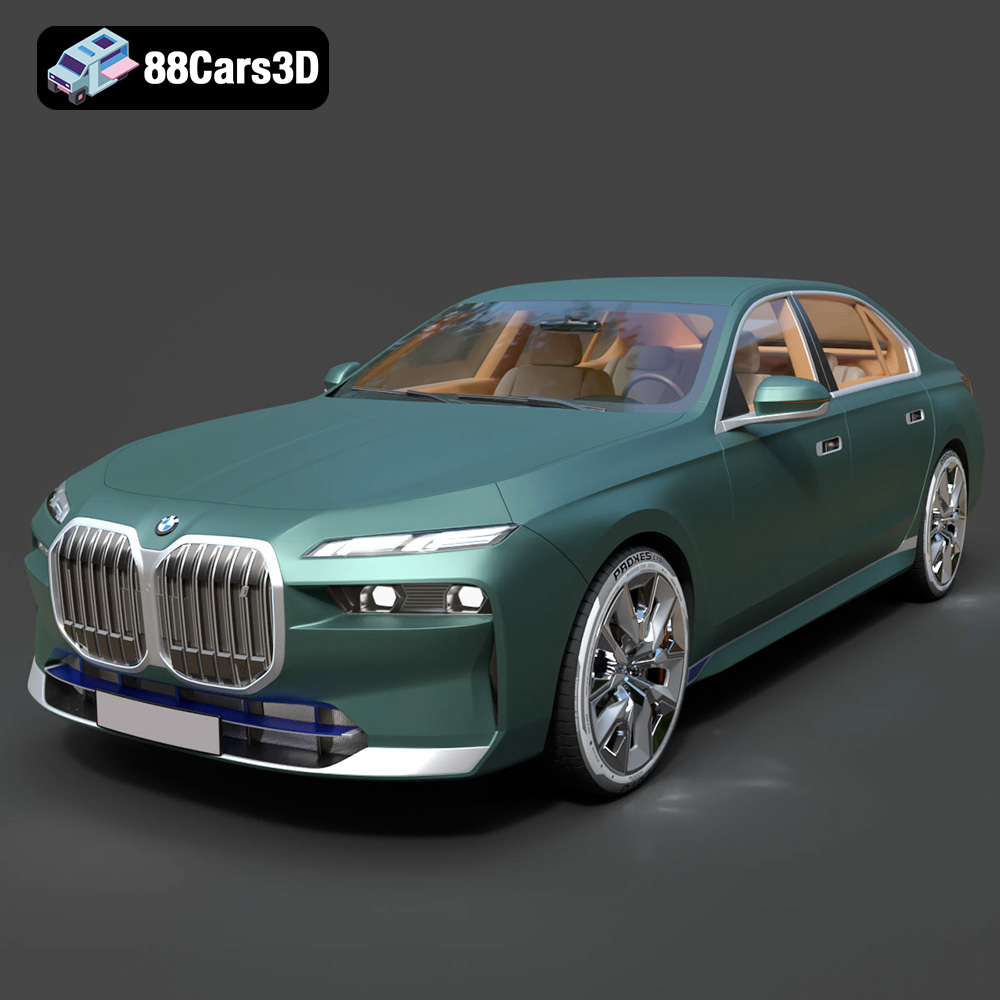
Texture: Yes | Material: Yes Download the ultra-high-detail BMW i7 (2023) 3D Model (4.14M Triangles). Features the illuminated kidney grille, split crystal headlights, fully modeled Theatre Screen interior, and monolithic luxury styling. Perfect for ArchViz, VFX, and cinematic rendering. Includes .blend, .fbx, .obj, .glb, .stl, and .max formats.
Price: $19.99
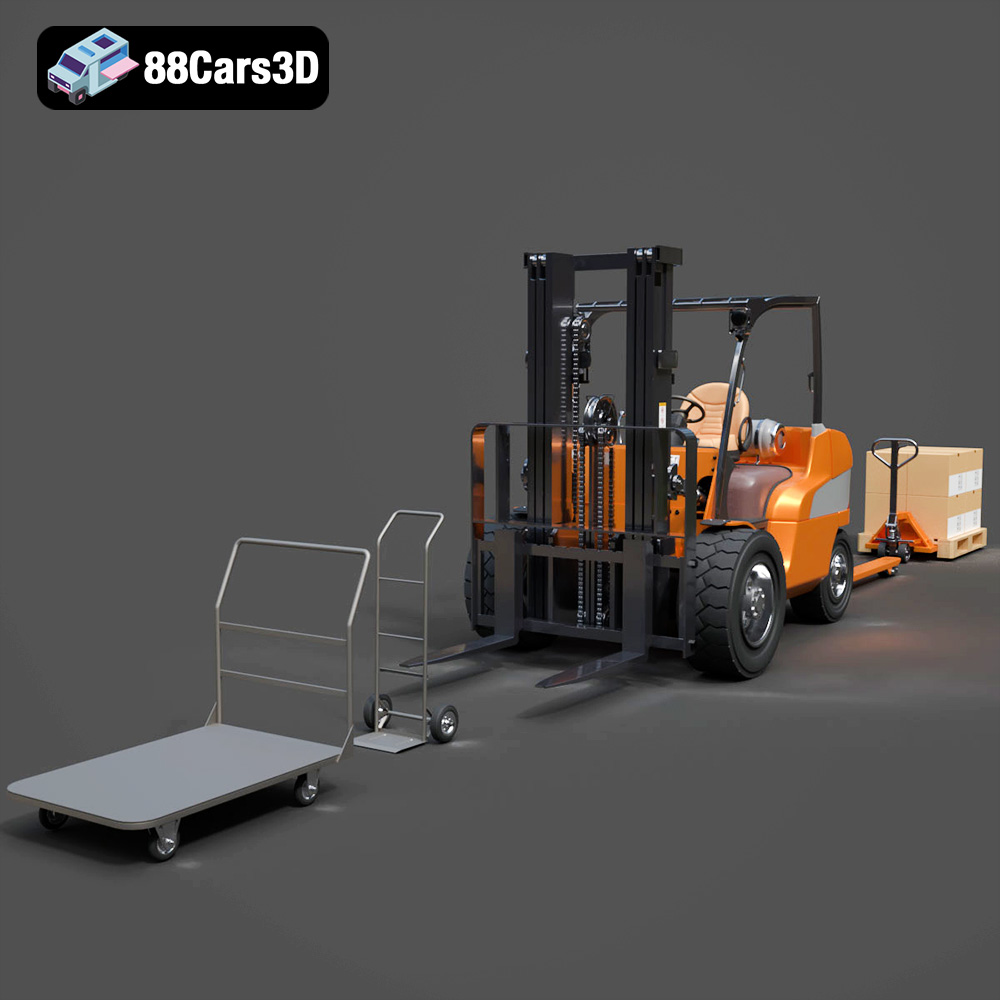
Texture: Yes | Material: Yes Download the highly detailed CAT Manual Loader & Warehouse Carts Kit 3D Model (2.4M Triangles). Features a macro-detailed hydraulic pallet jack, heavy-duty forks, and transport carts. Perfect for industrial ArchViz, factory rendering, and logistics simulations. Includes .blend, .fbx, .obj, .glb, .stl, and .max formats.
Price: $19.99
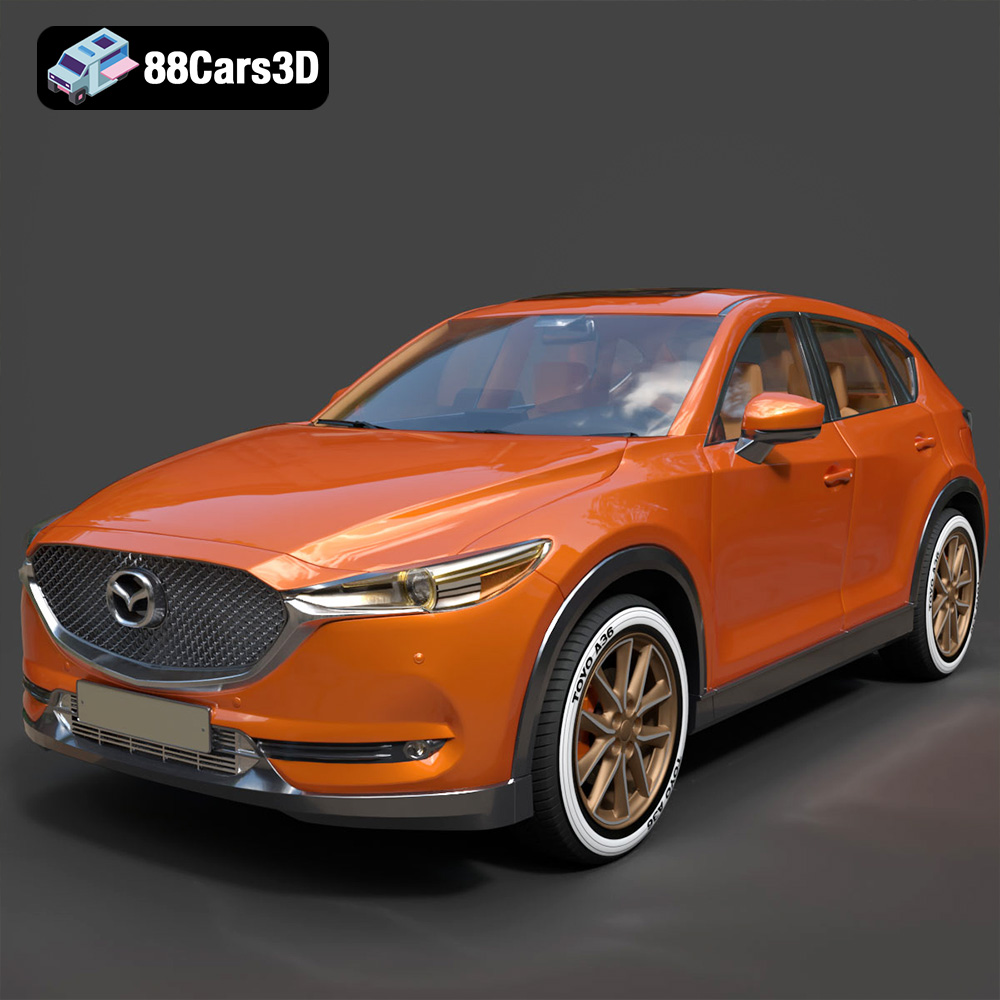
Texture: Yes | Material: Yes
Download the highly optimized Mazda CX-5 2014 3D Model (294k Triangles). Features the dynamic Kodo design language, signature grille, and a clean interior. Perfectly balanced for ArchViz, background traffic, and game development. Includes .blend, .fbx, .obj, .glb, .stl, and .max formats.
Price: $19.99
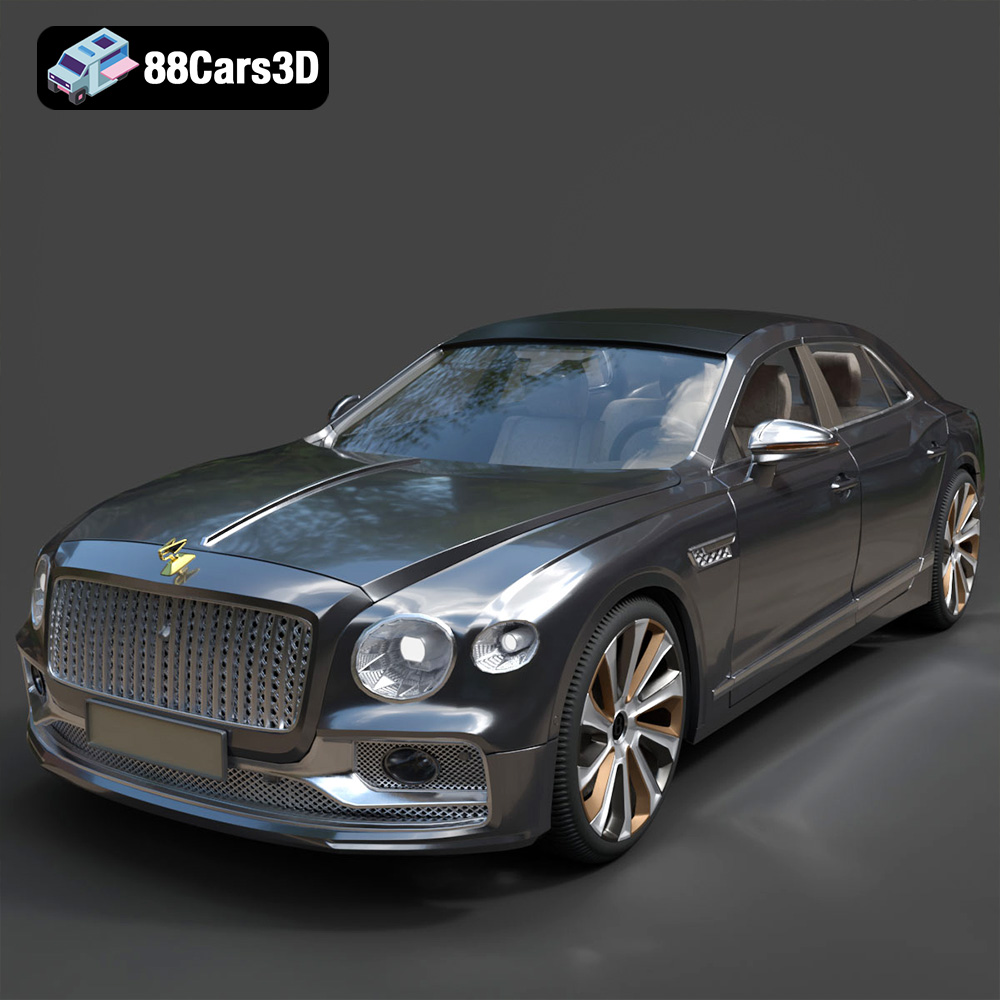
Texture: Yes | Material: Yes Download the ultra-high-detail Bentley Flying Spur Mulliner 2022 3D Model (2.94M Triangles). Features the bespoke Double Diamond grille, a fully modeled diamond-quilted interior, and exquisite luxury styling. Perfect for high-end ArchViz, VFX, and cinematic rendering. Includes .blend, .fbx, .obj, .glb, .stl, and .max formats.
Price: $19.90
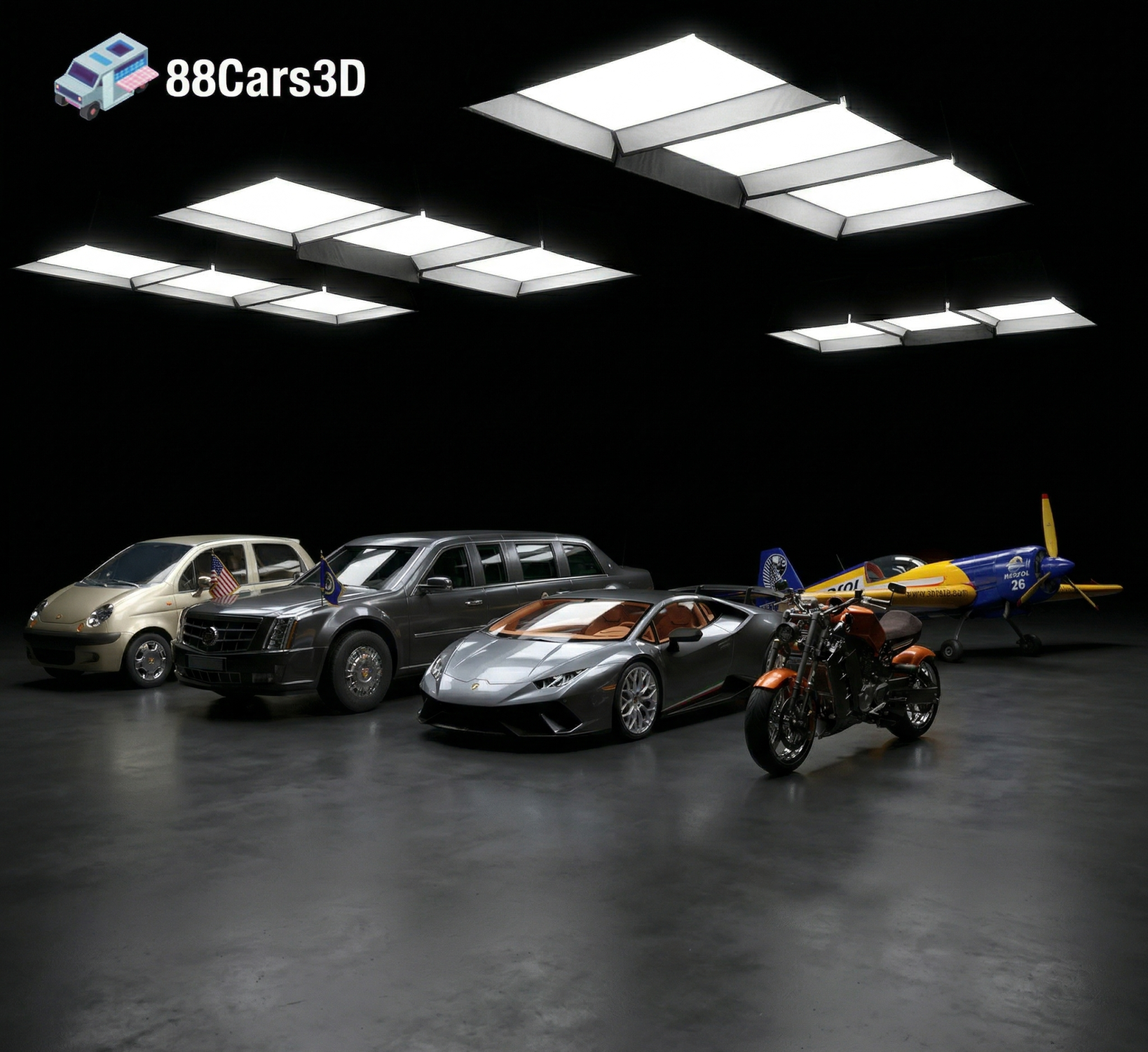
Texture: Yes | Material: Yes | 3D Printable: Yes. Download the Ultimate Creators’ Showcase featuring 5 premium 3D models: Lamborghini Huracan, ZAV Concept Motorcycle, Sukhoi SU-26, Presidential Limousine, and Daewoo Damas. Optimized for 4K CGI rendering and 3D printing. Save massive with this exclusive multi-category bundle!
Price: $99.99

Texture: Yes | Material: Yes | 3D Printable: Yes. Download the Italian Thoroughbreds Bundle featuring 5 iconic 3D models: Lamborghini Huracán Performante, Ferrari 458 Italia, Lamborghini Urus, Diablo SV, and Maserati GT. Optimized for 4K rendering and 3D printing (STL included). Save 50% with this ultimate Italian vehicle collection.
Price: $199.99

Download the Elite Future Mobility Bundle featuring 4 highly optimized 3D models: Tesla Model S, Avatr 11, Li L9, and Zoox Robotaxi. Perfect for ArchViz, Smart City renders, and game dev. Optimized for Unreal Engine and Blender. Includes .fbx, .obj, and .max formats.
Price: $99

🚗 5 Iconic German Cars (BMW M4 G82, M5 CS, X3, 1 Series & Mercedes E-Class). ✅ Optimized for ArchViz: Ready for Corona & V-Ray. 💰 Save €71 with this limited-time collection! 🚀 Instant Download after purchase.
Price: $119

Download the Extreme Off-Road & Survival 3D Models Bundle! Includes the Brabus 800 Adventure, Dodge Ram Bigfoot, Spec Truck, and a Caravan. Save over €210 on this premium 4-in-1 off-grid vehicle pack for ArchViz and game development.
Price: $149.99

Download the Heavy Duty & Commercial Logistics 3D Models Bundle! Includes the Ford Sterling, Caterpillar CT680, Mercedes Citaro Bus, and Vito Van. Save over €130 on this massive, game-ready 4-in-1 industrial vehicle pack.
Price: $109.99

