The gleam of a perfectly rendered supercar, the subtle imperfections on a vintage classic, or the gritty realism of a post-apocalyptic vehicle in a game – what truly brings these 3D car models to life isn’t just their geometry, but the intricate details of their textures. In the realm of automotive visualization, gaming, and animation, achieving this level of authenticity is paramount. For many 3D artists and studios, Adobe Substance Painter has emerged as the undisputed industry standard for creating breathtaking, physically-based rendering (PBR) materials. This comprehensive guide will take you on an in-depth journey through the art and science of car texturing with Substance Painter, from preparing your model with pristine UVs to crafting hyper-realistic paint, glass, and metal, and finally, optimizing your assets for diverse platforms like game engines, AR/VR experiences, and high-fidelity renders. Whether you’re an aspiring artist or a seasoned professional looking to refine your workflow, understanding Substance Painter’s capabilities is crucial for elevating your automotive projects to cinematic quality.
Laying the Foundation: Topology & UV Unwrapping for Car Models
Before even opening Substance Painter, the quality of your 3D car model’s topology and UV mapping dictates the success of your texturing endeavors. A meticulously crafted mesh with clean, organized UVs acts as a perfect canvas, allowing Substance Painter to apply materials flawlessly and without distortion. Conversely, poor topology or messy UVs can lead to stretched textures, visible seams, and frustrating artifacts that compromise realism and artistic vision.
Optimal Topology for Texturing
Clean topology is the backbone of any high-quality 3D model, especially for complex subjects like cars where reflections and smooth surfaces are critical. For automotive models, this means a predominantly quad-based mesh with excellent edge flow. Quads (four-sided polygons) deform predictably, which is essential for animation and subdivision surfaces, but more importantly for texturing, they ensure even distribution of pixels across the surface, preventing texture stretching. Edge loops should strategically follow the natural contours and creases of the car’s body panels, around headlights, wheel arches, and door cutlines. This not only makes modeling easier but also guides the texturing process, allowing generators and smart masks in Substance Painter to accurately identify edges and cavities for effects like edge wear or dirt accumulation.
For instance, a fender should have edge loops running along its main curvature and around any sharp creases. Without proper edge flow, baking maps like Normal or Ambient Occlusion will result in jagged or inaccurate information, which Substance Painter relies heavily upon for its smart materials. Models sourced from platforms like 88cars3d.com often feature exemplary topology, specifically designed for these precise texturing workflows, ensuring that every curve and panel reflects light and accepts textures without issue. A common polygon budget for a detailed game-ready car can range from 80,000 to 200,000 triangles, while high-end rendering models can easily exceed 500,000 or even millions of polygons, each requiring meticulous topology planning.
Mastering UV Unwrapping for Automotive Surfaces
UV unwrapping is the process of flattening your 3D model’s surface into 2D space, much like unfolding a cardboard box. This 2D representation, the UV map, tells Substance Painter where to place each pixel of your texture maps. For cars, which are a collection of hard, often reflective surfaces, precision in UVs is paramount. The goal is to create UV islands that are as undistorted as possible, have minimal seams, and maintain a consistent texel density across the entire model.
- Avoiding Overlaps: Absolutely critical. Overlapping UV islands mean that multiple parts of your 3D model will share the same texture space, leading to identical texturing on different parts, which is rarely desired for unique car components.
- Consistent Texel Density: This refers to the number of texture pixels per unit of surface area. Maintaining consistent texel density ensures that all parts of your car model appear equally detailed. For example, the car body shouldn’t have lower resolution textures than the wheels, unless it’s a deliberate optimization strategy (e.g., for very distant objects). Tools in 3ds Max, Maya, or Blender (using Blender 4.4’s UV Editor) can display texel density to help achieve uniformity.
- Strategic Seam Placement: Seams are unavoidable, but they should be hidden in discreet areas where they are less visible, such as along natural breaks in the geometry (e.g., under the car, along panel gaps, or beneath trim pieces). For large, smooth surfaces like the car body, minimizing seams on visible areas is crucial to prevent texture breaks.
- UV Strategies for Car Parts:
- Car Body: Often requires large, continuous UV islands to minimize seams, especially for metallic paints that rely on smooth reflections. Using methods like projection unwrapping or careful manual cuts is common.
- Glass: Simple planar projections are often sufficient, focusing on clean, rectangular islands.
- Tires: Can be unwrapped cylindrically for the sidewalls and planar for the treads, or entirely cylindrically if the tread pattern is procedural or a tiled texture.
- Interior: Broken down into logical components (dashboard, seats, steering wheel), each with its own carefully unwrapped islands.
- UV Packing: Once unwrapped, UV islands need to be efficiently packed into the 0-1 UV space. This maximizes the use of texture resolution and minimizes wasted space. Manual packing or using automatic packers (available in most 3D software) can achieve this. For extremely high-detail models, consider UDIM workflows, where different parts of the car (e.g., body, interior, wheels) occupy multiple UV tiles, allowing for extremely high texture resolutions without a single massive texture map.
Core Principles of PBR Texturing in Substance Painter
Physically Based Rendering (PBR) has revolutionized the way 3D artists create realistic materials. Substance Painter is built from the ground up to facilitate PBR workflows, ensuring that your car textures will look consistent and accurate under any lighting condition in any PBR-compliant renderer or game engine. Understanding the underlying principles of PBR is the key to unlocking Substance Painter’s full potential.
Demystifying PBR Workflows for Realistic Car Paint
The most common PBR workflow in Substance Painter is the Metallic/Roughness workflow. This system describes how light interacts with a surface using a set of texture maps, each controlling a specific material property:
- Base Color (Albedo): This map defines the pure color of the surface, stripped of any lighting information. For a car, this would be the base paint color, interior fabric color, or tire rubber color. It’s crucial not to bake shadows or highlights into this map.
- Metallic: A grayscale map that dictates which parts of the surface are metallic (white/1.0) and which are dielectric (non-metallic, black/0.0). Car paint itself is dielectric, but underlying metal components or metallic flakes within the paint would be metallic. Chrome or brushed aluminum parts would have high metallic values.
- Roughness: Another grayscale map, this controls the microscopic surface imperfections that scatter light. A value of 0 (black) represents a perfectly smooth, mirror-like surface (e.g., polished chrome, clear coat on car paint), while a value of 1 (white) represents a very rough, diffuse surface (e.g., matte rubber, unpolished plastic). This map is incredibly important for car paint, as it defines the reflectivity and gloss.
- Normal: This map stores surface detail information that fakes high-resolution geometry using tangent space vectors. It’s essential for adding fine details like subtle scratches, imperfections, or the texture of carbon fiber without adding actual polygons. Baked from a high-poly model onto a low-poly one, or generated procedurally within Substance Painter.
- Height (Displacement): While similar to normal maps, height maps define actual displacement, pushing geometry in or out based on grayscale values. Used for more prominent details like tire treads or subtle bumps on body panels, though often converted to normal maps for real-time applications due to performance considerations.
- Ambient Occlusion (AO): A grayscale map that simulates soft shadows in crevices and corners where light struggles to reach. It adds depth and realism, making objects appear more grounded. While often baked from the mesh, Substance Painter can generate it dynamically or include it as part of smart materials.
For car paint, the interplay of these maps is fascinating. The Base Color defines the hue, the Metallic map will typically be black for the paint itself but can contain subtle metallic flake information. The Roughness map is where the magic happens for the clear coat – a very low roughness value for pristine areas, gradually increasing for dusty or slightly scuffed regions. Understanding how these maps translate to real-world material properties, such as the reflectivity of a clear coat or the texture of rubber, is key to creating believable car models.
Setting Up Your Project & Importing Car Models
Getting started in Substance Painter involves a few critical setup steps:
- Creating a New Project: Start by selecting ‘File > New’. Choose the appropriate template (e.g., ‘PBR Metallic Roughness (Allegorithmic)’). Set your document resolution (e.g., 2048×2048 for a 2K map, 4096×4096 for 4K). For detailed car models, 4K is often a good starting point, and 8K for cinematic renders, especially if using UDIMs.
- Importing Your Car Model: Browse and select your 3D model, typically in FBX or OBJ format. Ensure your model is triangulated and that all transforms are frozen before export from your 3D package to prevent issues.
- Baking Mesh Maps: This is arguably the most crucial step. Substance Painter uses baked mesh maps to intelligently apply materials and effects. In the ‘Texture Set Settings’ panel, click ‘Bake Mesh Maps’. Key maps to bake include:
- Normal Map: Essential for transferring high-poly detail to a low-poly mesh and for accurate lighting.
- World Space Normal: Useful for specific generators and filters.
- Ambient Occlusion: Adds crucial depth. Substance Painter’s baker is excellent at this.
- Curvature: Identifies convex and concave areas, vital for edge wear and dirt accumulation.
- Position: Generates a gradient from one end of the model to the other, useful for gradient effects.
- Thickness (Substance Name: "Height"): Determines the thickness of the mesh, useful for subsurface scattering effects or specific generators.
Adjusting the ‘Max Frontal Distance’ and ‘Max Rear Distance’ helps capture details accurately, especially when baking from a high-poly to a low-poly mesh. These baked maps are what allow Substance Painter’s smart materials and generators to work their magic, intelligently applying effects based on the model’s geometry and topology.
Advanced Car Paint & Material Creation in Substance Painter
With the foundation laid, we can dive into the exciting world of crafting truly authentic car materials. Substance Painter’s powerful layering system, smart materials, and generators provide an unparalleled toolkit for achieving photorealism.
Crafting Authentic Car Paint Shaders
Car paint is a complex material, typically consisting of several layers: a primer, a base coat (color with metallic flakes), and a clear coat. Replicating this in Substance Painter involves a careful stacking of layers:
- Base Coat: Start with a fill layer for your primary car color. Adjust its Base Color and ensure its Metallic value is typically 0 (black). To add metallic flakes, you can overlay a second fill layer set to a very subtle metallic color (e.g., a dark gray) with a high Metallic value and low Roughness, then mask it with a procedural noise texture (like ‘Anisotropic Noise’ or ‘Fractal Sum Base’) to simulate the dispersed flakes. Blend this layer carefully.
- Clear Coat: This is where the magic happens for reflections. Add another fill layer above your base coat. Set its Metallic value to 0 and its Roughness to a very low value (e.g., 0.05-0.1) for a pristine, glossy finish. This layer will primarily affect the reflection behavior.
- Orange Peel Effect: Real car paint isn’t perfectly smooth; it has a subtle “orange peel” texture. This can be replicated by adding a subtle procedural noise (e.g., ‘Perlin Noise’ or ‘Grate’ with very low scale and intensity) to the Normal channel of your clear coat layer, or even by painting it directly onto the Height map with a soft brush, which then translates to normal map information.
- Subtle Scratches and Swirls: No car stays pristine forever. Add a new fill layer, set its blending mode to ‘Overlay’ or ‘Screen’ (for lighter scratches) or ‘Multiply’ (for darker ones) and adjust its Roughness, Base Color, and optionally Normal channel. Then, add a black mask and use a grunge map (e.g., ‘Grunge Scratches Rough’) or a custom alpha brush to paint in subtle scratches and swirl marks, especially around door handles, keyholes, and areas of high contact. Ensure these are very faint; realism is in subtlety.
- Dirt and Wear: To simulate the accumulation of dirt, dust, and grime, utilize Substance Painter’s powerful generators and smart masks. Add a fill layer for dirt (e.g., brownish Base Color, high Roughness, low Metallic). Add a black mask and apply a generator like ‘Dirt’ or ‘Dust’. These generators use your baked Ambient Occlusion and Curvature maps to intelligently apply dirt to crevices and upward-facing surfaces. You can further refine these masks with painted layers, grunge maps, and procedural noises to create realistic variations like water streaks (‘Water Flow’ generator) or tire kick-up.
- Pearlescent or Chameleon Paints: These complex paints shift color depending on the viewing angle. This is achieved by using a gradient map or a tri-planar projection with a custom shader graph (if supported by your target renderer) or by manipulating the Base Color and Metallic/Roughness in a complex layer stack within Substance Painter, often involving blending modes like ‘HSL Perceptual’ or ‘Gradient Map’ masks driven by the baked Position map.
Detailing Other Automotive Materials
Beyond the primary car paint, other materials contribute significantly to the overall realism:
- Tires: Create a rubber material with appropriate Base Color (dark gray), high Roughness, and 0 Metallic. Use a fill layer for the tread pattern, adding a Normal map (baked from geometry or a tileable texture) and potentially a Height map for genuine displacement. The sidewalls can have subtle text or branding added via alpha masks and height information, ensuring the material properties accurately reflect vulcanized rubber.
- Glass: Often requires a very clean Base Color (near black for clear glass), very low Roughness (for high reflectivity), and 0 Metallic. Imperfections like smudges, fingerprints, or rain streaks are critical. These can be added with a masked fill layer, setting its Roughness slightly higher and using grunge maps (e.g., ‘Fingerprint Grunge’, ‘Water Stains’) to break up the perfect reflection. For more advanced effects like refractive distortion, you might rely more on the renderer’s material settings, but Substance Painter can provide excellent texture maps for these properties.
- Plastics and Leather for Interiors: Interiors demand a variety of plastic and fabric textures. For plastics, focus on varying the Roughness map to differentiate between glossy and matte surfaces. For leather, add a subtle Normal map (either baked or procedural) for the grain, and vary the Roughness to simulate wear and tear, especially on seat edges or steering wheel. Dust and grime generators are also highly effective here.
- Chrome/Metals: For highly reflective metals, ensure the Metallic value is 1 (white) and Roughness is very low. Use subtle grunge maps and wear generators to introduce imperfections. For brushed metals, a specific Normal map that mimics the directionality of the brushing is essential, along with anisotropic reflection settings in your renderer.
Optimizing Car Textures for Various Platforms
The flexibility of Substance Painter lies in its ability to export textures tailored for virtually any target platform, from demanding real-time game engines to high-fidelity offline renderers. Understanding these export processes and optimization strategies is crucial for ensuring your beautifully textured car performs as intended.
Game Engine Readiness – LODs & Texture Atlasing
When preparing car models for real-time game engines like Unity or Unreal Engine, performance is paramount. Texture optimization plays a significant role in managing memory usage and draw calls.
High-Fidelity Rendering & Visualization
For cinematic renders, architectural visualization, or print media, the emphasis shifts from real-time performance to absolute visual fidelity. Substance Painter excels at generating the detailed maps required by advanced renderers like V-Ray, Corona Renderer, Cycles (Blender), and Arnold.
- Exporting for Renderers: Substance Painter provides various export presets for renderers like V-Ray, Arnold, Corona, and Redshift. These typically export individual maps (Base Color, Metallic, Roughness, Normal, Height, AO) in high-bit depth formats.
- UDIM Workflow: For extremely high-resolution automotive models, especially those used in film or advertising, UDIMs (U-Dimension) are indispensable. This system allows you to spread the UVs of your model across multiple 0-1 UV tiles (e.g., the car body on U1V1, the interior on U2V1, wheels on U3V1). Each tile gets its own set of textures, allowing for incredibly high texture resolution across the entire vehicle without creating a single, impossibly large texture file. Substance Painter fully supports UDIM workflows, allowing you to paint across multiple UV tiles seamlessly.
- Best Practices for Cinematic Quality:
- Resolution: Author at 4K or 8K, especially for hero assets. Use UDIMs for extreme detail.
- File Formats: Export in high-quality, lossless formats like PNG (16-bit), TIFF (16-bit), or EXR (32-bit float for height/displacement maps) to preserve color information and detail.
- Displacement Maps: For renderers, utilize baked height maps as true displacement maps in your shader, adding actual geometric detail to tire treads, subtle panel bumps, or interior fabric weaves, resulting in unparalleled realism.
- Micro-Surface Imperfections: Pay extra attention to very fine-grain roughness variations, subtle dust, and microscopic scratches. These small details are often what differentiate a good render from a truly photorealistic one.
Beyond Textures: Integration & Advanced Applications
Substance Painter is a powerful tool on its own, but its true strength lies in how seamlessly its outputs integrate into a larger 3D pipeline. From setting up sophisticated PBR shaders in your chosen 3D software to adapting your assets for emerging technologies like AR/VR and 3D printing, the versatility of your textured car model is vast.
Blender Integration & Rendering with Cycles/Eevee
Blender, with its powerful Cycles and Eevee renderers, is a popular choice for automotive visualization. Integrating your Substance Painter textures into Blender is a straightforward process:
- Importing Textures: After exporting your textures from Substance Painter (using a Blender-specific preset or a general PBR Metallic Roughness preset), import them into Blender.
- Setting Up PBR Shaders in Cycles:
- In Blender’s Shader Editor, select your car model and create a new material.
- Add a Principled BSDF shader node. This is Blender’s all-in-one PBR shader.
- Connect your Substance Painter texture maps to the corresponding inputs on the Principled BSDF node:
- Base Color Map: Connect to the ‘Base Color’ input. Ensure its Color Space is set to ‘sRGB’.
- Metallic Map: Connect to the ‘Metallic’ input. Set its Color Space to ‘Non-Color’.
- Roughness Map: Connect to the ‘Roughness’ input. Set its Color Space to ‘Non-Color’. You may need to invert this map or add a ‘Color Ramp’ node for finer control, as some renderers interpret roughness differently.
- Normal Map: Add a ‘Normal Map’ node. Connect your Substance Painter Normal map (Color Space: ‘Non-Color’) to the ‘Color’ input of the Normal Map node, and then connect the ‘Normal’ output of the Normal Map node to the ‘Normal’ input of the Principled BSDF.
- Height/Displacement Map: For true displacement in Cycles, connect your height map (Color Space: ‘Non-Color’) to a ‘Displacement’ node, and then connect the ‘Displacement’ output to the ‘Displacement’ input of the Material Output node. Remember to change the material’s ‘Settings > Surface > Displacement’ to ‘Displacement and Bump’ or ‘Displacement Only’ and subdivide your mesh.
- Ambient Occlusion Map: While the Principled BSDF doesn’t have a direct AO input, you can use an ‘Mix RGB’ node set to ‘Multiply’ to blend the AO map (Color Space: ‘Non-Color’) with your Base Color before connecting it to the ‘Base Color’ input for added depth.
For more detailed information on Blender’s shading nodes and Cycles rendering, you can always consult the official Blender 4.4 documentation.
- Lighting Techniques for Cars in Blender:
- HDRI (High Dynamic Range Image): The most common and effective way to light car renders. HDRI environments provide realistic lighting and reflections. Add an ‘Environment Texture’ node in the Shader Editor (World tab) and connect it to the ‘Background’ node.
- Area Lights: Supplement HDRI lighting with strategically placed area lights to emphasize specific curves, create dramatic reflections, or highlight interior details.
- Light Path Expressions: Advanced Cycles users can leverage Light Path Expressions for granular control over how light interacts with different material types, perfect for fine-tuning reflections and refractions on car paint and glass.
- Eevee vs. Cycles:
- Cycles: A physically accurate, unbiased ray-tracing renderer, ideal for photorealistic, high-quality still images and animations. It accurately simulates light bounces, reflections, and refractions.
- Eevee: Blender’s real-time rasterization renderer. Perfect for quick previews, animations, and game-engine-like performance. While not as physically accurate as Cycles, with careful setup (screen space reflections, ambient occlusion, bloom), Eevee can produce stunning automotive visualizations very quickly.
AR/VR & 3D Printing Considerations
The textured car models you create in Substance Painter can extend beyond traditional renders and games into exciting new applications.
- AR/VR Optimization:
- Reduced Texture Resolution: Performance is critical in AR/VR. Often, 1K or even 512×512 textures are sufficient for a car model, especially if it’s not the primary focus or is viewed at a distance.
- Optimized Material Complexity: Keep material graphs simple. Avoid complex procedural effects in your final exported textures if possible, and rely on baked maps.
- File Formats: GLB and USDZ are common formats for AR/VR, supporting PBR materials. Substance Painter can export textures ready for these formats. Platforms like 88cars3d.com often provide models in these optimized formats for easy AR/VR integration.
- 3D Printing Preparation: While 3D printing primarily deals with geometry, not textures, Substance Painter still has a role:
- Mesh Integrity: Ensure your model is watertight and manifold – no holes or intersecting geometry. While Substance Painter doesn’t directly repair meshes, its texture baking process can highlight areas of bad geometry if normal maps show artifacts.
- Color & Polypaint: If you’re printing in full color, your Base Color map from Substance Painter can be used as a guide for polypainting or directly applied to support color printing technologies.
- Baked Height Maps for Relief: For monochrome prints, a finely tuned height map (baked from Substance Painter’s detail or even converted from normal maps) can be used to generate actual geometric relief on the model, enhancing details like tire treads or subtle body panel lines, which can then be exported as a displacement map applied to the mesh before printing.
Mastering Substance Painter for car texturing is an incredibly rewarding journey that unlocks unparalleled realism and creative freedom. From the foundational importance of clean topology and precise UV mapping to the intricate art of PBR material creation and the strategic optimization for diverse platforms, every step contributes to bringing your automotive visions to life. We’ve delved into crafting complex car paints with clear coats, metallic flakes, and subtle imperfections, as well as detailing a range of other essential automotive materials like glass, rubber, and interior fabrics. Furthermore, understanding how to effectively integrate your Substance Painter outputs into renderers like Cycles or game engines like Unreal, along with considerations for AR/VR and 3D printing, ensures your assets are versatile and production-ready. The key to truly outstanding results lies in continuous practice, meticulous attention to detail, and a deep understanding of PBR principles. We encourage you to explore the high-quality 3D car models available on platforms like 88cars3d.com, using them as a perfect canvas to apply and hone these advanced texturing techniques. The road to automotive realism is paved with pixels, and with Substance Painter, you have the ultimate brush in hand.
Featured 3D Car Models
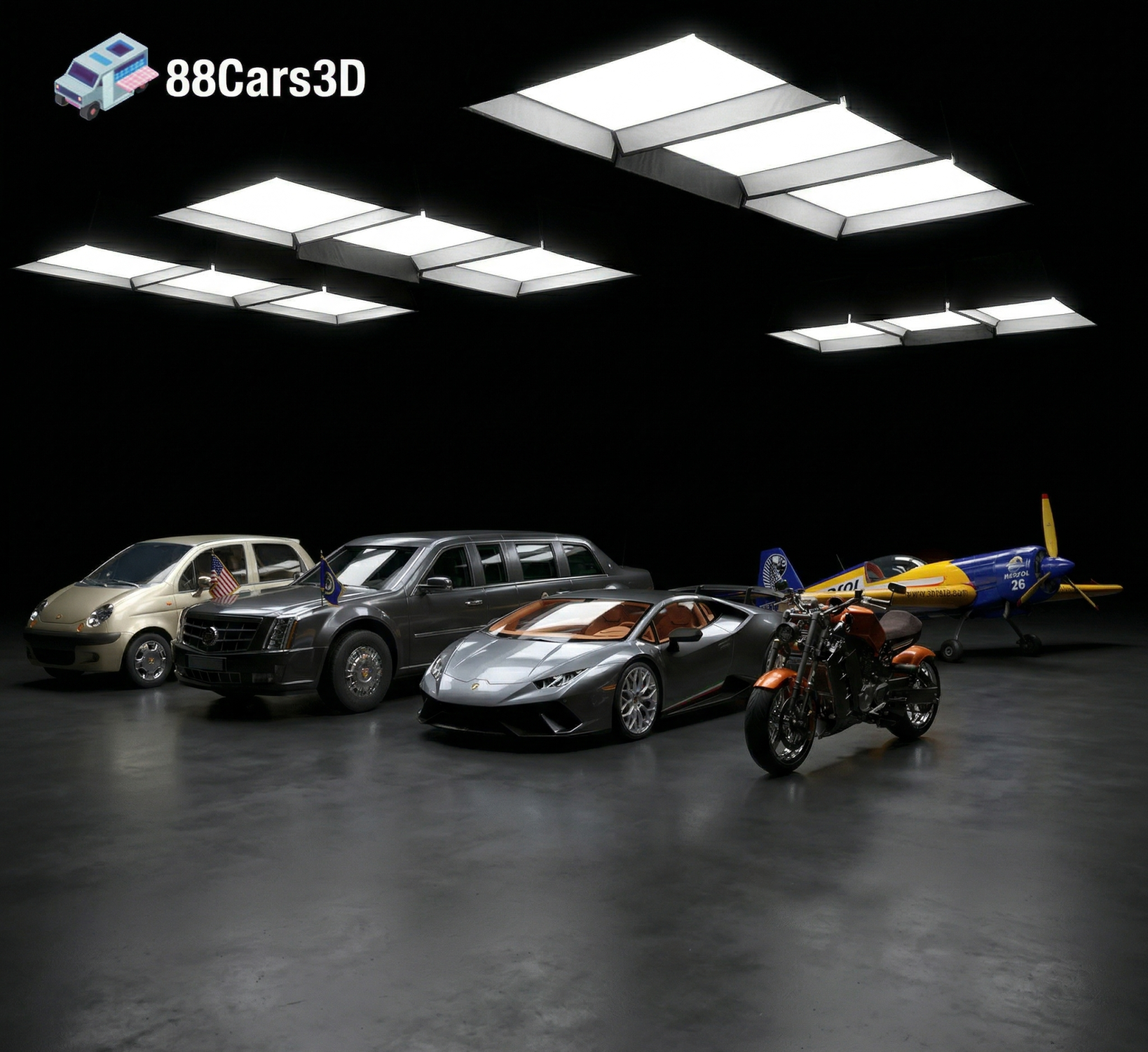
Texture: Yes | Material: Yes | 3D Printable: Yes. Download the Ultimate Creators’ Showcase featuring 5 premium 3D models: Lamborghini Huracan, ZAV Concept Motorcycle, Sukhoi SU-26, Presidential Limousine, and Daewoo Damas. Optimized for 4K CGI rendering and 3D printing. Save massive with this exclusive multi-category bundle!
Price: $99.99
View Product

Texture: Yes | Material: Yes | 3D Printable: Yes. Download the Italian Thoroughbreds Bundle featuring 5 iconic 3D models: Lamborghini Huracán Performante, Ferrari 458 Italia, Lamborghini Urus, Diablo SV, and Maserati GT. Optimized for 4K rendering and 3D printing (STL included). Save 50% with this ultimate Italian vehicle collection.
Price: $199.99
View Product

Download the Elite Future Mobility Bundle featuring 4 highly optimized 3D models: Tesla Model S, Avatr 11, Li L9, and Zoox Robotaxi. Perfect for ArchViz, Smart City renders, and game dev. Optimized for Unreal Engine and Blender. Includes .fbx, .obj, and .max formats.
Price: $99
View Product

🚗 5 Iconic German Cars (BMW M4 G82, M5 CS, X3, 1 Series & Mercedes E-Class). ✅ Optimized for ArchViz: Ready for Corona & V-Ray. 💰 Save €71 with this limited-time collection! 🚀 Instant Download after purchase.
Price: $119
View Product

Download the Extreme Off-Road & Survival 3D Models Bundle! Includes the Brabus 800 Adventure, Dodge Ram Bigfoot, Spec Truck, and a Caravan. Save over €210 on this premium 4-in-1 off-grid vehicle pack for ArchViz and game development.
Price: $149.99
View Product

Download the Heavy Duty & Commercial Logistics 3D Models Bundle! Includes the Ford Sterling, Caterpillar CT680, Mercedes Citaro Bus, and Vito Van. Save over €130 on this massive, game-ready 4-in-1 industrial vehicle pack.
Price: $109.99
View Product

Download the Ultimate Custom Motorcycles 3D Models Bundle. Includes a Custom Chopper, Ducati 916 Café Fighter, Harley XR1200X, and BMW K100. Perfect premium props for luxury ArchViz garages. Save over €250 today!
Price: $159.99
View Product

Download the ultimate JDM Street Racing 3D Models Bundle! Includes the Nissan GT-R, Toyota Supra, Mazda RX-7, Lancer Evo IX, and Honda NSX. Save big on this highly optimized, game-ready 5-in-1 Japanese legend car pack.
Price: $129.99
View Product

Download the ultimate American Muscle & Cinematic Classics 3D Models Bundle! Includes the Dodge Charger ’68, Mustang Eleanor GT500, Camaro Z28 ’79, and a custom ’69 Mustang. Save over €240 on this game-ready, premium 4-in-1 pack.
Price: $149.99
View Product
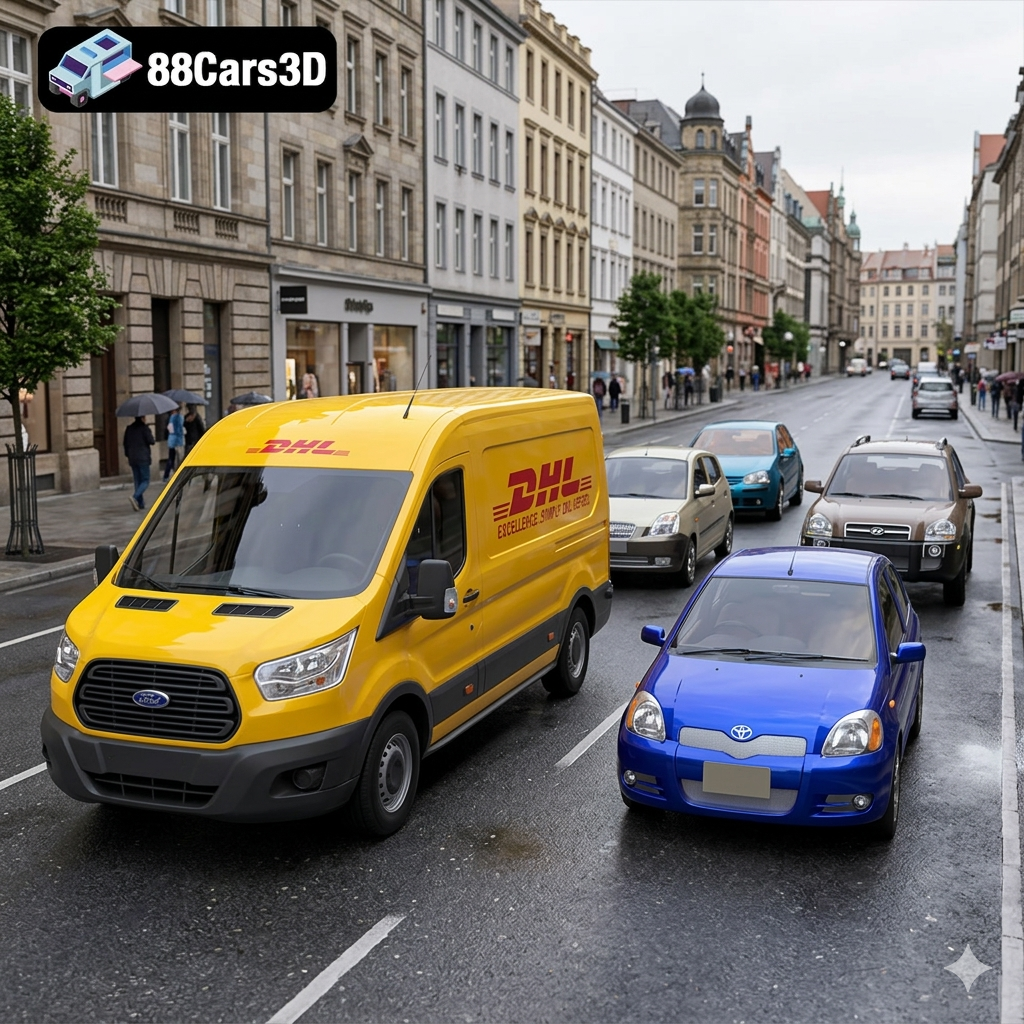
Download the Everyday City Traffic 3D Models Bundle. Includes the VW Golf, Kia Picanto, Hyundai Tucson, Toyota Yaris, and a DHL Ford Transit Van. Save big on this 5-in-1 pack, perfectly optimized for realistic ArchViz streets and game traffic.
Price: $99.99
View Product


