Get 50% OFF All Premium 3D & STL Models!

“`html
The allure of 3D printing lies in its ability to transform digital designs into tangible objects, bringing complex geometries to life with impressive precision. For automotive enthusiasts and model makers, this technology unlocks the exciting possibility of creating incredibly detailed car interiors. Whether you’re aiming to replicate a vintage dashboard, craft custom racing seats, or design futuristic consoles, the key to success lies in understanding the intricacies of STL files, 3D printer settings, and post-processing techniques. This comprehensive guide will walk you through the essential steps for 3D printing stunning car interiors from STL files, focusing on achieving optimal detail, accuracy, and aesthetic appeal. We’ll explore everything from file preparation and slicing strategies to support structures and material selection, providing you with the knowledge and skills to elevate your 3D printing projects to the next level. Many platforms like 88cars3d.com offer a wide array of models specifically designed for detailed printing.
The foundation of any successful 3D print is a well-prepared STL file. STL (Stereolithography) is a file format native to stereolithography CAD software used for 3D printing. It represents the surface geometry of a 3D object using a collection of triangles. Understanding the structure of an STL file is crucial for optimizing your print for detail and accuracy. When downloading models from marketplaces such as 88cars3d.com, the initial STL file may need adjustments to suit your specific printing goals.
Before diving into slicing, it’s essential to examine your STL file for potential issues like non-manifold edges, holes, and self-intersections. These imperfections can lead to print failures or artifacts in the final product. Software like MeshMixer, Netfabb, or even the built-in repair tools in PrusaSlicer and Cura can identify and automatically fix these errors. Aim for a “watertight” mesh, meaning a closed and continuous surface. A quick tip is to enable “backface culling” in your 3D viewing software; this helps identify flipped normals, which can indicate mesh problems. Ideally, the triangle count should be high enough to capture fine details, but not so high that it bogs down your slicing software. A balance is key.
The orientation of your car interior model on the print bed significantly impacts the level of detail achievable and the amount of support material required. Generally, orienting the model to minimize overhangs is a good starting point. However, for intricate interiors, you might need to strategically angle the model to ensure that critical features are facing upwards during the print, allowing for finer resolution on those details. Consider using software like Meshmixer to manually add or modify support structures, tailoring them to the specific geometry of your interior. Experiment with different support types, such as tree supports or linear supports, to find the best balance between stability and ease of removal. Remember, well-placed supports are crucial for preventing sagging and ensuring that delicate features print correctly. For example, complex dashboard vents will require supports that reach far enough inside the vent without fusing completely.
The slicing process transforms your prepared STL file into a series of instructions (G-code) that your 3D printer can understand. Slicing software like Cura, PrusaSlicer, Simplify3D, and others offer a vast array of parameters that can be fine-tuned to optimize your print for detail, strength, and speed. Getting these parameters right is essential for producing high-quality car interiors.
Layer height is arguably the most crucial parameter for achieving fine detail. Lower layer heights (e.g., 0.08mm to 0.12mm) result in smoother surfaces and more accurate representation of curves and intricate details. However, they also significantly increase print time. Higher layer heights (e.g., 0.2mm to 0.3mm) are faster but sacrifice detail. Experimentation is key. For car interiors, consider using adaptive layer height, a feature available in some slicers, which automatically adjusts the layer height based on the geometry of the model, using finer layers for detailed areas and coarser layers for less critical regions. This approach balances print time with detail.
While car interiors are often primarily cosmetic, infill density still plays a role in their structural integrity, especially for larger components like seats or dashboards. Higher infill densities (e.g., 20% to 30%) provide greater strength but increase material usage and print time. Lower infill densities (e.g., 5% to 15%) are faster and more economical but may result in weaker parts. The infill pattern also matters. Gyroid infill, for example, offers excellent strength in all directions, while rectilinear infill is faster but may be weaker along certain axes. For interior parts that will be subjected to stress, such as seat frames, consider using a denser infill pattern like cubic or concentric.
The choice of filament or resin significantly impacts the final appearance, durability, and ease of post-processing of your 3D printed car interior. Different materials offer varying levels of detail, surface finish, and heat resistance.
For FDM (Fused Deposition Modeling) printing, PLA (Polylactic Acid) is a popular choice due to its ease of use, low printing temperature, and biodegradability. It’s ideal for prototyping and non-functional parts. However, PLA is relatively brittle and has low heat resistance, making it unsuitable for parts that will be exposed to direct sunlight or high temperatures inside a car. PETG (Polyethylene Terephthalate Glycol) offers a better balance of strength, flexibility, and heat resistance. It’s more durable than PLA and easier to print than ABS. ABS (Acrylonitrile Butadiene Styrene) is a stronger and more heat-resistant option, but it requires higher printing temperatures and a well-ventilated environment due to its fumes. ABS is often used for functional car parts that need to withstand high temperatures, but it’s more prone to warping and requires careful temperature control. For printing interior parts like dashboards that might experience heat, PETG may be the best choice for a good balance of properties.
Resin printing, using technologies like SLA (Stereolithography) or MSLA (Masked Stereolithography), offers significantly higher resolution and detail than FDM printing. Resin printers use liquid resin that is cured by UV light to create solid objects. This allows for the creation of incredibly intricate details and smooth surfaces, making it ideal for car interiors with complex geometries and fine features. Different types of resin are available, including standard resin, tough resin, and flexible resin. Standard resin is suitable for cosmetic parts, while tough resin offers higher impact resistance. Flexible resin can be used for parts that need to bend or flex, such as rubber seals or hoses. When using resin, it’s crucial to follow proper safety precautions, including wearing gloves and eye protection, as the resin can be irritating to the skin and eyes. Always ensure proper ventilation.
Support structures are temporary structures that are printed alongside your model to support overhangs and prevent sagging. They are essential for printing complex geometries, but they can also be a source of frustration if not properly generated and removed. The key to successful support structures lies in finding the right balance between providing adequate support and minimizing the impact on the surface finish of your model.
Different slicing software offers a variety of support structure options, including linear supports, tree supports, and custom supports. Linear supports are simple vertical structures that are easy to generate and remove, but they can leave noticeable marks on the surface of your model. Tree supports are more complex, branching structures that provide better support while minimizing contact with the model. They are particularly useful for complex geometries with numerous overhangs. Custom supports allow you to manually add or modify support structures to suit the specific needs of your model. This gives you the greatest control over the support process, but it also requires more time and effort. Consider the geometry of your car interior when choosing the appropriate support type. For example, a complex dashboard with intricate vents may benefit from tree supports, while a simple seat frame may be adequately supported by linear supports.
Several parameters can be adjusted to optimize support structures for easy removal and minimal surface impact. These include support density, support overhang angle, and support interface layers. Lower support densities reduce the amount of material used for supports, making them easier to break away. Higher support overhang angles allow you to print steeper overhangs without supports, but they may also result in sagging or drooping. Support interface layers create a thin layer between the support structure and the model, making it easier to separate the two. Experiment with these settings to find the optimal balance for your specific model and material. After printing, carefully remove the support structures using tools like pliers, flush cutters, or a hobby knife. Take your time and avoid applying excessive force, as this can damage the surface of your model. Platforms like 88cars3d.com may also offer pre-supported models, saving you this crucial step.
Post-processing is the final step in the 3D printing process, and it’s where you transform your raw print into a polished and finished product. This may involve sanding, painting, assembly, and other techniques to enhance the appearance, durability, and functionality of your car interior.
Sanding is essential for removing layer lines and smoothing the surface of your 3D printed parts. Start with a coarse grit sandpaper (e.g., 220 grit) to remove any major imperfections, then gradually move to finer grits (e.g., 400 grit, 600 grit, 800 grit) to achieve a smooth surface. Wet sanding can help to reduce dust and improve the surface finish. For resin prints, consider using a polishing compound to achieve a glossy finish. Pay close attention to corners and edges, as these areas are often difficult to sand. Take your time and be patient, as sanding can be a time-consuming process. However, the results are well worth the effort. For difficult-to-reach areas, consider using a small rotary tool with sanding attachments.
Painting is a crucial step for achieving a realistic and visually appealing car interior. Start by applying a primer to the surface of your model to create a smooth and uniform base for the paint. Choose paints that are compatible with the material you used for printing (e.g., acrylic paints for PLA and PETG, enamel paints for ABS, and specialized resin paints for resin prints). Apply multiple thin coats of paint rather than one thick coat to avoid drips and runs. Use masking tape to protect areas that you don’t want to paint. Consider using an airbrush for a smoother and more professional finish. After painting, apply a clear coat to protect the paint and add a glossy or matte finish. Detailing, such as adding panel lines, rivets, and other small features, can further enhance the realism of your car interior.
3D printing detailed car interiors with STL files is a rewarding endeavor that combines technical precision with artistic expression. By understanding the intricacies of STL file preparation, slicing parameters, material selection, support structures, and post-processing techniques, you can unlock the full potential of your 3D printer and create stunningly realistic and customized car interiors. Remember to experiment with different settings and techniques to find what works best for you and your specific projects. Whether you’re a seasoned 3D printing enthusiast or a beginner just starting out, the possibilities are endless. So, dive in, explore, and unleash your creativity to bring your automotive visions to life! The key is patience, experimentation, and a willingness to learn from both successes and failures. Start with simpler interior components and gradually progress to more complex designs as your skills develop. The world of 3D-printed car interiors awaits!
“`

Texture: Yes | Material: Yes
Download the highly optimized Mazda CX-5 2014 3D Model (294k Triangles). Features the dynamic Kodo design language, signature grille, and a clean interior. Perfectly balanced for ArchViz, background traffic, and game development. Includes .blend, .fbx, .obj, .glb, .stl, and .max formats.
Price: $19.99
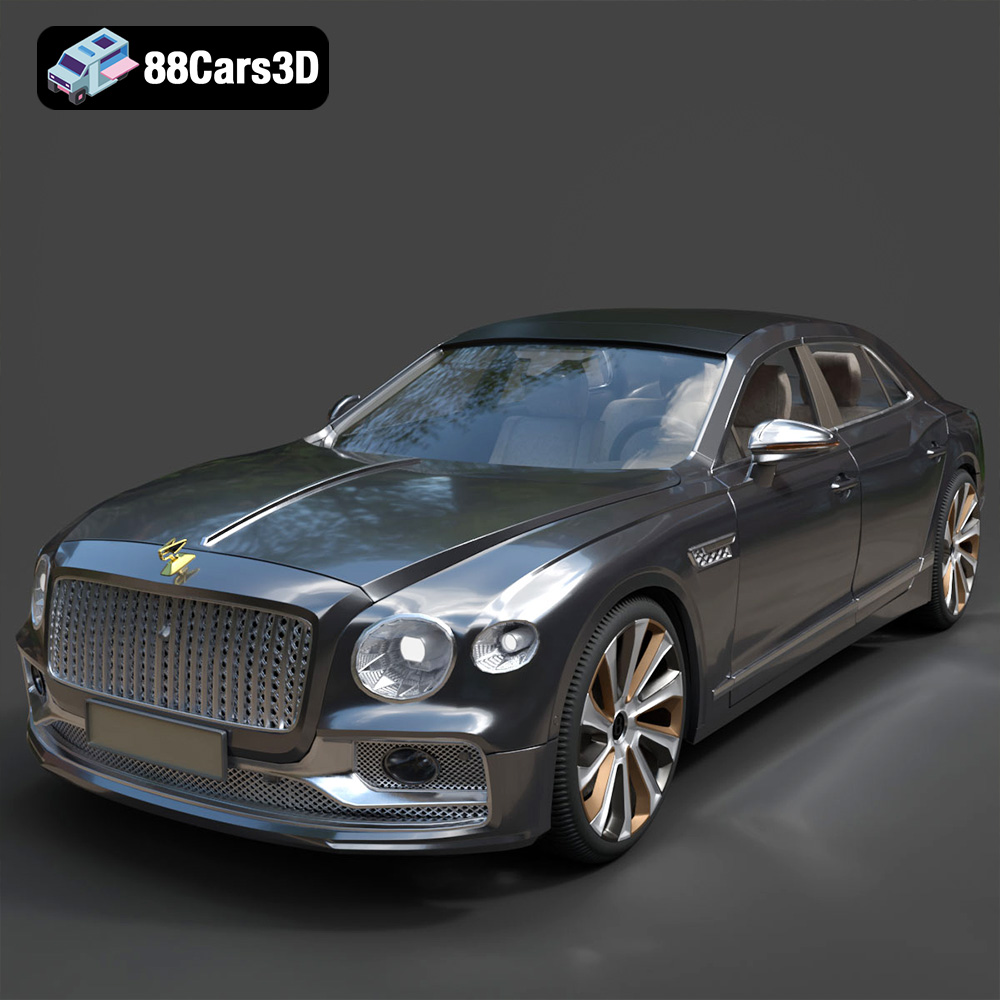
Texture: Yes | Material: Yes Download the ultra-high-detail Bentley Flying Spur Mulliner 2022 3D Model (2.94M Triangles). Features the bespoke Double Diamond grille, a fully modeled diamond-quilted interior, and exquisite luxury styling. Perfect for high-end ArchViz, VFX, and cinematic rendering. Includes .blend, .fbx, .obj, .glb, .stl, and .max formats.
Price: $19.90
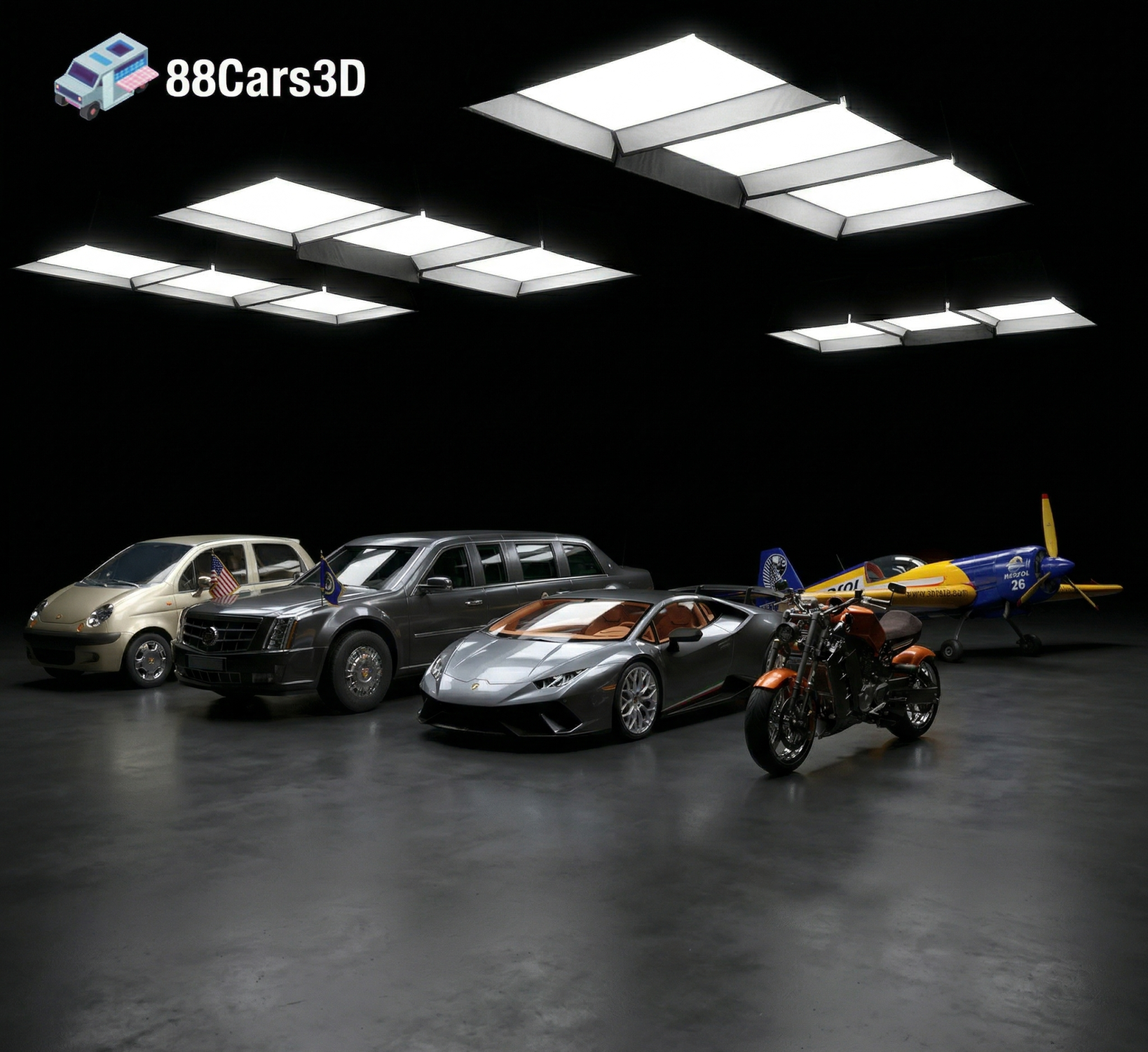
Texture: Yes | Material: Yes | 3D Printable: Yes. Download the Ultimate Creators’ Showcase featuring 5 premium 3D models: Lamborghini Huracan, ZAV Concept Motorcycle, Sukhoi SU-26, Presidential Limousine, and Daewoo Damas. Optimized for 4K CGI rendering and 3D printing. Save massive with this exclusive multi-category bundle!
Price: $99.99

Texture: Yes | Material: Yes | 3D Printable: Yes. Download the Italian Thoroughbreds Bundle featuring 5 iconic 3D models: Lamborghini Huracán Performante, Ferrari 458 Italia, Lamborghini Urus, Diablo SV, and Maserati GT. Optimized for 4K rendering and 3D printing (STL included). Save 50% with this ultimate Italian vehicle collection.
Price: $199.99

Download the Elite Future Mobility Bundle featuring 4 highly optimized 3D models: Tesla Model S, Avatr 11, Li L9, and Zoox Robotaxi. Perfect for ArchViz, Smart City renders, and game dev. Optimized for Unreal Engine and Blender. Includes .fbx, .obj, and .max formats.
Price: $99

🚗 5 Iconic German Cars (BMW M4 G82, M5 CS, X3, 1 Series & Mercedes E-Class). ✅ Optimized for ArchViz: Ready for Corona & V-Ray. 💰 Save €71 with this limited-time collection! 🚀 Instant Download after purchase.
Price: $119

Download the Extreme Off-Road & Survival 3D Models Bundle! Includes the Brabus 800 Adventure, Dodge Ram Bigfoot, Spec Truck, and a Caravan. Save over €210 on this premium 4-in-1 off-grid vehicle pack for ArchViz and game development.
Price: $149.99

Download the Heavy Duty & Commercial Logistics 3D Models Bundle! Includes the Ford Sterling, Caterpillar CT680, Mercedes Citaro Bus, and Vito Van. Save over €130 on this massive, game-ready 4-in-1 industrial vehicle pack.
Price: $109.99

Download the Ultimate Custom Motorcycles 3D Models Bundle. Includes a Custom Chopper, Ducati 916 Café Fighter, Harley XR1200X, and BMW K100. Perfect premium props for luxury ArchViz garages. Save over €250 today!
Price: $159.99

Download the ultimate JDM Street Racing 3D Models Bundle! Includes the Nissan GT-R, Toyota Supra, Mazda RX-7, Lancer Evo IX, and Honda NSX. Save big on this highly optimized, game-ready 5-in-1 Japanese legend car pack.
Price: $129.99

