Get 50% OFF All Premium 3D & STL Models!

In the dynamic world of 3D visualization, automotive design, and game development, the ability to integrate high-quality, authentic vehicle models is paramount. Whether you’re crafting a cinematic render, populating an immersive virtual reality experience, or developing the next generation of driving simulators, the foundation of your project often rests on the fidelity of your 3D assets. Few vehicles command the presence and iconic status quite like the Mercedes-Benz G-Class. Renowned for its rugged luxury, timeless design, and unparalleled off-road capability, the 2013 iteration represents a sweet spot of classic G-Wagen charm combined with modern refinements.
For professionals seeking to elevate their digital automotive projects, a meticulously crafted Mercedes-Benz G Class 2013 3D Model is an invaluable asset. This isn’t just a digital replica; it’s a versatile tool engineered for diverse applications, from high-fidelity rendering to real-time game engines and even physical 3D printing. At 88cars3d.com, we understand the critical demand for precision and flexibility, offering assets like this G-Class model that serve as a robust starting point for a myriad of creative and technical endeavors.
The versatility of any 3D model is largely defined by the file formats it supports. Each format is designed with specific use cases in mind, offering unique advantages for different stages of a professional workflow. Understanding these distinctions is crucial for seamless integration, optimal performance, and maximizing your project’s potential. The Mercedes-Benz G Class 2013 3D Model, for instance, provides a comprehensive suite of formats, ensuring broad compatibility and utility across the industry.
The .blend format is the native file type for Blender, the powerful open-source 3D creation suite. When you acquire a .blend file, you’re not just getting geometry; you’re getting a fully editable Blender scene. This includes all aspects of the model: mesh data, materials, textures (often packed within the file), lighting setups, camera positions, animations, and even modifiers. For artists and developers who use Blender as their primary DCC (Digital Content Creation) tool, this format offers the highest degree of flexibility for customization, allowing direct access to the clean topology, material nodes, and object hierarchy of the G-Class model.
.fbx (Filmbox) is arguably the most prevalent exchange format in the 3D industry, especially favored for game development and real-time pipelines like Unreal Engine and Unity. Developed by Autodesk, FBX excels at preserving a wide range of 3D data, including geometry, materials (with some limitations on complex shaders), textures, animations (skeletal and blend shapes), cameras, and lights. Its robust support for animation makes it ideal for integrating animated 3D car models into interactive experiences. The G-Class .fbx ensures that crucial elements like separate wheels and steering components for animation are maintained, facilitating game-ready vehicle rigging.
The .obj (Wavefront OBJ) format is a venerable and highly compatible file type, often considered a universal standard for geometry exchange. It primarily stores vertex positions, UV coordinates, normals, and face information. While it doesn’t typically embed materials or animations as comprehensively as FBX, it is excellent for transferring clean mesh data between virtually any 3D software. For the Mercedes-Benz G-Class 2013, an .obj file guarantees that the core geometric accuracy and clean mesh structure can be imported into any application, serving as a reliable foundation before applying specific materials or rigging.
.glb (GL Transmission Format Binary) is a modern, compact, and efficient format designed for web-based 3D, augmented reality (AR), and virtual reality (VR) applications. It bundles all necessary 3D assets – geometry, materials (PBR-ready), textures, and animations – into a single, self-contained binary file. This makes .glb files incredibly easy to share and load quickly in browsers or mobile AR apps, providing an optimized experience. The G-Class .glb allows for rapid deployment in immersive virtual showrooms or interactive AR demonstrations, making it perfect for rapid prototyping and deployment.
The .stl (Stereolithography) format is the cornerstone of 3D printing. It represents 3D surfaces as a series of connected triangles, essentially describing the external geometry of an object without color, texture, or material information. While simple, its ubiquity in the 3D printing world is unmatched. The G-Class .stl format is explicitly provided for those looking to convert the digital model into a physical collectible or prototype, enabling the creation of detailed scale models, requiring manifold geometry to ensure a successful print.
.ply (Polygon File Format) is another format for storing 3D data, particularly popular in academic and research fields for scanned data, CAD, and scientific visualization. It can store a wider range of properties per vertex or face than OBJ, including color, transparency, normals, and confidence values. While less common for everyday automotive visualization than FBX or OBJ, its precision and ability to store rich mesh data make it valuable for specialized applications or for generating high-fidelity mesh analyses of the G-Class geometry.
The .unreal designation often refers to assets that are specifically optimized, textured, and sometimes even pre-configured for direct import and use within Unreal Engine. This could involve specific naming conventions, material setup using Unreal’s PBR (Physically Based Rendering) system, optimized mesh density (LODs), and collision geometry. An Unreal-ready G-Class model significantly reduces the setup time for developers, allowing them to drop the vehicle directly into their game or simulation environment with minimal tweaking, ready for rendering in real-time.
Similar to .blend for Blender, the .max format is the native file type for Autodesk 3ds Max, a leading software for 3D modeling, animation, and rendering. A .max file contains the complete scene data, including geometry, materials (V-Ray, Corona, Standard), textures, lighting, cameras, animation keyframes, and scene organization. For 3ds Max users, this format offers native access to the model’s construction, enabling extensive modifications, rigging for complex animations, and advanced rendering setups for marketing visuals or cinematic sequences.
The allure of the Mercedes-Benz G-Class lies in its unique blend of military heritage and opulent refinement. The 2013 model year perfectly encapsulates this duality, offering a robust foundation for digital artists, designers, and developers. A high-quality 3D car model of this vehicle needs to capture every nuance, from its unmistakable silhouette to the intricate details that convey its luxury status.
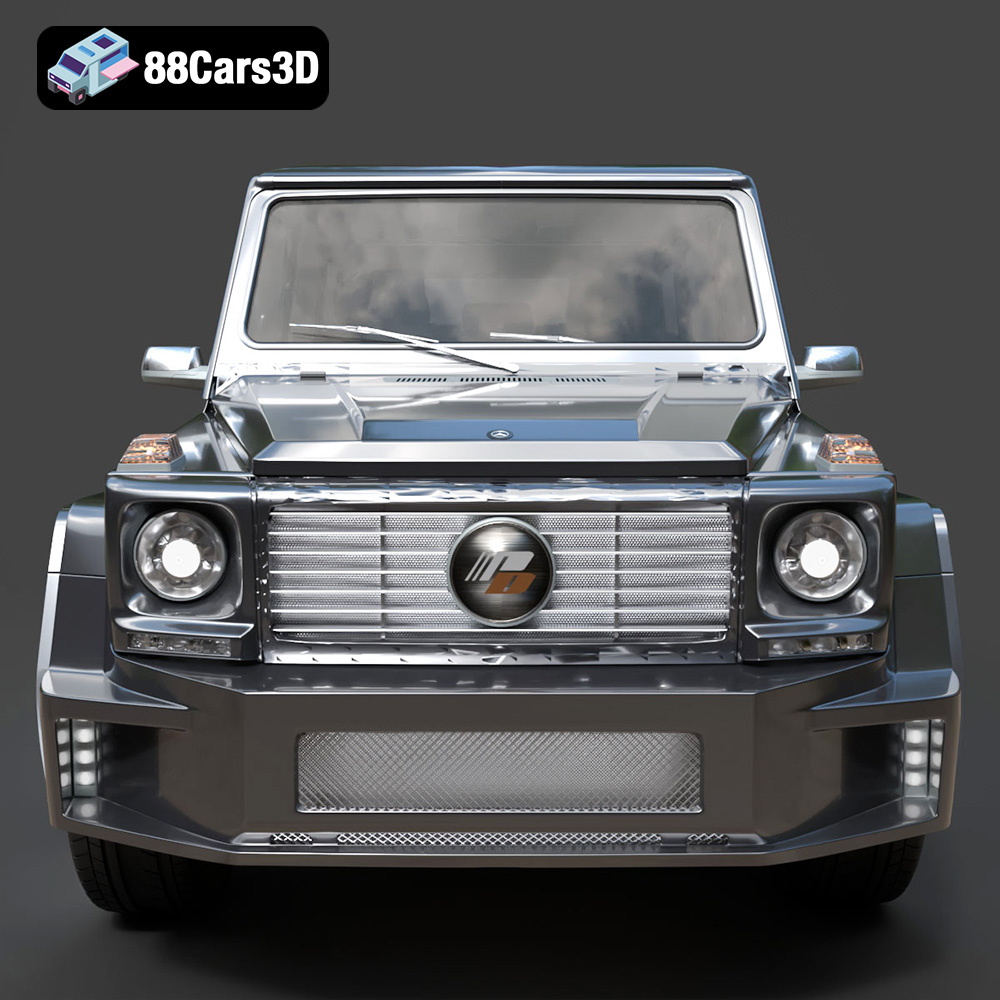
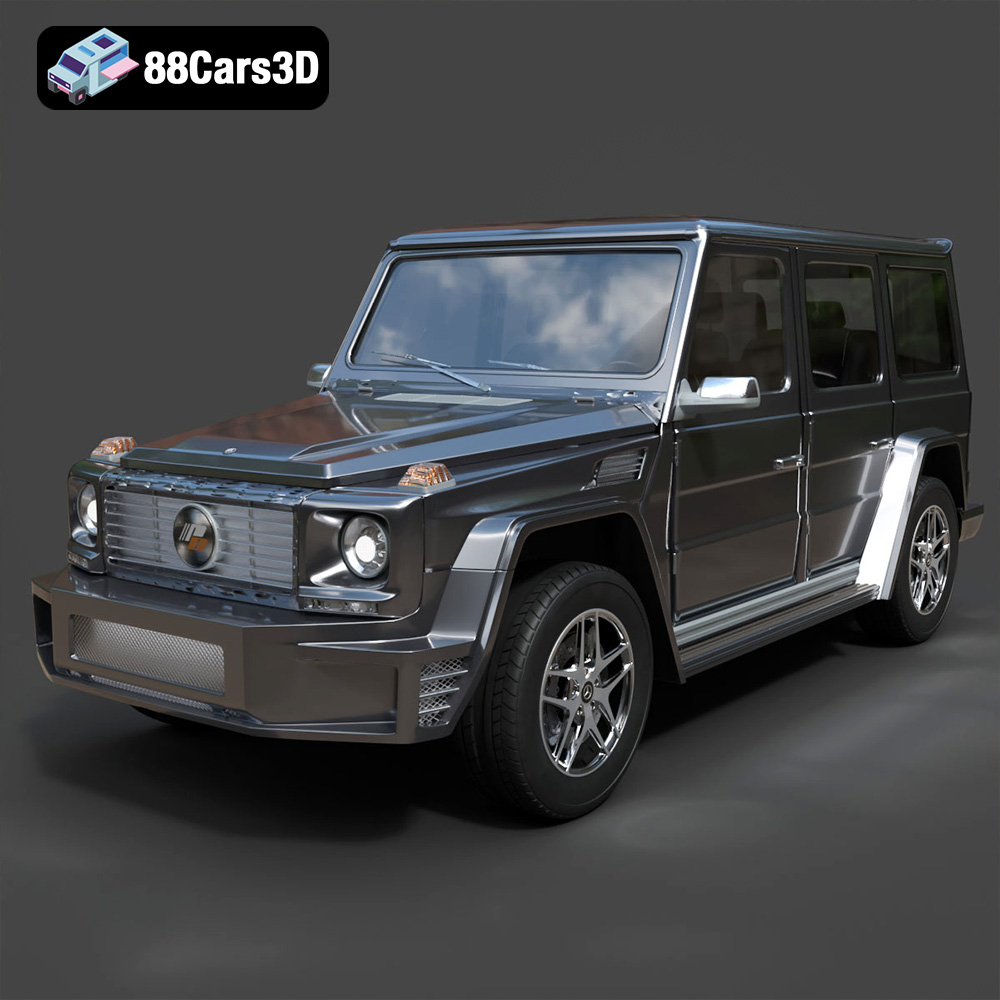
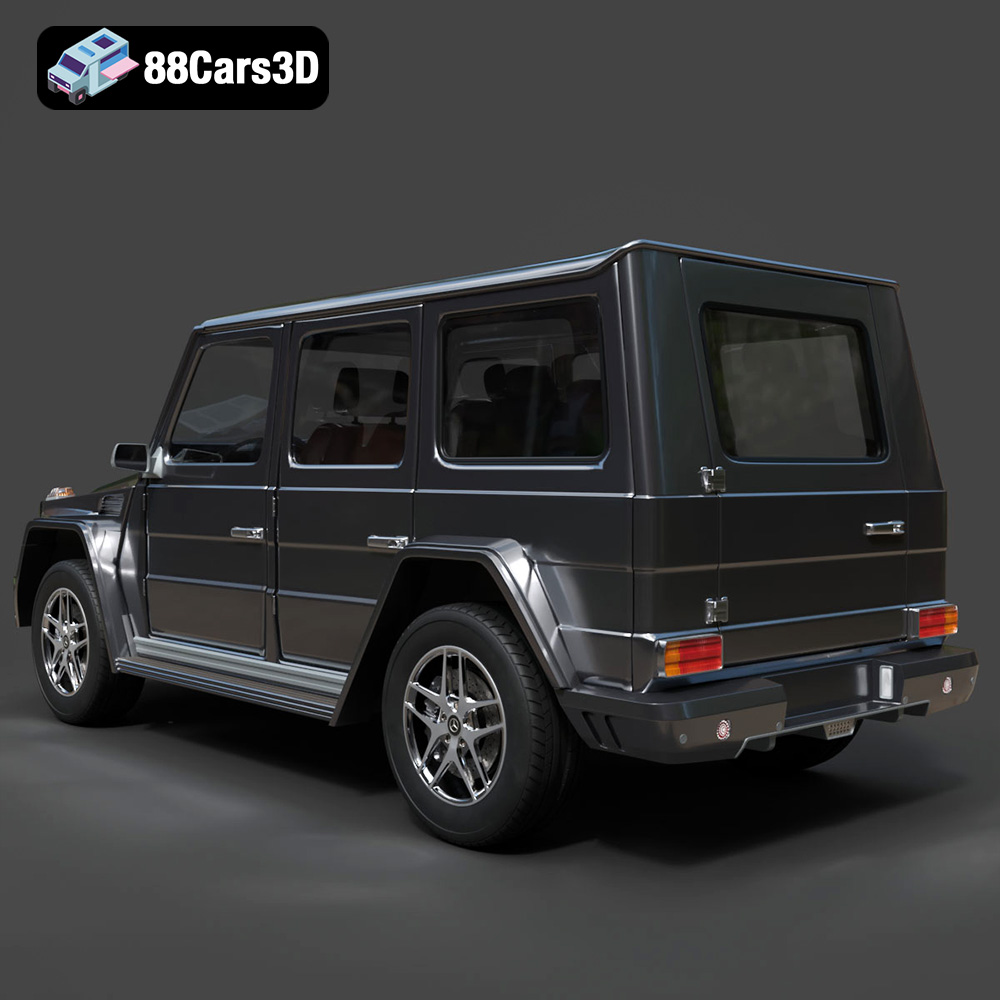
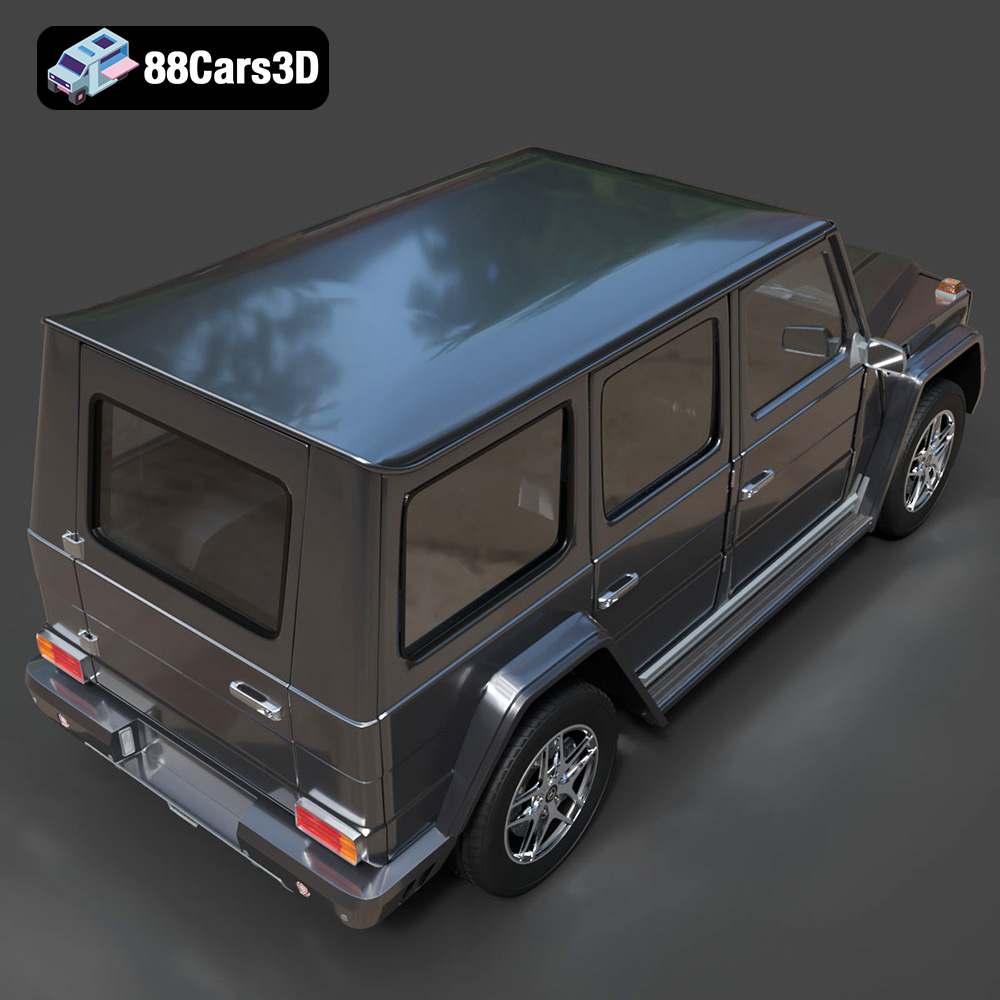
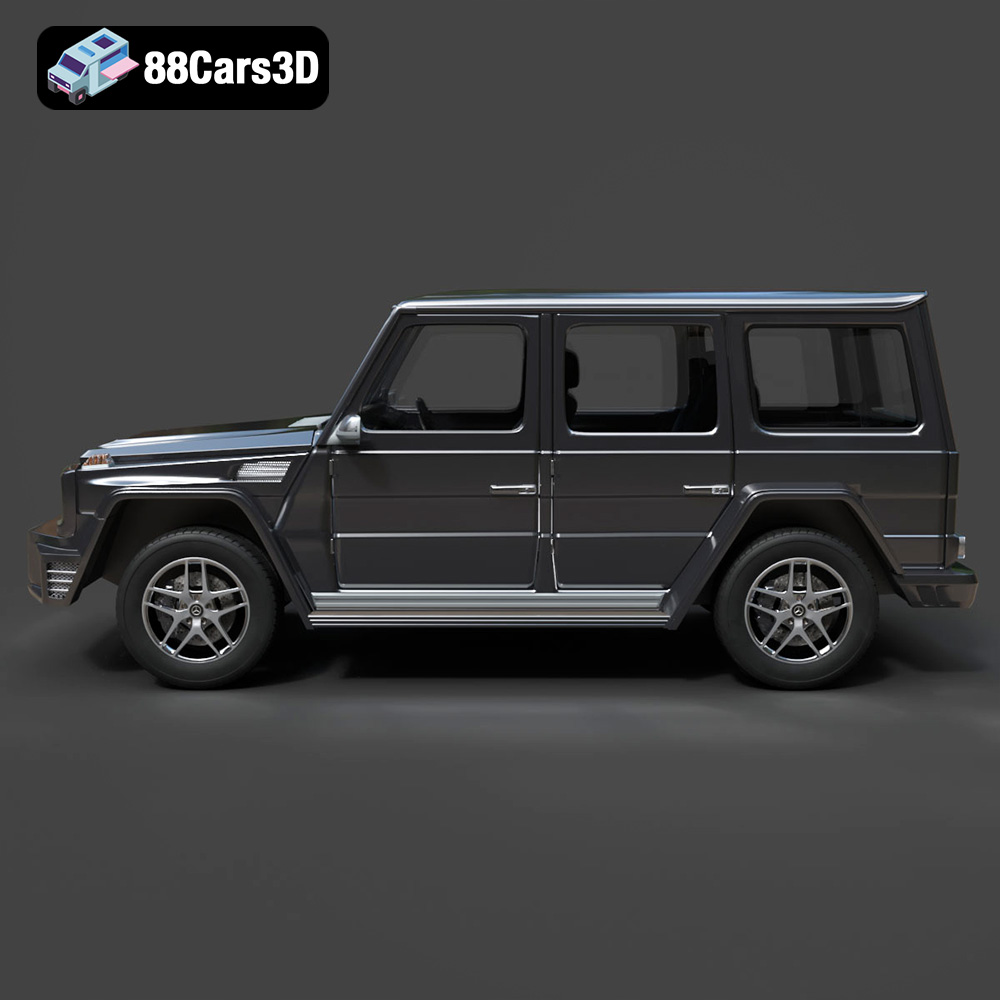
The defining characteristic of the G-Class is its iconic boxy silhouette. This 3D model accurately replicates these proportions, featuring sharp panel edges that are crucial for conveying its rugged yet sophisticated aesthetic. Details like the bold front grille with precise emblem placement, the distinctive round headlights, and the exposed door hinges are faithfully reproduced. Crucially, the model includes a rear-mounted spare wheel housing and side steps, adding to its off-road character. The large alloy wheels, paired with off-road tire geometry, are individually modeled and separated, an essential feature for realistic animation and customization. This level of exterior authenticity makes it ideal for automotive rendering in marketing campaigns or high-end visualization projects.
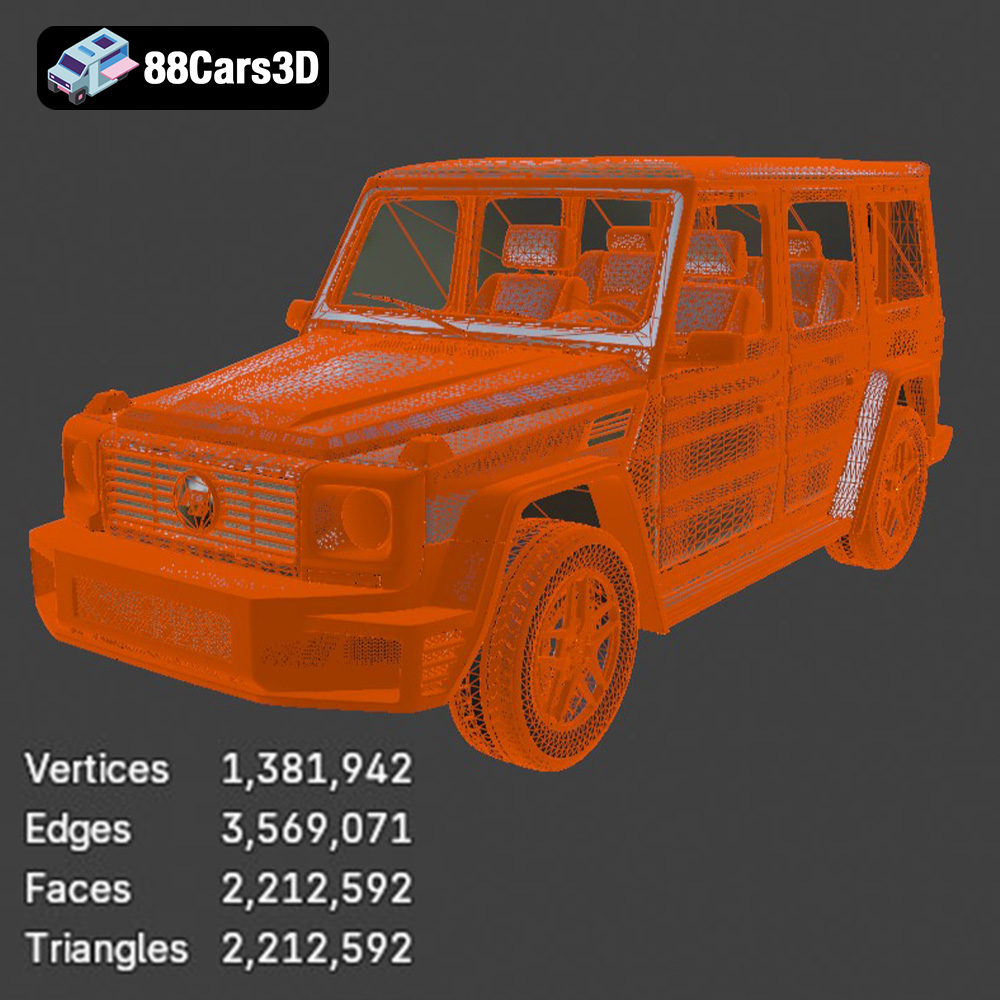
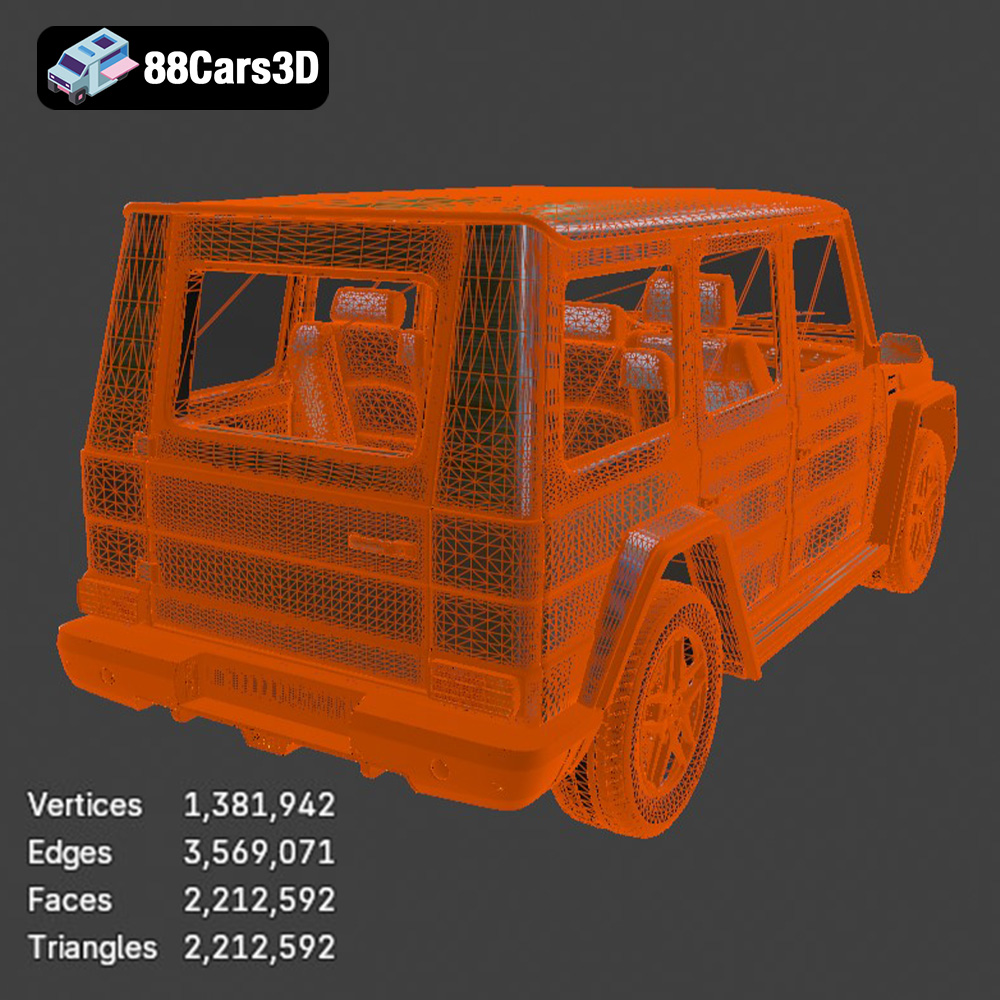
While the G-Class is rugged on the outside, its interior is a sanctuary of luxury. The 3D model meticulously represents this, featuring a detailed luxury dashboard with an instrument cluster, a multifunction steering wheel, and a center console with an infotainment layout. The seat geometry includes subtle stitching details, and the door panels and trim are accurately depicted. What’s particularly noteworthy for professionals is the “optimized geometry for real-time engines and high-quality renders.” This means the mesh is efficient enough for interactive applications without sacrificing the fidelity required for close-up renders, striking a perfect balance between performance and visual quality.
Beyond visual fidelity, a professional 3D model must possess underlying technical excellence. This G-Class model boasts a “clean and well-organized mesh structure,” which is paramount for smooth subdivision, easy UV unwrapping (implied by “Material: Yes, Texture: Yes” in the meta description), and predictable deformation during animation. “Real-world scale accuracy” ensures that the model fits perfectly into scenes without manual scaling adjustments, a common headache with lesser models. Furthermore, “proper pivot setup for steering and wheel rotation” is a critical time-saver for animators and game developers, allowing for quick and accurate vehicle dynamics. The “optimized polygon flow” contributes to both performance in real-time engines and visual smoothness in high-resolution renders.
The versatility of the Mercedes-Benz G Class 2013 3D Model truly shines in how it integrates into various professional pipelines. From high-end cinematic production to interactive gaming, its design and included file formats cater to a broad spectrum of creative and technical demands.
For artists focused on photorealistic rendering, the .max and .blend formats offer native environments for industry-standard software like Autodesk 3ds Max and Blender. In 3ds Max, professionals can leverage powerful renderers such as V-Ray or Corona to create stunning marketing visuals. This involves setting up studio lighting, refining material properties (like metallic paints, glossy plastics, and leather textures), and crafting dramatic camera angles. The clean topology of the G-Class model ensures that subdivision modifiers (like Turbosmooth) can be applied without artifacts, resulting in incredibly smooth surfaces. Animators can utilize the separate wheel and steering components to create realistic driving sequences, perfect for luxury automotive marketing or dealership visuals. Similarly, Blender users benefit from the native .blend file, enabling them to dive directly into Eevee for real-time renders or Cycles for production-quality results, exploiting Blender’s robust node-based material system to achieve precise PBR (Physically Based Rendering) materials that react realistically to light.
Game developers will find the Mercedes-Benz G Class 2013 3D Model particularly appealing for its game-ready attributes. The .fbx and .unreal formats are specifically tailored for real-time engines like Unreal Engine and Unity. When importing into Unreal, developers can expect a model with optimized polygon counts and potentially pre-configured materials, significantly reducing setup time. The separate wheels and steering parts are crucial for implementing accurate vehicle physics and animation blueprints. Developers can easily integrate this luxury SUV into open-world driving games, off-road simulators, or cinematic cutscenes. The robust geometry ensures stable collision meshes, and the optimized UVs (implied by texture support) allow for efficient texture packing and PBR material setup within the engine, leading to visually stunning yet performant in-game assets.
The burgeoning fields of AR and VR demand highly optimized yet visually compelling game assets. The .glb format, in particular, positions the G-Class model perfectly for these applications. Imagine a virtual showroom where potential buyers can explore the G-Class in 3D, customize its color, or even place it in their driveway using AR on a smartphone. The optimized nature of .glb ensures quick loading times and smooth interaction within these immersive environments. For VR, the model can populate virtual driving experiences, allowing users to “sit” inside the luxurious interior or navigate challenging off-road terrains, making it an invaluable tool for interactive product demonstrations or training simulations.
The utility of a high-quality 3D model extends beyond digital screens. The inclusion of the .stl format for the Mercedes-Benz G Class 2013 3D Model opens up an exciting avenue: 3D printing. This capability transforms the digital asset into a physical, tangible collectible, perfect for enthusiasts, designers, or anyone wanting a miniature replica of this iconic vehicle.
The .stl file is the standard for almost all 3D printers, providing a tessellated representation of the model’s surface. For the G-Class, this means you can take the intricate digital design and bring it into the physical world. The product description explicitly details recommended 3D print settings, which is a massive advantage for users. These settings are crucial for achieving a successful print and include:
These detailed guidelines are invaluable for both novice and experienced 3D printer users, ensuring the best possible outcome for their G-Class replica. Whether using FDM (Fused Deposition Modeling) for larger, more robust models or resin (SLA/DLP) printing for finer details and smoother finishes at smaller scales, the .stl provides the necessary geometric data.
After printing, the journey of creating a physical G-Class model is far from over. Post-processing is where the model truly comes to life. The product description outlines steps such as sanding, primer application, and choosing between a gloss or matte finish. These stages are critical for removing layer lines, preparing the surface for paint, and achieving a professional look. Customization doesn’t stop with digital modifications; it extends to the physical realm. Modelers can meticulously paint the body, add chrome detailing to grilles and badges, and even weather the vehicle for a more rugged, off-road appearance. This fusion of digital design and physical craftsmanship transforms the 3D model into a unique, collectible piece, further showcasing the versatility of high-quality 3D car models from resources like 88cars3d.com.
A truly valuable 3D asset is one that can be adapted and customized to fit diverse project requirements without extensive re-modeling. The Mercedes-Benz G Class 2013 3D Model is engineered with this philosophy in mind, offering significant customization potential to artists and developers.
The product description highlights several customization options that empower users to make the model truly their own:
These customization options, coupled with the clean mesh and organized structure, ensure that the model remains a flexible asset throughout its lifecycle, adapting to new challenges and creative directions. This long-term utility is a hallmark of high-quality 3D car models.
In the competitive landscapes of 3D visualization, game development, and architectural rendering, having access to premium, versatile assets is a game-changer. The Mercedes-Benz G Class 2013 3D Model stands out as an exemplary asset, meticulously crafted to meet the rigorous demands of professional workflows. Its authentic representation of an iconic vehicle, coupled with its technical advantages and comprehensive file format support, makes it an indispensable tool for a wide range of applications.
From delivering breathtaking automotive rendering for marketing campaigns to serving as a robust, game-ready vehicle for immersive simulations and even enabling the creation of physical scale models through 3D printing, this G-Class model offers unparalleled value. Understanding the nuances of each included file format – from the editable .blend and .max scenes to the versatile .fbx and AR/VR-optimized .glb, and the print-ready .stl – empowers artists and developers to integrate this asset seamlessly into their specific pipelines. The detailed exterior and interior features, combined with thoughtful technical advantages like proper pivot setup and optimized polygon flow, ensure both visual fidelity and practical usability.
For professionals seeking to elevate their projects with a high-quality, adaptable, and iconic 3D car model, the Mercedes-Benz G Class 2013 3D Model from 88cars3d.com offers a powerful foundation. It’s more than just a model; it’s a gateway to limitless creative possibilities, ready to be customized and deployed across the entire spectrum of digital and physical design. Investing in such a comprehensive asset ensures that your projects not only look exceptional but also benefit from a streamlined, efficient workflow.
The Mercedes-Benz G Class 2013 3D Model is a high-detail digital recreation of the iconic luxury off-road SUV known for its boxy design, rugged capability, and premium craftsmanship. The 2013 G-Class blends military-inspired durability with refined interior comfort, making it a timeless symbol of performance and prestige. This 3D model accurately represents the distinctive squared body shape, bold front grille, round headlights, exposed door hinges, roof rails, spare wheel rear mount, and elevated ground clearance. Designed with clean topology and real-world scale accuracy, it is ideal for rendering, animation, automotive visualization, game development, and AR/VR experiences. Perfect for urban luxury scenes, off-road environments, desert simulations, cinematic projects, and SUV driving games.
$9.99