Get 50% OFF All Premium 3D & STL Models!

The automotive industry is in a constant state of evolution, pushing the boundaries of design, engineering, and marketing. At the heart of this innovation lies real-time visualization, a powerful paradigm shift that has transformed how vehicles are conceived, presented, and experienced. Unreal Engine 5 stands at the forefront of this revolution, offering unparalleled visual fidelity, performance, and a rich ecosystem of tools for automotive professionals. From concept design and engineering reviews to interactive configurators, marketing campaigns, and virtual production, Unreal Engine empowers artists and developers to bring their automotive visions to life with stunning realism and interactivity.
This comprehensive guide dives deep into leveraging Unreal Engine 5 for advanced automotive visualization. We’ll explore critical workflows, optimization strategies, and cutting-edge features that enable the creation of photorealistic vehicles and immersive experiences. Whether you’re a seasoned Unreal Engine developer, a 3D artist, an automotive designer, or a visualization professional, this article will equip you with the knowledge to push the limits of real-time rendering. We’ll cover everything from project setup and model optimization with Nanite to crafting breathtaking PBR materials, dynamic lighting with Lumen, and building interactive configurators. Get ready to unlock the full potential of Unreal Engine 5 and transform how you visualize automotive excellence.
Embarking on an automotive visualization project in Unreal Engine 5 requires a thoughtful initial setup to ensure a stable, performant, and efficient development pipeline. The choices made here will lay the groundwork for everything that follows, from asset integration to final rendering quality. Understanding the right project template and configuring core settings are paramount.
When starting a new project, Unreal Engine offers several templates. For automotive visualization, the “Blank” or “Architecture, Engineering, and Construction (AEC)” templates are often preferred. While a “Vehicle” template exists, it’s primarily geared towards game-specific driving mechanics and might introduce unnecessary overhead for purely visualization-focused projects. The Blank template gives you the most control, allowing you to selectively enable features, while the AEC template provides a good starting point with some relevant architectural elements and rendering settings pre-configured.
Crucial initial configurations reside within the Project Settings. Navigate to Edit > Project Settings. Under the “Engine” section, pay close attention to:
For large-scale automotive projects, especially those involving multiple vehicles, complex environments, or real-time configurators, it’s also wise to consider the “Content” section. Set up clear folder structures (e.g., Cars/, Environments/, Materials/, Blueprints/) to maintain organization. Regularly saving and backing up your project is non-negotiable.
Professional automotive visualization projects often involve teams of artists, designers, and developers. Effective collaboration is impossible without robust source control. Perforce (Helix Core) is widely considered the industry standard for Unreal Engine projects due to its ability to handle large binary files efficiently, offer granular permission controls, and streamline asset management. Git with Git Large File Storage (LFS) is another viable option, particularly for smaller teams or projects already familiar with Git.
Implementing source control from day one ensures that:
Beyond the technical setup, establishing clear communication protocols and a disciplined workflow for checking in/out assets is crucial. Regularly “syncing” to the latest version, submitting small, focused changes, and communicating intent with other team members will prevent headaches and keep the project moving smoothly. For more details on best practices for team development, consult the official Unreal Engine documentation at dev.epicgames.com/community/unreal-engine/learning.
The visual quality of your automotive visualization hinges on the fidelity and optimization of your 3D car models. Bringing these intricate assets into Unreal Engine 5 requires careful attention to detail, leveraging the right file formats, and employing advanced features like Nanite to maintain performance without sacrificing visual excellence. Sourcing high-quality, pre-optimized assets from platforms like 88cars3d.com can significantly streamline this process, providing models with clean topology, realistic materials, and proper UV mapping ready for Unreal Engine.
The primary file formats for importing 3D models into Unreal Engine are FBX and USD (Universal Scene Description). Each has its strengths:
For automating the complex task of processing and cleaning up imported CAD or DCC data, Unreal Engine’s Data Prep toolset is invaluable. Data Prep allows you to create reusable recipes to:
This significantly reduces manual effort, especially when dealing with hundreds or thousands of parts in a highly detailed car model, ensuring consistent quality and organization.
One of Unreal Engine 5’s most revolutionary features is Nanite, a virtualized geometry system that allows artists to import film-quality assets with billions of polygons directly into the engine without traditional LODs or baking normal maps. For highly detailed 3D car models, Nanite is a game-changer.
With Nanite, you can:
To enable Nanite for a static mesh, simply open the Static Mesh Editor, locate the “Nanite Settings” section, and check “Enable Nanite Support.” You can also set a “Preserve Area Percent” to control how much surface area Nanite tries to retain during its internal simplification, or use “Fallback Relative Error” for more fine-grained control. It’s generally recommended to enable Nanite for most opaque, static geometry in a car model, such as the body, chassis, interior components, and wheels. However, dynamic meshes, transparent materials (like glass), or meshes with complex WPO (World Position Offset) often do not support Nanite or perform better as traditional meshes, so a strategic approach is key.
Beyond geometrically accurate models, truly immersive automotive visualization relies on meticulously crafted materials and sophisticated lighting. Unreal Engine 5 provides a powerful Material Editor and advanced rendering features to achieve photorealistic results, bringing every curve, reflection, and shadow of a vehicle to life.
Physically Based Rendering (PBR) is the cornerstone of realism in modern real-time graphics. It simulates how light interacts with surfaces based on real-world physics, resulting in materials that react consistently under various lighting conditions. For automotive models, mastering the PBR workflow in Unreal Engine’s Material Editor is essential for creating believable car paint, glass, chrome, rubber, and leather.
The standard Metallic-Roughness workflow is most commonly used:
Specific automotive materials require advanced techniques:
The quality of your textures directly impacts the final render. Aim for high-resolution textures (4K or 8K) for primary surfaces that will be viewed up close, and ensure proper UV mapping to avoid stretching or seams. Texture streaming automatically manages memory for larger textures, so using high resolutions is generally fine.
Lighting is arguably the most critical element in automotive visualization. Realistic lighting defines shape, form, and material properties. Unreal Engine 5’s Lumen Global Illumination and Reflections system is a game-changer for dynamic, real-time lighting scenarios.
Project Settings > Engine > Rendering > Global Illumination and Reflections, and set both to “Lumen.” For optimal quality, ensure “Hardware Ray Tracing” is enabled in your project settings and in the Lumen settings.Balancing visual quality and performance involves tweaking Lumen’s settings (e.g., Final Gather Quality, Trace Distance) and strategically placing light sources. Use Directional Lights for sunlight, Sky Lights for ambient skylight and cloud reflections, and Spot/Point Lights for interior lighting or accentuating specific features. Emissive materials on digital displays or LED strips within the car also contribute to Lumen’s global illumination, adding another layer of realism.
Real-time visualization goes beyond static renders; it’s about creating dynamic, interactive experiences. Unreal Engine 5 provides powerful tools like Blueprint visual scripting, Sequencer, and Chaos Physics to animate vehicles, build interactive configurators, and simulate realistic driving dynamics.
Blueprint visual scripting is Unreal Engine’s node-based scripting system, allowing artists and designers to create complex gameplay and interactive logic without writing a single line of code. For automotive visualization, Blueprints are indispensable for developing interactive configurators, animating car components, and building engaging user interfaces.
Key applications of Blueprint scripting in automotive visualization include:
This often involves Widget Blueprints (UMG) for the user interface elements (buttons, sliders, dropdowns) that communicate with the car’s controlling Blueprint.
By logically structuring your Blueprints (e.g., a “Car Master Blueprint” handling all variations and interactions), you can create highly robust and scalable interactive demos.
For high-quality promotional videos, cinematic presentations, or virtual production, Unreal Engine’s Sequencer is an indispensable tool. Sequencer is a powerful non-linear cinematic editor that allows you to orchestrate camera movements, character animations, environmental changes, and vehicle sequences with precision.
With Sequencer, you can:
For truly realistic driving simulations, Unreal Engine 5 integrates the Chaos Physics engine. Chaos offers a robust and highly scalable physics system capable of handling complex vehicle dynamics. While the standard Vehicle template provides a starting point, custom vehicle physics setups can be built to simulate specific car behaviors:
Combining Sequencer with Chaos Vehicle Physics allows you to create incredibly lifelike automotive cinematics, demonstrating a vehicle’s performance and handling in a dynamic, controlled environment.
Achieving stunning visual fidelity in real time, especially for high-detail automotive models, requires a constant focus on performance optimization. Unreal Engine 5 offers numerous tools and techniques to ensure your projects run smoothly across various hardware, enabling cutting-edge applications like AR/VR and virtual production.
While Nanite significantly reduces the burden of managing high-polygon counts, other optimization strategies remain crucial for non-Nanite assets, transparency, and overall scene performance.
Alt+8) to identify and optimize expensive materials. Material Functions can help simplify graphs and promote reuse.Regularly profiling your scene using Unreal Engine’s built-in tools (Stat Unit, Stat GPU, Profiler) is essential to identify performance bottlenecks and optimize effectively.
Unreal Engine 5 extends beyond traditional screen-based visualization, driving innovation in augmented reality (AR), virtual reality (VR), and virtual production workflows for the automotive sector.
Virtual production, particularly with large LED volumes, is revolutionizing how automotive commercials and cinematic content are created. Instead of expensive physical sets or green screens, a high-quality 3D car model is placed on a stage, surrounded by a dynamic environment rendered in Unreal Engine on LED screens. This allows for real-time lighting changes, reflections, and seamless integration of virtual backgrounds with physical vehicles.
Key aspects:
These cutting-edge applications not only enhance the visualization process but also unlock new creative and cost-effective avenues for automotive design, marketing, and sales.
Unreal Engine 5 has truly transformed the landscape of automotive visualization, moving it beyond static renders to a realm of interactive, immersive, and dynamic experiences. By harnessing features like Nanite’s virtualized geometry, Lumen’s dynamic global illumination, and the versatile power of Blueprint scripting, professionals can create unparalleled photorealistic representations of vehicles and their environments. We’ve explored the critical workflows, from meticulous project setup and the strategic import of high-fidelity 3D car models to the intricate crafting of PBR materials, real-time lighting, and advanced animation techniques.
The journey doesn’t end with visual fidelity; performance optimization is a continuous pursuit, enabling the deployment of these stunning visuals across diverse platforms, including the demanding environments of AR/VR and virtual production. As the automotive industry continues its rapid innovation, Unreal Engine remains an indispensable tool, empowering designers to iterate faster, marketers to engage more deeply, and consumers to experience future vehicles in entirely new ways. The ability to source high-quality, pre-optimized assets from marketplaces such as 88cars3d.com further streamlines this creative process, allowing teams to focus on innovation rather than foundational asset creation.
Embrace these advanced techniques to elevate your automotive visualization projects. The future of automotive design and presentation is real-time, and with Unreal Engine 5, you have the power to drive that future.
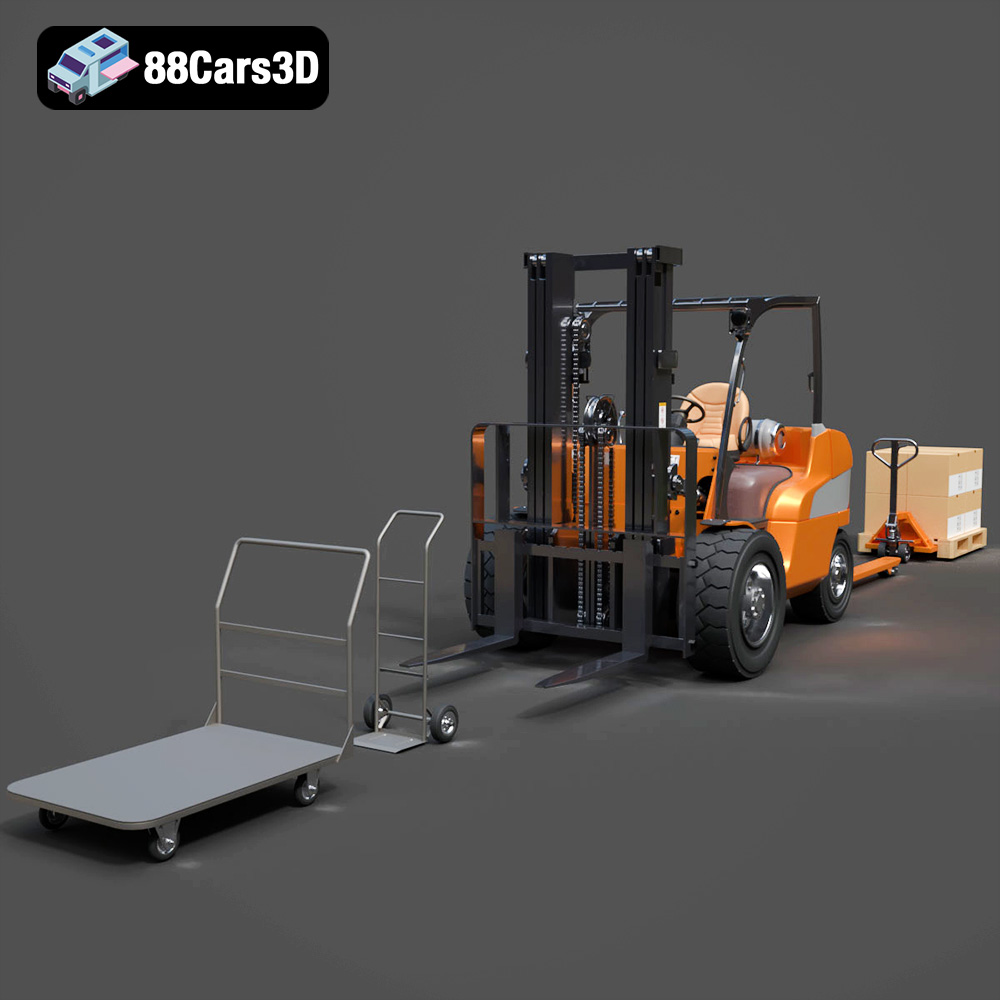
Texture: Yes | Material: Yes Download the highly detailed CAT Manual Loader & Warehouse Carts Kit 3D Model (2.4M Triangles). Features a macro-detailed hydraulic pallet jack, heavy-duty forks, and transport carts. Perfect for industrial ArchViz, factory rendering, and logistics simulations. Includes .blend, .fbx, .obj, .glb, .stl, and .max formats.
Price: $19.99
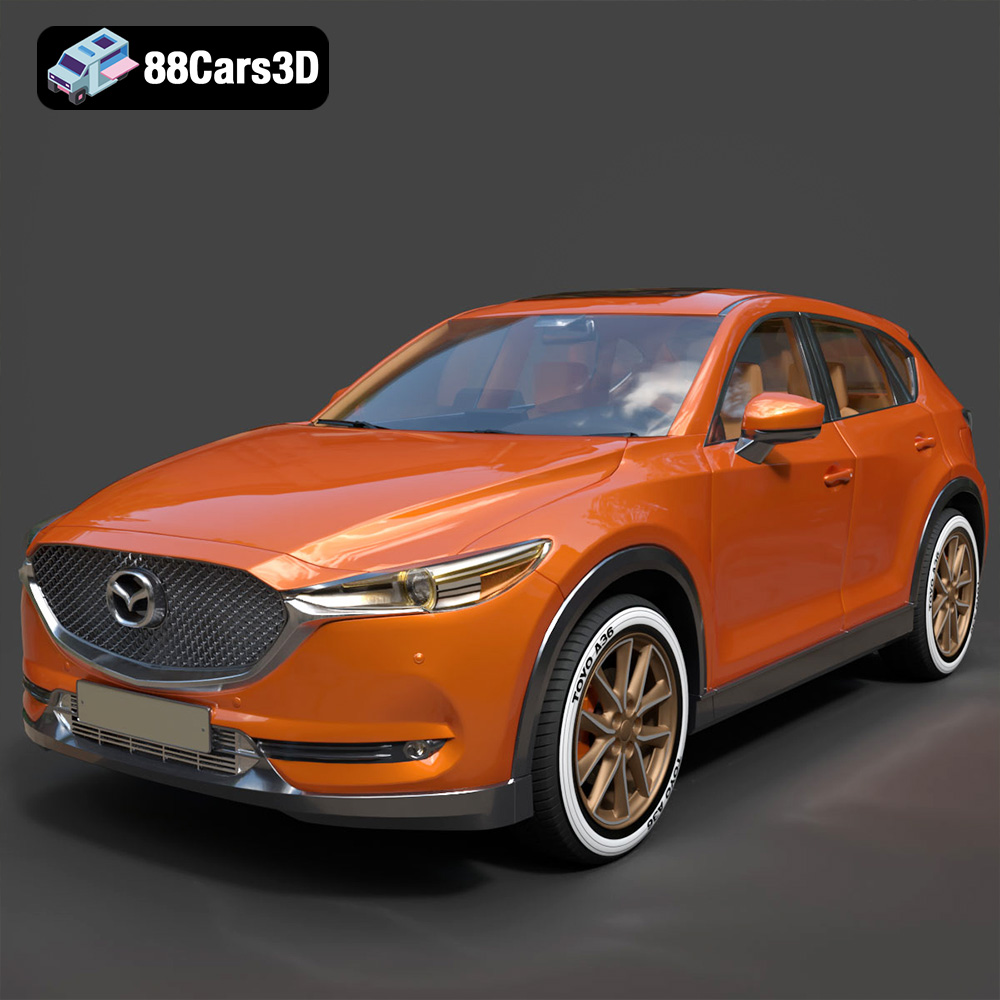
Texture: Yes | Material: Yes
Download the highly optimized Mazda CX-5 2014 3D Model (294k Triangles). Features the dynamic Kodo design language, signature grille, and a clean interior. Perfectly balanced for ArchViz, background traffic, and game development. Includes .blend, .fbx, .obj, .glb, .stl, and .max formats.
Price: $19.99
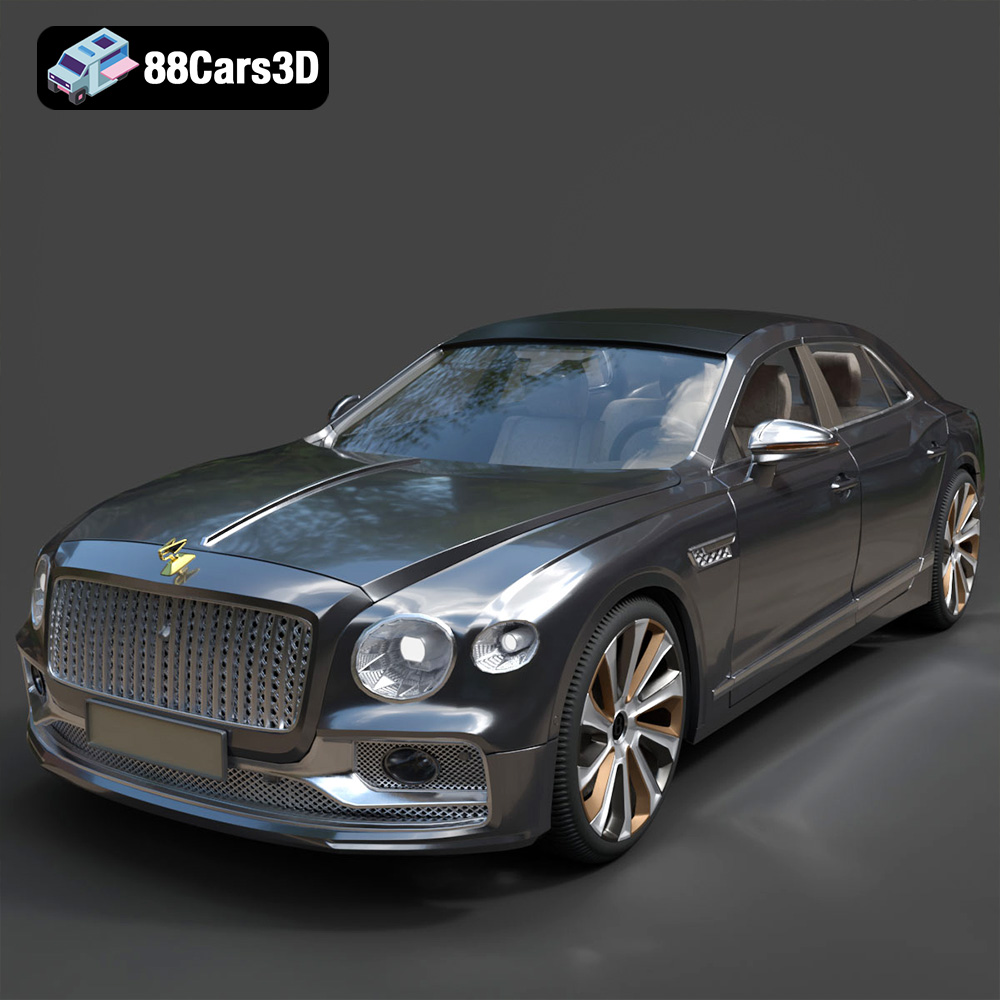
Texture: Yes | Material: Yes Download the ultra-high-detail Bentley Flying Spur Mulliner 2022 3D Model (2.94M Triangles). Features the bespoke Double Diamond grille, a fully modeled diamond-quilted interior, and exquisite luxury styling. Perfect for high-end ArchViz, VFX, and cinematic rendering. Includes .blend, .fbx, .obj, .glb, .stl, and .max formats.
Price: $19.90
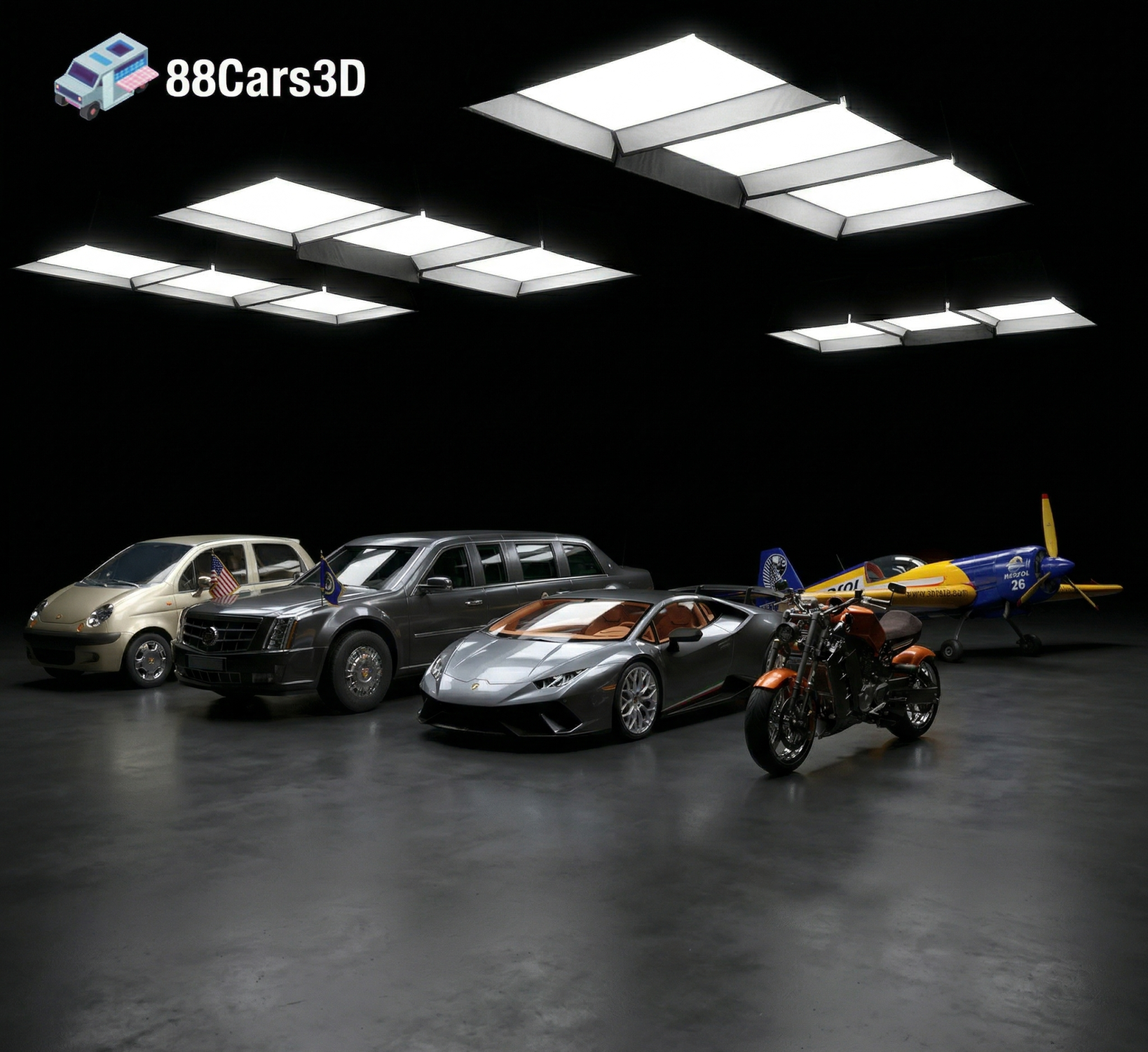
Texture: Yes | Material: Yes | 3D Printable: Yes. Download the Ultimate Creators’ Showcase featuring 5 premium 3D models: Lamborghini Huracan, ZAV Concept Motorcycle, Sukhoi SU-26, Presidential Limousine, and Daewoo Damas. Optimized for 4K CGI rendering and 3D printing. Save massive with this exclusive multi-category bundle!
Price: $99.99

Texture: Yes | Material: Yes | 3D Printable: Yes. Download the Italian Thoroughbreds Bundle featuring 5 iconic 3D models: Lamborghini Huracán Performante, Ferrari 458 Italia, Lamborghini Urus, Diablo SV, and Maserati GT. Optimized for 4K rendering and 3D printing (STL included). Save 50% with this ultimate Italian vehicle collection.
Price: $199.99

Download the Elite Future Mobility Bundle featuring 4 highly optimized 3D models: Tesla Model S, Avatr 11, Li L9, and Zoox Robotaxi. Perfect for ArchViz, Smart City renders, and game dev. Optimized for Unreal Engine and Blender. Includes .fbx, .obj, and .max formats.
Price: $99

🚗 5 Iconic German Cars (BMW M4 G82, M5 CS, X3, 1 Series & Mercedes E-Class). ✅ Optimized for ArchViz: Ready for Corona & V-Ray. 💰 Save €71 with this limited-time collection! 🚀 Instant Download after purchase.
Price: $119

Download the Extreme Off-Road & Survival 3D Models Bundle! Includes the Brabus 800 Adventure, Dodge Ram Bigfoot, Spec Truck, and a Caravan. Save over €210 on this premium 4-in-1 off-grid vehicle pack for ArchViz and game development.
Price: $149.99

Download the Heavy Duty & Commercial Logistics 3D Models Bundle! Includes the Ford Sterling, Caterpillar CT680, Mercedes Citaro Bus, and Vito Van. Save over €130 on this massive, game-ready 4-in-1 industrial vehicle pack.
Price: $109.99

Download the Ultimate Custom Motorcycles 3D Models Bundle. Includes a Custom Chopper, Ducati 916 Café Fighter, Harley XR1200X, and BMW K100. Perfect premium props for luxury ArchViz garages. Save over €250 today!
Price: $159.99

