Get 50% OFF All Premium 3D & STL Models!

“`html
Choosing the right file format is a crucial first step in any successful 3D printing project. While STL has long been the reigning champion, OBJ and FBX formats are becoming increasingly popular, each offering distinct advantages and disadvantages. This comprehensive guide will delve into the technical nuances of these three file formats, specifically focusing on their suitability for 3D printing applications, especially when working with detailed models like printable car models from platforms like 88cars3d.com. We’ll cover everything from file structure and data storage to slicing parameters and post-processing considerations, empowering you to make informed decisions for your next 3D printing endeavor. Whether you’re printing with FDM or resin, understanding the strengths and limitations of each format will save you time, material, and frustration, ensuring optimal print quality and accuracy.
STL, short for Stereolithography, has been the workhorse of 3D printing for decades. Its simplicity and widespread compatibility have made it a de facto standard. However, its limitations are becoming increasingly apparent, particularly when dealing with complex geometries and textured surfaces. STL files represent a 3D object as a collection of triangles, approximating the surface of the model. The smaller the triangles, the more accurate the representation, but also the larger the file size.
STL files can be stored in two formats: ASCII and binary. ASCII STL files are human-readable, listing the coordinates of each vertex and the normal vector for each triangle. While this makes them easy to inspect and edit manually, they are significantly larger than their binary counterparts. Binary STL files store the same information in a more compact binary format, resulting in smaller file sizes and faster processing times. Regardless of the storage method, the core data structure remains the same: a series of triangles defined by their vertices and normals.
The primary limitation of STL lies in its inability to store color, texture, or material information. It simply defines the shape of the object. This means that if you’re printing a multi-colored or textured model, you’ll need to apply those features in post-processing. Furthermore, STL files often suffer from “faceted” appearances, especially on curved surfaces, due to the triangular approximation. While increasing the triangle density can mitigate this, it also dramatically increases the file size and processing time. When downloading models from marketplaces such as 88cars3d.com, be sure to check if the STL resolution is adequate for the intended print size and desired level of detail.
OBJ, or Wavefront Object, is a more versatile file format that addresses some of the limitations of STL. OBJ files can store color, texture, and material information, making them suitable for printing more visually complex models. They also support both polygonal and free-form surface representations, allowing for more accurate representations of curved shapes. However, OBJ files are generally larger than STL files and may not be supported by all 3D printing software.
The key advantage of OBJ is its ability to store color and texture data. This is particularly useful for printing models with intricate details or realistic appearances. OBJ files also support more complex geometries than STL, allowing for smoother curves and more organic shapes. This can be especially beneficial when printing automotive models from 88cars3d.com, where accurate representation of curves and body lines is essential. Furthermore, OBJ files can reference external material files (MTL files), allowing for even more detailed material definitions.
Despite its advantages, OBJ has some potential drawbacks for 3D printing. OBJ files tend to be larger than STL files, which can increase processing time and memory usage. Compatibility can also be an issue, as not all slicing software fully supports the OBJ format, especially when it comes to color and texture information. It’s crucial to verify that your chosen slicer can properly interpret and process OBJ files before attempting to print. Furthermore, OBJ files can sometimes be more prone to errors or inconsistencies than STL files, requiring careful inspection and repair before printing.
FBX, or Filmbox, is a proprietary file format developed by Autodesk. It’s widely used in the gaming and animation industries and is gaining traction in 3D printing due to its advanced features and robust support for complex data. FBX files can store a wide range of information, including geometry, textures, materials, animations, and even skeletal rigs. However, its complexity can also make it more challenging to work with, and compatibility issues can arise depending on the software used.
FBX excels in handling complex scenes and data-rich models. Its ability to store animation data makes it useful for printing articulated models or components that require movement. The robust material and texture support allows for highly realistic prints, although this requires compatible 3D printers capable of handling multi-material printing. FBX also supports non-destructive editing workflows, allowing for iterative design changes without permanently altering the original file. This feature is particularly valuable for professional designers and engineers who require flexibility and control over their 3D models.
The main challenge with FBX for 3D printing is its complexity. Not all 3D printers and slicing software fully support the format, particularly when it comes to animation and advanced material properties. Converting FBX files to a printable format like STL or OBJ may be necessary, which can sometimes result in a loss of information. Furthermore, FBX files tend to be very large, requiring significant processing power and memory. It’s essential to carefully consider the complexity of your model and the capabilities of your hardware and software before choosing FBX as your primary file format. For simpler models, STL or OBJ may be a more efficient and reliable choice.
Even though STL has limitations, it remains a widely used format. Knowing how to optimize your STL files for 3D printing is crucial for achieving successful results. This includes checking for errors, repairing mesh issues, and adjusting settings for optimal print quality. Several software tools are available to help you with these tasks, including Meshmixer, Netfabb, and Blender.
Before printing any STL file, it’s essential to check for common mesh errors, such as non-manifold edges, holes, and flipped normals. These errors can lead to printing failures or inaccurate results. Meshmixer and Netfabb are powerful tools for identifying and repairing these issues. Meshmixer offers a user-friendly interface and a range of automated repair tools, while Netfabb provides more advanced features for professional users. The “Make Solid” tool in Meshmixer is particularly useful for converting complex meshes into watertight solids suitable for 3D printing. In Netfabb, the “Automatic Repair” function can quickly identify and fix a wide range of mesh errors.
Slicing parameters play a crucial role in the final print quality of your STL model. Layer height determines the resolution of the print, with lower layer heights resulting in smoother surfaces but longer print times. A layer height of 0.1mm to 0.2mm is generally recommended for achieving a good balance between quality and speed. Infill density affects the strength and weight of the print, with higher infill densities resulting in stronger but heavier prints. An infill density of 15% to 25% is typically sufficient for most applications. Support structures are necessary for printing overhangs and complex geometries. Choose support settings carefully to minimize material waste and ensure easy removal after printing. Experiment with different support patterns and densities to find the optimal balance for your specific model and printer.
The choice of file format can also depend on the type of 3D printer you’re using: FDM (Fused Deposition Modeling) or resin. FDM printers typically use STL files, while resin printers can handle both STL and OBJ files. Understanding the nuances of each printing method and its compatibility with different file formats is essential for achieving optimal results.
FDM printing involves extruding molten plastic layer by layer to create the 3D object. Due to the nature of the process, FDM printers are less accurate than resin printers, and the layer lines are more visible. Therefore, it’s crucial to optimize STL files for FDM printing by adjusting slicing parameters such as layer height, print speed, and temperature. A larger nozzle size can be used to reduce print time, but it will also result in lower resolution. Proper bed adhesion is essential to prevent warping or detachment during printing. Using a heated bed and applying an adhesive like glue stick or hairspray can improve bed adhesion. When printing models from 88cars3d.com, consider the orientation of the model to minimize the need for support structures and optimize print time.
Resin printing, also known as stereolithography (SLA) or digital light processing (DLP), uses UV light to cure liquid resin layer by layer. Resin printers offer higher resolution and accuracy than FDM printers, making them suitable for printing intricate details and complex geometries. While STL is commonly used for resin printing, OBJ can be advantageous when printing models with color or texture information. Some resin printers can also handle multi-material printing, allowing you to combine different resins with varying properties to create functional prototypes or visually appealing models. Optimize your resin printing by using appropriate exposure times, lift speeds, and support settings. Hollow out your models to reduce resin consumption and printing time. Be sure to properly clean and cure your prints after printing to achieve optimal strength and finish.
In conclusion, the best file format for 3D printing depends on several factors, including the complexity of the model, the capabilities of your 3D printer and slicing software, and your desired level of detail and visual appearance. While STL remains a widely used and reliable format, OBJ and FBX offer advantages for printing more complex and visually rich models. Understanding the strengths and limitations of each file format is crucial for achieving optimal results and avoiding common printing failures. Remember to always check for mesh errors and optimize slicing parameters before printing. By carefully considering these factors, you can confidently choose the right file format for your next 3D printing project and unlock the full potential of additive manufacturing. Explore the wide range of printable car models available in various file formats at 88cars3d.com to put your newfound knowledge to the test!
“`
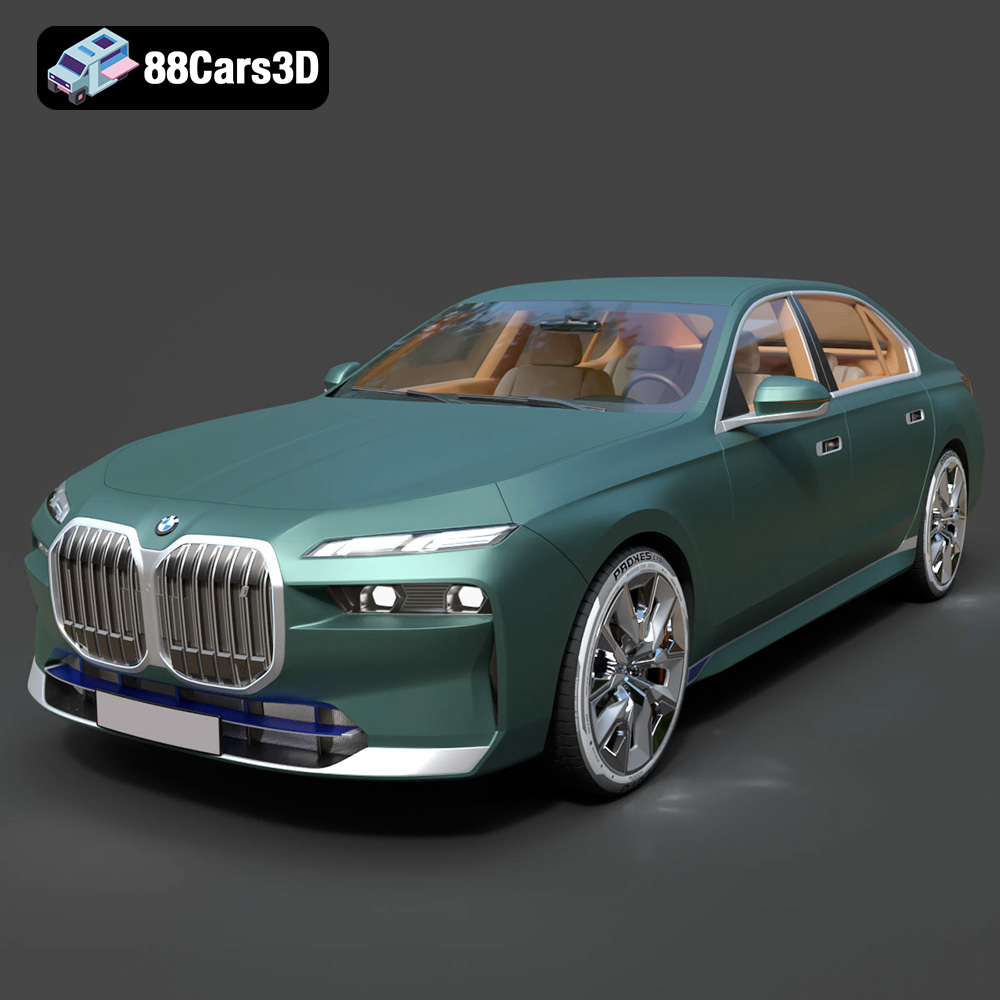
Texture: Yes | Material: Yes Download the ultra-high-detail BMW i7 (2023) 3D Model (4.14M Triangles). Features the illuminated kidney grille, split crystal headlights, fully modeled Theatre Screen interior, and monolithic luxury styling. Perfect for ArchViz, VFX, and cinematic rendering. Includes .blend, .fbx, .obj, .glb, .stl, and .max formats.
Price: $19.99
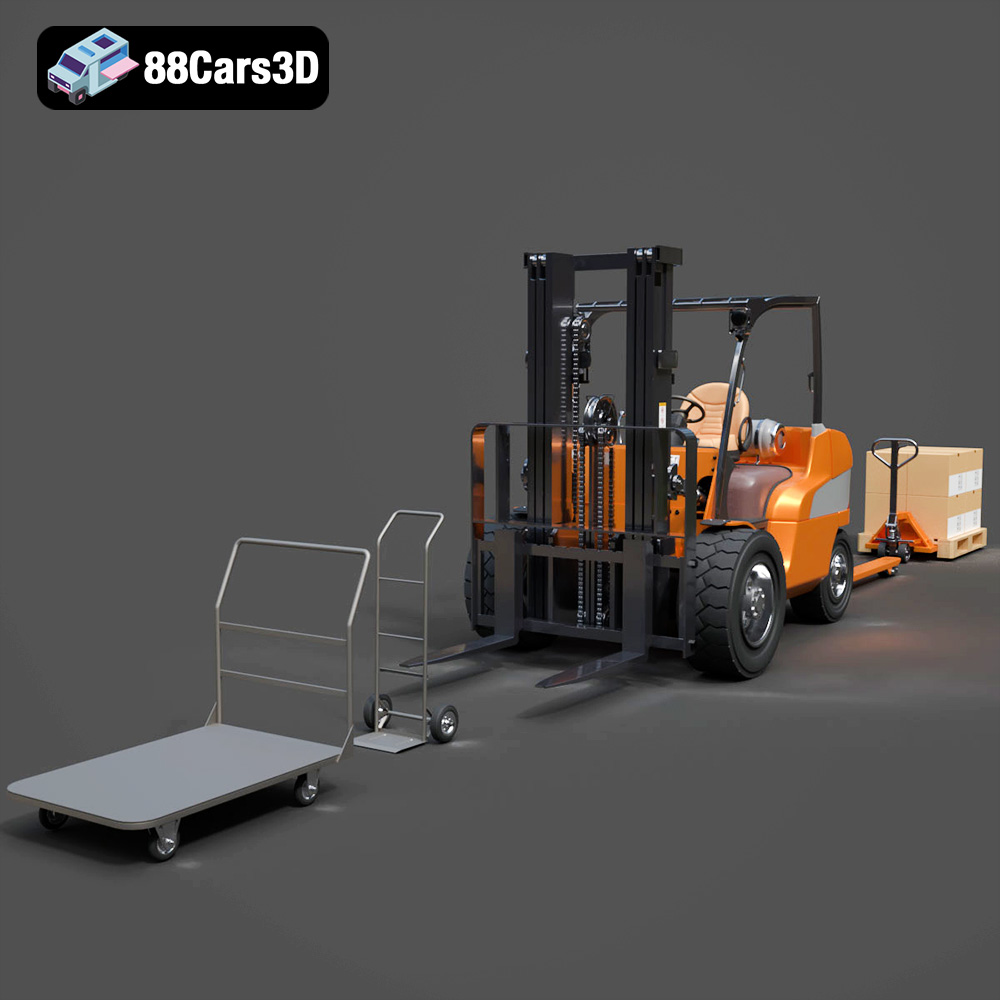
Texture: Yes | Material: Yes Download the highly detailed CAT Manual Loader & Warehouse Carts Kit 3D Model (2.4M Triangles). Features a macro-detailed hydraulic pallet jack, heavy-duty forks, and transport carts. Perfect for industrial ArchViz, factory rendering, and logistics simulations. Includes .blend, .fbx, .obj, .glb, .stl, and .max formats.
Price: $19.99

Texture: Yes | Material: Yes
Download the highly optimized Mazda CX-5 2014 3D Model (294k Triangles). Features the dynamic Kodo design language, signature grille, and a clean interior. Perfectly balanced for ArchViz, background traffic, and game development. Includes .blend, .fbx, .obj, .glb, .stl, and .max formats.
Price: $19.99
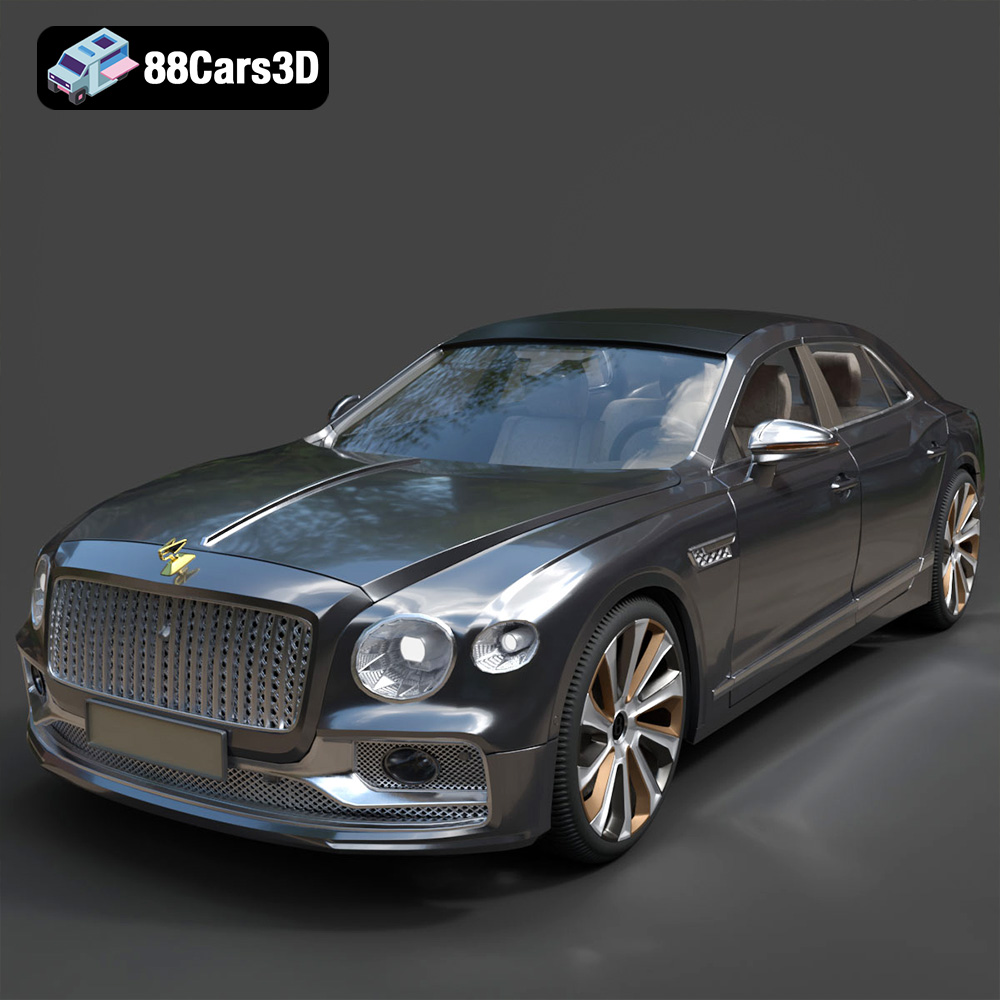
Texture: Yes | Material: Yes Download the ultra-high-detail Bentley Flying Spur Mulliner 2022 3D Model (2.94M Triangles). Features the bespoke Double Diamond grille, a fully modeled diamond-quilted interior, and exquisite luxury styling. Perfect for high-end ArchViz, VFX, and cinematic rendering. Includes .blend, .fbx, .obj, .glb, .stl, and .max formats.
Price: $19.90
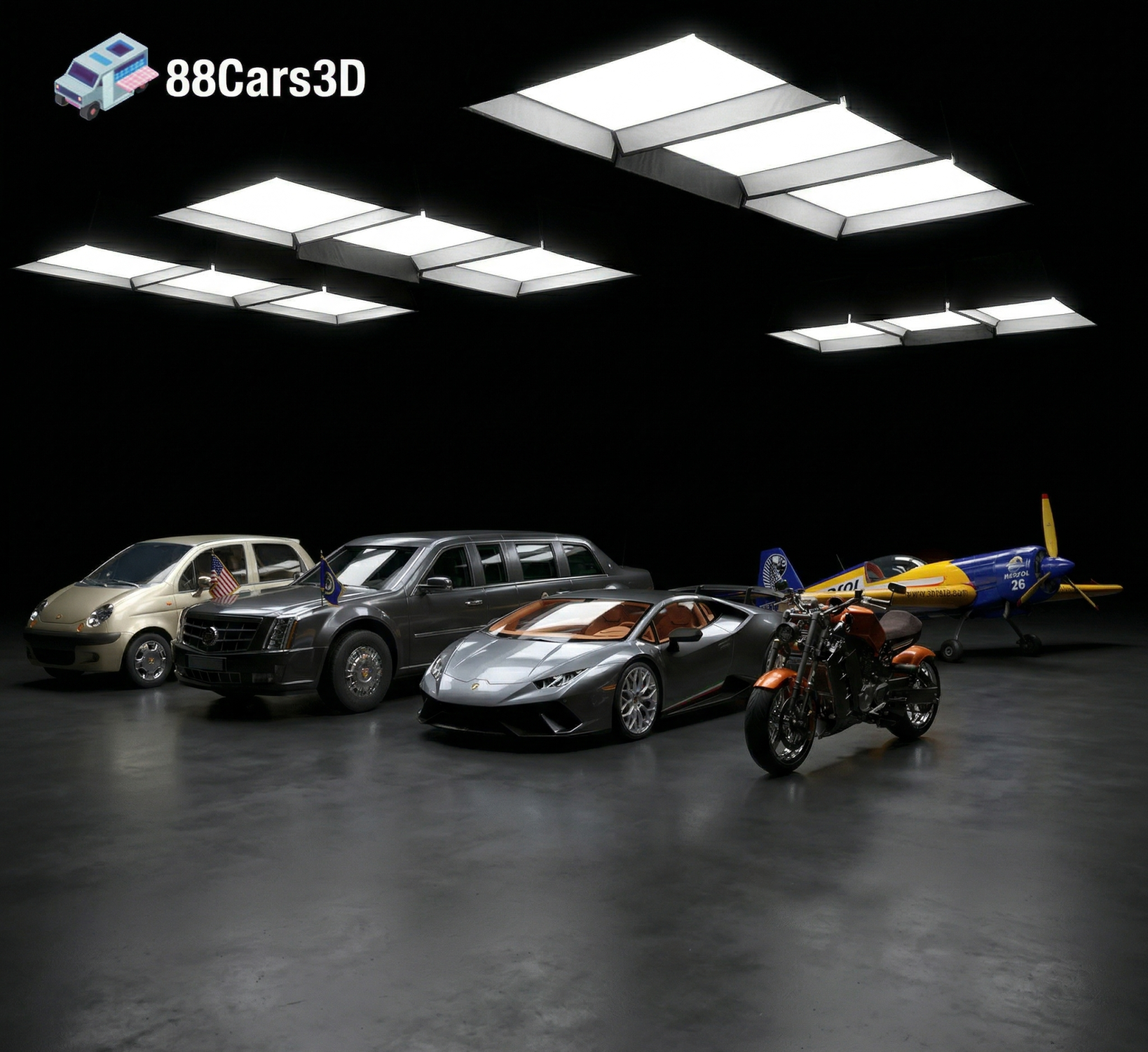
Texture: Yes | Material: Yes | 3D Printable: Yes. Download the Ultimate Creators’ Showcase featuring 5 premium 3D models: Lamborghini Huracan, ZAV Concept Motorcycle, Sukhoi SU-26, Presidential Limousine, and Daewoo Damas. Optimized for 4K CGI rendering and 3D printing. Save massive with this exclusive multi-category bundle!
Price: $99.99

Texture: Yes | Material: Yes | 3D Printable: Yes. Download the Italian Thoroughbreds Bundle featuring 5 iconic 3D models: Lamborghini Huracán Performante, Ferrari 458 Italia, Lamborghini Urus, Diablo SV, and Maserati GT. Optimized for 4K rendering and 3D printing (STL included). Save 50% with this ultimate Italian vehicle collection.
Price: $199.99

Download the Elite Future Mobility Bundle featuring 4 highly optimized 3D models: Tesla Model S, Avatr 11, Li L9, and Zoox Robotaxi. Perfect for ArchViz, Smart City renders, and game dev. Optimized for Unreal Engine and Blender. Includes .fbx, .obj, and .max formats.
Price: $99

🚗 5 Iconic German Cars (BMW M4 G82, M5 CS, X3, 1 Series & Mercedes E-Class). ✅ Optimized for ArchViz: Ready for Corona & V-Ray. 💰 Save €71 with this limited-time collection! 🚀 Instant Download after purchase.
Price: $119

Download the Extreme Off-Road & Survival 3D Models Bundle! Includes the Brabus 800 Adventure, Dodge Ram Bigfoot, Spec Truck, and a Caravan. Save over €210 on this premium 4-in-1 off-grid vehicle pack for ArchViz and game development.
Price: $149.99

Download the Heavy Duty & Commercial Logistics 3D Models Bundle! Includes the Ford Sterling, Caterpillar CT680, Mercedes Citaro Bus, and Vito Van. Save over €130 on this massive, game-ready 4-in-1 industrial vehicle pack.
Price: $109.99

