Get 50% OFF All Premium 3D & STL Models!

In the quest for unparalleled visual realism, especially within demanding fields like automotive visualization and game development, every detail matters. From the gleam of a meticulously crafted vehicle body (such as the premium 3D car models available on 88cars3d.com) to the subtle play of light on surrounding environmental elements, each component contributes to a truly immersive experience. Among these, the often-overlooked yet critically important element is foliage. Realistic vegetation can elevate a scene from merely functional to breathtakingly authentic, grounding your high-fidelity car models in a believable world.
Unreal Engine’s powerful suite of tools provides an incredible foundation for creating and rendering lush, dynamic environments. Mastering its foliage system is not just about scattering trees and bushes; it’s about understanding complex material pipelines, intricate lighting interactions, robust optimization strategies, and engaging interactive elements. This comprehensive guide will delve deep into the art and science of leveraging Unreal Engine’s foliage capabilities, helping you craft environments that not only look stunning but also perform flawlessly in real-time. Whether you’re visualizing a new vehicle concept, building an expansive open-world game, or developing immersive AR/VR applications, you’ll discover the technical workflows and creative techniques necessary to bring your virtual worlds to life with unparalleled botanical beauty.
The journey to realistic foliage begins long before you even open Unreal Engine – it starts with sourcing and preparing your 3D assets. The quality of your base meshes and textures will fundamentally dictate the visual fidelity and performance of your final scene. Just as you’d scrutinize the topology of a high-quality 3D car model, the same attention must be paid to your botanical assets. A poorly optimized or low-resolution plant model can quickly detract from an otherwise pristine automotive visualization.
High-quality foliage assets feature clean, efficient topology, accurate UV mapping, and a comprehensive set of PBR textures. When considering polygon counts, strike a balance between visual detail and performance. For dense foliage, individual leaf meshes should ideally be simple planes or quads with alpha-masked textures, rather than fully modeled geometry. Tree trunks and larger branches can afford higher polygon counts, but always aim for efficiency. Consistent UV mapping is crucial for applying textures without distortion and for leveraging texture atlases effectively, which groups multiple plant textures into a single image to reduce draw calls.
For artists and developers focused on automotive visualization and game development, time is often a critical factor. Creating realistic foliage from scratch, including meticulous modeling, texturing, and LOD generation, is a specialist skill that demands significant time. This is where marketplaces offering pre-made, high-quality assets become invaluable. Platforms like 88cars3d.com excel in providing premium 3D car models, but there are also numerous dedicated foliage asset packs available that offer production-ready trees, bushes, grasses, and ground cover.
When selecting assets, prioritize those that are already optimized for Unreal Engine, come with multiple Levels of Detail (LODs), and feature well-structured PBR texture sets. Look for assets that provide both static mesh variations (for unique hero trees) and instanced mesh variations (for painting dense forests). Integrating these assets into your workflow involves importing them, often as FBX files, ensuring proper scale, and setting up their materials within Unreal Engine’s Material Editor. Consistency in asset quality across all environmental elements, from the ground textures to the highest tree, reinforces the overall realism of your scene.
Once you have your base foliage meshes, preparation for Unreal Engine is paramount for performance. Even if you source pre-made assets, understanding these principles allows for better integration and troubleshooting. Mesh topology should be clean, avoiding non-manifold geometry or excessively thin faces. Ensure normals are correctly oriented, and generate tangents if your materials use normal maps. For highly dense foliage like grass, consider using billboard-style cards or simple planes that always face the camera to minimize geometry processing.
Levels of Detail (LODs) are non-negotiable for foliage. Each foliage asset should have several LODs, ranging from the high-detail base mesh (LOD0) to very simplified versions or even billboards for distant rendering. Unreal Engine can generate automatic LODs, but manual creation in a 3D modeling application often yields superior results, allowing for targeted poly reduction and the creation of custom billboard meshes. Configuring appropriate screen size transitions for each LOD within Unreal Engine is crucial to ensure smooth visual transitions without noticeable pop-in, contributing significantly to overall scene performance and visual continuity.
High-quality textures are the soul of realistic foliage. Unreal Engine relies on the Physically Based Rendering (PBR) pipeline, which requires specific texture maps to accurately simulate how light interacts with surfaces. For foliage, this typically includes: Albedo (base color), Normal (surface detail), Roughness (specular spread), and Opacity (for alpha masking leaf shapes). Additional maps like Ambient Occlusion (AO) can enhance contact shadows, and Subsurface Scattering (SSS) masks are vital for simulating light passing through thin leaves.
Texture resolution should be appropriate for the asset’s visual importance and screen size. A hero tree might warrant 2048×2048 or 4096×4096 textures, while distant grass patches might use 512×512. For efficiency, utilize texture atlases where multiple leaf or bark textures are packed into a single UV space. This minimizes the number of texture lookups and draw calls, which is a major performance boost for dense foliage. Ensure all textures are saved in appropriate formats (e.g., TGA for alpha, PNG for general, EXR for HDR data if needed) and that their compression settings in Unreal Engine are optimized (e.g., DXT1 for opaque, DXT5 for alpha).
Once your foliage assets are meticulously prepared, the next step is to bring them into Unreal Engine and configure them for effective use within your scene. This involves a streamlined process of importing static meshes, setting up their materials, and then leveraging the powerful Foliage Tool to paint and manage vast amounts of instances. Understanding the underlying mechanisms, particularly how Unreal Engine handles instancing, is key to maintaining high performance, especially in environments built around high-fidelity subjects like 3D car models where visual quality cannot be compromised.
Unreal Engine’s Foliage Tool is designed to handle thousands, even millions, of instances efficiently. It automatically converts painted meshes into Hierarchical Instanced Static Meshes (HISMs), which are highly optimized for rendering large quantities of the same mesh. Proper setup within this tool, including density, scaling, and rotation variations, can break up visual repetition and contribute significantly to a more natural and organic look. This setup is crucial for creating convincing outdoor environments that complement your primary subjects, be they architectural visualizations or dynamic game worlds.
Importing your prepared foliage meshes into Unreal Engine is a straightforward process. Drag and drop your FBX files directly into the Content Browser, ensuring you select appropriate import options such as “Combine Meshes” if you have multiple parts of a single plant, and “Generate Missing Collisions” for basic interaction. Once imported, each mesh will appear as a Static Mesh asset.
The next critical step is material setup. For each foliage mesh, you’ll need to create a new Material asset. Open the Material Editor and connect your PBR texture maps (Albedo, Normal, Roughness, Opacity/Alpha) to their respective pins. For foliage with transparency (like individual leaves), set the Material’s Blend Mode to “Masked” and connect your alpha texture to the Opacity Mask pin. For accurate light interaction, ensure “Two Sided” is enabled under the Material’s Details panel for leaf materials, and for thin surfaces that allow light to pass through, utilize the Subsurface Color input. Proper material setup is foundational for realistic appearance and efficient rendering of your botanical assets. More details on material creation can be found in the official Unreal Engine documentation on PBR materials.
The Foliage Tool, accessible from the Modes dropdown in the Unreal Engine editor, is your primary method for distributing foliage efficiently across your landscape or static meshes. Begin by adding your foliage Static Meshes to the “Foliage Type” list within the tool. For each type, you can define crucial parameters:
You can then use the brush tools (Paint, Erase, Select, Fill, Lasso) to strategically place your foliage. Using different brush sizes and densities allows for nuanced distribution, creating natural-looking transitions between different biomes or clearings for your 3D car models to inhabit. The ability to paint on specific layers or types also offers granular control over your environment’s composition.
A key reason for the Foliage Tool’s efficiency is its reliance on Hierarchical Instanced Static Meshes (HISMs). When you paint foliage, Unreal Engine doesn’t create individual Static Mesh actors for each instance. Instead, it groups all instances of a particular mesh type into a single HISM actor. This dramatically reduces the number of draw calls, which is a significant bottleneck in real-time rendering. Instead of rendering hundreds of thousands of individual objects, the engine renders a few HISM actors, each containing potentially millions of instances.
HISMs also come with built-in LOD support and efficient culling mechanisms. The hierarchical structure allows the engine to cull entire groups of instances if they are outside the camera’s view or too far away. This optimization is crucial for maintaining high frame rates in complex scenes with dense vegetation. When optimizing your foliage, always remember that you are working with instances, and modifications to the base Static Mesh or Material will propagate to all painted instances, simplifying iteration and adjustments.
The visual believability of your foliage hinges significantly on its materials. While the meshes define the shape, it’s the materials that dictate how light interacts with the leaves, bark, and branches, creating the illusion of organic life. In Unreal Engine, this means a deep dive into the Material Editor, where the power of Physically Based Rendering (PBR) combined with specialized foliage shaders comes into play. A well-crafted foliage material will account for transparency, subsurface scattering, and dynamic elements like wind, ensuring your virtual botanicals feel alive and reactive, perfectly complementing the photorealism of your automotive visualization projects.
The Material Editor provides an intricate node-based system for building complex shaders. For foliage, you’ll move beyond simple PBR setups to incorporate advanced features that mimic the unique optical properties of plants. This includes techniques to simulate light passing through thin leaves, adding subtle movement to break static appearances, and ensuring correct interaction with environmental lighting, particularly with dynamic global illumination solutions like Lumen. Mastering these material complexities is essential for achieving truly convincing results.
A robust foliage material starts with a comprehensive set of PBR textures. Each map plays a specific role in defining the surface properties:
It’s important to use the correct texture compression settings in Unreal Engine for each map (e.g., BC7 for Albedo, Normal maps use specific compression). For detailed information on texture setup, refer to the Unreal Engine documentation on texturing for PBR.
For realistic leaves and thin branches, a standard one-sided material will look flat and unnatural. The “Two Sided Foliage” shading model in Unreal Engine is specifically designed to address this. To enable it, open your material, select the main Material node, and in the Details panel, change the Shading Model to “Two Sided Foliage.”
This shading model automatically handles lighting calculations for both sides of the geometry. Crucially, it provides a dedicated “Subsurface Color” input. By feeding a desaturated version of your Albedo map, or a specific SSS mask, into this input, you simulate light scattering and bleeding through the leaf surface. This effect is most noticeable when light shines from behind the foliage, giving it a vibrant, organic glow that adds immense depth and realism. Experiment with different colors for your Subsurface Color input to simulate various types of leaves and their translucency, from thin, bright green leaves to thicker, darker ones.
Static foliage appears lifeless. To truly bring your environment to life, you need dynamic elements, and wind is paramount. Unreal Engine’s Material Editor supports vertex animation, allowing you to create procedural wind effects directly within your material. A common technique involves using a “SimpleGrassWind” node or custom sinusoidal wave functions that displace vertices based on their world position and object pivot.
You can mask the wind effect by painting vertex colors on your foliage meshes (e.g., red for areas that sway, green for static trunks). This allows for realistic movement where outer leaves and thin branches move more, while the main trunk remains stationary. Parameters like wind speed, intensity, and frequency can be exposed as Material Parameters, allowing you to easily adjust the wind characteristics globally or per instance. For more advanced interactions, you can use Blueprints to feed parameters into a foliage material, allowing for effects like leaves reacting to a passing vehicle or falling when a player walks through a bush, further enhancing the immersion in your game assets.
Lighting is the sculptor of perception, transforming mere geometry and textures into a vibrant, atmospheric scene. For foliage, advanced lighting and rendering techniques in Unreal Engine are critical to achieving hyper-realism. It’s not enough to simply place lights; you must understand how they interact with the complex geometries and translucent properties of vegetation, especially when aiming for high-fidelity automotive visualization where every reflection and shadow contributes to the overall narrative. Unreal Engine’s advanced lighting features, particularly Lumen and comprehensive shadow systems, play a pivotal role in creating truly immersive botanical landscapes.
Modern real-time rendering demands dynamic, physically accurate lighting. Lumen, Unreal Engine’s global illumination and reflections system, offers an incredible leap forward in rendering foliage realistically. Combined with robust directional lighting, atmospheric effects, and optimized shadow rendering, these techniques ensure that your foliage integrates seamlessly with your environment and reacts dynamically to changes in the scene, mirroring the intricate lighting seen in professional cinematic productions.
Lumen is a game-changer for lighting complex environments, and its impact on foliage is profound. Unlike traditional baked lighting (Lightmass), Lumen provides real-time global illumination (GI) and reflections without the need for pre-computation. This means that light bounces naturally off surfaces, illuminates foliage indirectly, and plants self-shadow and contribute to the ambient light in their surroundings.
For foliage, Lumen accurately simulates indirect lighting, making leaves glow subtly with bounced light and casting soft, colored shadows. When using Lumen, ensure your foliage meshes have appropriate material settings, especially the “Two Sided Foliage” shading model and Subsurface Color input, as Lumen will accurately calculate light penetration and scattering. One key consideration is that Lumen works best with opaque or masked materials; translucent materials have limitations. For optimal results with Lumen, set your foliage materials to “Masked” blend mode and fine-tune the opacity mask. Lumen dramatically enhances the realism of your foliage by integrating it physically into the lighting environment, essential for a convincing backdrop for your 3D car models.
The primary light source in most outdoor scenes is a Directional Light, simulating the sun. Proper configuration of this light is crucial for realistic foliage. Key settings include:
Also, ensure your foliage meshes have collision settings appropriate for shadow casting; simple collision meshes for tree trunks are often sufficient. The fidelity of your shadows directly impacts the perceived depth and realism of your dense foliage, contributing greatly to the overall immersion. You can learn more about lighting in Unreal Engine from the official Unreal Engine lighting documentation.
Atmospheric effects, particularly volumetric fog, play a vital role in integrating foliage into the environment and adding depth. Volumetric fog scatters light, creating a sense of density and haziness that can greatly enhance the mood of a scene. For foliage, volumetric fog helps to soften distant elements, creating atmospheric perspective and obscuring repetition in dense forests.
To enable and configure volumetric fog, add a “Volumetric Fog” component to your Exponential Height Fog actor. Key parameters to adjust include: Fog Density, Fog Inscattering Color (which dictates the color of the fog as light passes through it), and Directional Inscattering Color (for sun-driven shafts of light). Volumetric fog interacts with shadows, allowing for striking light shafts (god rays) filtering through tree canopies, which is a powerful visual for creating drama and realism. However, volumetric fog can be performance intensive, so carefully balance its density and sample quality settings to suit your project’s performance targets, especially for AR/VR applications where frame rate is critical.
Dense, realistic foliage is notoriously performance-intensive in real-time rendering. Achieving stunning visuals without sacrificing frame rate requires a deep understanding of optimization techniques, particularly when developing for high-stakes applications like automotive visualization or demanding game environments. Unreal Engine offers a powerful arsenal of features, including Nanite, Levels of Detail (LODs), and sophisticated culling mechanisms, to tackle this challenge head-on. These tools allow artists and developers to manage polygon counts and draw calls effectively, ensuring smooth performance even with millions of polygons of vegetation.
The key to optimizing foliage lies in rendering only what is absolutely necessary and at the appropriate level of detail. Nanite revolutionizes how high-polygon meshes are handled, while traditional LODs remain essential for assets that don’t leverage Nanite. Combining these with intelligent culling strategies ensures that your scenes, regardless of their botanical density, remain responsive and visually consistent across different hardware configurations and platforms.
Nanite, Unreal Engine’s virtualized geometry system, is a game-changer for highly detailed assets, including dense foliage. It allows artists to import film-quality meshes with millions of polygons without traditional LOD constraints or significant performance penalties. For foliage, this means you can use extremely detailed tree trunks, branches, and even individual leaves with very high polygon counts directly in your scene, and Nanite will automatically stream and render only the necessary geometry based on screen space. This eliminates the need for manual LOD creation for Nanite-enabled meshes.
To enable Nanite for a Static Mesh, simply open the mesh editor and check the “Enable Nanite” checkbox. While Nanite is incredibly powerful for static, opaque meshes, there are considerations for foliage: currently, Nanite does not natively support masked materials (required for alpha-cut leaves) or vertex animation (for wind). Therefore, a common workflow is to enable Nanite for large, opaque elements like tree trunks and main branches, while using traditional instanced static meshes with LODs for individual leaves and smaller, alpha-masked foliage where wind animation is desired. This hybrid approach allows you to harness Nanite’s power where it shines while maintaining flexibility for dynamic foliage elements.
For foliage that cannot fully leverage Nanite (e.g., alpha-masked leaves, grass, animated bushes), traditional Levels of Detail (LODs) are indispensable. Each foliage mesh should have multiple LODs to reduce polygon count at a distance:
Unreal Engine offers automatic LOD generation within the Static Mesh Editor, which can be a good starting point. However, manual LOD creation in a 3D modeling software typically yields better visual quality and optimization. When setting up LODs in Unreal Engine, define the “Screen Size” for each LOD (e.g., 1.0 for LOD0, 0.5 for LOD1). This value dictates the screen percentage at which each LOD will transition. Smooth transitions are key to avoid noticeable popping. Ensuring that the materials for lower LODs are also optimized (e.g., simpler shaders, fewer instructions) will further boost performance.
Beyond LODs, intelligent culling is vital for performance. Culling prevents objects from being rendered if they are not visible to the camera:
While static, realistic foliage forms the backbone of any immersive environment, truly dynamic and interactive vegetation adds an unparalleled layer of realism and engagement. In automotive visualization, where the goal is to captivate and immerse the viewer, allowing the environment to react to the presence of a 3D car model or to changes in weather can significantly enhance the perceived quality of the entire experience. Unreal Engine’s powerful scripting capabilities via Blueprint, combined with its robust particle system Niagara, enable developers to infuse their botanical scenes with life and interactivity, making every detail count.
Creating dynamic foliage involves blending artistic vision with technical implementation. From subtle wind simulations that cause leaves to rustle, to more direct interactions like grass bending under the wheels of a virtual car, these elements elevate a static render into a vibrant, responsive world. These advanced techniques are essential for delivering cutting-edge real-time demos, virtual production sequences, and highly interactive AR/VR applications that push the boundaries of visual fidelity and user engagement.
Unreal Engine’s Blueprint visual scripting system is incredibly versatile for creating interactive foliage. While basic wind can be handled via materials, Blueprint allows for more complex, dynamic wind systems that react to weather changes or even player input. You can create a Blueprint actor that controls global wind parameters (speed, direction, intensity) and passes these values as Material Parameter Collections to your foliage shaders. This allows for unified, easily adjustable wind across your entire environment.
For vehicle interaction, Blueprint can detect overlaps or collisions between your 3D car model and foliage instances. For instance, when a car drives over a patch of grass, Blueprint can trigger a custom effect. This could involve dynamically modifying material parameters for nearby foliage instances to simulate bending (using vertex offset in the material), playing a rustling sound effect, or even spawning small Niagara particle systems for dust kicks. By identifying the instance index of the hit foliage, you can even target specific instances for interaction, leading to highly localized and believable responses. This level of interaction grounds the car in its environment, enhancing the sense of presence.
Niagara, Unreal Engine’s next-generation particle system, is perfect for adding fine-tuned, dynamic environmental details to your foliage scenes. These effects, though subtle, significantly contribute to realism and atmosphere:
Integrating Niagara with Blueprint allows for event-driven particle spawning, making effects highly reactive and context-sensitive. For example, a heavy gust of wind from your Blueprint system could trigger a stronger falling leaf Niagara emitter, creating a cohesive and believable environmental simulation.
In virtual production and AR/VR, the demands on foliage are particularly high. For virtual production, especially with LED walls, realistic foliage is crucial for achieving seamless integration between real and virtual elements. The foliage needs to react correctly to the virtual camera’s perspective, display accurate lighting and shadows that match the physical stage, and maintain performance for real-time camera tracking.
In AR/VR, performance is paramount due to the high frame rate requirements for comfortable immersion. Foliage needs aggressive optimization:
For AR, environmental integration means placing virtual foliage convincingly in a real-world camera feed, respecting real-world lighting. For VR, the sense of scale and depth afforded by detailed foliage greatly enhances immersion. Whether creating a virtual showroom with surrounding landscape for an automotive configurator or developing a new game, dynamic and optimized foliage plays a critical role in convincing the user that they are truly present in that digital space.
Creating truly convincing and performant foliage in Unreal Engine is a multifaceted discipline that requires a blend of artistic skill and technical acumen. From the initial stages of asset acquisition and meticulous mesh preparation to the intricate dance of PBR material creation, dynamic lighting with Lumen, and rigorous optimization techniques like Nanite and LODs, every step is crucial. This comprehensive guide has walked you through the essential workflows and advanced strategies needed to transform static environments into lush, breathing ecosystems that powerfully complement the high-fidelity 3D car models found on platforms like 88cars3d.com.
The journey from a simple foliage mesh to a sprawling, interactive forest is one of continuous learning and iteration. By embracing Unreal Engine’s powerful toolset – the Foliage Tool, Material Editor, Nanite, Lumen, Blueprint, and Niagara – you gain the ability to craft environments that not only look stunning but also perform flawlessly across a range of applications, from cutting-edge automotive visualization and virtual production to immersive AR/VR experiences. The details make the difference: the subtle sway of leaves in the wind, the realistic light scattering through a canopy, and the intelligent culling of distant geometry. By mastering these elements, you’re not just placing virtual plants; you’re cultivating a vibrant, believable world that enhances every aspect of your real-time projects.
Now, it’s time to take these insights and apply them to your own projects. Experiment with different foliage types, push the boundaries of material realism, and always keep optimization at the forefront of your mind. The digital wilderness awaits your touch, ready to be transformed into a masterpiece of real-time rendering.

Texture: Yes | Material: Yes Download the highly detailed CAT Manual Loader & Warehouse Carts Kit 3D Model (2.4M Triangles). Features a macro-detailed hydraulic pallet jack, heavy-duty forks, and transport carts. Perfect for industrial ArchViz, factory rendering, and logistics simulations. Includes .blend, .fbx, .obj, .glb, .stl, and .max formats.
Price: $19.99

Texture: Yes | Material: Yes
Download the highly optimized Mazda CX-5 2014 3D Model (294k Triangles). Features the dynamic Kodo design language, signature grille, and a clean interior. Perfectly balanced for ArchViz, background traffic, and game development. Includes .blend, .fbx, .obj, .glb, .stl, and .max formats.
Price: $19.99
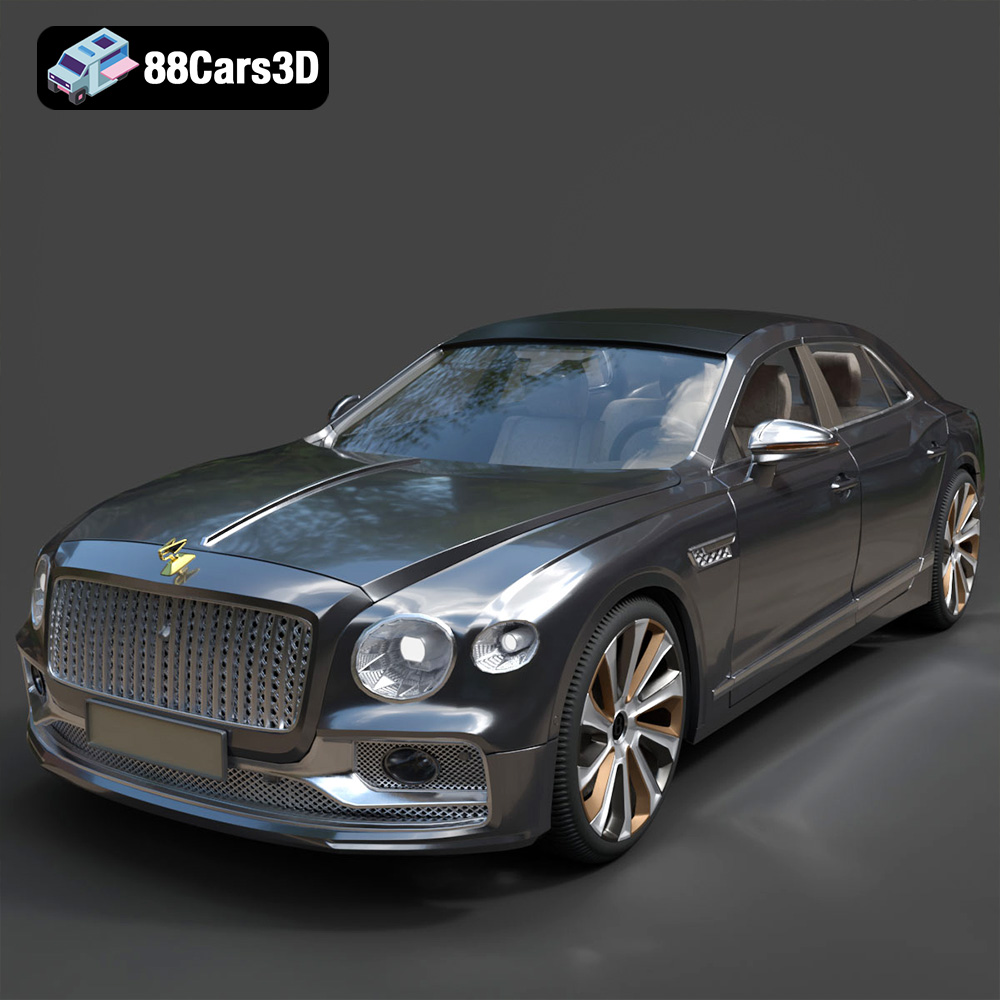
Texture: Yes | Material: Yes Download the ultra-high-detail Bentley Flying Spur Mulliner 2022 3D Model (2.94M Triangles). Features the bespoke Double Diamond grille, a fully modeled diamond-quilted interior, and exquisite luxury styling. Perfect for high-end ArchViz, VFX, and cinematic rendering. Includes .blend, .fbx, .obj, .glb, .stl, and .max formats.
Price: $19.90

Texture: Yes | Material: Yes | 3D Printable: Yes. Download the Ultimate Creators’ Showcase featuring 5 premium 3D models: Lamborghini Huracan, ZAV Concept Motorcycle, Sukhoi SU-26, Presidential Limousine, and Daewoo Damas. Optimized for 4K CGI rendering and 3D printing. Save massive with this exclusive multi-category bundle!
Price: $99.99

Texture: Yes | Material: Yes | 3D Printable: Yes. Download the Italian Thoroughbreds Bundle featuring 5 iconic 3D models: Lamborghini Huracán Performante, Ferrari 458 Italia, Lamborghini Urus, Diablo SV, and Maserati GT. Optimized for 4K rendering and 3D printing (STL included). Save 50% with this ultimate Italian vehicle collection.
Price: $199.99

Download the Elite Future Mobility Bundle featuring 4 highly optimized 3D models: Tesla Model S, Avatr 11, Li L9, and Zoox Robotaxi. Perfect for ArchViz, Smart City renders, and game dev. Optimized for Unreal Engine and Blender. Includes .fbx, .obj, and .max formats.
Price: $99

🚗 5 Iconic German Cars (BMW M4 G82, M5 CS, X3, 1 Series & Mercedes E-Class). ✅ Optimized for ArchViz: Ready for Corona & V-Ray. 💰 Save €71 with this limited-time collection! 🚀 Instant Download after purchase.
Price: $119

Download the Extreme Off-Road & Survival 3D Models Bundle! Includes the Brabus 800 Adventure, Dodge Ram Bigfoot, Spec Truck, and a Caravan. Save over €210 on this premium 4-in-1 off-grid vehicle pack for ArchViz and game development.
Price: $149.99

Download the Heavy Duty & Commercial Logistics 3D Models Bundle! Includes the Ford Sterling, Caterpillar CT680, Mercedes Citaro Bus, and Vito Van. Save over €130 on this massive, game-ready 4-in-1 industrial vehicle pack.
Price: $109.99

Download the Ultimate Custom Motorcycles 3D Models Bundle. Includes a Custom Chopper, Ducati 916 Café Fighter, Harley XR1200X, and BMW K100. Perfect premium props for luxury ArchViz garages. Save over €250 today!
Price: $159.99

