Get 50% OFF All Premium 3D & STL Models!

In the dynamic world of 3D visualization, the ability to accurately and beautifully recreate real-world objects is paramount. Whether for cinematic renders, immersive game environments, or tangible 3D prints, a meticulously crafted 3D model forms the bedrock of any successful project. Few vehicles embody timeless design and cultural significance quite like the Vespa scooter. Its elegant curves, distinctive silhouette, and rich heritage have made it an enduring symbol of freedom and style. Capturing this essence in a digital format requires not just artistic skill, but a deep understanding of 3D modeling principles, software compatibility, and diverse application needs. This article delves into the technical intricacies of developing and utilizing high-quality 3D models, specifically highlighting how an exceptional asset like the Vespa Standard 3D Model from 88cars3d.com serves as a cornerstone for professionals across various industries.
From the subtle reflections on its painted panels to the precise articulation of its steering, a premium 3D vehicle model can elevate a project from ordinary to extraordinary. We’ll explore the critical aspects that define such quality, dissect the various file formats essential for different workflows, and illustrate how a versatile asset like the Vespa Standard 3D Model can be integrated into demanding production pipelines for rendering, game development, AR/VR, and even physical 3D printing.
The Vespa isn’t just a scooter; it’s a cultural icon, a design masterpiece that transcends mere transportation. Its journey from post-war necessity to a global symbol of cool has cemented its place in history. For 3D artists and developers, this makes it an incredibly appealing subject. Recreating such a recognizable form demands accuracy and respect for its original design. The Vespa Standard 3D Model meticulously captures the essence of this classic, making it an invaluable asset for anyone looking to infuse their digital environments with authentic European charm or retro flair.
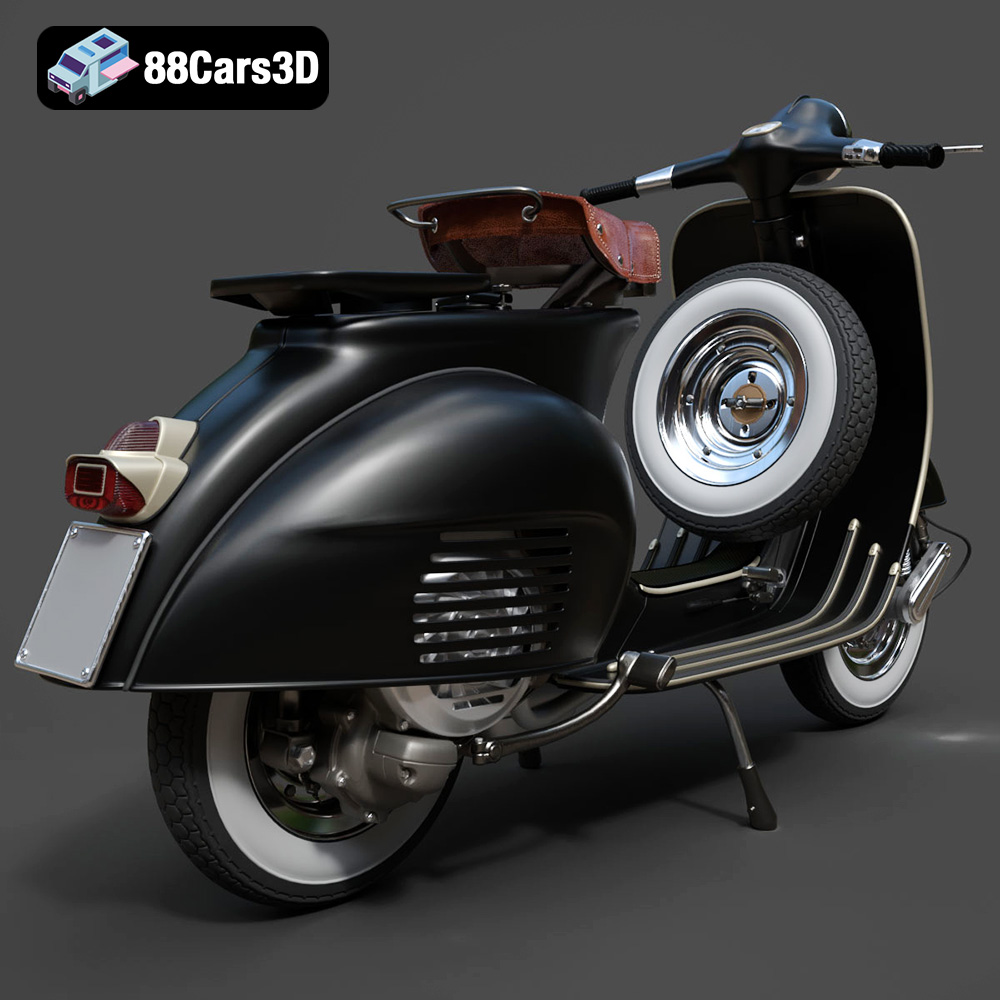
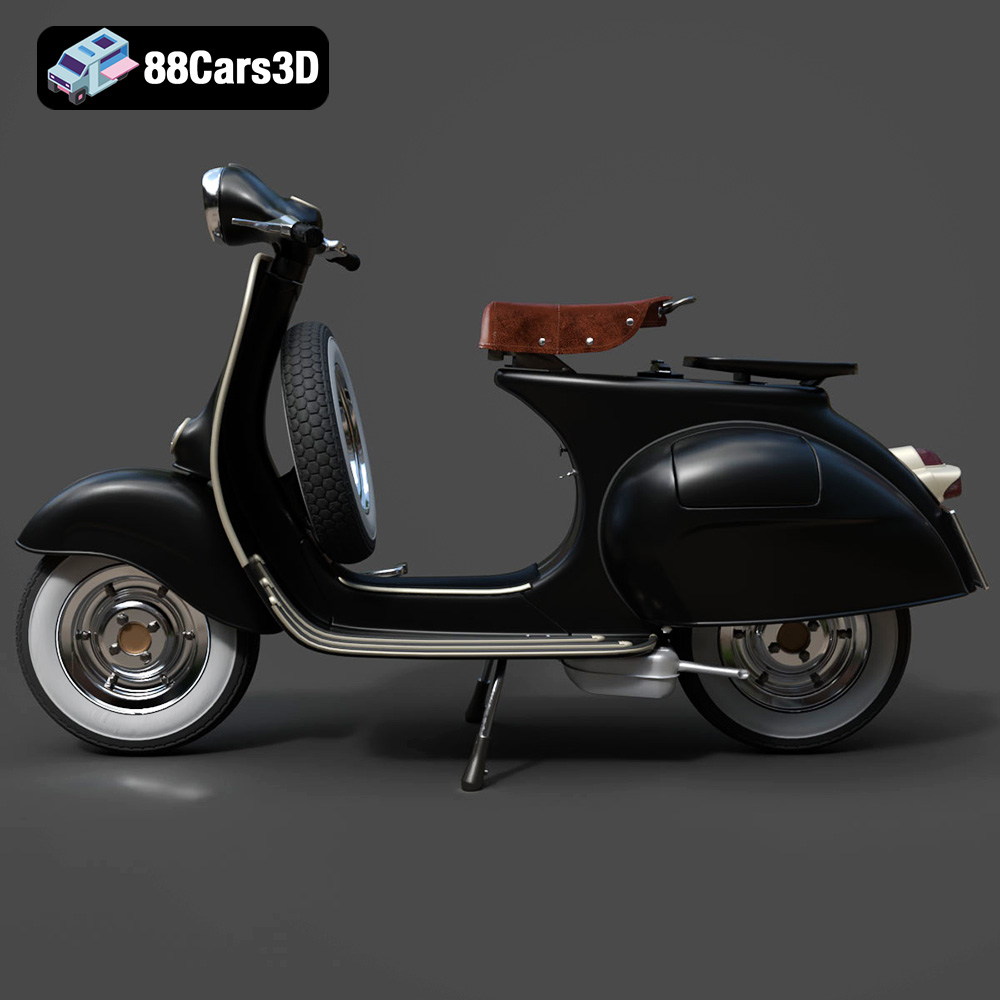
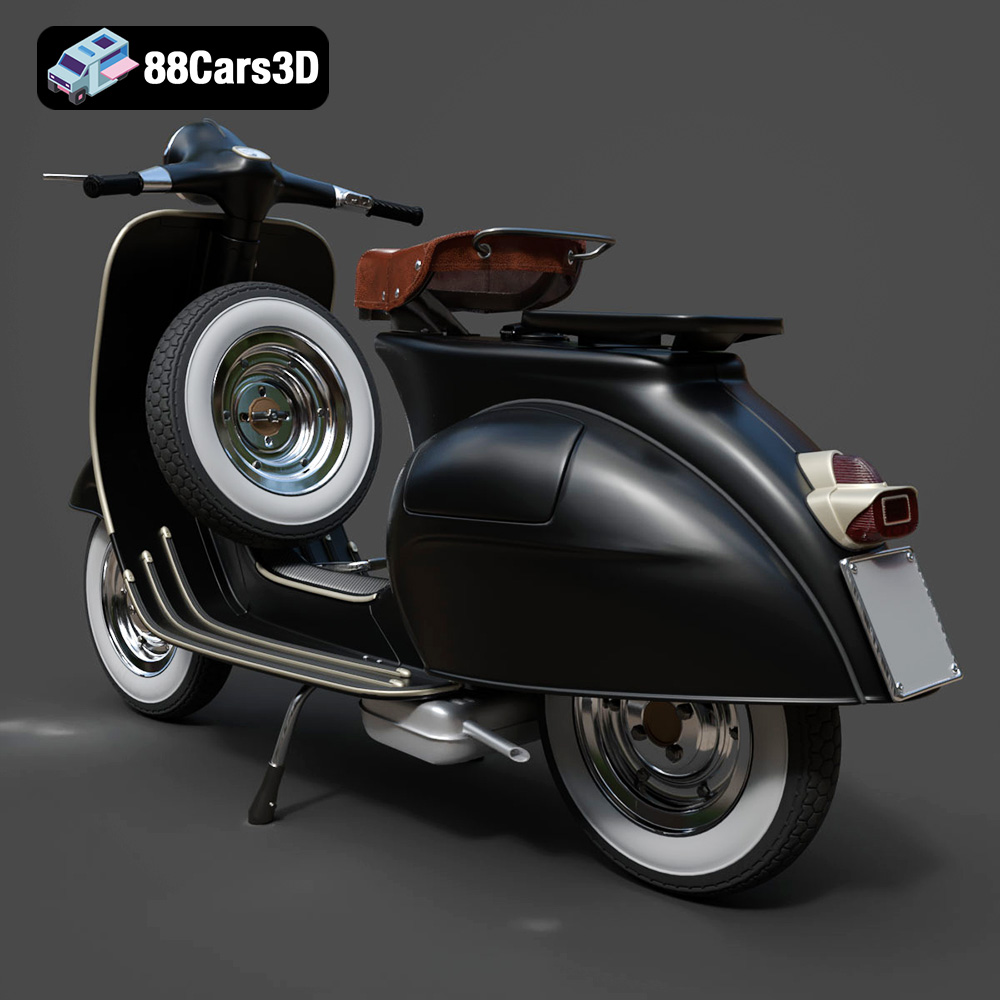
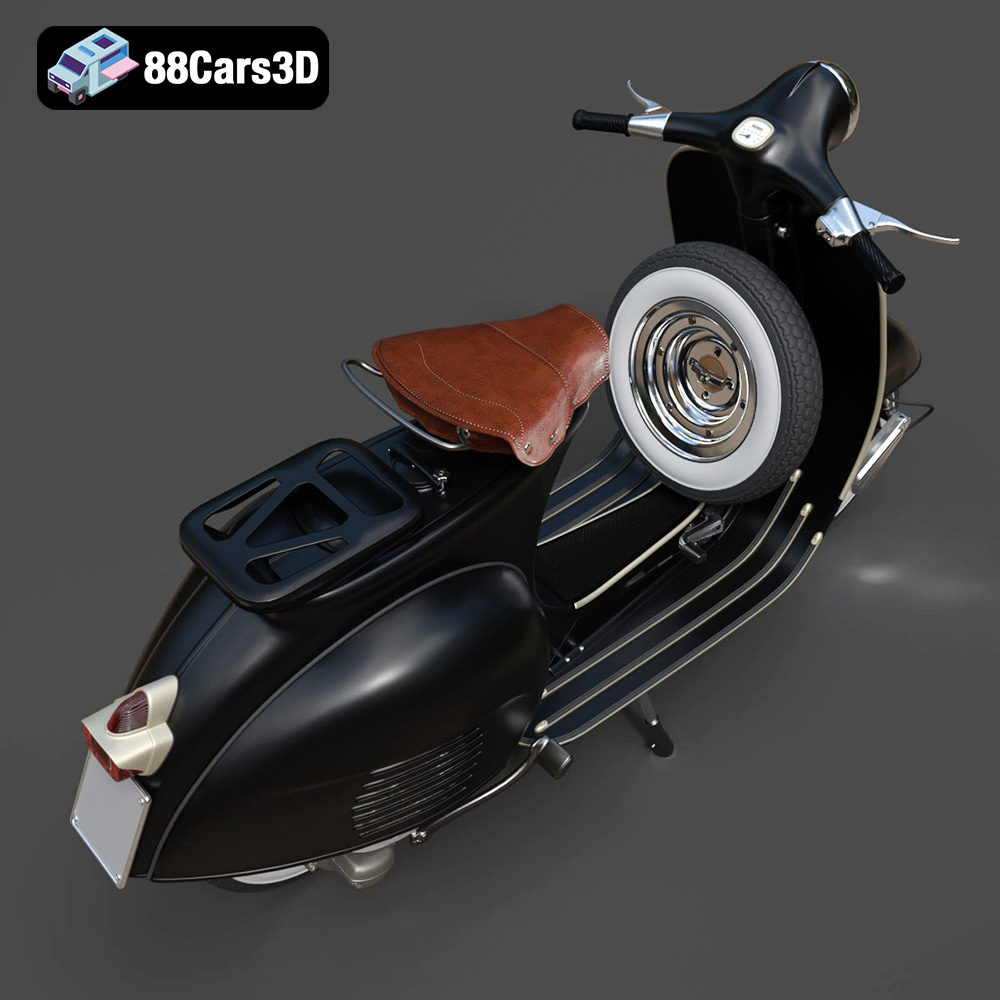
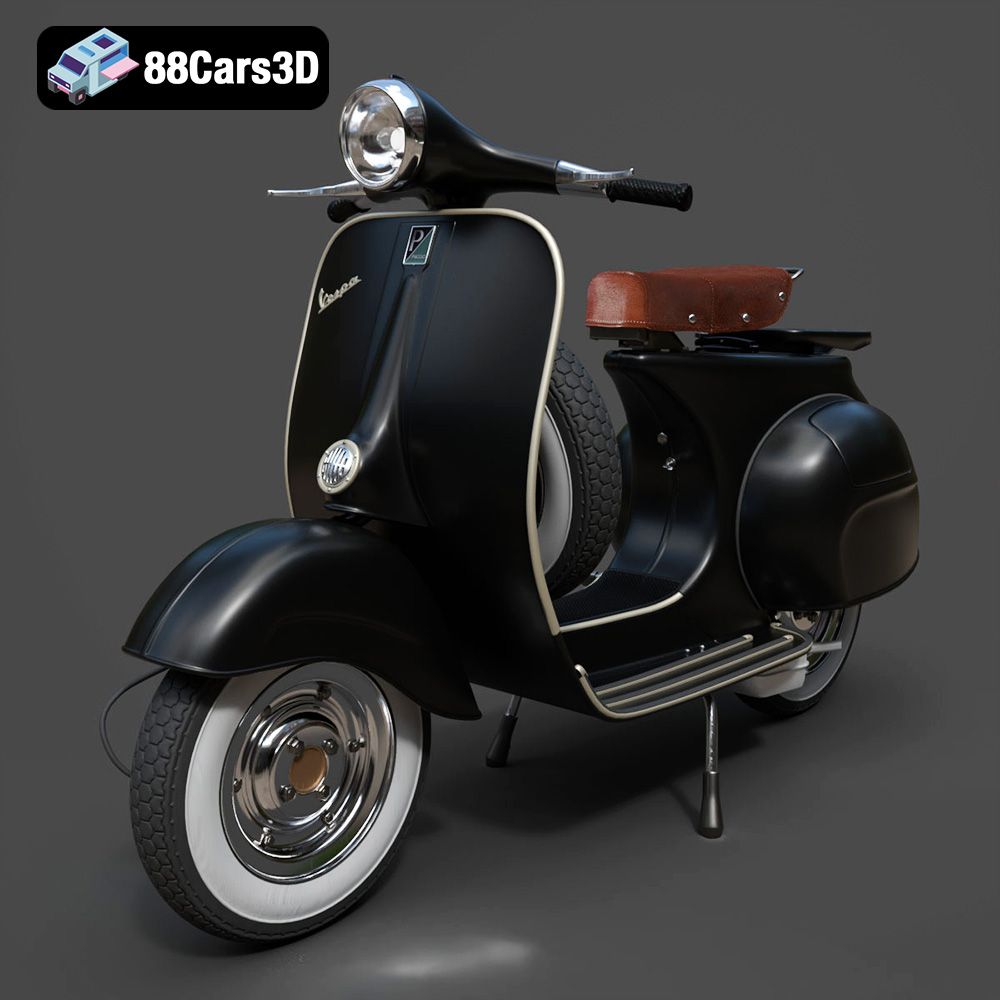
The beauty of the Vespa lies in its organic, flowing lines and functional simplicity. Translating this into a 3D model involves more than just matching proportions; it requires understanding the interplay of light and shadow on its curved surfaces. The rounded front shield, integrated leg guard, and signature curved side panels are not just features; they are design statements. A high-quality model, like the one available at 88cars3d.com, reflects these nuances, ensuring that the digital representation evokes the same sense of nostalgia and elegance as its real-world counterpart. This attention to detail extends to smaller elements like the classic circular headlight housing, vintage tire styling on detailed wheels, and chrome accents, all of which contribute to the model’s overall authenticity.
Beyond aesthetic accuracy, the true strength of a well-engineered 3D model lies in its versatility. The Vespa Standard 3D Model is not confined to a single purpose. Its clean topology, real-world scale, and optimized geometry make it a Swiss Army knife for digital artists. Imagine it as a central element in a sophisticated automotive rendering project, adding a touch of vintage cool to an urban scene. Picture it as a drivable asset in a vibrant open-world game set in a European city, or an interactive element in an AR application allowing users to explore its design in their living room. Even for simulation and training, its accurate proportions provide a solid foundation. This multifaceted applicability ensures that the investment in a high-quality model translates into tangible value across numerous project types.
The world of 3D modeling relies heavily on a multitude of file formats, each designed with specific strengths and intended uses. Choosing the right format for your project is crucial for maintaining data integrity, ensuring compatibility, and optimizing performance. The Vespa Standard 3D Model is a prime example of an asset that offers a comprehensive suite of these formats, catering to virtually any professional workflow.
The .blend format is native to Blender, the powerful open-source 3D creation suite. When you download a .blend file, you’re not just getting a mesh; you’re receiving a complete Blender scene. This typically includes the model, its materials (shaders, textures, UV maps), lights, cameras, animation rigs, and even scene settings. This format is ideal for Blender users who need full editability and want to leverage Blender’s Cycles or Eevee render engines directly. It offers the most flexibility for customization, allowing artists to delve into the node-based material system, modify geometry, or extend animations directly within the software. For the Vespa model, this means access to every shader detail and the ability to easily change colors, add decals, or even re-rig components if needed.
.fbx (Filmbox) is a proprietary format developed by Autodesk, serving as one of the most widely adopted interchange formats in the 3D industry. It excels at transferring geometry, materials, textures, animations, and skeletal data between different 3D software applications and game engines. For applications like Unreal Engine and Unity, .fbx is the gold standard for importing animated characters, vehicles, and complex scenes. It’s highly optimized for real-time performance, making it perfect for game development and interactive experiences where efficiency is key. The Vespa model in .fbx format ensures seamless integration into these engines, preserving pivot points for wheels and steering, and maintaining material assignments.
The .obj (Wavefront Object) format is a widely supported, open-standard geometric data format. It’s essentially a universal language for 3D models, capable of storing vertex positions, UV coordinates, normals, and material group information. While it doesn’t typically store animation or rigging data, its widespread compatibility makes it an excellent choice for basic mesh transfer between virtually any 3D software. For rendering and visualization, .obj combined with an accompanying .mtl (material library) file and separate texture maps offers robust interoperability. If you’re working with a niche 3D application or simply need a clean mesh to start from, .obj is a reliable fallback for the Vespa model.
.glb (GL Transmission Format Binary) is the binary version of glTF, a royalty-free specification for the efficient transmission and loading of 3D scenes and models by applications. Often called the “JPEG of 3D,” .glb packages the 3D model, textures, and animations into a single, self-contained file. This makes it incredibly efficient for web-based 3D viewers, AR/VR applications, and mobile platforms due to its compact size and fast loading times. The Vespa model in .glb format is perfectly suited for interactive product showcases on websites, augmented reality apps, or even social media filters, delivering high-quality visuals with minimal performance overhead.
.stl (Stereolithography) is the most common file format used for 3D printing and computer-aided manufacturing. It describes only the surface geometry of a 3D object using a collection of interconnected triangles, without any color, texture, or material information. While simplistic, its ubiquity in the additive manufacturing world makes it indispensable. When a 3D model like the Vespa is prepared for 3D printing, it’s converted to .stl, often requiring manifold (watertight) geometry to ensure successful print jobs. The inclusion of a dedicated .stl file for the Vespa ensures it’s ready for immediate physical manifestation as a collectible scale model.
The .ply (Polygon File Format, also known as Stanford Triangle Format) is primarily used for storing 3D data from 3D scanners. It can store a variety of properties including color, transparency, normals, texture coordinates, and even reliability information. While less common for general 3D model exchange than .fbx or .obj, it’s particularly useful in scientific visualization, CAD workflows, and for models derived from real-world scans where precision and additional data attributes are important. For the Vespa model, its inclusion offers an alternative for highly detailed mesh analysis or specific engineering applications.
The .unreal format signifies an asset specifically optimized and packaged for direct use within Unreal Engine. This isn’t a single file format in the traditional sense, but rather a representation of a fully configured Unreal Engine asset. It implies that the model has been imported, materials set up, collisions generated, and potentially even LODs (Levels of Detail) created within the engine. This “engine-ready” state drastically reduces the setup time for game developers, allowing them to drag and drop the Vespa directly into their levels with minimal additional configuration, a significant advantage for fast-paced development cycles.
The .max format is the native file type for Autodesk 3ds Max, one of the leading software packages for 3D modeling, animation, and rendering in the architecture, visualization, and entertainment industries. Like .blend, a .max file contains the complete scene data, including geometry, materials, lighting, cameras, animation keyframes, and plugins used. This format offers maximum flexibility for 3ds Max users who need to perform extensive modifications, complex animations, or leverage advanced rendering features with renderers like V-Ray or Corona. For the Vespa, the .max file provides full control over the scene, enabling artists to animate the wheels, steer the handlebars, and customize every aspect of the model for high-end cinematic or product visualization projects.
The perceived quality of a 3D model goes far beyond its visual appeal; it’s deeply rooted in its underlying technical structure. A professional-grade asset, such as the Vespa Standard 3D Model from 88cars3d.com, is engineered with precision, ensuring both aesthetic fidelity and practical utility across diverse applications.
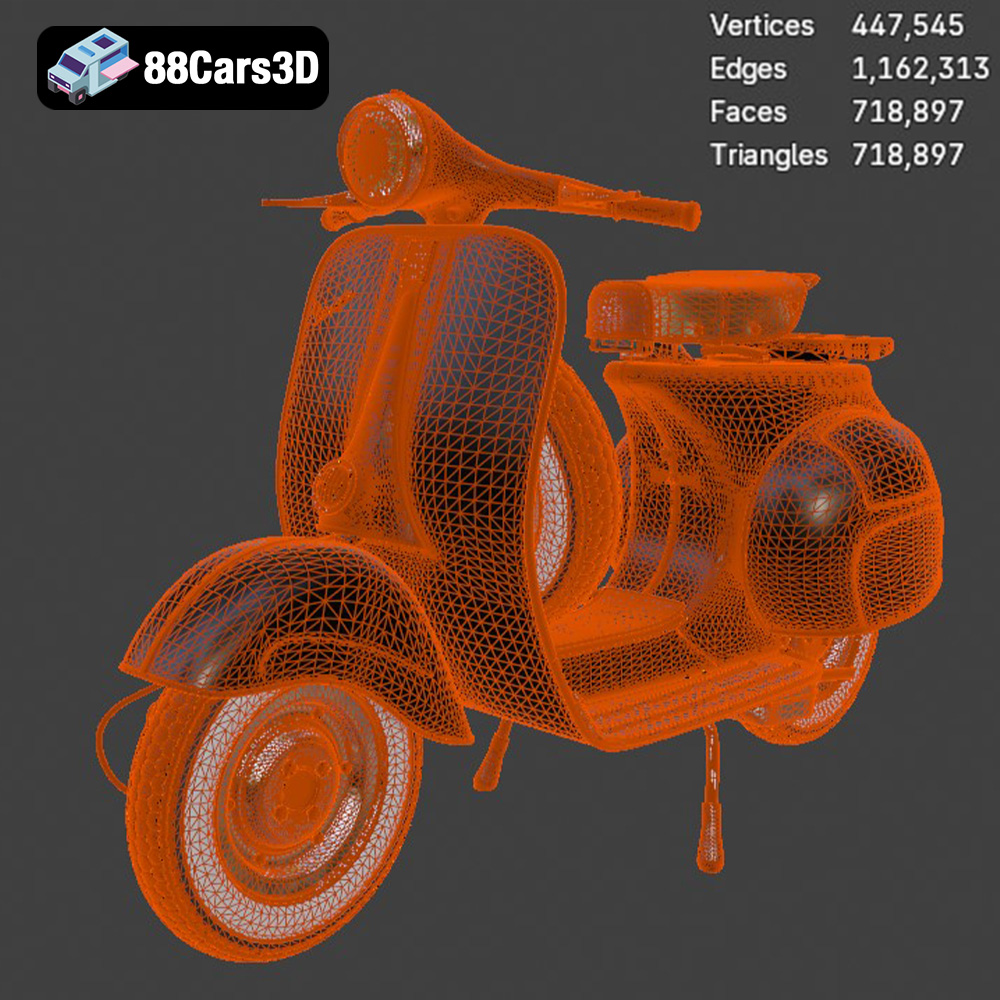
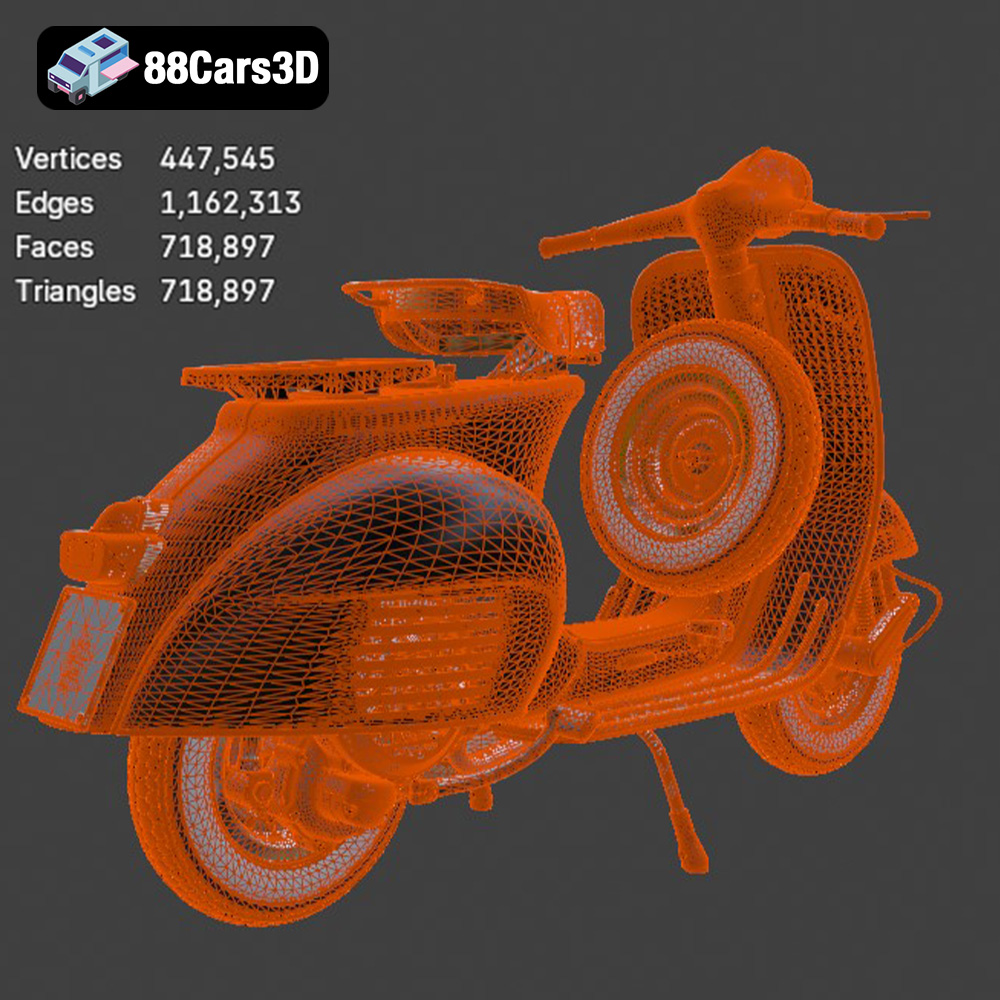
At the heart of any high-quality 3D model is its mesh topology. The Vespa model boasts a clean and well-organized mesh structure, which is crucial for several reasons. Firstly, clean topology, characterized by mostly quad polygons, ensures smooth subdivision when applying modifiers or for cinematic close-ups, preventing undesirable pinching or artifacts. This is particularly important for the Vespa’s iconic curved body panels, where seamless surfaces are paramount. Secondly, a thoughtful polygon flow facilitates efficient UV unwrapping, which directly impacts how textures are applied and displayed without stretching or distortion. Finally, a well-structured mesh makes the model easier to edit and adapt for different levels of detail (LODs) in game development, or for retopology if specific animation demands arise.
Accuracy in 3D modeling isn’t just about visual resemblance; it’s about adherence to real-world dimensions. The Vespa Standard 3D Model is built with real-world scale accuracy, meaning its digital representation matches the actual size of a Vespa scooter. This detail is vital for realistic scene composition, architectural visualization, and physically based rendering (PBR) workflows where lighting and scale interact realistically. Furthermore, proper pivot setup for steering and wheel rotation is a critical technical advantage. This thoughtful articulation allows animators to effortlessly create realistic movement, from a simple static pose with a turned wheel to a dynamic animation of the scooter navigating a busy street, without the need for extensive rigging modifications.
The “optimized polygon flow” mentioned in the product description is a key indicator of its professional suitability. This means the model achieves a balance between visual fidelity and polygon count, ensuring it performs well in real-time engines without sacrificing detail for high-quality renders. For game developers, this optimization translates to lower rendering overhead, higher frame rates, and reduced memory footprint. For AR/VR experiences, it ensures smooth interactivity without motion sickness-inducing lag. Even for high-end rendering, an optimized mesh streamlines scene loading and render times. The careful consideration of geometry ensures that the model can be effectively used from a cinematic rendering project requiring intricate detail to a mobile AR experience demanding peak efficiency.
The true value of a versatile 3D asset like the Vespa Standard 3D Model lies in its seamless integration into diverse professional workflows. Its wide array of included file formats and technical advantages make it a go-to choice for artists and developers across various industries.
For artists working in architectural visualization, product marketing, or cinematic productions, the Vespa model provides an excellent foundation for high-fidelity renders. In environments like 3ds Max, users can load the .max file, giving them full access to the scene structure, materials, and potential rigging. Here, artists can leverage powerful renderers like V-Ray or Corona to create photorealistic images. This might involve setting up intricate lighting scenarios – perhaps a golden hour sunset reflecting off the Vespa’s chrome accents in a charming European alley scene – or composing a dynamic camera path for an animated product shot. Customization options, such as changing body color to a classic pastel shade or adding vintage decals, are easily applied through the material editor, bringing unique character to each render.
Similarly, Blender users benefit from the .blend file, which provides a ready-to-render scene. With Blender’s Cycles or Eevee, artists can achieve stunning results. They can dive into the node-based shader editor to fine-tune material properties, adding subtle wear and tear or enhancing the gloss finish. Imagine placing the Vespa model in a stylized interior showroom, using Blender’s procedural textures to generate realistic ground imperfections, and leveraging volumetric lighting for a dramatic effect. The clean topology of the Vespa model ensures that even extreme close-ups maintain visual integrity, crucial for capturing the fine details of its classic design.
The demands of game development are unique, requiring assets that are not only visually appealing but also highly optimized for real-time performance. The Vespa Standard 3D Model excels here, particularly with its .fbx and .unreal file formats. Game developers using Unreal Engine can import the .unreal package directly, which often means the model comes pre-configured with materials, textures, and appropriate collision meshes, significantly accelerating the integration process. The optimized polygon flow ensures that the Vespa can be populated across vast open-world city environments without crippling frame rates.
A typical workflow might involve importing the Vespa into a European street scene within Unreal Engine, setting up its physics for realistic scooter simulation, and assigning it to an NPC or player character. The separate wheels and steering components, along with proper pivot setup, are crucial for animating realistic movement and vehicle dynamics. Developers can then apply custom LODs (Levels of Detail) to ensure the model performs efficiently whether viewed up close or from a distance, maintaining visual quality while conserving resources. This enables the Vespa to function as a key gameplay element or an atmospheric background prop in titles ranging from racing games to immersive narrative experiences.
Augmented Reality (AR) and Virtual Reality (VR) represent the frontier of immersive experiences, and 3D models are their building blocks. The .glb format, included with the Vespa Standard 3D Model, is perfectly suited for these applications. Its compact, self-contained nature ensures fast loading times and efficient rendering on mobile devices and VR headsets, which is paramount for smooth, responsive interactions.
Consider a virtual showroom experience where users can walk around a 3D Vespa in VR, inspecting its details from every angle. Or an AR application that places a life-sized Vespa on a user’s driveway, allowing them to customize its color and add accessories in real-time. The optimized geometry and included materials in the .glb file facilitate these scenarios, providing a high-quality visual without excessive computational demands. For interactive mobility demos or immersive vintage showroom experiences, the Vespa model offers a compelling and engaging digital asset.
One of the most exciting capabilities of modern 3D modeling is the ability to bridge the gap between the digital and the physical. The Vespa Standard 3D Model, with its included .stl format, is designed to be fully 3D printable, allowing enthusiasts and professionals to bring this iconic scooter to life as a tangible collectible or scale model.
The journey from a digital mesh to a physical object requires careful consideration of 3D print settings. The product description provides excellent guidelines, recommending scales like 1:18, 1:12, 1:10, or 1:8, which offer a good balance of detail and printability. For FDM (Fused Deposition Modeling) printers, suggested layer heights of 0.08–0.16 mm will ensure a relatively smooth surface, capturing the Vespa’s curved body panels effectively. Wall thickness (1.2–2.0 mm) is crucial for structural integrity, preventing fragile parts. An infill of 15–25% typically provides sufficient strength without excessive material usage.
Supports are almost always necessary for complex geometries with overhangs, and the Vespa is no exception. Mirrors, handlebars, and the center stand will require strategically placed supports to prevent warping or collapse during printing. Print orientation is another critical factor; printing the body angled can help minimize visible layer lines on curved surfaces, leading to a smoother finish. Separating components like wheels from the main body allows for easier support removal and potentially different print settings for each part, optimizing overall quality.
Once printed, the physical Vespa model enters the realm of post-processing and customization, where its digital origins give way to traditional model-making techniques. Sanding is often the first step to smooth out layer lines and surface imperfections. Following this, a primer coat prepares the surface for painting. The real fun begins with color application: gloss pastel finishes, vibrant reds, classic creams, or metallic hues can be applied, echoing the Vespa’s rich palette. Optional chrome detailing can be achieved with specific paints or metallic foils, bringing out the authentic luster of its real-world counterpart. This hands-on process allows for a unique, personalized collectible that stands as a testament to both digital design and physical craftsmanship.
Beyond its inherent quality, the true power of a versatile 3D model like the Vespa Standard 3D Model lies in the creative freedom it offers. Professional artists understand that a model is often just the starting point, a canvas upon which they can project their unique vision and integrate it seamlessly into specific project narratives.
The Vespa model’s clean mesh and separated components facilitate a wide range of aesthetic modifications. Changing the body color is a fundamental yet impactful customization. From the soft pastel shades that evoke mid-century charm to bold, modern metallic finishes, the possibilities are extensive and easily achieved within any major 3D software by adjusting material parameters. Artists can also add custom decals or vintage stickers, which can range from subtle branding to more elaborate graphical treatments, instantly transforming the scooter’s persona. Modifying the seat color and material style—perhaps from a classic leather texture to a more contemporary fabric—can further refine the model’s appearance to fit a specific era or design theme. Even minor additions like a rear luggage rack or other accessories can significantly alter the model’s visual story, turning it from a standard vehicle into a personalized ride.
Beyond individual model customization, the Vespa’s adaptability shines in its ability to be integrated into diverse scene contexts. Its real-world scale and accurate proportions make it an ideal prop for architectural visualizations of urban landscapes, lifestyle marketing visuals, or retro-themed projects. Imagine configuring the lighting for an urban sunset scene, casting long, dramatic shadows around the Vespa parked on a cobblestone street, or placing it under the warm glow of classic European streetlights. Its inclusion can instantly define the setting, mood, and era of a scene. Whether it’s the centerpiece of a product advertisement, a dynamic element in a cinematic chase sequence, or a static but evocative prop in a game environment, the Vespa Standard 3D Model from 88cars3d.com provides the creative flexibility needed to tell compelling visual stories across any medium.
The journey of a 3D model, from conceptualization to deployment, is a complex interplay of artistic vision and technical precision. As we’ve explored, a high-quality asset is not merely a collection of polygons; it’s a meticulously crafted digital artifact designed for versatility, accuracy, and ease of use across a myriad of professional applications. The Vespa Standard 3D Model stands as a testament to this philosophy, offering an iconic design recreated with exceptional detail and provided in a comprehensive suite of file formats to meet the demands of any workflow.
Whether your project calls for stunning automotive rendering, efficient game asset development, immersive AR/VR experiences, or tangible 3D printed collectibles, this model provides the foundational quality and flexibility required. Its clean topology, real-world scale, optimized geometry, and thoughtful articulation streamline production pipelines, saving valuable time and resources while elevating the visual fidelity of your work. By understanding the nuances of different 3D car models and file formats, creators can make informed decisions that ensure their projects not only look exceptional but also perform flawlessly across diverse platforms. For professionals seeking top-tier 3D assets that blend artistic excellence with technical robustness, 88cars3d.com remains a trusted source, providing the tools necessary to bring the most ambitious creative visions to life.
The Vespa Standard 3D Model is a high-detail digital recreation of the iconic Italian scooter known for its timeless design, curved body panels, and urban mobility heritage. Recognized worldwide for its elegant silhouette and practical engineering, the Vespa became a cultural symbol of freedom, style, and post-war European transportation. This 3D model accurately represents the rounded front shield, integrated leg guard, single-sided front suspension, curved side panels, classic headlight housing, compact seat, and rear-mounted engine structure. Designed with clean topology and real-world scale accuracy, it is ideal for rendering, animation, product visualization, game development, and AR/VR experiences. Perfect for European city scenes, retro environments, lifestyle projects, cinematic productions, and scooter simulations. Includes .blend, .fbx, .obj, .glb, .stl, .ply, .unreal, and .max formats.
$9.99