Get 50% OFF All Premium 3D & STL Models!

In the vast landscape of digital content creation, where photorealism meets performance optimization, the demand for high-quality, meticulously crafted 3D models is perpetually on the rise. Whether you’re an architect visualizing a vibrant city scene, a game developer populating a retro open-world environment, or a filmmaker seeking authentic period details, the foundation of your success often lies in the quality of your assets. Among the most sought-after categories are 3D car models and other vehicles, providing instant immersion and unparalleled detail.
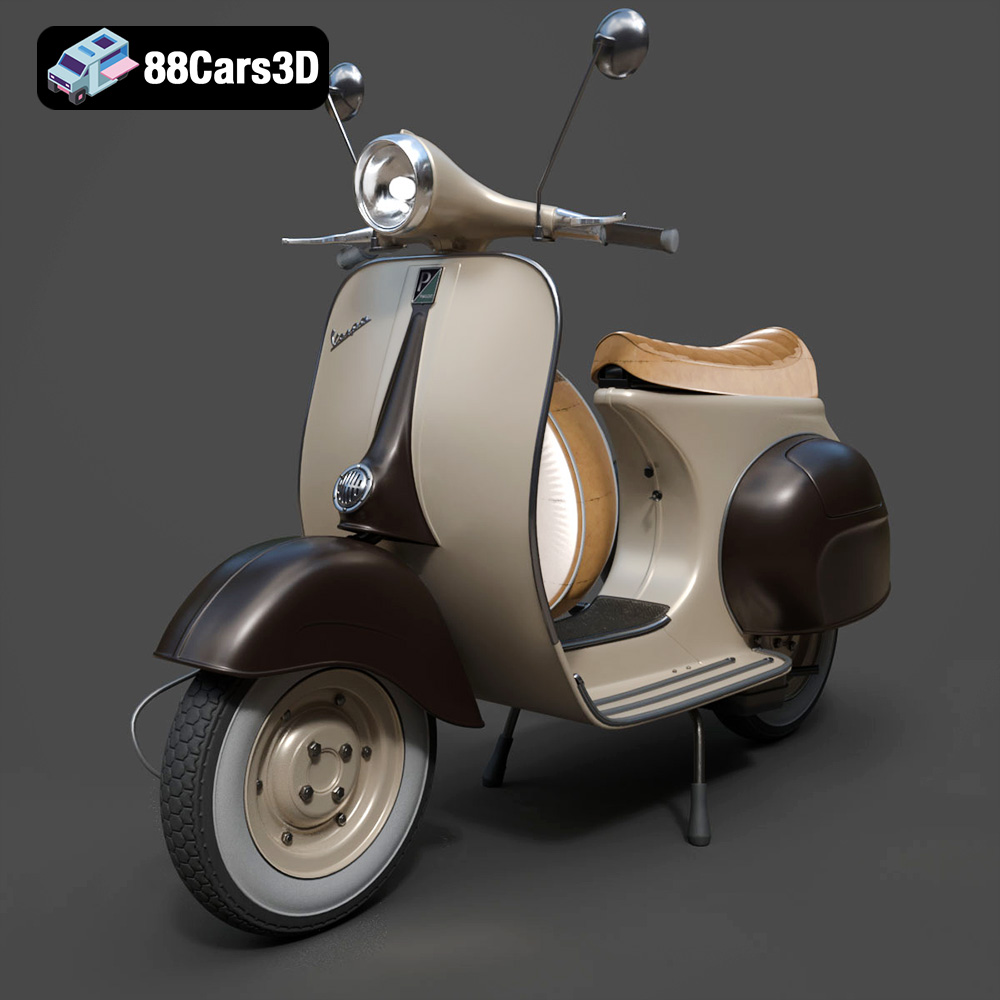
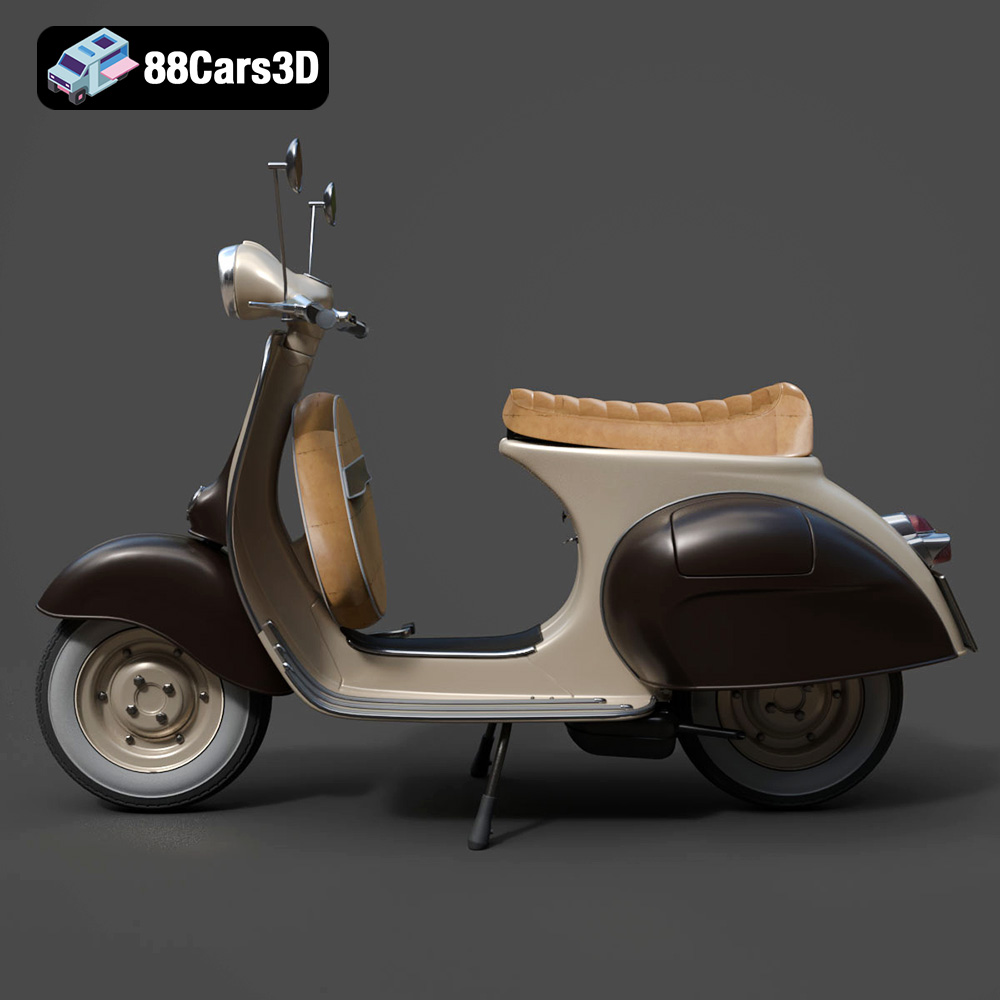
Today, we’re taking a deep dive into an exquisite example that perfectly embodies this blend of artistry and technical precision: the Vespa VNB 125 3D Model. This isn’t just a digital replica; it’s a meticulously engineered piece of virtual history, ready to be integrated into almost any modern workflow. Available on marketplaces like 88cars3d.com, this model encapsulates the timeless charm of the early 1960s Italian scooter, offering a versatile foundation for a myriad of creative and technical applications, from stunning automotive rendering to engaging game assets and even tangible 3D prints.
When working with 3D models, understanding the various file formats is crucial for ensuring compatibility, preserving data, and optimizing assets for specific applications. The Vespa VNB 125 3D Model, offered through 88cars3d.com, provides a comprehensive suite of formats, catering to virtually every professional need. Each format serves a distinct purpose, carrying different types of information and excelling in particular scenarios. Let’s explore these in detail.
The .blend format is the native file type for Blender, the powerful open-source 3D creation suite. When you download a .blend file, you’re not just getting the mesh; you’re getting a complete Blender scene. This includes all the geometry, materials (with their node setups), textures, lighting, cameras, animation data, and even modifiers or rigging information. For users primarily working in Blender, this is often the most convenient and flexible format. It allows for full editability, enabling artists to tweak every aspect of the model, from adjusting mesh details to reconfiguring material shaders or setting up custom animations. This format is ideal for artists who want maximum control and intend to extensively customize the model within Blender’s environment before export or final rendering.
The .fbx (Filmbox) format, developed by Autodesk, has become an industry-standard interchange format, especially prevalent in game development and animation pipelines. It supports geometry, materials (though often simplified upon export), textures, skeletal animations, blend shapes, and camera data. Its strength lies in its ability to efficiently transfer complex scenes between different 3D software (like 3ds Max, Maya, Blender) and game engines such as Unreal Engine and Unity. For the Vespa VNB 125, the .fbx version would be meticulously prepared for optimal performance in real-time applications, ensuring proper scale, pivot points for animation (like wheels and steering), and efficient mesh topology.
The .obj (Wavefront OBJ) format is one of the oldest and most widely supported 3D file formats. It primarily stores geometric data – vertices, normals, UV coordinates, and faces. While it can reference external material files (.mtl) for basic color and texture information, it doesn’t typically store advanced material properties or animation data. Its universality makes it an excellent choice for straightforward mesh transfer between virtually any 3D software. If you need a clean mesh that’s guaranteed to open anywhere, .obj is a reliable option, though you might need to re-apply complex materials in your target application.
.glb (GLB format for GL Transmission Format) is a binary file format that encapsulates 3D models, textures, and animations into a single file, making it highly efficient for web-based 3D content, augmented reality (AR), and virtual reality (VR) applications. It’s often referred to as the “JPEG of 3D” due to its compact nature and ease of deployment. For the Vespa VNB 125, a .glb file would be optimized for quick loading and rendering in browsers, AR viewers on mobile devices, or lightweight VR experiences, providing a seamless visual experience without requiring specialized software.
The .stl (STereoLithography) format is the de facto standard for 3D printing. It describes only the surface geometry of a 3D object using a mesh of triangular facets. It contains no color, texture, or material information. For models like the Vespa VNB 125 destined for physical production, the .stl file must represent a “manifold” mesh – meaning it’s a completely watertight, enclosed surface without any gaps or intersecting geometry. The provided .stl for the Vespa is meticulously prepared for printing, ensuring a solid, printable model for scales like 1:18, 1:12, or 1:10.
The .ply (Polygon File Format) is another format for storing 3D data, particularly useful for scanned data, CAD, and scientific applications. It can store a wider range of properties than .obj or .stl, including color, transparency, surface normals, and even data from 3D scanners. While less common for typical asset pipelines than .fbx or .obj, it offers a robust way to preserve detailed mesh information, making it valuable for precise analysis or conversion in specialized engineering or archival workflows.
While not a universal file extension in the same vein as .fbx or .obj, the inclusion of “.unreal” typically signifies an asset that has been specifically prepared and potentially packaged for direct import or even as part of an Unreal Engine project structure. This might involve optimized materials, collision meshes, LODs (Levels of Detail), and proper pivot setups, ready for immediate use within Unreal Engine’s environment. This level of preparation drastically reduces the time and effort required for integration, making the Vespa VNB 125 a true plug-and-play game asset for Unreal developers.
Similar to .blend for Blender, the .max format is the native file type for Autodesk 3ds Max, a leading software for 3D modeling, animation, and rendering. An included .max file means you get the full 3ds Max scene, complete with geometry, materials (using 3ds Max’s native shaders or common render engine shaders like V-Ray or Corona), lighting, and any animation or scene organization. This provides complete control for 3ds Max users, allowing for extensive customization, re-lighting, or integration into existing 3ds Max projects for high-end rendering and animation tasks.
Understanding these formats ensures you select the correct file for your project, maximizing efficiency and leveraging the full potential of your 3D assets, such as the versatile Vespa VNB 125 3D Model.
Recreating an iconic vehicle like the Vespa VNB 125 in 3D is a meticulous art form, blending historical accuracy with technical prowess. The product description highlights several key elements that define a truly superior 3D car model, and the Vespa VNB 125 embodies them all. It’s not enough to simply model the shape; every curve, every detail must be precisely captured to evoke the intended nostalgia and realism.
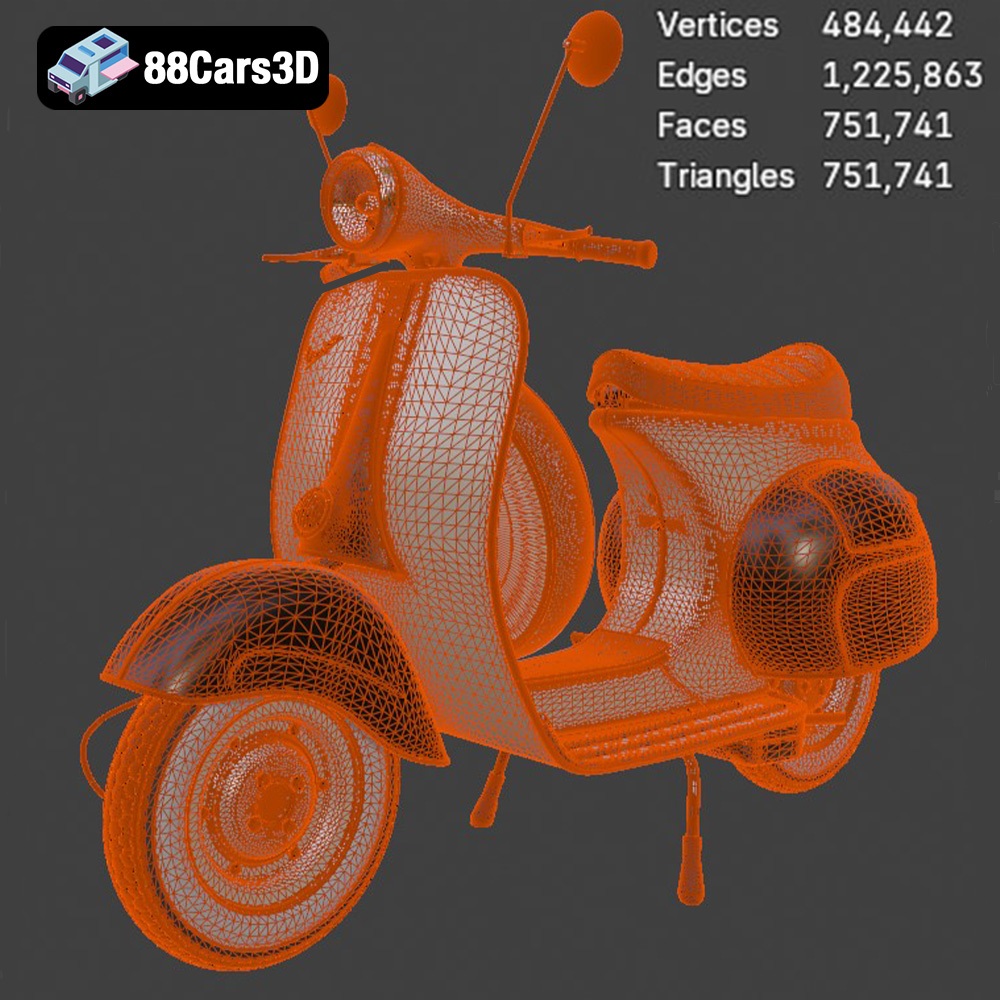
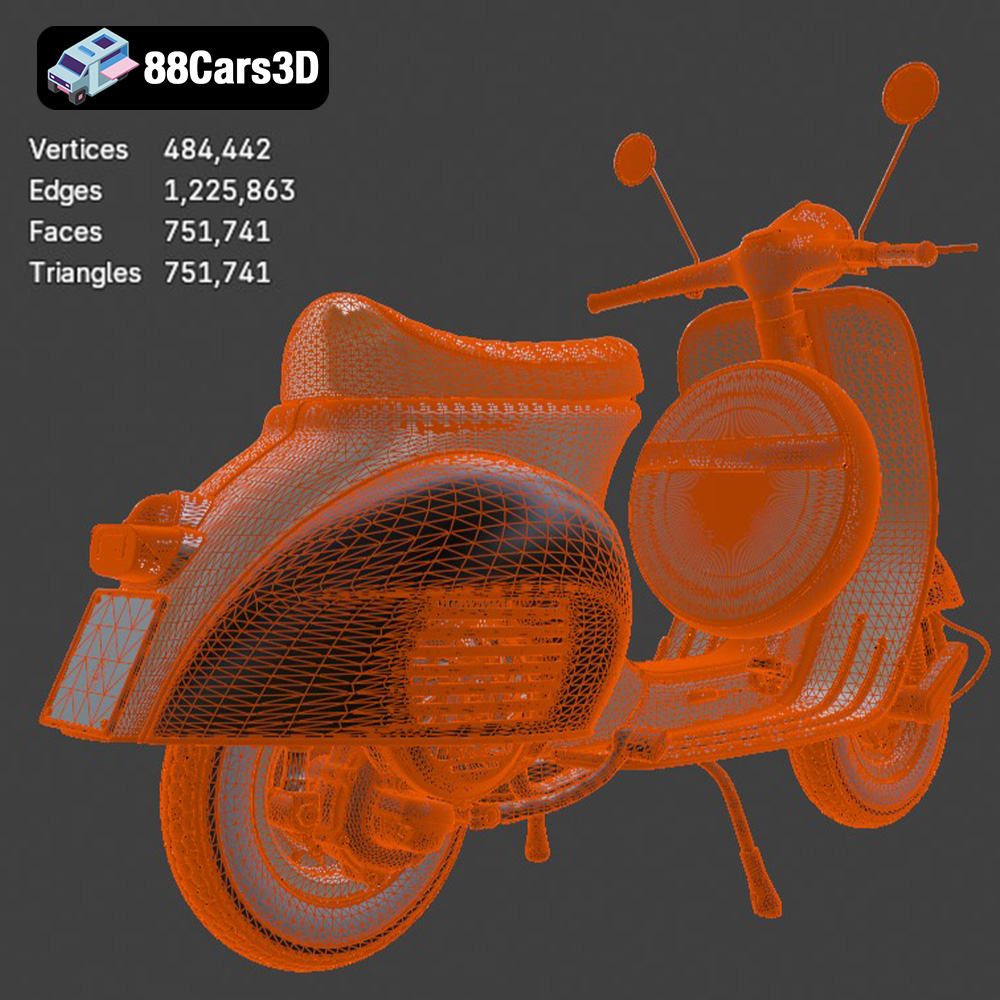
A premium 3D vehicle model starts with a strong foundation: clean, well-organized mesh topology. This means the polygons (quads, ideally) are evenly distributed, follow the natural flow of the object’s surfaces, and minimize triangles where possible. Clean topology is critical for smooth Subdivision Surface modifiers, flawless deformations during animation, and efficient UV unwrapping. For the Vespa VNB 125, this translates into perfectly rounded leg shields and smooth side panels, devoid of pinching or unsightly artifacts when rendered close-up. Real-world scale accuracy is another non-negotiable, ensuring the model fits seamlessly into scenes without requiring manual resizing, which can introduce inconsistencies. Furthermore, proper pivot setup for crucial components like wheels and steering assembly is vital for animation, allowing for quick and accurate movement without complex rigging.
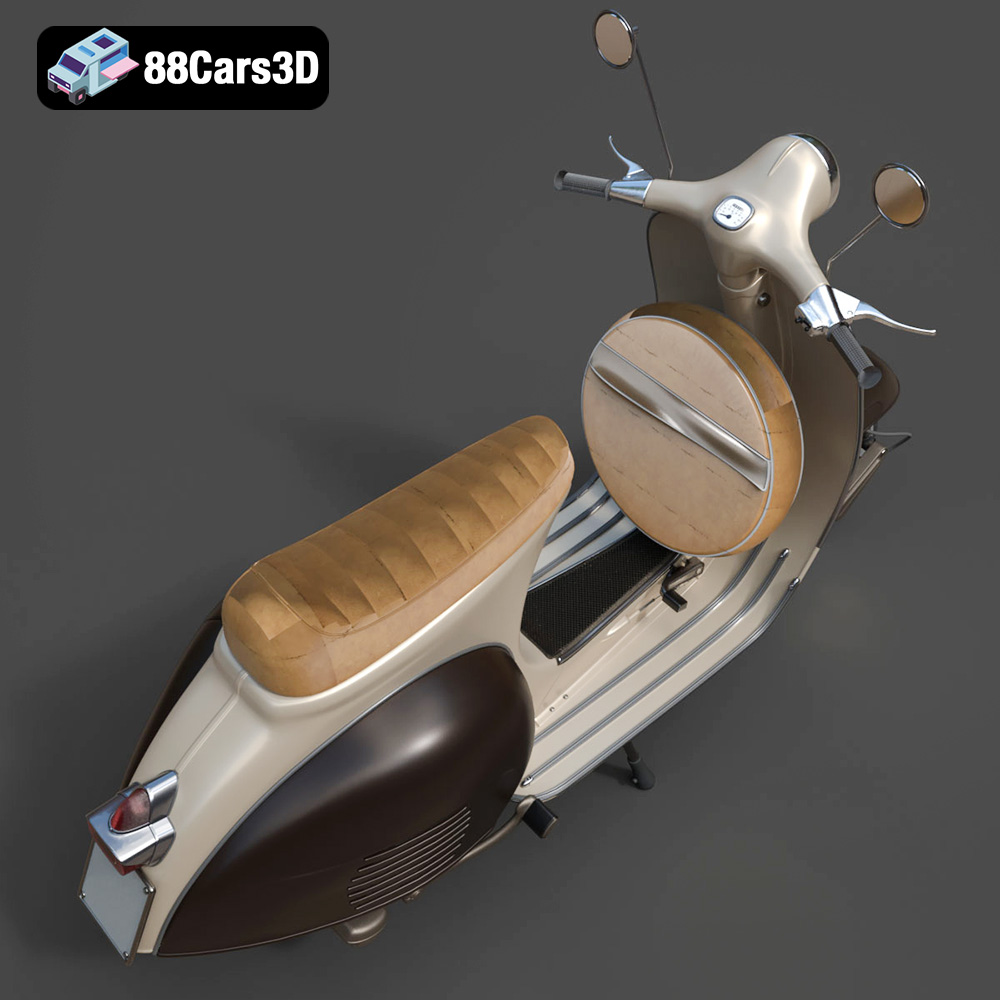
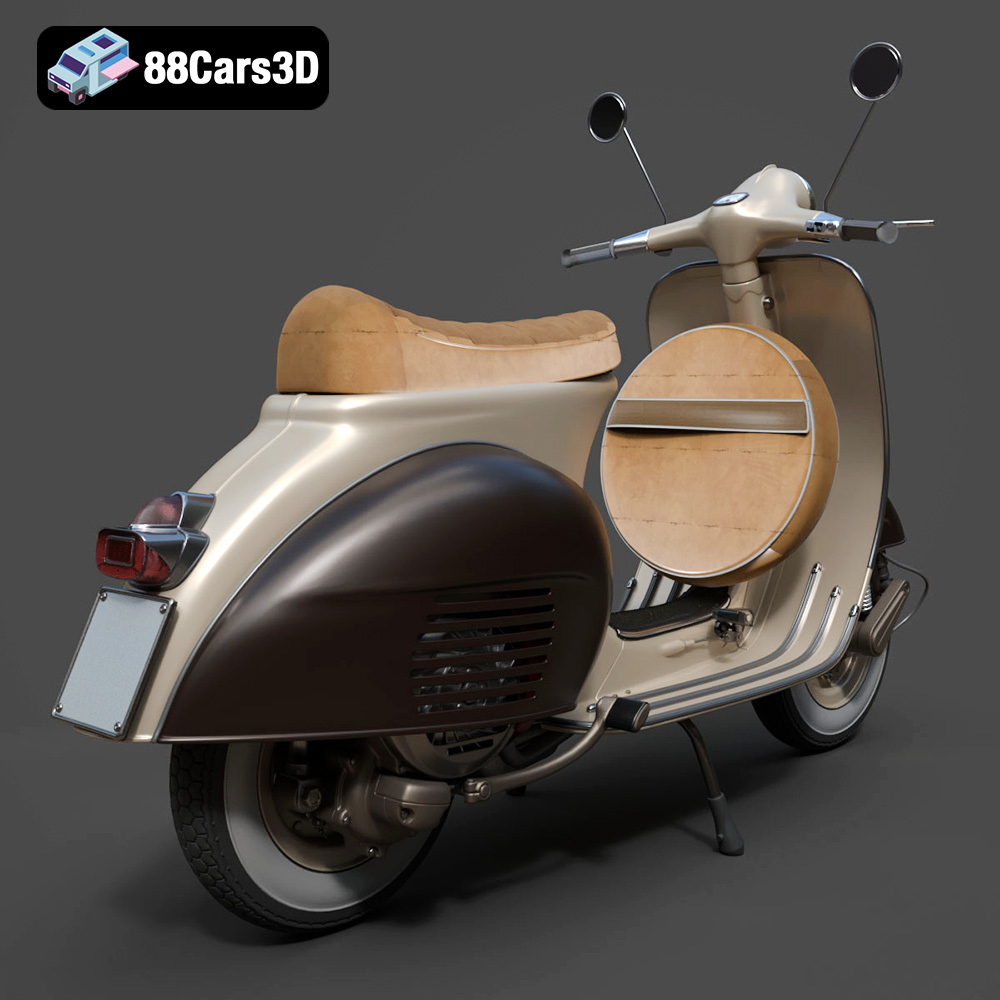
The allure of the Vespa VNB 125 lies in its distinctive mid-century Italian design. The 3D model meticulously recreates these signature elements: the classic rounded leg shield, the circular headlamp with its chrome trim, the elegantly curved steel side panels, and the period-correct wheel and tire dimensions. Even subtle details like the air vent specifics on the side panels, the detailed exhaust system, and the suspension components contribute to its authenticity. Inside the rider area, the handlebar assembly, speedometer housing, throttle, and brake levers are faithfully reproduced, offering a high level of detail for interior shots or close-ups. This attention to granular detail is what elevates a generic scooter model to an iconic representation of the Vespa VNB 125.
A truly versatile 3D model must be optimized for a range of applications. While high-poly counts are desirable for photorealistic rendering, they can be prohibitive for real-time engines like Unreal or Unity. The Vespa VNB 125 3D Model achieves a balance, with “optimized polygon flow for performance and realism.” This suggests a model designed with multiple use cases in mind, potentially offering different LODs (Levels of Detail) or a base mesh that can be easily decimated for game engine use or subdivided for cinematic quality. The clean mesh structure also facilitates easy texture application and material adjustments, making it adaptable to various rendering pipelines and art styles.
The primary appeal of a high-detail 3D car model like the Vespa VNB 125 is its ability to generate stunning, photorealistic imagery. For automotive rendering and visualization, precision, believable materials, and thoughtful lighting are paramount. The Vespa VNB 125 is perfectly engineered for these demanding tasks.
Within professional rendering suites such as 3ds Max or Blender, the provided model can be brought to life with incredible fidelity. Using the .max or .blend files, artists have direct access to the model’s clean geometry and organized structure. Materials can be assigned and refined using physically based rendering (PBR) workflows, simulating the subtle sheen of painted metal, the texture of rubber tires, and the reflectivity of chrome trim. Render engines like V-Ray, Corona Renderer (for 3ds Max), Cycles, or Eevee (for Blender) can then be employed to cast realistic shadows, simulate global illumination, and apply depth of field, resulting in images indistinguishable from photographs. The “clean and well-organized mesh structure” ensures that displacement maps or subdivision surfaces can be applied smoothly, enhancing perceived detail without adding unnecessary geometry.
Imagine an advertising agency tasked with promoting a new line of retro-inspired fashion or a vintage coffee brand. Instead of expensive photoshoots with real classic scooters, they could leverage the Vespa VNB 125 3D Model. A digital artist could place the Vespa in a custom-built 3D scene: a sun-drenched Italian piazza, a chic Parisian cafe, or a bustling 1960s street. Different customization options – changing body color to classic pastel finishes, adding vintage decals, or configuring single-seat or dual-seat versions – allow for tailor-made visuals for various campaign segments. This approach offers unparalleled creative control, cost-effectiveness, and the ability to revise endlessly without incurring additional physical production costs, all while maintaining an authentic, high-quality aesthetic.
Beyond direct advertising, the Vespa VNB 125 3D Model serves as an excellent prop for architectural visualization. Picture a modern urban development render that needs a touch of character or a historical renovation project requiring period-appropriate street furniture. Placing the Vespa VNB 125 outside a boutique hotel, parked elegantly by a cafe, or cruising down a rendered street adds immediate context, scale, and storytelling to an otherwise sterile scene. Its “real-world scale accuracy” makes integration seamless, ensuring it looks natural within any architectural environment.
The digital realm extends far beyond static renders. For interactive experiences like video games, augmented reality (AR), and virtual reality (VR), 3D assets must not only look good but also perform efficiently. The Vespa VNB 125 3D Model is designed with these real-time applications in mind, making it a valuable game asset.
Game developers will find the included .fbx and especially the “.unreal” file formats invaluable for integrating the Vespa VNB 125 into engines like Unreal Engine and Unity. The .fbx format facilitates efficient export and import, preserving mesh data, UVs, and pivot points. The “optimized geometry for real-time engines” ensures that the model maintains visual fidelity while adhering to strict polygon budgets. Once imported, PBR materials can be quickly set up using the engine’s native material systems, allowing for realistic reflections, dynamic lighting, and environmental interactions. Crucially, the “proper pivot setup for steering and wheel rotation” means developers can rapidly implement vehicle physics and animation, saving significant development time. Whether it’s a drivable asset or a static background prop in an open-world urban game set in the 1960s, the Vespa integrates smoothly.
The demand for immersive AR/VR experiences is growing, and high-quality 3D car models like the Vespa VNB 125 are perfect for these platforms. The .glb format, specifically optimized for web, AR, and VR, makes deployment straightforward. Imagine an interactive museum exhibit where users can virtually walk around a historical Vespa, examining its details up close through an AR app on their phone, or even sit on it in a VR environment. The model’s optimized geometry and textures are critical for maintaining high frame rates in these demanding environments, preventing motion sickness and ensuring a smooth, engaging user experience. Such applications could include historical vehicle showcases or interactive classic scooter displays, bringing history to life in a new dimension.
In a typical game development pipeline, assets often undergo rigorous optimization. The Vespa VNB 125’s clean topology and pre-optimized structure provide an excellent starting point. Developers can easily generate LODs (Levels of Detail) to swap out higher-poly versions for distant objects, further enhancing performance. Collision meshes can be automatically or manually generated based on the model’s geometry, ensuring realistic interactions within the game world. The versatility of this 3D car model as a game asset allows it to serve multiple roles: a key interactive vehicle, a decorative background element, or even part of a cinematic cutscene, all while maintaining optimal performance.
One of the most exciting aspects of modern 3D modeling is the ability to bridge the gap between digital and physical. The Vespa VNB 125 3D Model isn’t just for pixels; it’s also designed to be brought into the real world through 3D printing. The inclusion of a dedicated .stl file and detailed print settings speaks volumes about its physical readiness.
For a 3D model to be successfully printed, its geometry must be “manifold” – a completely enclosed, watertight mesh with no holes, self-intersecting faces, or non-uniform normals. The provided .stl file for the Vespa VNB 125 is explicitly designed with this in mind, ensuring a flawless transition from digital design to physical object. Before printing, users might use slicing software (like Cura or PrusaSlicer) to prepare the model, considering factors such as scale, orientation, and supports. The recommended scales (1:18, 1:12, 1:10) ensure that the model retains sufficient detail and structural integrity after printing, creating compelling collectible scale scooter models.
The product description provides invaluable guidance for 3D printing enthusiasts. Recommended layer heights (0.08–0.16 mm) suggest a balance between speed and detail, suitable for FDM printers, with finer layers for smoother curves. Wall thickness (1.2–2.0 mm) ensures the printed model is robust. Infill (15–25%) provides internal support without excessive material consumption. Crucially, the need for supports for delicate areas like the handlebar, exhaust, and center stand is clearly indicated, preventing print failures. Print orientation – body upright for smooth curves, wheels separately – is a professional tip for achieving the best aesthetic results. Post-processing, including sanding, primer, a gloss pastel paint finish, and chrome detailing, is highly recommended to achieve a museum-quality miniature, truly honoring the classic design of the Vespa.
For hobbyists, collectors, or even professional model makers, the ability to 3D print a classic like the Vespa VNB 125 opens up a world of possibilities. Imagine a custom-painted miniature Vespa, perfectly scaled, sitting on a desk or as part of a diorama. This direct-to-print capability allows for personalized creations that would otherwise be difficult or expensive to commission. It’s a testament to the model’s robust design that it can transition seamlessly from high-fidelity rendering to a tangible, collectible item, further extending the value of this exceptional 3D car model.
Purchasing a high-quality 3D model like the Vespa VNB 125 is an investment in efficiency and creative freedom. Its versatility allows for extensive customization and adaptation across a spectrum of professional applications, saving invaluable time and resources compared to modeling from scratch.
The customization options are vast. Beyond changing body colors to classic pastel finishes – perhaps a period-accurate mint green or sky blue – artists can add vintage decals or country license plates to give the scooter a specific regional identity or story. The flexibility to configure a single-seat or dual-seat version alters its character, making it suitable for a solo adventure scene or a romantic European getaway. Adding a rear luggage rack or a spare wheel enhances its practicality and visual interest. Even adjusting lighting for daytime city or sunset promenade scenes can dramatically alter the mood, allowing the Vespa to fit perfectly into any narrative or visual brief. This level of adaptability ensures the model remains relevant across numerous projects.
While often seen in rendering and gaming, 3D car models also play a vital role in simulation and training. The detailed mechanics and accurate proportions of the Vespa VNB 125 make it useful for mechanical demonstration visuals. For instance, an educational program could use the model to demonstrate how a classic scooter’s engine or suspension system works, providing an interactive and visually engaging learning experience. Similarly, vehicle restoration previews could use the 3D model to virtually “restore” the scooter, testing different paint schemes or component replacements before committing to physical work. This highlights the model’s utility beyond purely aesthetic purposes, extending into practical, educational, and archival realms.
In any professional pipeline, time is money. Modeling a complex vehicle like the Vespa VNB 125 from scratch, to this level of detail and optimization, would require hundreds of hours of a skilled 3D artist’s time. By leveraging a ready-made, high-quality asset from a trusted source like 88cars3d.com, studios and freelancers can drastically reduce production timelines and costs. The included multiple file formats ensure compatibility, and the pre-optimized geometry and clear documentation mean less time spent on technical troubleshooting and more time on creative execution. This efficiency allows projects to meet tighter deadlines and allocate resources to other critical development areas, proving the immense value of a meticulously crafted 3D car model.
The digital creative landscape thrives on quality, versatility, and efficiency. The Vespa VNB 125 3D Model exemplifies these principles, offering a meticulously crafted digital asset that transcends mere geometry. From its deep roots in classic Italian design to its technical readiness for cutting-edge applications, this model serves as a powerhouse for professionals across industries.
Whether you’re crafting photorealistic automotive rendering for a vintage advertising campaign, populating a 1960s-themed game world with authentic game assets, or bringing a piece of history to life through immersive AR/VR experiences, the Vespa VNB 125 delivers. Its comprehensive suite of file formats – from editable .blend and .max scenes to optimized .fbx, .glb, and .unreal files, and even a print-ready .stl – ensures seamless integration into virtually any workflow.
By investing in a high-quality 3D car model like the Vespa VNB 125 from 88cars3d.com, you’re not just acquiring a digital object; you’re gaining a powerful tool that accelerates your projects, inspires creativity, and delivers exceptional visual fidelity across all your digital and physical endeavors. Unleash the timeless charm of this Italian icon in your next project.
The Vespa VNB 125 3D Model is a high-detail digital recreation of the iconic Italian scooter produced during the early 1960s. Known for its elegant curves, monocoque steel body, and lightweight urban practicality, the VNB 125 represents the golden era of classic European scooter design. This 3D model accurately captures the rounded front leg shield, signature circular headlamp, streamlined side panels, single-seat or dual-seat configuration, exposed handlebar assembly, and period-correct wheel styling. Designed with clean topology and real-world scale accuracy, it is ideal for rendering, animation, game development, AR/VR environments, and historical vehicle visualization. Perfect for retro city streets, European alleyways, beach promenades, café scenes, and cinematic vintage productions.
$4.99