Get 50% OFF All Premium 3D & STL Models!

In the dynamic realms of automotive design, game development, cinematic visualization, and even augmented reality, the quality of a 3D model can make or break a project. A truly exceptional 3D car model isn’t just a digital representation; it’s a meticulously crafted asset that embodies the spirit and engineering prowess of its real-world counterpart. This is particularly true for iconic vehicles that push the boundaries of design and performance. Consider a supercar like the Acura NSX 2017, a vehicle that redefined what a modern hybrid sports car could be. Its razor-sharp aesthetics, innovative aerodynamics, and powerful stance demand a 3D model that can live up to its legacy.
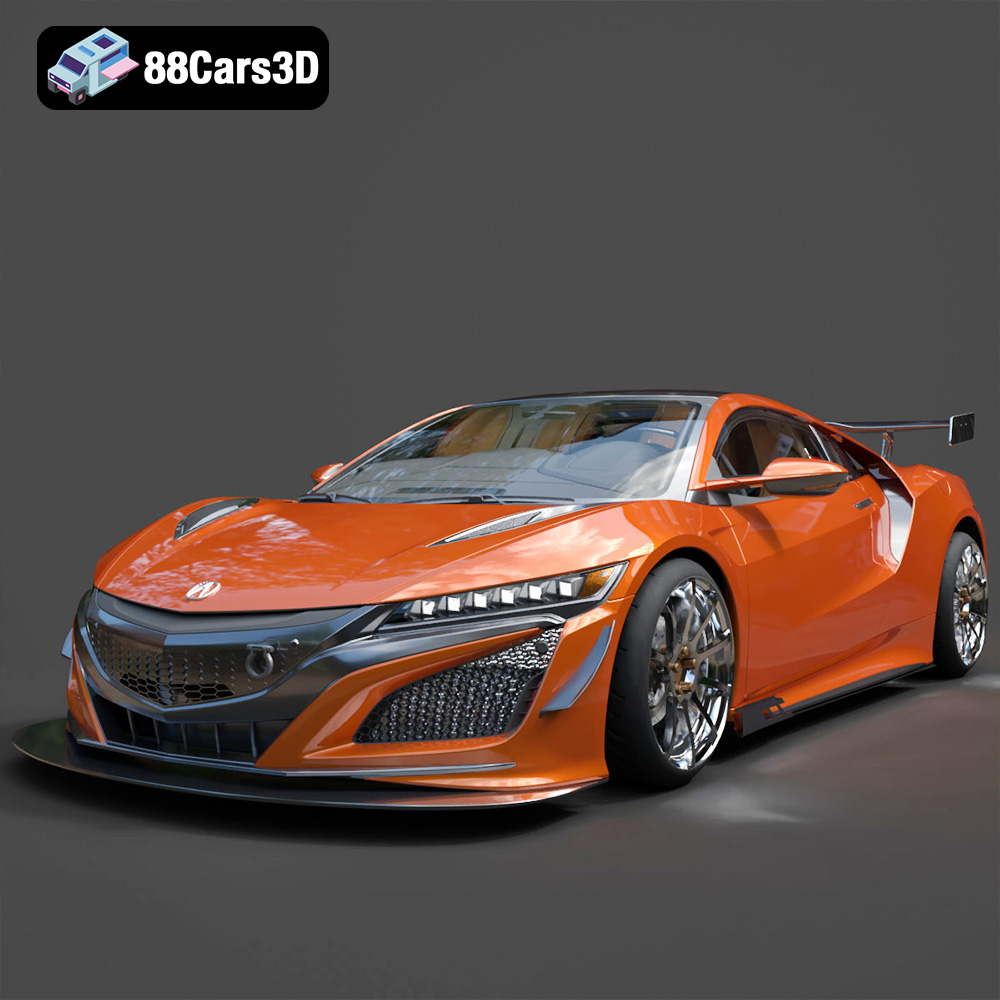
The Acura NSX 2017 3D Model is a prime example of such an asset, meticulously designed to serve a vast array of professional applications. From showcasing its distinctive Jewel Eye LED headlights in a high-resolution studio render to integrating its aggressive front fascia as a hero vehicle in a cutting-edge racing game, the model’s balanced topology and accurate details are paramount. For professionals seeking premium, ready-to-use digital assets that minimize development time and maximize visual impact, resources like 88cars3d.com become indispensable. These platforms offer a curated selection of models, ensuring that creators have access to the highest standards of digital craftsmanship, enabling them to bring their visions to life with unparalleled realism and efficiency.
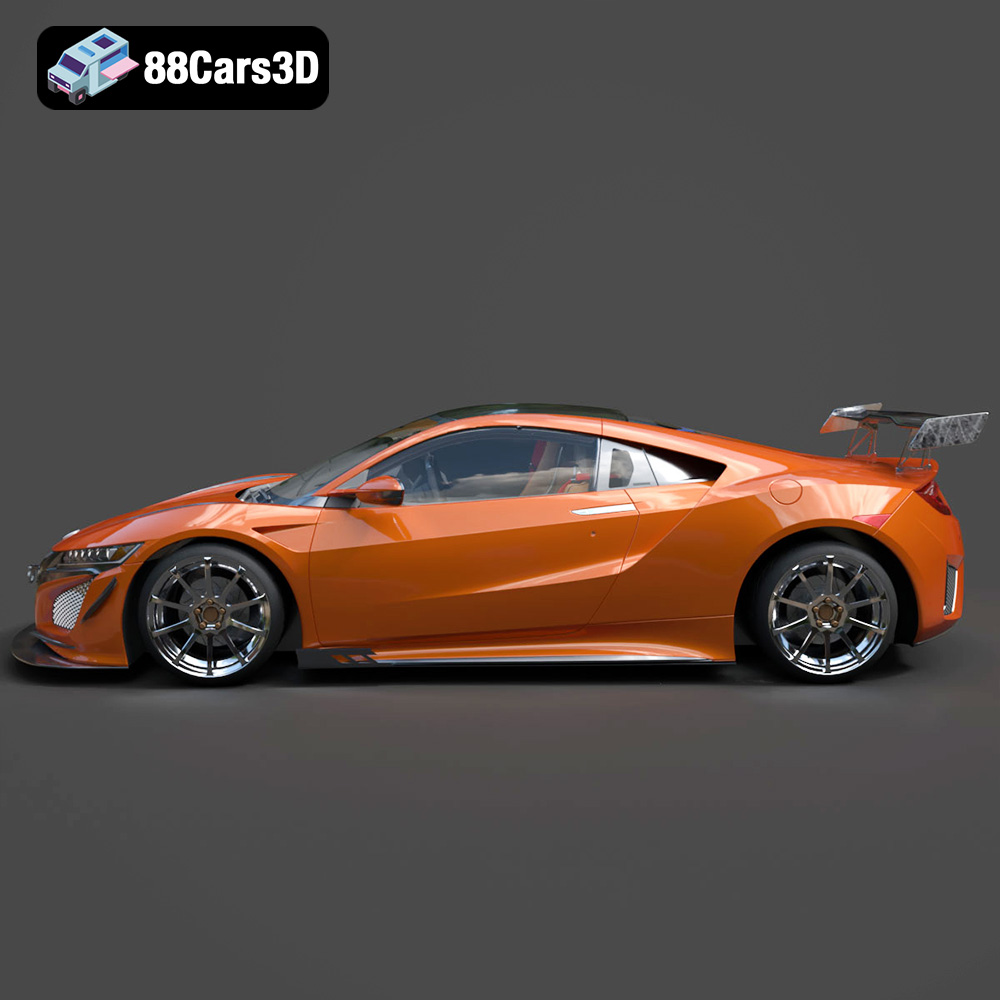
Creating a compelling 3D car model goes far beyond simply replicating shapes. It involves a deep understanding of automotive design principles, aerodynamics, and the intricate details that give a vehicle its character. For a supercar like the Acura NSX 2017, this means translating its “mid-engine hybrid profile” and “floating C-pillars” into digital geometry that is both accurate and optimized.
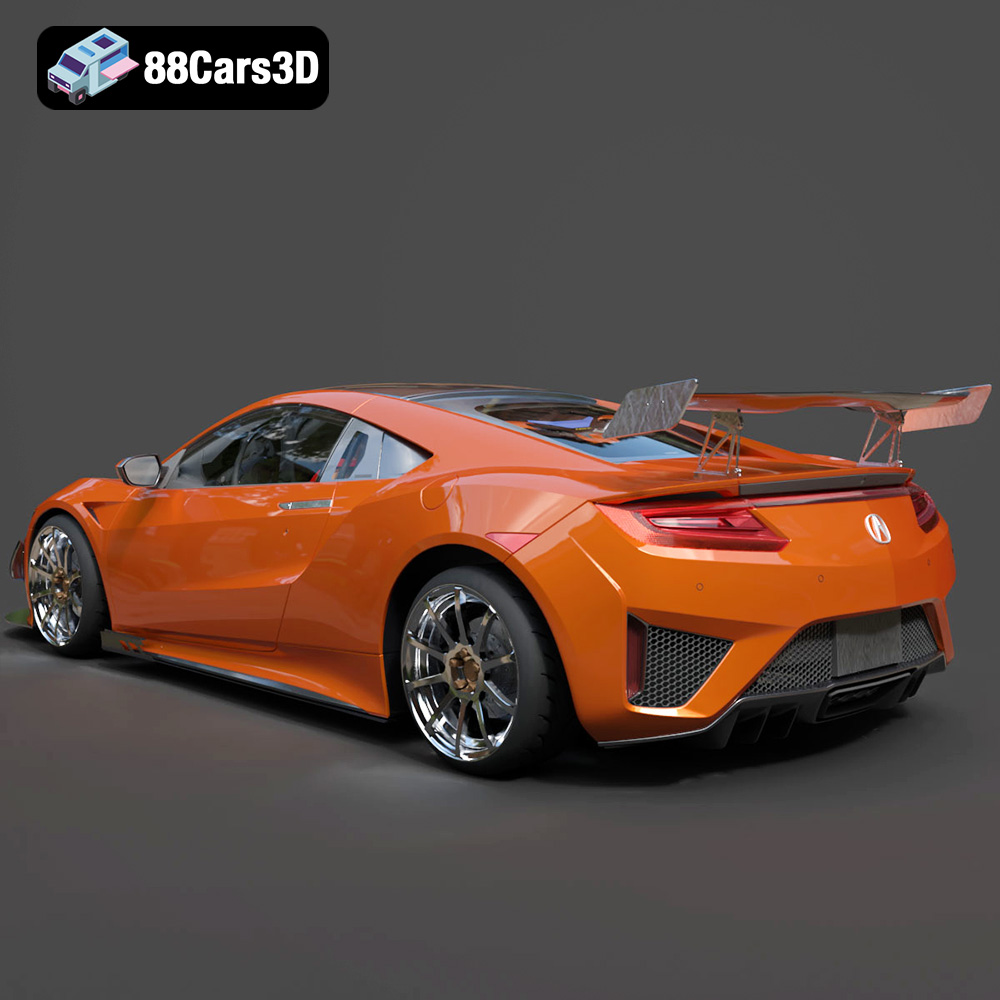
Every curve, vent, and panel of a high-quality 3D car model must reflect the original design intent. For the Acura NSX 2017 3D Model, this includes the “massive functional side air intakes” and the “detailed rear diffuser and center-mounted quad exhaust setup.” These aren’t just cosmetic details; they are crucial components of the car’s aerodynamic and performance identity. Modeling them accurately ensures that the digital asset is true to life, whether it’s being scrutinized in a static render or animated in a virtual environment. The “real-world scale accuracy” of such a model ensures it integrates seamlessly into virtual scenes, maintaining proper perspective and proportion.
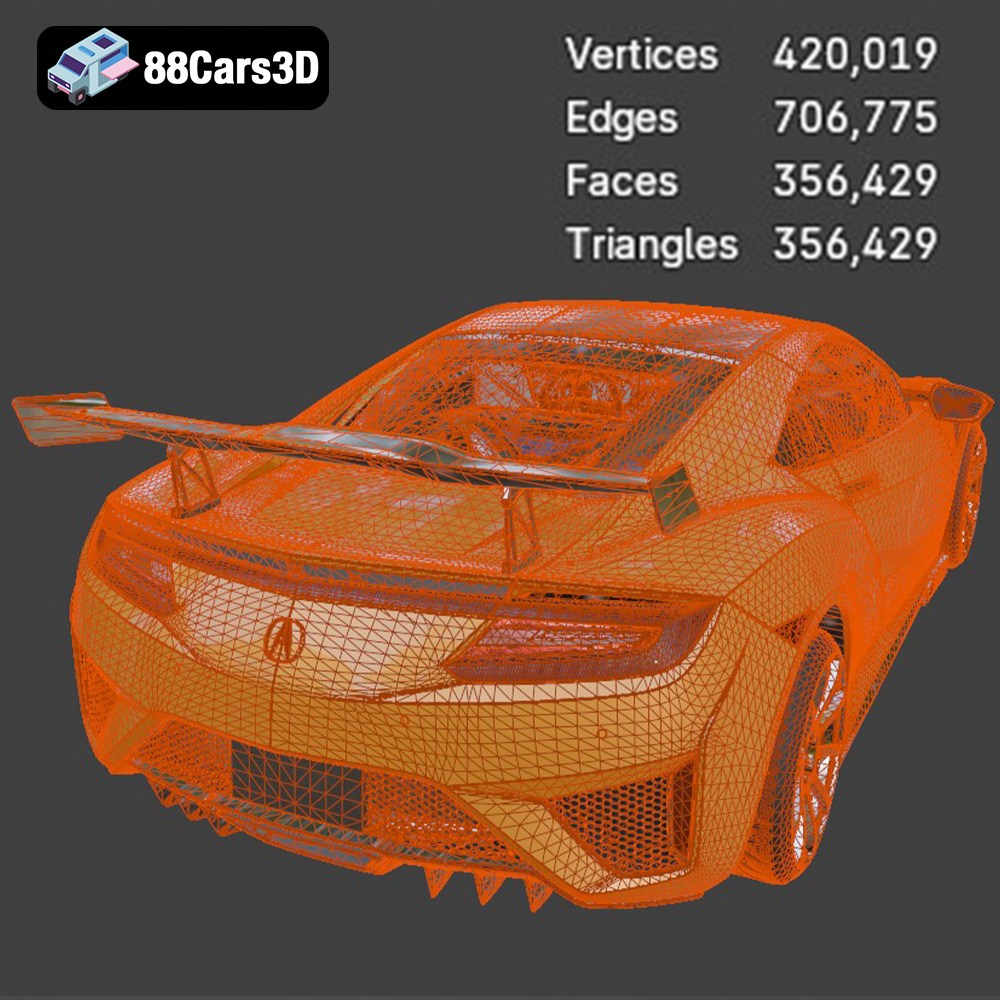
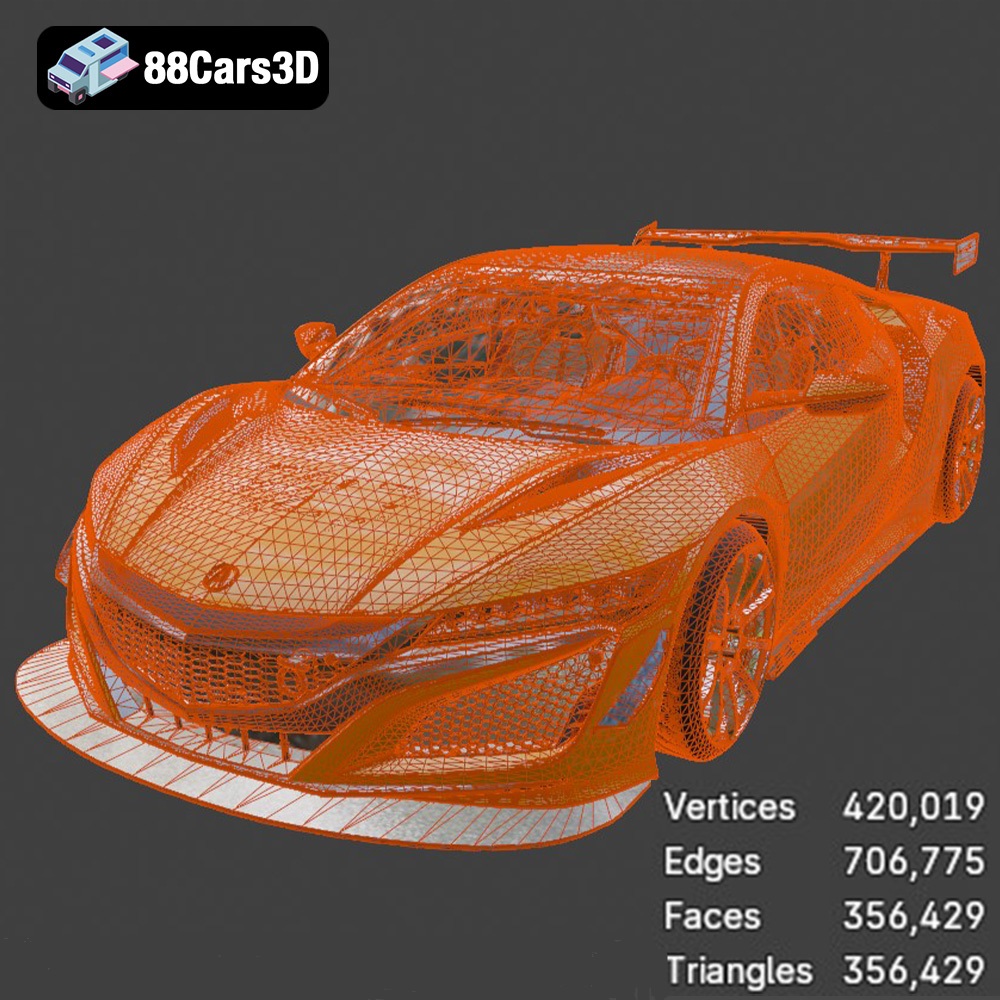
One of the most critical aspects of professional 3D car models is their topology. A model needs to be detailed enough for close-up renders, yet optimized enough for real-time applications like games or AR/VR experiences. The Acura NSX 2017 3D Model, with its “just over 356k triangles,” exemplifies this “perfectly balanced topology.” This “Goldilocks zone” means it offers “excellent visual fidelity for close-up automotive rendering” while “remaining highly optimized for use as a hero vehicle in modern game engines and real-time applications.” This careful balance avoids excessive polygon counts that can bog down performance, while retaining enough detail to prevent a “low-poly” look in high-definition contexts.
The choice of file format for a 3D model is not a trivial decision; it dictates how the asset can be used, its compatibility across different software, and its ultimate performance in various pipelines. A comprehensive marketplace like 88cars3d.com understands this, offering a wide array of formats to cater to every professional need. The Acura NSX 2017 3D Model, for instance, comes bundled with an impressive eight different formats, each serving a unique purpose. Understanding these formats is crucial for efficient workflow and successful project execution.
The `.blend` file format is native to Blender, a powerful and increasingly popular open-source 3D creation suite. When you receive a `.blend` file, you’re getting a fully editable Blender scene. This includes not just the mesh data, but also materials, textures, lighting setups, cameras, animations, and even physics simulations, all configured within the Blender environment. For artists who primarily work in Blender, this format offers the most flexibility for customization, rigging, and further development without any loss of data or conversion artifacts. It’s ideal for designers who want to deeply integrate the Acura NSX 3D Model into their Blender-centric projects, modifying existing materials, adding custom animations for its “separate wheels, steering components, and doors,” or even dissecting its topology for learning purposes.
`.fbx` (Filmbox) is arguably the most widely adopted proprietary 3D file format for exchanging 3D data between various software applications. Developed by Autodesk, it’s a robust format that supports not only geometric data (meshes, polygons, vertices) but also materials, textures, animations, skinning, and camera data. Its strength lies in its ability to maintain complex scene hierarchies and animation data, making it the “ideal for Unreal, Unity, and real-time pipelines.” When importing the Acura NSX 2017 3D Model as an `.fbx` into a game engine, you can expect its “proper pivot setup for steering, wheel rotation, and door articulation” to be preserved, drastically reducing setup time. It’s the go-to for game developers and animation studios needing a reliable bridge between their modeling software and engine.
The `.obj` (Wavefront Object) format is a fundamental and widely supported 3D file format that has been around for decades. It’s a “universal format for cross-software compatibility” primarily storing geometric data like vertices, normals, UV coordinates, and faces. While it can reference external `.mtl` (material) files for basic material properties and texture paths, it doesn’t support advanced features like animation, rigging, or scene hierarchy as robustly as `.fbx`. However, its simplicity and widespread compatibility make it an excellent choice for straightforward mesh import into almost any 3D application, often used as a fallback for pure geometry transfer. For the Acura NSX 2017, an `.obj` file ensures the core “accurate 2017 Acura (Honda) NSX supercar proportions and aerodynamic geometry” can be imported into virtually any 3D package.
`.glb` (GL Transmission Format Binary) is the binary version of glTF, an open standard for 3D scenes and models. It’s designed to be a compact, efficient, and runtime-agnostic format, making it “optimized for AR, VR, and browser-based display.” A single `.glb` file typically contains all the necessary data—geometry, materials, textures, and animations—embedded within it, reducing the need for external files and simplifying loading processes. This makes it perfect for interactive web experiences, mobile AR applications where the Acura NSX 2017 3D Model could appear in a user’s driveway, or immersive VR car configurators, where file size and quick loading are paramount.
`.stl` (Stereolithography) is the de facto standard file format for 3D printing. It represents a 3D model as a series of connected triangles (a tessellation) that approximate the surface geometry of the object. `.stl` files contain no color, texture, or material information, focusing purely on the physical shape. The Acura NSX 2017 3D Model, explicitly noted as “3D Printable STL,” highlights its suitability for converting digital assets into physical objects. This format is essential for hobbyists and professionals who want to produce “display-scale supercar diecast” models, enabling them to bring the digital NSX into the tangible world. Its manifold geometry ensures a solid, printable shell.
The `.ply` (Polygon File Format) is another format that stores 3D data, often used for storing data from 3D scanners, CAD applications, or for scientific analysis. It’s capable of storing not just geometry but also color, transparency, and normal information for each vertex or face. While less common for general 3D asset exchange than `.fbx` or `.obj`, its ability to store detailed mesh information, including vertex properties, makes it a “precision mesh format for CAD or analysis” where fine-grained control over mesh data is required. For the Acura NSX, a `.ply` might be used for specialized applications needing exact data representation.
The `.unreal` format, often referring to a project or asset package specifically prepared for Unreal Engine, signifies an asset that’s already optimized and configured for that engine’s pipeline. This could mean an `.fbx` that has been pre-imported, had its materials set up, collisions generated, and LODs (Levels of Detail) configured within an Unreal project structure. Receiving an `.unreal` package for the Acura NSX 2017 3D Model means it’s an “engine-ready asset for real-time environments,” saving developers significant time on asset preparation and ensuring optimal performance and visual quality straight out of the box within Unreal Engine.
The `.max` file is the native scene file format for Autodesk 3ds Max, one of the leading 3D modeling, animation, and rendering software packages in the industry. Similar to `.blend` for Blender, a `.max` file contains the complete scene data, including all geometry, materials, textures, lights, cameras, animations, modifiers, and plugin-specific data. For users of 3ds Max, this format offers the highest level of editability and ensures that all the intricate details of the Acura NSX 2017 3D Model, its “premium sport seating geometry,” and its “driver-centric, high-performance cockpit layout” can be fully accessed and modified within their preferred environment for “animation and rendering.”
The journey of a 3D car model from a meticulously crafted digital asset to a fully interactive element in a game or a stunning visualization in a marketing campaign is multifaceted. It requires a model that is robust enough for high-fidelity rendering yet optimized for the demanding constraints of real-time engines. The Acura NSX 2017 3D Model showcases this dual capability perfectly.
For studio renders and automotive commercials, visual fidelity is paramount. This means leveraging advanced rendering techniques, realistic material definitions, and sophisticated lighting setups. The Acura NSX 2017 3D Model’s “razor-sharp aesthetic” and “signature Jewel Eye LED headlights” truly shine in this context. Its “perfectly balanced topology” (356,429 triangles) is “detailed enough for gorgeous studio renders,” allowing for smooth, subdivision-ready meshes that capture every nuance of its exterior and interior.
The requirements for game engines like Unreal Engine or Unity are different. Here, performance is key, but not at the expense of visual quality, especially for “hero” vehicles. The Acura NSX 2017 3D Model’s “optimized enough to drop right into Unreal Engine or Unity without causing severe performance drops” status highlights its suitability.
For many 3D artists and game developers, Blender and Unreal Engine form a powerful tandem. Blender excels at modeling and initial texturing, while Unreal Engine provides an industry-leading platform for real-time rendering, interactivity, and game logic. Integrating a high-quality asset like the Acura NSX 2017 3D Model into this workflow can be incredibly efficient.
Starting with the `.blend` file of the Acura NSX 2017 3D Model offers maximum flexibility for Blender users.
Bringing the Acura NSX 3D Model into Unreal Engine transforms it into a dynamic, interactive asset.
The utility of a high-quality 3D car model extends far beyond digital screens. With advancements in 3D printing technology, these digital assets can be transformed into tangible, physical collectibles or prototypes. The Acura NSX 2017 3D Model is specifically designed with “3D Printing” in mind, offering a seamless transition from virtual to physical.
Not all 3D models are suitable for 3D printing directly. The Acura NSX 3D Model, with its “convertible to .stl format” capability and “manifold geometry,” is an ideal candidate. This means the model has a solid, watertight surface without gaps or overlapping faces, which is crucial for successful 3D printing.
After printing, the physical model undergoes a process of refinement to achieve its final showroom-ready look.
The applications for high-quality 3D car models like the Acura NSX 2017 are constantly expanding, driven by technological advancements in real-time rendering, virtual reality, and interactive experiences. These assets are fundamental tools across numerous professional fields.
Beyond simple renders, 3D models are integral to the automotive design process itself. Designers use these models to iterate on concepts, test aerodynamics in virtual wind tunnels, and visualize different trim levels or color options. Marketing teams leverage them to create compelling configurators, virtual showrooms, and promotional materials long before physical prototypes exist. The Acura NSX model, with its accurate proportions and customization potential, is perfect for demonstrating potential variations of the vehicle.
Augmented reality (AR) and virtual reality (VR) are transforming how consumers interact with products. Imagine stepping into a VR showroom and exploring the Acura NSX 2017 in full 3D, able to walk around it, open its doors, and even sit inside the “driver-centric, high-performance cockpit layout.” Or an AR app that lets you place the NSX virtually in your driveway, true to “real-world scale accuracy.” The `.glb` format, tailored for these applications, makes such experiences seamless and highly engaging. This provides a level of immersion that traditional media cannot match, making the model “excellent for interactive digital showrooms, car configurators, and mobile AR experiences.”
In film and television, high-fidelity 3D car models are crucial for creating stunning visual effects, chase sequences, and product placements without needing to physically destroy expensive vehicles. From pre-visualization to final render, the NSX model can be seamlessly integrated into live-action footage or used to create entirely CGI-driven scenes. Its detailed geometry and animation-ready components allow for dynamic camera movements and realistic interactions within the digital environment, making it suitable for “cinematic automotive showcases.”
One of the greatest advantages of investing in a premium 3D model, such as the Acura NSX 2017 3D Model from 88cars3d.com, is the immense creative freedom it offers. These aren’t just static models; they are foundations for boundless artistic expression and project-specific adaptations.
The product description highlights several key customization avenues that empower creators:
Beyond physical appearance, premium 3D car models can be adapted to fit diverse narrative contexts:
This level of customization means that even with a base model, the creative possibilities are extensive, making the Acura NSX 2017 3D Model a truly versatile asset for any professional workflow.
The journey of a 3D car model, from its initial conceptualization to its deployment across diverse platforms, underscores the critical importance of quality, optimization, and versatility. The Acura NSX 2017 3D Model exemplifies these principles, offering a meticulously crafted digital asset that transcends mere visual appeal. Its balanced topology makes it equally at home in breathtaking cinematic renders as it is performing flawlessly as a hero vehicle in demanding real-time game engines. The comprehensive array of included file formats ensures unparalleled compatibility, providing professionals with the right tool for every task, from detailed design visualization and interactive AR/VR experiences to the tangible creation of “display-scale supercar diecast” models through 3D printing.
In a rapidly evolving digital landscape, access to high-fidelity, production-ready 3D car models is not just a convenience; it is a strategic advantage. Platforms like 88cars3d.com play a crucial role in empowering creators by offering expertly crafted assets that save invaluable development time and elevate project quality. The Acura NSX 2017 3D Model stands as a testament to the power of precise digital craftsmanship, ready to drive innovation and inspire creativity across the automotive, gaming, and visualization industries. Investing in such quality assets allows artists and developers to focus on their creative vision, confident that their foundational models are built to the highest technical standards.
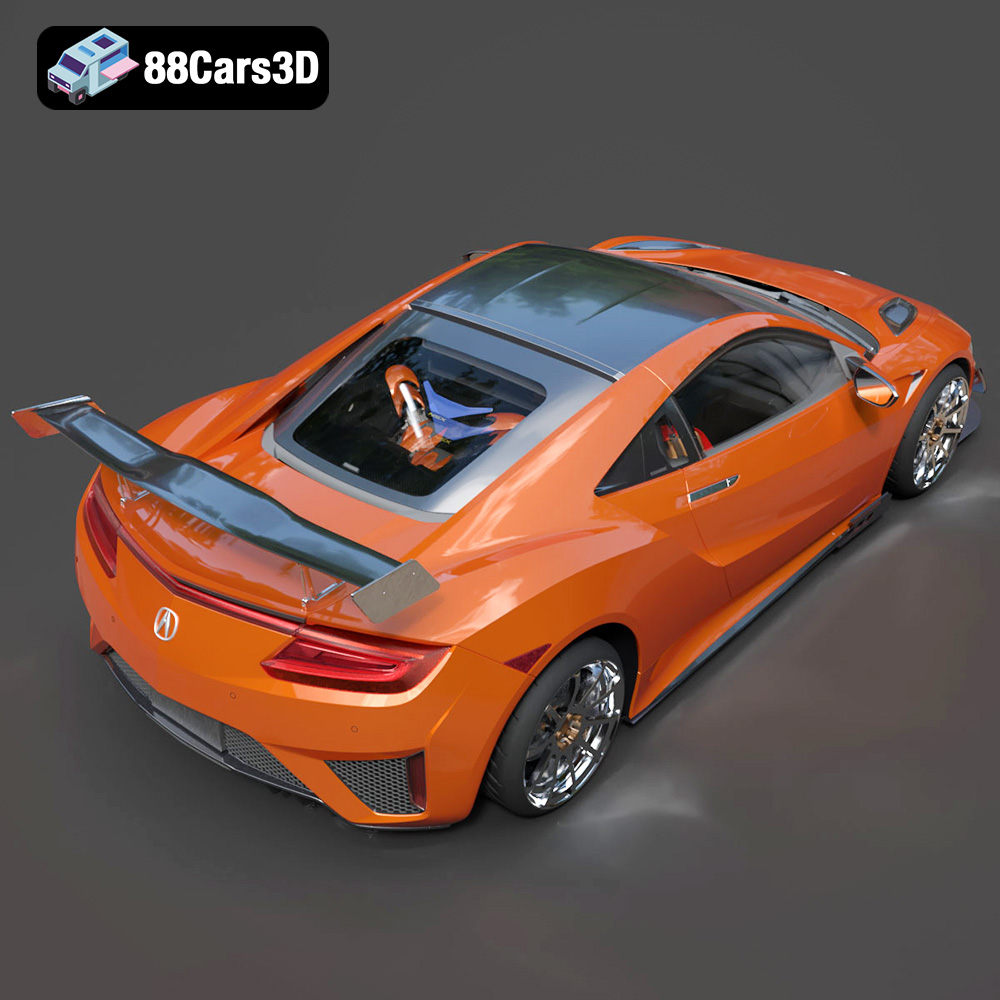
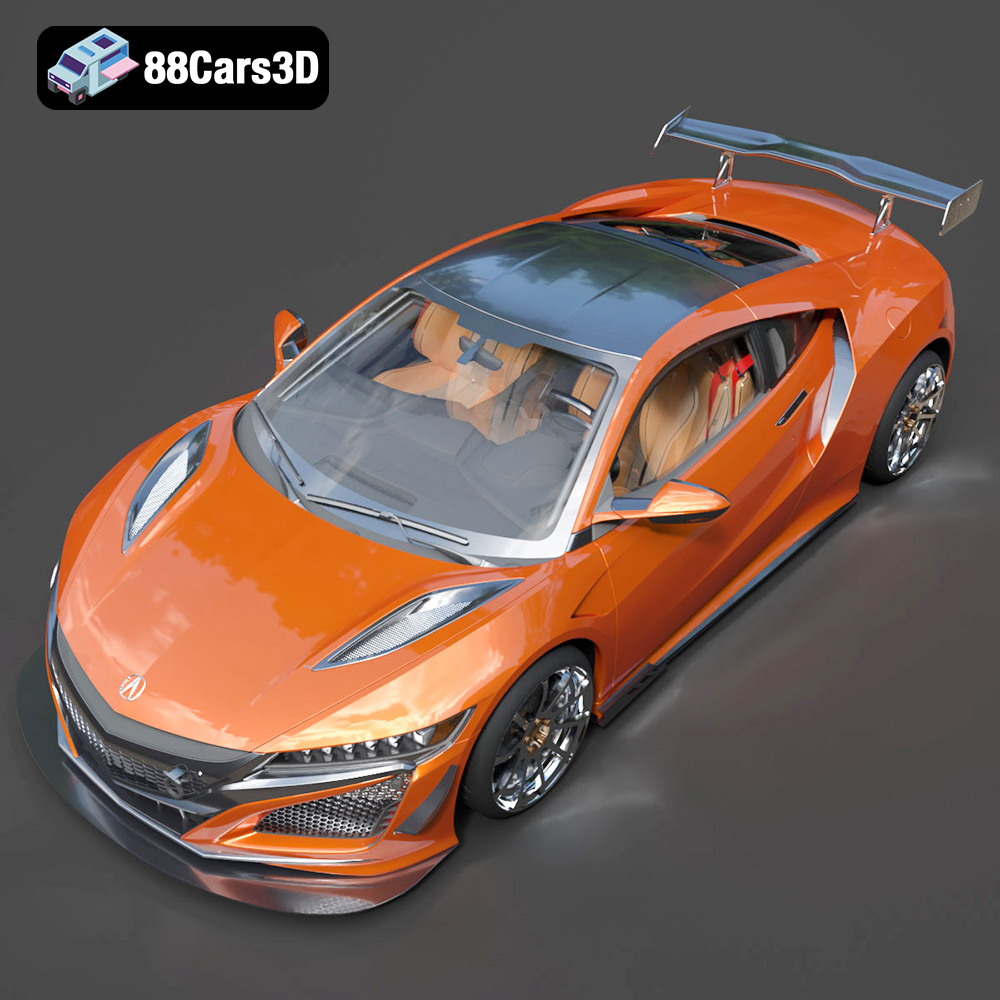
The Acura NSX 2017 3D Model is a stunning digital recreation of the rebirth of a legendary supercar. Combining striking, aerodynamically optimized styling with a futuristic mid-engine hybrid profile, the 2017 NSX represents the pinnacle of modern precision craftsmanship. This 3D model accurately captures the razor-sharp aesthetic of the original car, featuring the signature Jewel Eye LED headlights, aggressive front fascia, floating C-pillars, and massive side air intakes that feed the twin-turbo V6. Built with a highly efficient and perfectly balanced mid-polygon topology (just over 356k triangles), it provides excellent visual fidelity for close-up automotive rendering while remaining highly optimized for use as a hero vehicle in modern game engines and real-time applications.
$9.99