Get 50% OFF All Premium 3D & STL Models!

The world of digital visualization has transformed how we perceive and interact with automobiles. From breathtaking cinematic renders that grace the screens of automotive advertising to immersive game experiences and the intricate precision of 3D-printed prototypes, high-fidelity 3D car models are the fundamental building blocks. These assets empower designers, engineers, game developers, and enthusiasts to explore concepts, test theories, and create stunning visual narratives without the constraints of physical production.
In this evolving landscape, the demand for meticulously crafted 3D models that meet stringent professional standards is paramount. Whether you’re an architect visualizing a luxury garage, a game studio populating a virtual metropolis, or a product designer iterating on scale models, the quality and versatility of your digital assets directly impact your project’s success. It’s precisely this blend of aesthetic excellence and technical rigor that defines models like the BMW X6 3D Model – a digital recreation designed to serve a myriad of professional applications, from stunning renders to tangible 3D prints.
Today, we’ll explore the technical intricacies behind creating and utilizing premium 3D car models, delving into workflows, specific software applications, and the critical role file formats play. We’ll use the BMW X6 3D Model as a prime example to illustrate how such an asset seamlessly integrates into diverse production pipelines, offering both artistic freedom and robust technical performance.
The flexibility and utility of any 3D asset, especially a complex one like a car model, heavily depend on the file formats it supports. Each format serves a specific purpose, catering to different software, pipelines, and end-use applications. Understanding these distinctions is crucial for anyone working with 3D models, ensuring smooth integration and optimal performance. The BMW X6 3D Model from 88cars3d.com is provided in an impressive array of formats, ensuring broad compatibility across the industry.
The .blend format is native to Blender, a powerful and increasingly popular open-source 3D creation suite. When you download a .blend file, you’re not just getting the mesh; you’re receiving the complete scene, including materials, textures, lighting, camera setups, and even animation data. This format offers maximum editability, allowing artists to dive deep into the model’s structure, modify its topology, adjust PBR (Physically Based Rendering) materials, or re-rig components. For users primarily working in Blender, this is the most convenient and comprehensive option, providing a fully organized and ready-to-render setup straight out of the box.
.fbx (Filmbox) is an industry-standard format developed by Autodesk, renowned for its excellent support for inter-application data exchange. It excels at transferring not only geometry but also materials (though often simplified), textures, animations, rigging, and even basic lighting. For game developers using Unreal Engine or Unity, .fbx is the go-to format due to its robust support for game engine import and its ability to maintain crucial elements like clean hierarchies and pivot points. It’s designed for efficiency, making it perfect for real-time applications where performance is critical.
The .obj (Wavefront Object) format is one of the oldest and most universally supported 3D file formats. It primarily stores geometry (vertices, normals, texture coordinates, and faces) and can reference external material (.mtl) and texture files. While it doesn’t store rigging or animation data, its widespread compatibility makes it a safe choice for transferring models between almost any 3D software package, from 3ds Max to Maya to ZBrush. It’s a clean, text-based format that ensures your core mesh data is preserved, making it an excellent fallback for maximum cross-platform access.
.glb (GL Transmission Format Binary) is the binary version of glTF, a royalty-free specification for the efficient transmission and loading of 3D scenes and models by applications. Often dubbed the “JPEG of 3D,” .glb files package all necessary data—geometry, materials, textures, animations—into a single, self-contained file. This makes it incredibly efficient for web-based 3D viewers, augmented reality (AR) and virtual reality (VR) applications, and other environments where quick loading and compact file size are essential. It’s a modern format designed for the demands of interactive real-time experiences.
The .stl (Stereolithography) format is the standard for 3D printing. It represents 3D surfaces as a series of connected triangles (facets) without any color or texture information. For models like the BMW X6 3D Model intended for physical fabrication, an optimized .stl file is crucial. It must have manifold (watertight) geometry, meaning there are no holes, gaps, or overlapping faces, to ensure a successful print. The BMW X6 model, being 3D printable, would require careful conversion and optimization to this format, often involving specific slicing software to prepare it for FDM or resin printers.
.ply (Polygon File Format) is another format that stores geometric data, including vertex positions, normals, colors, and faces. While less common for everyday artistic exchange than .obj or .fbx, it’s often used in academic, scientific, and engineering applications for storing 3D scanner data, point clouds, and precision meshes. It can be particularly useful for CAD workflows, reverse engineering, or when a precise, raw mesh data transfer is required for analysis.
The .unreal format signifies an asset specifically prepared and optimized for direct import and use within Unreal Engine. This often implies that the model has undergone specific optimizations like proper UV mapping for lightmaps, collision mesh generation, LOD (Level of Detail) variations, and a material setup compatible with Unreal’s PBR renderer. While typically imported via .fbx, a file package explicitly labeled .unreal suggests a highly streamlined asset ready for immediate integration into an Unreal project, saving significant setup time.
The .max format is the native file type for Autodesk 3ds Max, one of the leading software packages for 3D modeling, animation, and rendering. Similar to .blend, a .max file contains the complete scene, including all geometry, materials, textures, lights, cameras, animation keyframes, and modifiers. For professionals working in architectural visualization, product design, or cinematic rendering, having the .max file provides full control over the asset within a robust production environment, allowing for complex scene assembly, advanced V-Ray or Corona renders, and intricate animation sequences.
The comprehensive range of formats included with the BMW X6 3D Model from 88cars3d.com underscores its adaptability, ensuring it can be a cornerstone asset for virtually any 3D production pipeline.
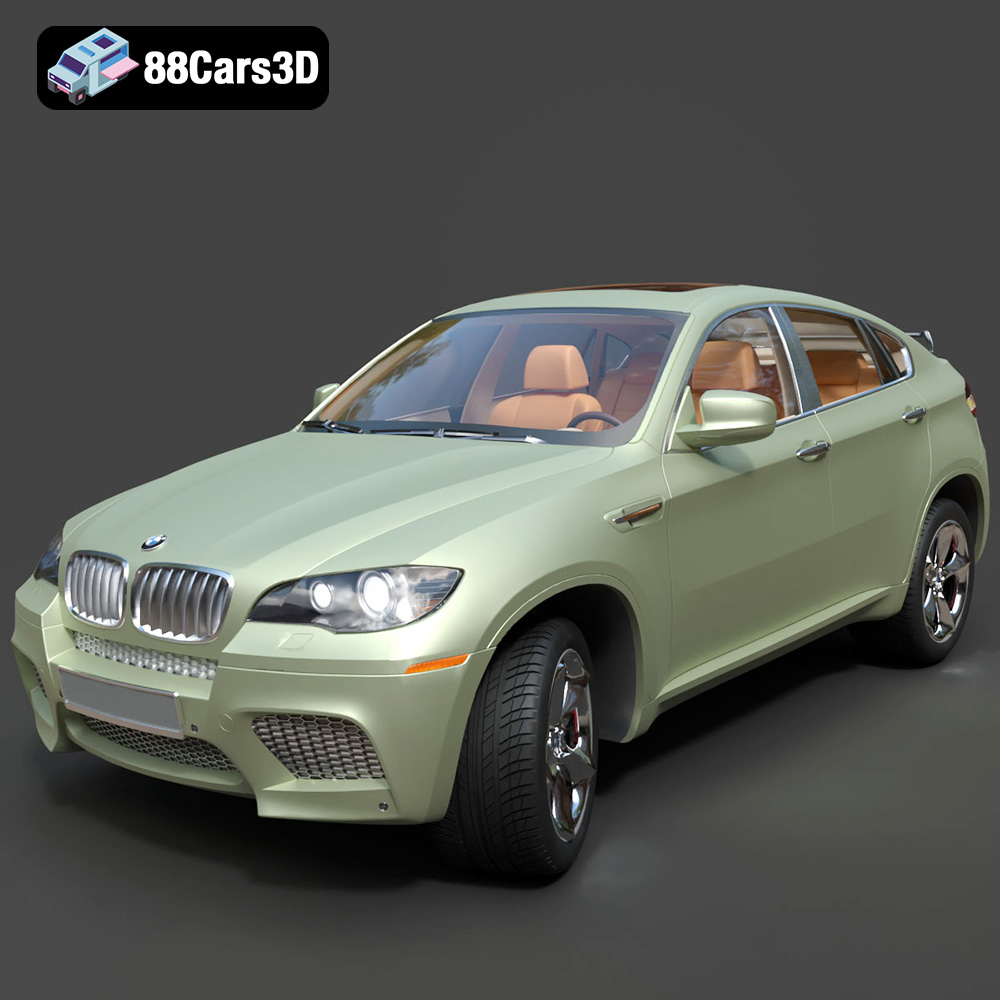
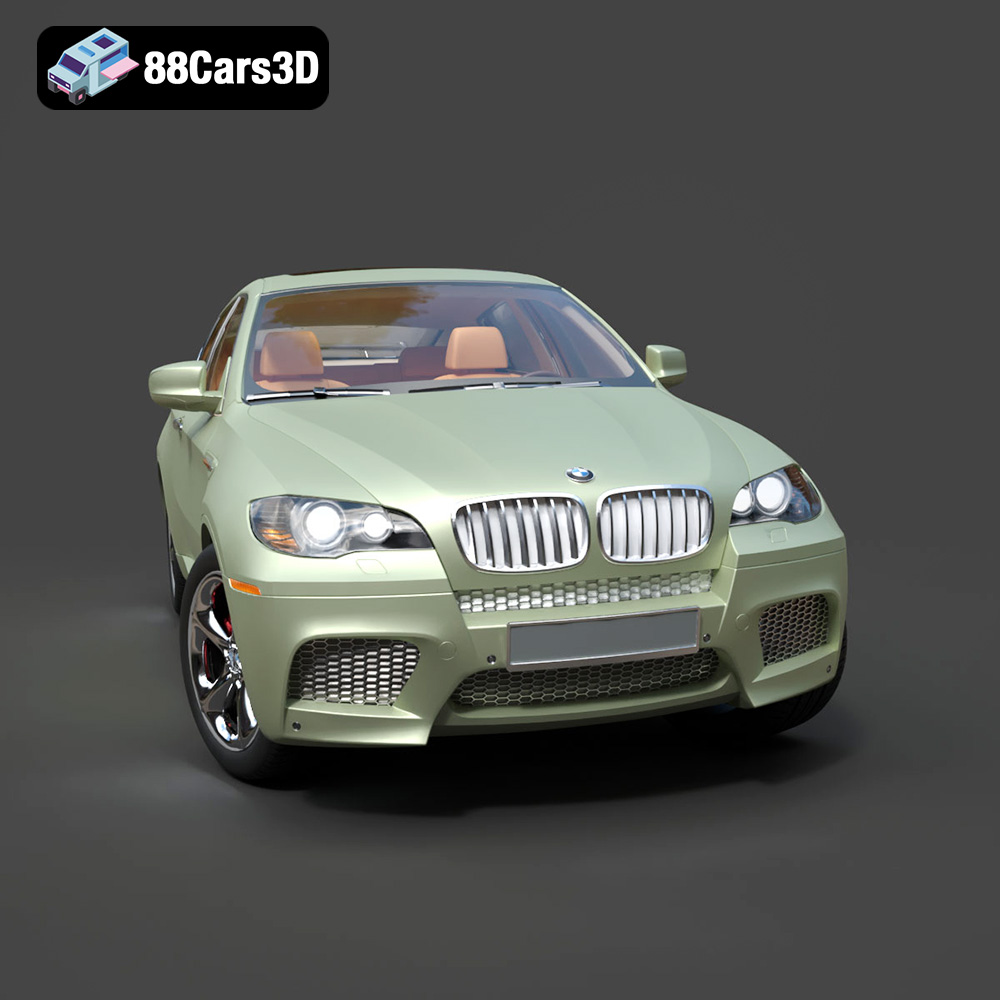
High-quality 3D car models are indispensable for creating hyper-realistic renders that capture the essence of automotive design. The BMW X6, with its distinctive coupe-SUV profile, aggressive stance, and luxurious detailing, demands a 3D model capable of conveying every nuance. This is where the BMW X6 3D Model truly shines, providing the foundation for stunning automotive visualization projects.
For rendering, the quality of materials and textures is as crucial as the mesh itself. A premium 3D model, like the BMW X6, typically utilizes a PBR (Physically Based Rendering) workflow. This means materials are designed to react to light in a physically accurate way, mimicking real-world surfaces. Expect highly detailed textures for paint (metallic flakes, clear coat reflections), tires (rubber roughness, tread patterns), glass (transparency, refraction), and interior elements (leather grains, stitching, polished metals). The inclusion of transparent materials for windows and lighting components allows for realistic light scattering and interior visibility, crucial for compelling renders.
Achieving photorealistic renders requires mastery of lighting. Artists often use HDRI (High Dynamic Range Image) environments to simulate real-world lighting conditions, from studio setups with softboxes to outdoor scenes with natural sun and sky. Software like 3ds Max, paired with renderers like V-Ray or Corona, allows for precise control over light sources, reflections, and global illumination. The BMW X6 3D Model, with its clean topology and proper UV mapping, ensures that these complex lighting setups produce predictable and beautiful results, highlighting the car’s sculpted hood, signature kidney grille, and aerodynamic profile.
Beyond static images, the BMW X6 3D Model is engineered for animation. Its proper hierarchy and pivot placement for elements like doors, hood, trunk, and wheels are critical. This allows animators to create realistic opening and closing sequences, dynamic camera moves around the vehicle, or even full driving simulations. In automotive advertising, these animated sequences are vital for showcasing vehicle features, performance, and design aesthetics in a captivating manner. The model’s optimized geometry also ensures smooth deformation and rendering during complex camera movements, making it suitable for high-end commercial presentations and cinematic sequences.
While high-fidelity rendering focuses on ultimate visual quality, real-time applications prioritize performance without sacrificing too much visual appeal. Game development, AR/VR experiences, and interactive simulations demand highly optimized 3D car models that can be rendered at high frame rates on various hardware. The BMW X6 3D Model is built with these considerations in mind.
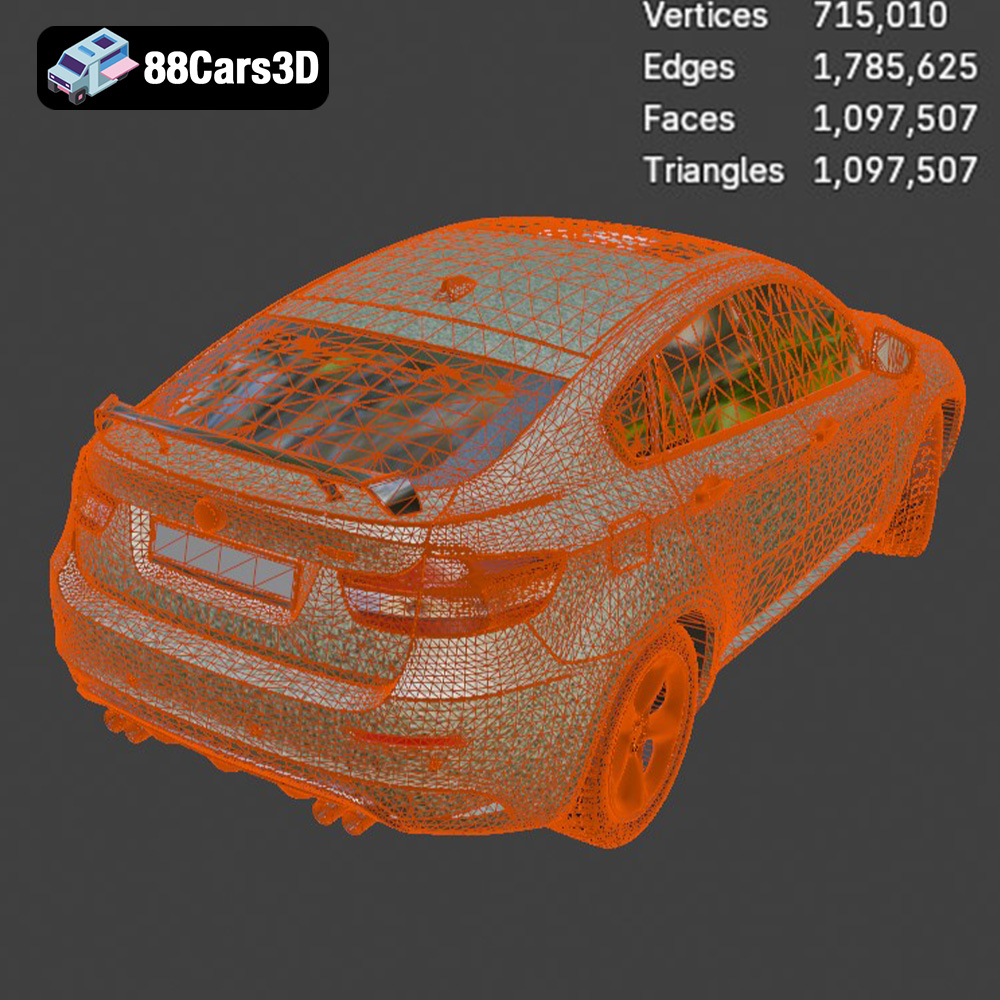
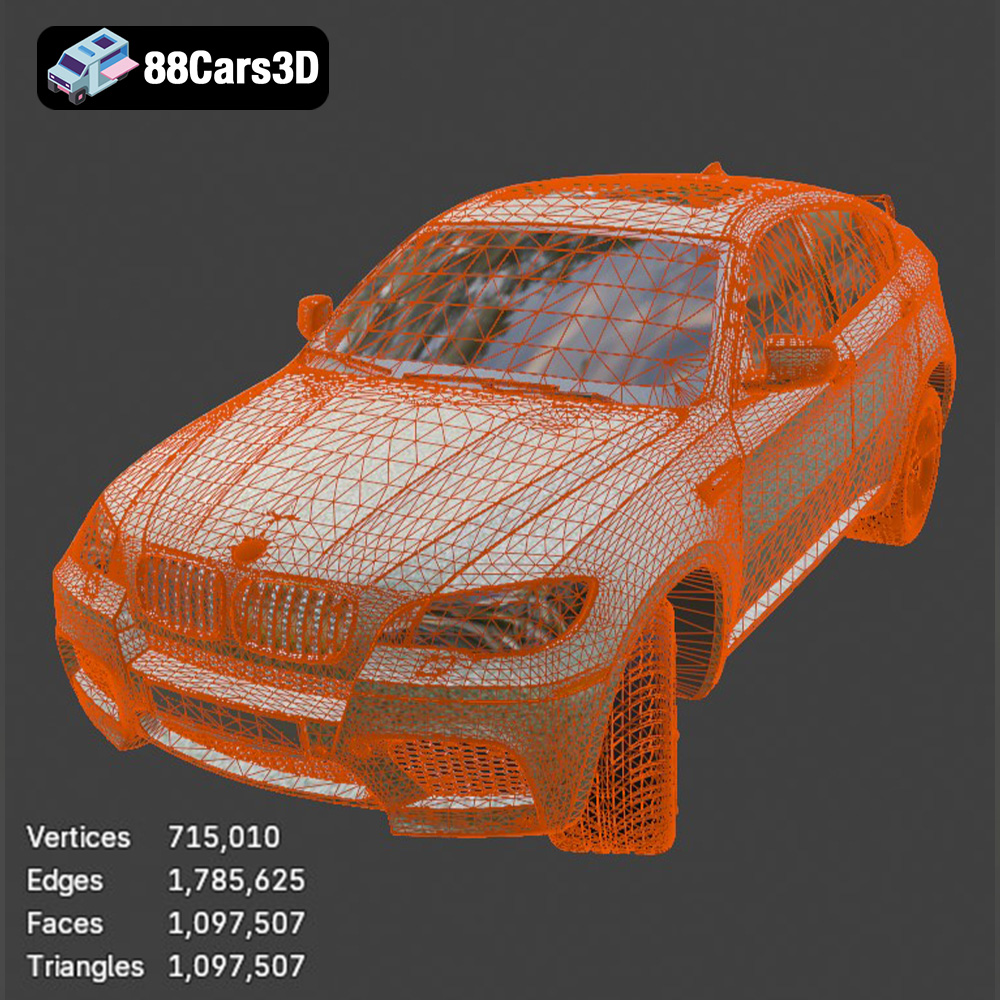
A key aspect of real-time optimization is managing polygon count. While a high-resolution model might have millions of polygons for cinematic renders, game engines require a more balanced approach. The BMW X6 3D Model is described as having an “optimized polygon count for performance.” This implies a careful balance between visual detail and real-time efficiency. For even greater performance, Level of Detail (LOD) models are often created, which are lower-polygon versions that swap in as the car moves further from the camera. This ensures that distant vehicles don’t consume excessive processing power, maintaining smooth gameplay or interactive experiences.
In real-time engines like Unreal and Unity, clean and efficient UV mapping is crucial not just for textures but also for lightmaps. Lightmaps bake complex lighting information directly onto textures, improving performance by reducing real-time lighting calculations. The BMW X6 3D Model would feature well-organized UVs, allowing for efficient texture packing and lightmap generation. Furthermore, PBR materials are often implemented using material instancing, where a base material can be modified with different textures or parameters for various car variants without creating entirely new materials, further boosting performance.
For games and simulations, the car model needs to interact realistically with its environment. This involves creating collision meshes – simplified, invisible versions of the car’s geometry used by the physics engine to detect impacts and prevent objects from passing through. The BMW X6 model, with its separate elements for doors, hood, trunk, and wheels, also allows for interactive functionality. In a game, players could open doors, customize wheels, or even damage specific body parts, all driven by the model’s well-structured hierarchy and individual components.
Beyond digital screens, the BMW X6 3D Model offers a unique opportunity for physical creation through 3D printing. Transforming a complex digital vehicle into a tangible object requires specific technical considerations and careful preparation, but the results can be incredibly rewarding, from scale models to collector builds.
The core requirement for 3D printing is “manifold” or “watertight” geometry. This means the model must be a completely enclosed volume without any holes, intersecting faces, or non-manifold edges. A professional 3D printable model like the BMW X6 will have been meticulously checked and prepared to meet this standard, often exported as an .stl file. Preparing for print also involves separating components. The description highlights “wheels printed separately for improved detailing,” a common technique to achieve higher resolution on intricate parts and facilitate multi-material or multi-color prints.
The product description provides invaluable 3D print settings, offering a roadmap for successful fabrication. Recommended scales (1:24, 1:32, 1:18, 1:12) cater to different detail levels and printer capabilities. Layer height (0.12–0.18 mm for FDM, or even finer for resin printing) dictates the print’s resolution and smoothness. Wall thickness (2–3 mm) ensures structural integrity. Infill (15–30%) balances strength and material usage. Critical details like “Supports: Required for mirrors, underbody sections, and wheel arches” and “Print orientation: Body printed upside-down for smoother roof finish” are expert tips that directly impact print quality and reduce post-processing effort.
Post-processing is where the model truly comes to life. Steps like sanding, primer, metallic automotive paint, and a clear coat are essential to achieve a factory-finish look, transforming the raw print into a miniature replica of the luxury vehicle. This entire process, from digital file to painted miniature, showcases the versatility of a well-engineered 3D model.
The true value of a high-quality 3D car model lies in its seamless integration into various professional workflows. From conceptual design to marketing, the BMW X6 3D Model serves as a versatile asset, accelerating production and enhancing creative output across different industries.
For automotive studios and designers, 3D models are fundamental. Before a physical prototype is ever built, designers use models like the BMW X6 to visualize design iterations, test aerodynamics, and present concepts to stakeholders. The “clean, organized mesh structure” and “real-world scaling” mentioned in the product description are critical here. These features ensure that measurements are accurate and that the model can be modified efficiently without introducing errors, allowing for rapid prototyping and detailed design reviews.
Beyond aesthetics, 3D car models play a crucial role in simulation and training. Whether it’s for autonomous vehicle development, driver training simulators, or traffic flow analysis, realistic vehicle models are essential. The BMW X6 3D Model, optimized for real-time engines, can be integrated into these complex simulation systems to provide accurate visual representations and dynamic behavior. Its proper hierarchy and pivot placement facilitate realistic vehicle dynamics visualization, making it a valuable tool for engineers and researchers.
For marketing agencies and content creators, the BMW X6 3D Model offers unparalleled flexibility. Instead of costly photoshoots with physical cars, digital models allow for endless variations in lighting, environments, and angles, all at a fraction of the cost. The ability to “Change paint finishes (metallic, matte, gloss),” “Modify wheel designs and performance trims,” or “Apply custom decals or promotional branding” means a single model can be adapted for countless campaigns, from product launches to social media content. This efficiency and creative freedom are a game-changer for digital marketing.
One of the most compelling advantages of using a professional 3D model is the inherent flexibility it offers for customization. Unlike working with photographs or pre-rendered media, a 3D asset provides an entire canvas for creative expression and adaptation to specific project needs. The BMW X6 3D Model is engineered precisely with this versatility in mind, empowering artists and developers to truly make it their own.
The comprehensive nature of the BMW X6 3D Model allows for extensive aesthetic customization. Imagine a scene requiring the X6 in a sleek matte black finish for a stealthy urban render, or perhaps a vibrant metallic blue for a high-energy advertising campaign. The model facilitates seamless changes to paint finishes, offering options for metallic, matte, or gloss looks. Beyond color, the ability to “Modify wheel designs and performance trims” is crucial. Wheels are often a focal point of car design, and being able to swap them out or adjust their appearance instantly transforms the vehicle’s character, enabling artists to match the model to a specific brand aesthetic or scenario. Even adding M Sport styling elements can instantly elevate the perceived performance and luxury of the vehicle, demonstrating the granular control available.
In commercial applications, branding is everything. The BMW X6 3D Model can be easily adapted to incorporate custom decals or promotional branding. This is invaluable for creating realistic product placements, event visuals, or showcasing a vehicle in a specific corporate fleet. Whether it’s a small logo on the door or a full-body wrap, the model’s clean UV mapping ensures that textures and decals apply flawlessly. This level of control extends to environmental adaptations as well, allowing creators to “Adjust lighting setups for day, night, or studio renders,” thereby placing the X6 within any desired narrative context without reshooting or extensive post-production.
The customization options aren’t just for visuals; they extend to practical applications too. In a design context, the ability to rapidly iterate on different visual configurations of the BMW X6—testing out new rim designs, bumper variations, or even subtle changes to body contours—significantly speeds up the design process. This iterative capability, coupled with the option for 3D printing, means that a design concept can quickly move from a digital idea to a physical prototype, allowing for tactile evaluation before significant resources are committed to manufacturing. This fusion of digital flexibility and physical output makes the BMW X6 3D Model an incredibly powerful tool for innovation and creativity.
The digital age has ushered in an era where high-quality 3D assets are not just supplementary tools but fundamental necessities across a multitude of industries. From the meticulous detail required for automotive rendering and advertising to the performance optimization demanded by game development and AR/VR, and even the precision needed for 3D printing, a versatile 3D car model is an invaluable asset.
The BMW X6 3D Model stands as a testament to this versatility, offering a meticulously crafted digital recreation of a luxury Sports Activity Coupe that seamlessly integrates into diverse professional workflows. Its clean topology, real-world scale, optimized polygon count, and comprehensive file format support ensure that it’s ready for any challenge – whether that’s generating a breathtaking showroom render in 3ds Max, populating a virtual world in Unreal Engine, or producing a finely detailed scale model via 3D printing. With extensive customization options, it empowers creators to tailor the vehicle to their exact specifications, unlocking limitless creative possibilities.
For professionals seeking reliable, high-fidelity 3D car models that provide both technical excellence and creative freedom, resources like 88cars3d.com offer an exceptional selection. Investing in such a robust asset saves countless hours of modeling work and provides a solid foundation for achieving exceptional visual and interactive results in any automotive-related project.
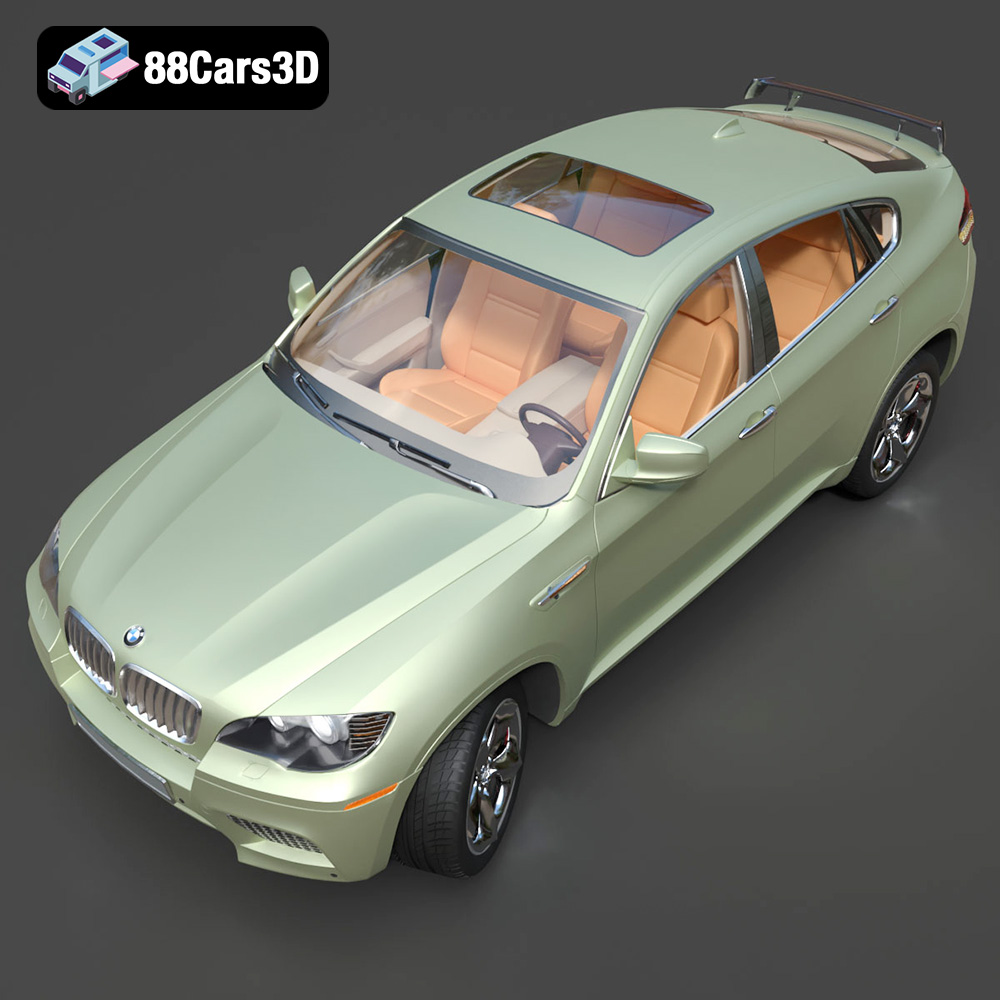
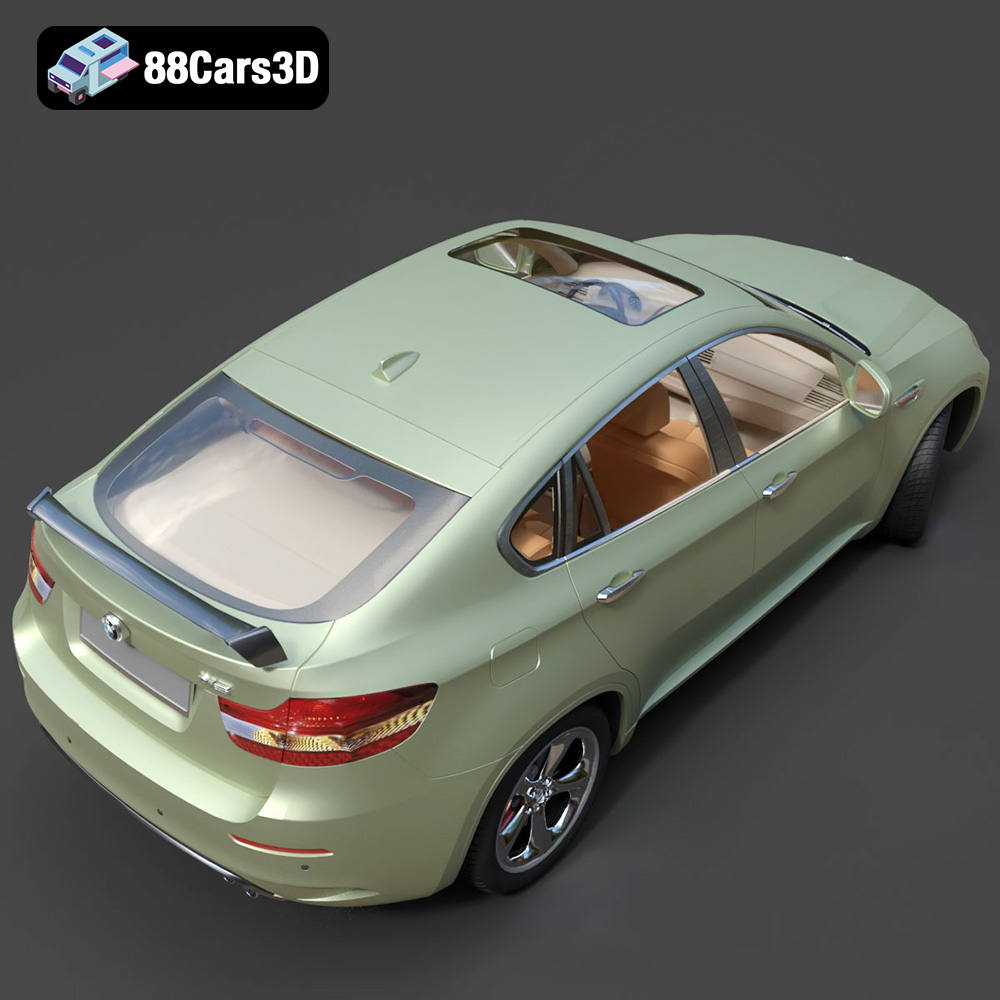
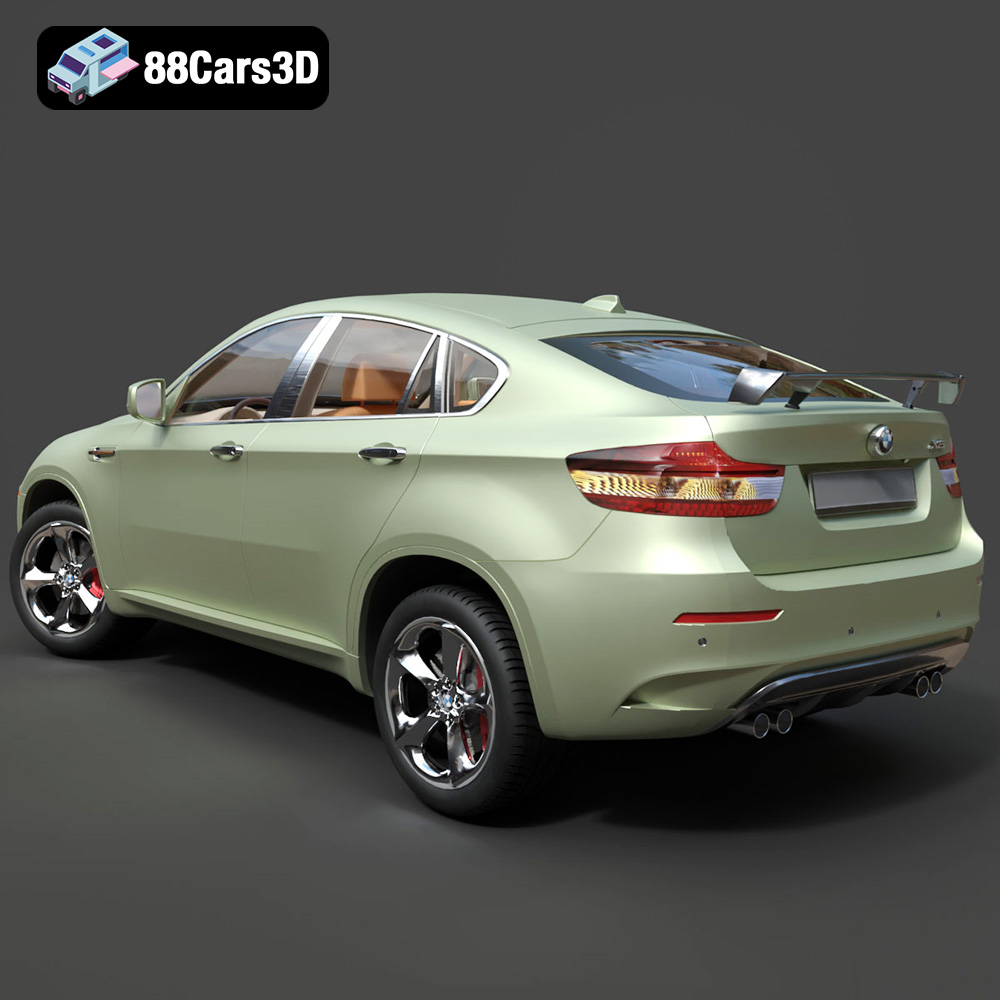
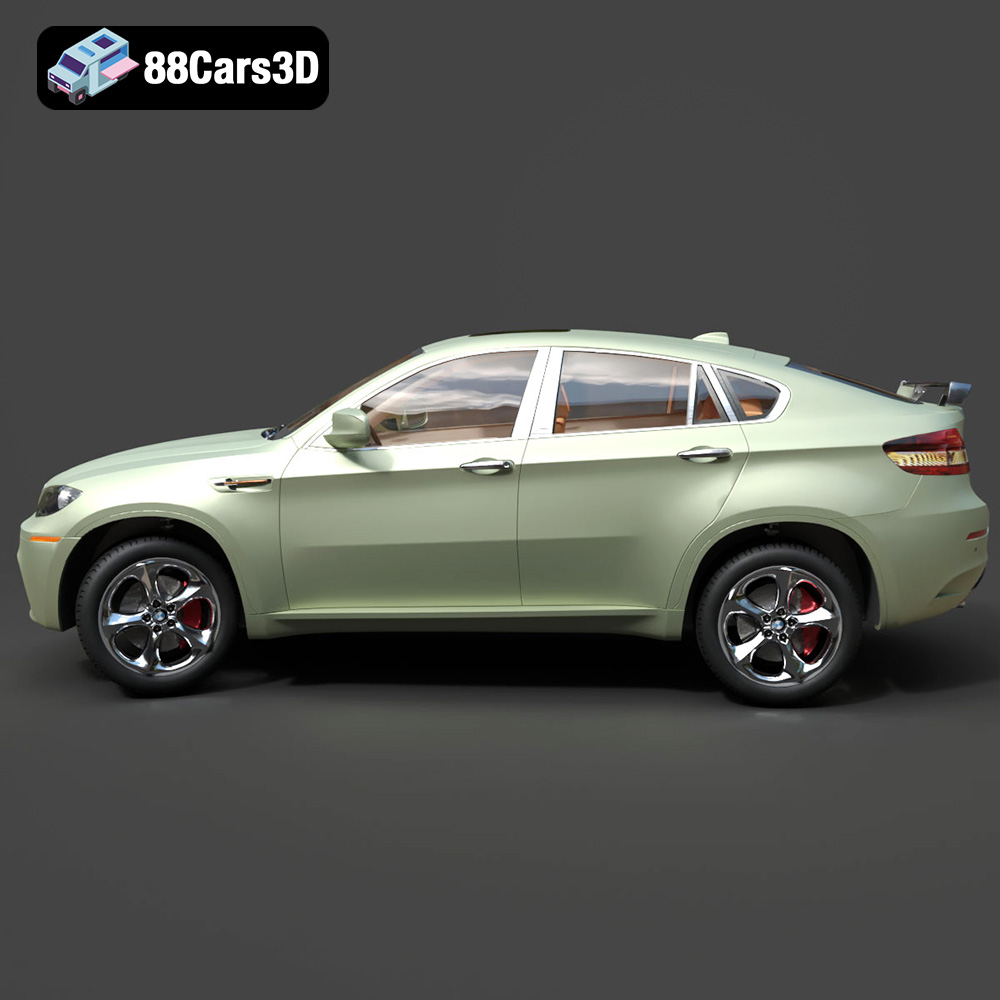
The BMW X6 3D Model is a high-quality digital recreation of the luxury Sports Activity Coupe. This 3D model accurately captures the bold kidney grille, sculpted hood, aerodynamic profile, and performance-oriented proportions that define the BMW X6. Built with clean topology and real-world scale accuracy, it is ideal for rendering, animation, automotive visualization, game development, AR/VR applications, simulation environments, and is convertible to .stl format for scale SUV coupe miniatures and collector builds. Includes .blend, .fbx, .obj, .glb, .stl, .ply, .unreal, and .max formats.
$9.99
.arvr
.blend
.bmw
.car3dmodel
.coupesuv
.fbx
.gameasset
.glb
.luxurysuv
.max
.obj
.ply
.rendering
.simulation
.stl
.unreal
.vehicleasset
.x6
automotive3d