Get 50% OFF All Premium 3D & STL Models!

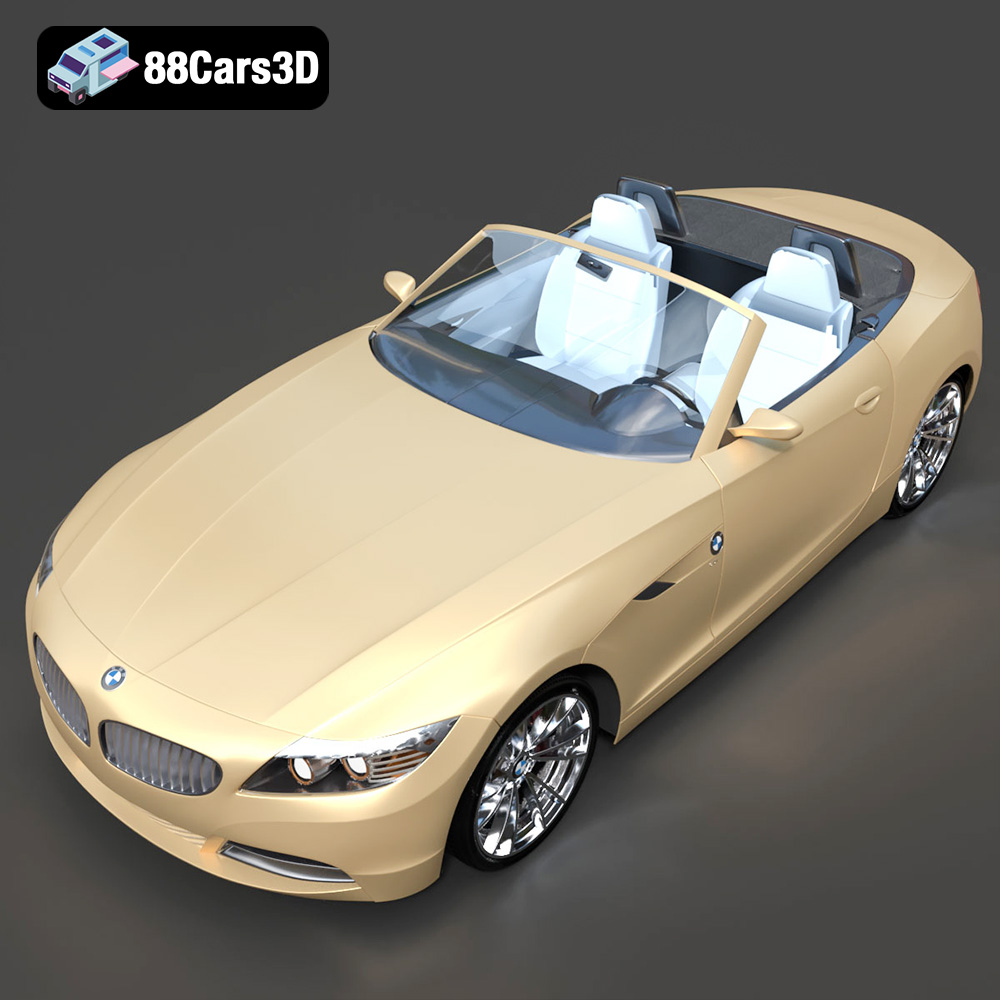
The BMW Z4 is an icon of automotive design, a two-seat roadster that perfectly blends sporty performance with luxurious styling. Now, thanks to advances in 3D printing technology, you can bring this iconic vehicle to life in miniature form. Whether you’re a seasoned 3D printing enthusiast or just starting out, this guide will provide you with the comprehensive knowledge needed to successfully 3D print the BMW Z4 3D model from 88cars3d.com. From selecting the right materials and printer settings to mastering post-processing techniques, we’ll cover everything you need to create a stunning replica of this legendary roadster.
Several 3D printing technologies are suitable for printing the BMW Z4 model, each with its own strengths and weaknesses. The most common options include:
FDM is a widely accessible and affordable 3D printing method that uses a thermoplastic filament. It’s a great option for beginners and for producing larger-scale models. For the BMW Z4, FDM can be used with materials like PLA (Polylactic Acid) or PETG (Polyethylene Terephthalate Glycol-modified). PLA is biodegradable and easy to print, while PETG offers improved strength and heat resistance. When using FDM, pay close attention to layer height, as finer layers will result in a smoother surface finish. We recommend a layer height between 0.1mm and 0.18mm for a good balance of detail and print time.
SLA and DLP are resin-based 3D printing technologies that offer superior detail and surface finish compared to FDM. These technologies use a liquid resin that is cured by a UV light source. Resin printing is ideal for producing smaller, highly detailed parts of the BMW Z4, such as the intricate grilles, headlights, and interior components. When printing with resin, you’ll need to use support structures, which will require careful removal and post-processing. Due to the nature of resin and the required cleaning steps, ensure adequate ventilation and safety measures are in place during the printing and post-processing phases.
SLS is a powder-based 3D printing technology that uses a laser to fuse together particles of plastic powder. SLS offers excellent mechanical properties and allows for the creation of complex geometries without the need for support structures. While SLS is a more advanced and expensive technology, it can be a great option for producing functional prototypes or parts that require high strength and durability. However, the surface finish from SLS printing may require more extensive post-processing to achieve a smooth, polished look. Because of the high temperature process, specialized high-temp plastics are required.
Choosing the right file format is crucial for a successful 3D printing experience. The BMW Z4 3D model from 88cars3d.com comes in a variety of formats, each with its own purpose. Let’s explore the most common file formats and their suitability for 3D printing.
The STL (Stereolithography) format is the industry standard for 3D printing. It represents the surface geometry of a 3D object as a collection of triangles. STL files are simple and widely compatible with slicing software, making them the go-to choice for most 3D printing applications. However, STL files only contain mesh data, meaning they don’t include information about color, texture, or materials. When working with STL files, it’s essential to ensure the mesh is watertight (i.e., no holes or gaps) and that the normals are oriented correctly. These factors directly impact the printability of the model. Slicing software typically offers tools to repair minor mesh errors, but for more complex issues, you may need to use dedicated mesh editing software.
The OBJ format is a more versatile format that can store not only the geometry of a 3D object but also color and texture information. This makes it suitable for colored 3D prints, although it is less widely used in 3D printing due to the complexity of handling color information. When using OBJ files for 3D printing, ensure your slicing software supports color printing and that your printer is equipped for multi-material or color printing. If you intend to print in a single color, the OBJ file will function similarly to an STL file, but it may be larger in size due to the additional data.
The PLY format, also known as the Polygon File Format, is designed to store 3D data acquired from 3D scanners. It can store color, normals, and other properties per vertex, making it suitable for high-detail prints where preserving fine details is crucial. PLY files are less common than STL or OBJ in general 3D printing workflows, but they can be useful when working with models that have been generated from 3D scans. Ensure your slicing software supports PLY files and that the mesh is properly optimized for 3D printing.
The BLEND format is the native file format for Blender, a popular open-source 3D modeling software. BLEND files contain the entire Blender scene, including the model’s geometry, materials, textures, lighting, and animation. This format is ideal for users who want to customize the BMW Z4 model before 3D printing. You can use Blender to modify the model’s shape, add details, or split it into smaller parts for easier printing. Once you’ve made your changes, you can export the model as an STL file for 3D printing.
The FBX format is a proprietary file format developed by Autodesk for storing 3D models, animations, and scenes. It is widely used in the game development and film industries. FBX files can contain information about geometry, materials, textures, and animations. While some slicing software can import FBX files, it’s important to note that not all slicing software supports all features of the FBX format. In most cases, you’ll need to convert the FBX file to an STL file before 3D printing.
The GLB format is a binary file format that is used to store 3D models and scenes. It is based on the glTF (Graphics Language Transmission Format) standard and is designed to be a compact, efficient, and portable format for transmitting 3D content. GLB files are commonly used for previewing models in augmented reality (AR) applications. While GLB files are not directly used for 3D printing, they can be useful for visualizing the model before printing to ensure it meets your expectations.
The MAX format is the native file format for 3ds Max, a professional 3D modeling and animation software. MAX files contain the entire 3ds Max project, including the model’s geometry, materials, textures, lighting, and animation. This format is ideal for users who want to customize the BMW Z4 model using 3ds Max. You can use 3ds Max to modify the model’s shape, add details, or split it into smaller parts for easier printing. Once you’ve made your changes, you can export the model as an STL file for 3D printing.
In summary, for 3D printing the BMW Z4 model, the STL format is the most reliable and widely supported option. Ensure the STL file is watertight and that the normals are oriented correctly before slicing. If you need to customize the model, use the BLEND or MAX files and export the modified model as an STL file for printing.
Before you hit the print button, you’ll need to prepare the BMW Z4 model using slicing software. Slicing software takes the 3D model and converts it into a series of layers that the 3D printer can understand. Here’s a breakdown of the key steps involved in pre-print preparation:
Start by importing the STL file of the BMW Z4 into your slicing software. Next, carefully consider the orientation of the model on the build plate. For the BMW Z4, printing the body upside down (with the roof facing down) is generally recommended. This helps to achieve a smoother surface finish on the roof and hood, as these areas will be printed directly on the build plate or on support structures. Consider printing the wheels separately for enhanced detailing. Experiment with different orientations to minimize the need for support structures and to optimize print time.
Once you’ve oriented the model, you’ll need to configure the printing parameters. These parameters will vary depending on the 3D printing technology and material you’re using. However, some common parameters include:
Before slicing, it’s a good idea to check the model for any errors or imperfections. Slicing software typically includes tools to repair minor mesh errors, such as holes or gaps. You can also use mesh editing software to further optimize the model for 3D printing. This may involve simplifying the mesh, reducing the polygon count, or smoothing out any rough surfaces. It is a good idea to check for non-manifold edges or faces and correct these before printing.
The choice of material will significantly impact the final look, feel, and durability of your 3D printed BMW Z4. Here’s an overview of some popular materials and their suitability for this project:
PLA is a biodegradable thermoplastic that is widely used in FDM 3D printing. It’s easy to print, relatively inexpensive, and available in a wide range of colors. PLA is a good choice for printing the BMW Z4 if you’re looking for a cost-effective and beginner-friendly option. However, PLA is not as strong or heat-resistant as other materials, so it may not be suitable for functional prototypes or parts that will be exposed to high temperatures.
PETG is another popular thermoplastic that offers improved strength, heat resistance, and flexibility compared to PLA. It’s also more resistant to moisture and chemicals. PETG is a good choice for printing the BMW Z4 if you need a more durable and functional model. However, PETG can be more challenging to print than PLA, as it requires higher temperatures and may be prone to stringing.
ABS is a strong and heat-resistant thermoplastic that is commonly used in automotive and industrial applications. ABS is a good choice for printing the BMW Z4 if you need a highly durable and heat-resistant model. However, ABS can be difficult to print, as it requires a heated build plate and is prone to warping and cracking. It is recommended to use an enclosure when printing ABS.
Resin is used in SLA and DLP 3D printing. It offers exceptional detail and surface finish, making it ideal for printing small, intricate parts of the BMW Z4. Resin is available in a variety of formulations, including standard resin, tough resin, and flexible resin. Choose a resin that is appropriate for your specific application.
Once the 3D printing is complete, some post-processing steps are required to achieve a polished, professional-looking result. These steps may include:
Carefully remove any support structures from the model. Use sharp tools, such as a hobby knife or pliers, to avoid damaging the model’s surface. In some cases, you may need to soak the model in warm water to soften the supports before removing them. Take your time to prevent breakage.
Sanding is an essential step for smoothing out any imperfections on the model’s surface. Start with coarse sandpaper (e.g., 220 grit) and gradually move to finer grits (e.g., 400, 600, 800 grit) to achieve a smooth finish. Wet sanding can help to reduce dust and improve the smoothness of the surface.
Priming is a crucial step for preparing the model for painting. Primer helps to fill in any remaining imperfections and provides a uniform surface for the paint to adhere to. Apply several thin coats of primer, allowing each coat to dry completely before applying the next. Lightly sand the primer with fine-grit sandpaper (e.g., 800 grit) to create a smooth surface.
Now comes the fun part: painting your BMW Z4! Choose high-quality paints that are designed for use on plastic. Apply several thin coats of paint, allowing each coat to dry completely before applying the next. Consider using an airbrush for a smooth, even finish. For an authentic look, research the original BMW Z4 color options and choose a paint that matches your desired color.
A clear coat will protect the paint and give the model a glossy finish. Apply several thin coats of clear coat, allowing each coat to dry completely before applying the next. If desired, you can polish the clear coat to achieve an even glossier finish.
If you printed the wheels or other parts separately, now is the time to assemble them. Use glue or other adhesive to attach the parts to the main body of the BMW Z4. Ensure the parts are properly aligned before the adhesive sets.
Even with careful preparation, 3D printing can sometimes present challenges. Here are some common issues and their solutions:
Warping occurs when the corners of the model lift off the build plate during printing. This is more common with ABS and other materials that shrink as they cool. To prevent warping, use a heated build plate, apply an adhesive to the build plate (e.g., glue stick or hairspray), and print in an enclosed environment. Ensure that the build plate is level and properly calibrated.
Stringing occurs when the 3D printer extrudes filament while moving between parts of the model, leaving thin strands of plastic. To prevent stringing, adjust the retraction settings in your slicing software, reduce the print temperature, and increase the travel speed.
Layer delamination occurs when the layers of the model separate during printing. This can be caused by insufficient bed adhesion, low print temperature, or poor layer bonding. To prevent layer delamination, ensure the build plate is level and properly calibrated, increase the print temperature, and use a heated build plate.
Elephant’s foot is a common 3D printing defect where the first layer of a print flares out wider than the rest of the model, resembling an elephant’s foot. This is typically caused by the nozzle being too close to the print bed during the initial layer printing. The excess pressure flattens the molten filament, causing it to spread outwards beyond the intended dimensions. To fix this, carefully adjust the Z-offset in your printer settings, increasing it slightly to create more space between the nozzle and the build plate. Also, ensure your bed is perfectly level to minimize variations in layer thickness.
The print time and material cost for the BMW Z4 model will vary depending on the size of the model, the printing technology, the material used, and the printing parameters. However, here’s a rough estimate:
These are just estimates, so be sure to factor in the cost of electricity, support structures, and post-processing materials.
By following this comprehensive guide, you’ll be well-equipped to 3D print a stunning replica of the BMW Z4. Remember to experiment with different materials, printer settings, and post-processing techniques to achieve the best possible results. The 3D printed BMW Z4 is perfect for display, gifting, or as a conversation piece.
The BMW Z4 3D Model is a premium digital recreation of the iconic two-seat roadster developed by BMW. Known for its sporty proportions, long hood, short rear deck, and dynamic performance styling, the Z4 embodies precision engineering and modern roadster design.
$9.99
.arvr
.blend
.bmw
.car3dmodel
.convertible
.fbx
.gameasset
.glb
.max
.obj
.ply
.rendering
.roadster
.simulation
.sportsCar
.stl
.unreal
.vehicleasset
.z4
automotive3d