Get 50% OFF All Premium 3D & STL Models!

In the vast ocean of digital content creation, the demand for realistic, high-fidelity 3D assets continues to surge. From captivating cinematic sequences to interactive game worlds and intricate architectural visualizations, the foundation of any compelling visual experience lies in the quality of its underlying models. For marine-themed projects, this means access to meticulously crafted watercraft that not only look authentic but are also technically sound for diverse applications. Whether you’re a game developer building an open-world sailing adventure, an architect visualizing a marina, or a product designer showcasing a new yacht, a superior 3D boat model is an invaluable asset.
Imagine effortlessly populating your virtual coastline with vessels that feature accurate hull geometry, detailed deck layouts, and functional components. This level of detail elevates a project from merely presentable to truly immersive. Today, we’ll delve into the intricacies of professional 3D boat models, exploring their technical advantages, diverse applications, and how they streamline various production pipelines. We’ll also highlight a standout example: the versatile Boat 3D Model available on 88cars3d.com, an asset engineered for excellence across rendering, simulation, game development, AR/VR, and even 3D printing.
The journey of a 3D model from creation to deployment involves navigating a landscape of various file formats, each with its unique strengths, compatibility, and intended use case. Understanding these formats is crucial for any professional working with 3D assets, as selecting the right one can significantly impact workflow efficiency, performance, and the final quality of your project. The Boat 3D Model exemplifies this versatility by offering a comprehensive suite of formats, ensuring seamless integration into virtually any professional pipeline.
The .blend format is the native file type for Blender, the popular open-source 3D creation suite. A .blend file is more than just a mesh; it’s a complete scene package, containing all aspects of a Blender project including models, materials, textures, lighting, cameras, animations, physics simulations, and even custom scripts. This makes it incredibly powerful for artists and studios that primarily use Blender, offering full editability and control over every element of the model. For the Boat 3D Model, having a .blend file means users can directly open the asset in Blender and immediately customize hull colors, modify seating, adjust rigging for animation, or reconfigure lighting for specific renders, without any loss of data or needing to re-import materials.
.fbx (Filmbox) is arguably the most widely adopted proprietary 3D file format for exchanging 3D data between different software applications. Developed by Autodesk, FBX is highly regarded for its ability to store a comprehensive range of 3D data, including geometry (meshes), materials, textures, animations, skinning, camera data, and lighting. It’s the go-to format for transferring assets between 3ds Max, Maya, Unity, Unreal Engine, Cinema 4D, and many other programs. For game developers and real-time visualization specialists, the .fbx version of the Boat 3D Model is ideal for its robust support of animation data, making it perfect for interactive elements like a rotating propeller or a steerable rudder in game engines. Its optimization for real-time pipelines ensures efficient loading and rendering.
The .obj (Wavefront OBJ) format is one of the oldest and most universal 3D file formats. It’s a simple, widely supported format primarily used for transferring geometry data (vertices, normals, texture coordinates, and faces) between applications. While it can reference external material files (.mtl) for basic material properties and textures, it doesn’t typically store advanced features like animation, rigging, or complex material shaders. Its strength lies in its widespread compatibility, making it an excellent fallback for virtually any 3D software. The .obj version of the Boat 3D Model ensures cross-software compatibility, allowing users to import the raw geometry into less common applications or for direct mesh manipulation.
.glb (GL Transmission Format Binary) is a modern, open-standard 3D file format designed for efficient transmission and loading of 3D scenes and models. It bundles all necessary assets (geometry, materials, textures, animations) into a single, self-contained binary file, making it incredibly efficient for web-based 3D, augmented reality (AR), and virtual reality (VR) applications. Its small file size and optimized structure ensure quick loading times and smooth performance in browsers and mobile devices. For developers creating immersive marine experiences or interactive boat demonstrations, the .glb version of the Boat 3D Model is invaluable for its performance and broad support across AR/VR platforms.
.stl (Stereolithography) is the de facto standard file format for 3D printing. It represents a 3D model as a series of connected triangles, defining only the surface geometry of an object without color, texture, or other CAD attributes. Its simplicity makes it universally compatible with 3D printers and slicing software. The inclusion of an .stl format for the Boat 3D Model is a significant advantage for users looking to create physical scale models, prototypes, or miniature display pieces. It ensures that the model is manifold and ready for immediate conversion into G-code for manufacturing.
.ply (Polygon File Format) is another format for storing 3D data, often used in applications that deal with scanned data, scientific visualizations, and CAD. It can store not only geometry but also color, transparency, normals, texture coordinates, and data confidence values for each vertex. While less common for general asset exchange than FBX or OBJ, it provides a precise mesh representation often preferred for reverse engineering, measurement, or detailed analytical workflows. For users requiring a highly accurate and versatile mesh representation of the Boat 3D Model for engineering or analysis, the .ply format offers a robust solution.
While not a traditional standalone file format in the same way as .fbx or .obj, the .unreal designation typically refers to assets specifically prepared and optimized for direct import into the Unreal Engine. This usually implies that the model has been exported with Unreal-specific settings, includes collision meshes, proper material assignments (often using Unreal’s PBR workflow), and is scaled correctly for the engine’s coordinate system. For game developers leveraging Unreal Engine, the .unreal version of the Boat 3D Model provides an almost plug-and-play solution, minimizing setup time and ensuring optimal performance within the engine’s real-time rendering pipeline.
The .max format is the native file format for Autodesk 3ds Max, one of the leading software packages for 3D modeling, animation, and rendering. Similar to .blend, a .max file stores an entire 3ds Max scene, including geometry, modifiers, materials, lights, cameras, animations, and render settings. This offers the highest level of editability and flexibility for users working within the 3ds Max environment. The inclusion of the .max file for the Boat 3D Model means that professionals using 3ds Max can fully explore and modify the model’s construction, rigging, and materials, making it perfectly suited for high-end rendering and complex animation projects.
This comprehensive array of file formats provided with the Boat 3D Model underscores its adaptability and commitment to supporting a wide range of professional workflows and creative applications.
Creating believable marine 3D models goes beyond mere aesthetics; it demands a deep understanding of hydrodynamics, material properties, and environmental interaction. A truly high-quality boat model, like the one found on 88cars3d.com, encapsulates these principles, offering artists and developers a foundation for stunning visualizations and immersive experiences.
The excellence of a 3D boat model begins with its fundamental structure. Accurate hull geometry is paramount, reflecting the actual hydrodynamic design that allows a boat to move efficiently through water. This includes precise waterline proportions and the subtle curvature that defines its buoyant form. Beyond the hull, attention to deck detailing is crucial. This encompasses everything from the texture and layout of the deck surface to the intricate design of the railing system, the realistic configuration of seating, and the functional placement of navigation lights. Furthermore, components like the steering console with its windshield and the propeller and rudder assembly need to be modeled not just for visual accuracy but also with animation in mind, allowing for realistic movement and interaction.
Visual fidelity is significantly enhanced by realistic materials and textures. For marine models, this means understanding how light interacts with painted surfaces, polished metals, and weathered wood. Physically Based Rendering (PBR) workflows are essential, ensuring materials react correctly to various lighting conditions, mimicking the reflectivity of wet surfaces or the subtle wear on high-traffic areas. The interplay of water, reflections, and subsurface scattering on the hull’s surface can make or break a scene’s believability. A well-designed 3D boat model will come with PBR-ready materials and high-resolution textures that capture these nuances, minimizing the need for extensive post-import setup and accelerating the rendering process.
The Boat 3D Model from 88cars3d.com stands out as a prime example of a meticulously crafted digital asset. Designed for versatility, it boasts a feature set that caters to a wide array of professional needs, from cinematic rendering to interactive real-time applications and even 3D printing.
This model meticulously recreates the external elements of a modern recreational boat. Its accurate hull geometry and waterline proportions are central to its realistic appearance, ensuring it sits naturally within any water environment. The detailed deck surface, complete with a robust railing system, adds a layer of authenticity, reflecting practical marine design. Realistic seating layouts and a steering console with a clear windshield provide context and functionality. Crucially, the propeller and rudder assembly are not merely static elements; they are modeled with separation, allowing for realistic animation of steering and propulsion. Even subtle details like navigation light placements are included, enhancing the model’s suitability for night scenes or accurate marine simulations.
The attention to detail extends to the interior and deck areas, which are crucial for close-up renders and interactive experiences. The helm control area features a dashboard, complete with the suggestion of instrumentation, making it convincing for cockpit views. Seating cushions and storage compartments are modeled, giving a sense of usability and realism. For cabin variants, a thoughtful cabin layout provides additional interior context. Essential marine hardware such as an anchor and mooring cleats are present, reinforcing the model’s practical design. All these elements are built with optimized geometry, ensuring a balance between high-quality renders and efficient performance in real-time engines.
A high-quality 3D asset like the Boat 3D Model is not just a pretty object; it’s a powerful tool that integrates seamlessly into various professional pipelines, saving countless hours of modeling and optimization. Its adaptability makes it a cornerstone for projects across multiple industries.
For architectural visualization, the Boat 3D Model can transform a static marina scene into a vibrant, living environment. Imagine a luxury yacht bobbing gently in a pristine harbor, reflecting the golden hues of a sunset. This model is ideal for marine advertising, enhancing yacht brochures, and creating coastal promotional visuals that demand photorealism. Rendered in engines like V-Ray, Corona, or Arnold, its clean topology and PBR-ready materials allow for breathtaking detail, accurate reflections, and sophisticated lighting setups. Cinematic ocean renders benefit from its dynamic features, enabling animators to craft realistic wake simulations and motion paths, elevating storytelling in film and commercial productions.
The world of game development thrives on optimized, visually rich assets. The Boat 3D Model, with its optimized polygon flow and real-world scale, is perfectly suited for open-world water environments, sailing simulations, and adventure games. For Unreal Engine and Unity developers, the included .fbx and .unreal formats provide engine-ready assets, often reducing the need for extensive re-optimization. Proper pivot setups for steering and propeller rotation ensure that the model is game-logic ready, allowing for immediate integration into vehicle systems. Its versatility makes it a valuable asset for creating immersive marine experiences, enabling players to navigate realistic digital waters. Finding such high-quality 3D car models and marine assets is simplified by marketplaces like 88cars3d.com, which curates professional-grade content.
Augmented Reality (AR) and Virtual Reality (VR) demand assets that are both high-fidelity and performance-friendly. The Boat 3D Model, particularly in its .glb format, is perfect for immersive marine experiences and interactive boat demonstrations. Imagine customers exploring a virtual boat showroom, walking around and even “on” the vessel, customizing colors, and viewing its features in real-time. This model facilitates the creation of engaging AR/VR applications, offering users a deep, interactive understanding of a watercraft without the need for a physical prototype.
Beyond digital screens, the Boat 3D Model offers a tangible dimension through its suitability for 3D printing. This capability opens doors for scale model enthusiasts, product designers, and educators to bring the digital design into the physical world.
The inclusion of an .stl format is key for 3D printing, providing a manifold mesh ready for slicing software. This allows users to convert the digital asset into a physical object. Recommended scales such as 1:72, 1:48, 1:32, or 1:24 ensure that the printed model can be a detailed miniature or a substantial display piece. For printing, layer heights between 0.10–0.20 mm are recommended for FDM printers, balancing detail and print time, while resin printers (SLA/DLP) would achieve even finer details at smaller layer heights. Considerations like wall thickness (2–3 mm) and infill (20–35%) are crucial for structural integrity, especially for larger prints. Supports are often required for overhangs like railings, the windshield frame, and the propeller to ensure successful printing, while print orientation (hull flat or vertically split) optimizes surface quality and minimizes support material.
Once printed, the physical Boat 3D Model can be further customized and refined. Post-processing steps like sanding remove layer lines and support artifacts, preparing the surface for priming. A gloss marine paint finish can replicate the sleek look of a real boat, and optional decals can add branding or registration numbers. The digital model’s customizable attributes—such as changing hull color, adding marine branding, modifying seating, or adding fishing equipment or luxury deck accessories—can all be translated into physical modifications post-print. This allows for personalized scale models or prototypes, offering a unique blend of digital precision and hands-on creativity.
The true value of a professional 3D asset lies not just in its visual appeal but in its underlying technical quality. The Boat 3D Model exemplifies this with several technical advantages designed to streamline workflows and ensure optimal performance across diverse platforms.
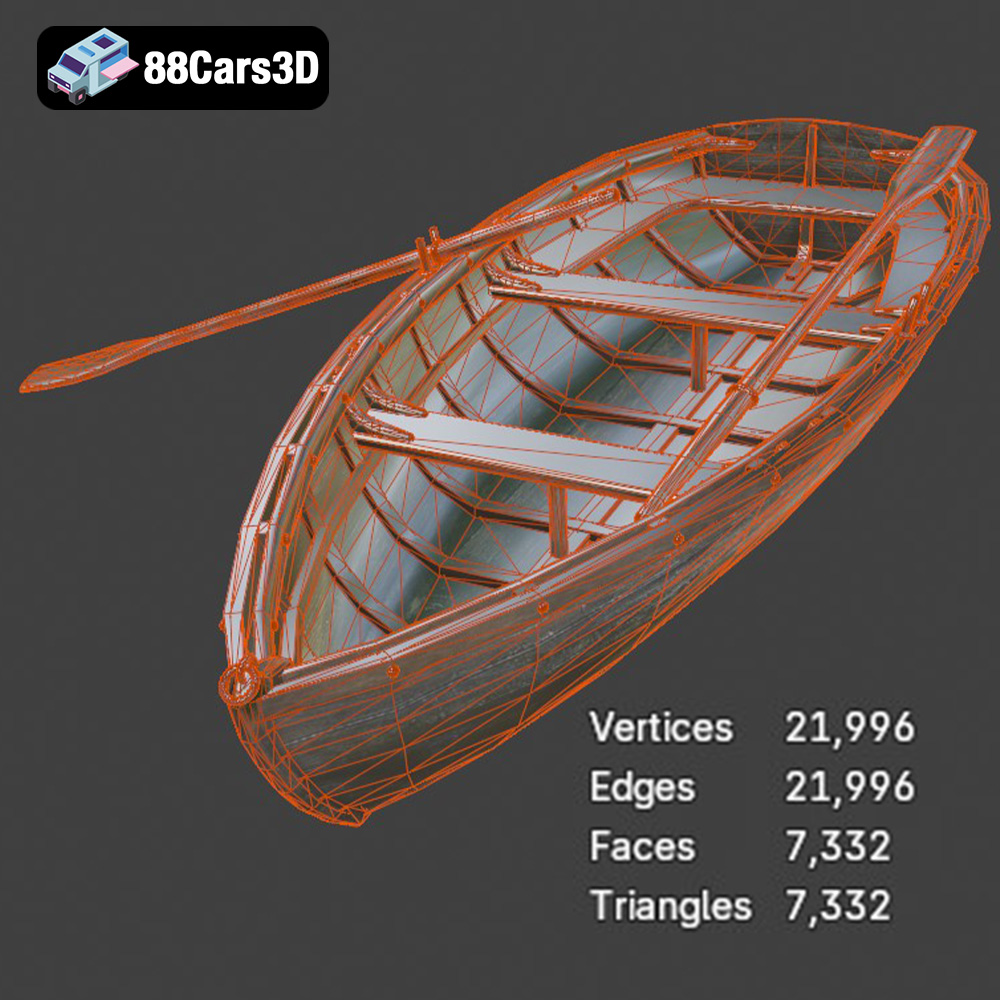
A clean and well-organized mesh structure is fundamental for any high-quality 3D model. This ensures predictable deformation during animation, efficient rendering, and ease of modification. The Boat 3D Model boasts an optimized polygon flow, striking a balance between detail and performance, making it suitable for both high-fidelity renders and real-time applications where polygon count is a critical factor. Furthermore, its adherence to real-world scale accuracy means that the model will fit seamlessly into existing scenes without requiring manual scaling, saving significant setup time for artists and designers. Proper pivot setups for steering and propeller rotation are also pre-configured, simplifying the rigging and animation process for interactive elements.
The comprehensive range of included file formats—.blend, .fbx, .obj, .glb, .stl, .ply, .unreal, and .max—is a testament to the model’s compatibility with major 3D software platforms and engines. This eliminates the common headache of format conversion issues, allowing artists to integrate the boat model into their preferred digital environment with minimal fuss. Whether you’re working in Blender for indie game development, 3ds Max for architectural visualization, or directly within Unreal Engine for a cutting-edge simulation, the Boat 3D Model provides a reliable and ready-to-use solution. This robust compatibility makes it an invaluable asset for studios and freelancers alike, enabling fluid collaboration and efficient project delivery.
The demand for high-quality, versatile 3D assets continues to grow across industries, driving the need for models that are not only visually stunning but also technically robust. A premium 3D boat model serves as a cornerstone for creating compelling marine visualizations, immersive game environments, realistic simulations, and engaging AR/VR experiences. From its meticulously crafted hull and detailed deck features to its optimized topology and extensive file format support, such an asset offers unparalleled flexibility.
The Boat 3D Model from 88cars3d.com stands as an excellent example of a product that meets these stringent professional demands. Its comprehensive design, coupled with its readiness for diverse applications—including even 3D printing for tangible miniatures—makes it an indispensable tool for designers, developers, and artists. By investing in such expertly prepared 3D car models and marine assets, creators can significantly accelerate their workflows, ensuring their projects achieve the highest levels of realism and immersion. Explore the possibilities and elevate your digital seascapes with professional-grade assets from 88cars3d.com.
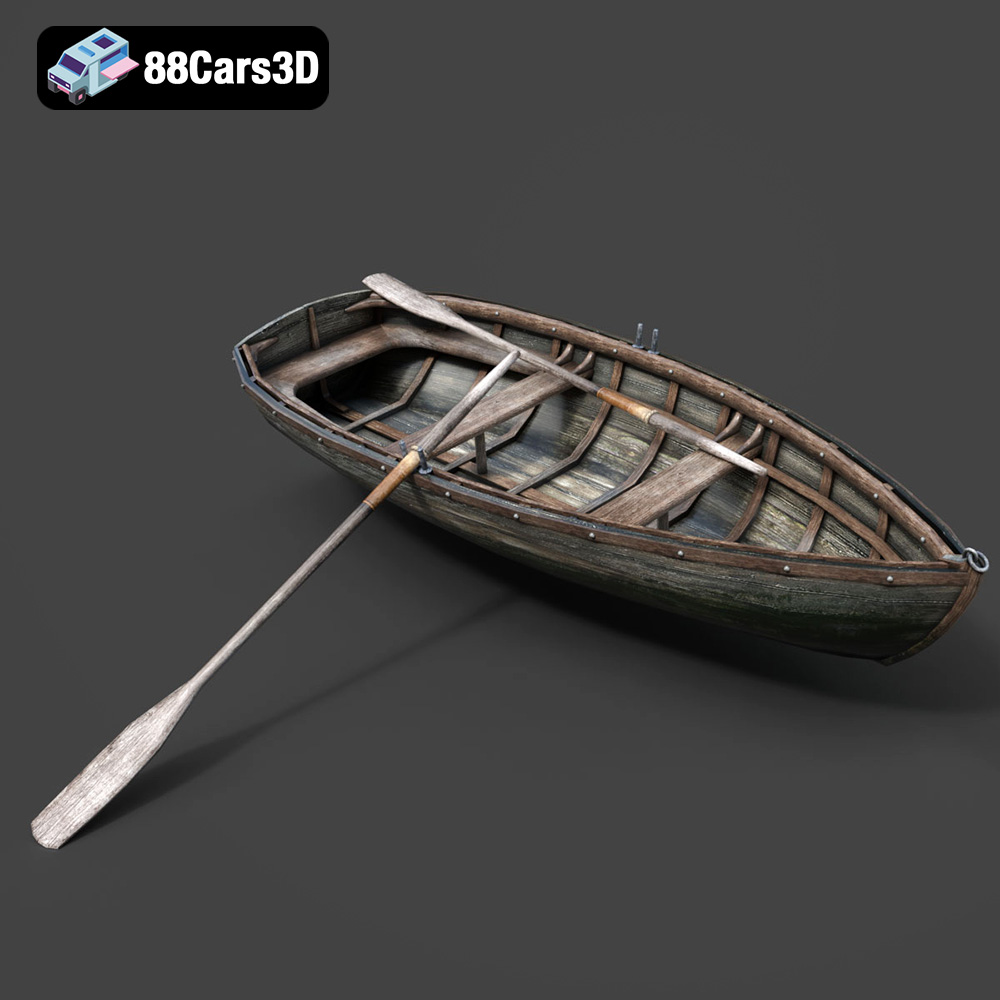
The Boat 3D Model is a high-detail digital recreation of a versatile watercraft designed for marine visualization, simulation, and entertainment applications. Featuring realistic hull proportions and functional deck detailing, this model captures the structural balance, buoyant form, and nautical design elements of a modern recreational boat. This 3D model accurately represents the streamlined hull structure, deck layout, railing system, seating configuration, steering console, and propeller assembly. Built with clean topology and real-world scale accuracy, it is ideal for rendering, animation, marine simulation, game development, and AR/VR visualization. Perfect for coastal environments, marina scenes, open-water simulations, cinematic ocean renders, and promotional marine projects.
$5
.arvr
.blend
.boat
.boat3dmodel
.fbx
.gameasset
.glb
.marinesimulation
.marinevehicle
.max
.obj
.oceanrender
.ply
.rendering
.sailing
.simulation
.stl
.unreal
.watercraft
yacht