Get 50% OFF All Premium 3D & STL Models!

In the fast-paced world of digital creation, the demand for high-quality, efficient 3D assets is ever-increasing. From blockbuster game titles and photorealistic architectural visualizations to immersive AR/VR experiences and detailed product renderings, the foundation of any compelling visual project lies in its underlying models. Automotive assets, in particular, present unique challenges due to their intricate designs, complex material properties, and critical need for real-world accuracy.
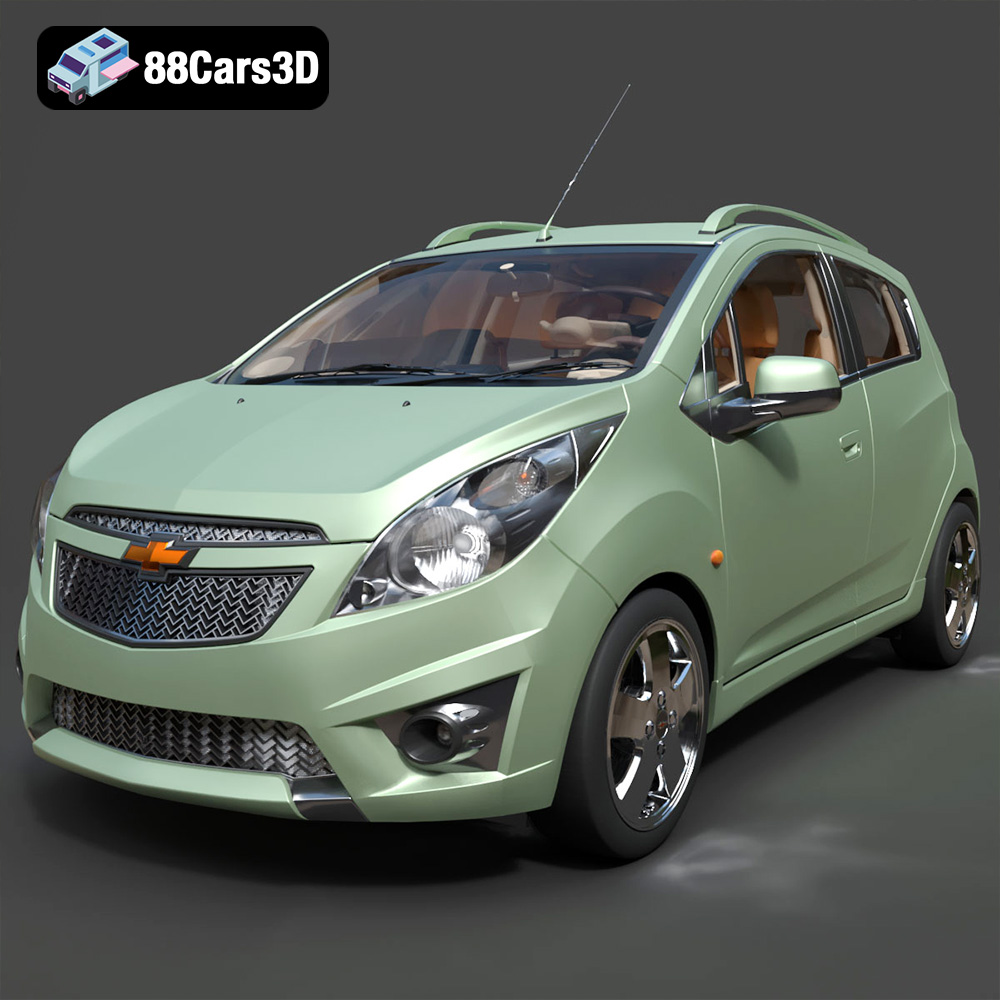
Crafting a truly exceptional 3D car model requires a delicate balance of artistic fidelity and technical optimization. It means capturing every curve and contour with precision, ensuring realistic proportions, and structuring the mesh in a way that performs flawlessly across diverse platforms and applications. This meticulous approach is exemplified by assets like the Chevrolet Spark LT 3D Model, a prime example of how an efficiently modeled vehicle can serve a multitude of professional needs. Whether you’re populating a bustling urban scene, developing a mobile game, or even creating a physical miniature, a well-executed 3D car model is an invaluable resource.
This article will delve into the technical intricacies of modern 3D car models, exploring the various file formats essential for different workflows, examining the specific features that make an asset like the Chevrolet Spark LT stand out, and providing insights into its integration across major software platforms and industries. We’ll uncover how such optimized assets empower creators to achieve stunning visuals and fluid performance without the burden of extensive modeling from scratch.
The journey of a 3D model, from its creation to its final application, often involves traversing a landscape of diverse file formats. Each format is designed with specific strengths, catering to different stages of the production pipeline, software ecosystems, and end-use scenarios. Understanding these distinctions is paramount for any professional dealing with 3D car models, ensuring compatibility, preserving data integrity, and optimizing performance. The Chevrolet Spark LT 3D Model, for instance, is offered in a comprehensive suite of formats, enabling seamless integration into virtually any workflow.
The .blend format is Blender’s native file type, retaining all aspects of a Blender scene. This includes not only the mesh data but also materials, textures, lighting setups, animation data, rigging, modifiers, and even scene configurations. For users deeply integrated into the Blender ecosystem, a .blend file offers maximum editability and flexibility. It’s ideal for artists who wish to dissect the model’s construction, modify its topology, tweak its materials, or integrate it into a complex Blender scene with minimal effort. When working with a model like the Chevrolet Spark LT in Blender, the .blend file provides a complete, ready-to-render setup straight out of the box.
Autodesk’s .fbx (Filmbox) format has become a de facto standard for exchanging 3D data between different software applications and game engines. It supports geometry, materials, textures, animations, and skeletal data, making it incredibly versatile. For pipelines involving Unreal Engine, Unity, 3ds Max, Maya, or Cinema 4D, .fbx is often the go-to choice. Its robust support for embedded media and animation makes it indispensable for real-time applications where a rigged vehicle like the Spark LT needs to be driven or showcased dynamically. The .fbx version ensures that pivots for wheels and steering, crucial for animation, are correctly preserved.
The .obj (Wavefront OBJ) format is a widely supported, universal standard primarily for transferring geometric data – vertices, normals, UV coordinates, and faces. While it can reference external material files (.mtl), it doesn’t embed animations or rigging. Its simplicity and widespread compatibility make it an excellent fallback or starting point for projects requiring clean mesh data. If you need to import the Chevrolet Spark LT into an older software package or simply require the raw geometric shell for re-texturing in a non-standard pipeline, .obj offers reliable cross-software compatibility.
.glb (GLB – Binary glTF) is the binary version of the glTF (GL Transmission Format) format. Developed by the Khronos Group, glTF is quickly gaining traction as the “JPEG for 3D” due to its efficiency and suitability for web-based 3D, augmented reality (AR), and virtual reality (VR) applications. A .glb file packages all necessary data (geometry, materials, textures, animations) into a single, self-contained binary file, making it fast to load and share online. For interactive product showcases of the Spark LT on a website or its deployment in a mobile AR experience, .glb offers optimal performance and ease of use.
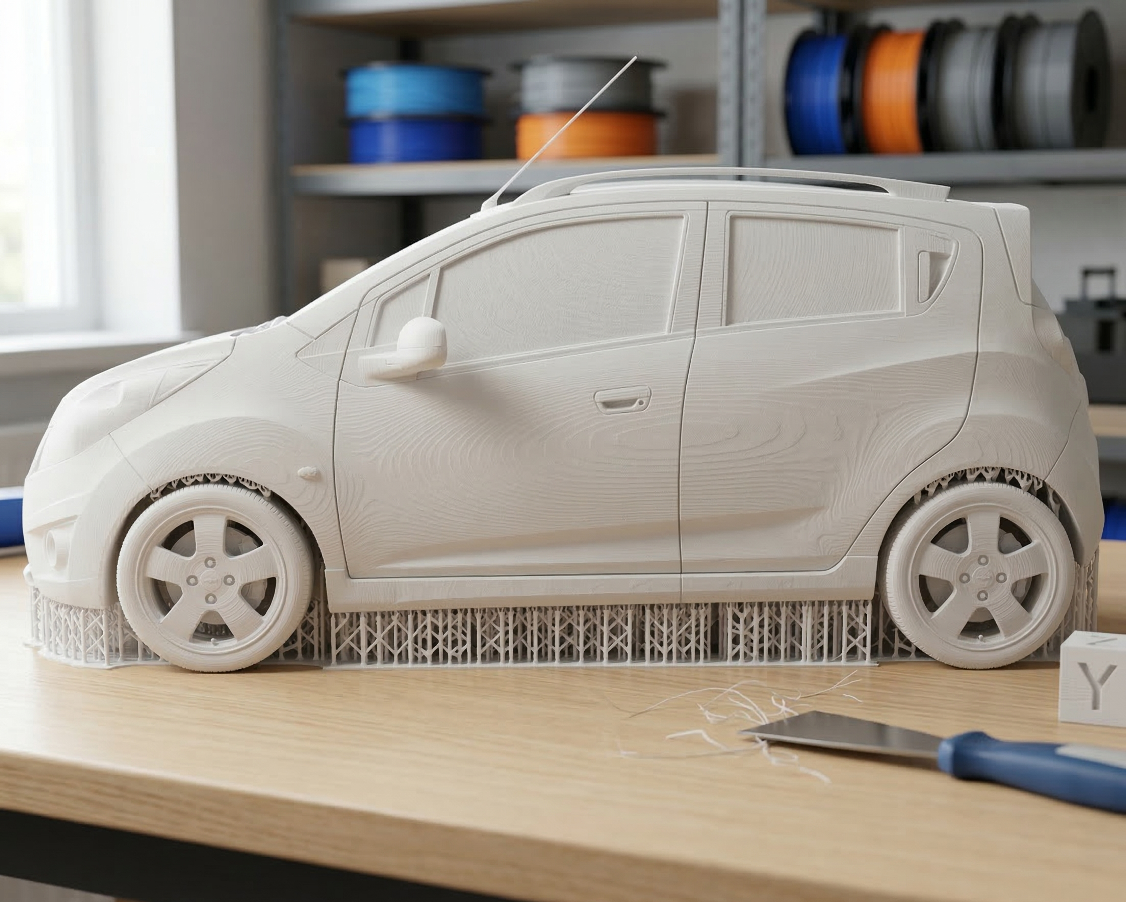
.stl (STereoLithography) is the most common file format for 3D printing. It represents a 3D model as a series of connected triangles, defining only the surface geometry. It lacks color, texture, or material information. When preparing the Chevrolet Spark LT 3D Model for physical creation, converting it to .stl is the crucial step. The model’s optimized topology ensures a clean, manifold mesh, which is essential for successful 3D printing, enabling hobbyists to produce detailed scale models for urban dioramas or display.
.ply (Polygon File Format) is often used for storing 3D data from 3D scanners, CAD systems, and scientific applications. It can store not only geometry but also color, transparency, and sometimes even surface normal information for each vertex or face. While less common for general animation, it’s valuable for precision modeling, measurement, or certain engineering simulations. For detailed analysis or conversion into CAD-compatible formats from the Chevrolet Spark LT model, .ply offers a robust data structure.
The .unreal format, or more accurately, the Unreal Engine asset format, refers to models specifically packaged and optimized for direct import into the Unreal Engine. This often involves specific naming conventions, asset hierarchy, and material setups that conform to Unreal’s workflow. An “Unreal-ready” asset like the Spark LT means less time spent on importing, configuring materials, and setting up collisions within the engine, allowing developers to immediately utilize it as a game-ready asset for their virtual worlds.
Autodesk 3ds Max is a cornerstone of professional 3D content creation, particularly in architectural visualization and high-end rendering. The .max file format preserves all scene data, including geometry, modifiers, textures, materials (especially V-Ray or Corona setups), lights, cameras, and animation keyframes. For professionals who use 3ds Max extensively for automotive rendering or ArchViz projects, having the Chevrolet Spark LT in its native .max format ensures maximum flexibility for integration, further editing, or leveraging specific render engine features for photorealistic output.
The Chevrolet Spark LT 3D Model available on 88cars3d.com stands as a testament to meticulous craftsmanship and technical foresight. It’s not just a digital representation; it’s a finely tuned asset designed to excel across various professional applications, from real-time game environments to static, high-fidelity renders. Its optimized topology and thoughtful detailing make it an ideal choice for creators seeking both visual appeal and performance.
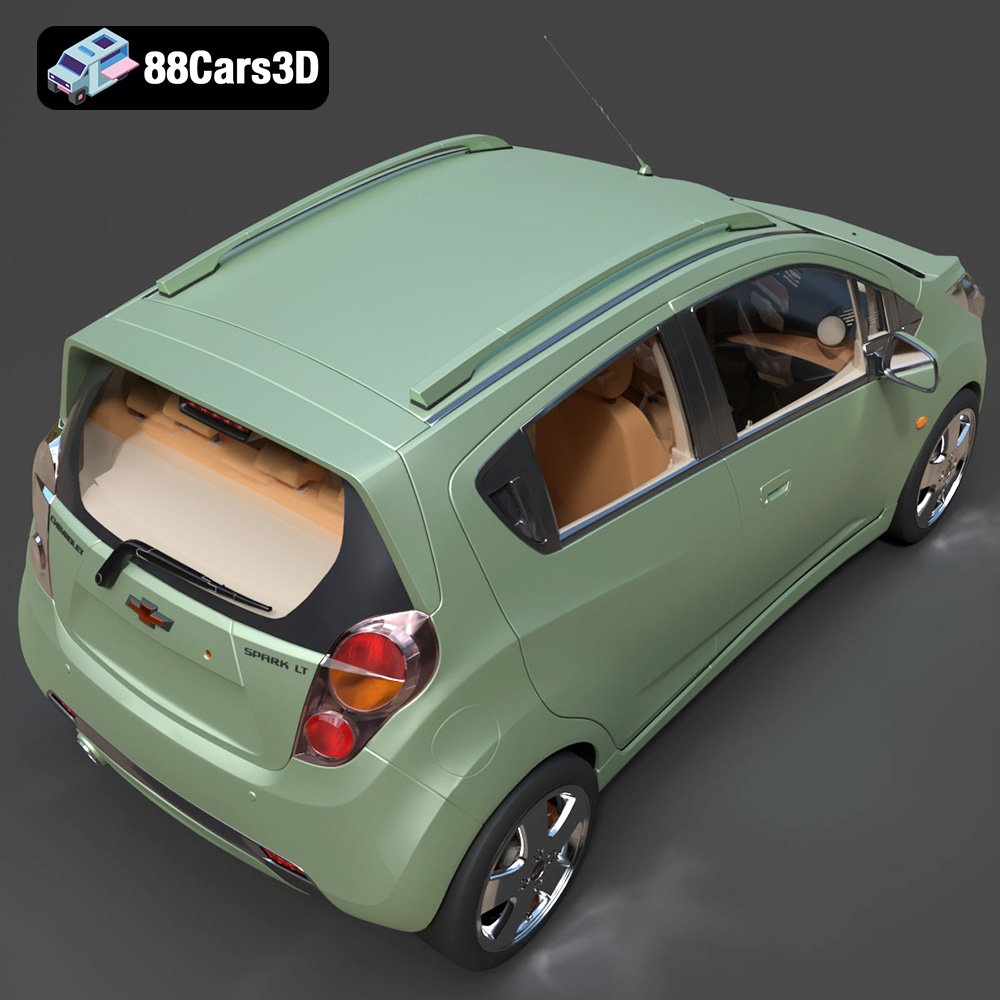
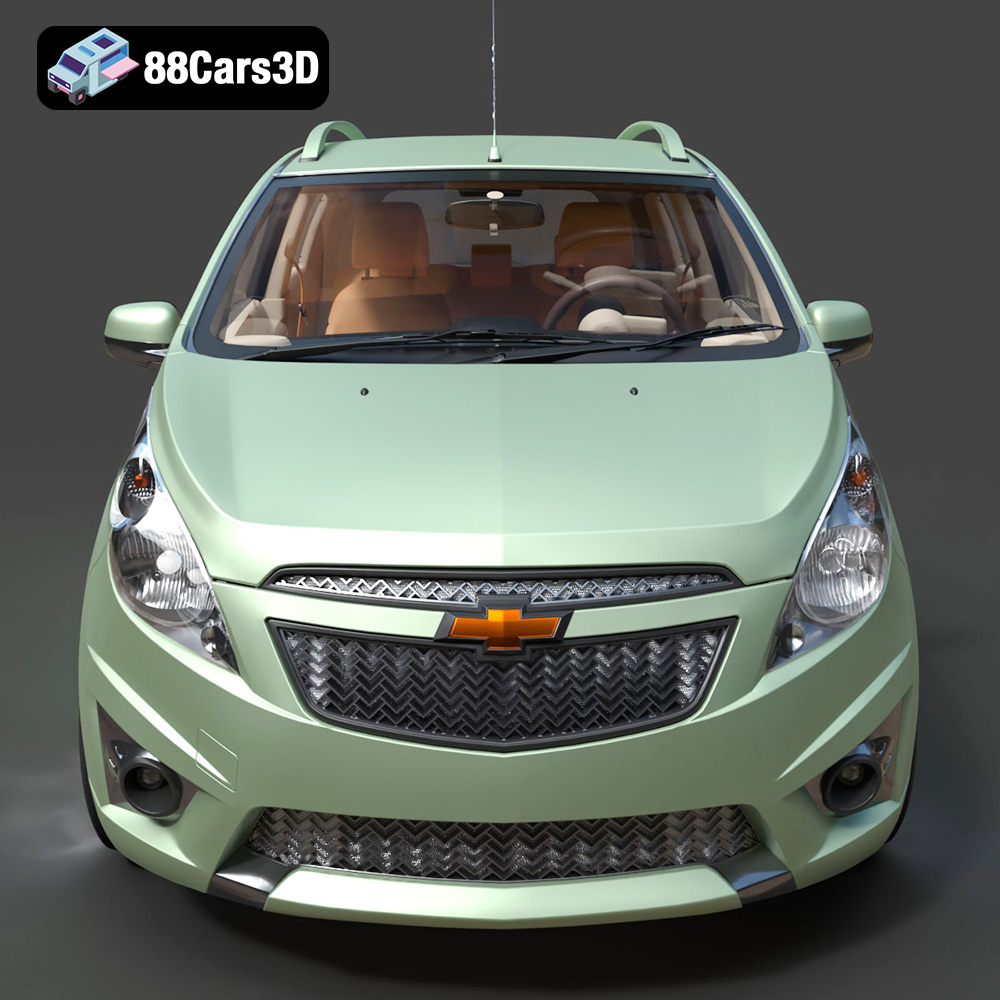
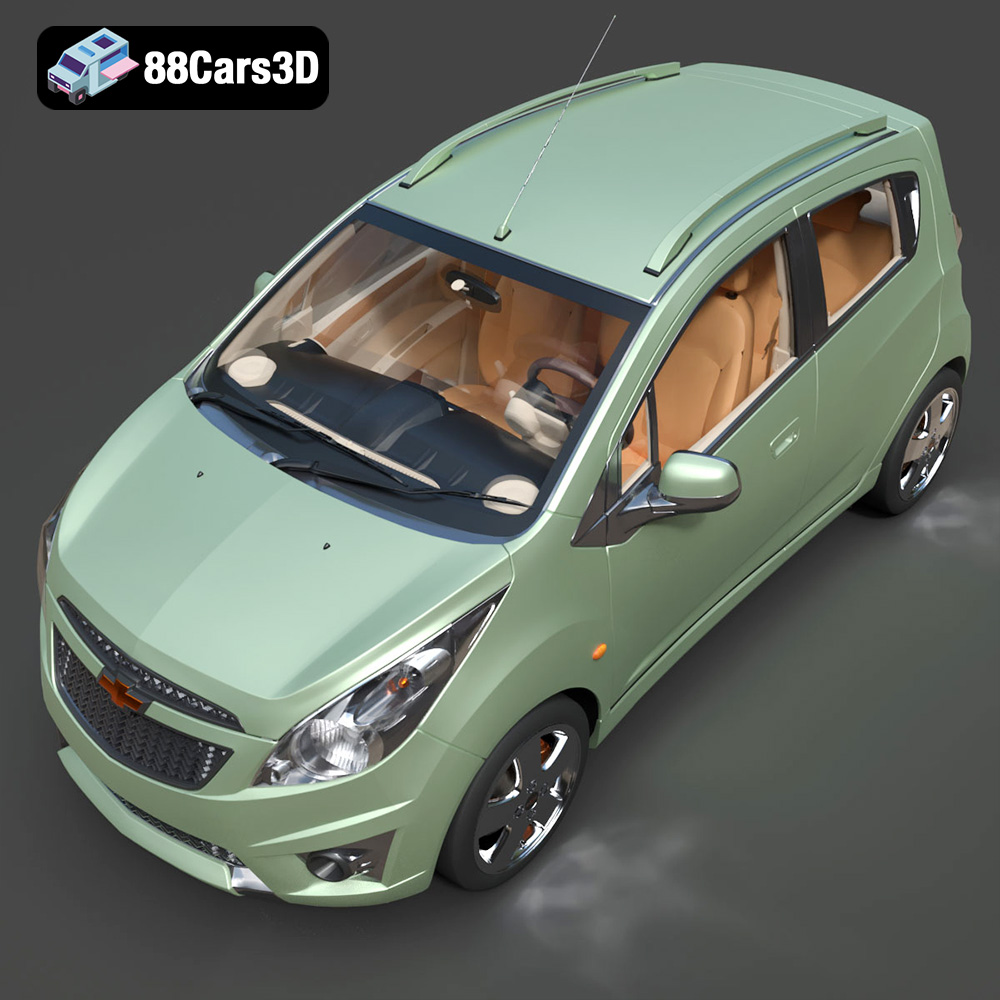
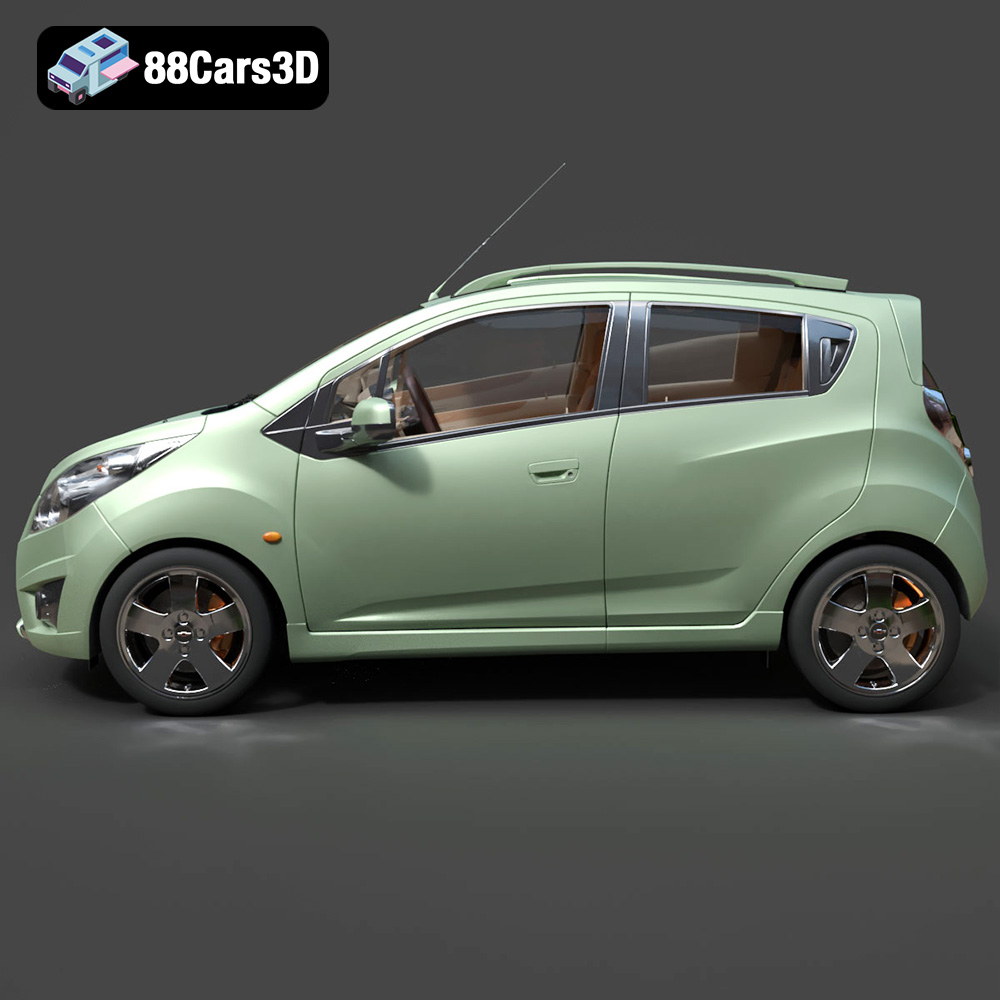
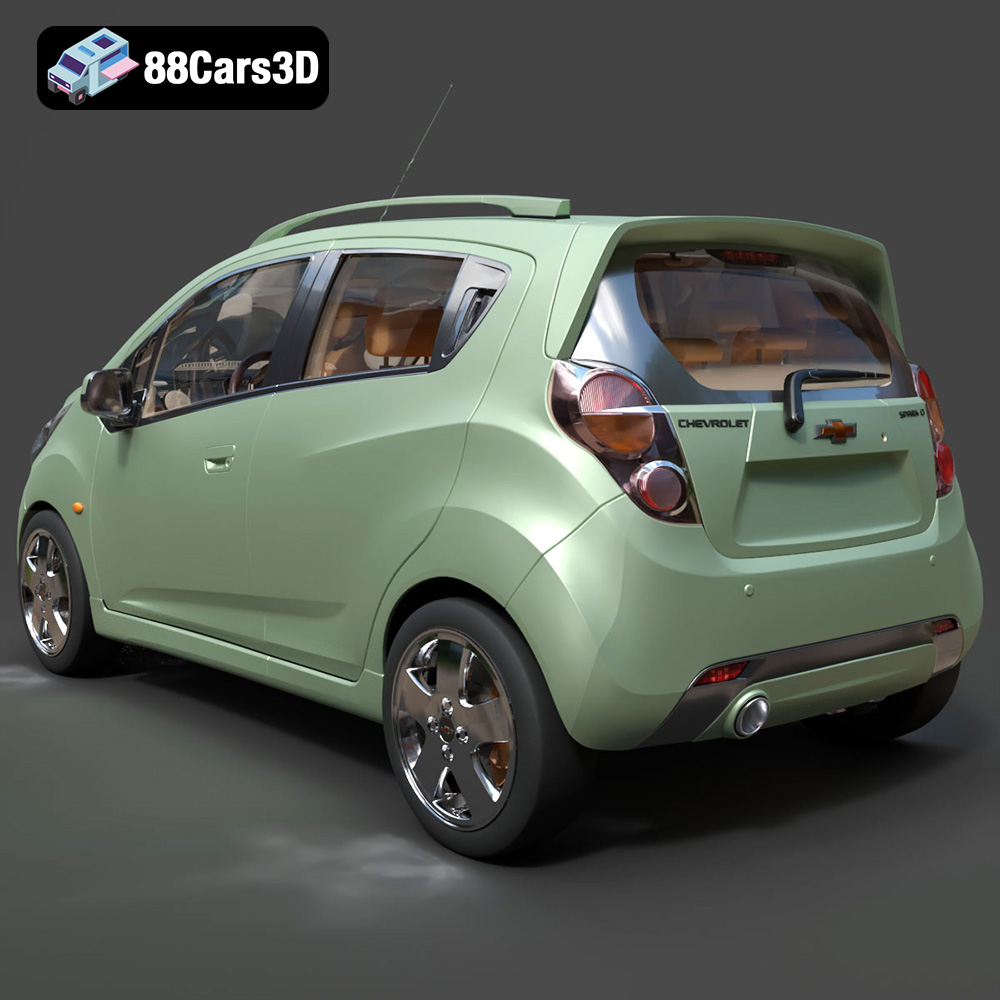
Capturing the essence of a modern vehicle involves more than just getting the shape right. The Chevrolet Spark LT model beautifully replicates the subcompact’s signature characteristics: its swept-back headlight housings, the distinctive dual-port Chevrolet grille, and the cleverly integrated rear door handles that give it a sportier, two-door illusion. These details are crucial for establishing visual authenticity in any scene. Furthermore, the model comes with separate wheels, steering components, and doors. This pre-separation is a critical advantage for animators. Instead of spending valuable time detaching and parenting objects, artists can immediately begin rigging the vehicle for driving simulations, door opening sequences, or crash physics in game engines. Proper pivot setups for steering and wheel rotation are already established, streamlining the animation workflow significantly.
While often seen from the outside, a car model’s interior details can significantly enhance realism, especially in close-up shots, interactive VR experiences, or open-world games where players can enter vehicles. The Spark LT model features a practical, modern driver-centric cabin layout, a detailed dashboard with a central infotainment screen housing, and a sporty, motorcycle-inspired instrument cluster representation. The seating geometry is realistic, accommodating a four-passenger layout. Crucially, the interior geometry is optimized. This means it’s detailed enough to look convincing through windows or in VR, but without adding unnecessary polygon count that would bog down performance. This balance is particularly vital for AR/VR applications where every polygon and draw call contributes to frame rate and user comfort.
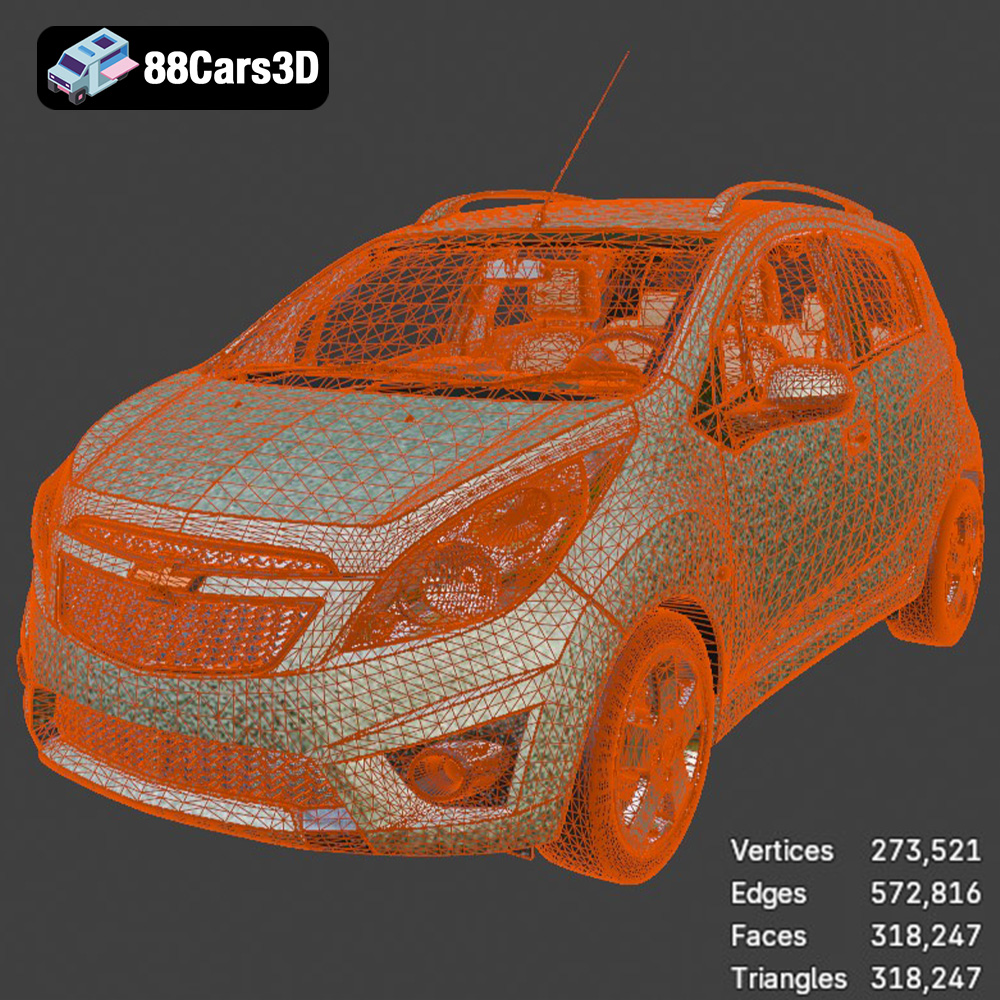
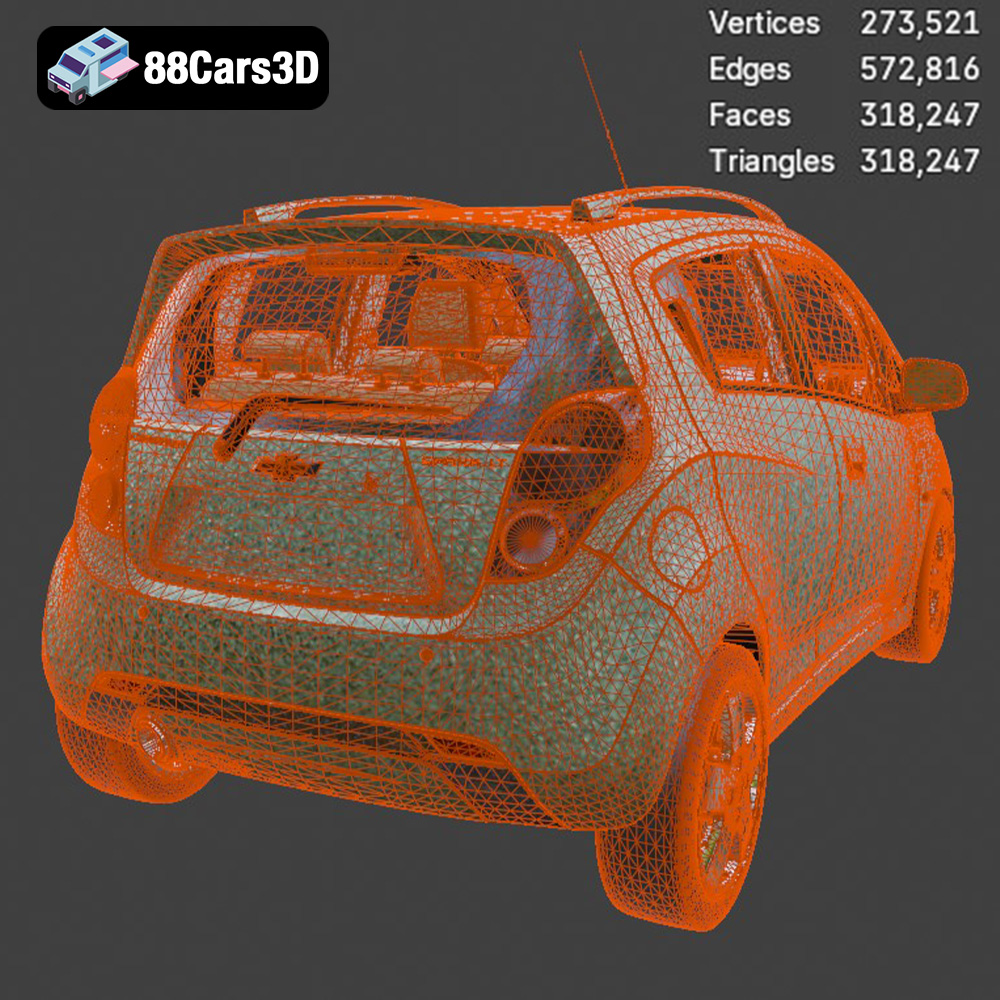
The true strength of a professional 3D model often lies in its technical specifications. The Chevrolet Spark LT boasts impressive metrics that underscore its optimization:
At just over 318,000 triangles, this model strikes an excellent balance. It’s rich enough for detailed renders without being excessively heavy for real-time applications. The product description highlights its “highly optimized, clean mid-polygon topology” and a “beautifully clean, quad-heavy structure.” This clean topology is vital for smooth deformations if the model is rigged, easy UV unwrapping for texturing, and predictable subdivision if higher detail is required. Being lightweight enough to be duplicated dozens of times as background traffic without breaking render times is a significant advantage for large-scale scene creation in ArchViz or expansive game environments. Furthermore, real-world scale accuracy, based on Chevrolet factory dimensions, ensures that the vehicle will fit perfectly within any scene without requiring manual scaling and adjustment.
The versatility of the Chevrolet Spark LT 3D Model extends across numerous professional pipelines, providing a solid foundation for diverse creative projects. Its optimized nature makes it a valuable asset in several demanding industries.
For game developers, asset optimization is paramount. Every polygon, texture, and material contributes to the overall performance of a game. The Chevrolet Spark LT, with its mid-polygon count of around 318k triangles, is perfectly suited for use in modern game engines like Unreal Engine and Unity. Its “game-ready” designation means it can serve as the ultimate “everyday traffic” vehicle for open-world games, delivery simulators, and mobile racing titles. The separate geometry for wheels, steering, and doors, combined with proper pivot setups, significantly accelerates the rigging and animation process. Developers can quickly integrate it into physics simulations, populate busy streets with convincing background cars, or even feature it as a drivable asset with minimal performance impact. The included .fbx and .unreal formats ensure direct and efficient import into these engines, allowing designers to focus on gameplay rather than asset preparation.
Architectural Visualization (ArchViz) thrives on realism. A barren scene, however well-modeled, often feels lifeless. Populating driveways, parking lots, and busy city intersections with realistic vehicles is essential for breathing life into architectural renders. The Chevrolet Spark LT 3D Model is an excellent candidate for this purpose. Its accurate proportions and modern aesthetic allow it to seamlessly blend into contemporary urban settings. Whether rendered in 3ds Max, Blender, or V-Ray, its clean topology ensures smooth shading and realistic reflections under various lighting conditions. Imagine a vibrant urban development render, where the Spark LT is parked outside a modern apartment building or navigating a bustling street, instantly enhancing the scene’s narrative and believability. Its optimized polygon count ensures that even when multiplied across a large scene, render times remain manageable, a critical factor for tight deadlines.
Beyond screen-based applications, the Chevrolet Spark LT 3D Model extends its utility to physical creation and immersive experiences. For 3D printing enthusiasts, the model is convertible to .stl format, allowing for the creation of display-scale modern diecast hobbyist models. The product description even provides specific 3D print settings, recommending scales like 1:32, 1:43, or 1:64, suggesting resin printing for finer details, and offering guidance on layer height, wall thickness, infill, and support placement. This foresight caters to a growing community interested in tangible automotive collectibles.
In the realm of AR/VR, lightweight and optimized assets are crucial for maintaining fluid frame rates and preventing motion sickness. The Spark LT’s efficient polygon count and clean geometry make it excellent for interactive digital showrooms, city-planning VR experiences, and lightweight web configurators. The inclusion of the .glb format is a direct nod to its AR/VR readiness, facilitating rapid deployment on web browsers or mobile AR applications. Users can interact with the car in real-time, view it in different environments, or even customize its appearance, all powered by a robust and performant 3D model.
A high-quality 3D car model like the Chevrolet Spark LT provides a superb foundation, but its true potential is often unlocked through thoughtful customization and intelligent deployment within a project. Understanding these best practices ensures that the asset integrates seamlessly and performs optimally.
While the Chevrolet Spark LT 3D Model comes with materials and textures (as indicated in its meta description), the ability to customize these aspects is crucial for matching specific project aesthetics. Professional workflows often involve PBR (Physically Based Rendering) materials, which accurately simulate how light interacts with surfaces. Users can easily adjust the base color, metallic, roughness, and normal maps to achieve different looks – from a showroom-gloss finish to a weathered urban appearance. For architectural visualization, aligning the car’s paint colors with existing material palettes in the scene is vital. For game development, creating LODs (Levels of Detail) for textures, alongside geometry, helps maintain performance at varying distances. Customization options mentioned for the Spark LT, such as changing exterior paint colors to vibrant city-car palettes or modifying wheel setups, are easily achieved by swapping or adjusting these material parameters. Adding custom decals or delivery branding for commercial vehicle renders involves applying new texture maps to specific areas of the body, often leveraging UV mapping flexibility.
Integrating a 3D car model into a scene goes beyond merely placing it. Effective lighting is key to making the vehicle look realistic and grounded. In 3ds Max or Blender, artists would typically set up HDRi (High Dynamic Range image) lighting for realistic environmental reflections, combined with directional lights to simulate sun or artificial light sources. For urban scenes, streetlights, building lights, and ambient occlusion play a significant role in making the Spark LT feel part of its environment. For game engines like Unreal, dynamic lighting setups, including global illumination solutions like Lumen, would be employed. Adjusting lighting for “sunny urban commutes or rainy night-time city scenes” involves not just changing light sources but also adjusting material roughness, adding rain effects, and tweaking post-processing volumes for atmospheric effects. Proper scaling (which the Spark LT inherently supports with real-world dimensions) and careful placement relative to other objects in the scene contribute significantly to visual believability.
In an industry driven by deadlines and quality expectations, the decision to leverage pre-built 3D assets, especially complex ones like cars, is increasingly common and strategically sound. While custom modeling has its place, readily available high-quality models offer distinct advantages that directly impact project success.
Creating a detailed, optimized 3D car model from scratch is an incredibly time-consuming and expensive endeavor. It requires specialized skills in hard-surface modeling, topology optimization, UV mapping, texturing, and often rigging. A single artist could spend weeks, if not months, perfecting an asset to professional standards. By purchasing a model like the Chevrolet Spark LT from 88cars3d.com, studios and individual artists bypass this entire arduous process. The cost of a pre-built model is a fraction of the labor cost involved in creating one internally, leading to significant savings in both time and budget. This allows teams to allocate resources to other critical aspects of their project, accelerating production timelines without compromising quality.
Not all 3D models are created equal. Poorly optimized meshes, messy topology, incorrect scaling, or flawed UVs can lead to endless headaches down the production pipeline – from rendering artifacts and performance drops to difficulties in texturing and animation. Platforms like 88cars3d.com curate collections of high-quality 3D car models, ensuring that assets like the Chevrolet Spark LT meet rigorous professional standards. These models are typically created by experienced artists who understand the nuances of various workflows, from game engine optimization to photorealistic rendering. The detailed technical specifications provided, such as poly count, clean topology, and real-world scale, offer transparency and confidence in the asset’s quality. This assurance means less time spent fixing errors and more time dedicated to creative application, ultimately delivering superior results faster.
The role of high-quality 3D car models in modern digital production cannot be overstated. They are the essential building blocks that empower creators across game development, architectural visualization, AR/VR, and 3D printing to realize their visions with unparalleled efficiency and fidelity. The complexity of automotive design, coupled with the varied technical requirements of different platforms, necessitates assets that are meticulously crafted and thoughtfully optimized.
The Chevrolet Spark LT 3D Model exemplifies this pinnacle of digital asset creation. Its balanced polygon count, clean topology, detailed interior and exterior features, and inclusion of multiple industry-standard file formats (.blend, .fbx, .obj, .glb, .stl, .ply, .unreal, .max) make it an incredibly versatile and powerful tool. Whether you are populating a sprawling urban environment with realistic traffic, building an interactive driving experience in a game engine, or printing a scale model for a diorama, this model provides the robust foundation needed for success.
Leveraging expertly crafted 3D car models from reputable sources like 88cars3d.com not only streamlines workflows but also elevates the overall quality of any digital project. They are an investment in efficiency, quality, and creative freedom, allowing artists and developers to focus on innovation rather than tedious asset generation. As the digital landscape continues to evolve, the demand for such high-performance, ready-to-use assets will only grow, solidifying their status as indispensable tools in the modern creator’s arsenal.
The Chevrolet Spark LT 3D Model is a highly accurate, efficiently modeled digital recreation of the popular subcompact city car. Known for its nimble handling, practical dimensions, and expressive styling, the Spark is a staple of modern urban environments across the globe. This 3D model beautifully captures the sleek, modernized aesthetic of the latest-generation Spark, featuring its signature swept-back headlight housings, the distinctive dual-port Chevrolet grille, its compact hatchback profile, and the cleverly integrated rear door handles that give it a sporty, two-door appearance. Built with a highly optimized, clean mid-polygon topology (just over 318k triangles), it strikes the perfect balance between visual fidelity for close-up renders and lightweight performance for real-time game engines. Perfect for populating modern city streets, architectural visualizations, urban traffic simulations, and mobile game development. Exterior Features: • Accurate subcompact hatchback proportions and modern Chevrolet design language • Distinctive dual-port front grille and swept-back headlight assemblies • Cleverly integrated “hidden” rear door handles in the C-pillar • Sleek aerodynamic roofline with an integrated rear spoiler • Detailed factory alloy wheels wrapped in realistic street tires • Separate wheels, steering components, and doors for rigging and animation Interior Features: • Practical, modern driver-centric cabin layout • Detailed dashboard featuring the central infotainment screen housing • Sporty motorcycle-inspired instrument cluster representation • Realistic seating geometry for a four-passenger layout • Optimized interior geometry tailored to look great from the exterior or in VR Technical Specifications & Advantages: • Vertices: 273,521 • Edges: 572,816 • Faces / Polygons: 318,247 • Triangles: 318,247 • Highly Optimized Topology: As seen in your wireframe, the model boasts a beautifully clean, quad-heavy structure. At 318k triangles, it is lightweight enough to be duplicated dozens of times as background traffic without breaking your render times. • Real-world scale accuracy based on Chevrolet factory dimensions • Proper pivot setup for steering and wheel rotation • Compatible with major 3D software platforms and real-time engines (Unreal, Unity) Applications: • Game Development: The ultimate “everyday traffic” vehicle for open-world games, delivery simulators, and mobile racing titles. • Rendering & Visualization: Perfect for breathing life into architectural visualizations (ArchViz) by populating driveways, parking lots, and busy city intersections. • AR/VR: Excellent for interactive digital showrooms, city-planning VR experiences, and lightweight web configurators. • 3D Printing: Convertible to .stl format for display-scale modern diecast hobbyists. 3D Print Setting: • Recommended scale: 1:32 / 1:43 / 1:64 (Perfect for urban dioramas) • Layer height: 0.04–0.12 mm (Resin printing recommended for the smaller scale details) • Wall thickness: 1.2–2.0 mm • Infill: 15–25% • Supports: Required for side mirrors, wheel arches, and the rear spoiler • Print orientation: Body printed angled for a smooth surface finish; wheels printed separately • Post-processing: Sanding, primer, and vibrant factory colors (like Red Hot, Mystic Blue, or Summit White) Customization Options: • Change exterior paint colors to match striking, vibrant city-car palettes • Modify the wheel setup (swap standard alloys for custom compact tuner wheels) • Add custom decals or delivery branding to the side panels for commercial vehicle renders • Adapt lighting for sunny urban commutes or rainy night-time city scenes Included File Formats: .blend, .fbx, .obj, .glb, .stl, .ply, .unreal, .max
$9.99
.archviz
.automotive
.blend
.chevrolet
.fbx
.hatchback
.obj
.rendering
.subcompact
car-3d-model
chevy-spark
city-car
game-ready
mid-poly
spark-lt
traffic-car