Get 50% OFF All Premium 3D & STL Models!

“`html
3D printing has revolutionized the way we create and prototype, and the availability of high-quality 3D models, like the printable car models available at 88cars3d.com, has further fueled this revolution. However, before you can bring those digital designs to life, understanding how to convert polygon-based 3D models into the STL format is crucial. This process, though seemingly simple, involves technical nuances that can drastically affect the quality and success of your print. This comprehensive guide will walk you through the intricacies of this conversion, covering everything from file formats and mesh optimization to software-specific techniques and troubleshooting common issues. Whether you’re a seasoned 3D printing enthusiast or just starting out, mastering the art of STL conversion is key to achieving professional-grade results.
In this article, you’ll learn about the significance of the STL format in 3D printing, the step-by-step process of converting polygon models to STL, optimizing your mesh for printing, handling various software tools for conversion and repair, understanding the difference between FDM and resin printing implications, and mastering the art of troubleshooting common conversion and printing errors. Let’s dive in and unlock the secrets to seamless 3D printing!
The STL (Stereolithography) file format is the workhorse of 3D printing. It represents the surface geometry of a 3D object as a collection of triangles. Unlike more complex formats that store color, texture, or material properties, STL focuses solely on the shape, making it universally compatible across different 3D printers and slicing software. The simplicity of the STL format is both its strength and its limitation; it ensures broad compatibility but sacrifices detail beyond the basic geometric representation.
An STL file essentially contains a list of triangles, where each triangle is defined by its three vertices and a normal vector (indicating the direction the triangle is facing). The accuracy of the STL representation depends on the number of triangles used; more triangles mean a finer, more detailed representation of the original model. However, increasing the triangle count also increases the file size and processing time during slicing. It’s a delicate balance to strike. Mesh topology refers to the interconnectedness of these triangles. A well-formed mesh is “manifold,” meaning it’s watertight and doesn’t have any holes, self-intersections, or non-manifold edges (edges shared by more than two triangles). Non-manifold meshes can cause significant issues during slicing and printing, leading to errors or incomplete prints.
Virtually all 3D printers and slicing software support the STL format. Its simplicity and widespread adoption make it the standard for exchanging 3D models between design software and 3D printers. Slicing software takes the STL file as input and converts it into a series of instructions (G-code) that the 3D printer can understand. This process involves slicing the 3D model into thin layers and generating a toolpath for the printer to follow. Without a properly formatted and optimized STL file, the slicing process can fail, leading to wasted material and time. Therefore, a solid understanding of STL is foundational for successful 3D printing.
The process of converting a polygon-based 3D model (e.g., OBJ, FBX) to STL typically involves using 3D modeling software or specialized mesh conversion tools. Here’s a general workflow you can follow, with specific examples using popular software:
Blender, a free and open-source 3D creation suite, is a powerful tool for both creating and converting 3D models. To convert a model to STL in Blender, first import your polygon model (e.g., OBJ). Then, go to File > Export > Stl (.stl). In the export settings, you can adjust the “Ascii” or “Binary” format (binary is generally preferred for smaller file sizes) and optionally apply modifiers. Before exporting, it’s a good practice to apply any modifiers (such as Subdivision Surface) and ensure the model’s scale and orientation are correct. A crucial step is to check for and correct any non-manifold geometry before exporting the STL. Blender’s “Mesh Analysis” tools can help identify such issues.
Meshmixer, another free tool from Autodesk, is specifically designed for working with meshes and preparing them for 3D printing. Import your model into Meshmixer. Meshmixer automatically analyzes the mesh and highlights potential issues. Use the “Make Solid” function (Edit > Make Solid) to convert the model into a watertight solid. This process often involves remeshing the model to create a more printable structure. Adjust the “Solid Type” (e.g., Accurate, Blocky) and “Mesh Density” to find the optimal balance between detail and printability. Once the model is solid, export it as an STL file (File > Export).
A well-optimized mesh is crucial for achieving high-quality 3D prints. Optimization involves reducing the file size, ensuring the mesh is manifold, and adjusting the mesh density to balance detail and printability. Neglecting mesh optimization can lead to printing errors, long processing times, and poor surface finish.
High polygon counts can lead to unnecessarily large STL files, which can slow down slicing and printing. Use mesh decimation tools (available in Blender, Meshmixer, and other software) to reduce the number of polygons without significantly affecting the visual quality of the model. Experiment with different decimation algorithms (e.g., planar decimation, collapse edges) and target polygon counts to find the optimal balance. For example, in Blender, the “Decimate” modifier allows you to reduce the polygon count by a specified ratio or to a target number of faces. A reduction of 20-50% can often be achieved without noticeable loss of detail.
Non-manifold geometry is a common issue in 3D models, especially those created through sculpting or complex boolean operations. Common issues include holes, self-intersections, and inverted normals. Meshmixer’s “Inspector” tool is excellent for automatically identifying and repairing these issues. It highlights problem areas in different colors and offers various repair options. Another effective technique is to use boolean operations to merge overlapping meshes into a single, solid object. Ensure that all normals are facing outwards to prevent inside-out printing issues. Software like Netfabb offers advanced mesh repair tools specifically designed for preparing models for additive manufacturing. These tools can automatically detect and fix a wide range of mesh errors, including holes, flipped normals, and self-intersections.
Once you have a properly converted and optimized STL file, the next step is to slice it using slicing software like Cura, PrusaSlicer, or Simplify3D. The slicing process converts the 3D model into a series of layers that the 3D printer can understand. The slicing parameters you choose will significantly impact the quality, strength, and printing time of your final object.
Layer height is one of the most critical slicing parameters. Lower layer heights (e.g., 0.1mm) result in smoother surfaces and finer details, but they also increase printing time. Higher layer heights (e.g., 0.3mm) print faster but produce more visible layer lines. A good starting point is 0.2mm for general-purpose printing. Adjust print speed according to the material and printer capabilities. Slower speeds generally improve print quality, especially for intricate details and overhangs. Experiment with different speed settings (e.g., 40mm/s, 60mm/s) to find the optimal balance between speed and quality. For FDM printing of car models downloaded from platforms like 88cars3d.com, consider reducing the speed for the first few layers to improve bed adhesion.
Infill density determines the amount of material used inside the printed object. Higher infill densities (e.g., 50-100%) result in stronger, heavier objects, while lower infill densities (e.g., 10-20%) save material and reduce printing time. The optimal infill density depends on the application. For purely aesthetic models, a low infill density may suffice. For functional parts that need to withstand stress, a higher infill density is recommended. Common infill patterns include rectilinear, grid, honeycomb, and gyroid. Gyroid infill offers excellent strength-to-weight ratio and is a good choice for functional parts. Rectilinear infill is simple and fast to print, while honeycomb provides good strength in multiple directions.
The choice between FDM (Fused Deposition Modeling) and resin printing affects how you prepare your STL files. FDM printing involves extruding molten plastic through a nozzle to build the object layer by layer, while resin printing uses light to cure liquid resin. Each technology has its strengths and limitations, influencing the optimal settings and considerations for STL conversion.
Support structures are essential for printing overhangs and complex geometries. FDM printing typically requires more substantial support structures than resin printing due to the nature of the extrusion process. Cura and PrusaSlicer offer excellent support generation tools. Experiment with different support patterns (e.g., tree supports, linear supports) and densities to find the optimal balance between support strength and ease of removal. For resin printing, support structures are typically thinner and more delicate. Software like Chitubox and Lychee Slicer are specifically designed for resin printing and offer advanced support generation features. When dealing with printable car models, remember that the orientation and automatic support generation can sometimes block fine details; manual placement is often the best approach.
Different materials require different printing temperatures, speeds, and bed adhesion strategies. PLA is a beginner-friendly material that prints at relatively low temperatures (e.g., 200°C nozzle, 60°C bed). ABS requires higher temperatures (e.g., 230°C nozzle, 80-100°C bed) and an enclosed build chamber to prevent warping. PETG offers a good balance of strength and ease of printing. Resin printing requires careful calibration of exposure times and lift speeds. Overexposure can lead to overly thick layers and loss of detail, while underexposure can result in incomplete prints. Always consult the material manufacturer’s recommendations for optimal printing settings. Many quality models available for sale on platforms like 88cars3d.com will include printing recommendations for optimal results with the most common materials.
Even with careful preparation, errors can still occur during STL conversion and printing. Understanding common issues and their solutions is essential for a smooth and successful 3D printing experience.
Holes and gaps in the printed object can be caused by non-manifold geometry, insufficient support structures, or incorrect slicing settings. Use mesh repair tools like Meshmixer’s “Inspector” to identify and fix non-manifold geometry. Increase support density or adjust support placement to prevent overhangs from collapsing. Ensure that the “Ensure manifold” setting is enabled in your slicing software. If gaps occur between layers, increase the flow rate or extrusion multiplier in your slicing settings. This can compensate for underextrusion issues. Also, verify your printer’s e-steps are properly calibrated to ensure accurate material extrusion.
Warping occurs when the printed object detaches from the build plate during printing, typically due to temperature differences or poor bed adhesion. Use a heated bed to maintain a consistent temperature throughout the print. Apply bed adhesion aids like glue stick, hairspray, or painter’s tape to improve adhesion. Ensure that the first layer is properly calibrated; the nozzle should be close enough to the bed to create a slight squish. For materials prone to warping (e.g., ABS), consider using a brim or raft to increase the surface area in contact with the build plate. Properly leveling your bed is also crucial for first layer adhesion.
Converting polygon 3D models to STL for 3D printing is a multifaceted process that demands attention to detail and a thorough understanding of both the software tools and the underlying principles. From ensuring a manifold mesh to optimizing slicing parameters, each step plays a crucial role in the success of your print. By mastering these techniques, you can transform digital designs into tangible objects with confidence and precision.
Remember, the key to successful 3D printing lies in continuous learning and experimentation. Don’t be afraid to try new settings, explore different materials, and refine your workflow. Platforms like 88cars3d.com offer a fantastic resource for high-quality, printable car models, providing an excellent opportunity to put your newfound knowledge into practice. So, download a model, fire up your 3D printer, and embark on your 3D printing journey with confidence!
“`

Texture: Yes | Material: Yes Download the ultra-high-detail BMW i7 (2023) 3D Model (4.14M Triangles). Features the illuminated kidney grille, split crystal headlights, fully modeled Theatre Screen interior, and monolithic luxury styling. Perfect for ArchViz, VFX, and cinematic rendering. Includes .blend, .fbx, .obj, .glb, .stl, and .max formats.
Price: $19.99
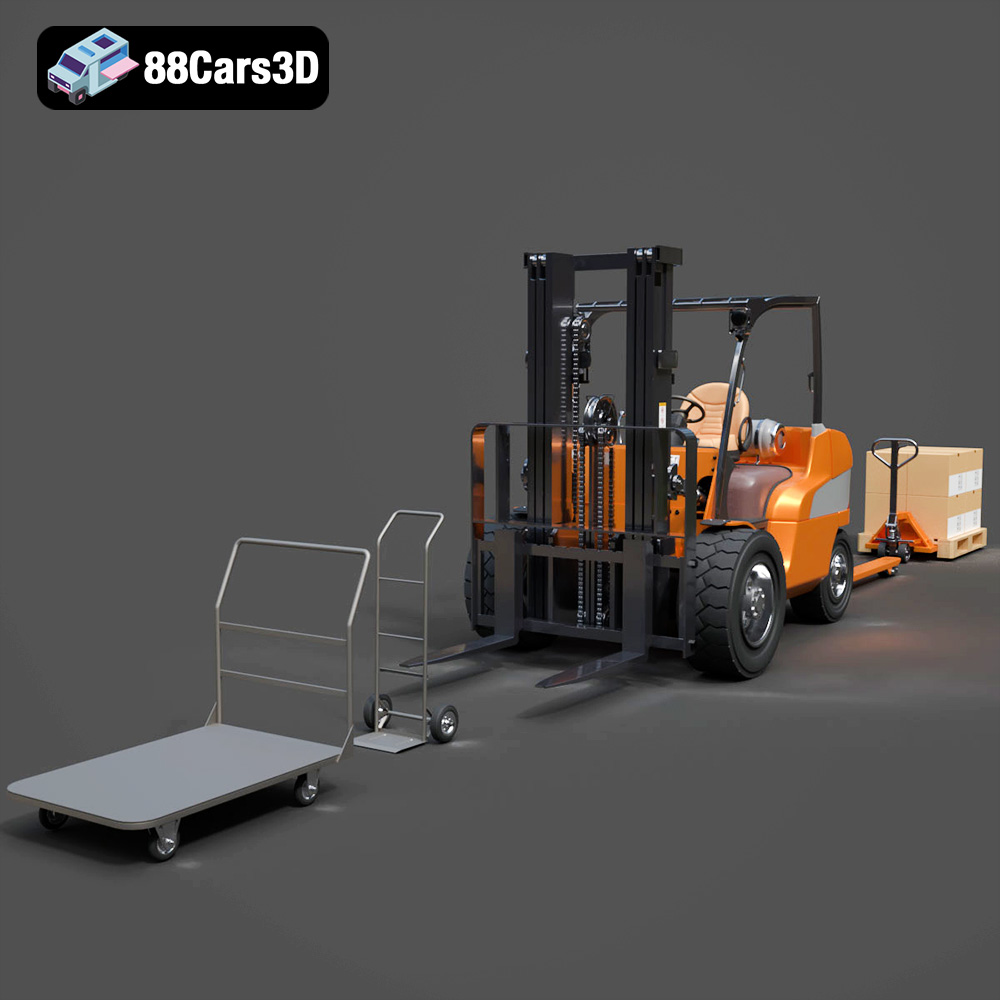
Texture: Yes | Material: Yes Download the highly detailed CAT Manual Loader & Warehouse Carts Kit 3D Model (2.4M Triangles). Features a macro-detailed hydraulic pallet jack, heavy-duty forks, and transport carts. Perfect for industrial ArchViz, factory rendering, and logistics simulations. Includes .blend, .fbx, .obj, .glb, .stl, and .max formats.
Price: $19.99

Texture: Yes | Material: Yes
Download the highly optimized Mazda CX-5 2014 3D Model (294k Triangles). Features the dynamic Kodo design language, signature grille, and a clean interior. Perfectly balanced for ArchViz, background traffic, and game development. Includes .blend, .fbx, .obj, .glb, .stl, and .max formats.
Price: $19.99
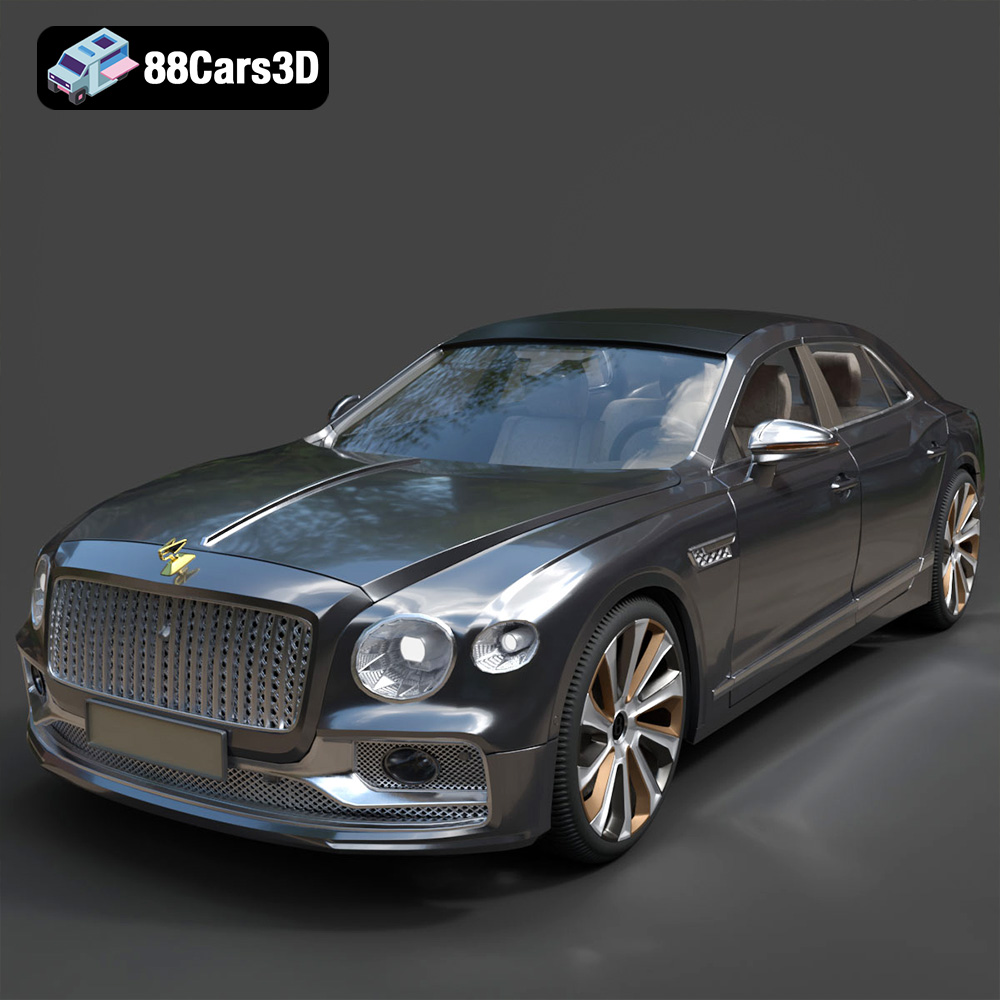
Texture: Yes | Material: Yes Download the ultra-high-detail Bentley Flying Spur Mulliner 2022 3D Model (2.94M Triangles). Features the bespoke Double Diamond grille, a fully modeled diamond-quilted interior, and exquisite luxury styling. Perfect for high-end ArchViz, VFX, and cinematic rendering. Includes .blend, .fbx, .obj, .glb, .stl, and .max formats.
Price: $19.90

Texture: Yes | Material: Yes | 3D Printable: Yes. Download the Ultimate Creators’ Showcase featuring 5 premium 3D models: Lamborghini Huracan, ZAV Concept Motorcycle, Sukhoi SU-26, Presidential Limousine, and Daewoo Damas. Optimized for 4K CGI rendering and 3D printing. Save massive with this exclusive multi-category bundle!
Price: $99.99

Texture: Yes | Material: Yes | 3D Printable: Yes. Download the Italian Thoroughbreds Bundle featuring 5 iconic 3D models: Lamborghini Huracán Performante, Ferrari 458 Italia, Lamborghini Urus, Diablo SV, and Maserati GT. Optimized for 4K rendering and 3D printing (STL included). Save 50% with this ultimate Italian vehicle collection.
Price: $199.99

Download the Elite Future Mobility Bundle featuring 4 highly optimized 3D models: Tesla Model S, Avatr 11, Li L9, and Zoox Robotaxi. Perfect for ArchViz, Smart City renders, and game dev. Optimized for Unreal Engine and Blender. Includes .fbx, .obj, and .max formats.
Price: $99

🚗 5 Iconic German Cars (BMW M4 G82, M5 CS, X3, 1 Series & Mercedes E-Class). ✅ Optimized for ArchViz: Ready for Corona & V-Ray. 💰 Save €71 with this limited-time collection! 🚀 Instant Download after purchase.
Price: $119

Download the Extreme Off-Road & Survival 3D Models Bundle! Includes the Brabus 800 Adventure, Dodge Ram Bigfoot, Spec Truck, and a Caravan. Save over €210 on this premium 4-in-1 off-grid vehicle pack for ArchViz and game development.
Price: $149.99

Download the Heavy Duty & Commercial Logistics 3D Models Bundle! Includes the Ford Sterling, Caterpillar CT680, Mercedes Citaro Bus, and Vito Van. Save over €130 on this massive, game-ready 4-in-1 industrial vehicle pack.
Price: $109.99

