Get 50% OFF All Premium 3D & STL Models!

In the vast landscape of automotive history, some vehicles transcend mere transportation to become cultural touchstones. The Daewoo Nexia N100, a car that needs little introduction across Eastern Europe, Russia, and Central Asia, is precisely one such icon. Known for its rugged reliability and ubiquity as an everyday commuter and workhorse, the Nexia N100 isn’t just a car; it’s a symbol of an era and a prevalent sight on city streets to this day.
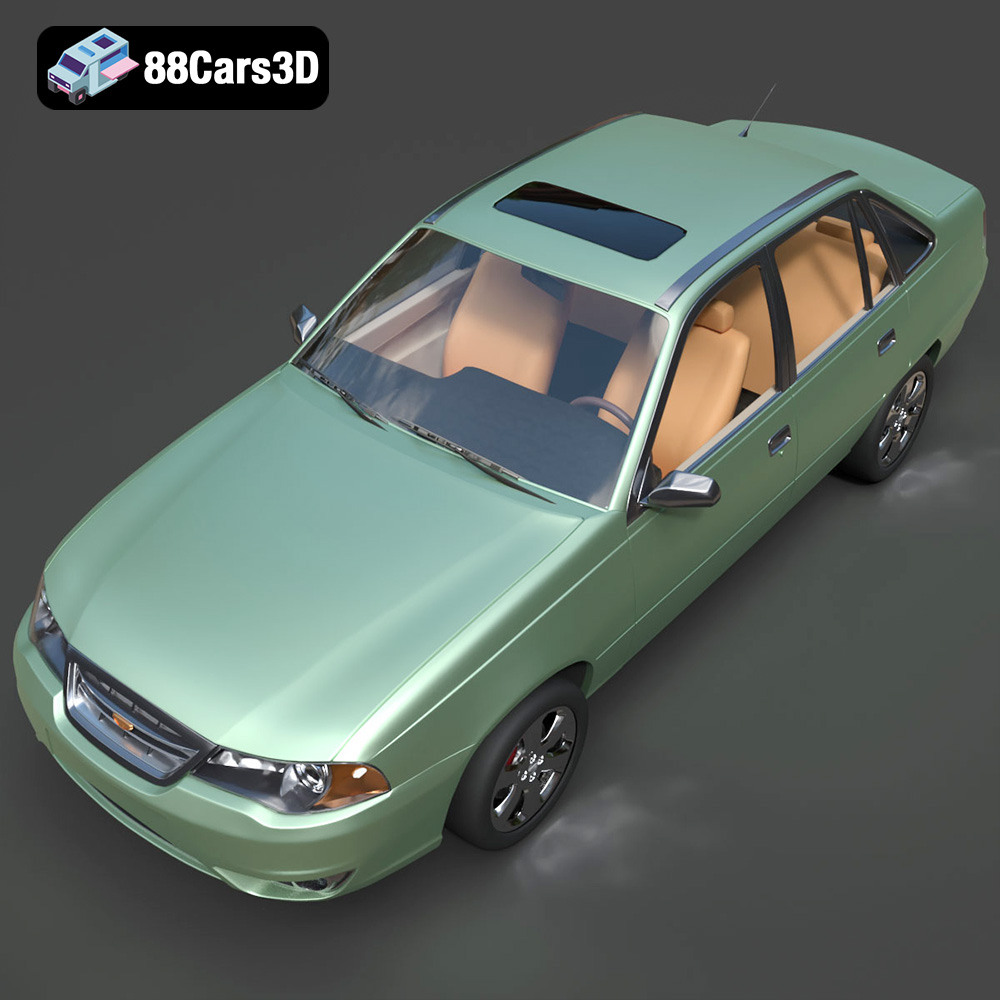
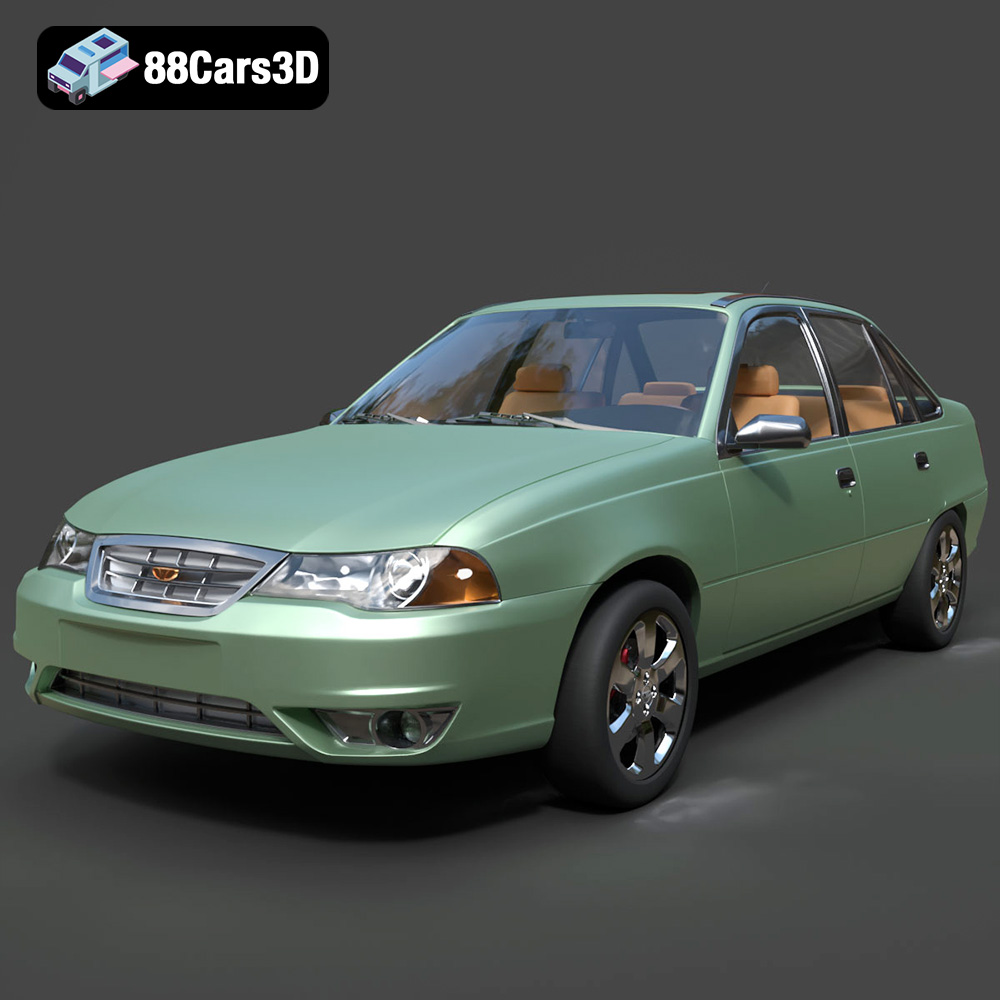
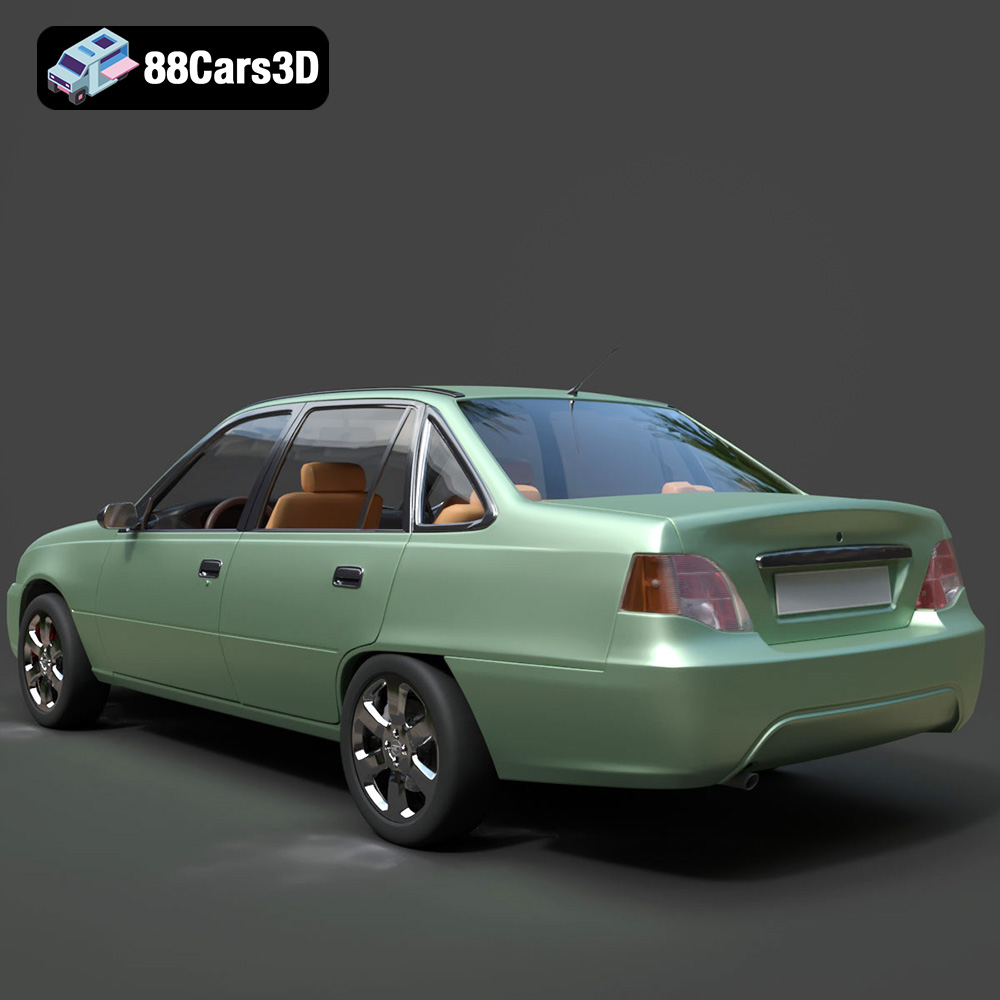
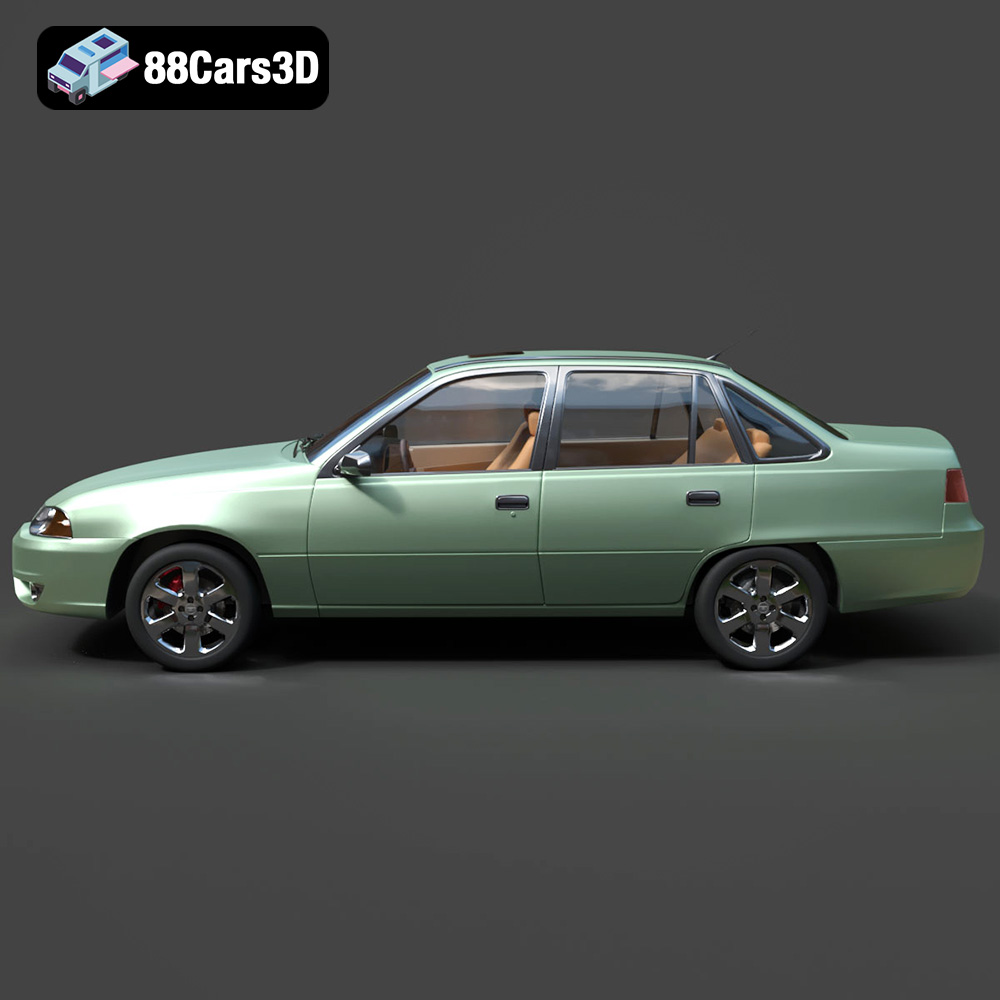
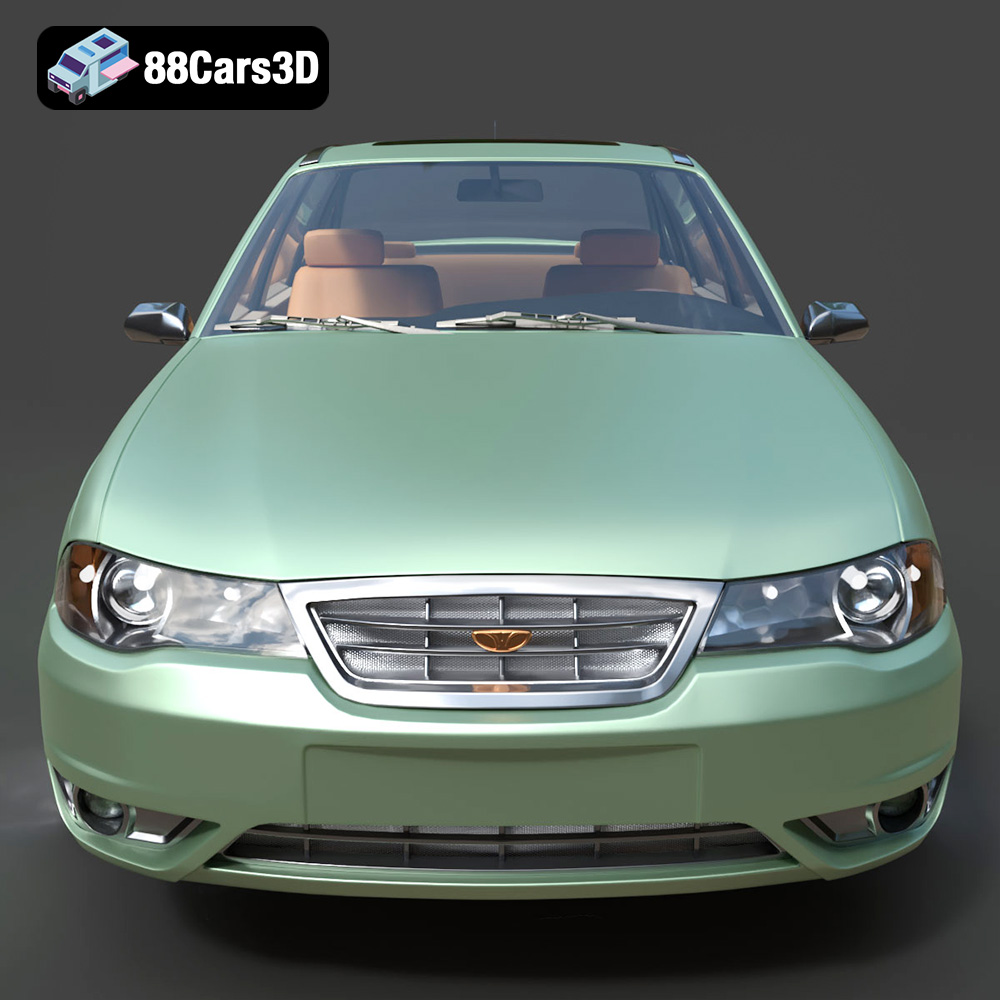
Originating from the robust architecture of the Opel Kadett E, the original N100 Nexia (also known as the Cielo or Heaven in various markets) cultivated a reputation for being dependable and unassuming. Its classic 1990s aesthetic—defined by rectangular headlights, a distinctive split front grille, and a straightforward three-box sedan silhouette—evokes a powerful sense of nostalgia and realism for anyone familiar with the region. Capturing this essence in the digital realm requires meticulous attention to detail and a deep understanding of 3D modeling principles. This is where high-quality 3D car models, such as the Daewoo Nexia N100 (Classic) 3D Model available at 88cars3d.com, become invaluable assets for professionals across various industries.
Whether you’re an architectural visualization artist aiming for authentic street scenes, a game developer crafting immersive open-world environments, or an animator bringing historical narratives to life, the need for accurate and optimized 3D car models is paramount. This particular model doesn’t just replicate the Nexia N100; it distills its character, offering a meticulously crafted digital twin that is both visually faithful and technically robust. From its balanced topology to its comprehensive file format support, it is designed to seamlessly integrate into professional pipelines, bridging the gap between historical accuracy and modern digital production.
The versatility of a 3D model is often defined by the file formats it supports. For professionals working with 3D car models like the Daewoo Nexia N100, understanding the nuances of each format is crucial for efficient workflow, compatibility, and achieving optimal results. The Daewoo Nexia N100 (Classic) 3D Model comes packed with an array of popular formats, ensuring maximum usability across different software and applications.
The `.blend` file is Blender’s native format, offering a fully editable scene complete with materials, textures, lighting, and even animation data if present. For artists whose primary DCC (Digital Content Creation) tool is Blender, this format provides the most flexibility. You can directly open the file, inspect the topology, modify materials, adjust UVs, and animate components like doors and wheels without any conversion issues. It’s ideal for those who want to deeply customize the Daewoo Nexia N100 model or integrate it into a Blender-centric rendering or animation project.
FBX (Filmbox) is a proprietary file format owned by Autodesk and is widely recognized as the industry standard for 3D data exchange between different software applications and game engines. It supports geometry, materials, textures, animations, and skeletal data. For the Daewoo Nexia N100, the `.fbx` format is absolutely ideal for pipelines involving Unreal Engine, Unity, and other real-time environments. Its robust support for embedded textures and animations makes it a go-to choice for transferring game-ready assets, ensuring that all components of the model, including the separate wheels and doors, are correctly imported and ready for rigging or immediate use.
OBJ (Object) is one of the oldest and most universally supported 3D file formats. It’s a simple, text-based format that primarily stores geometry (vertices, normals, texture coordinates, and faces) and references material files (`.mtl`). While it doesn’t support animation or advanced rigging data, its widespread compatibility makes it excellent for cross-software transfers when you mainly need the mesh data. If you’re importing the Daewoo Nexia N100 into a niche rendering application or an older software version, `.obj` is a safe and reliable choice for ensuring the base model geometry is intact.
GLB (GL Transmission Format Binary) is a binary version of the glTF (GL Transmission Format) format, designed for efficient transmission and loading of 3D scenes and models by engines and applications. It’s quickly becoming the standard for 3D content on the web, AR (Augmented Reality), and VR (Virtual Reality) experiences due to its compact size and comprehensive support for PBR (Physically Based Rendering) materials, animations, and scene graphs. The `.glb` version of the Nexia N100 is perfect for embedding the model into interactive web experiences, AR apps that display the car in a real-world setting, or light VR simulations where performance and quick loading times are critical.
STL (Stereolithography) is the de facto standard file format for 3D printing. It represents a 3D model as a series of connected triangles, describing only the surface geometry without color, texture, or material information. When preparing the Daewoo Nexia N100 for physical reproduction, the `.stl` format is essential. It provides a watertight mesh suitable for slicer software, allowing hobbyists and professionals alike to bring the digital model into the physical world, creating display-scale classic diecast replicas or urban diorama elements.
PLY (Polygon File Format) is a file format for storing three-dimensional data from 3D scanners. It can store a variety of properties including color, transparency, surface normals, texture coordinates, and data confidence values. While less common for general rendering than FBX or OBJ, `.ply` is particularly useful in applications requiring precision mesh data, such as CAD (Computer-Aided Design) software, scientific visualization, or detailed geometric analysis. For the Daewoo Nexia N100, its inclusion broadens its utility for niche engineering or reverse-engineering projects where accurate vertex and face data are paramount.
The `.unreal` format (often referring to specific Unreal Engine asset packages or directly imported assets) signifies that the model is already optimized and prepared for seamless integration into Unreal Engine. This might include pre-configured materials, collision meshes, LODs (Levels of Detail), and proper pivot points for animation. For the Daewoo Nexia N100, having an “engine-ready” asset significantly reduces setup time for game developers and real-time visualization artists, allowing them to drop the model directly into their scenes and begin populating their virtual worlds immediately, whether as a drivable vehicle or background traffic.
Similar to `.blend` for Blender, the `.max` file is the native project format for Autodesk 3ds Max. It contains all scene data, including geometry, modifiers, materials, lighting, cameras, and animation curves. For artists working within 3ds Max, this format provides the most comprehensive access to the model’s construction. It allows for intricate adjustments, complex rigging for advanced animations, and setup for high-fidelity rendering using powerful renderers like V-Ray or Corona. The Daewoo Nexia N100 in `.max` format gives 3ds Max users full control over the asset for animation, rendering, and scene integration.
By offering this extensive range of formats, the Daewoo Nexia N100 (Classic) 3D Model ensures that no matter your preferred software or project requirement, you have the right tool to incorporate this iconic vehicle into your digital creations with maximum efficiency and fidelity.
Automotive rendering is an art form that demands precision, realism, and a keen eye for detail. The Daewoo Nexia N100 (Classic) 3D Model provides an exceptional foundation for creating stunning visualizations, particularly for architectural visualization (ArchViz) and cinematic projects that require a touch of authentic, era-specific street life. The model’s balanced topology and accurate proportions make it an ideal candidate for both foreground hero shots and dense background traffic.
With approximately 475k triangles, the Daewoo Nexia N100 model strikes a perfect balance: it’s detailed enough for close-up renders without being overly complex, which could burden scene performance. For ArchViz artists working on projects set in Eastern Europe or Central Asia, this model is a revelation. Its authentic 90s aesthetic, featuring the distinctive split front grille, rectangular halogen headlight assemblies, and functional black plastic side moldings, instantly grounds a scene in a specific time and place. Imagine a modern residential building rendered against a backdrop of historic streets, with a perfectly placed Nexia N100 adding a layer of regional authenticity and realism that generic traffic models simply cannot achieve.
When working in software like 3ds Max with V-Ray or Corona Renderer, artists can easily apply custom PBR materials. The model’s clean UV mapping allows for realistic texture application, from the subtle wear on the paintwork to the specific weave of the interior fabric. Adjusting reflections on the paint, refracting light through the classic glass headlights, and carefully setting up studio-quality lighting can transform this digital asset into a photorealistic centerpiece. The separate wheels and doors also allow for subtle animations, such as a slight wheel turn or an open door, further enhancing dynamic realism in a still render or animation.
The model’s robust construction makes it adaptable for various rendering needs. For high-impact hero shots, artists can utilize the full polygon count, focusing on intricate details like the realistic panel gaps and classic door handles. For background vehicles in a bustling city scene, the model’s efficient geometry means you can populate your environment with numerous Nexias without bogging down render times significantly. This scalability is a testament to the thoughtful design of 3D car models found on platforms like 88cars3d.com.
Beyond traditional rendering, the Nexia N100 also excels in real-time visualization environments. Its optimized interior geometry, tailored to look great from the exterior or in VR, ensures a consistent level of detail. This makes it suitable for interactive walk-throughs in Unreal Engine or Unity, where real-time lighting and reflections bring the car to life in dynamic ways, whether it’s reflecting the changing skybox or reacting to a streetlamp’s glow. Customization options, such as changing exterior paint colors or adding weathering materials, further extend its utility, allowing artists to create vibrant, weathered, or even rusty city-car palettes that tell a story within the scene.
Game development demands a unique blend of visual fidelity and rigorous optimization. The Daewoo Nexia N100 (Classic) 3D Model is meticulously crafted to meet these requirements, making it an excellent game asset for various genres, from open-world simulations to niche taxi driving games. Its balanced topology positions it perfectly for both hero vehicle status and dense background traffic.
The journey of a 3D car model from an asset marketplace to an interactive game world involves several critical steps. The inclusion of `.fbx` and `.unreal` formats significantly streamlines this process for the Daewoo Nexia N100. For Unreal Engine and Unity developers, the `.fbx` file, with its support for embedded materials and clean mesh, can be directly imported. The engine-ready `.unreal` asset goes a step further, often providing pre-configured materials, proper collision meshes, and optimized pivot points for immediate use.
Once imported, the model’s separated wheels, steering components, and doors are crucial for rigging. Game developers can easily set up vehicle physics, attach custom animations for opening doors or steering, and implement damage models. The realistic panel gaps and detailed exterior features translate well into game engines, maintaining visual integrity even with dynamic lighting and shadow systems. For optimal performance in a diverse game environment, developers can generate multiple Levels of Detail (LODs) from the base model, ensuring that the car appears highly detailed when close to the player, but reduces polygon count for distant instances, saving precious processing power.
The Daewoo Nexia N100 is more than just a car; it’s a character in itself, capable of instantly defining the cultural and geographical context of a game world. For open-world games or simulations set in Eastern Europe, Russia, or Central Asia, populating the streets with this iconic vehicle lends an unparalleled level of authenticity. Imagine a retro 90s delivery simulator where players navigate busy city streets, interacting with highly recognizable Nexia N100 taxis or weathered private cars.
The model’s mid-to-high polygon count (approx. 475k triangles) hits the “Goldilocks zone” for game assets. It’s robust enough to serve as a drivable hero car with a detailed interior, yet efficient enough to be duplicated hundreds of times as background traffic without causing severe lag. This versatility is key for developers aiming to create believable and immersive urban environments. Furthermore, the customization options described earlier, such as adding classic yellow “Taxi” roof signs and checker decals, or applying weathering materials like dust and mud, allow developers to create a diverse fleet of Nexias that reflect the game’s narrative and environment, enhancing the overall player experience.
The utility of high-quality 3D car models extends far beyond digital rendering and game development. With the advent of accessible 3D printing technology, these digital assets can be transformed into tangible, physical objects. The Daewoo Nexia N100 (Classic) 3D Model, with its inclusion of the `.stl` format, offers a fantastic opportunity for hobbyists and professionals to create physical scale models or dioramas.
The `.stl` format, being the standard for additive manufacturing, ensures that the Daewoo Nexia N100 model is ready for conversion into a physical object. While the digital model is optimized for visual fidelity, preparing it for 3D printing requires attention to specific settings. The recommended scales of 1:24, 1:32, or 1:43 are perfect for urban dioramas, tabletop displays, or as part of a classic diecast collection. These scales allow for a good balance between retaining fine details and managing print time and material usage.
For best results, resin printing is often recommended, especially for smaller scales and intricate details like the grille, wipers, and other fine exterior elements. Resin printers (SLA/DLP) offer superior resolution and smoother surface finishes compared to FDM (Fused Deposition Modeling) printers. However, FDM can still be used for larger scales or less critical applications, provided careful consideration is given to layer height and nozzle size. A layer height of 0.04–0.12 mm is suggested for capturing the model’s subtle curves and details effectively.
Successful 3D printing of detailed models like the Daewoo Nexia N100 involves careful configuration of print settings. A wall thickness of 1.2–2.0 mm ensures structural integrity, preventing fragile parts from breaking during printing or post-processing. An infill of 15–25% provides sufficient internal support without excessive material consumption. Supports are crucial for overhangs and delicate features such as the side mirrors, wheel arches, and the exhaust pipe, preventing warping and ensuring geometric accuracy.
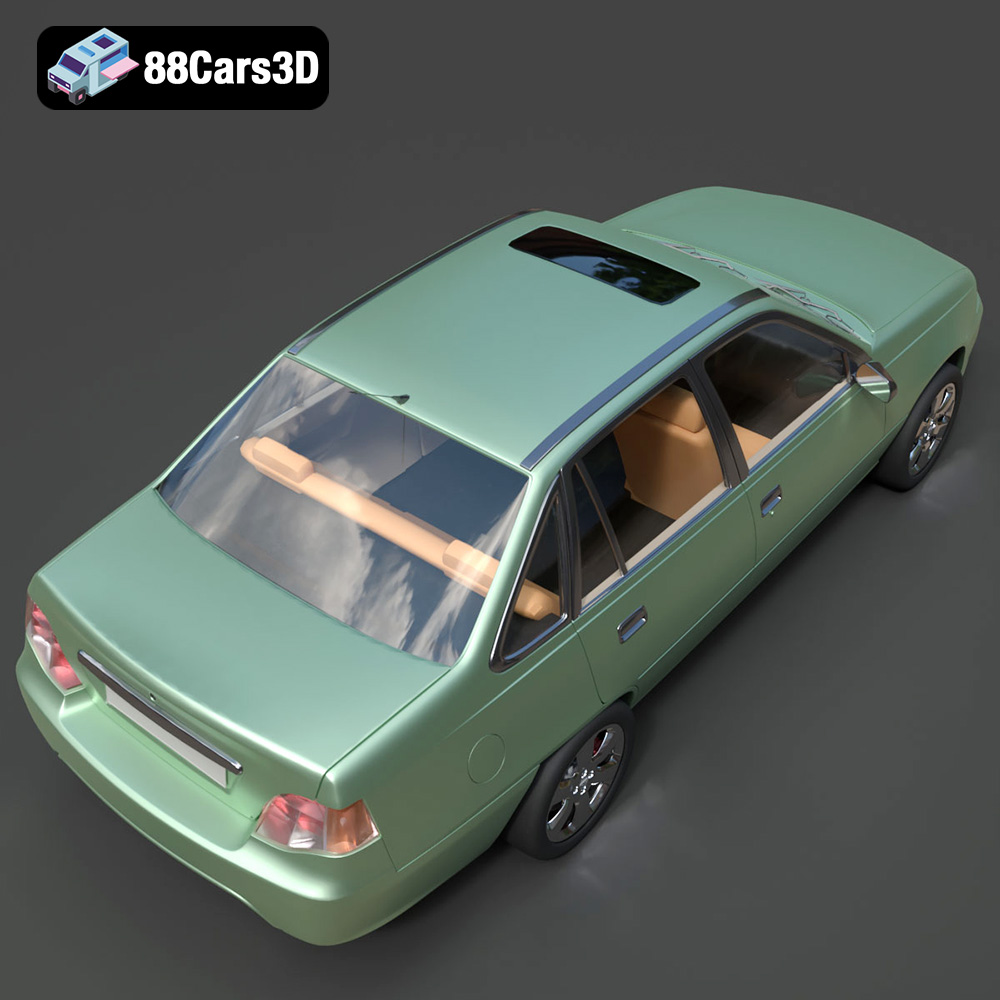
Print orientation is another key factor. Printing the body angled can help achieve a smoother surface finish by minimizing visible layer lines. Printing wheels separately allows for greater detail and easier post-processing. Once printed, the physical model benefits greatly from post-processing. This includes careful support removal, sanding to smooth any layer lines, and applying primer to prepare the surface for painting. The final touch involves painting the model in classic 90s factory colors like Metallic Silver, Cherry Red, or Navy Blue, bringing the iconic Daewoo Nexia N100 to life as a tangible collectible or diorama piece. This ability to cross the digital-to-physical divide underscores the comprehensive nature of the 3D car models available on 88cars3d.com.
In the realm of professional 3D content, technical specifications are not just numbers; they are indicators of quality, performance, and versatility. The Daewoo Nexia N100 (Classic) 3D Model distinguishes itself through a carefully considered technical foundation, ensuring it meets the demanding requirements of various digital production pipelines.
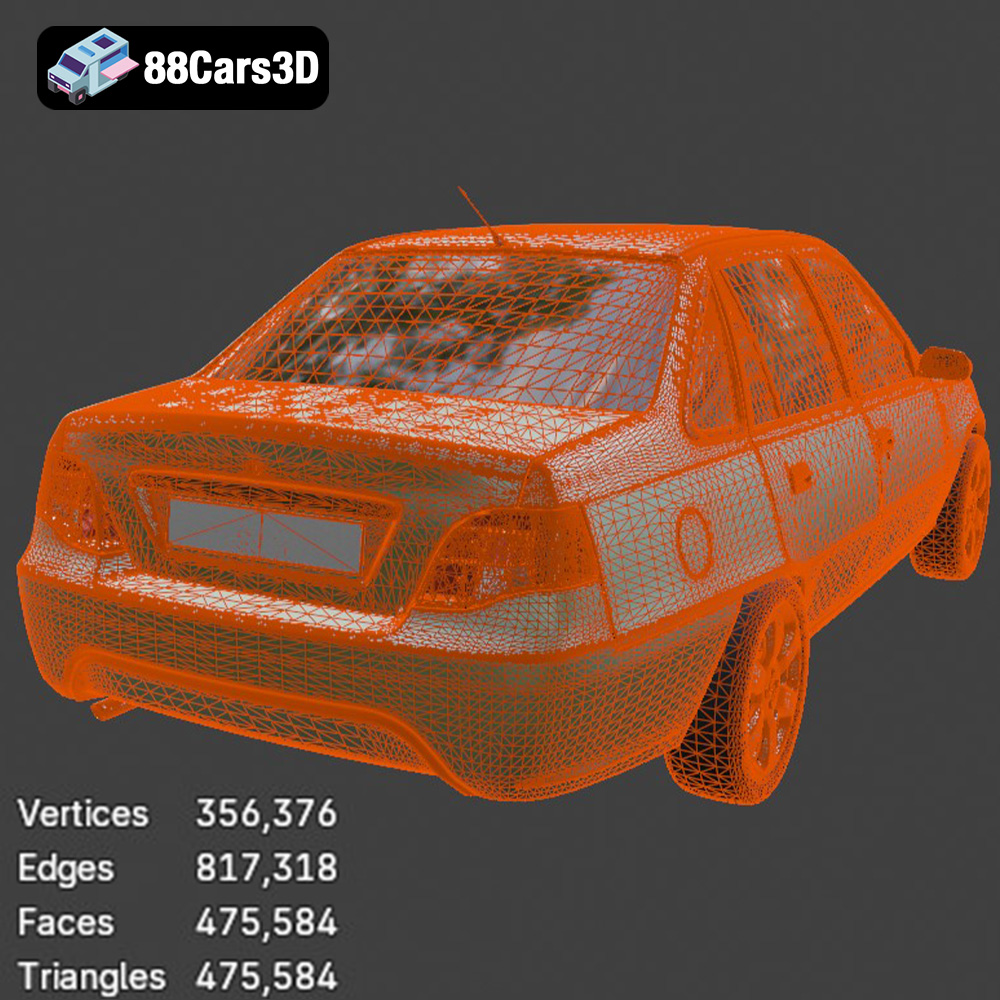
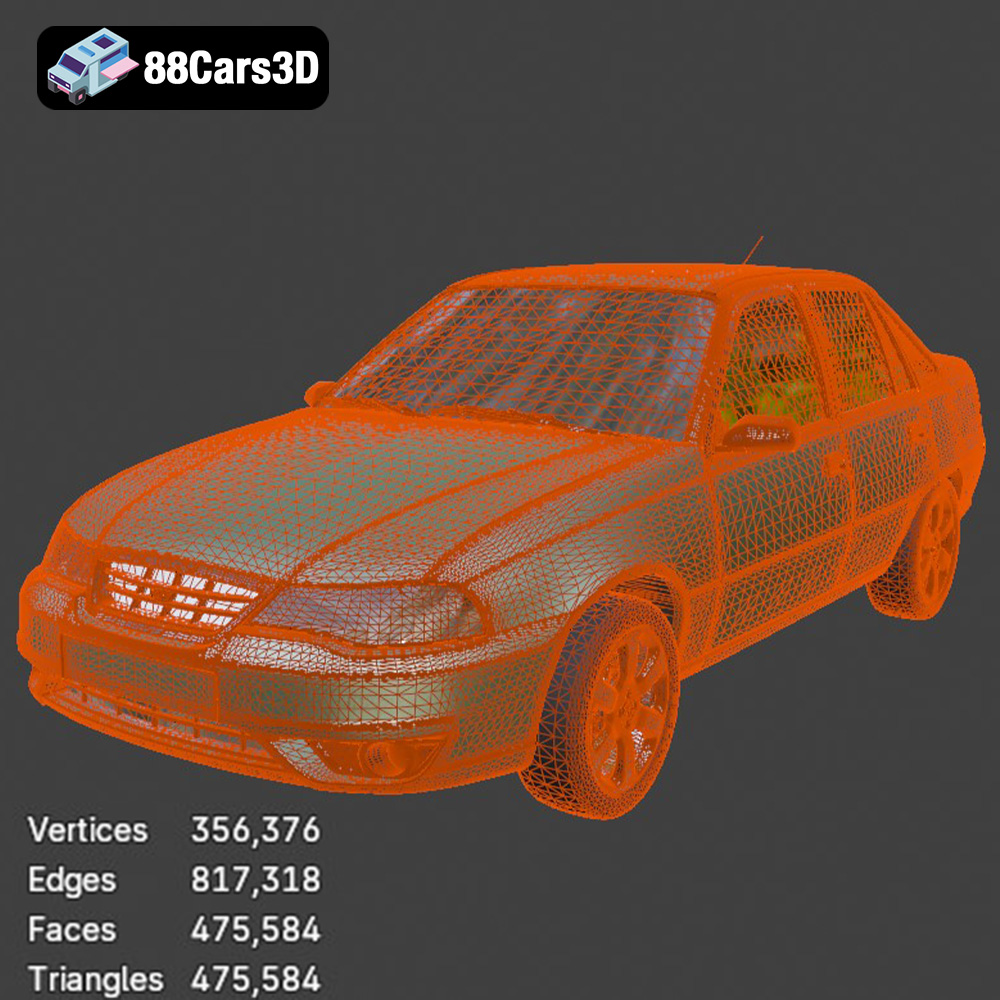
One of the most significant technical advantages of this model lies in its highly balanced topology. With 356,376 vertices, 817,318 edges, and 475,584 faces/polygons (totaling 475,584 triangles), the model resides in what can be described as the “Goldilocks zone” for 3D car models. This means it is:
The clean and well-balanced geometry not only looks good but also facilitates easier UV mapping, texturing, and rigging processes, making it a truly production-ready asset.
Beyond the polygon count, several other technical aspects contribute to the model’s professional-grade quality:
These technical specifications collectively make the Daewoo Nexia N100 (Classic) 3D Model a robust, reliable, and highly efficient asset for any professional 3D pipeline.
A truly versatile 3D model offers more than just accurate geometry; it provides a canvas for creativity and can be adapted to a multitude of narrative and functional requirements. The Daewoo Nexia N100 (Classic) 3D Model excels in this regard, offering ample customization options and fitting into a wide array of professional applications.
The foundation of a high-quality 3D model is its flexibility for artistic interpretation. With the Daewoo Nexia N100, artists can:
These customization options ensure that the Daewoo Nexia N100 isn’t just a static model but a dynamic component that can be integrated into diverse creative visions.
The thoughtful design and technical prowess of the Daewoo Nexia N100 (Classic) 3D Model translate directly into its broad applicability across various professional fields:
The Daewoo Nexia N100 (Classic) 3D Model from 88cars3d.com is more than just a digital asset; it is a meticulously engineered tool designed to enhance realism, drive immersion, and support the creative endeavors of professionals across the 3D industry.
The Daewoo Nexia N100, an unassuming yet iconic budget sedan of the 1990s, holds a significant place in the cultural landscape of many nations. Its digital counterpart, the Daewoo Nexia N100 (Classic) 3D Model, captures this enduring legacy with remarkable fidelity and technical precision. We’ve explored how this meticulously crafted asset, with its balanced mid-to-high polygon topology, accurate real-world scale, and comprehensive file format support, serves as an indispensable tool for a wide range of creative and technical professionals.
From mastering the intricacies of automotive rendering in architectural visualizations and cinematic projects to seamlessly integrating into complex game development pipelines as both a hero vehicle and background traffic, the model demonstrates exceptional versatility. Its readiness for 3D printing further extends its utility, bridging the gap between the digital and physical realms for hobbyists and collectors. The detailed technical specifications, including the strategic polygon count and proper pivot setups, underscore its professional-grade quality, ensuring efficient workflows across platforms like 3ds Max, Blender, and Unreal Engine.
Ultimately, the Daewoo Nexia N100 (Classic) 3D Model is more than just an accurate representation; it’s a catalyst for storytelling, a cornerstone for building authentic digital environments, and a testament to the quality offered by 88cars3d.com. Whether your project demands historical accuracy, regional immersion, or robust game assets, this model provides the reliable foundation upon which to build compelling and realistic 3D experiences. It stands as a prime example of how carefully crafted 3D car models can elevate the realism and efficiency of professional digital content creation.
The Daewoo Nexia N100 3D Model is a highly accurate digital recreation of the classic 1990s budget sedan that became a global phenomenon. Built on the proven architecture of the Opel Kadett E, the original N100 Nexia (also known in various markets as the Cielo or Heaven) earned a legendary reputation for rugged reliability. It remains an absolute icon of everyday commuting and taxi fleets across Eastern Europe, Russia, and Central Asia to this day. This 3D model beautifully captures the quintessential 90s aesthetic of the pre-facelift N100. It features the classic rectangular headlight housings, the iconic split front grille, the simple yet functional body molding, and the timeless three-box sedan silhouette. Built with an incredibly clean and well-balanced mid-to-high polygon topology (approx. 475k triangles), it provides excellent visual fidelity for close-up automotive rendering while remaining highly optimized for background traffic in modern game engines and simulations. Perfect for populating realistic 90s or modern CIS (Commonwealth of Independent States) street scenes, architectural visualizations, urban taxi simulators, and mobile game development.
$9.99