Get 50% OFF All Premium 3D & STL Models!

In the dynamic world of digital content creation, the demand for realism and precision in 3D assets is ever-increasing. From architectural visualization and cinematic productions to cutting-edge game development and interactive experiences, high-quality 3D car models are indispensable. They don’t just fill a scene; they define its character, convey luxury, signify speed, and ground the viewer in a believable reality. The journey from concept to a stunning final render or a tangible 3D print begins with foundational assets that embody meticulous craftsmanship and technical accuracy.
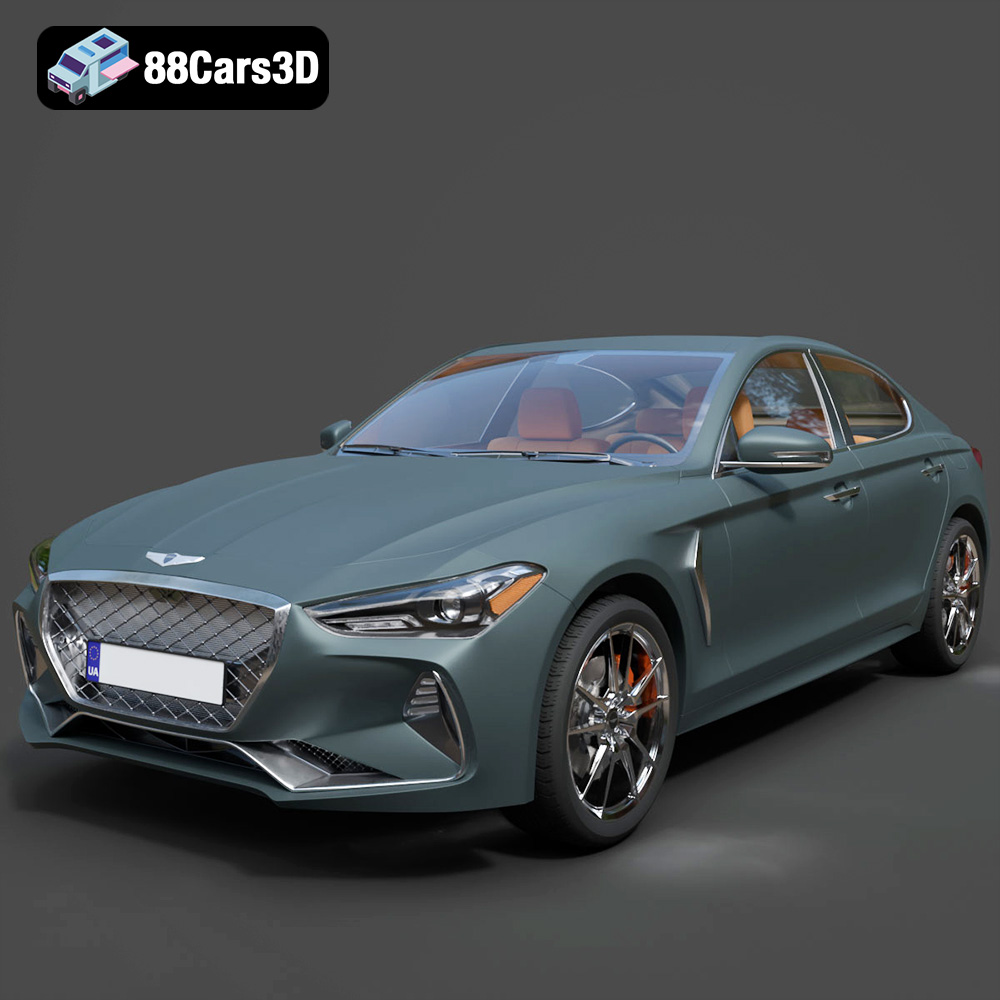
Today, we’re diving deep into the intricate processes and significant impact of utilizing premium 3D vehicle assets, exemplified by a standout offering: the Genesis G70 2018 3D Model. This particular model, available at 88cars3d.com, is not just a digital representation; it’s a meticulously engineered asset designed to meet the rigorous demands of professional artists and studios across various disciplines. Its high-polygon count and detailed construction make it a perfect subject for exploring the nuances of automotive rendering, visualization, and even physical production through 3D printing.
The versatility of a 3D model often hinges on the file formats it supports. Each format is designed with specific use cases in mind, catering to different software, pipelines, and end goals. Understanding these distinctions is crucial for any professional working with 3D assets, ensuring smooth integration and optimal performance. The Genesis G70 2018 3D Model offers a comprehensive suite of formats, enabling its use across virtually all major platforms.
The .blend file format is native to Blender, a powerful open-source 3D creation suite. When you receive a .blend file, you’re not just getting the mesh; you’re typically getting a fully editable Blender scene. This includes the model’s geometry, materials, textures, lighting setups, cameras, animation data, and even modifiers. For artists deeply integrated into the Blender ecosystem, this offers unparalleled flexibility. It allows for direct manipulation of the original setup, quick adjustments to materials or scene lighting, and seamless integration into existing Blender projects without the need for extensive re-importing or re-configuring. Its strength lies in preserving the entire scene’s context, making it ideal for those who prefer to work within Blender for their primary modifications and rendering.
.fbx (Filmbox) is arguably the most widely used proprietary 3D file format for data exchange between various 3D applications. Developed by Autodesk, it excels at storing not only geometric data but also animation, skeletal information, materials, textures, and camera data. For game development, especially with engines like Unreal Engine and Unity, .fbx is often the go-to format due to its robust support for animations and hierarchical object structures. When working with the Genesis G70 2018 3D Model in a real-time pipeline, an .fbx export would be the logical choice after any necessary retopology and UV adjustments, ensuring that separated components like wheels and doors retain their pivot points for animation.
The .obj (Wavefront OBJ) format is a simple, universally compatible file format primarily used for transferring geometric data between different 3D software. It stores vertices, faces, UV coordinates, and normals, and can reference external material files (.mtl). While it’s excellent for cross-software compatibility, it generally does not support animation, rigging, or scene information like lights or cameras. For the Genesis G70 2018, an .obj file would be perfect for importing into virtually any 3D package where you primarily need the raw, detailed mesh and plan to set up materials and lighting from scratch.
.glb (GL Transmission Format Binary) is the binary version of the glTF format, designed for efficient transmission and loading of 3D scenes and models by applications. It’s becoming the standard for web-based 3D, augmented reality (AR), and virtual reality (VR) experiences due to its compact size and ability to embed all necessary data (geometry, materials, textures, animations) into a single file. For developers aiming to showcase the Genesis G70 in an interactive web viewer or an AR application, the .glb format provides an optimized, ready-to-display asset that loads quickly and performs well on various devices.
The .stl (Standard Tessellation Language or Stereolithography) format is the industry standard for 3D printing. It describes only the surface geometry of a 3D object as a raw, unstructured triangular mesh. Unlike other formats, .stl files do not contain color, texture, or material information. They are prized for their simplicity and robustness in defining watertight meshes necessary for physical fabrication. The Genesis G70 2018’s high-poly nature makes it an excellent candidate for detailed 3D printing, and the included .stl file ensures direct compatibility with slicing software, ready for manufacturing at various scales, from desktop miniatures to larger display models.
.ply (Polygon File Format or Stanford Triangle Format) is a file format for storing 3D data, particularly data from 3D scanners. It can store a variety of properties including color, transparency, surface normals, and texture coordinates. While less common for general 3D model distribution, it’s a precision mesh format often used in CAD, reverse engineering, and scientific analysis where accurate surface information and potentially additional vertex attributes are critical. For highly detailed models like the G70, a .ply file might be useful for specific engineering or measurement tasks.
While not a standalone file format in the same way as .fbx or .obj, the inclusion of .unreal implies an asset that has been specifically prepared or optimized for direct use within the Unreal Engine ecosystem. This might mean pre-configured materials, textures, collision meshes, or even blueprints for immediate integration. For the Genesis G70, given its high triangle count, this would typically involve a version that has undergone careful optimization (retopology, LODs) to be a performance-friendly hero asset within an Unreal project, saving significant time for game developers and real-time visualization artists.
Similar to .blend for Blender, .max is the native file format for Autodesk 3ds Max, a leading software for 3D modeling, animation, rendering, and visualization. A .max file contains the entire scene data, including geometry, materials, textures, lights, cameras, animation, and any specific 3ds Max modifiers or settings. For professionals using 3ds Max as their primary tool, the .max file for the Genesis G70 2018 offers the most comprehensive and editable version of the model, enabling deep customization, integration with V-Ray or Corona renders, and complex animation setups for cinematic sequences.
The Genesis G70 2018 3D Model is more than just a collection of polygons; it’s a digital homage to a vehicle that truly shook up the luxury sports sedan segment. This model captures the pre-facelift elegance and aggressive stance of the original, making it an invaluable asset for projects demanding authentic automotive presence. Its development focused on delivering maximum visual fidelity, ensuring it stands up to the closest scrutiny in high-resolution renders.
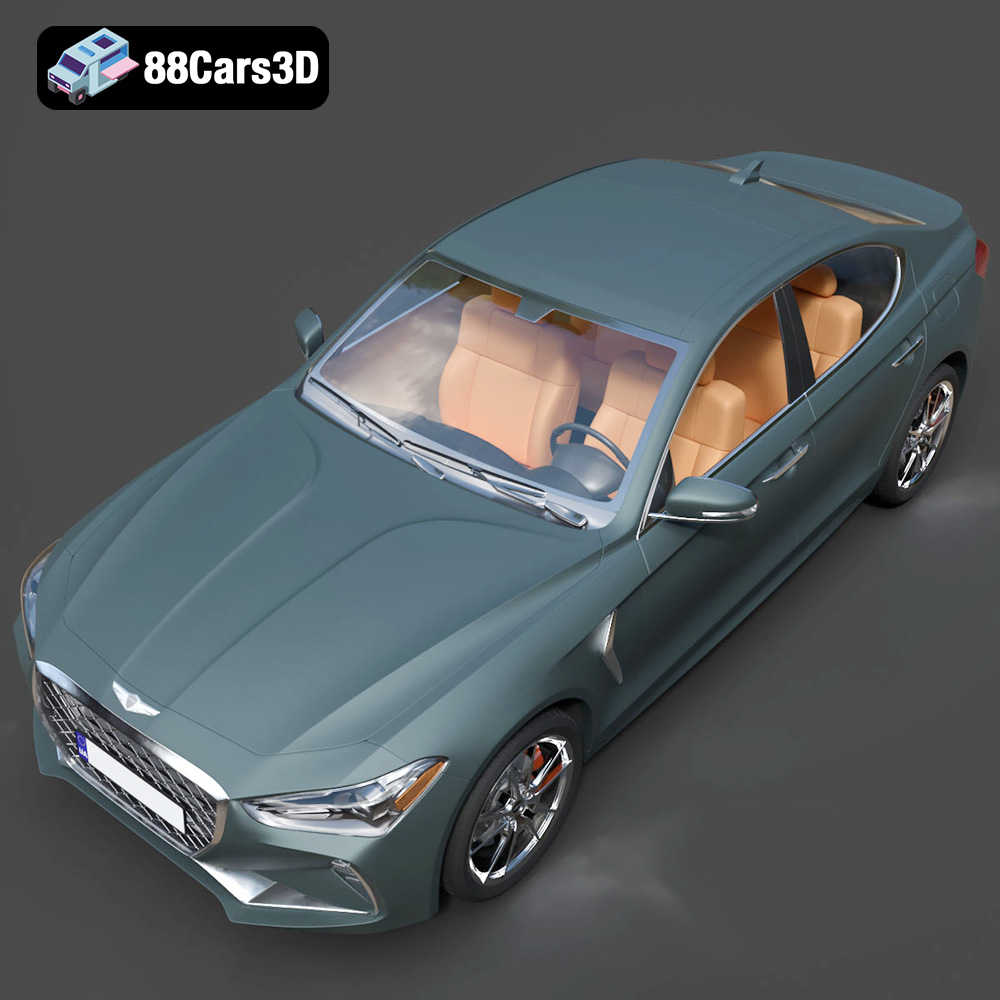
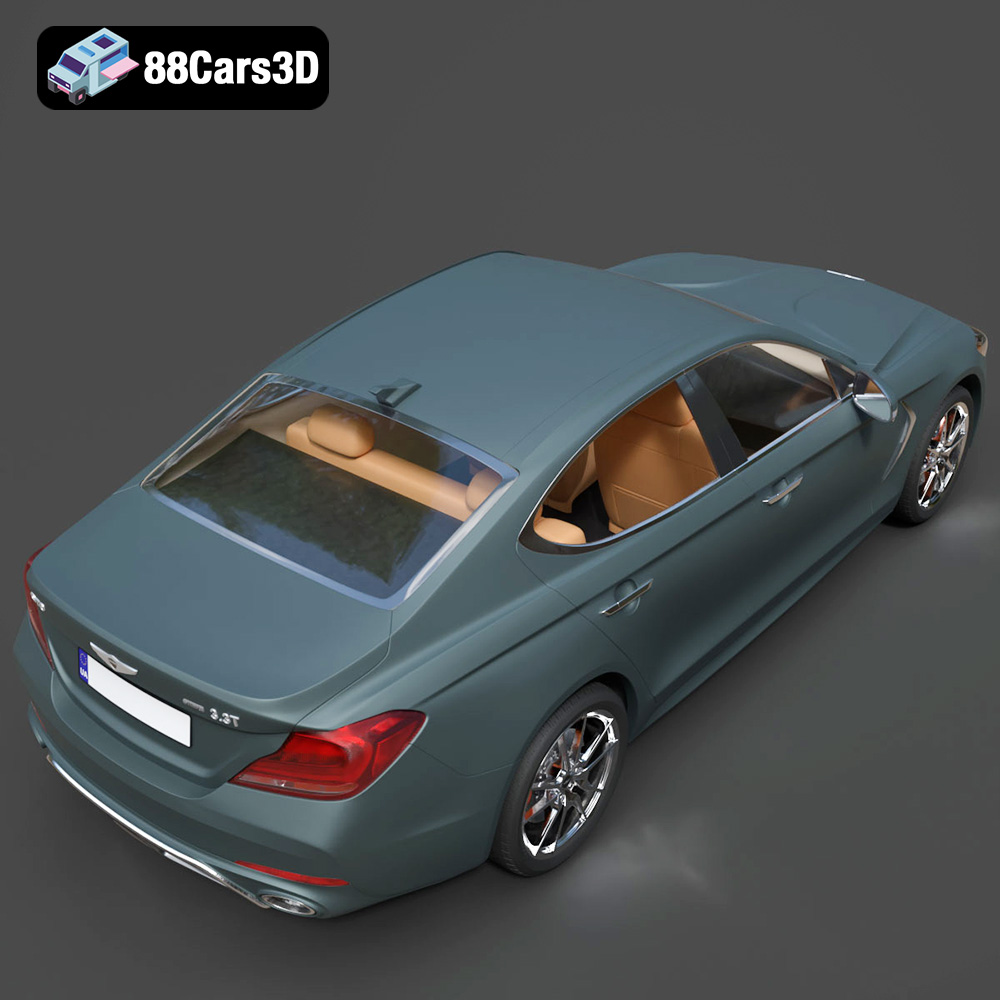
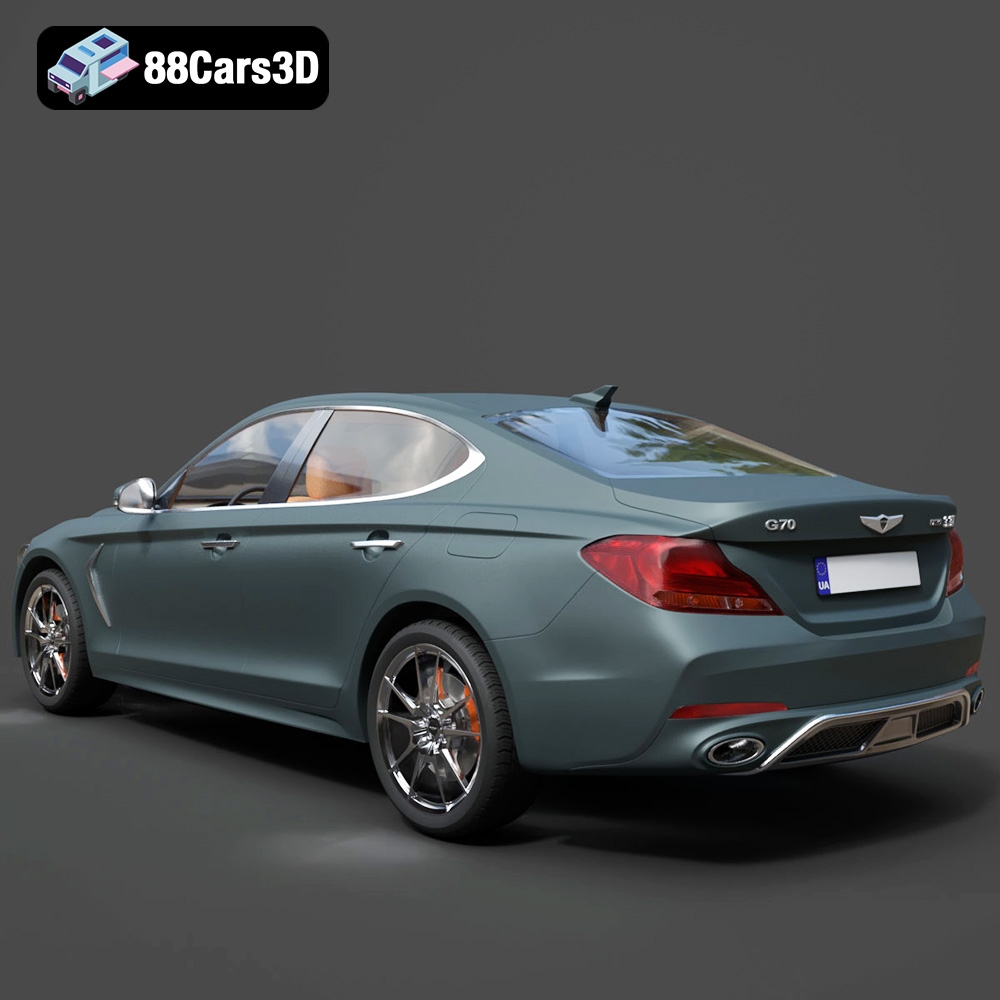
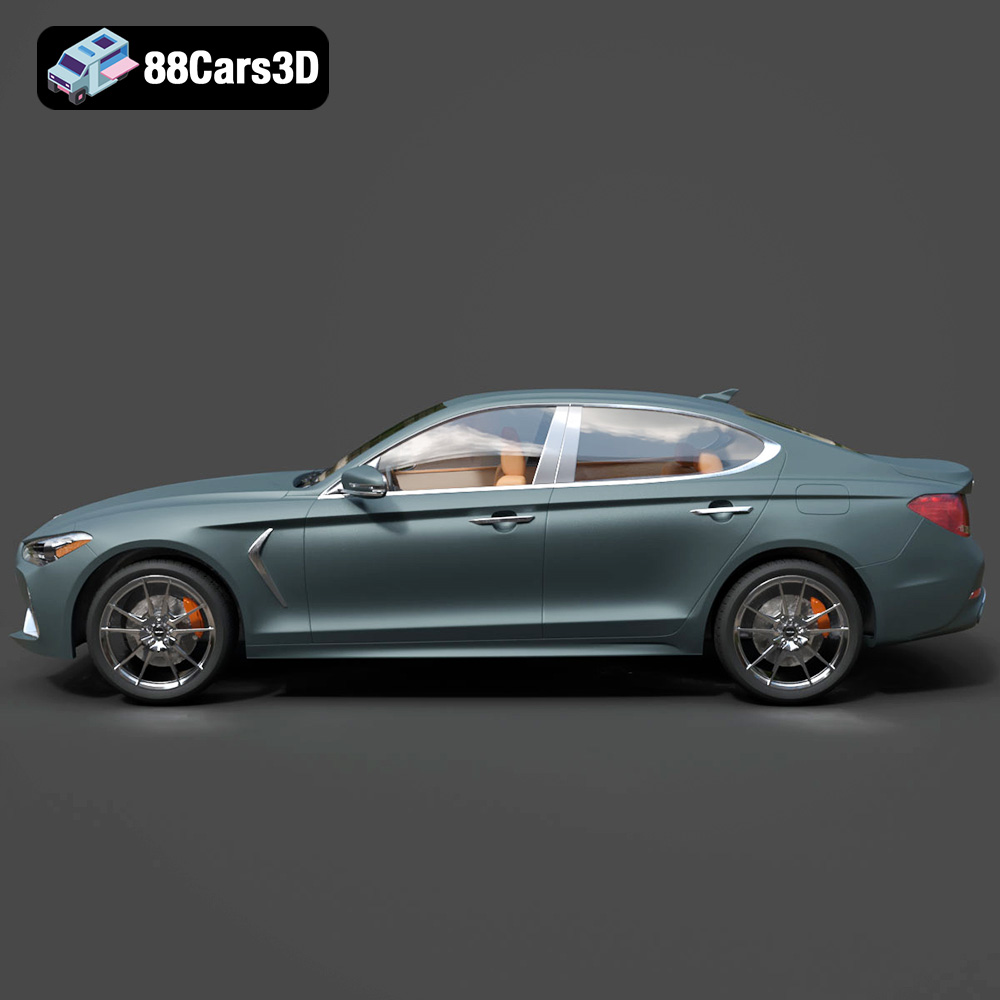
The exterior of this 3D car model is a testament to precision. It meticulously recreates the Genesis G70’s athletic chassis geometry and distinctive features. From the signature Crest Grille, which commands attention, to the sharp LED headlight assemblies with their intricate internal detailing, every curve and line is faithfully replicated. Artists will appreciate the sporty aerodynamic elements, including the functional-looking front fender vents and the subtly sculpted hood. The rear profile is equally impressive, featuring a detailed dual exhaust system and refined diffuser styling, all sitting atop high-end factory alloy wheels wrapped in performance tires. The separation of wheels, steering components, and doors means this model is inherently animation-ready, crucial for dynamic presentations and virtual car showcases.
While many 3D car models prioritize exterior aesthetics, the Genesis G70 2018 3D Model delivers an equally compelling interior experience. The cabin boasts an authentic luxury, driver-focused layout. Artists can explore a premium dashboard with a central infotainment screen, a highly detailed center console, and intricate seating geometry featuring classic luxury quilted/perforated leather textures. Even the multi-function steering wheel and instrument cluster are rendered with a high degree of fidelity, complemented by refined interior trim representations in brushed aluminum and gloss finishes. This level of interior detail is specifically optimized for high-resolution close-up renders, making it perfect for virtual showrooms, detailed product showcases, or architectural visualizations where a glimpse inside the vehicle adds an extra layer of realism.
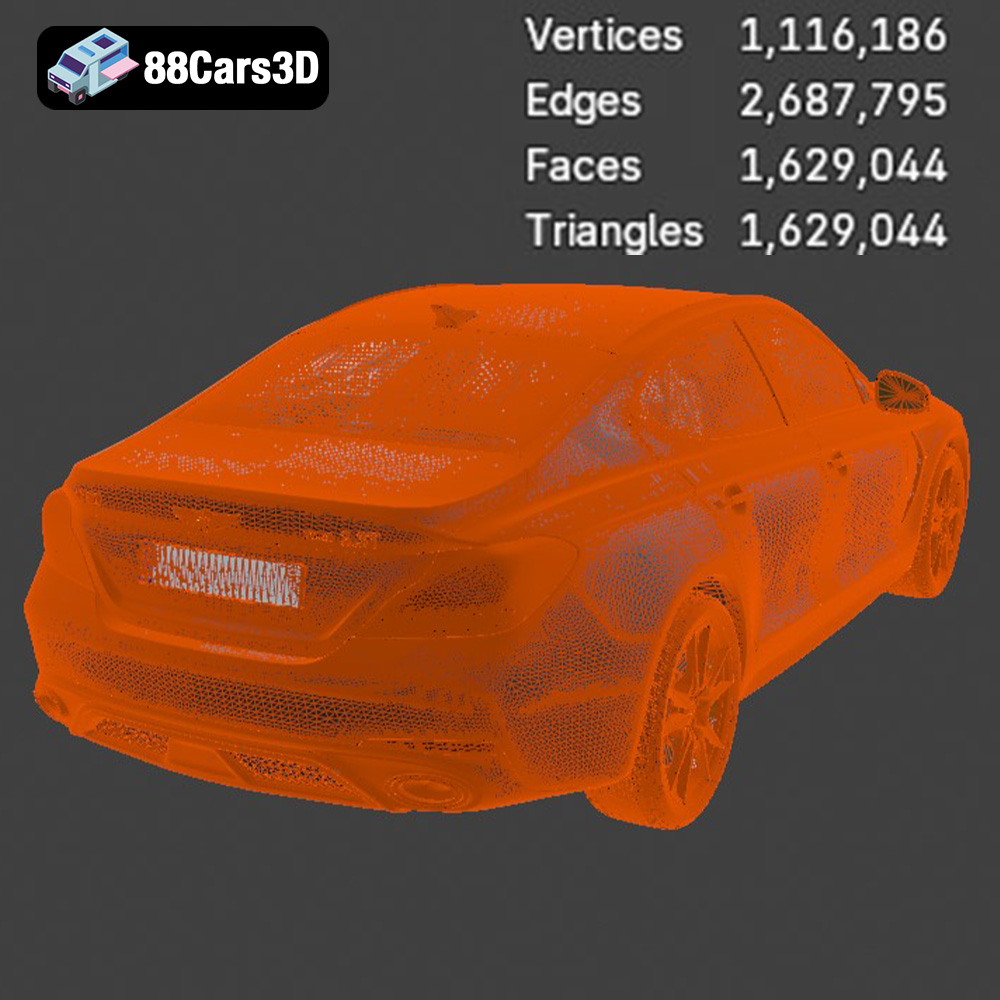
The foundation of this model’s visual quality lies in its robust technical specifications. With 1,116,186 vertices, 2,687,795 edges, and 1,629,044 triangles/faces, it is classified as a high-poly asset. This dense mesh structure is not an arbitrary choice; it is optimized for maximum exterior and interior realism, ensuring smooth surfaces and sharp details even under extreme magnification. The real-world scale accuracy, based on Genesis factory dimensions, guarantees that the model will fit seamlessly into any scene without needing scale adjustments. Furthermore, proper pivot setups for steering, wheel rotation, and door articulation simplify the animation process significantly. This makes the Genesis G70 2018 3D Model from 88cars3d.com a formidable choice for demanding applications in rendering and commercial visualization.
The true value of a high-quality 3D car model like the Genesis G70 2018 lies in its seamless integration into various professional pipelines. Whether you’re a rendering artist, an animator, or a game developer, understanding how to best utilize such an asset can dramatically enhance your project’s visual appeal and efficiency.
For artists working in 3ds Max, the included .max file provides a direct entry point. Upon opening, the model should retain its hierarchy, pivot points, and potentially some basic material assignments. The first step often involves assessing the geometry and ensuring all normals are correctly aligned. For high-end automotive rendering, pairing the model with powerful renderers like V-Ray or Corona is standard. This involves setting up realistic car paint materials, which typically consist of multiple layers: a base coat, metallic flakes, clear coat with subtle reflections and refractions, and dirt/scratch maps for added realism. Interior materials like leather, brushed aluminum, and glossy plastics also require careful shader creation, often using PBR (Physically Based Rendering) workflows. Lighting is paramount; studio HDRIs (High Dynamic Range Images) or physically accurate area lights are used to simulate real-world photography conditions, emphasizing the G70’s sleek contours and luxury finishes. Camera setup, including depth of field and motion blur, finalizes the scene for a breathtaking render.
Blender users benefit immensely from the native .blend file, which should load with all components intact. Artists can immediately dive into Cycles for photorealistic path-traced renders or Eevee for fast, real-time results. In Blender, material creation follows a similar PBR approach. Using Cycles, advanced nodes can create complex car paint shaders with iridescent qualities, realistic glass, and detailed interior fabrics. Environment lighting with HDRIs from sites like Poly Haven is a common technique to provide realistic reflections and global illumination. For presenting the Genesis G70 in an urban setting, adding a detailed ground plane, surrounding buildings, and subtle atmospheric effects can elevate the scene. Eevee, Blender’s real-time renderer, can be used for quick previews, animations, and even interactive presentations, allowing artists to iterate rapidly on lighting and camera angles.
While the Genesis G70 2018 3D Model is described as a “heavy ‘hero’ asset” at 1.62M triangles for real-time engines, its potential in Unreal Engine is immense, especially for high-fidelity cinematics or bespoke visualization experiences. The initial step for game development or interactive VR/AR would involve optimization. This typically means retopology to reduce the polygon count for efficient real-time rendering, creating LODs (Levels of Detail) that swap out lower-poly versions as the camera moves away, and generating optimized UV maps for efficient texture packing. Once optimized, the .fbx or .unreal formats are imported. Materials are then set up using Unreal’s robust material editor, leveraging PBR textures for metallic surfaces, glass, and interior elements. Blueprint scripting can be used to enable interactive elements like opening doors or rotating wheels. For automotive configurators or virtual showrooms, the G70 serves as a stunning centerpiece, demonstrating the power of Unreal’s real-time rendering capabilities.
The utility of a detailed 3D car model extends far beyond digital rendering. The inclusion of an .stl file for the Genesis G70 2018 underscores its readiness for physical fabrication, opening doors for hobbyists, product designers, and automotive enthusiasts to create tangible scale models or prototypes.
3D printing a complex object like a car model requires careful preparation. The Genesis G70 2018’s high polygon count, which is a boon for rendering, translates directly into highly detailed physical prints. The recommended scales (1:24 / 1:18 / 1:12) are crucial for capturing the model’s intricacies, with larger scales generally yielding finer detail. Before printing, the .stl file is loaded into a slicing software (e.g., Cura, PrusaSlicer, Chitubox). Here, parameters like layer height, wall thickness, and infill are set. A smaller layer height (e.g., 0.08–0.16 mm for FDM, even finer for resin printers) will result in smoother surfaces, crucial for a luxury car finish. Wall thickness ensures structural integrity. Supports are critical for overhangs like side mirrors, door handles, exhaust tips, and bumper overhangs, preventing print failures and maintaining geometric accuracy. The recommended print orientation, with the body angled and wheels printed separately, helps minimize visible layer lines and optimizes surface quality.
Once printed, the physical model enters the post-processing phase. Removing supports carefully to avoid damaging delicate parts is the first step. For FDM prints, sanding is often necessary to smooth out layer lines and achieve a professional finish. Primer application helps to unify the surface and prepare it for paint. This is where customization truly shines: enthusiasts can apply standard factory paint colors like Siberian Ice, Mallorca Blue, or Havana Red, mimicking the real vehicle. Detailing can include chrome effects for trim and wheels, gloss clear coats for a factory-fresh appearance, and even hand-painted interior accents. The Genesis G70 2018 3D Model provides an excellent base for these advanced finishing techniques, allowing for a truly personalized and high-quality physical replica.
The versatility and fidelity of assets like the Genesis G70 2018 3D Model make them indispensable across a spectrum of professional applications. They empower creators to achieve unparalleled realism and efficiency in their projects.
In architectural visualization, context is everything. Placing a modern, elegant vehicle like the Genesis G70 2018 in an urban street scene or within a luxury residential rendering instantly elevates the sense of realism and aspirational lifestyle. It’s not just a prop; it’s a character that interacts with the lighting, reflects its surroundings, and grounds the scale of the environment. Imagine a high-rise apartment exterior render: the G70, perfectly parked, with reflections of the building’s facade gleaming off its polished paint, brings life and credibility to the architectural design. Its detailed interior even allows for subtle glimpses through tinted windows, adding depth without requiring an overly complex scene.
For pre-rendered cinematic sequences and high-end commercial advertising, the Genesis G70 2018 3D Model truly shines as a “hero” asset. Its 1.62 million triangles enable extreme close-ups, where every curve, vent, and light fixture holds up to the camera’s scrutiny. Whether it’s a dramatic reveal shot, a slow-motion tracking shot, or an intricate animation showcasing its distinct features, this model provides the raw detail required. Car manufacturers, advertising agencies, and film studios can leverage such models for virtual product launches, dynamic car configurators, or even integrated into live-action footage for impossible stunts or futuristic urban landscapes, all without the logistical complexities and costs of filming a physical car.
While the Genesis G70 2018 3D Model is highly detailed, its polygon count makes it ideal for game cinematics and high-end immersive experiences rather than directly drivable vehicles in a standard real-time game. However, its robust base geometry provides an exceptional starting point for creating game-ready assets. A typical workflow would involve retopologizing the model to significantly reduce its polygon count (perhaps to 50,000-150,000 triangles for a hero vehicle, or even less for background traffic), baking the high-poly detail onto normal maps, and generating multiple LODs. This process ensures that the visual fidelity is maintained while meeting the performance demands of game engines like Unreal and Unity. For AR/VR applications where immersion is key, a carefully optimized version of this model can bring the Genesis G70 to life in interactive showrooms or virtual test drives.
The journey from a digital concept to a captivating visual or a tangible object is paved with crucial decisions, none more so than the choice of foundational assets. The Genesis G70 2018 3D Model exemplifies the pinnacle of high-fidelity automotive design in the digital realm, offering a versatile and technically robust solution for professionals across various industries. From its meticulously crafted exterior and interior details to its high polygon count and comprehensive file format support, it’s designed to deliver exceptional results in every application.
Whether your goal is to produce breathtaking automotive rendering, integrate a realistic vehicle into architectural visualizations, craft cinematic sequences, or embark on a detailed 3D printing project, this model provides the quality and flexibility needed. It underscores the critical importance of investing in premium 3D car models that stand up to rigorous scrutiny and demanding creative pipelines. For those seeking assets that truly make a difference in their projects, exploring offerings like the Genesis G70 2018 3D Model on 88cars3d.com is a step towards achieving unparalleled realism and professional excellence.
The Genesis G70 2018 3D Model is a premium, high-detail digital recreation of the acclaimed Korean luxury sports sedan. As the vehicle that firmly established Genesis as a serious competitor in the compact executive segment, the 2018 G70 combines an aggressive, athletic stance with refined elegance and world-class luxury design. This 3D model accurately represents the original pre-facelift styling, featuring the signature wide Crest Grille, sharp LED headlight assemblies with intricate detailing, sporty front fender vents, dynamic character lines, and a sleek, aerodynamic rear profile with dual exhausts. Built with dense, uncompromising topology (over 1.6 million triangles), it provides maximum visual fidelity for extreme close-up rendering, cinematic automotive visualization, commercial mockups, and high-end 3D printing. Perfect for upscale urban street scenes, luxury automotive galleries, high-end commercial pitches, and architectural visualizations needing modern, elegant traffic.
$9.99
.automotive
.blend
.fbx
.g70
.genesis
.obj
.rendering
.stl
2018-g70
3d printing
car-3d-model
compact-executive
high poly
korean-auto
luxury car
sports-sedan