Get 50% OFF All Premium 3D & STL Models!

The automotive industry is in a constant race for innovation, not just in vehicle design and performance, but also in how these marvels are presented to the world. Gone are the days when static renders and pre-rendered animations sufficed. Today, the demand is for dynamic, interactive, and hyper-realistic visualization that can adapt in real-time. This is where Unreal Engine emerges as an undisputed leader, transforming how car manufacturers, designers, and enthusiasts interact with automotive concepts and products.
Unreal Engine’s unparalleled real-time rendering capabilities, combined with a robust suite of tools for content creation and interaction, make it the go-to platform for everything from early design reviews and marketing campaigns to interactive configurators and virtual production. For anyone working with 3D car models – whether for high-end cinematic sequences, engaging game experiences, or cutting-edge AR/VR applications – mastering Unreal Engine is no longer an option, but a necessity. This comprehensive guide will take you on a deep dive into leveraging Unreal Engine for automotive visualization, covering essential workflows, advanced features like Nanite and Lumen, and best practices for achieving breathtaking realism and optimal performance. Prepare to unlock the full potential of your real-time rendering projects and drive innovation forward.
Embarking on an automotive visualization project in Unreal Engine requires a thoughtful setup to ensure a smooth workflow and optimal performance from the outset. Choosing the right project template and configuring essential settings lays the foundation for success, particularly when dealing with the intricate details of 3D car models.
When starting a new Unreal Engine project, you’re presented with several templates. For automotive visualization, the “Blank” or “Architectural” templates often serve as good starting points, as they provide minimal overhead, allowing you to build your environment from scratch. Alternatively, the “Games” templates (e.g., “Third Person”) can be useful if your project involves a drivable vehicle with pre-configured inputs, but often bring unnecessary game-specific assets that can clutter your project. For pure visualization, a blank canvas is typically preferred.
Upon creation, immediately navigate to Edit > Project Settings. Here, critical configurations begin. Under the Maps & Modes section, set your default map and game mode. For most visualization projects, you might not need a complex game mode, but a basic one ensures proper scene loading. Crucially, explore the Engine > Rendering section. This is where you activate core features that define visual fidelity. Enable Lumen Global Illumination and Lumen Reflections for dynamic, realistic lighting. If your hardware supports it and your target platform allows, enable Hardware Ray Tracing for even more accurate reflections, shadows, and ambient occlusion. These settings are foundational for achieving the photorealism expected in high-end automotive renders. Also, consider the Default Post-Processing Settings, as these will influence the overall look of your project before any custom volumes are added.
Beyond the initial template and basic rendering features, several other project settings are vital for automotive visualization. Under Engine > Input, you might define custom input mappings if you plan for interactive camera controls or vehicle manipulation. However, for static renders or cinematics, default mouse and keyboard navigation often suffice. More importantly, in Engine > Physics > Chaos Vehicle, you can configure global physics settings for any vehicles you plan to simulate, adjusting parameters like default friction, restitution, and more granular settings that impact how your 3D car models interact with the environment. For advanced visual quality, explore the Engine > Post Processing section. Ensure that features like Anti-Aliasing (TAA Gen5 or TSR are excellent choices for reducing jagged edges), Screen Space Reflections (SSR) as a fallback, and Exposure are properly configured. Setting a fixed exposure or using a camera with an auto-exposure bias can prevent unexpected lighting shifts during playback or capture. Finally, for projects targeting specific platforms or with strict performance budgets, always check the Platforms settings to ensure compatibility and default quality levels are appropriate. Maintaining a clean and optimized project from the start prevents countless headaches down the line, especially when integrating complex assets and functionalities.
The quality of your 3D car models is paramount for achieving compelling automotive visualization. Sourcing high-fidelity assets from platforms like 88cars3d.com ensures you begin with clean topology, realistic PBR materials, and proper UV mapping, which are essential for seamless integration and optimization within Unreal Engine. However, simply importing models isn’t enough; strategic optimization is key to maintaining real-time performance without sacrificing visual fidelity.
Unreal Engine supports various 3D file formats, with FBX and USD being the most common and robust for automotive assets. When importing 3D car models, whether from 88cars3d.com or your own creations, utilize the Content Browser > Import function. A critical step during import is managing scale. Unreal Engine operates on a 1 unit = 1 centimeter scale. Ensure your exported models adhere to this unit system from your 3D modeling software (e.g., Blender, Maya, 3ds Max). If the scale is off, you can adjust it during the FBX import process within Unreal Engine, or correct it on the exported asset itself. Always double-check your model’s dimensions against real-world counterparts to maintain realism.
During FBX import, important options include:
After import, create a Blueprint or an Actor that aggregates all the car’s components, making it easier to move, rotate, and scale the entire vehicle in your scene.
One of Unreal Engine’s most groundbreaking features for high-fidelity assets is Nanite. This virtualized geometry system allows for the seamless import and rendering of incredibly detailed meshes with millions of polygons, far exceeding what was previously feasible in real-time. For intricate 3D car models, which often feature complex curves, intricate panel gaps, and detailed interiors, Nanite is a game-changer. When importing your models, check the “Enable Nanite” option during the import process or right-click on an existing Static Mesh in the Content Browser and select “Nanite > Enable Nanite.”
Nanite automatically handles mesh simplification and streaming, ensuring that only the necessary detail is rendered for each pixel on screen, regardless of camera distance. This means you can use CAD-level fidelity car models directly, without laboriously creating multiple levels of detail (LODs) manually. A typical high-quality car model from 88cars3d.com might exceed several million polygons, which would traditionally cripple performance. With Nanite, such models can be rendered effortlessly, maintaining crisp detail even up close. While Nanite is excellent for static mesh components like the car body, chassis, and interior, animated parts (e.g., rotating wheels, opening doors) still benefit from traditional static meshes or skeletal meshes with optimized polygon counts, as Nanite currently works best with non-deforming geometry.
Even with Nanite handling high-poly static meshes, effective LOD management and broader optimization strategies are crucial, especially for interactive experiences, games, or AR/VR applications. Not all assets benefit from Nanite (e.g., transparent meshes, skeletal meshes, instances of tiny foliage), and it’s essential to understand where traditional optimization still applies.
For non-Nanite meshes, manual LODs (Level of Detail) are indispensable. Unreal Engine provides an automated LOD generation system: right-click a Static Mesh > “LODs > Generate LODs.” You can set the number of LODs and screen size percentages at which they switch. For a car model, you might have LOD0 (full detail, ~150k-300k polygons for non-Nanite parts), LOD1 (~50k-100k), LOD2 (~10k-30k), and LOD3 (~1k-5k) for distant views. This significantly reduces polygon count when the object is further from the camera, boosting real-time rendering performance.
Other optimization techniques include:
stat gpu, stat unit, stat rhi) to identify performance bottlenecks and optimize accordingly. Understanding where frame time is spent is critical for targeted improvements.By combining high-quality 3D car models with intelligent import practices and performance optimization, you can achieve stunning visual fidelity without compromising frame rates.
Achieving photorealistic automotive visualization in Unreal Engine hinges on two critical pillars: physically based rendering (PBR) materials and advanced lighting techniques. The interaction of light with accurately represented surfaces is what truly sells the illusion of reality, especially for highly reflective and detailed subjects like cars.
Physically Based Rendering (PBR) is the cornerstone of modern real-time graphics, ensuring that materials react to light in a consistent and physically accurate manner. For 3D car models, this means painstakingly crafting materials for everything from the metallic paintwork and intricate carbon fiber to the clear glass, reflective chrome, and textured rubber tires. Unreal Engine’s Material Editor is a node-based system that allows artists to construct complex shaders.
Key PBR channels and their application to car materials:
For car paint, you often need a more advanced material setup. This typically involves layering a clear coat effect over the base metallic paint. Unreal Engine’s default “Clear Coat” shading model, or custom clear coat logic within the material graph, can simulate the depth and specular properties of real automotive paint. Similarly, realistic glass requires a material with appropriate refraction, specular, and transparency settings, often employing the “Thin Translucent” shading model or custom ray tracing features for accuracy.
Unreal Engine 5’s Lumen Global Illumination and Reflections system is a game-changer for real-time rendering, particularly in automotive visualization. Lumen provides dynamic, boundless global illumination and reflections that react instantly to changes in lighting or geometry. This means light realistically bounces off surfaces, illuminating darker areas and reflecting off shiny components of your 3D car models. For example, the vibrant color of a car’s paint can subtly tint nearby surfaces, and light sources within an environment will realistically illuminate the car’s interior.
To enable Lumen, ensure it’s activated in your Project Settings (Engine > Rendering). Within your scene, ensure your lights (Directional, Point, Spot, Sky Light) have their “Cast Ray Traced Shadows” and “Cast Ray Traced Global Illumination” properties enabled. For reflections, Lumen provides detailed, dynamic reflections across all surfaces. This is critical for car paint, windows, and chrome, where accurate reflections of the environment are key to realism. For even higher fidelity, especially with reflections and shadows, enabling Hardware Ray Tracing (also in Project Settings > Rendering) offers physically accurate results. When combined with Lumen, ray tracing can achieve unparalleled visual quality, capturing intricate light interactions that were once only possible with offline renderers.
Beyond direct lights and global illumination, a comprehensive approach to lighting involves leveraging High Dynamic Range Images (HDRIs) and sophisticated post-processing. An HDRI Skybox, applied through a Sky Light actor, provides realistic ambient lighting and reflections derived from a real-world environment. This is indispensable for grounding your 3D car models in a believable scene, instantly providing subtle color variations and light direction that are hard to replicate with individual lights alone. For example, an HDRI of an overcast sky will naturally create soft, diffused lighting, while a sunset HDRI will bathe the scene in warm, directional light.
Post-processing is the final layer of polish that brings your visualization to life. A Post Process Volume placed in your scene allows you to control a vast array of visual effects:
By carefully balancing Lumen, ray tracing, HDRIs, and post-processing, you can transform your scenes into hyper-realistic automotive showcases, making your real-time rendering indistinguishable from photographs.
Static renders, while beautiful, only scratch the surface of Unreal Engine’s capabilities for automotive visualization. The engine truly shines when it comes to creating interactive experiences, cinematic presentations, and realistic vehicle simulations. These elements allow users to engage with 3D car models in dynamic ways, offering deeper insights and more immersive storytelling.
Blueprint Visual Scripting is Unreal Engine’s powerful, node-based scripting system that empowers artists and designers to create complex gameplay and interactive logic without writing a single line of code. For automotive configurators, Blueprint is indispensable. Imagine a user interface where a click of a button instantly changes the car’s paint color, swaps out wheel designs, opens doors, or even activates interior lighting. All of this can be achieved with Blueprint.
A typical configurator workflow might involve:
The flexibility of Blueprint allows for highly sophisticated and responsive configurators, enabling potential customers or designers to explore countless variations of a vehicle in real-time, greatly enhancing the design and sales process. For more information on scripting interactivity, Epic Games’ official Unreal Engine learning resources on Blueprint are an excellent starting point: dev.epicgames.com/community/unreal-engine/learning.
When it’s time to create stunning marketing videos, product reveals, or internal design reviews, Sequencer is Unreal Engine’s non-linear cinematic editor. It allows you to orchestrate cameras, actors, lights, and effects over a timeline, crafting professional-grade cinematic sequences that showcase your 3D car models in the best possible light.
Key Sequencer features for automotive visualization:
Once your cinematic is complete, Sequencer can render out high-quality video files (e.g., EXR, JPG, MP4) at various resolutions, complete with motion blur and other post-processing effects, ready for any marketing campaign or presentation.
For interactive driving experiences, games, or even technical simulations, realistic vehicle physics are crucial. Unreal Engine’s Chaos Vehicles system provides a robust framework for simulating car dynamics, allowing your 3D car models to react authentically to terrain, acceleration, braking, and steering inputs.
Implementing Chaos Vehicles involves:
Fine-tuning parameters like engine torque, brake force, differential type, and suspension damping is essential for achieving a believable driving feel. Furthermore, you can use Blueprint to add interactive elements like dynamic damage (though more complex), operational lights, and sound effects synchronized with engine RPM and speed. This capability allows developers to create truly immersive driving simulators or incorporate interactive vehicles into larger game worlds, providing a dynamic experience beyond mere visual showcase.
Unreal Engine’s versatility extends far beyond traditional screen-based rendering, pushing the boundaries of what’s possible in automotive visualization. From cutting-edge virtual production workflows to immersive augmented and virtual reality experiences, the engine is driving innovation across the automotive industry.
Virtual Production has revolutionized filmmaking and broadcast, and its application in the automotive sector is rapidly growing. This technology, powered by Unreal Engine, allows for the creation of real-time 3D environments that are displayed on massive LED walls surrounding physical sets. Imagine filming a commercial for a new car model: instead of costly and time-consuming location shoots or greenscreen compositing, the vehicle sits on a stage while a dynamic, photorealistic digital environment (rendered in Unreal Engine) wraps around it on LED screens. The camera tracks its position, and the Unreal environment updates in real-time to maintain perfect parallax, making it appear as though the car is truly in that location.
This workflow offers immense benefits for automotive advertising and content creation:
High-quality 3D car models, like those found on 88cars3d.com, are perfectly suited for this environment, providing the necessary detail and material fidelity to hold up under the scrutiny of an LED wall and high-resolution cameras.
Augmented Reality (AR) and Virtual Reality (VR) are transforming how we interact with cars, offering immersive experiences for design review, sales, and training. Unreal Engine is at the forefront of this revolution, providing robust tools for developing high-performance AR/VR applications. However, optimizing 3D car models and environments for these platforms presents unique challenges due to the stringent performance requirements for maintaining high frame rates (typically 90 FPS or more to prevent motion sickness).
Key optimization strategies for AR/VR automotive applications:
For AR applications, accurate tracking and interaction are critical. Unreal Engine supports various AR platforms (ARKit, ARCore), allowing you to place and interact with virtual 3D car models in real-world environments. This is invaluable for showcasing new vehicles in a customer’s driveway or for design validation in context.
The impact of Unreal Engine on the automotive sector is evident in numerous real-world applications. Major manufacturers like Cadillac, Porsche, and Volkswagen have adopted Unreal Engine for various stages of their product lifecycle:
These case studies underscore the pivotal role Unreal Engine plays in modern automotive visualization, transforming every aspect from initial design conception to final consumer engagement. The ability to render high-quality, optimized game assets in real-time provides an unprecedented level of flexibility and efficiency to the industry.
As we’ve explored, Unreal Engine stands as an unparalleled platform for pushing the boundaries of automotive visualization. From the foundational steps of project setup and intelligent asset integration using high-quality 3D car models from resources like 88cars3d.com, to the intricate dance of PBR materials and advanced lighting with Lumen and ray tracing, every aspect of the engine is geared towards achieving breathtaking realism.
We’ve delved into the power of Nanite for handling immense geometric detail, the art of Blueprint scripting for creating captivating interactive experiences, and the cinematic prowess of Sequencer for storytelling. Beyond traditional screens, Unreal Engine is revolutionizing virtual production workflows and enabling immersive AR/VR applications, cementing its role as an indispensable tool across design, marketing, and simulation within the automotive industry. The continuous advancements in real-time rendering mean that the line between digital and physical is increasingly blurred, offering unprecedented opportunities for engagement and innovation.
The journey to mastering Unreal Engine for automotive projects is ongoing, but the rewards are significant: unparalleled visual fidelity, incredible creative control, and efficient workflows that drive modern development. So, whether you’re a seasoned Unreal Engine developer, a 3D artist, or an automotive designer, it’s time to harness these powerful tools. Start experimenting, dive deeper into the official Unreal Engine documentation, and leverage optimized game assets to bring your vision of the future of automotive experiences to life.
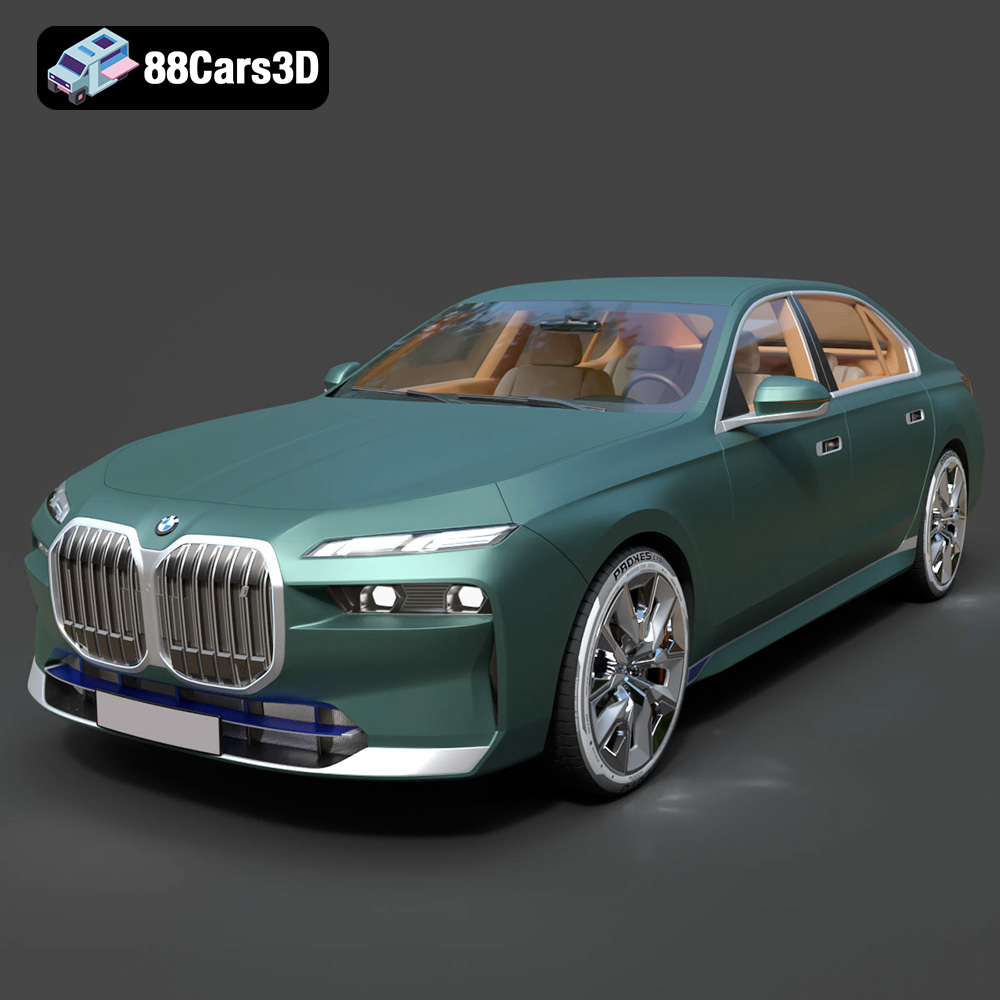
Texture: Yes | Material: Yes Download the ultra-high-detail BMW i7 (2023) 3D Model (4.14M Triangles). Features the illuminated kidney grille, split crystal headlights, fully modeled Theatre Screen interior, and monolithic luxury styling. Perfect for ArchViz, VFX, and cinematic rendering. Includes .blend, .fbx, .obj, .glb, .stl, and .max formats.
Price: $19.99
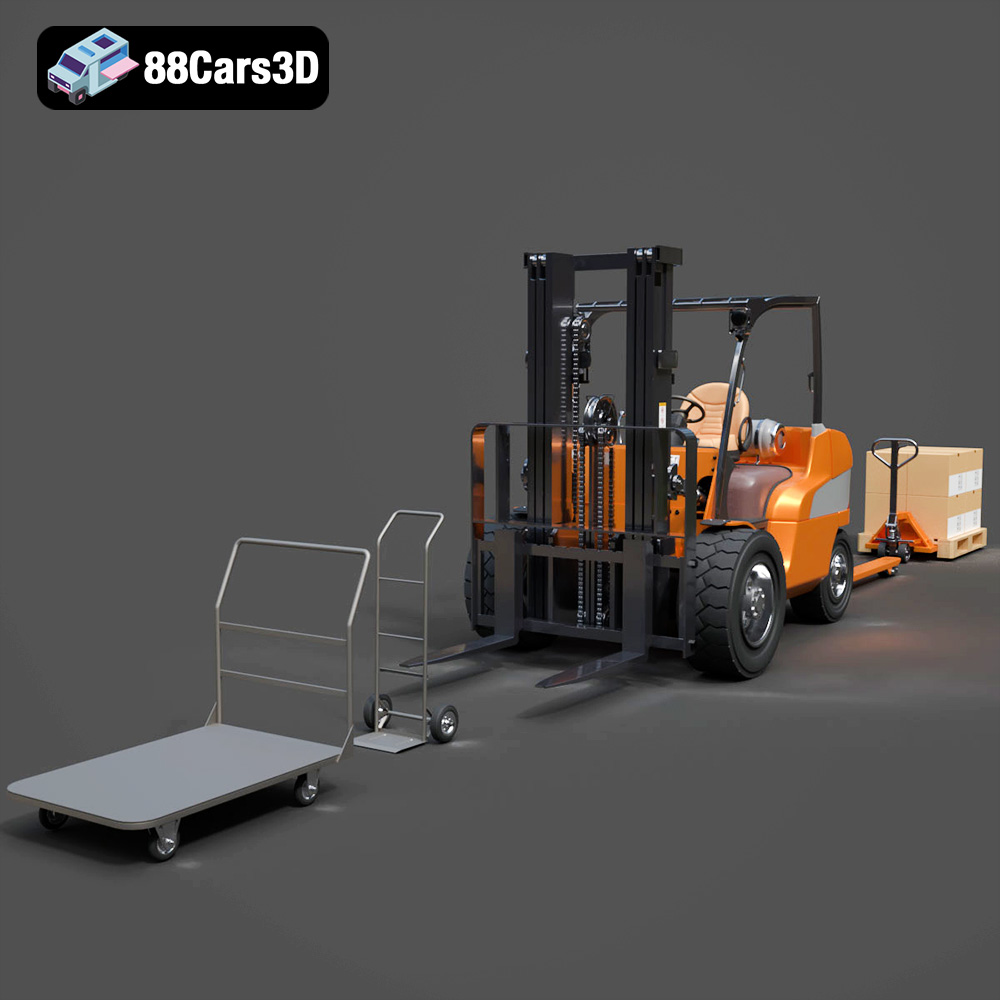
Texture: Yes | Material: Yes Download the highly detailed CAT Manual Loader & Warehouse Carts Kit 3D Model (2.4M Triangles). Features a macro-detailed hydraulic pallet jack, heavy-duty forks, and transport carts. Perfect for industrial ArchViz, factory rendering, and logistics simulations. Includes .blend, .fbx, .obj, .glb, .stl, and .max formats.
Price: $19.99
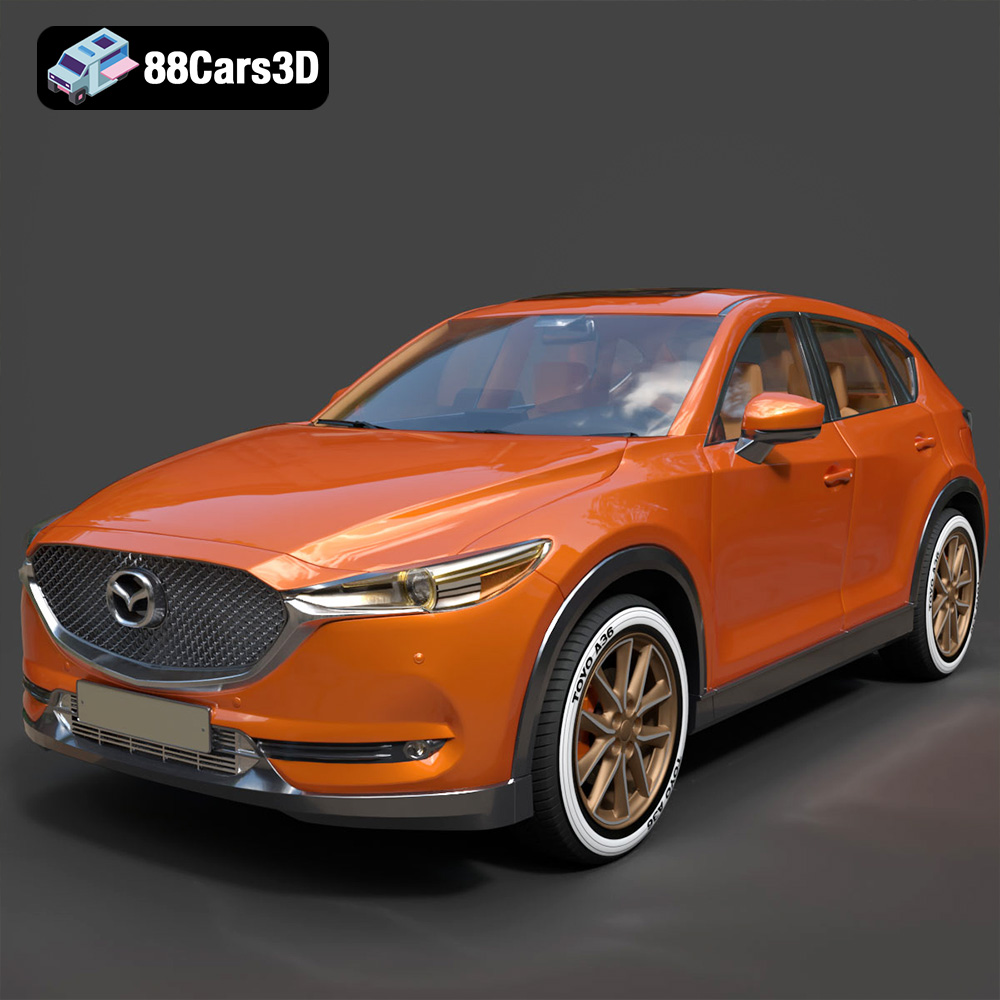
Texture: Yes | Material: Yes
Download the highly optimized Mazda CX-5 2014 3D Model (294k Triangles). Features the dynamic Kodo design language, signature grille, and a clean interior. Perfectly balanced for ArchViz, background traffic, and game development. Includes .blend, .fbx, .obj, .glb, .stl, and .max formats.
Price: $19.99
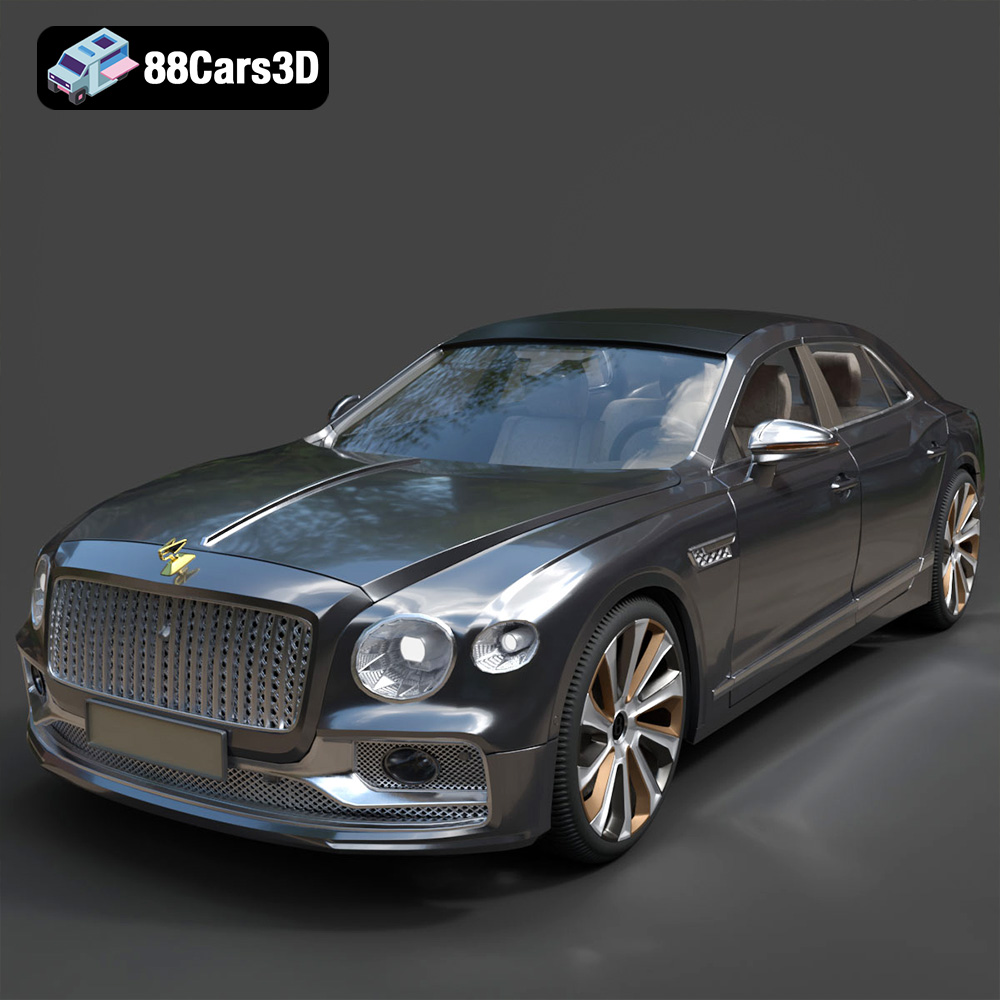
Texture: Yes | Material: Yes Download the ultra-high-detail Bentley Flying Spur Mulliner 2022 3D Model (2.94M Triangles). Features the bespoke Double Diamond grille, a fully modeled diamond-quilted interior, and exquisite luxury styling. Perfect for high-end ArchViz, VFX, and cinematic rendering. Includes .blend, .fbx, .obj, .glb, .stl, and .max formats.
Price: $19.90
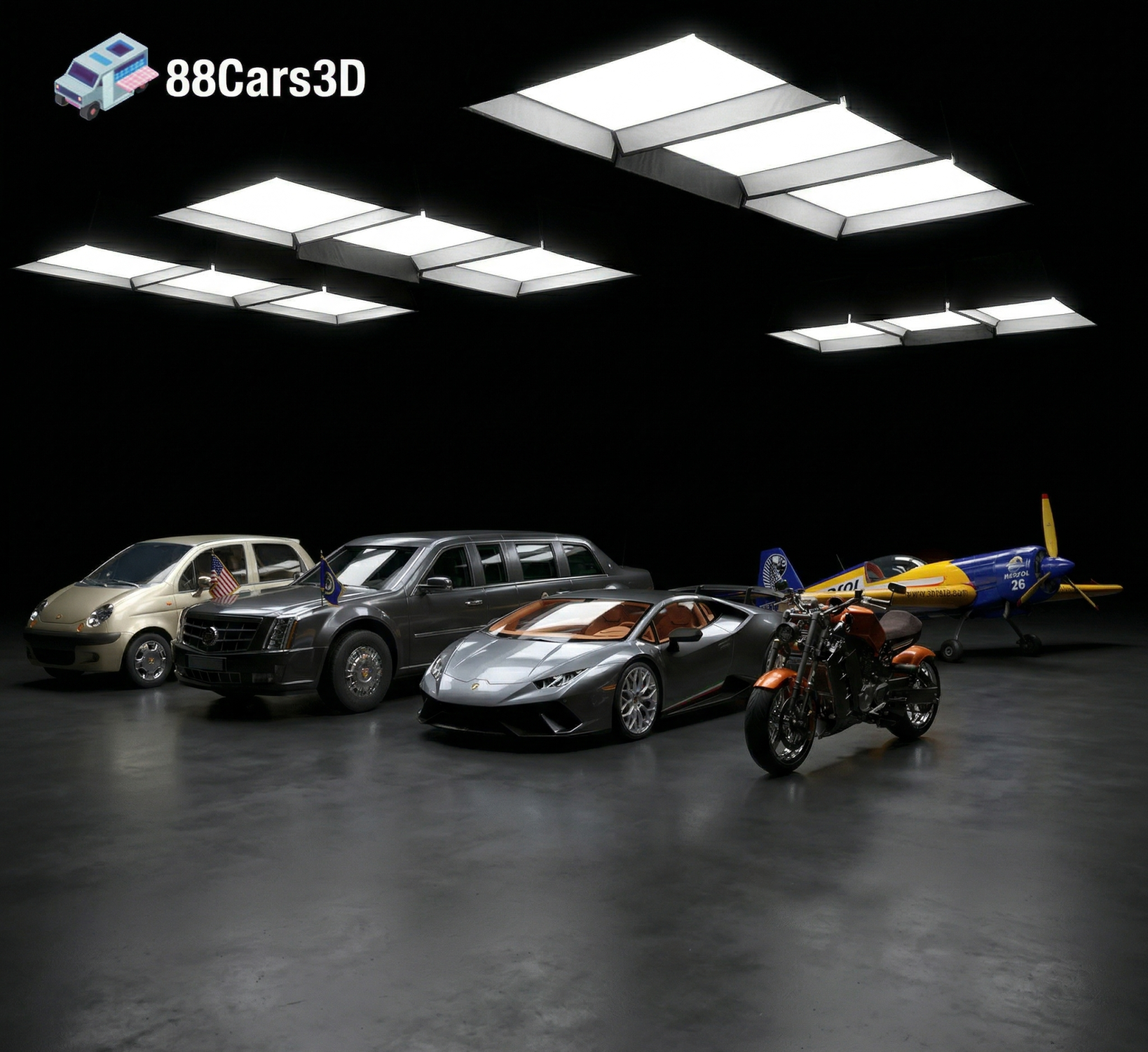
Texture: Yes | Material: Yes | 3D Printable: Yes. Download the Ultimate Creators’ Showcase featuring 5 premium 3D models: Lamborghini Huracan, ZAV Concept Motorcycle, Sukhoi SU-26, Presidential Limousine, and Daewoo Damas. Optimized for 4K CGI rendering and 3D printing. Save massive with this exclusive multi-category bundle!
Price: $99.99

Texture: Yes | Material: Yes | 3D Printable: Yes. Download the Italian Thoroughbreds Bundle featuring 5 iconic 3D models: Lamborghini Huracán Performante, Ferrari 458 Italia, Lamborghini Urus, Diablo SV, and Maserati GT. Optimized for 4K rendering and 3D printing (STL included). Save 50% with this ultimate Italian vehicle collection.
Price: $199.99

Download the Elite Future Mobility Bundle featuring 4 highly optimized 3D models: Tesla Model S, Avatr 11, Li L9, and Zoox Robotaxi. Perfect for ArchViz, Smart City renders, and game dev. Optimized for Unreal Engine and Blender. Includes .fbx, .obj, and .max formats.
Price: $99

🚗 5 Iconic German Cars (BMW M4 G82, M5 CS, X3, 1 Series & Mercedes E-Class). ✅ Optimized for ArchViz: Ready for Corona & V-Ray. 💰 Save €71 with this limited-time collection! 🚀 Instant Download after purchase.
Price: $119

Download the Extreme Off-Road & Survival 3D Models Bundle! Includes the Brabus 800 Adventure, Dodge Ram Bigfoot, Spec Truck, and a Caravan. Save over €210 on this premium 4-in-1 off-grid vehicle pack for ArchViz and game development.
Price: $149.99

Download the Heavy Duty & Commercial Logistics 3D Models Bundle! Includes the Ford Sterling, Caterpillar CT680, Mercedes Citaro Bus, and Vito Van. Save over €130 on this massive, game-ready 4-in-1 industrial vehicle pack.
Price: $109.99

