Get 50% OFF All Premium 3D & STL Models!

The automotive industry is at the forefront of digital transformation, constantly pushing the boundaries of design, marketing, and engineering with cutting-edge visualization techniques. For 3D artists, game developers, and visualization professionals, Unreal Engine has emerged as the undisputed leader for creating breathtakingly realistic automotive experiences in real time. Its powerful rendering capabilities, extensive toolset, and unparalleled fidelity make it the go-to platform for everything from interactive car configurators and marketing assets to virtual production and immersive AR/VR experiences.
Mastering Unreal Engine for automotive visualization requires a blend of artistic skill and technical acumen. It involves understanding optimal asset pipelines, leveraging advanced rendering features like Nanite and Lumen, crafting physically accurate materials, and implementing interactive logic with Blueprint. This comprehensive guide will take you on a deep dive into the essential workflows and best practices for creating stunning automotive projects in Unreal Engine. Whether you’re showcasing the latest concept car, building a driving simulator, or developing an interactive automotive configurator, the insights here will help you elevate your projects to a professional standard, utilizing high-quality 3D car models often sourced from platforms like 88cars3d.com.
A solid foundation is crucial for any high-fidelity automotive visualization project in Unreal Engine. Proper project setup ensures optimal performance, efficient workflows, and scalability as your project evolves. Before diving into asset import, it’s essential to configure your Unreal Engine project correctly, keeping automotive-specific needs in mind.
When creating a new project, select the ‘Games’ category and then the ‘Blank’ template, or ‘Automotive, Product Design and Manufacturing’ template if available in newer engine versions, as it often includes useful automotive-focused presets. Ensure your project uses the latest stable version of Unreal Engine for access to the newest features and performance enhancements. For high-end automotive visualization, aim for ‘Maximum Quality’ in scalability settings and enable features like ‘Ray Tracing’ and ‘Lumen’ from the outset in your Project Settings under ‘Rendering’. These settings can be found and adjusted via Edit > Project Settings > Engine > Rendering. It’s also wise to enable the ‘Datasmith Importer’ plugin (if not already enabled) as it’s indispensable for importing CAD and DCC assets.
Establishing a clean, organized folder structure from the beginning will save you countless hours. A common practice is to create main folders like Cars, Environments, Materials, Blueprints, Textures, and Sequences. Within the Cars folder, each vehicle can have its own sub-folder containing its mesh, materials, and associated textures. This systematic approach becomes vital when managing numerous complex assets, ensuring easy navigation and collaborative development. Remember to enable source control (e.g., Git, Perforce) for version tracking, especially in team environments. This safeguards your work and allows for seamless collaboration, which is standard practice in professional game development and visualization studios.
For cutting-edge automotive visualization, Unreal Engine 5 is highly recommended due to its revolutionary features like Nanite and Lumen. These technologies significantly streamline the workflow for high-detail assets and achieve photorealistic global illumination. Key plugins for automotive projects include:
Activating these plugins early on through Edit > Plugins ensures that all necessary functionalities are available as you build your automotive scene. Regular project backups are also a non-negotiable best practice, safeguarding against unforeseen issues and data loss.
The quality of your 3D car models is paramount to achieving photorealistic results. Platforms like 88cars3d.com offer meticulously crafted 3D car models with clean topology, PBR-ready materials, and optimized UV mapping, which significantly accelerates the production pipeline. Once you have your high-quality assets, the next step is to efficiently bring them into Unreal Engine and optimize them for real-time performance.
For professional automotive visualization, Datasmith is the preferred method for importing complex 3D assets, particularly CAD data. Datasmith not only imports meshes but also preserves scene hierarchy, material assignments, UVs, and sometimes even metadata. To use it, simply export your CAD or DCC file (e.g., .MAX, .SKP, .RHINO, .FBX) and then in Unreal Engine, click the Datasmith import button in the Content Browser toolbar. Ensure consistent unit scales between your source software and Unreal Engine (e.g., meters) to avoid scaling issues. Datasmith also allows for re-importing, making design iterations much smoother.
While Datasmith excels with complex scenes, the FBX format remains a reliable choice for individual meshes or simpler assets. When exporting FBX from your 3D modeling software (e.g., Maya, Blender), ensure that ‘Embed Media’ is unchecked (textures should be separate), ‘Smoothing Groups’ are enabled, and the mesh is triangulated. Crucially, verify that the pivot point of your car model is at the origin (0,0,0) in your DCC application, as this simplifies placement and manipulation within Unreal Engine. It’s also good practice to ensure your mesh has clean UV mapping for lightmaps (UV Channel 0) and textures (UV Channel 1), preventing visual artifacts and ensuring proper material application. Models from marketplaces such as 88cars3d.com are typically pre-optimized for these requirements, significantly streamlining the import process.
Unreal Engine 5’s Nanite virtualized geometry is a game-changer for automotive visualization. It allows artists to import extremely high-polygon models (millions or even billions of triangles) directly into Unreal Engine without significant performance penalties. This means you can bring in full-fidelity CAD models of car bodies, engines, and interiors without needing to manually decimate or create traditional LODs for the entire asset. To enable Nanite on a static mesh, simply open the Static Mesh Editor, check the ‘Enable Nanite’ box in the Details panel, and apply changes. For complex car models, enabling Nanite for the main body, chassis, and detailed interior components will deliver unparalleled visual fidelity.
However, Nanite is not suitable for all meshes (e.g., animated characters, translucent materials, meshes with custom vertex shaders). For components like wheels, tires, or specific interior elements that might require traditional optimization or specific material setups, strategic Level of Detail (LOD) management is still important. Unreal Engine’s automatic LOD generation can be a good starting point, or you can import custom-created LOD meshes from your DCC application. A typical car model might have 3-5 LODs for different components, with polygon counts reducing by 50-75% for each subsequent LOD. For example, a wheel might go from 50,000 polygons (LOD0) to 15,000 (LOD1), 5,000 (LOD2), and 1,000 (LOD3), rendering only the necessary detail based on camera distance. This hybrid approach—Nanite for high-detail core components and traditional LODs for others—ensures both visual quality and optimal real-time performance.
The visual impact of an automotive scene in Unreal Engine hinges on two critical elements: physically based rendering (PBR) materials and sophisticated lighting. Achieving photorealism requires a deep understanding of how light interacts with surfaces and how to translate real-world material properties into digital assets.
PBR materials are fundamental to realistic rendering in Unreal Engine. They simulate how light behaves in the real world, based on properties like albedo (base color), roughness, metallic, specular, and normal maps. For automotive visualization, car paint is a complex material that often requires a layered approach. A common setup involves a base metallic layer (controlled by a metallic texture or value) with varying roughness for the flakes, topped with a clear coat layer. The clear coat can be implemented using a separate material function or by creatively utilizing the existing PBR parameters, often involving a ‘clear coat’ input in advanced material shaders. The key is to achieve realistic reflections and refractions, especially for metallic paints with subtle metallic flake effects.
Glass materials, crucial for windows and headlights, demand accurate transparency, refraction, and reflection. These are typically created with a translucent material blending mode, utilizing a normal map for subtle distortions and a high roughness value for frosted areas. Interior materials, ranging from leather to plastics and fabrics, each require specific PBR texture sets (Albedo, Normal, Roughness, Metallic, Ambient Occlusion). High-resolution textures (e.g., 4096×4096 or 2048×2048) are ideal for close-up shots, with efficient texture streaming managed by Unreal Engine. Material instances are indispensable here, allowing artists to create a master car paint material and then easily create variations (different colors, metallic flake sizes) without duplicating complex node networks, promoting efficiency and consistency across an entire fleet of vehicles.
Unreal Engine 5’s Lumen global illumination system is a cornerstone for photorealistic automotive scenes. Lumen dynamically calculates indirect lighting, reflections, and shadows, reacting in real time to changes in lighting and geometry. This means light from an HDRI backdrop will accurately bounce off the environment and reflect onto your car model, creating incredibly natural illumination without the need for baked lighting. To enable Lumen, navigate to Project Settings > Engine > Rendering > Global Illumination and set it to ‘Lumen’. Also, set ‘Reflections’ to ‘Lumen’.
For unparalleled reflection and shadow accuracy, hardware-accelerated Ray Tracing should be enabled (Project Settings > Engine > Rendering > Ray Tracing). Ray-traced reflections are particularly impactful on highly reflective surfaces like car paint and chrome, providing pixel-perfect mirror-like quality. Ray-traced shadows offer precise contact shadows and accurate soft shadows from light sources. To complement Lumen and Ray Tracing, an HDRI (High Dynamic Range Image) Backdrop is essential. This acts as both an environment map for reflections and a primary light source, wrapping your scene in realistic outdoor or studio lighting. The HDRIBackdrop plugin simplifies this: simply import a high-quality HDRI texture (e.g., .exr format) and assign it to the backdrop actor in your scene. Adjusting the rotation and intensity of the HDRI allows you to quickly achieve various lighting scenarios, from sunny outdoor shoots to soft studio environments. Directional lights, Sky Lights, and Rect Lights can further refine lighting, adding specific highlights or fill light where needed.
Beyond static renders, Unreal Engine truly shines in creating interactive automotive experiences. Blueprint visual scripting empowers artists and designers to build complex logic without writing a single line of code, while the Chaos Vehicle Physics system provides robust, realistic vehicle dynamics.
Automotive configurators are a prime application for Unreal Engine, allowing users to customize vehicles in real time. Blueprint visual scripting makes this accessible. At its core, a configurator allows users to change elements like exterior paint, wheel designs, interior trim, and even optional accessories. This can be achieved by setting up Material Instances for paint colors, allowing users to dynamically switch between them via UI buttons that trigger ‘Set Material’ nodes. For swapping out physical components like wheels, you can use ‘Set Static Mesh’ nodes on a skeletal mesh component or simply ‘Set Visibility’ to hide/show different static mesh actors. For example, when a user clicks a button for “Sport Wheels,” a Blueprint event is fired that sets the visibility of the “Standard_Wheels” mesh to false and the “Sport_Wheels” mesh to true.
More advanced configurators might involve custom events for animated part changes (e.g., opening doors or showing interior variations), triggering these animations via Sequencer. Blueprint also facilitates dynamic pricing updates, saving user configurations, and integrating with external databases. User Interface (UI) elements, often created with Unreal Motion Graphics (UMG), provide the interactive front-end. By linking UI widgets (buttons, sliders) to Blueprint events, you can create a seamless and intuitive customization experience. This modular approach allows for easy expansion, enabling designers to quickly add new options or vehicle models to the configurator. Many 3D car models available on 88cars3d.com are structured to facilitate such modularity, with separate meshes for different parts, ready for Blueprint integration.
For driving simulators, virtual test drives, or realistic animations, accurate vehicle physics are paramount. Unreal Engine’s Chaos Vehicle Physics system offers a robust framework for simulating car dynamics. Setting up a vehicle involves several key components:
Within the Vehicle Movement Component, you can adjust numerous parameters to fine-tune the driving feel: engine torque curves (horsepower, RPM), gear ratios, differential types (RWD, FWD, AWD), suspension stiffness, damping, and travel, as well as tire friction coefficients. Achieving realistic handling often requires iterative testing and adjustment of these values. For instance, tuning tire friction values (longitudinal and lateral slip) is critical for realistic grip and drifting behavior. You can also integrate more advanced features like anti-roll bars, aerodynamic drag, and even damage models. The official Unreal Engine documentation provides excellent resources on setting up and tuning Chaos Vehicles for detailed physics simulation.
Unreal Engine’s capabilities extend far beyond interactive applications, offering powerful tools for cinematic storytelling and cutting-edge virtual production workflows. For automotive brands, this means creating stunning marketing videos, dynamic presentations, and immersive live events.
Sequencer is Unreal Engine’s non-linear cinematic editor, a robust tool for creating high-quality, pre-rendered or real-time rendered cinematic sequences. For automotive projects, Sequencer allows you to choreograph complex camera moves around your 3D car models, animate car components (e.g., doors opening, convertible tops folding), control lighting changes, and integrate special effects (e.g., Niagara particle systems for smoke or dust). You can import camera animations from external DCC tools or create them directly within Sequencer using keyframes and animation curves.
A typical automotive cinematic workflow might involve:
Sequencer allows you to render out these cinematics as image sequences or video files, providing high-quality marketing assets without the need for traditional offline rendering farms, drastically reducing production time and cost. The precise control offered by Sequencer ensures that every detail of your car model, from its elegant curves to its intricate interior, is showcased beautifully.
Virtual Production (VP) has revolutionized filmmaking, and its applications in the automotive sector are equally transformative. VP combines real-time graphics with physical sets, LED volumes, or green screen stages, allowing filmmakers and designers to see the final composition live on set. For automotive marketing and design reviews, this means placing a digital 3D car model from 88cars3d.com into dynamic, photorealistic virtual environments that respond to real-world camera movements.
The core components of an LED wall virtual production setup include:
This setup allows for dynamic virtual backgrounds, real-time reflections on the car model from the LED screen, and incredibly immersive environments. Imagine shooting a commercial where the car appears to be driving through a bustling city or a serene countryside, all rendered in real time, with instant feedback on lighting and composition. This not only offers unparalleled creative freedom but also reduces the need for expensive location shoots and post-production, making it an efficient and impactful solution for showcasing automotive designs in a professional, high-impact manner.
High-fidelity automotive visualizations are resource-intensive. Achieving smooth, real-time performance across various platforms—from high-end workstations to mobile devices and AR/VR headsets—requires careful optimization. Performance isn’t just about frame rate; it’s about delivering a fluid and responsive user experience.
Even with powerful features like Nanite, careful optimization is crucial. Start by utilizing Unreal Engine’s built-in profiling tools: stat FPS for frame rate, stat unit for CPU/GPU timings, and stat GPU for detailed GPU information. The GPU Visualizer (profileGPU command) is invaluable for identifying rendering bottlenecks. Key optimization strategies include:
Regular profiling and incremental optimization during development will prevent performance issues from escalating. A target frame rate of 60 FPS for desktop experiences and 90 FPS for VR is a good benchmark.
Deploying automotive experiences to AR/VR headsets or mobile devices presents unique optimization challenges. These platforms have significantly less processing power and require even more stringent performance targets.
Project Settings > Engine > Rendering > VR).For AR/VR, having access to highly optimized 3D car models, such as those provided by 88cars3d.com, which feature clean topology and efficient UVs, provides a significant head start in meeting these demanding performance requirements.
Unreal Engine has revolutionized the landscape of automotive visualization, offering an unparalleled toolkit for creating immersive, photorealistic experiences in real time. From the precise engineering details captured by Nanite to the stunning global illumination provided by Lumen, and the interactive logic enabled by Blueprint, the engine empowers artists and developers to bring their automotive visions to life with incredible fidelity and efficiency. Mastering these workflows, from meticulous project setup and intelligent asset optimization to sophisticated material creation and advanced cinematic techniques, is key to staying ahead in this rapidly evolving field.
By leveraging high-quality, pre-optimized 3D car models from trusted sources like 88cars3d.com, you can significantly accelerate your development pipeline and focus on the creative aspects of your project. Whether you’re crafting an interactive configurator, a cutting-edge virtual production, or an immersive AR/VR experience, the principles and techniques outlined in this guide provide a robust framework for success. The journey into advanced automotive visualization with Unreal Engine is one of continuous learning and innovation. Keep exploring, keep optimizing, and keep pushing the boundaries of what’s possible in real-time rendering. The future of automotive design and marketing is here, and it’s rendered in Unreal Engine.
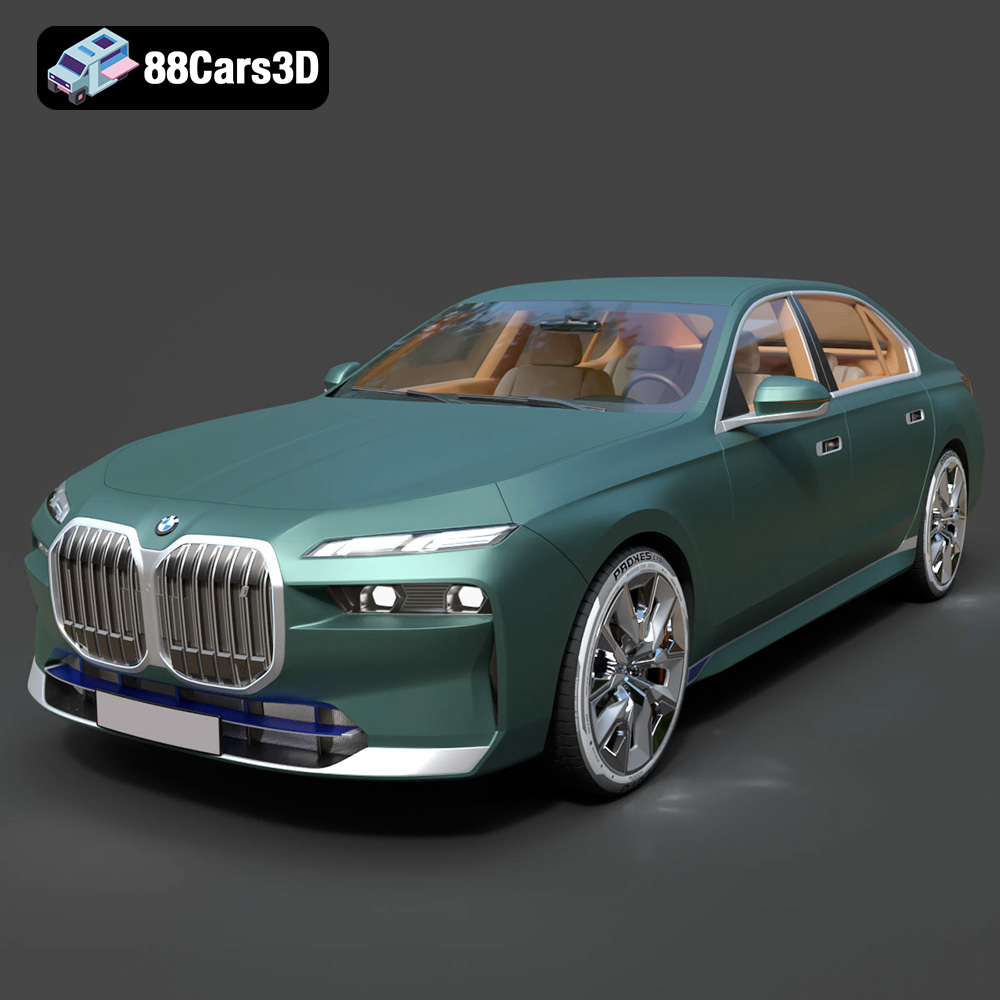
Texture: Yes | Material: Yes Download the ultra-high-detail BMW i7 (2023) 3D Model (4.14M Triangles). Features the illuminated kidney grille, split crystal headlights, fully modeled Theatre Screen interior, and monolithic luxury styling. Perfect for ArchViz, VFX, and cinematic rendering. Includes .blend, .fbx, .obj, .glb, .stl, and .max formats.
Price: $19.99
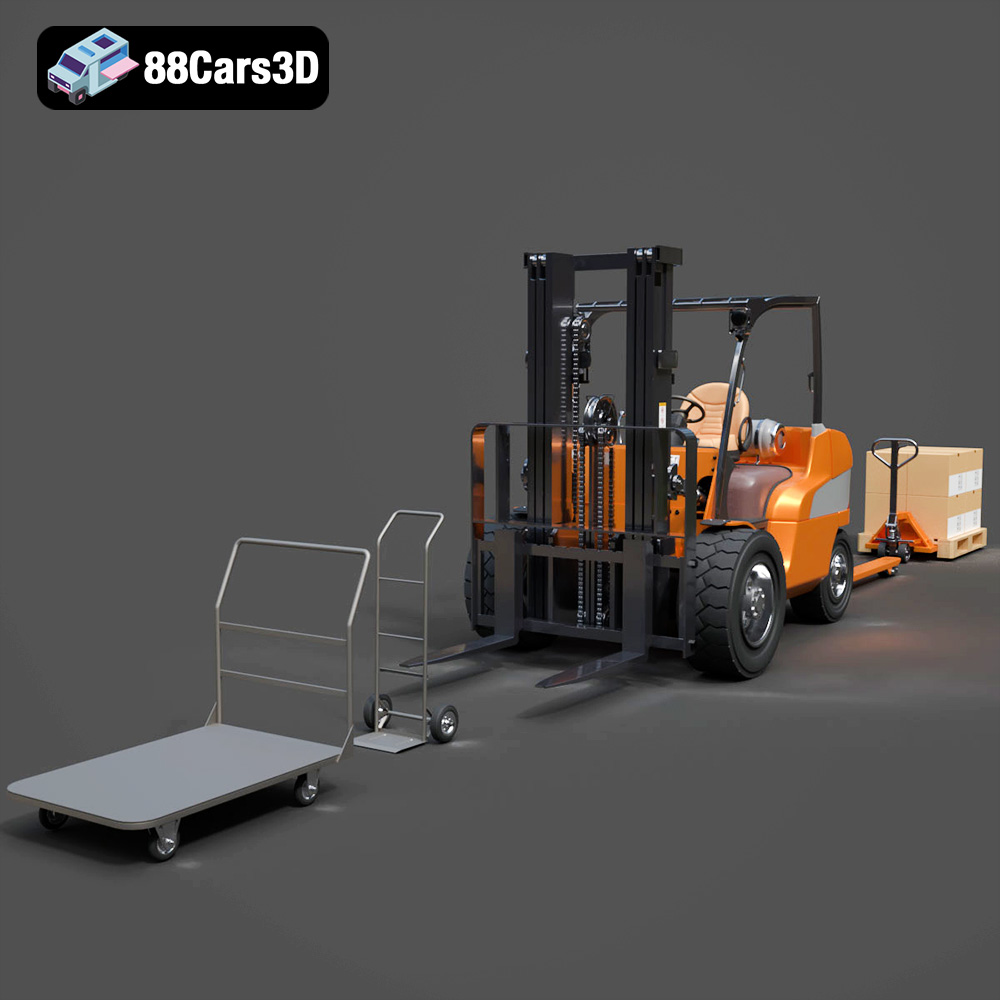
Texture: Yes | Material: Yes Download the highly detailed CAT Manual Loader & Warehouse Carts Kit 3D Model (2.4M Triangles). Features a macro-detailed hydraulic pallet jack, heavy-duty forks, and transport carts. Perfect for industrial ArchViz, factory rendering, and logistics simulations. Includes .blend, .fbx, .obj, .glb, .stl, and .max formats.
Price: $19.99
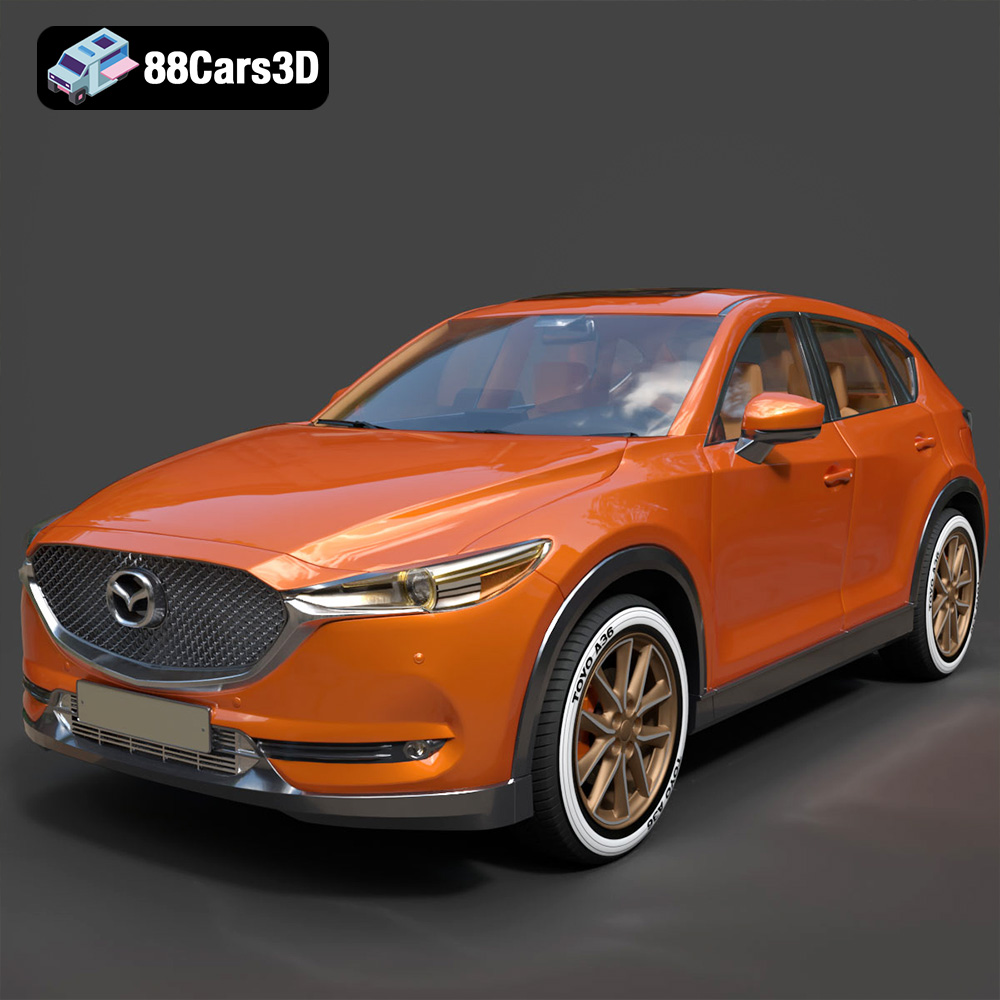
Texture: Yes | Material: Yes
Download the highly optimized Mazda CX-5 2014 3D Model (294k Triangles). Features the dynamic Kodo design language, signature grille, and a clean interior. Perfectly balanced for ArchViz, background traffic, and game development. Includes .blend, .fbx, .obj, .glb, .stl, and .max formats.
Price: $19.99
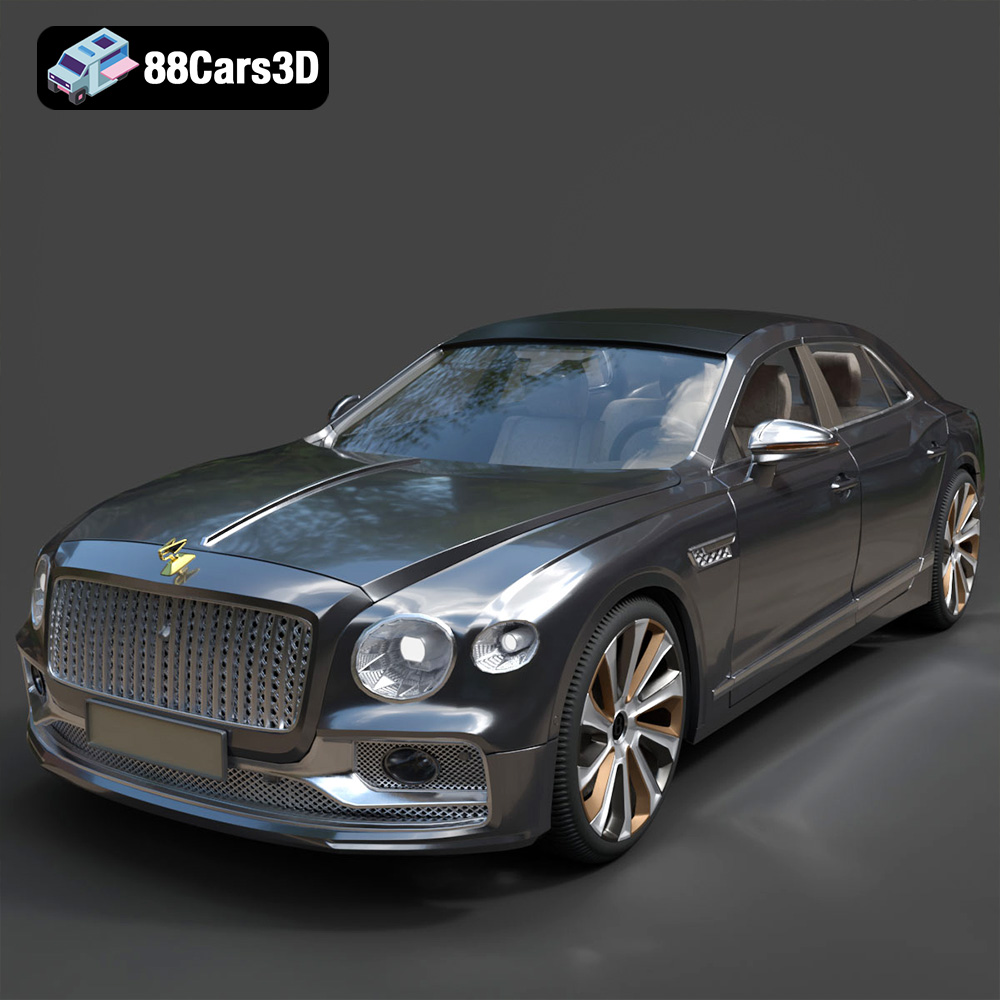
Texture: Yes | Material: Yes Download the ultra-high-detail Bentley Flying Spur Mulliner 2022 3D Model (2.94M Triangles). Features the bespoke Double Diamond grille, a fully modeled diamond-quilted interior, and exquisite luxury styling. Perfect for high-end ArchViz, VFX, and cinematic rendering. Includes .blend, .fbx, .obj, .glb, .stl, and .max formats.
Price: $19.90
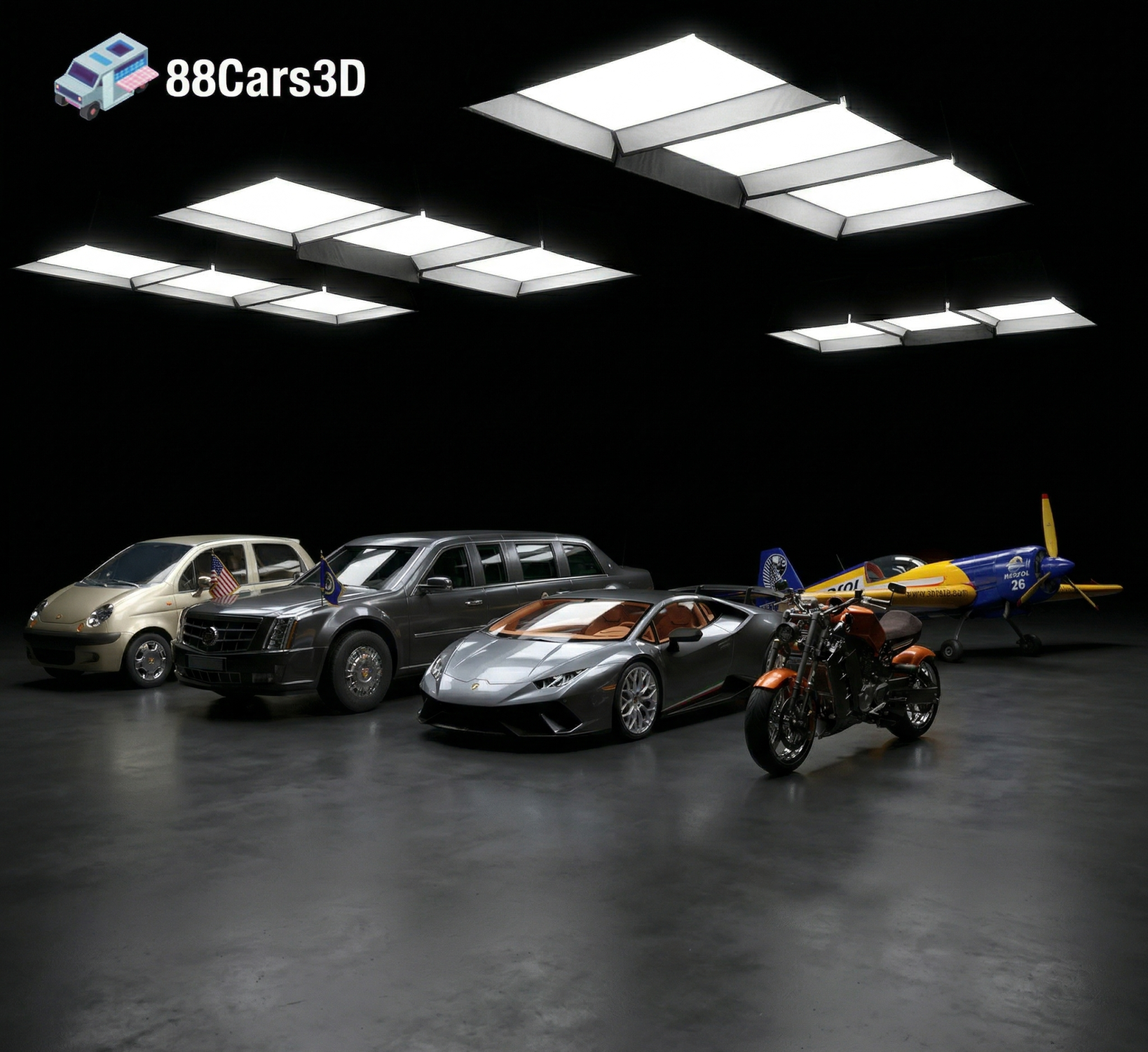
Texture: Yes | Material: Yes | 3D Printable: Yes. Download the Ultimate Creators’ Showcase featuring 5 premium 3D models: Lamborghini Huracan, ZAV Concept Motorcycle, Sukhoi SU-26, Presidential Limousine, and Daewoo Damas. Optimized for 4K CGI rendering and 3D printing. Save massive with this exclusive multi-category bundle!
Price: $99.99

Texture: Yes | Material: Yes | 3D Printable: Yes. Download the Italian Thoroughbreds Bundle featuring 5 iconic 3D models: Lamborghini Huracán Performante, Ferrari 458 Italia, Lamborghini Urus, Diablo SV, and Maserati GT. Optimized for 4K rendering and 3D printing (STL included). Save 50% with this ultimate Italian vehicle collection.
Price: $199.99

Download the Elite Future Mobility Bundle featuring 4 highly optimized 3D models: Tesla Model S, Avatr 11, Li L9, and Zoox Robotaxi. Perfect for ArchViz, Smart City renders, and game dev. Optimized for Unreal Engine and Blender. Includes .fbx, .obj, and .max formats.
Price: $99

🚗 5 Iconic German Cars (BMW M4 G82, M5 CS, X3, 1 Series & Mercedes E-Class). ✅ Optimized for ArchViz: Ready for Corona & V-Ray. 💰 Save €71 with this limited-time collection! 🚀 Instant Download after purchase.
Price: $119

Download the Extreme Off-Road & Survival 3D Models Bundle! Includes the Brabus 800 Adventure, Dodge Ram Bigfoot, Spec Truck, and a Caravan. Save over €210 on this premium 4-in-1 off-grid vehicle pack for ArchViz and game development.
Price: $149.99

Download the Heavy Duty & Commercial Logistics 3D Models Bundle! Includes the Ford Sterling, Caterpillar CT680, Mercedes Citaro Bus, and Vito Van. Save over €130 on this massive, game-ready 4-in-1 industrial vehicle pack.
Price: $109.99

