Get 50% OFF All Premium 3D & STL Models!

In the dynamic world of 3D visualization, game development, and cinematic production, a static 3D car model, no matter how exquisitely detailed, only tells half the story. The true magic unfolds when that model springs to life, driving, turning, and interacting with its environment in a believable manner. This transformation from a high-fidelity asset to an animated performance is made possible through the intricate process of rigging. Rigging a car model for animation is an exacting craft that marries technical precision with a deep understanding of automotive mechanics. It’s about building a robust skeletal system and control interface that allows animators to manipulate the vehicle with ease and achieve stunningly realistic movements.
Whether you’re developing a AAA racing game, producing an automotive commercial, or creating an interactive AR/VR experience, a well-rigged car model is non-negotiable. It dictates the fluidity of suspension, the accuracy of wheel rotation, the subtle nuances of steering, and even the opening of doors and hoods. A poorly rigged model, conversely, can lead to frustrating animation workflows, visual glitches, and a breakdown of realism that undermines hours of modeling and texturing work. This comprehensive guide will take you through the essential best practices for rigging 3D car models, from foundational preparation to advanced control systems and game engine optimization. We’ll explore the workflows across popular 3D software, dive into technical specifications, and provide actionable tips to elevate your automotive animation projects.
Before a single bone is placed, the success of any car rigging project hinges on meticulous preparation of the 3D model itself. This initial phase, often overlooked, is critical for ensuring a clean, stable, and animatable asset. A well-prepared model simplifies the rigging process immensely, prevents countless headaches down the line, and ensures optimal performance in animation and real-time applications. Think of it as laying the groundwork for a robust and reliable machine.
The foundation of a good rig is a model with clean and animation-friendly topology. For car models, this means an organized mesh with quads predominantly, clear edge loops defining curvature and deformation areas, and minimal N-gons or non-manifold geometry. The goal is to have a mesh that deforms predictably and efficiently. More importantly, for rigging, the car model must be logically separated into distinct, individual mesh objects. This isn’t just about organizational neatness; it’s a functional requirement. Each component that needs to move independently must be its own mesh object. This includes:
Proper separation ensures that when you parent a mesh object to a bone, only that specific component moves. Merging everything into one large mesh makes rigging impossible for complex movements. For instance, in Blender, you’d use ‘P’ to separate by ‘Loose Parts’ or ‘Material’ if you’ve already assigned different materials, then refine manually. This structured approach allows for precise control over each mechanical element, making the rigging process significantly more straightforward and less error-prone.
Once your mesh components are separated, defining their pivot points (also known as origins or transformation centers) is the next crucial step. The pivot point is the central axis around which an object rotates or scales. For accurate rigging and animation, each movable part must have its pivot point precisely located at its real-world rotation axis. Consider these examples:
Incorrect pivot placement will result in unnatural, ‘wobbly’ rotations that break the illusion of realism. In software like 3ds Max, you’d use ‘Affect Pivot Only’ to reposition the pivot. In Blender, you can use the ‘Object > Set Origin’ menu, often utilizing the 3D cursor to precisely place the origin point (refer to Blender 4.4 documentation on Object Origins for detailed instructions). This seemingly minor detail is incredibly important and dramatically impacts the quality and ease of animation.
As your car rig grows in complexity, with dozens of bones, controls, and mesh objects, a clear and consistent naming convention becomes your best friend. Imagine sifting through “Bone.001”, “Cylinder.005”, and “NurbsSurface.003” in an outliner with hundreds of items – it’s an animator’s nightmare. A structured naming system ensures clarity, reduces errors, and makes collaboration much smoother. Best practices include:
Chassis_Main, Wheel_Front_Left, Door_Driver_Front).L_Wheel_Front, R_Door_Rear).B_Chassis_Root, C_Wheel_FL, M_Tire_FR, E_Suspension_Target).For example, instead of Bone.001, you would have B_Chassis_Root. Instead of Sphere.002, you might have C_Wheel_FL_Move. This systematic approach is invaluable when debugging a rig, finding specific controls, or integrating your car model into a larger scene. Adhering to good naming conventions saves immense time and frustration, especially on large-scale projects or when working with teams.
The chassis and suspension system are the heart of any realistic car rig. They define how the car’s body interacts with its wheels and the ground, translating movement into believable weight shifts, bumps, and turns. A robust chassis and suspension rig allows for both subtle and dramatic animations, from a gentle cruise to aggressive off-roading. Getting this section right is crucial for achieving an authentic automotive animation.
The chassis rigging typically begins with a main “root” bone, often called B_Chassis_Root or B_Car_Master, which serves as the ultimate parent for the entire vehicle. This root bone is usually placed at the car’s center of gravity, allowing an animator to move, rotate, and scale the entire car with a single control. Directly parented to this root bone is the B_Chassis_Main bone, which directly controls the car’s body mesh. It’s often beneficial to have a hierarchy that allows for separate global controls versus controls that only affect the car’s body without influencing the wheels’ immediate translation (though they will naturally follow via the suspension system).
The hierarchy for a basic chassis might look like this:
C_Car_Global (Control object, not a bone, parenting B_Chassis_Root)
B_Chassis_Root (Main bone, often at the car’s center of gravity)
B_Chassis_Main (Directly controls the body mesh, allowing for body tilt/lean independent of global movement)
B_Door_FL_Hinge, B_Door_FR_Hinge, etc.B_Hood_Hinge, B_Trunk_HingeB_Wheel_FL_Parent, B_Wheel_FR_Parent, etc. (Parent for each wheel’s independent suspension)This structure provides a clean separation of concerns: the global control moves the entire car, the root bone manages its overall transformation relative to the ground, and the main chassis bone allows for body movements (like rolling or pitching) while keeping the wheels correctly aligned through their suspension systems. It’s a robust framework that supports complex animations without getting tangled.
One of the most defining characteristics of a moving car is how its suspension interacts with terrain. To achieve this, each wheel needs an independent suspension rig. A common approach involves creating a vertical bone or control for each wheel, often called C_Wheel_FL_Suspension. This control is constrained to move only along the Z-axis (up/down) relative to the car body. The main wheel bone (e.g., B_Wheel_FL_Main) is then parented to this suspension control.
To simulate the compressing and extending action of shocks and springs, you can use Inverse Kinematics (IK) chains. For each wheel, create a simple two-bone IK chain: one bone for the upper control arm/shock mount, and one for the lower control arm/wheel hub. The end effector of this IK chain (often an empty or another bone) is parented to the suspension control. As the suspension control moves up and down, the IK chain will articulate, mimicking the realistic movement of the suspension components. You can then parent the actual mesh components (control arms, shock absorber meshes, brake calipers, rotors) to their respective bones in this IK chain.
A crucial element here is ensuring that the brake calipers remain fixed relative to the car body while the rotors rotate with the wheels. This means the caliper mesh should be parented higher up in the suspension hierarchy, perhaps to the car body or a non-rotating suspension arm, while the rotor mesh is parented to the wheel’s rotation bone. Careful attention to these details elevates the realism significantly.
Beyond basic up-and-down movement, advanced suspension systems often involve more complex IK chains, helper objects, and constraints to accurately mimic multi-link setups or to provide additional animation control. For instance, to get realistic wheel camber and caster as the suspension compresses, you might need a more elaborate IK setup involving multiple pivot points for the control arms. Driver bones can also be employed: an attribute on a main suspension control can drive the rotation or position of helper bones that influence camber or toe-in, creating dynamic and physically plausible reactions.
Consider using “Limit Location” or “Limit Rotation” constraints to prevent suspension components from passing through each other or exceeding realistic physical limits. In Blender, these are found in the Constraints tab, allowing you to define minimum and maximum values for transformations. For real-time applications, however, excessive constraints can sometimes be computationally heavier than simple parent-child relationships, so a balance must be struck. The goal is to provide enough control for animators to create realistic bounces and dips, absorbing bumps and weight shifts, without over-complicating the rig to the point of performance degradation. Platforms like 88cars3d.com rely on models with efficient, yet effective, rigging that can handle diverse animation needs across different engines and rendering pipelines.
The wheels are arguably the most animated parts of a car. Their rotation, steering, and interaction with the ground are paramount to creating a believable driving experience. Rigging these elements dynamically requires a keen understanding of their mechanical relationships and how to translate them into a functional 3D control system.
The simplest way to make a wheel rotate is to parent its mesh to a bone that rotates on its local Y-axis (or whichever axis aligns with the wheel’s rotation). However, manually animating the rotation of four wheels to match the car’s speed and direction is tedious and prone to error. This is where drivers and constraints become indispensable. A common technique involves linking the rotation of the wheels to the car’s forward/backward movement. In Blender, you can achieve this by adding a “Transformation” constraint or a custom driver to each wheel’s rotation axis. The driver’s input variable would be the global Z-location (or equivalent forward axis) of the main car control.
The formula for wheel rotation typically involves the car’s forward movement distance divided by the wheel’s circumference, multiplied by 360 degrees. For example, if your car moves 1 unit forward, and your wheel has a radius of 0.35 units, its circumference is 2 * π * 0.35 ≈ 2.199 units. So, for every 2.199 units the car moves, the wheel should rotate 360 degrees. This can be expressed in a driver expression. For steering, the front wheels need to rotate around their Z-axis (or a similar axis) based on a steering input. A dedicated steering control bone (e.g., C_Steering_Wheel) can be used, and its rotation along a specific axis can drive the Z-axis rotation of the front wheel parent bones. This simulates the linkage, ensuring both front wheels turn in unison, but in opposite directions relative to the car’s forward motion.
For more advanced setups, you might introduce a “steering arm” bone for each front wheel that acts as an intermediate between the main steering control and the wheel’s local rotation. This allows for realistic toe-in/toe-out effects as the wheels steer.
For truly realistic car animation, the wheels shouldn’t just spin; they need to adapt to the ground surface. While full physics simulations are often done in game engines, a good rig can provide controls for animators to manually adjust for terrain. A common approach involves using ray-casting or empties as “ground probes” for each wheel. Each probe is parented to its respective wheel’s suspension control, and its vertical position can be used to drive the suspension’s compression. While this can be complex to set up with drivers in a 3D package, a simpler, animator-driven approach is to ensure that the suspension controls (C_Wheel_FL_Suspension) are easily accessible and movable by the animator to visually adjust for uneven ground.
For game engines, this interaction is typically handled by the engine’s physics system, which often requires specific collider setups and wheel colliders on the car model. However, a well-structured rig still provides the necessary bone hierarchy for the engine to apply its physics calculations to the correct parts (e.g., applying suspension forces to the suspension bones, and rotational forces to the wheel bones). When preparing models for game assets, ensuring that each wheel’s pivot and orientation are aligned with the engine’s expected wheel collider setup is crucial for seamless integration.
Achieving realistic tire deformation, especially under cornering or heavy braking, adds an incredible layer of fidelity. This is an advanced technique, but highly effective for high-end visualizations. There are two primary methods:
For most applications, especially game development, basic tire deformation might be achieved through normal maps or simpler shader effects. However, for high-fidelity rendering or cinematics, investing time in subtle shape key deformation can dramatically enhance realism. When integrating car models from platforms like 88cars3d.com, ensure they come with clean base meshes that support such deformation techniques if you plan to implement them.
While the chassis and wheels form the core of a car rig, the smaller, movable components like doors, hoods, and interior elements are essential for adding interactive realism, especially for close-up shots, game interactions, or AR/VR experiences. Rigging these parts effectively ensures they open and close naturally, enhancing the overall functionality and appeal of the 3D model.
The rigging of hinged parts is relatively straightforward but demands precision. Each hinged component (doors, hood, trunk, fuel cap, glove compartment) must be a separate mesh object, as discussed in the preparation phase. The key is to correctly place the pivot point of each object at the exact location of its real-world hinge. Once the pivot is set, the object can simply be parented to a bone (e.g., B_Door_Driver_Hinge) that is itself parented to the main car chassis bone. This bone will then only need to rotate along a single axis (e.g., local Z or Y) to simulate the opening and closing motion.
To provide animators with intuitive control, a custom control object (e.g., an empty, a circle curve, or a custom shape) can be created and constrained to control the hinge bone’s rotation. This allows animators to simply grab and rotate the control to open or close the door. For realism, “Limit Rotation” constraints are often applied to these hinge bones to prevent them from rotating beyond their physically possible range (e.g., a door can’t open 360 degrees). For example, a car door might have a rotation limit of 0 to -90 degrees on its local Y-axis. This ensures that the animation adheres to realistic mechanics and prevents parts from clipping through each other.
The interior of a car rig, especially for first-person views or interactive simulations, requires its own set of rigging considerations:
B_Steering_Wheel) with its pivot at the center of the steering column. This bone’s rotation (often on its local Y-axis) can then be driven by the main car’s steering control or directly manipulated by the animator. You might also add a separate bone for a horn button if it needs to be pressed.B_Pedal_Accelerator). These bones will typically only need to rotate along one axis within a limited range. Animators can then keyframe these rotations to simulate pressing the pedals. For a more integrated setup, drivers can be used to link pedal depression to the car’s acceleration/deceleration values in a game engine, though this is often handled by the engine’s input system.Attention to these interior details significantly enhances the immersion, especially for interactive experiences. The level of detail here will largely depend on the specific project’s requirements, but even simple, functional rigs for these parts can make a big difference.
Beyond the major components, many smaller details on a car also require rigging for complete realism or interactivity:
B_Wiper_Left_Arm) would control its arc. The wiper blade itself might be parented to a small helper bone that subtly rotates or tilts to maintain contact with the windshield. Drivers or “Limit Rotation” constraints can define the arc of the wiper’s movement.When considering these smaller elements, always weigh the effort of rigging against the functional or aesthetic payoff. For background cars, many of these details might be skipped. For hero vehicles in a cinematic, however, every detail contributes to the overall believability. A high-quality base model from a site like 88cars3d.com will typically provide the necessary mesh separation to facilitate the rigging of these intricate components.
A well-rigged car model is only as good as its control system. An intuitive, robust animation interface empowers animators to bring the vehicle to life efficiently and artistically, without getting bogged down in the underlying technical complexities. This section focuses on designing user-friendly controls that streamline the animation workflow.
Animators don’t want to manipulate bones directly. They need easily selectable and visually distinct control objects. These are typically custom shapes (e.g., circles, squares, arrows, or even simplified car outlines) created from curves or empty objects. Each control object is then linked to the corresponding bone via parenting or constraints (e.g., a “Copy Transforms” constraint in Blender, or parenting in Maya/3ds Max). It’s crucial that these control objects are clearly visible, easy to select, and don’t interfere with the mesh.
Best practices for control rig design include:
The goal is to provide a clean and intuitive interface that reduces cognitive load and allows the animator to focus purely on performance and timing.
While controls provide direct manipulation, drivers and custom properties are the engine of intelligent, automated rig behavior. A driver allows an attribute of one object (e.g., the X-location of a control empty) to directly influence an attribute of another object (e.g., the Z-rotation of a wheel bone). This is incredibly powerful for automating complex relationships that would be impossible or incredibly tedious to animate manually.
Key applications of drivers in car rigging include:
-var * 30) to define the turning angle.Custom properties provide a user-friendly interface for animators to control complex parameters from a single location, often directly on a main control object. You can add a custom property (e.g., a float slider from 0 to 1 for “Suspension Stiffness”) to your main car control. This property can then drive various constraints or bone scales, allowing an animator to quickly tweak the car’s “feel” without diving into bone properties. In Blender, custom properties are added in the “Item” tab of the N-panel for selected objects or bones, and then used as inputs for drivers. This system reduces the number of explicit controls an animator needs to manage, consolidating functionality into logical and intuitive parameters.
With a well-structured control system in place, animating a car becomes a much more enjoyable and efficient process. Here are some workflow tips:
A common pitfall is over-complicating the rig beyond what’s necessary for the project. While it’s tempting to add every conceivable feature, focus on what your animation requirements truly demand. A streamlined rig is often more performant and easier to work with than an overly complex one.
Rigging a car for a cinematic render is one thing; preparing it for real-time applications like game engines or AR/VR experiences introduces a new set of challenges centered around performance optimization. Every bone, constraint, and polygon counts towards the computational budget, making efficiency paramount. This final stage ensures your beautifully rigged car model performs flawlessly in interactive environments.
For game engines, it’s inefficient to render a highly detailed, fully rigged car model at all distances. This is where Levels of Detail (LODs) come in. An LOD system swaps out higher-polygon, more complex models for simpler versions as the camera moves further away. For rigged car models, this extends beyond just the mesh; the rig itself can be simplified.
The goal is to reduce the number of bones and calculations for models that are far from the camera, thereby minimizing CPU overhead from skinning and animation calculations. Some game engines (like Unreal Engine) have robust LOD systems that can manage both mesh and skeletal LODs effectively.
While drivers and complex constraints are powerful for creating flexible rigs within a 3D application, they are often not directly transferable or efficiently computed by game engines. Many engines prefer explicit keyframe data. This is where animation baking becomes essential.
Baking converts all the procedural animations, IK solutions, drivers, and constraints into raw keyframe data for each bone over a specified time range. Essentially, it “records” the final position, rotation, and scale of every bone at every frame. This process removes the need for the game engine to interpret complex rig logic, making the animation highly optimized and universally compatible.
When to bake:
How to bake: Most 3D software offers baking tools. In Blender, you can select your armature, go to Pose > Animation > Bake Action. Here, you can specify options like baking visual keyframes, clearing constraints, and baking to a new action. For game development, baking all keyframes on every bone (and removing the original constraints/drivers if exporting for final use) is a common practice.
The choice of file format and export settings is critical for seamless integration into game engines. The most common formats are FBX and GLB/glTF.
Upon import into Unity or Unreal Engine, you’ll configure the imported model’s settings. For rigged cars, this includes:
The goal is to have a game-ready asset that is performant, visually accurate, and fully functional within the engine’s environment. Sourcing pre-optimized 3D car models from marketplaces like 88cars3d.com can significantly reduce the initial setup time, providing high-quality meshes and sometimes even pre-rigged base armatures ready for engine integration or further customization.
Rigging a car model for animation is a multifaceted discipline that requires a blend of technical expertise, an eye for mechanical detail, and a commitment to creating efficient workflows. From the meticulous preparation of the 3D model with clean topology and precise pivot points, through the intricate construction of chassis and independent suspension systems, to the dynamic rigging of wheels and the intuitive design of control interfaces, each stage is vital for a successful outcome. We’ve explored how to harness the power of bones, constraints, drivers, and custom properties to build a robust and animatable vehicle, capable of delivering believable motion in any 3D environment.
Furthermore, understanding the nuances of optimization and export for real-time applications like game engines is critical in today’s interactive landscape. Strategies such as LODs, animation baking, and careful file format selection ensure that your expertly rigged car models perform efficiently without sacrificing visual fidelity. The investment in a well-engineered car rig pays dividends in animation quality, production efficiency, and overall project success, transforming a static asset into a compelling, living component of your 3D world.
Whether you’re a seasoned 3D artist or an aspiring game developer, mastering the art and science of car rigging will undoubtedly elevate your projects. By adhering to these best practices, you can create vehicles that not only look spectacular but also move with the authenticity and dynamism that audiences expect. For those looking to kickstart their projects with high-quality, production-ready 3D car models, platforms like 88cars3d.com offer a vast selection of expertly crafted assets that serve as an excellent foundation for your rigging and animation endeavors.
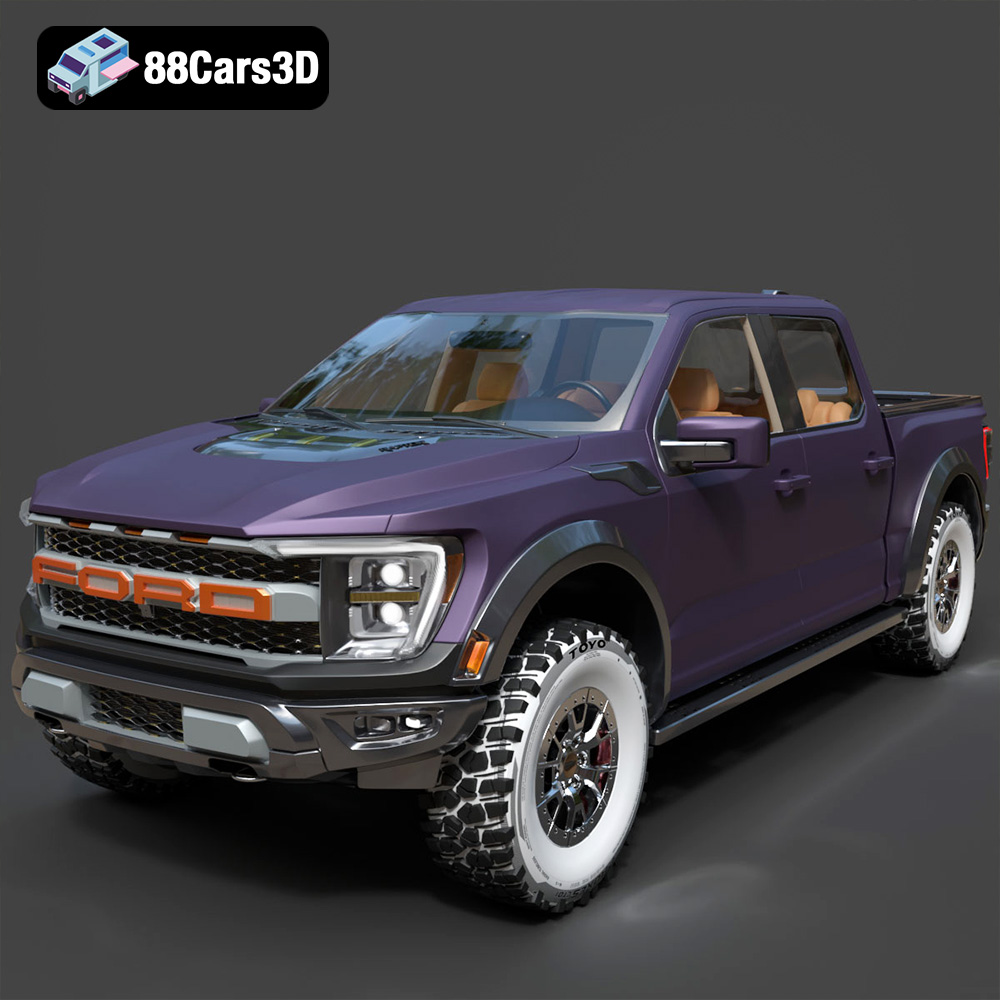
Texture: Yes | Material: Yes Download the ultra-high-detail Ford F-150 Raptor 2021 3D Model (8.73M Triangles). Features uncompromised widebody styling, fully modeled Fox Live Valve suspension, 37-inch tires, and interior. Perfect for premium VFX, cinematic rendering, and ArchViz. Includes .blend, .fbx, .obj, .glb, .stl, and .max formats.
Price: $29.99
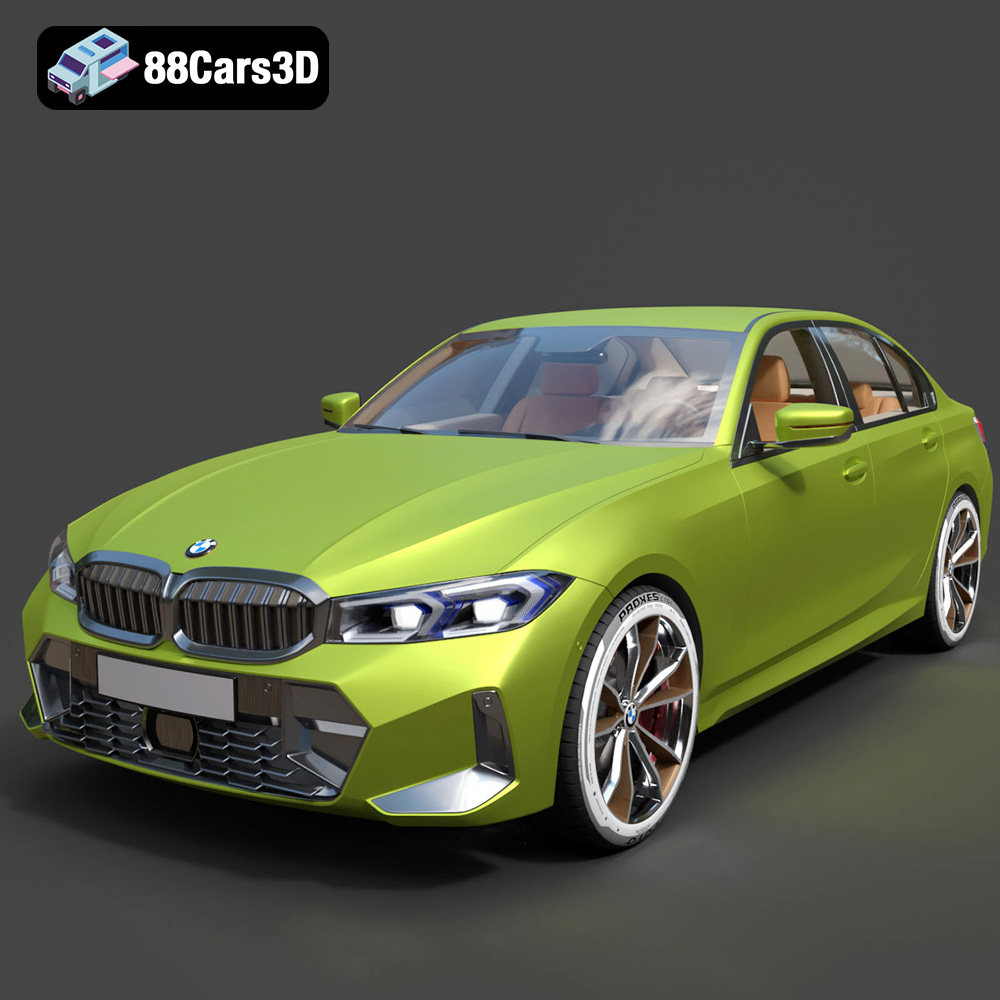
Texture: Yes | Material: Yes Download the ultra-high-detail BMW 3 Series Limousine (2022) 3D Model (4.16M Triangles). Features the modernized G20 LCI exterior, the all-new BMW Curved Display interior, and ultra-dense topology. Perfect for ArchViz, VFX, and cinematic rendering. Includes .blend, .fbx, .obj, .glb, .stl, and .max formats.
Price: $19.99
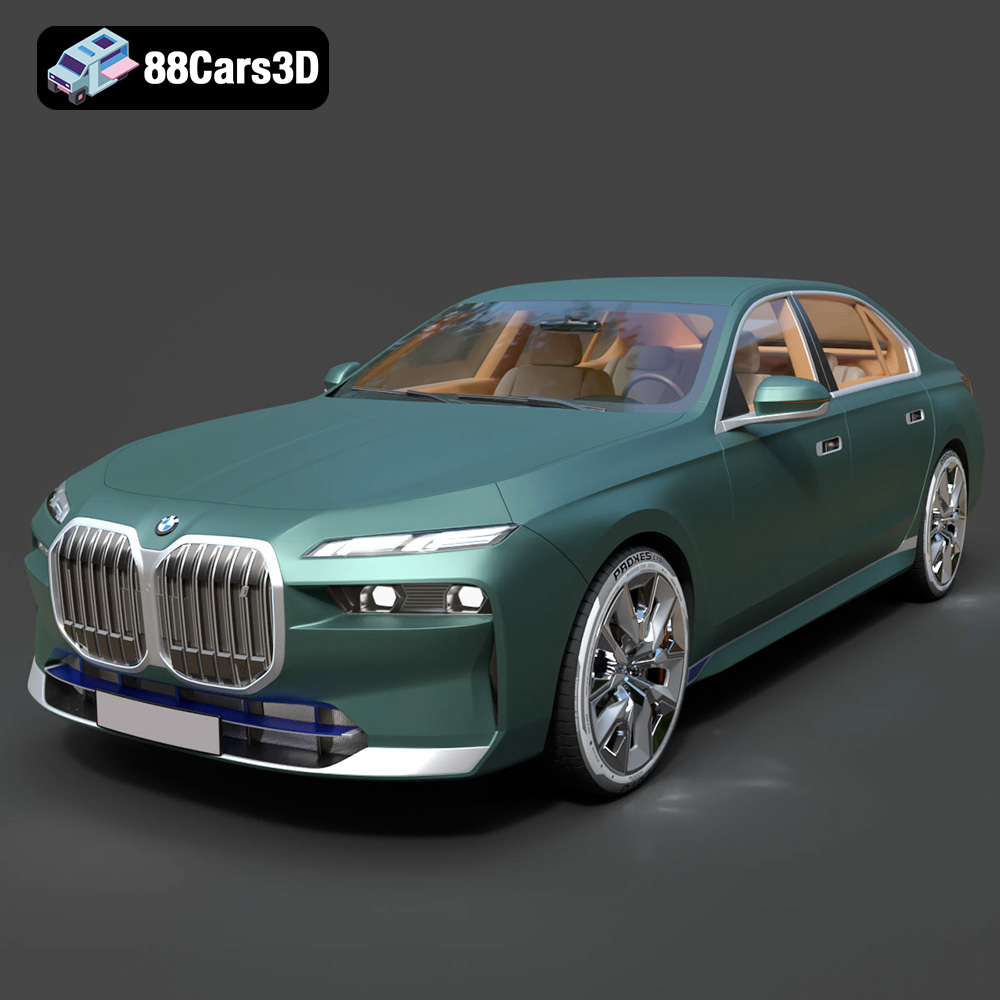
Texture: Yes | Material: Yes Download the ultra-high-detail BMW i7 (2023) 3D Model (4.14M Triangles). Features the illuminated kidney grille, split crystal headlights, fully modeled Theatre Screen interior, and monolithic luxury styling. Perfect for ArchViz, VFX, and cinematic rendering. Includes .blend, .fbx, .obj, .glb, .stl, and .max formats.
Price: $19.99
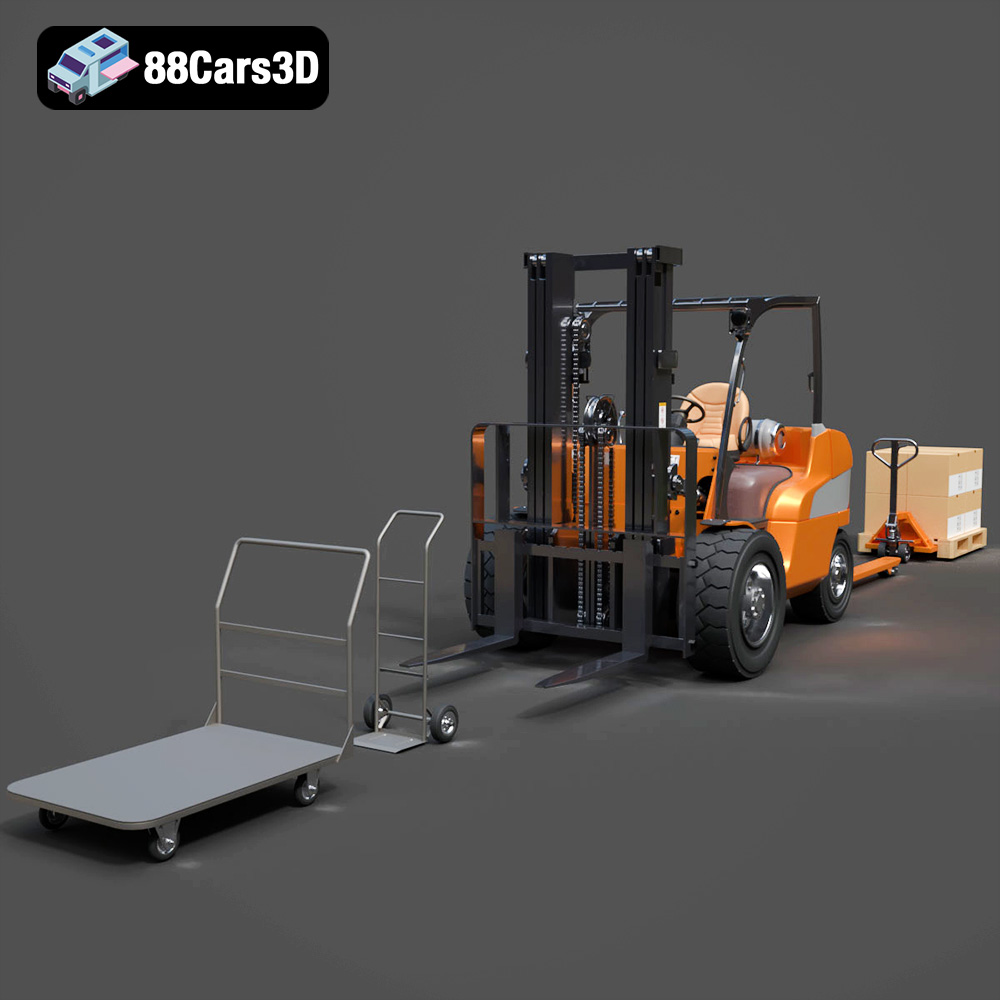
Texture: Yes | Material: Yes Download the highly detailed CAT Manual Loader & Warehouse Carts Kit 3D Model (2.4M Triangles). Features a macro-detailed hydraulic pallet jack, heavy-duty forks, and transport carts. Perfect for industrial ArchViz, factory rendering, and logistics simulations. Includes .blend, .fbx, .obj, .glb, .stl, and .max formats.
Price: $19.99
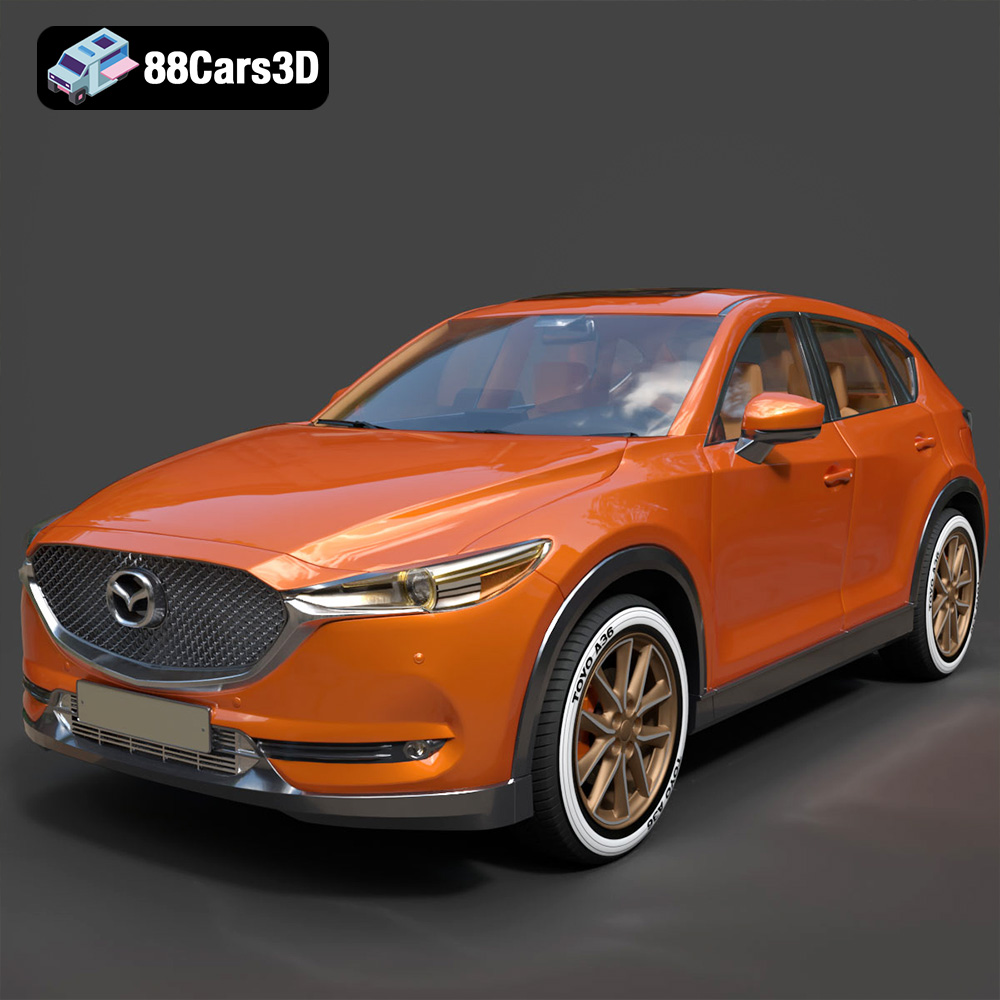
Texture: Yes | Material: Yes
Download the highly optimized Mazda CX-5 2014 3D Model (294k Triangles). Features the dynamic Kodo design language, signature grille, and a clean interior. Perfectly balanced for ArchViz, background traffic, and game development. Includes .blend, .fbx, .obj, .glb, .stl, and .max formats.
Price: $19.99
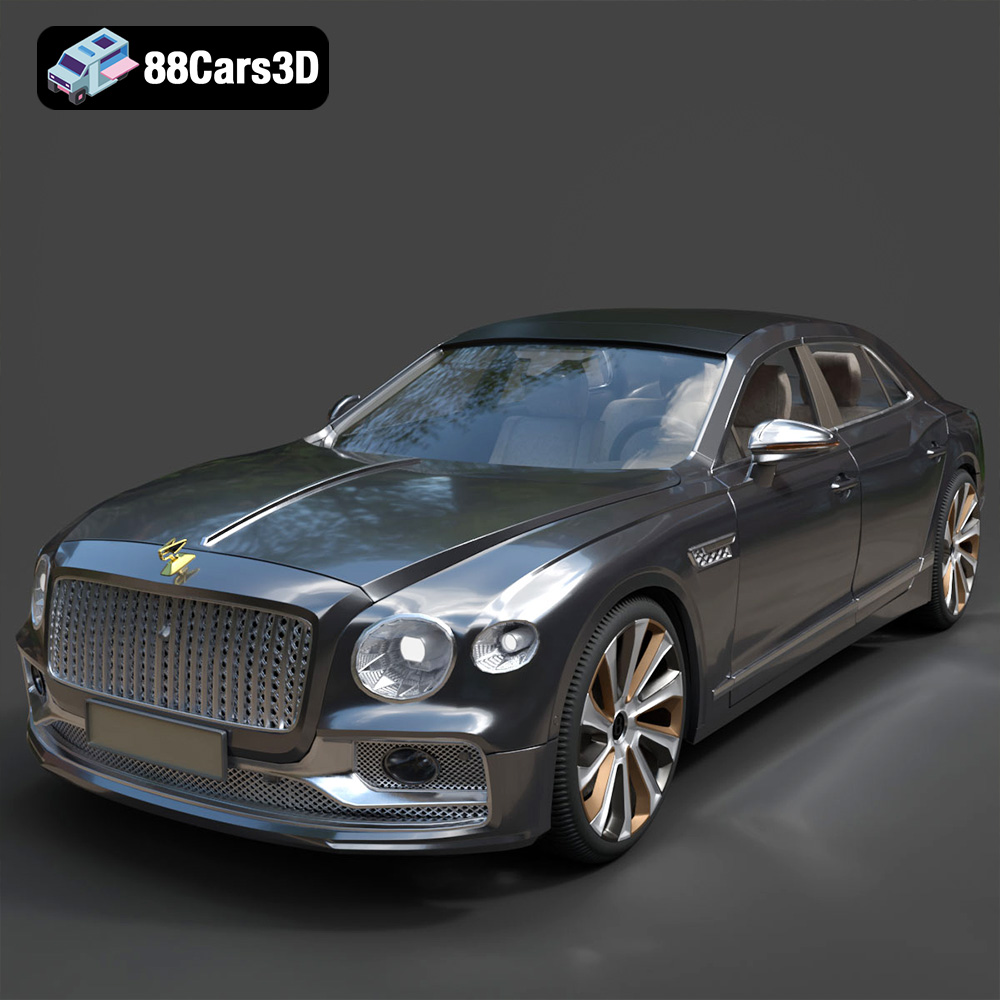
Texture: Yes | Material: Yes Download the ultra-high-detail Bentley Flying Spur Mulliner 2022 3D Model (2.94M Triangles). Features the bespoke Double Diamond grille, a fully modeled diamond-quilted interior, and exquisite luxury styling. Perfect for high-end ArchViz, VFX, and cinematic rendering. Includes .blend, .fbx, .obj, .glb, .stl, and .max formats.
Price: $19.90
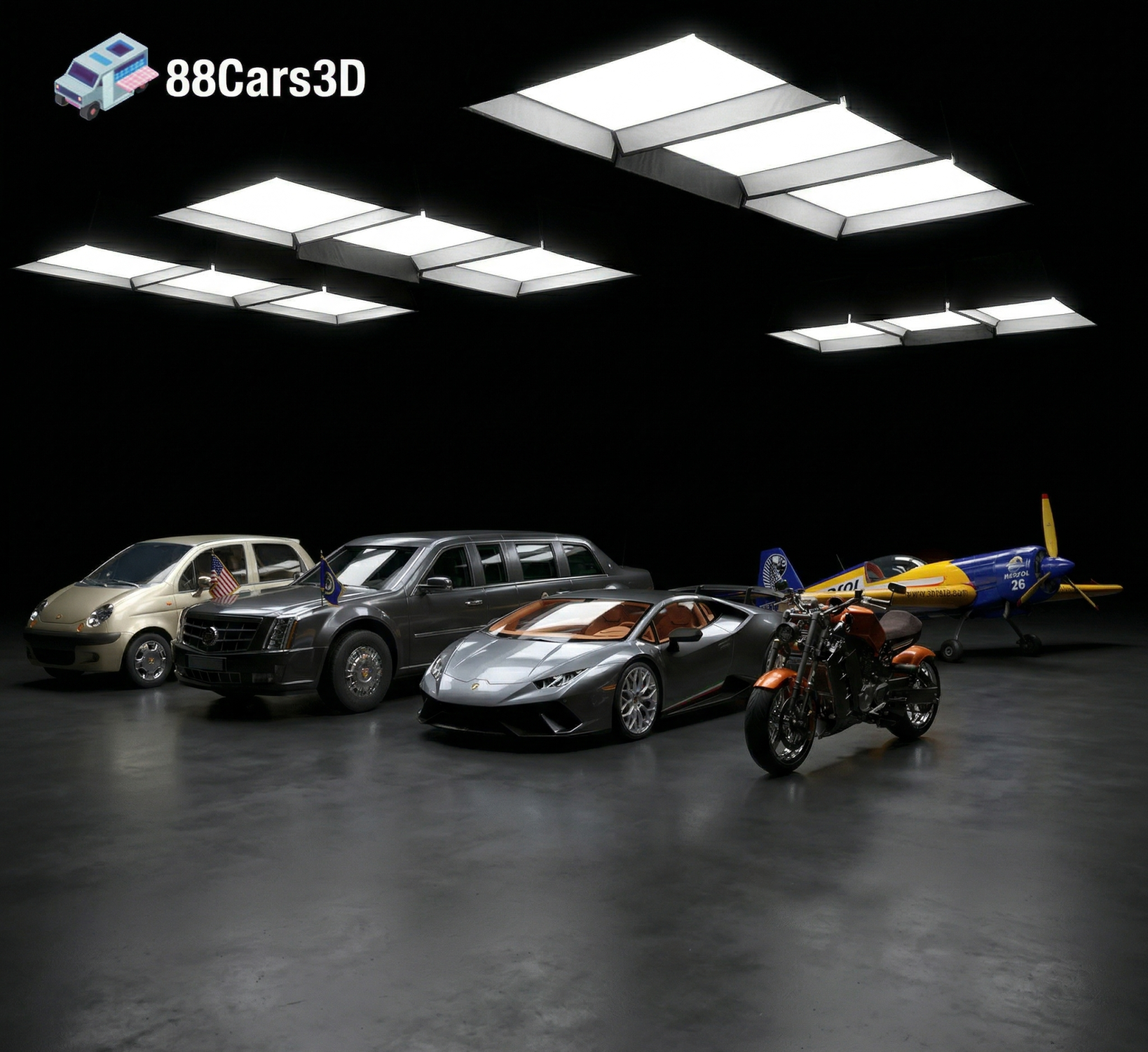
Texture: Yes | Material: Yes | 3D Printable: Yes. Download the Ultimate Creators’ Showcase featuring 5 premium 3D models: Lamborghini Huracan, ZAV Concept Motorcycle, Sukhoi SU-26, Presidential Limousine, and Daewoo Damas. Optimized for 4K CGI rendering and 3D printing. Save massive with this exclusive multi-category bundle!
Price: $99.99

Texture: Yes | Material: Yes | 3D Printable: Yes. Download the Italian Thoroughbreds Bundle featuring 5 iconic 3D models: Lamborghini Huracán Performante, Ferrari 458 Italia, Lamborghini Urus, Diablo SV, and Maserati GT. Optimized for 4K rendering and 3D printing (STL included). Save 50% with this ultimate Italian vehicle collection.
Price: $199.99

Download the Elite Future Mobility Bundle featuring 4 highly optimized 3D models: Tesla Model S, Avatr 11, Li L9, and Zoox Robotaxi. Perfect for ArchViz, Smart City renders, and game dev. Optimized for Unreal Engine and Blender. Includes .fbx, .obj, and .max formats.
Price: $99

🚗 5 Iconic German Cars (BMW M4 G82, M5 CS, X3, 1 Series & Mercedes E-Class). ✅ Optimized for ArchViz: Ready for Corona & V-Ray. 💰 Save €71 with this limited-time collection! 🚀 Instant Download after purchase.
Price: $119

