Get 50% OFF All Premium 3D & STL Models!

Building vast, immersive open worlds in Unreal Engine has long been a dream for game developers and visualization artists alike. However, the sheer scale of managing countless assets, complex lighting, and intricate physics within a single, massive environment presented significant technical hurdles. Traditional methods of level management, such as World Composition, often struggled under the weight of such ambitious projects, leading to cumbersome workflows, performance bottlenecks, and collaboration headaches.
Enter Unreal Engine’s World Partition system – a revolutionary approach designed to streamline the creation and management of colossal landscapes. This system fundamentally transforms how large worlds are structured and streamed, moving away from a multi-level setup to a single, persistent world that intelligently loads and unloads sections as needed. For professionals in automotive visualization, game development, and real-time rendering, World Partition is not just an improvement; it’s a game-changer, enabling the creation of hyper-realistic, expansive environments that perfectly showcase the intricate detail of 3D car models from platforms like 88cars3d.com.
In this comprehensive guide, we’ll dive deep into the World Partition system, exploring its core functionalities, best practices for implementation, and advanced strategies for maximizing performance and collaboration. We’ll cover everything from initial project setup and asset integration to leveraging cutting-edge Unreal Engine features like Nanite and Lumen within a partitioned world. By the end, you’ll have a robust understanding of how to harness World Partition to build truly epic open worlds, elevating your Unreal Engine projects to unprecedented levels of scale and visual fidelity.
For many years, Unreal Engine developers relied on the World Composition system to manage vast environments. While innovative for its time, World Composition operated by breaking down a large world into multiple smaller levels, each representing a distinct section of the overall map. These levels would then be loaded and unloaded based on the player’s proximity, offering a form of streaming. However, this system had inherent limitations that became increasingly apparent as projects grew in scope and complexity, especially with the demand for highly detailed assets like those found on marketplaces such as 88cars3d.com. The need for a more robust, scalable, and collaborative solution led to the development of World Partition.
World Partition redefines open-world design by shifting from a hierarchical, multi-level structure to a data-oriented, single-world paradigm. Instead of manually managing an array of sub-levels, World Partition automatically divides the entire world into a grid of cells. These cells are then streamed in and out dynamically at runtime, based on a customizable streaming source (typically the player camera). This fundamental change allows for truly massive worlds without the editor performance hit associated with loading everything at once or the administrative burden of managing countless individual levels. It simplifies the asset pipeline and fosters a more seamless development experience, particularly when integrating high-fidelity 3D car models into expansive, realistic settings.
World Composition, while a powerful tool in its day, came with several operational challenges. One significant issue was the editor performance bottleneck; even if only a small portion of the world was being worked on, the editor often had to load metadata for all sub-levels, leading to slow load times and sluggish responsiveness. Merging changes from multiple team members working on different sub-levels could also be a nightmare, often resulting in complex source control conflicts that were difficult to resolve. The streaming mechanism itself, tied to individual level bounds, could be less granular and sometimes less efficient, making precise control over asset visibility and memory footprint challenging. Furthermore, the maximum world size was theoretically large but practically limited by the number of levels and the complexity of managing their interactions. This often meant developers had to compromise on scale or detail when designing environments to host intricate models like those used in automotive visualization.
World Partition represents a radical departure from these previous methodologies. At its core, it introduces a single, persistent level that contains the entirety of your world data. This world is implicitly divided into a grid of cells. Critically, these cells are not separate levels but logical divisions of the data within the single world. Only the cells surrounding your active streaming source (e.g., player character) are loaded into memory and visible in the editor or at runtime. This “load-on-demand” approach drastically improves editor performance, as only relevant data is present. It also simplifies source control because changes are managed at the cell level, reducing conflict potential during multi-user development. For an in-depth understanding of World Partition’s design principles, refer to the official Unreal Engine documentation on World Partition Overview.
For professionals leveraging Unreal Engine for automotive visualization, World Partition is indispensable. Modern automotive projects demand not just stunning car models but also equally impressive, expansive environments to showcase them. Imagine driving a meticulously detailed virtual car, sourced from 88cars3d.com, through a photorealistic city, across a vast desert, or around a sprawling test track. World Partition makes this feasible by allowing artists to populate these massive environments with incredibly high levels of detail, from individual blades of grass to complex architectural elements, without crippling performance. It enables the creation of dynamic, interactive car configurators set in realistic open-world contexts or virtual production scenes where the virtual backdrop stretches infinitely. The ability to manage such scale while maintaining fidelity is paramount for delivering cutting-edge automotive experiences.
Implementing World Partition in your Unreal Engine project is a straightforward process, whether you’re starting fresh or converting an existing map. The system is designed for ease of use while providing powerful controls over how your world is organized and streamed. A well-planned setup is crucial for maximizing efficiency and ensuring optimal performance, especially when dealing with the high-fidelity assets typical in automotive visualization. Understanding the initial steps and editor interface will lay a strong foundation for building your expansive environments and integrating detailed assets, such as those from 88cars3d.com, seamlessly into your workflow.
When you enable World Partition, Unreal Engine takes over the responsibility of dividing your world into a grid and managing its streaming. This frees you from the manual overhead of creating and linking multiple levels. The power of this system lies in its ability to automatically handle the complexity of asset loading and unloading, allowing you to focus on content creation rather than intricate streaming logic. Proper configuration of streaming distance and data layers from the outset can significantly impact both development efficiency and runtime performance, making the setup phase a critical part of your overall project strategy.
For a new project, simply select a template that supports World Partition (like the Open World template) or create a new level and enable World Partition via World Settings > World Partition > Enable World Partition. Unreal Engine will then convert your level into a World Partition map. For existing maps, the process is similar but requires a conversion step. Go to Tools > Convert Level and select your desired options. It’s highly recommended to back up your project before converting an existing map, especially if it’s large or complex. During conversion, Unreal Engine will divide your existing content into World Partition cells. You’ll typically want to set a larger Cell Size (e.g., 256m or 512m) for vast open environments, as this determines the granularity of your streaming. The World Partition system will then handle the rest, preparing your map for large-scale content creation.
Once World Partition is enabled, you’ll gain access to a new panel: the World Partition Minimap. This window is your central hub for visualizing and managing your partitioned world. It displays your entire world as a grid, with each square representing a World Partition cell. Cells currently loaded in the editor are highlighted. You can manually load and unload cells by clicking and dragging on the minimap, or by using the Load Region tool. The minimap also allows you to define Streaming Grids and Data Layers, which are crucial for organizing content and optimizing performance. You can filter loaded actors by type or Data Layer, making it easier to navigate and work within immense scenes. Familiarity with this interface is key to efficiently populating and debugging your expansive environments.
When beginning with World Partition, thoughtful planning of your world layout is crucial.
Careful consideration of these elements during setup will prevent future headaches and ensure a smooth development process for your large-scale automotive projects.
Once your World Partition project is set up, the exciting phase of populating your vast environment begins. This involves strategically placing a multitude of assets, from sprawling landscapes and dense foliage to the star attractions – highly detailed 3D car models. The challenge in a large world is not just placing assets, but doing so efficiently, ensuring they stream correctly, and maintaining performance. World Partition, combined with other Unreal Engine features, provides the tools necessary to achieve this balance, allowing for incredible fidelity even in the most expansive scenes. When sourcing automotive assets, remember that marketplaces like 88cars3d.com specialize in models specifically optimized for Unreal Engine, making their integration into World Partition projects much smoother.
Achieving visual richness without sacrificing performance in a partitioned world requires a multi-faceted approach. This includes understanding how Nanite handles high-polygon meshes, leveraging procedural tools for environmental elements, and employing Data Layers for organized content management. Each placed asset contributes to the overall complexity, and thoughtful placement and optimization are key to creating a compelling and performant automotive visualization or game environment that truly shines. The goal is to build a world that feels alive and detailed, no matter how far the camera travels, without overwhelming the engine’s resources.
Integrating high-quality 3D car models, such as those obtained from 88cars3d.com, into a World Partition environment is a critical step for automotive visualization projects. These models often feature extensive detail, PBR materials, and clean topology, making them ideal for Unreal Engine. When importing, always use the FBX or USD formats (USD is increasingly preferred for its extensibility and collaborative features, including USDZ for AR/VR). Ensure your models have proper UV mapping for materials and lightmaps. For extremely high-poly vehicles (millions of polygons), enabling Nanite Virtualized Geometry is a must. Nanite intelligently streams polygon data, allowing millions of triangles on screen without a significant performance hit, making it perfect for cinematic car close-ups within a vast world. For models that don’t need Nanite (e.g., background vehicles), ensure they have appropriate Levels of Detail (LODs) to scale down complexity at a distance, further optimizing performance within your partitioned world.
Populating a massive environment with props, foliage, and other environmental elements requires efficient strategies. Manually placing every tree or rock is impractical. Instead, leverage Unreal Engine’s built-in tools:
Remember to optimize textures (e.g., using virtual textures or appropriate resolutions like 2K or 4K for close-ups, 1K for distant objects) and material complexity for all environmental assets.
Data Layers are a cornerstone of effective World Partition workflows, especially for large, complex projects like those found in automotive visualization. They allow you to logically group actors together, providing granular control over their loading and unloading. For example, you might create Data Layers for:
By assigning actors to specific Data Layers, you can streamline editor performance (only load layers you’re actively working on), manage runtime memory, and enable sophisticated collaborative workflows. For instance, an environment artist can work on the “Foliage” layer while a technical artist focuses on the “Road Network” layer, both within the same partitioned world. During runtime, you can use Blueprint to dynamically activate or deactivate Data Layers based on player progression, vehicle state, or performance profiles.
The ability to create massive, detailed worlds with World Partition is incredible, but without careful optimization and strategic streaming, even the most powerful hardware can buckle under the strain. Real-time rendering in expansive environments, especially those showcasing high-fidelity 3D car models and intricate environmental details, demands a meticulous approach to performance. World Partition provides the framework, but it’s up to the developer to fine-tune the system and leverage Unreal Engine’s advanced features to ensure a smooth, visually stunning experience. This section delves into the technical aspects of optimizing your partitioned world, focusing on how assets are streamed and how to employ cutting-edge technologies like Nanite and Lumen effectively.
Effective optimization extends beyond just tweaking settings; it involves a deep understanding of how Unreal Engine processes and renders large amounts of data. From carefully managing texture resolutions to intelligently utilizing virtualized geometry and global illumination systems, every decision contributes to the overall performance profile. The goal is to minimize draw calls, reduce memory footprint, and maintain a consistent frame rate, ensuring that your automotive visualizations or open-world games deliver a premium experience without compromise. Striking this balance is key to harnessing the full power of World Partition in your projects.
At runtime, World Partition dynamically loads and unloads cells based on defined streaming sources. By default, the player camera is the primary streaming source, meaning cells around the camera’s location are loaded. However, you can designate any actor as a streaming source, such as a vehicle in an automotive simulation, or even multiple actors for split-screen experiences. Understanding how these sources interact with your streaming grid and cell size is crucial. Each cell has an associated loading state: “Loaded,” “Unloaded,” or “Unloading.” Unreal Engine manages transitions between these states, attempting to pre-load cells before they become visible and unload them gracefully when no longer needed. Fine-tuning the Streaming Distance in your World Partition settings (e.g., 50000 units for a detailed open world) directly impacts how far ahead cells are loaded, affecting both memory usage and potential hitches during streaming transitions. For specific scenarios, you can define “always loaded” cells for critical areas like a starting garage or a unique landmark, ensuring they are perpetually in memory.
When working with World Partition, two Unreal Engine 5 features become incredibly powerful allies:
Combining Nanite and Lumen within World Partition enables unparalleled visual fidelity and scalability, truly unlocking the potential for next-generation open worlds. For details on integrating these features, refer to Epic’s learning resources on Nanite and Lumen.
While World Partition handles most streaming automatically, you can gain finer control through various customization options.
By mastering these techniques, you can ensure your large automotive world performs optimally across various hardware configurations and use cases.
One of the most significant advantages of the World Partition system is its fundamental design for collaborative development. In traditional large-world workflows, multiple artists working on the same map could easily encounter severe merge conflicts, especially in version control systems. World Partition elegantly sidesteps many of these issues, enabling multiple team members to iterate simultaneously on different parts of a vast environment without constantly stepping on each other’s toes. This is particularly beneficial for large-scale projects, such as developing an open-world driving simulation or a sprawling virtual production set for automotive commercials, where numerous specialists contribute to the environment.
Beyond seamless collaboration, World Partition also streamlines the iteration process. Its grid-based structure and data layer system allow for focused development, testing, and optimization of specific areas or content types. This agility accelerates production cycles and reduces the friction associated with integrating changes from various disciplines. From using multi-user editing to leveraging command-line tools, World Partition empowers development teams to build, test, and refine their expansive worlds with unprecedented efficiency and fewer headaches, fostering a more productive creative environment.
World Partition truly shines in a multi-user environment. Because the world is logically divided into cells, and these cells only load relevant data, multiple artists can simultaneously work on different, geographically distinct areas of the same large map. For example, one artist can be detailing a city street while another builds a racetrack segment far away, and a third works on a surrounding forest, all within the same persistent level. When changes are saved, they are typically committed at the cell level, significantly reducing the likelihood of merge conflicts in version control systems like Git or Perforce. Furthermore, Unreal Engine’s Multi-User Editing feature integrates beautifully with World Partition, allowing artists to see each other’s changes in real-time within the editor, further enhancing collaboration. This is a game-changer for large studio productions or distributed teams working on expansive automotive virtual environments.
For large-scale projects and automated pipelines, World Partition offers powerful command-line tools that simplify management tasks. These tools are invaluable for continuous integration, automated builds, and specific content operations. Key commandlets include:
-Run=WorldPartitionConvert: Used for converting existing levels to World Partition.-Run=WorldPartitionResaveActors: Useful for re-saving all actors in a World Partition map, which can update asset references or apply global changes.-Run=WorldPartitionReport: Generates reports about the state of your partitioned world, helping to identify potential issues or areas for optimization.-Run=GatherText: Can be used in conjunction with localization efforts for text within World Partitioned levels.These tools allow developers to automate routine tasks, perform batch operations, and integrate World Partition workflows into broader CI/CD pipelines, ensuring consistency and efficiency across the project. Refer to Unreal Engine’s official documentation for a comprehensive list of commandlets and their usage.
World Partition fundamentally improves how large maps are managed within version control systems. Instead of a single massive .umap file that causes frequent merge conflicts when multiple users modify it, World Partition stores map data and actor data in a more modular fashion. Each actor in a World Partition world is typically saved as a separate .umap file (or data in a .uasset), meaning changes to individual actors or cells result in smaller, more manageable file changes. This drastically reduces the occurrence of merge conflicts and makes resolving them far simpler when they do occur.
For asset pipelines, this means:
This streamlined integration with source control ensures that large, ambitious projects can be developed collaboratively with minimal friction.
The power of World Partition extends far beyond simply managing vast game worlds; it unlocks incredible potential for advanced real-time applications, especially within the high-stakes realm of automotive visualization and virtual production. By providing a scalable foundation for expansive environments, World Partition enables developers to push the boundaries of realism, interactivity, and immersion. It transforms the way we conceive and execute projects that require massive scale without compromising on the intricate details of vehicles, environments, and lighting.
Looking ahead, the integration of World Partition with other Unreal Engine features like Blueprint, Sequencer, and AR/VR frameworks promises even more sophisticated possibilities. Imagine fully interactive car configurators set within dynamically loading, photorealistic urban landscapes, or cinematic automotive advertisements filmed against infinite virtual backdrops. These advanced applications are not merely theoretical; they are becoming achievable realities thanks to the robust capabilities of World Partition, allowing artists and developers to create truly next-generation experiences.
World Partition is ideal for creating dynamic and interactive automotive environments. With Blueprint visual scripting, you can design sophisticated systems that react to the player’s presence or vehicle state. For instance:
These dynamic environments enhance user engagement and provide a richer context for automotive presentations.
Virtual Production, particularly with LED walls, benefits immensely from World Partition. For automotive commercials or cinematic sequences, an LED wall acts as a dynamic backdrop, displaying virtual environments that extend beyond the physical set. World Partition enables the creation of virtually infinite, high-detail backdrops:
World Partition provides the scalable backbone required for such ambitious virtual production workflows.
Bringing large-scale automotive scenes into Augmented Reality (AR) and Virtual Reality (VR) presents unique optimization challenges, as AR/VR demands extremely high and consistent frame rates (e.g., 90 FPS). World Partition offers crucial tools for achieving this in massive environments:
World Partition, combined with careful asset management and targeted optimizations, makes it feasible to deliver immersive, high-fidelity automotive AR/VR experiences within expansive virtual environments.
The Unreal Engine World Partition system stands as a monumental leap forward in the creation and management of large, intricate open worlds. It liberates developers from the performance bottlenecks and collaborative friction that often plagued previous methodologies, paving the way for unprecedented scale and detail in real-time environments. For anyone involved in automotive visualization, game development, or virtual production, mastering World Partition is no longer optional; it’s a fundamental skill for delivering cutting-edge projects.
From intelligently streaming high-fidelity 3D car models sourced from marketplaces like 88cars3d.com across vast landscapes, to enabling seamless multi-user collaboration on expansive virtual sets, World Partition is the backbone of modern large-scale content creation. By leveraging its grid-based streaming, Data Layers, and integration with powerful features like Nanite and Lumen, artists and developers can craft environments that are not only visually stunning but also performant and manageable. The journey to build truly epic open worlds is now smoother and more accessible than ever before.
We encourage you to experiment with World Partition in your next Unreal Engine project. Start by converting an existing map or building a new one from scratch, paying close attention to cell size and Data Layer organization. Explore the official Unreal Engine documentation at https://dev.epicgames.com/community/unreal-engine/learning for additional insights and best practices. Embrace the future of large-world design, and unlock the full potential of your creative vision with Unreal Engine’s World Partition system.
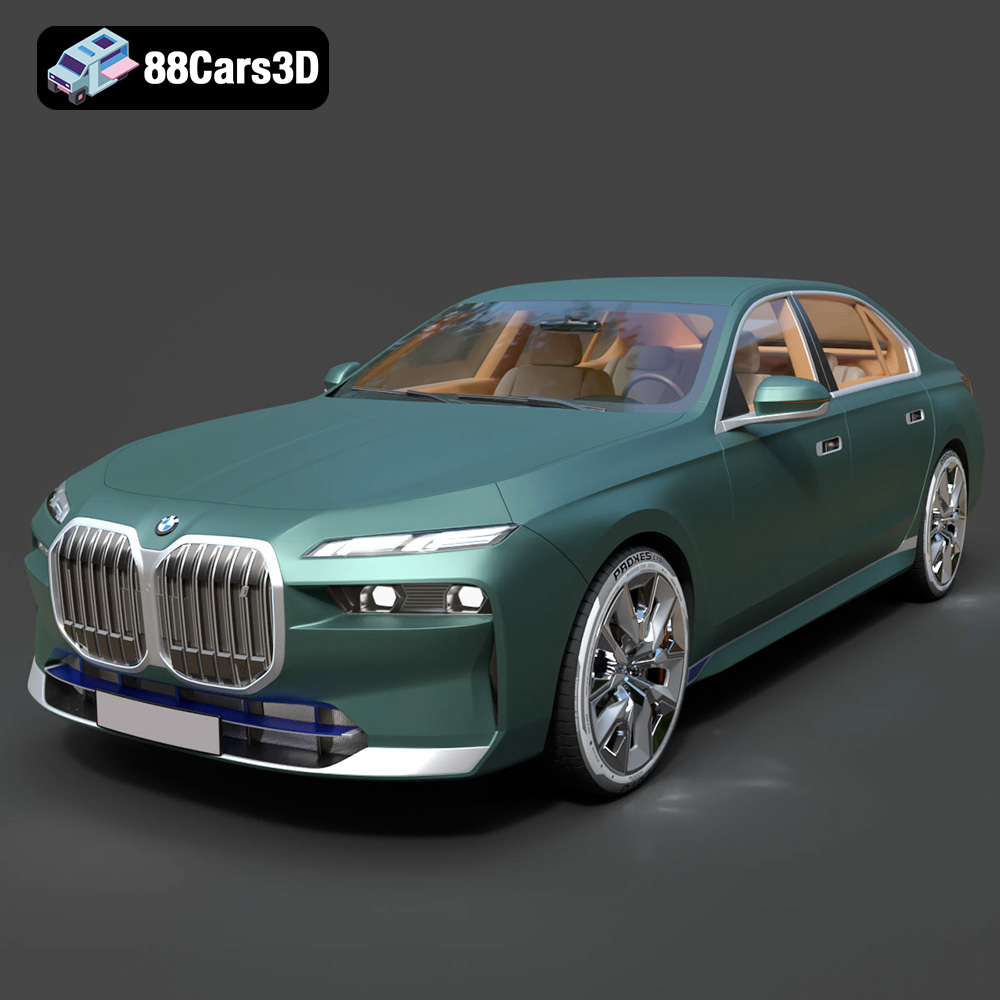
Texture: Yes | Material: Yes Download the ultra-high-detail BMW i7 (2023) 3D Model (4.14M Triangles). Features the illuminated kidney grille, split crystal headlights, fully modeled Theatre Screen interior, and monolithic luxury styling. Perfect for ArchViz, VFX, and cinematic rendering. Includes .blend, .fbx, .obj, .glb, .stl, and .max formats.
Price: $19.99
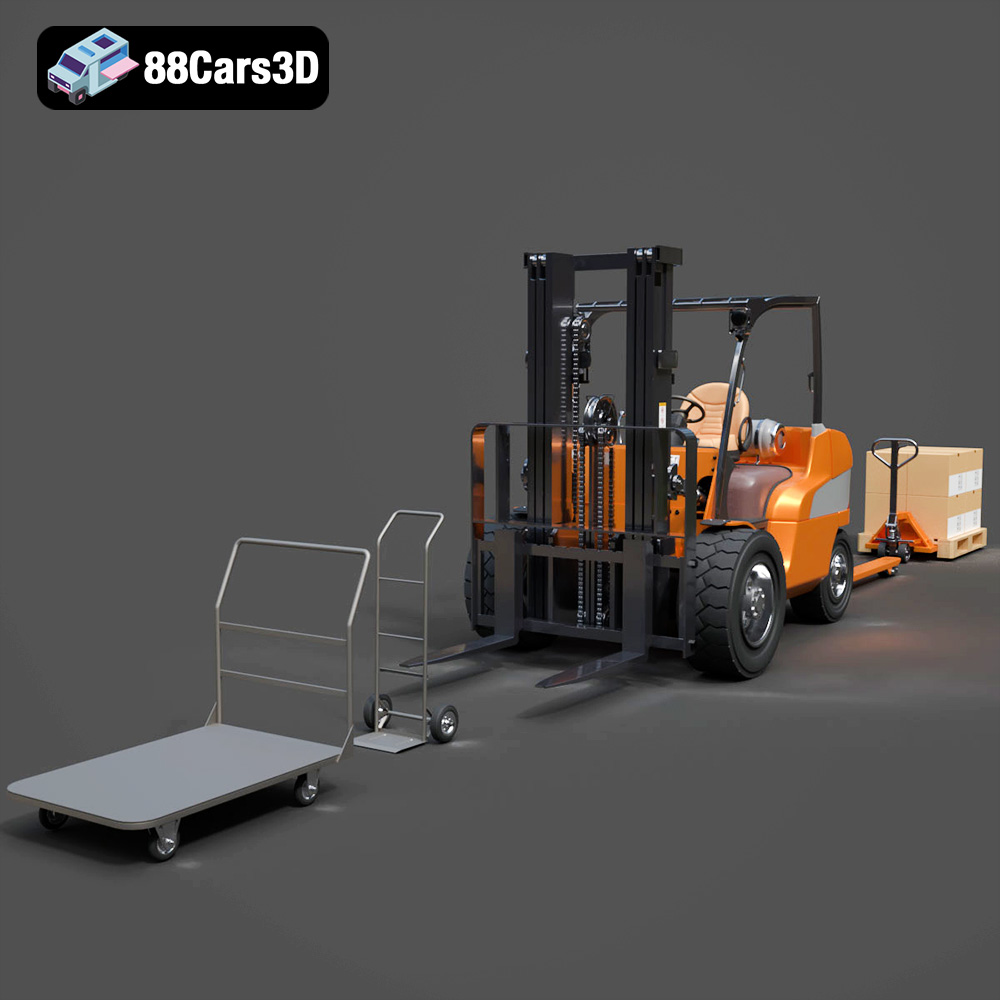
Texture: Yes | Material: Yes Download the highly detailed CAT Manual Loader & Warehouse Carts Kit 3D Model (2.4M Triangles). Features a macro-detailed hydraulic pallet jack, heavy-duty forks, and transport carts. Perfect for industrial ArchViz, factory rendering, and logistics simulations. Includes .blend, .fbx, .obj, .glb, .stl, and .max formats.
Price: $19.99

Texture: Yes | Material: Yes
Download the highly optimized Mazda CX-5 2014 3D Model (294k Triangles). Features the dynamic Kodo design language, signature grille, and a clean interior. Perfectly balanced for ArchViz, background traffic, and game development. Includes .blend, .fbx, .obj, .glb, .stl, and .max formats.
Price: $19.99
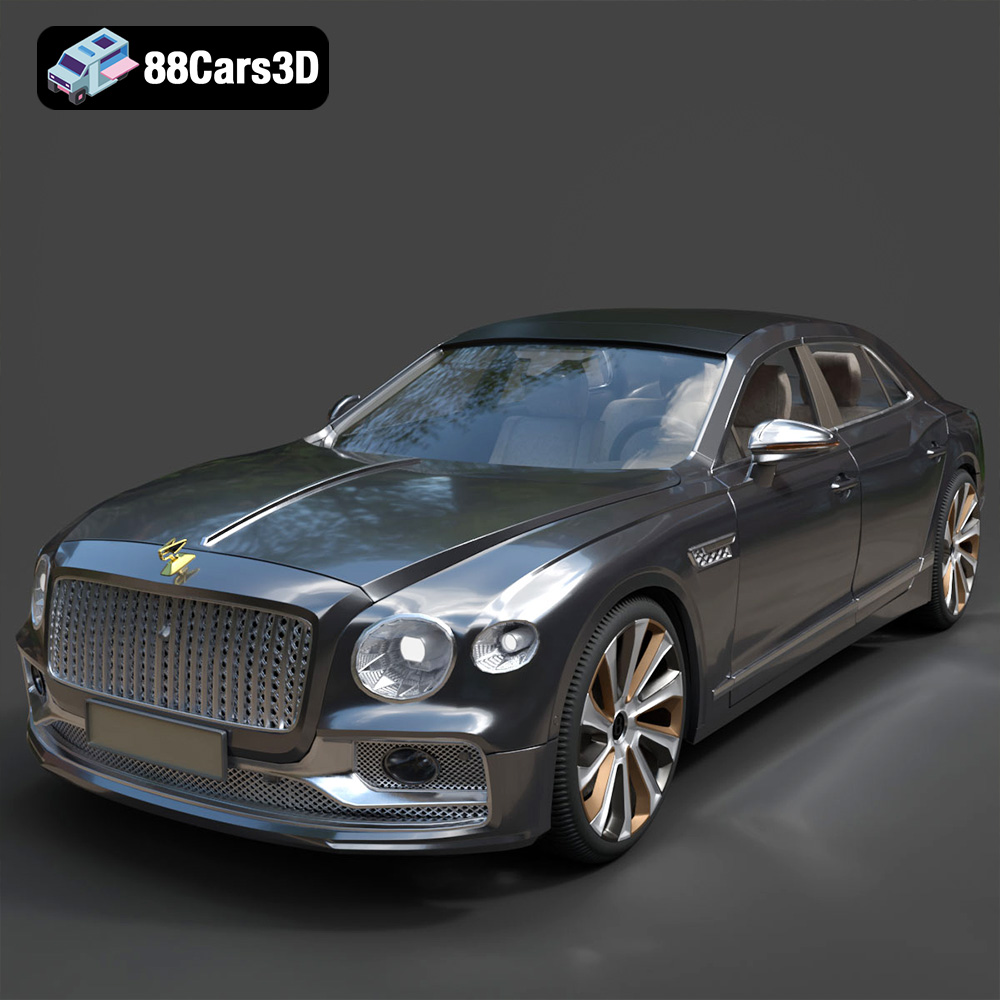
Texture: Yes | Material: Yes Download the ultra-high-detail Bentley Flying Spur Mulliner 2022 3D Model (2.94M Triangles). Features the bespoke Double Diamond grille, a fully modeled diamond-quilted interior, and exquisite luxury styling. Perfect for high-end ArchViz, VFX, and cinematic rendering. Includes .blend, .fbx, .obj, .glb, .stl, and .max formats.
Price: $19.90
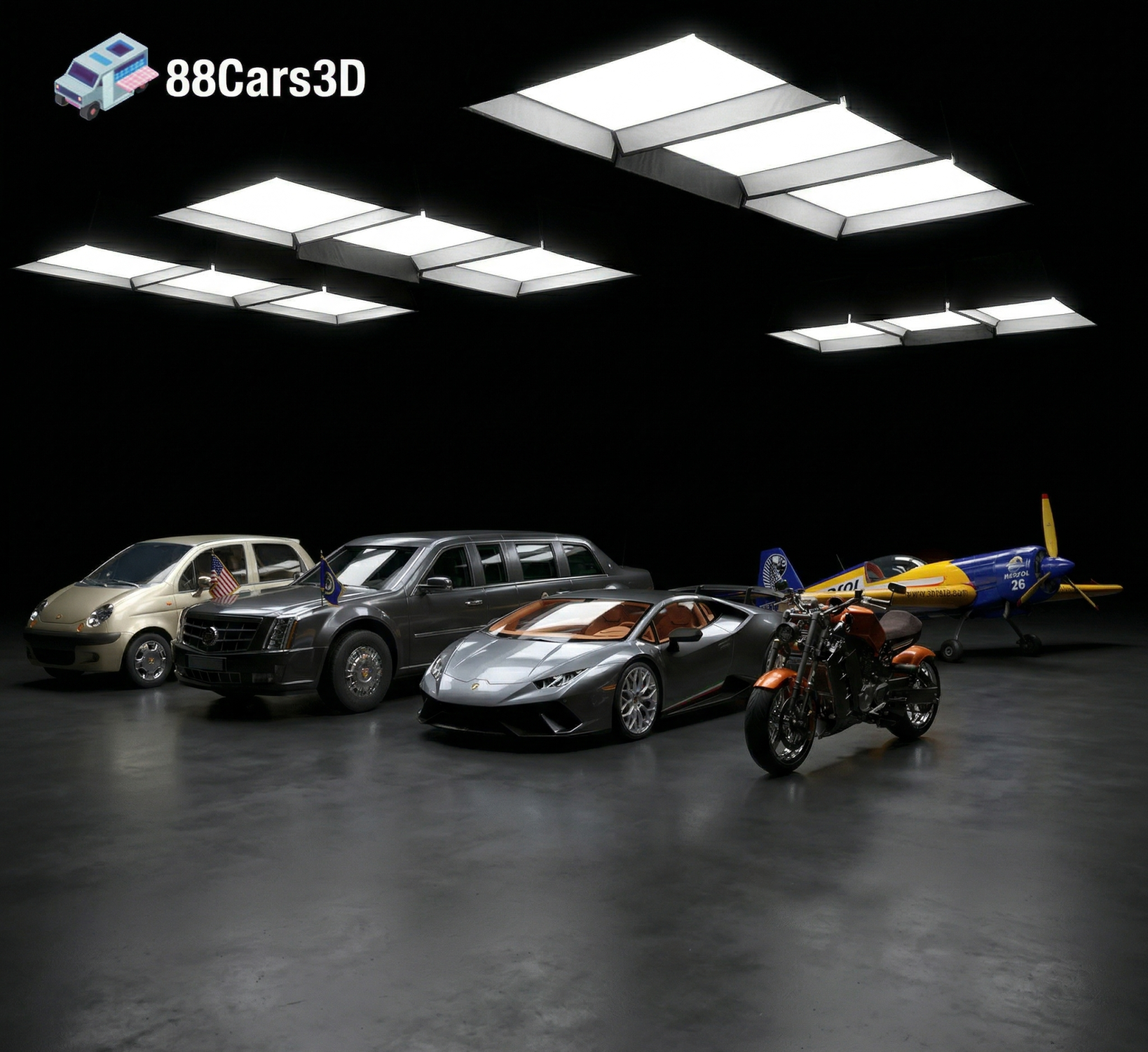
Texture: Yes | Material: Yes | 3D Printable: Yes. Download the Ultimate Creators’ Showcase featuring 5 premium 3D models: Lamborghini Huracan, ZAV Concept Motorcycle, Sukhoi SU-26, Presidential Limousine, and Daewoo Damas. Optimized for 4K CGI rendering and 3D printing. Save massive with this exclusive multi-category bundle!
Price: $99.99

Texture: Yes | Material: Yes | 3D Printable: Yes. Download the Italian Thoroughbreds Bundle featuring 5 iconic 3D models: Lamborghini Huracán Performante, Ferrari 458 Italia, Lamborghini Urus, Diablo SV, and Maserati GT. Optimized for 4K rendering and 3D printing (STL included). Save 50% with this ultimate Italian vehicle collection.
Price: $199.99

Download the Elite Future Mobility Bundle featuring 4 highly optimized 3D models: Tesla Model S, Avatr 11, Li L9, and Zoox Robotaxi. Perfect for ArchViz, Smart City renders, and game dev. Optimized for Unreal Engine and Blender. Includes .fbx, .obj, and .max formats.
Price: $99

🚗 5 Iconic German Cars (BMW M4 G82, M5 CS, X3, 1 Series & Mercedes E-Class). ✅ Optimized for ArchViz: Ready for Corona & V-Ray. 💰 Save €71 with this limited-time collection! 🚀 Instant Download after purchase.
Price: $119

Download the Extreme Off-Road & Survival 3D Models Bundle! Includes the Brabus 800 Adventure, Dodge Ram Bigfoot, Spec Truck, and a Caravan. Save over €210 on this premium 4-in-1 off-grid vehicle pack for ArchViz and game development.
Price: $149.99

Download the Heavy Duty & Commercial Logistics 3D Models Bundle! Includes the Ford Sterling, Caterpillar CT680, Mercedes Citaro Bus, and Vito Van. Save over €130 on this massive, game-ready 4-in-1 industrial vehicle pack.
Price: $109.99

