Get 50% OFF All Premium 3D & STL Models!

In the vast and ever-evolving landscape of real-time rendering and game development, Unreal Engine stands as a powerhouse, continually pushing the boundaries of what’s possible. From breathtaking cinematic sequences to highly interactive game worlds and hyper-realistic architectural and automotive visualizations, its capabilities are immense. However, as projects grow in scope and ambition, incorporating large-scale simulations—such as dynamic crowds—presents a significant performance challenge. Traditional Actor-based approaches, while flexible, can quickly buckle under the weight of hundreds or thousands of individual entities, leading to crippling frame rates and hindering the immersive experience we strive to create.
For professionals leveraging high-quality assets, such as the meticulously crafted 3D car models available on platforms like 88cars3d.com, ensuring optimal performance across the entire scene is paramount. Whether you’re building an expansive open-world game, a bustling urban visualization for an automotive concept, or a virtual production stage with lifelike environments, the need for efficient large-scale entity management is undeniable. Enter the Unreal Engine Mass Entity System – a groundbreaking framework designed from the ground up to tackle these exact challenges. This deep dive will explore the technical intricacies of Mass, its advantages for crowd simulation, and how it empowers developers to create incredibly rich, performant, and believable worlds, seamlessly integrating with and enhancing projects featuring detailed assets like those found on 88cars3d.com.
The journey towards truly immersive real-time experiences often hits a formidable roadblock: performance at scale. When designing environments that demand hundreds or even thousands of independent entities—be it pedestrians in a city street, wildlife in a forest, or even autonomous vehicles in a traffic simulation—traditional Unreal Engine Actor-based methodologies quickly reveal their limitations. Each Actor carries a substantial overhead, encompassing its own scene component, physics body, scripting logic, and rendering pipeline. Multiply this by hundreds or thousands, and the CPU cost for updates, collision detection, and rendering preparation becomes prohibitive, leading to performance bottlenecks and an unsatisfactory user experience.
This is precisely where the Unreal Engine Mass Entity System shines, offering a paradigm shift rooted in Data-Oriented Design (DOD) and the Entity Component System (ECS) pattern. Instead of encapsulating all data and logic within heavy Actors, Mass decouples these elements. Entities are lightweight identifiers, Components (known as ‘Fragments’ in Mass) hold only data, and Processors contain the logic that operates on this data across many entities in parallel. This approach significantly reduces memory footprint, optimizes data access patterns for the CPU, and enables highly efficient batch processing. For demanding automotive visualization projects where high-fidelity car models from sources like 88cars3d.com are placed in complex, dynamic environments, Mass provides the critical backbone to populate these scenes with believable, performant crowds or other large-scale simulations without compromising the overall frame rate.
To truly appreciate Mass, it’s essential to understand the contrast with the traditional Actor model. In an Actor-centric design, each car, character, or interactive element exists as a distinct object in the world, inheriting from AActor. While incredibly versatile for unique, hero objects and manageable numbers of entities, this object-oriented approach incurs significant overhead per instance. Memory locality is poor, as data for different Actors is scattered throughout memory. Cache misses become frequent, and CPU instruction pipelines struggle to achieve optimal efficiency. Furthermore, updates for individual Actors are often processed sequentially, leading to scalability issues.
The ECS pattern, championed by Mass, fundamentally reorganizes this structure. Instead of objects *having* components, components *belong* to entities. Data for similar components (e.g., all positions, all velocities) is stored contiguously in memory. This data-oriented layout dramatically improves cache utilization, allowing the CPU to process large chunks of relevant data in rapid succession. Processors then iterate over these contiguous data blocks, performing operations on thousands of entities with far greater efficiency. This architectural shift is key to unlocking the performance required for massive simulations in real-time. For a deeper dive into these principles, Epic Games’ official documentation on the Mass Entity System provides excellent technical insights at dev.epicgames.com/community/unreal-engine/learning.
At the heart of Mass are four fundamental concepts:
FMassMoveFragment (position, velocity), FMassRepresentationFragment (rendering data), or custom fragments like FMassCrowdAnimFragment (animation state). Fragments are the building blocks that define an entity’s capabilities and state.FMassMoveFragment and FMassForceFragment to update an entity’s position. Processors run in parallel, making them highly efficient.Understanding this data-driven hierarchy is crucial for effectively implementing large-scale simulations, including realistic crowd behaviors that complement hero assets like the detailed vehicle models from 88cars3d.com.
Integrating the Mass Entity System into your Unreal Engine project requires a deliberate setup process, departing from the typical Actor-centric workflow. The objective is to leverage Mass’s data-oriented design for optimal performance while still benefiting from Unreal Engine’s robust rendering and physics capabilities. This section guides you through the essential steps, from enabling the necessary plugins to defining the basic structure of your Mass agents for crowd simulation.
The real power of Mass lies in its modularity and the explicit separation of data from logic. When you’re dealing with hundreds or thousands of entities, such as pedestrians around an exquisitely rendered car from 88cars3d.com in an urban scene, this structure is critical. It allows you to create highly optimized simulations where only the necessary data is processed, and updates occur in parallel, maintaining a smooth frame rate even with dense crowds. Properly configuring your project and defining your Mass agents from the outset is the foundation for a scalable and performant crowd system.
To begin using the Mass Entity System, you first need to enable the relevant plugins within your Unreal Engine project. These plugins provide the core functionality, various utility modules, and specific implementations for different types of simulations, including crowds. The primary plugins you’ll need are:
To enable these, navigate to Edit > Plugins, search for “Mass”, and check the boxes for the required modules. Restart the editor after enabling them. Once activated, you’ll gain access to the Mass framework and its associated classes, allowing you to start defining your crowd agents.
Unlike Actors, Mass agents are defined purely by the collection of Fragments they possess. To create a crowd agent, you’ll typically start by defining a Mass Entity Type. This is not a C++ class in the traditional sense, but rather a configuration asset (UMassEntityConfigAsset) that specifies which Fragments an entity will initially have and which Traits will be applied to it.
Here’s a simplified breakdown of the process:
FMassMoveFragment, FMassVelocityFragment), you’ll often need to define custom ones specific to your crowd’s needs. For example, FMyCrowdAnimationStateFragment might store the current animation state, speed, and desired animation blend.UMassCrowdCharacterTrait. This trait would:
FMassMoveFragment, FMassVelocityFragment, FMassRepresentationFragment, and your custom FMyCrowdAnimationStateFragment.Mass > Mass Entity Config Asset. In this asset, you’ll assign your custom Trait(s) to define the entity’s initial properties. This asset acts as a blueprint for spawning your crowd entities.MassSpawner Actor placed in the world, or through Blueprint/C++ code, passing your UMassEntityConfigAsset to create a specified number of entities.By carefully selecting and defining these Fragments and Traits, you construct the blueprint for your crowd agents, ensuring they possess all the necessary data for movement, animation, rendering, and interaction, all within the highly optimized Mass framework. This modular approach ensures that your crowd simulation remains performant, even when populating vast urban environments or event spaces alongside high-detail assets from 88cars3d.com.
Once you’ve laid the groundwork by setting up your Mass project and defining your entities, the next critical step is to imbue your crowd agents with intelligent and believable behavior. This is where Mass Processors and Traits truly shine, working in conjunction with Unreal Engine’s powerful navigation system. The goal is to simulate complex interactions and movements for hundreds or thousands of agents, creating a dynamic and lifelike environment that complements any scene, from a bustling car show featuring models from 88cars3d.com to a high-speed chase through a city.
Implementing sophisticated crowd behavior using Mass goes far beyond simple random walks. It involves a delicate balance of navigation, decision-making, and interaction, all while maintaining peak performance. By leveraging the data-oriented design, you can define specific behaviors that operate on targeted data fragments, ensuring that only relevant logic is executed for each entity, leading to a highly optimized and scalable system for dynamic, interactive crowds.
At the core of Mass behavior are Processors. Each Processor is a piece of C++ code (or sometimes a Blueprint-derived class, though C++ offers maximum performance) that queries for entities possessing specific combinations of Fragments and then performs operations on their data. For crowd simulation, you’ll design a chain of processors, each responsible for a distinct aspect of behavior:
FMassMoveFragment (position, orientation).FMassCrowdAnimFragment to drive animation states.Traits serve as a convenient way to package and apply these processors and their associated fragments to an entity type. For instance, a UMassCrowdBehaviorTrait might:
FMassTargetLocationFragment, FMassAvoidanceFragment, and FMassCrowdDestinationFragment.UMassLookAtTargetProcessor, UMassSteeringProcessor, and UMassCrowdNavigationProcessor.This modularity allows you to easily combine different traits to create varied crowd behaviors. For example, some agents might have a “Loiter Trait” and “Social Interaction Trait,” while others have a “Commuter Trait” and “Destination Trait.” Processors are designed to run efficiently across thousands of entities, only accessing the data they need, making them incredibly powerful for large-scale simulations. For best practices in processor design, refer to the official Unreal Engine documentation on Mass Entity System at dev.epicgames.com/community/unreal-engine/learning.
Realistic crowd movement relies heavily on robust navigation. Mass Entity System integrates seamlessly with Unreal Engine’s existing navigation mesh (NavMesh) system through the MassNavigation module. This allows your crowd agents to efficiently find paths, avoid static obstacles, and navigate complex environments without you having to reinvent the wheel.
Here’s how it generally works:
FMassNavigationFragment, which stores pathfinding data, current path segment, and navigation state.UMassNavigationProcessor and related processors handle the heavy lifting. They:
FMassTargetLocationFragment).By leveraging these features, you can create intricate and believable crowd movements that dynamically react to their environment, enhancing the realism of your scenes without taxing performance, even with complex automotive visualization assets in the foreground.
While the Mass Entity System excels at CPU-side simulation, the visual representation of hundreds or thousands of entities presents its own set of challenges, especially in real-time applications. High-quality assets like the 3D car models from 88cars3d.com demand significant GPU resources, and adding an unoptimized crowd can quickly overwhelm rendering pipelines. Therefore, efficient rendering strategies for Mass entities are paramount to maintaining high frame rates and a visually appealing experience. This section explores how Unreal Engine addresses this with instancing, Level of Detail (LOD) management, and other optimization techniques to ensure your crowds look great without breaking performance.
The key to scaling visual fidelity for large numbers of entities lies in leveraging GPU instancing and intelligent culling. Instead of drawing each entity individually, which incurs a substantial draw call overhead, Mass aims to render groups of similar entities in a single batch. This, combined with distance-based optimization, allows for visually rich crowds that coexist harmoniously with high-detail hero assets, keeping your automotive visualizations sharp and responsive.
To render Mass entities efficiently, Unreal Engine employs several techniques:
MassRepresentationFragment stores the mesh ID and material, which are then used by a MassVisualizerProcessor to feed data to the instancing system.FMassSkeletalMeshInstanceFragment would store animation data (e.g., current pose, animation clip), and a dedicated processor would manage these instances.MassLOD module is crucial for scaling visual quality. It allows you to define different levels of detail for both the simulation logic (e.g., simpler pathfinding at a distance) and the rendering (e.g., switching from a high-poly skeletal mesh to a low-poly static mesh or even a billboard at extreme distances). The FMassRepresentationLODFragment tracks the current LOD state, which processors use to determine what data to update and how the entity should be rendered. This ensures that resources are only spent on entities that are close enough to warrant higher detail.UMassRepresentationProcessor) that bridge the gap between Mass entity data and Unreal Engine’s rendering pipeline. They gather the necessary rendering data from active entities (e.g., positions, orientations, material overrides, animation states) and package it for efficient drawing, typically via instancing.By combining these methods, Mass ensures that even vast crowds can be rendered performantly, leaving ample GPU budget for high-resolution textures and complex materials on hero assets like your 88cars3d.com vehicles.
Beyond instancing and LODs, several other optimization strategies are vital for maintaining performance with Mass entities:
uint8 instead of int32 where possible) and align data to reduce memory footprint. Lean, contiguous data is the bedrock of Mass’s performance.Mastering these optimization techniques allows you to scale your crowd simulations to unprecedented levels, creating vibrant, living worlds that enhance any Unreal Engine project, from immersive games to sophisticated automotive visualization experiences powered by assets from 88cars3d.com.
While the core of the Mass Entity System is built with C++ for maximum performance, Unreal Engine’s powerful Blueprint visual scripting system is not excluded from the equation. Integrating Mass with Blueprint allows developers to create dynamic and interactive experiences, providing artists and designers with the flexibility to influence and react to large-scale simulations without diving deep into C++ code. This bridge is crucial for rapid prototyping, iteration, and adding layers of interactivity to scenes, whether it’s for game mechanics, an interactive car configurator, or a live automotive demonstration.
The ability to control and query Mass entities through Blueprint opens up a world of possibilities. Imagine a scenario where a player drives a car from 88cars3d.com through a city, and crowds dynamically disperse or gather based on the vehicle’s presence, speed, or specific triggers. Or perhaps, in an architectural visualization, a user can toggle crowd density or behavior patterns with a click of a button. Blueprint integration makes these complex interactions accessible, blending the performance of Mass with the ease of visual scripting.
Unreal Engine provides several ways to interact with the Mass Entity System from Blueprint:
MassEntitySubsystem, which can be accessed from any Blueprint. This subsystem exposes functions to:
SpawnMassEntity node, providing a MassEntityConfigAsset (which you’ve defined earlier to describe your crowd agent) and an initial transform.MassEntityConfigAsset. In Blueprint, you can then query for entities that possess specific tags (e.g., “Crowd.Pedestrian,” “Crowd.Driver”) to apply effects or trigger behaviors.While direct, granular control over every fragment from Blueprint is discouraged for performance reasons (as it can break data locality benefits), these methods allow for high-level control and meaningful interaction points without sacrificing the efficiency of Mass.
The combination of Blueprint and Mass opens up exciting avenues for interactive experiences, particularly in automotive visualization and real-time configurators:
By judiciously using Blueprint to interface with the underlying Mass Entity System, developers can create rich, interactive, and performant simulations that elevate the quality and immersion of their Unreal Engine projects, seamlessly integrating with and enhancing premium assets like those found on 88cars3d.com.
The Unreal Engine Mass Entity System represents a monumental leap forward in addressing the challenges of large-scale simulations in real-time environments. By embracing a data-oriented design and the Entity Component System pattern, Mass liberates developers from the performance constraints of traditional Actor-based approaches, enabling the creation of incredibly rich, dynamic, and believable worlds populated by hundreds or even thousands of intelligent entities. Whether it’s sprawling crowds, complex traffic simulations, or environmental dynamics, Mass provides the robust and scalable foundation required for next-generation interactive experiences.
For professionals dedicated to high-fidelity automotive visualization, game development, and virtual production, integrating Mass Entity System into their workflow is a strategic advantage. It ensures that while hero assets—like the meticulously detailed 3D car models acquired from platforms such as 88cars3d.com—command the foreground with their exquisite visuals and complex materials, the surrounding environments can be brought to life with equally compelling, performant, and interactive simulations. This synergy between high-quality static and dynamic elements is what truly elevates a project from good to exceptional, delivering unparalleled immersion and realism.
The Mass Entity System, with its emphasis on efficient data processing, parallel execution, and flexible modularity through Fragments, Processors, and Traits, empowers creators to push beyond previous limitations. From carefully curated project setups and the definition of lightweight agents to crafting intelligent behaviors and optimizing rendering with advanced instancing and LOD techniques, Mass provides a comprehensive toolkit for scaling your vision. Furthermore, its thoughtful integration with Blueprint allows for accessible control and interactive experiences, making powerful simulations manageable for designers and artists.
Embracing Mass is an investment in future-proof development, ensuring that your Unreal Engine projects can scale in complexity and entity count without compromising on the smooth, real-time performance that defines a truly immersive experience. Explore its capabilities, experiment with its modules, and unlock the potential to create the most ambitious and living worlds imaginable, knowing that the foundation is rock solid for both your bespoke assets and the dynamic life that surrounds them.
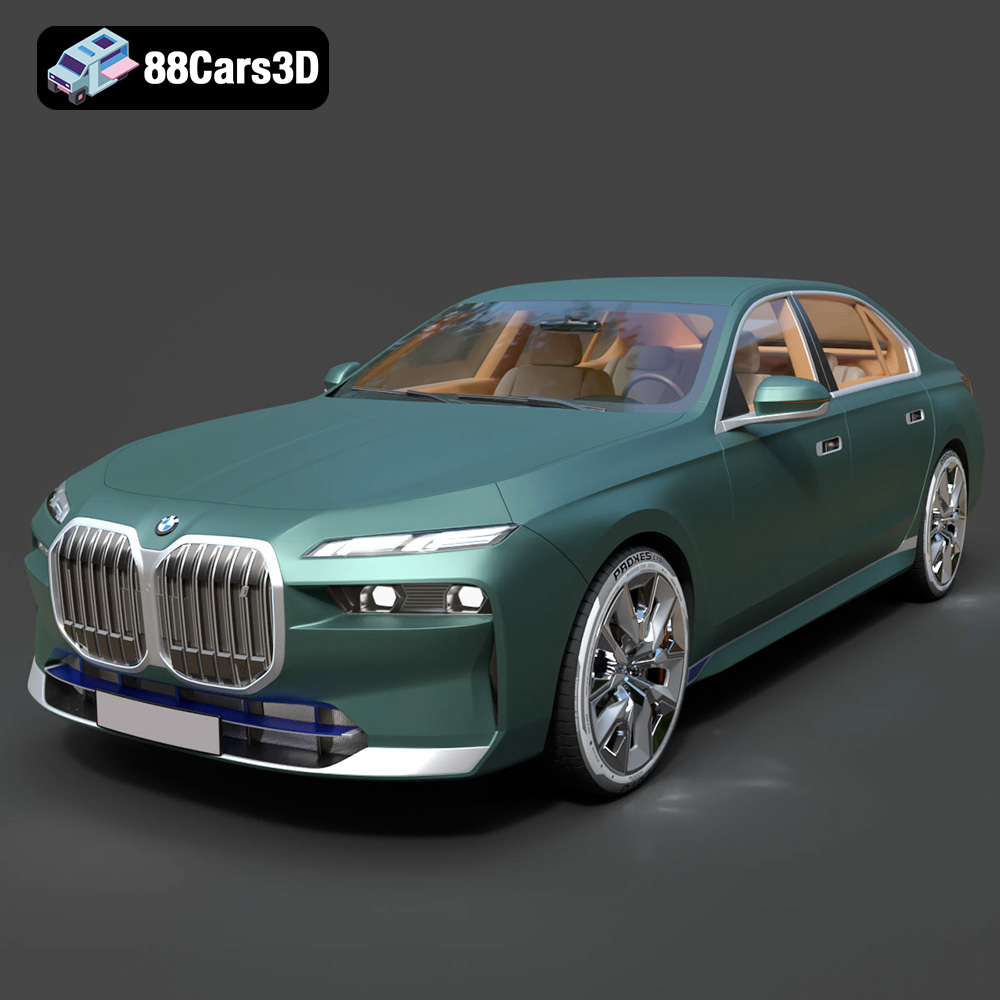
Texture: Yes | Material: Yes Download the ultra-high-detail BMW i7 (2023) 3D Model (4.14M Triangles). Features the illuminated kidney grille, split crystal headlights, fully modeled Theatre Screen interior, and monolithic luxury styling. Perfect for ArchViz, VFX, and cinematic rendering. Includes .blend, .fbx, .obj, .glb, .stl, and .max formats.
Price: $19.99
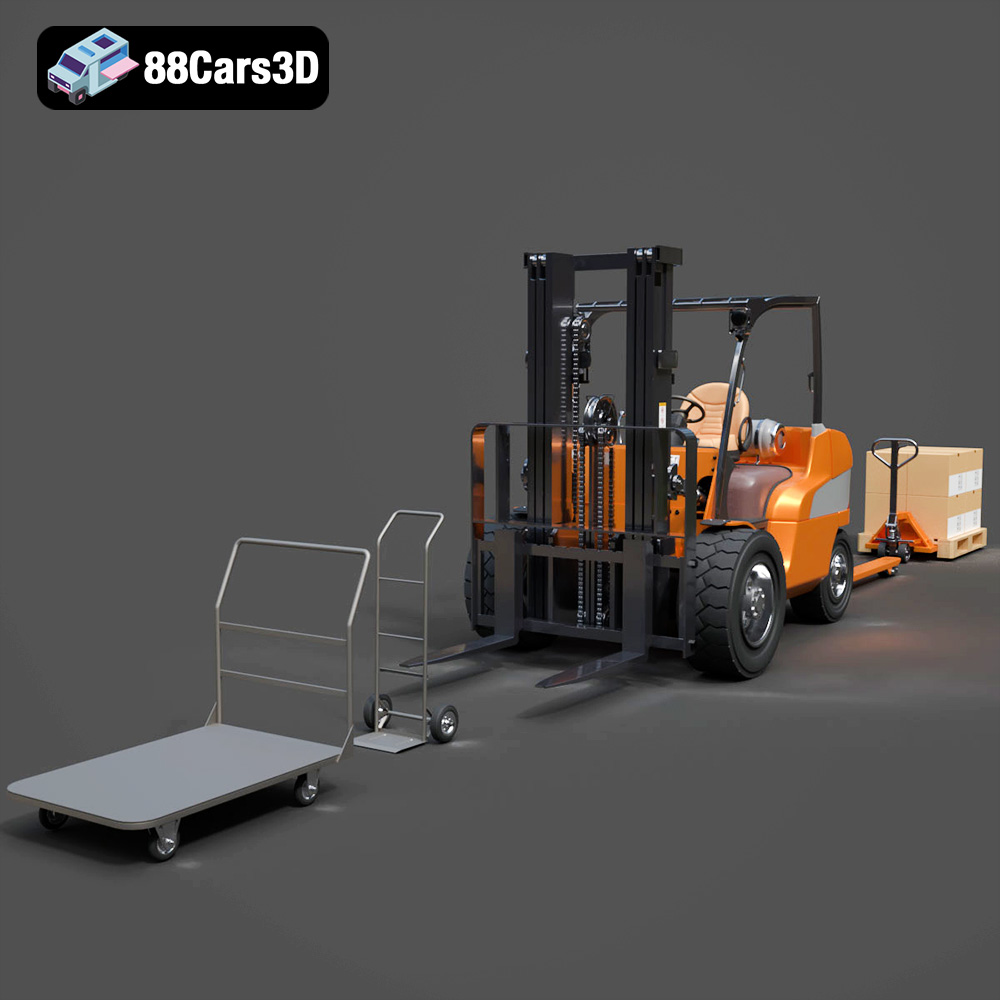
Texture: Yes | Material: Yes Download the highly detailed CAT Manual Loader & Warehouse Carts Kit 3D Model (2.4M Triangles). Features a macro-detailed hydraulic pallet jack, heavy-duty forks, and transport carts. Perfect for industrial ArchViz, factory rendering, and logistics simulations. Includes .blend, .fbx, .obj, .glb, .stl, and .max formats.
Price: $19.99
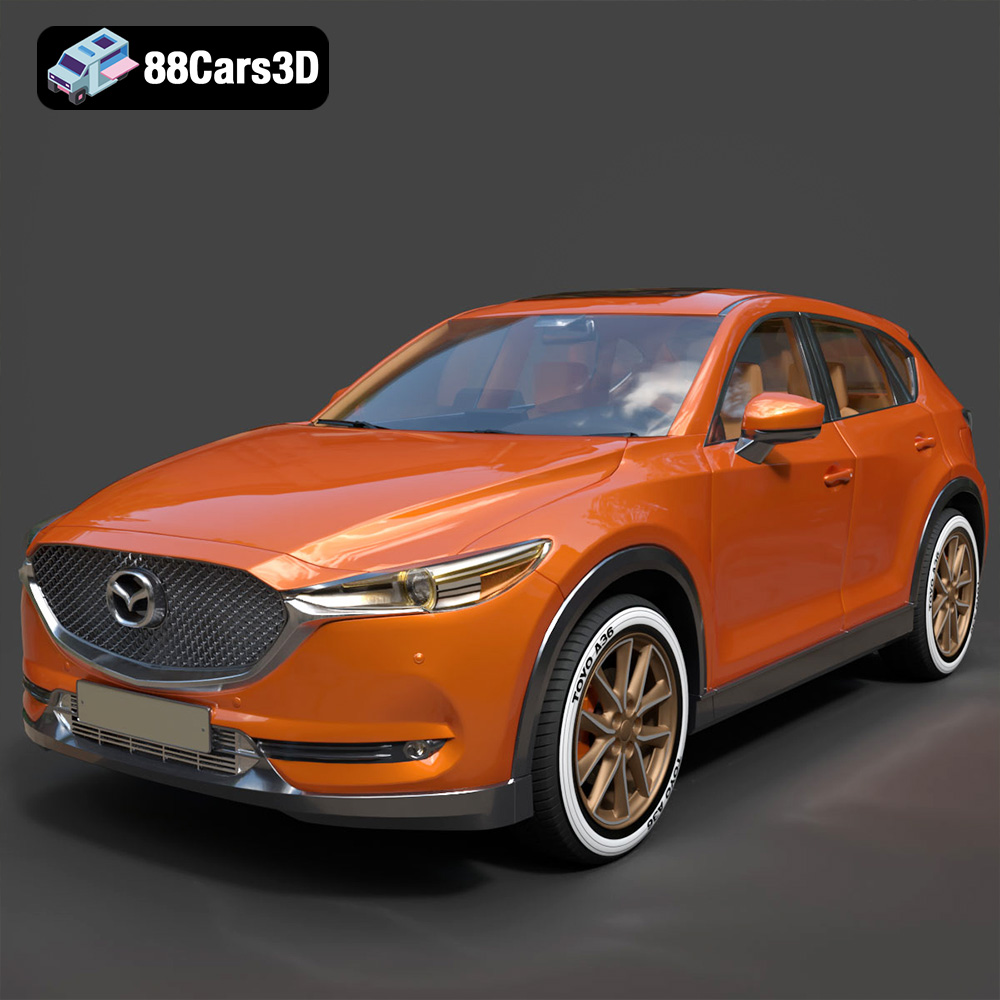
Texture: Yes | Material: Yes
Download the highly optimized Mazda CX-5 2014 3D Model (294k Triangles). Features the dynamic Kodo design language, signature grille, and a clean interior. Perfectly balanced for ArchViz, background traffic, and game development. Includes .blend, .fbx, .obj, .glb, .stl, and .max formats.
Price: $19.99
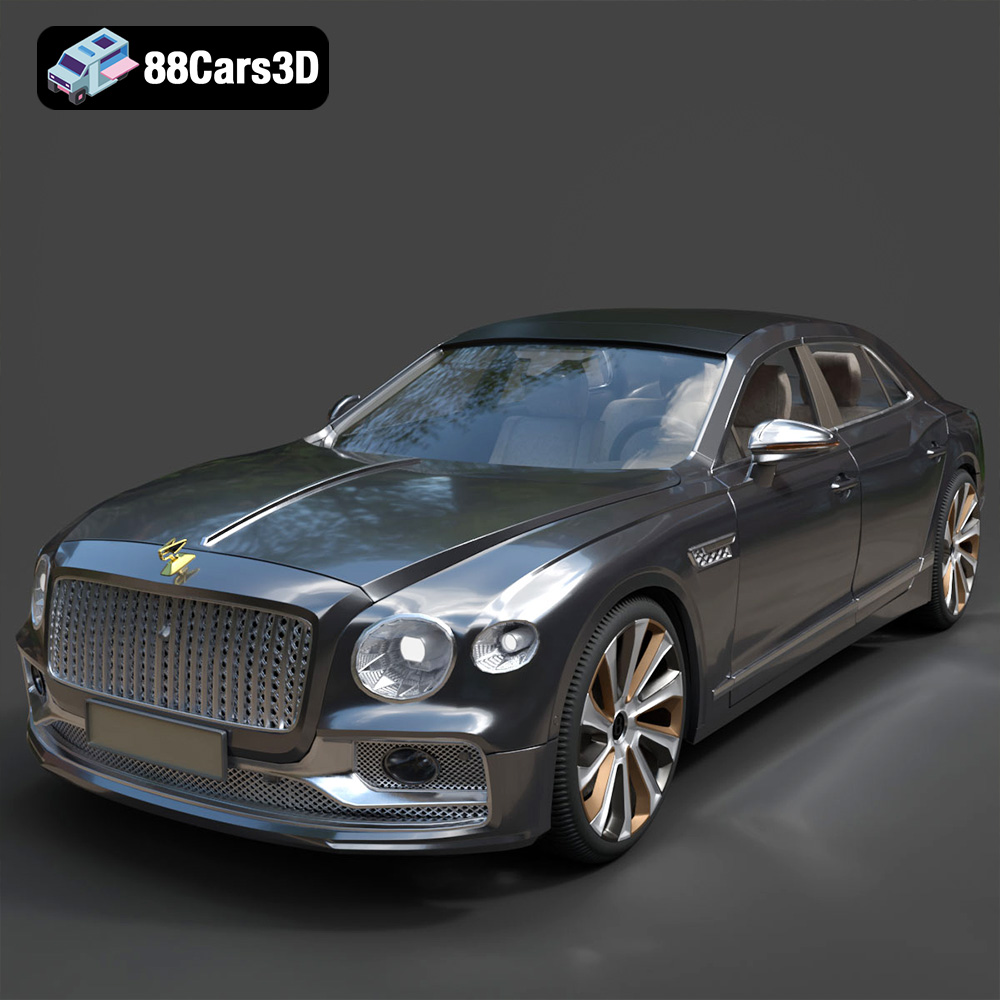
Texture: Yes | Material: Yes Download the ultra-high-detail Bentley Flying Spur Mulliner 2022 3D Model (2.94M Triangles). Features the bespoke Double Diamond grille, a fully modeled diamond-quilted interior, and exquisite luxury styling. Perfect for high-end ArchViz, VFX, and cinematic rendering. Includes .blend, .fbx, .obj, .glb, .stl, and .max formats.
Price: $19.90

Texture: Yes | Material: Yes | 3D Printable: Yes. Download the Ultimate Creators’ Showcase featuring 5 premium 3D models: Lamborghini Huracan, ZAV Concept Motorcycle, Sukhoi SU-26, Presidential Limousine, and Daewoo Damas. Optimized for 4K CGI rendering and 3D printing. Save massive with this exclusive multi-category bundle!
Price: $99.99

Texture: Yes | Material: Yes | 3D Printable: Yes. Download the Italian Thoroughbreds Bundle featuring 5 iconic 3D models: Lamborghini Huracán Performante, Ferrari 458 Italia, Lamborghini Urus, Diablo SV, and Maserati GT. Optimized for 4K rendering and 3D printing (STL included). Save 50% with this ultimate Italian vehicle collection.
Price: $199.99

Download the Elite Future Mobility Bundle featuring 4 highly optimized 3D models: Tesla Model S, Avatr 11, Li L9, and Zoox Robotaxi. Perfect for ArchViz, Smart City renders, and game dev. Optimized for Unreal Engine and Blender. Includes .fbx, .obj, and .max formats.
Price: $99

🚗 5 Iconic German Cars (BMW M4 G82, M5 CS, X3, 1 Series & Mercedes E-Class). ✅ Optimized for ArchViz: Ready for Corona & V-Ray. 💰 Save €71 with this limited-time collection! 🚀 Instant Download after purchase.
Price: $119

Download the Extreme Off-Road & Survival 3D Models Bundle! Includes the Brabus 800 Adventure, Dodge Ram Bigfoot, Spec Truck, and a Caravan. Save over €210 on this premium 4-in-1 off-grid vehicle pack for ArchViz and game development.
Price: $149.99

Download the Heavy Duty & Commercial Logistics 3D Models Bundle! Includes the Ford Sterling, Caterpillar CT680, Mercedes Citaro Bus, and Vito Van. Save over €130 on this massive, game-ready 4-in-1 industrial vehicle pack.
Price: $109.99

