Get 50% OFF All Premium 3D & STL Models!

The roar of a finely-tuned engine, the gleam of polished chrome, the unique lines of a custom body kit – for automotive enthusiasts, the desire to personalize and optimize their vehicles runs deep. In recent years, a revolutionary technology has empowered this passion like never before: 3D printing. No longer confined to rapid prototyping in industrial settings, 3D printing has become an accessible tool for creating custom car parts, from bespoke interior accents and dashboard organizers to aerodynamic exterior components and functional engine bay fixtures. This guide delves deep into the fascinating world of 3D printing custom car parts, offering a comprehensive tutorial that will take you from a digital concept to a tangible, high-performance component.
Whether you’re an experienced 3D artist looking to bring your automotive designs to life, a mechanic seeking to fabricate a discontinued part, or an enthusiast dreaming of a truly unique vehicle, this article will equip you with the knowledge and techniques needed. We’ll explore the critical steps involved, from mastering 3D modeling topology for print-ready meshes and selecting the right materials, to optimizing your designs for various printing technologies and performing essential post-processing. By the end, you’ll understand how to leverage platforms like 88cars3d.com for high-quality base models and transform your digital vision into a robust physical reality, opening up a world of possibilities for automotive customization and innovation.
Creating a successful 3D print begins long before the print head moves or the laser cures resin; it starts with a meticulously crafted 3D model. For custom car parts, where precision and functionality are paramount, understanding the core principles of 3D modeling for additive manufacturing is non-negotiable. Unlike models destined solely for automotive rendering or game assets, 3D printable models demand specific geometric integrity to ensure they can be accurately translated into a physical object. This foundation dictates everything from structural integrity to the print’s success rate.
The single most critical aspect of a 3D model intended for printing is its topological integrity, specifically the concept of a “watertight” or “manifold” mesh. Imagine your 3D model as a balloon; if there’s any hole, it’s not truly sealed. Similarly, a watertight mesh is a completely enclosed volume without any gaps, internal faces, intersecting geometry, or flipped normals. Non-manifold geometry, such as edges shared by more than two faces, open boundaries (holes), or faces pointing inwards, creates ambiguity for the slicing software, leading to errors, missing layers, or even complete print failures. When sourcing high-quality 3D car models from platforms like 88cars3d.com, you often get models with excellent topology for rendering, but they may still require checks and modifications to be truly watertight for 3D printing, especially if they are shell models. Tools within modeling software like Blender’s 3D Print Toolbox (which you can learn more about in the official Blender 4.4 documentation) or external mesh repair tools are indispensable for identifying and rectifying these issues, ensuring your digital design translates into a solid physical object.
Working in real-world units is paramount when designing custom car parts. A part designed to fit snugly under a hood or within an interior panel must have precise dimensions. Always set your modeling software’s scene units to real-world measurements (millimeters, centimeters, or inches) from the outset. This prevents scaling discrepancies later in the workflow. Furthermore, it’s essential to account for material shrinkage, a phenomenon where certain 3D printing materials (especially plastics like ABS or resins) contract slightly as they cool or cure. While slicer software often has compensation settings, understanding your chosen material’s specific shrinkage rate and potentially oversizing your part by a fraction of a percentage can be crucial for achieving exact dimensional accuracy. For example, if you’re printing a bracket that needs to fit a 10mm bolt, designing the hole at 10.1mm or 10.2mm might be necessary, depending on your printer’s calibration and material.
With the foundational understanding of watertight meshes and dimensional accuracy established, the next step is to dive into the software environments where these concepts are put into practice. The choice of software can significantly impact your workflow, especially when dealing with the intricate forms and precise requirements of automotive components. While many tools can achieve similar results, each offers a slightly different approach and feature set, making it crucial to select the right one for your specific needs, whether you’re modifying an existing 3D car model or designing from scratch.
For organic shapes, complex surfaces, and artistic freedom, industry-standard polygon modeling software like Blender, 3ds Max, and Maya are excellent choices. These programs allow for highly detailed surface modeling, which is crucial when replicating automotive aesthetics or designing flowing custom body parts. When working in Blender, for instance, you’ll extensively use tools like the ‘Solidify’ modifier to give thickness to surfaces, ensuring they become watertight volumes suitable for printing. Mesh analysis tools, also found within Blender’s 3D Print Toolbox (refer to the official Blender 4.4 documentation for detailed usage), can help identify non-manifold edges, open faces, and intersections before export. For more structured, mechanical parts, boolean operations (union, difference, intersect) are powerful for combining and subtracting shapes, but always remember to clean up the resulting topology to avoid artifacts. While UV mapping and PBR materials are vital for high-quality rendering and visualization (especially for the original 3D car models you might source), for 3D printing, these attributes are generally stripped away or ignored by the slicer, as the focus shifts entirely to the physical geometry and material properties.
When designing functional custom car parts – components that need to withstand mechanical stresses, fit precisely, or integrate with existing hardware – Computer-Aided Design (CAD) software often takes precedence. Programs like Fusion 360, SolidWorks, or FreeCAD are built around parametric modeling, allowing for precise control over dimensions, constraints, and features. This is particularly advantageous for parts like brackets, adapters, custom mounts, or enclosures where exact measurements are paramount. CAD software excels at creating solid bodies with predictable behavior, which is ideal for engineering applications. When you’re ready to print from CAD, the standard output format is typically STL (Stereolithography), though OBJ and even 3MF are also common. It’s crucial to export with sufficient mesh resolution; too low, and your curved surfaces will appear faceted; too high, and the file size becomes unwieldy for your slicer. A good balance often involves adjusting chord height or angle tolerance settings during the STL export process to ensure smooth curves without excessive polygon counts.
Once your 3D car model is meticulously designed, the next critical phase involves preparing it specifically for the 3D printing process. This isn’t just about saving the file; it’s a comprehensive optimization stage that ensures printability, structural integrity, and efficient material usage. Neglecting this step can lead to wasted time, material, and frustrating print failures. The goal is to transform your pristine digital model into an instruction set that your 3D printer can reliably execute, producing a robust and accurate physical part.
Even with careful modeling, imperfections can creep into your mesh, especially when combining complex geometries or importing models from different sources. Mesh repair tools, either integrated into your modeling software (like Blender’s 3D Print Toolbox) or standalone applications like Autodesk Meshmixer or Netfabb, are indispensable. These tools can automatically detect and fix common issues such as non-manifold geometry, inverted normals, intersecting faces, and small gaps. It’s a good practice to run a comprehensive mesh analysis before exporting. For optimization, consider decimation. While high polygon counts are great for rendering detailed 3D car models, they can increase file size and processing time for slicers without adding significant value to the physical print, especially for organic curves that don’t need minute surface detail. Decimation strategies aim to reduce the polygon count while preserving critical details and overall shape, which is crucial for complex automotive components where performance might be a factor. However, be cautious not to decimate too aggressively, as this can lead to a loss of detail and a “low-poly” appearance that compromises the part’s intended form.
A common pitfall in 3D printing custom car parts is inadequate wall thickness. Every part needs sufficient material to maintain its shape and withstand any intended forces. Minimum wall thickness varies significantly depending on the printing technology (FDM, SLA, SLS), the material used, and the part’s intended function. For FDM printing, walls typically need to be at least 1.0mm to 1.5mm thick, often a multiple of your nozzle diameter. For resin (SLA) printing, thinner walls (0.5mm – 1.0mm) are often achievable, while SLS can handle even finer details. Always consult your chosen printer’s specifications and material data sheets. When designing, pay close attention to stress points and areas that will experience mechanical load. Adding fillets (rounded edges) or chamfers to sharp internal and external corners can significantly improve structural integrity by distributing stress more evenly, preventing cracks or breaks. Consider designing with internal ribbing or infill patterns (which will be defined in the slicer) to add strength without adding excessive weight or material.
The selection of material and printing technology is perhaps the most critical decision after the design phase, profoundly impacting the custom car part’s functionality, durability, aesthetics, and cost. Each material boasts a unique set of properties, and each printing method excels in different areas, making an informed choice essential for the success of your automotive project. Whether you’re fabricating a cosmetic dashboard trim or a heat-resistant engine bay component, understanding these options is paramount.
For custom car parts, the material choice is dictated by the part’s environment and function:
The choice of printing technology is intertwined with the material and the desired outcome:
Consider the balance of detail, strength, cost, and desired finish when making your selection. For many custom car parts, a high-quality FDM print with engineering-grade filament or a robust SLA resin print will suffice.
The final digital hurdle before bringing your custom car part to life is mastering your slicer software. This crucial application translates your 3D model into precise instructions (G-code) for your 3D printer. Beyond the print itself, post-processing techniques are essential for achieving the desired finish, functionality, and aesthetic appeal, transforming a raw 3D print into a professional-grade component worthy of your vehicle.
The slicer is your bridge between the digital model and the physical print. Software like Cura, PrusaSlicer, Simplify3D, or Chitubox (for resin printers) offers a wealth of settings that directly impact print quality, strength, and speed.
After the printing process is complete, post-processing transforms the raw print into a finished part.
The journey from a digital concept to a tangible custom car part is a testament to the transformative power of 3D printing. We’ve explored the intricate steps, from meticulously crafting watertight 3D models with proper topology and dimensional accuracy, through the selection of appropriate software like Blender, 3ds Max, or CAD tools, to the critical preparation stages of mesh repair and structural optimization. Understanding the diverse landscape of 3D printing materials and technologies – FDM, SLA, and SLS – empowers you to choose the perfect combination for your specific automotive needs, whether it’s a robust engine bracket or a finely detailed interior trim.
Finally, mastering your slicer settings and applying meticulous post-processing techniques will ensure your printed custom car part not only functions flawlessly but also looks as good as an OEM component. The ability to design, iterate, and produce bespoke automotive parts opens up unparalleled opportunities for personalization, repair, and innovation. Embrace this technology, experiment with different designs and materials, and continuously refine your skills. For those seeking a strong foundation, platforms like 88cars3d.com offer high-quality 3D car models that can serve as excellent starting points for modification and integration into your custom projects. The road to automotive customization is now literally at your fingertips – start printing your vision today!
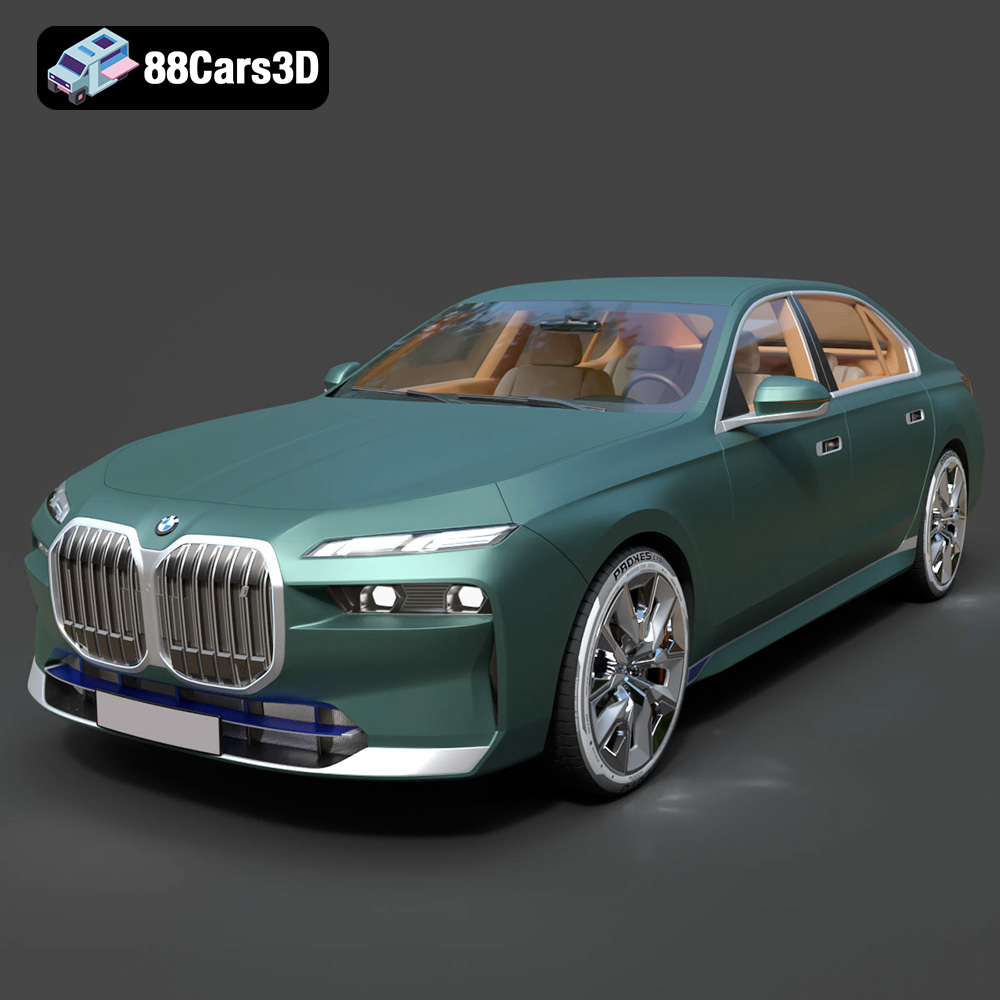
Texture: Yes | Material: Yes Download the ultra-high-detail BMW i7 (2023) 3D Model (4.14M Triangles). Features the illuminated kidney grille, split crystal headlights, fully modeled Theatre Screen interior, and monolithic luxury styling. Perfect for ArchViz, VFX, and cinematic rendering. Includes .blend, .fbx, .obj, .glb, .stl, and .max formats.
Price: $19.99
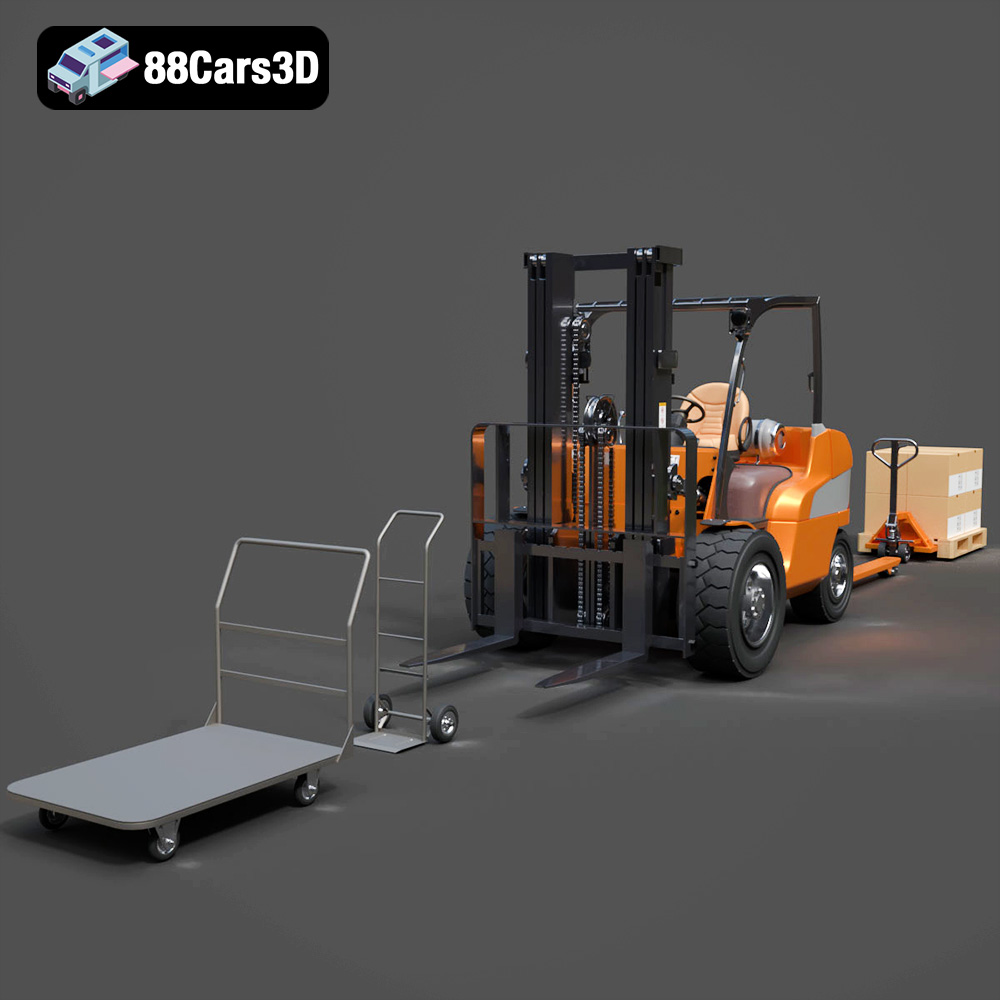
Texture: Yes | Material: Yes Download the highly detailed CAT Manual Loader & Warehouse Carts Kit 3D Model (2.4M Triangles). Features a macro-detailed hydraulic pallet jack, heavy-duty forks, and transport carts. Perfect for industrial ArchViz, factory rendering, and logistics simulations. Includes .blend, .fbx, .obj, .glb, .stl, and .max formats.
Price: $19.99
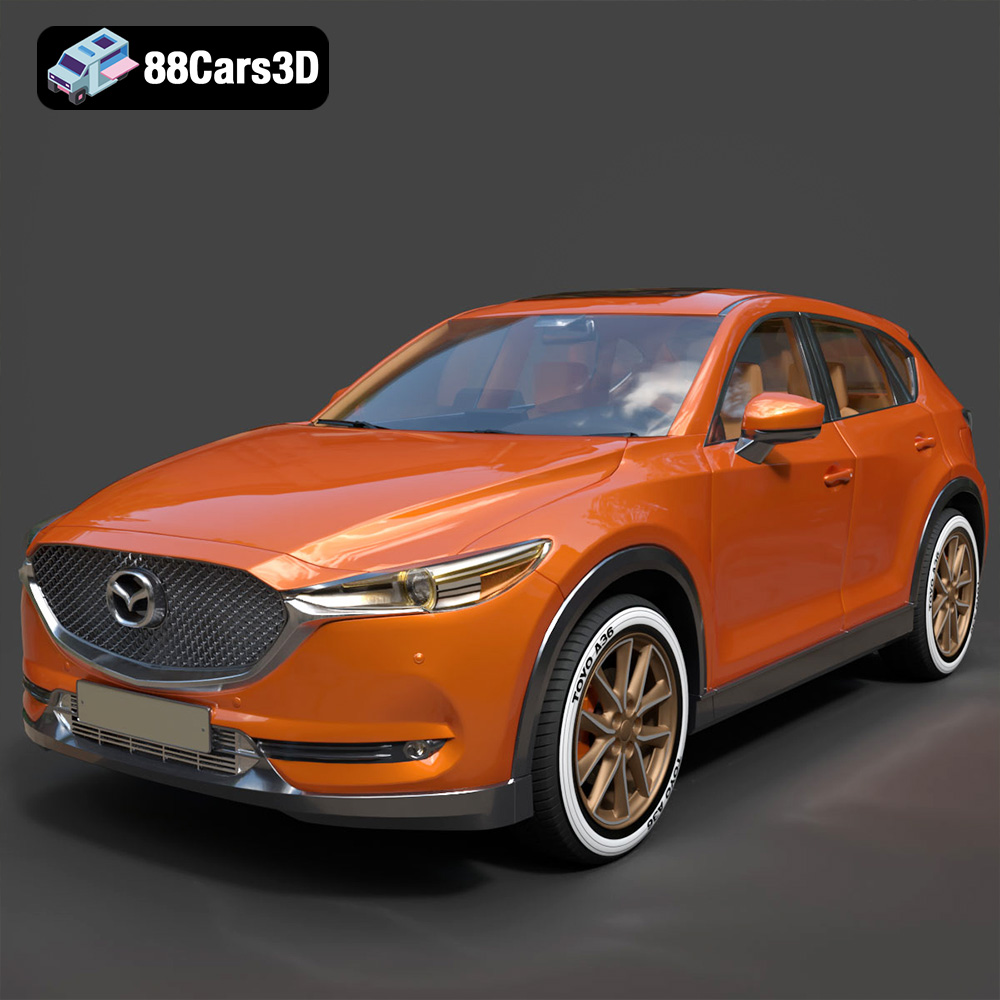
Texture: Yes | Material: Yes
Download the highly optimized Mazda CX-5 2014 3D Model (294k Triangles). Features the dynamic Kodo design language, signature grille, and a clean interior. Perfectly balanced for ArchViz, background traffic, and game development. Includes .blend, .fbx, .obj, .glb, .stl, and .max formats.
Price: $19.99
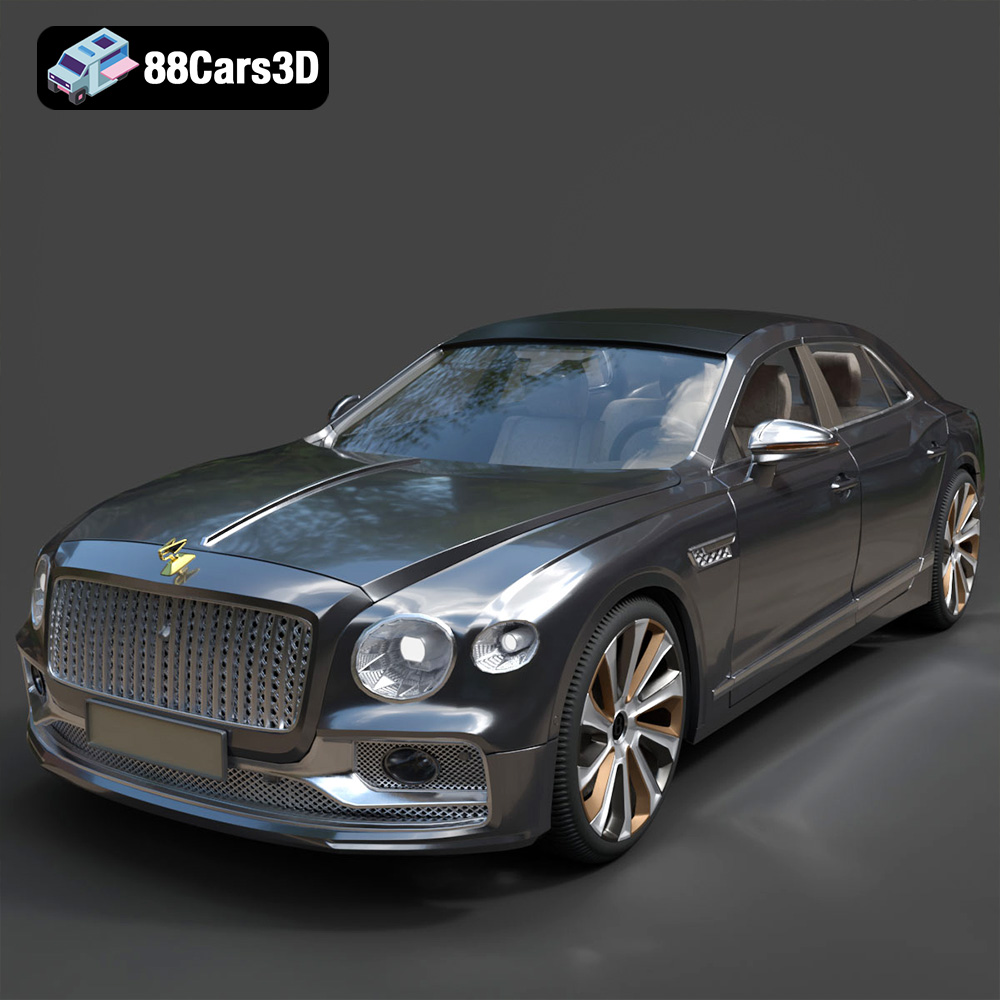
Texture: Yes | Material: Yes Download the ultra-high-detail Bentley Flying Spur Mulliner 2022 3D Model (2.94M Triangles). Features the bespoke Double Diamond grille, a fully modeled diamond-quilted interior, and exquisite luxury styling. Perfect for high-end ArchViz, VFX, and cinematic rendering. Includes .blend, .fbx, .obj, .glb, .stl, and .max formats.
Price: $19.90
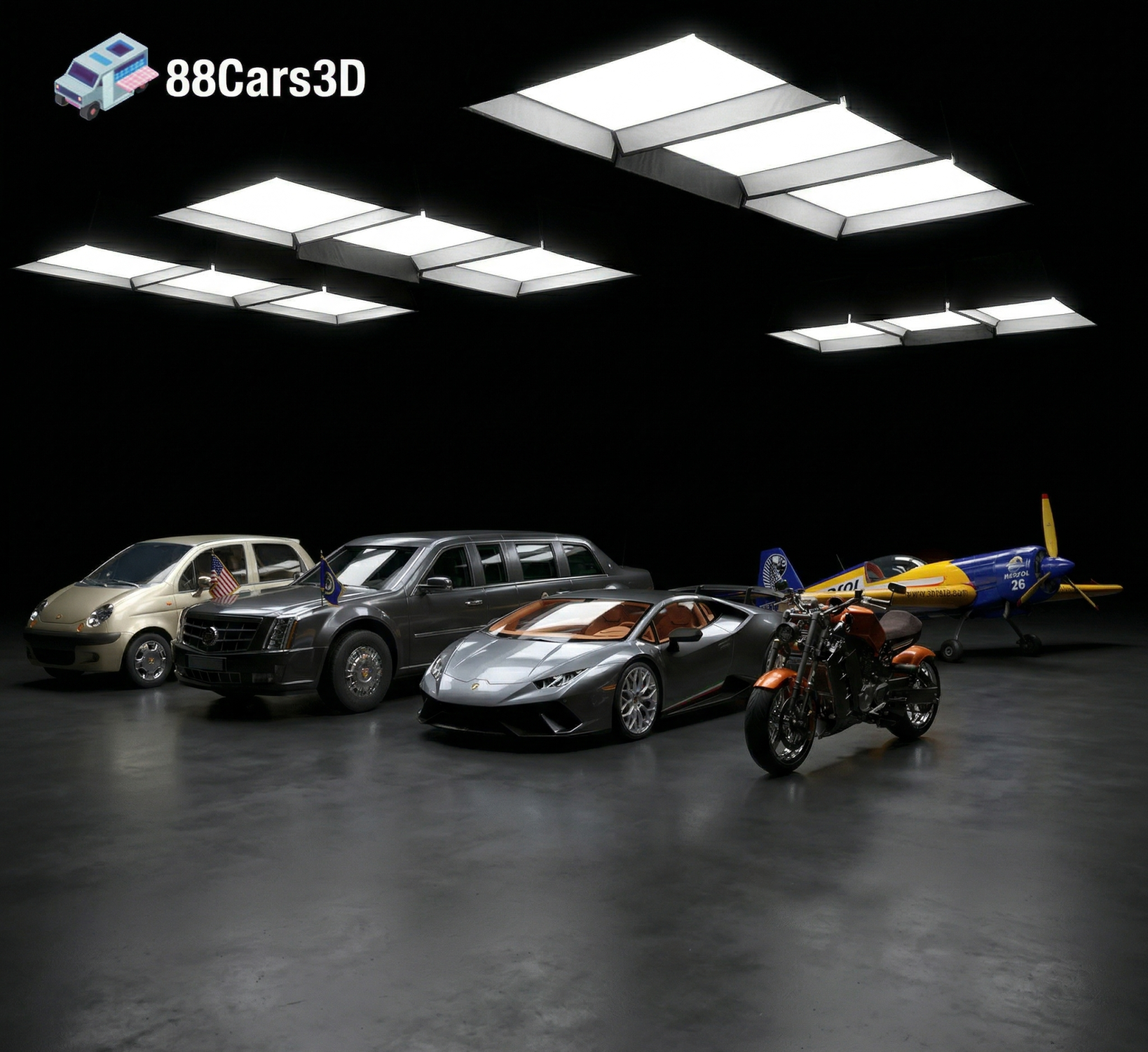
Texture: Yes | Material: Yes | 3D Printable: Yes. Download the Ultimate Creators’ Showcase featuring 5 premium 3D models: Lamborghini Huracan, ZAV Concept Motorcycle, Sukhoi SU-26, Presidential Limousine, and Daewoo Damas. Optimized for 4K CGI rendering and 3D printing. Save massive with this exclusive multi-category bundle!
Price: $99.99

Texture: Yes | Material: Yes | 3D Printable: Yes. Download the Italian Thoroughbreds Bundle featuring 5 iconic 3D models: Lamborghini Huracán Performante, Ferrari 458 Italia, Lamborghini Urus, Diablo SV, and Maserati GT. Optimized for 4K rendering and 3D printing (STL included). Save 50% with this ultimate Italian vehicle collection.
Price: $199.99

Download the Elite Future Mobility Bundle featuring 4 highly optimized 3D models: Tesla Model S, Avatr 11, Li L9, and Zoox Robotaxi. Perfect for ArchViz, Smart City renders, and game dev. Optimized for Unreal Engine and Blender. Includes .fbx, .obj, and .max formats.
Price: $99

🚗 5 Iconic German Cars (BMW M4 G82, M5 CS, X3, 1 Series & Mercedes E-Class). ✅ Optimized for ArchViz: Ready for Corona & V-Ray. 💰 Save €71 with this limited-time collection! 🚀 Instant Download after purchase.
Price: $119

Download the Extreme Off-Road & Survival 3D Models Bundle! Includes the Brabus 800 Adventure, Dodge Ram Bigfoot, Spec Truck, and a Caravan. Save over €210 on this premium 4-in-1 off-grid vehicle pack for ArchViz and game development.
Price: $149.99

Download the Heavy Duty & Commercial Logistics 3D Models Bundle! Includes the Ford Sterling, Caterpillar CT680, Mercedes Citaro Bus, and Vito Van. Save over €130 on this massive, game-ready 4-in-1 industrial vehicle pack.
Price: $109.99

