Get 50% OFF All Premium 3D & STL Models!

In the relentless pursuit of visual realism and immersive experiences, real-time rendering engines like Unreal Engine stand at the forefront. At the heart of creating breathtaking dynamic visuals lies a powerful tool: the Niagara VFX System. Far more than just a particle editor, Niagara offers an incredibly robust, modular, and data-driven framework for crafting everything from subtle atmospheric nuances to colossal explosions and intricate environmental effects. For Unreal Engine developers, 3D artists, and particularly those specializing in automotive visualization and game development, mastering Niagara is paramount to elevating projects to photorealistic or hyper-stylized heights.
This comprehensive guide will unravel the complexities of Unreal Engine’s Niagara VFX system, transforming you from a novice to a proficient effects artist. We’ll navigate its core architecture, demystify its modular design, and provide step-by-step workflows for creating stunning real-time effects. Whether you’re aiming to simulate realistic tire smoke for a high-fidelity car model sourced from platforms like 88cars3d.com, craft dynamic exhaust fumes, visualize intricate weather patterns, or design impactful game abilities, Niagara provides the tools. Prepare to delve into advanced techniques, performance optimization strategies, and discover how to integrate these captivating visual effects seamlessly into your Unreal Engine projects, driving unparalleled visual fidelity and interactive experiences.
Niagara represents a fundamental shift in how visual effects are conceived and created within Unreal Engine. Moving beyond the limitations of its predecessor, Cascade, Niagara introduces a truly modular, data-driven, and highly performant architecture. At its core, Niagara treats particle simulation as a stream of data that flows through various modules, allowing for unparalleled control and reusability. This paradigm empowers artists to build complex behaviors from simple building blocks, fostering a highly flexible and scalable workflow. Understanding this underlying structure is key to unlocking Niagara’s full potential.
A Niagara effect is composed of one or more **Niagara Systems**. Each System acts as a container for multiple **Niagara Emitters**. An Emitter, in turn, is responsible for generating and simulating a specific type of particle effect, such as smoke, fire, or sparks. Within each Emitter, the actual behavior of particles is defined by a series of **Niagara Modules**. Modules are small, self-contained scripts that perform specific operations on particle data – spawning, updating position, applying forces, calculating color, or reacting to external inputs. This hierarchical structure allows for immense flexibility. You could have a single System containing multiple Emitters for different elements of an explosion (e.g., one emitter for initial blast, another for debris, a third for smoke trails), all orchestrated within one cohesive effect. The data-driven nature means that particle attributes like position, velocity, color, size, and even custom data can be passed between modules, allowing for incredibly intricate and interdependent behaviors.
The transition from Cascade to Niagara marked a significant evolution in Unreal Engine’s VFX capabilities. Cascade was a more linear, “what you see is what you get” editor, where effects were largely defined by a fixed set of pre-defined modules with limited customization. Niagara, by contrast, is a truly **data-driven** and **node-based** environment. Every action within an Emitter, from spawning to updating, is controlled by a series of modules that operate on particle data streams. This allows for:
* **Greater Customization:** Artists can create custom modules using a visual scripting language similar to Blueprints, or even directly write HLSL code for highly specific behaviors.
* **Reusability:** Modules and entire Emitters can be saved and reused across multiple Systems, significantly streamlining workflow and maintaining consistency.
* **Performance:** Niagara natively supports **GPU particle simulation**, offloading heavy calculations from the CPU to the graphics card, leading to significantly better performance for large-scale effects, especially critical for real-time applications and game development.
* **Scalability:** Effects can seamlessly scale from simple local simulations to massive world-spanning phenomena, adapting dynamically based on performance needs.
* **Dynamic Inputs:** Parameters can be driven by external data, Blueprint scripts, other Niagara systems, or even material parameters, enabling highly interactive and reactive VFX. This modularity not only simplifies complex effects but also opens doors to advanced optimizations and highly dynamic visual feedback, making it an indispensable tool for modern real-time rendering projects. For more details on Unreal Engine’s particle systems, refer to the official documentation on dev.epicgames.com.
Embarking on your Niagara journey begins with understanding the fundamental steps of creating a new system and populating it with basic particle behaviors. This section will guide you through the initial setup, from creating your first emitter to adding essential modules that define a particle’s life cycle and appearance. We’ll start with a simple effect, such as floating dust motes or subtle sparks, to illustrate the core workflow. This foundational knowledge is crucial before tackling more complex integrations, such as attaching effects to 3D car models for automotive visualization.
To begin, navigate to your Content Browser in Unreal Engine. Right-click and select **FX > Niagara System**. You’ll be presented with a template selector. For most effects, starting from “New System from selected Emitters” and choosing a basic template like “Empty” or “Simple Sprite Burst” is a good approach. Let’s select “Empty” for maximum control. Double-click your newly created Niagara System to open the Niagara Editor. The editor is divided into several panels: the “System Overview” on the left, “Selection” details on the right, and the central “Graph” view where you’ll build your effect.
In the “System Overview” panel, you’ll see a section for Emitters. Click the green plus icon to “Add Emitter.” Again, select “New Emitter from an empty template.” This creates a new Emitter within your System. Now you have a blank canvas. An Emitter has several groups of modules: “Emitter Spawn,” “Emitter Update,” “Particle Spawn,” “Particle Update,” “Event Handlers,” and “Render.” Each group executes its modules at different stages of the particle’s life cycle. For instance, “Particle Spawn” modules run once when a particle is born, while “Particle Update” modules run every frame during the particle’s existence.
With your empty Emitter selected, let’s add some basic modules.
1. **Particle Spawn Group:** Click the plus icon next to “Particle Spawn.” Add the following:
* **Spawn Burst Instantaneous:** This module will spawn a set number of particles immediately. Set “Spawn Count” to a value like 50.
* **Initialize Particle:** This crucial module sets the initial properties of each particle. Here, you define the particle’s initial life (e.g., “Sprite Attributes > Sprite Life > Life Time Mode: Random Range, Min: 2.0, Max: 5.0” for 2-5 seconds), color, and size. Set “Color > Color Mode” to “Direct Set” and choose a subtle gray or white, and “Sprite Attributes > Sprite Size” to “Random Uniform, Min: 5, Max: 15”.
* **Set New UV:** If you are using a spritesheet, this module helps you define which portion of the texture to use. For now, leave it default.
2. **Particle Update Group:** Click the plus icon next to “Particle Update.” Add:
* **Solve Forces and Velocity:** Essential for physics-based movement.
* **Apply Forces > Gravity Force:** To simulate gravity pulling particles down. Adjust “Gravity Multiplier” if needed.
* **Scale Sprite Size:** Over Life: Gradually reduce particle size over its lifetime. Set the curve to go from 1 to 0.
* **Color > Scale Color:** Over Life: Make particles fade out. Set the alpha (A) curve to go from 1 to 0.
3. **Render Group:** Finally, add a render module. Click the plus icon next to “Render” and select **Sprite Renderer**. This tells Niagara how to draw your particles. In its details, assign a basic particle material (e.g., `M_Particle_Master` or create your own simple translucent material).
You should now see particles spawning, moving, and fading out in the viewport. This basic setup forms the backbone of almost any Niagara effect, providing a clear pathway to constructing more sophisticated visual elements.
Once you’re comfortable with the foundational modules, Niagara truly shines with its capabilities for advanced customization and dynamic inputs. This level of control allows artists to create unique, highly tailored effects that respond intelligently to their environment or game logic. Moving beyond static values, we can leverage dynamic inputs, user parameters, and even custom script modules to craft truly bespoke visual experiences. This depth of customization is invaluable for achieving specific aesthetics, whether it’s for intricate environmental effects or highly detailed simulations for automotive visualization.
The real power of Niagara lies in its ability to dynamically drive parameters. Instead of fixed values, almost any input field in a module can be driven by expressions, curves, random ranges, or even external variables.
* **Dynamic Inputs:** To use a dynamic input, click on the small arrow icon next to a parameter field in any module (e.g., “Initial Velocity” in Initialize Particle). You’ll see options like “Set from float,” “Set from vector,” “Random Range,” “Curve,” “Expression,” etc.
* **Random Range:** Perfect for introducing natural variance, like varying particle size or lifespan.
* **Curve:** Allows you to define how a parameter changes over time (e.g., particle size scaling down, color fading). You can edit these curves directly in the module’s details panel.
* **Expression:** This is where things get powerful. You can write simple mathematical expressions using available particle attributes or system-level parameters. For example, `Particle.Velocity * 0.5` could halve a particle’s velocity.
* **User Parameters:** These are parameters defined at the System or Emitter level that can be exposed to Blueprint or even other Niagara Systems. To create one, go to the “Parameters” panel (usually at the bottom left) and click the green plus icon. Choose your desired type (e.g., `float`, `vector`, `bool`). Once created, you can drag and drop this user parameter into any module input that accepts that data type. For instance, you could create a “User.SmokeDensity” float parameter and use it to control the “Spawn Count” of a smoke emitter, allowing a Blueprint to adjust smoke density dynamically based on vehicle RPM. This method is incredibly flexible for creating interactive effects, making your 3D car models react dynamically to user input or in-game events.
For truly unique behaviors that aren’t achievable with existing modules, Niagara allows you to create custom **Niagara Script Assets**. These scripts are essentially mini-programs that operate on particle data. There are two primary ways to create these:
1. **Niagara Script (Graph-based):** Similar to Blueprint, you can create new modules using a visual graph editor. Right-click in the Content Browser > FX > Niagara Script. You choose a template like “Module” or “Dynamic Input.” Inside, you define inputs and outputs, and then use a node-based system (similar to material editor or Blueprint) to perform calculations. For example, you could create a custom module to apply a swirling force based on distance from a central point, or to project particles onto a mesh surface. This visual approach lowers the barrier for complex logic.
2. **Custom HLSL in Modules:** For maximum performance and control, experienced developers can embed custom High-Level Shading Language (HLSL) directly within Niagara modules. When creating a new Niagara Script, you can switch to the “Source” tab and write your own compute shader code. This is particularly useful for highly optimized mathematical operations, custom physics simulations, or when you need to leverage advanced GPU capabilities. For instance, if you’re simulating intricate water ripples or complex volumetric effects around a car, writing a custom HLSL module can provide a significant performance boost and level of detail that might be difficult to achieve with standard modules. This level of scripting power empowers artists to push the boundaries of real-time VFX, crafting truly unique and performant effects that can be directly integrated into your automotive visualization or game projects.
The real-world application of Niagara often involves integrating effects directly into environments and onto character or vehicle models. For automotive visualization, this means enhancing 3D car models with realistic and dynamic effects that breathe life into the scene. From exhaust fumes to tire smoke, and even subtle dust kicked up by movement, Niagara can dramatically increase the fidelity and immersion of your vehicle presentations or game environments. Leveraging high-quality 3D car models, such as those available on 88cars3d.com, provides an excellent foundation for attaching these sophisticated visual effects.
To make your Niagara effects interact dynamically with a 3D car model, the most common and robust method is to attach them to **Sockets**. Sockets are defined points on a Skeletal Mesh or Static Mesh that allow you to attach other actors or components, maintaining their relative position and rotation even if the parent mesh moves or animates.
1. **Identifying Sockets:** If you’re using a high-quality 3D car model from a reputable source like 88cars3d.com, it will often come with pre-defined sockets for common attachment points like exhaust pipes, wheel hubs, and sometimes even headlights. You can view these sockets by opening the Skeletal Mesh or Static Mesh editor. In the “Skeleton Tree” or “Details” panel, you’ll see a list of bones or mesh components, and their associated sockets. If sockets are missing, you can easily create new ones by right-clicking on the appropriate bone or static mesh component and selecting “Add Socket.” Position and orient the socket precisely to match the desired origin of your effect (e.g., the exact opening of an exhaust pipe).
2. **Attaching the Niagara System:** In your level Blueprint or within an Actor Blueprint that contains your car model, you can spawn and attach your Niagara System.
* **In Level Blueprint:** Drag your car model into the level. Right-click anywhere in the Level Blueprint event graph, search for “Spawn Emitter Attached.” Select your Niagara System asset. For the “Attach To Component” pin, drag off of it and select “Get Static Mesh Component” or “Get Skeletal Mesh Component” (depending on your car model). Then, crucially, specify the “Socket Name” (e.g., “exhaust_L” or “tire_FR_smoke”).
* **In Actor Blueprint (Recommended):** Create an Actor Blueprint for your car. Add your car’s Static Mesh or Skeletal Mesh component. Then, add a “Niagara Component” (search for “Niagara”). In the “Details” panel of the Niagara Component, set its “Niagara System Asset” to your desired VFX. Below that, set the “Parent Socket” property to the name of your target socket (e.g., “exhaust_L”). This method is more modular and allows for easier replication and instancing of your car.
Once attached, Niagara’s power allows for the creation of incredibly realistic and dynamic effects that enhance automotive scenes:
* **Exhaust Fumes:** Build an emitter that spawns soft, translucent sprites with a “Cone” spawn shape, giving the effect of gases expelling. Use “Curl Noise Force” and “Drag” modules to simulate realistic turbulence and dissipation. Vary particle size and color over life, perhaps with subtle emissive properties. You can expose a “SmokeDensity” user parameter to Blueprint, allowing the car’s engine RPM or speed to dynamically control the exhaust’s intensity.
* **Tire Smoke/Dust:** For burnouts or off-road driving, attach a Niagara System to tire sockets. The system could have two emitters: one for dense, quick-dissipating smoke (using opaque or masked materials with high spawn rates) and another for finer, lighter dust particles that linger and dissipate slower. Use “Collision” modules to make particles interact with the ground, bouncing or sticking. Dynamic parameters can link the effect’s intensity to wheel spin or velocity.
* **Rain on Glass:** For dynamic weather visualization, Niagara can simulate rain streaks on car windows. This is often achieved with mesh-based particles or custom shaders that deform mesh vertices to create droplet effects. A Niagara System could spawn invisible particles that drive parameters in a car window material, creating dynamic normal map distortions or varying opacity for rain accumulation. This level of detail significantly enhances the realism of your automotive presentations, making the car models from marketplaces like 88cars3d.com truly come alive.
Achieving stunning visual effects with Niagara is only half the battle; ensuring they run smoothly in real-time is equally crucial. Performance optimization is an ongoing process of balancing visual fidelity with frame rate targets, especially critical for demanding applications like games, AR/VR experiences, and high-fidelity automotive configurators. Niagara offers numerous tools and techniques to optimize particle systems, leveraging modern GPU capabilities and intelligent culling mechanisms to maintain a fluid user experience.
* **Level of Detail (LODs):** Just like meshes, Niagara Systems can have LODs. This allows you to define simpler versions of your effect that automatically switch in when the camera is further away, or when performance becomes an issue.
* To set up LODs: In the Niagara Editor, select an Emitter. In the “Emitter Properties” panel, you’ll see an “LOD Settings” section. You can add multiple LODs, each with different properties. For instance, LOD0 might have 1000 particles and complex forces, while LOD1 might have 200 particles with simpler forces and fewer modules, and LOD2 might have only 50 particles. Unreal Engine automatically transitions between these LODs based on screen size, distance, or even custom Blueprint logic.
* **Culling:** Efficiently determining when to render an effect is vital. Niagara supports several culling methods:
* **Bounding Box Culling:** Each Niagara System has a bounding box. If this box is outside the camera frustum, the system is not rendered. Ensure your bounding boxes are accurate; in “System Properties > System Life Cycle > Bounds,” you can adjust “Fixed Bounds” or allow “Calculate Bounds.”
* **Distance Culling:** You can set a maximum render distance for an entire Niagara System. Beyond this distance, the system will stop rendering and simulating. Find this in “System Properties > System Life Cycle > Max Distance.”
* **Per-Particle Culling:** Niagara particles themselves can be culled. In your Emitter’s “Render” module (e.g., Sprite Renderer), look for “Visibility” properties. This often works in conjunction with materials that have culling logic.
* **GPU Particle Simulation:** This is arguably Niagara’s biggest performance advantage. By default, many Niagara modules run on the CPU. However, for effects with a large number of particles (hundreds or thousands), simulating on the GPU provides a massive performance boost.
* To enable GPU simulation: In the “Emitter Properties” panel, under “Emitter > Sim Target,” change it from “CPU” to “GPU Compute Sim.” Be aware that not all modules are compatible with GPU simulation; some modules (especially those requiring CPU-specific logic or intricate collision) may need to be replaced or adapted. When enabling GPU sim, Unreal Engine will provide warnings for incompatible modules. Using GPU particles for effects like large-scale dust clouds, rain, or massive explosions is critical for maintaining high frame rates in real-time rendering applications.
Particle materials are often highly optimized for performance and specific rendering needs. Here are key considerations:
* **Overdraw:** Particles, especially transparent ones, contribute heavily to overdraw (multiple pixels being rendered on top of each other). Minimize the number of overlapping translucent particles.
* **Material Domain and Blend Modes:**
* **Translucent:** Most common for smoke, fire, and soft effects. While visually appealing, translucent materials are more expensive.
* **Additive:** Excellent for glowing effects like sparks or energy. Adds color to the scene, often cheaper than translucent.
* **Masked:** For particles with distinct shapes and hard edges (e.g., debris, leaves). Uses an alpha mask, which can be cheaper than translucency if not over-complicated.
* **Shader Complexity:** Keep your particle materials as simple as possible. Avoid complex node networks, excessive texture lookups, or heavy mathematical operations within the material itself. Use unlit materials for basic additive particles.
* **Texture Resolution:** Use appropriate texture resolutions. A small spark sprite doesn’t need a 2K texture; often a 128×128 or 256×256 texture is sufficient. If using texture atlases (sprite sheets), ensure they are packed efficiently.
* **PBR Materials for Particles:** While traditionally particles used unlit, emissive materials, modern pipelines increasingly leverage PBR (Physically Based Rendering) for greater realism. You can use PBR principles for particles, especially opaque ones like debris, but be mindful of the added computational cost. For translucent effects like smoke, a combination of emissive and subtle PBR elements can work well, ensuring proper lighting interaction while maintaining performance. Remember, optimizing particle materials is a crucial step in delivering high-performance, visually rich real-time effects in any Unreal Engine project.
Static visual effects, while aesthetically pleasing, often fall short in delivering truly immersive and dynamic experiences. This is where the symbiotic relationship between Niagara and Unreal Engine’s Blueprint visual scripting system becomes invaluable. Blueprint allows developers to programmatically control Niagara Systems, responding to game events, user input, or environmental changes. This capability is essential for creating everything from context-sensitive effects in games to dynamic and interactive automotive configurators, where the 3D car model reacts realistically to user choices or simulated conditions.
The most common interaction involves spawning and deactivating Niagara Systems based on in-game events.
1. **Spawning a Niagara System:**
* In a Blueprint, you can use the “Spawn System at Location” node to create a temporary, standalone Niagara effect. This is great for one-shot effects like explosions or impact decals.
* For effects that need to be attached to an object (like exhaust fumes on a car), use “Spawn System Attached.” This node allows you to specify a parent component (e.g., a car’s mesh) and a socket name, ensuring the VFX moves with its parent.
2. **Referencing and Controlling Existing Systems:**
* If you’ve added a Niagara Component directly to a Blueprint Actor (as discussed in the integration section), you can get a reference to that component. From this reference, you can access various nodes to control its behavior.
* **Activate/Deactivate:** Use “Activate System” and “Deactivate System” to turn the effect on or off. This is crucial for effects that should only play under certain conditions (e.g., tire smoke when accelerating).
* **Set Emitter State:** You can specifically control the state of individual emitters within a system using “Set Emitter State.” This allows you to toggle specific parts of a complex effect.
* **System Duration:** Use “Set System Duration” to control how long the entire Niagara System runs before stopping.
Beyond basic activation, Blueprint allows granular control over individual parameters exposed in your Niagara System:
* **Set Niagara Variable:** This is the workhorse node for dynamic parameter control. From a Niagara Component reference, drag off and search for “Set Niagara Variable.” You’ll see options like “Set Niagara Variable (Float),” “Set Niagara Variable (Vector),” “Set Niagara Variable (LinearColor),” etc.
* **Input:** For the “In Variable Name” pin, type the exact name of your User Parameter from the Niagara editor (e.g., “User.SmokeDensity”, “User.LightColor”).
* **Value:** Connect a float, vector, or color variable to the “In Value” pin. This variable can be driven by anything in Blueprint:
* **Player Input:** A key press could trigger a boost effect by increasing the “User.ThrustIntensity” parameter.
* **Game State:** A car’s speed or engine RPM could dynamically drive the intensity of exhaust smoke or tire spray. You would get the car’s current velocity/RPM and map it to your Niagara parameter using a “Map Range Clamped” node for smooth transitions.
* **Timers/Curves:** Effects can evolve over time based on Blueprint timelines or interpolation nodes, making them fade in or out gradually.
* **Case Study: Dynamic Automotive Configurator:** Imagine an automotive configurator where a user changes the paint color of a car. With Blueprint, you could detect this change and use “Set Niagara Variable (LinearColor)” on a “glow” effect attached to the car’s undercarriage, matching the glow color to the new paint scheme. Or, if the user enables a “sport mode,” Blueprint could increase the “User.ExhaustIntensity” parameter of the exhaust effect, making it visually more aggressive.
* **Physics Simulation Integration:** When a car collides, Blueprint can trigger Niagara systems for sparks, debris, or dust effects at the impact point, with parameters like “User.ImpactForce” influencing the intensity and spread of the particles. This seamless integration between Blueprint’s logic and Niagara’s visual power is crucial for creating truly interactive and believable real-time experiences, whether you are developing a cutting-edge game or a high-end visualization project featuring detailed 3D car models.
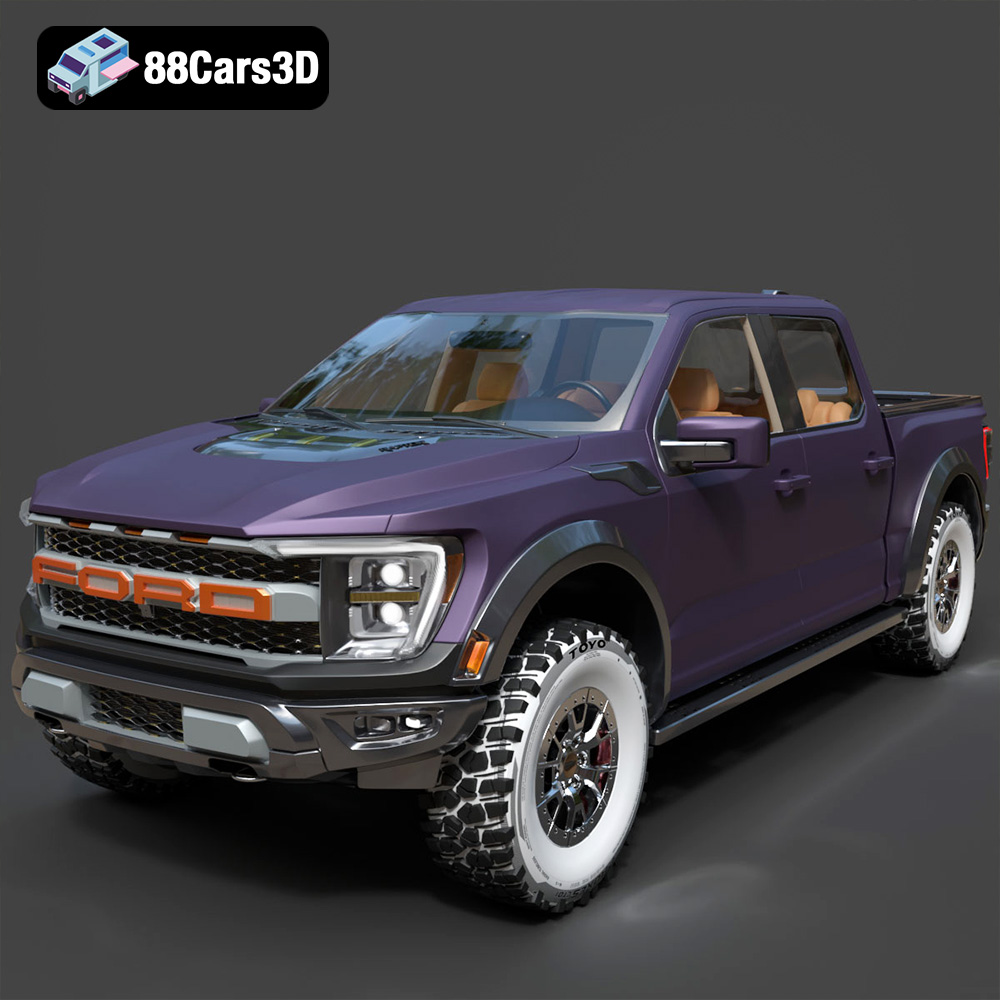
Texture: Yes | Material: Yes Download the ultra-high-detail Ford F-150 Raptor 2021 3D Model (8.73M Triangles). Features uncompromised widebody styling, fully modeled Fox Live Valve suspension, 37-inch tires, and interior. Perfect for premium VFX, cinematic rendering, and ArchViz. Includes .blend, .fbx, .obj, .glb, .stl, and .max formats.
Price: $29.99
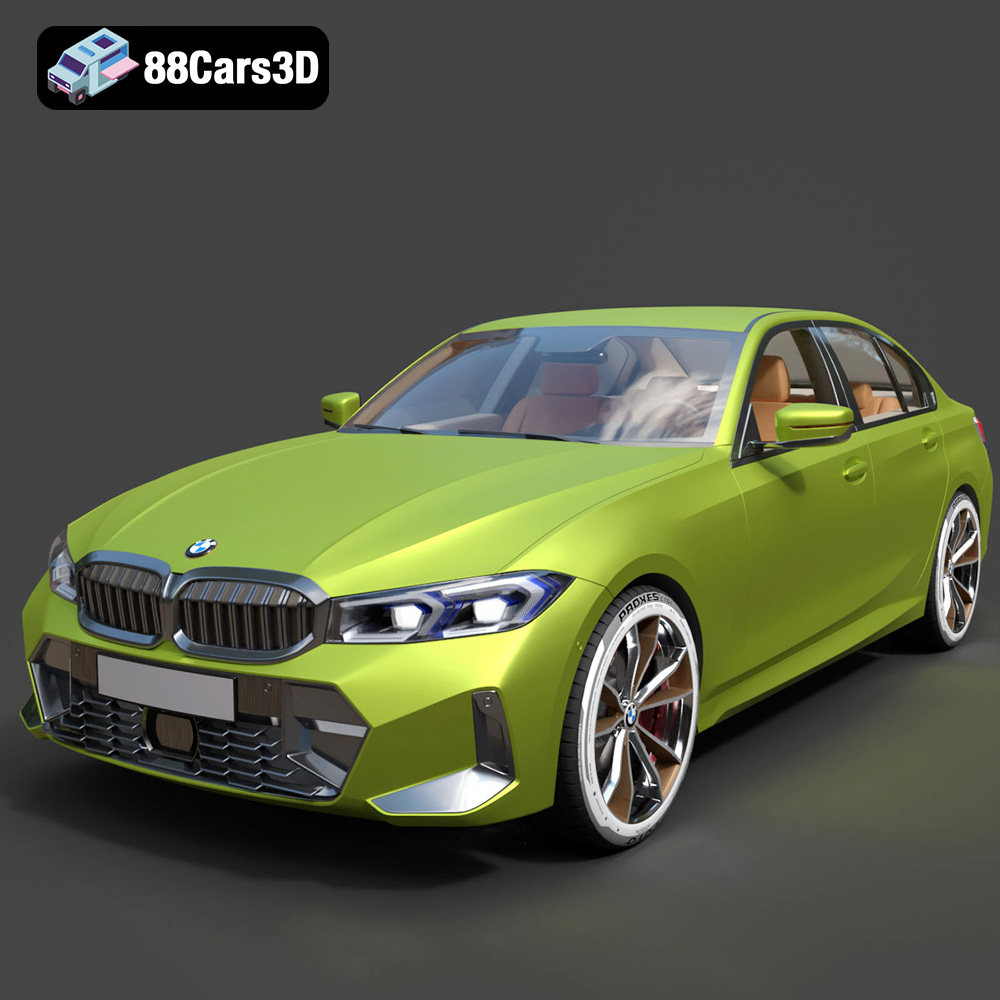
Texture: Yes | Material: Yes Download the ultra-high-detail BMW 3 Series Limousine (2022) 3D Model (4.16M Triangles). Features the modernized G20 LCI exterior, the all-new BMW Curved Display interior, and ultra-dense topology. Perfect for ArchViz, VFX, and cinematic rendering. Includes .blend, .fbx, .obj, .glb, .stl, and .max formats.
Price: $19.99
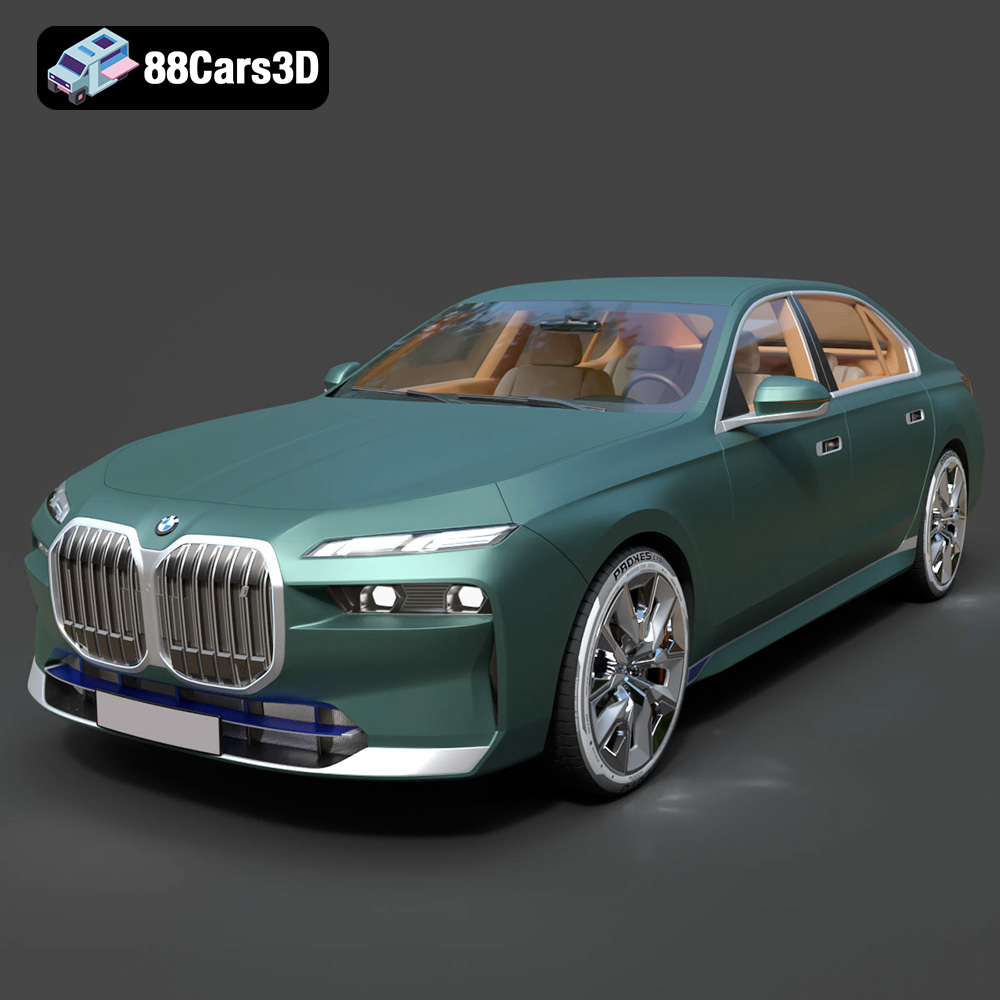
Texture: Yes | Material: Yes Download the ultra-high-detail BMW i7 (2023) 3D Model (4.14M Triangles). Features the illuminated kidney grille, split crystal headlights, fully modeled Theatre Screen interior, and monolithic luxury styling. Perfect for ArchViz, VFX, and cinematic rendering. Includes .blend, .fbx, .obj, .glb, .stl, and .max formats.
Price: $19.99
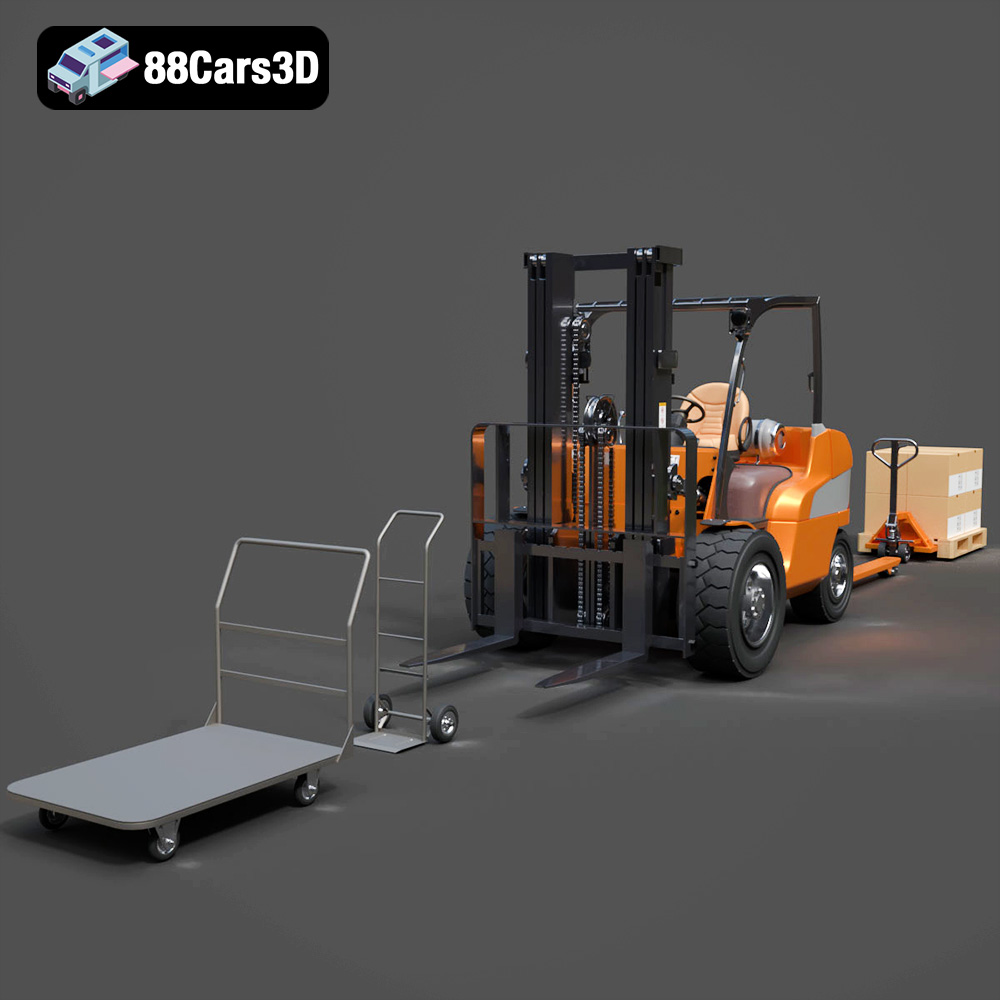
Texture: Yes | Material: Yes Download the highly detailed CAT Manual Loader & Warehouse Carts Kit 3D Model (2.4M Triangles). Features a macro-detailed hydraulic pallet jack, heavy-duty forks, and transport carts. Perfect for industrial ArchViz, factory rendering, and logistics simulations. Includes .blend, .fbx, .obj, .glb, .stl, and .max formats.
Price: $19.99
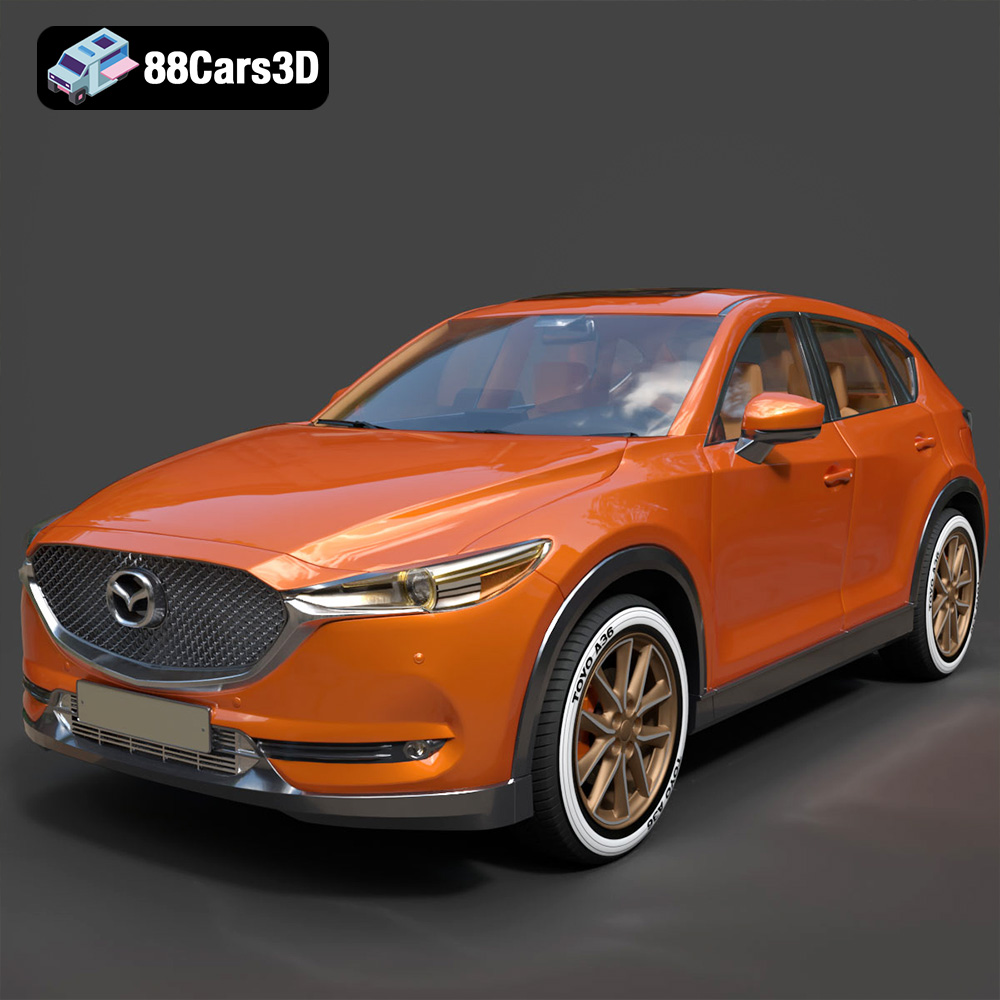
Texture: Yes | Material: Yes
Download the highly optimized Mazda CX-5 2014 3D Model (294k Triangles). Features the dynamic Kodo design language, signature grille, and a clean interior. Perfectly balanced for ArchViz, background traffic, and game development. Includes .blend, .fbx, .obj, .glb, .stl, and .max formats.
Price: $19.99
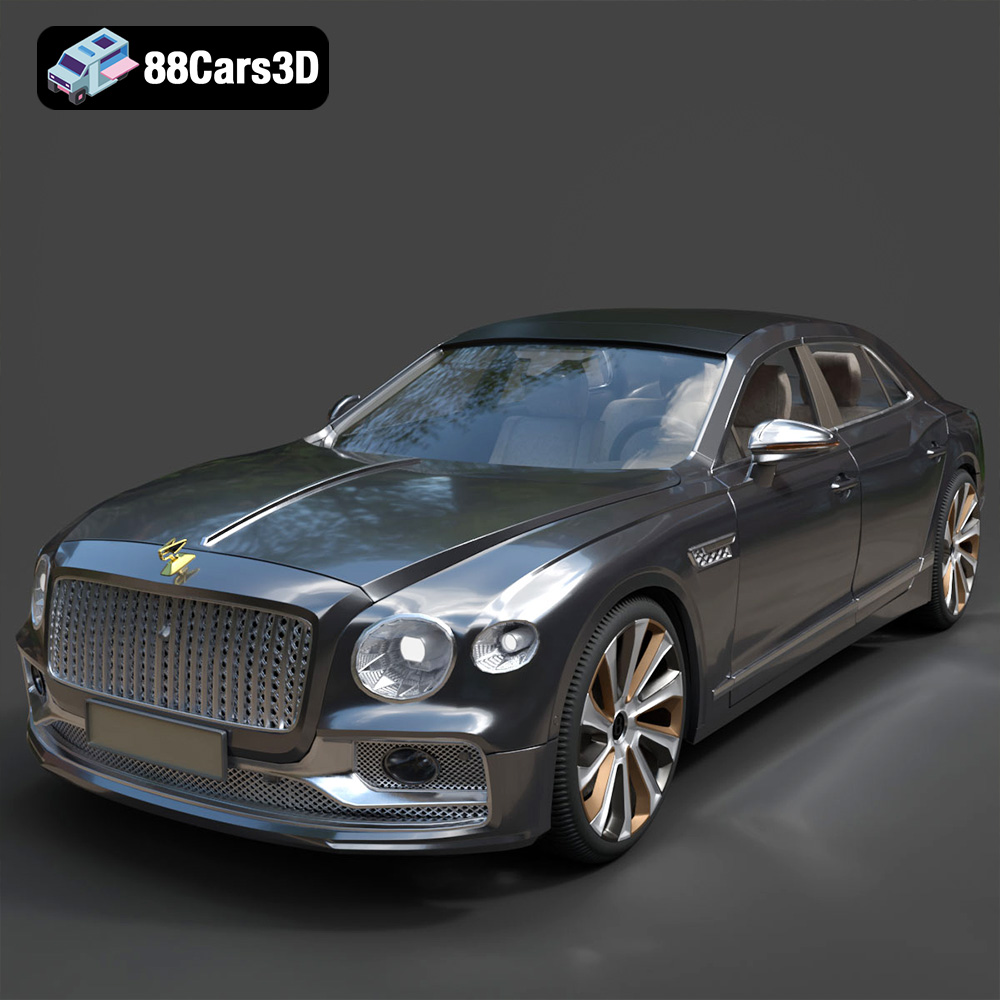
Texture: Yes | Material: Yes Download the ultra-high-detail Bentley Flying Spur Mulliner 2022 3D Model (2.94M Triangles). Features the bespoke Double Diamond grille, a fully modeled diamond-quilted interior, and exquisite luxury styling. Perfect for high-end ArchViz, VFX, and cinematic rendering. Includes .blend, .fbx, .obj, .glb, .stl, and .max formats.
Price: $19.90
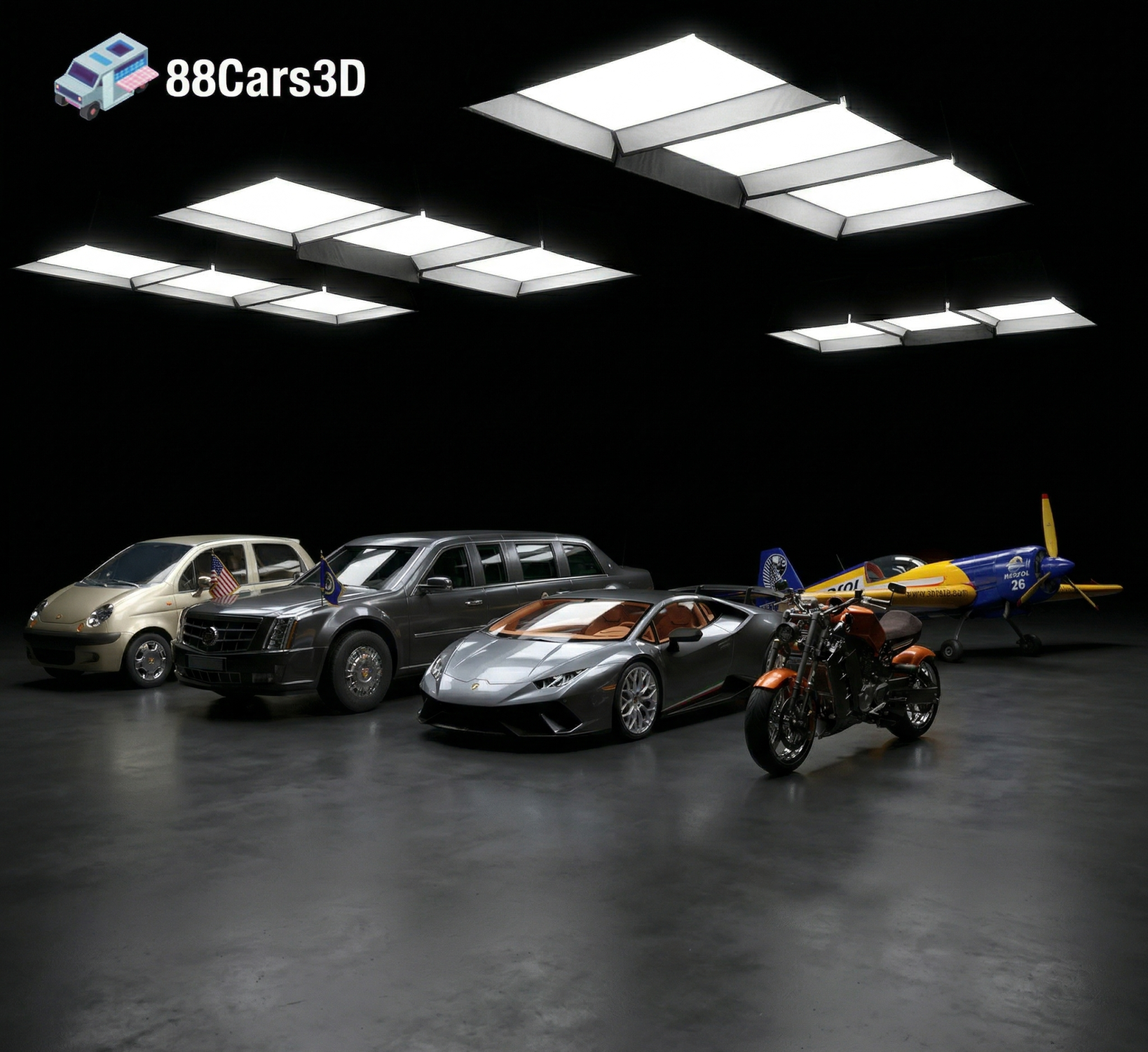
Texture: Yes | Material: Yes | 3D Printable: Yes. Download the Ultimate Creators’ Showcase featuring 5 premium 3D models: Lamborghini Huracan, ZAV Concept Motorcycle, Sukhoi SU-26, Presidential Limousine, and Daewoo Damas. Optimized for 4K CGI rendering and 3D printing. Save massive with this exclusive multi-category bundle!
Price: $99.99

Texture: Yes | Material: Yes | 3D Printable: Yes. Download the Italian Thoroughbreds Bundle featuring 5 iconic 3D models: Lamborghini Huracán Performante, Ferrari 458 Italia, Lamborghini Urus, Diablo SV, and Maserati GT. Optimized for 4K rendering and 3D printing (STL included). Save 50% with this ultimate Italian vehicle collection.
Price: $199.99

Download the Elite Future Mobility Bundle featuring 4 highly optimized 3D models: Tesla Model S, Avatr 11, Li L9, and Zoox Robotaxi. Perfect for ArchViz, Smart City renders, and game dev. Optimized for Unreal Engine and Blender. Includes .fbx, .obj, and .max formats.
Price: $99

🚗 5 Iconic German Cars (BMW M4 G82, M5 CS, X3, 1 Series & Mercedes E-Class). ✅ Optimized for ArchViz: Ready for Corona & V-Ray. 💰 Save €71 with this limited-time collection! 🚀 Instant Download after purchase.
Price: $119

