Get 50% OFF All Premium 3D & STL Models!

The world of 3D modeling has revolutionized various industries, from automotive design and marketing to game development and virtual reality. At the heart of many of these applications lie meticulously crafted 3D car models. Whether you’re creating photorealistic automotive renderings, designing immersive game environments, or preparing files for 3D printing, understanding the nuances of 3D car models is essential. This guide delves into the intricacies of working with these assets, covering everything from file formats and optimization techniques to real-world use cases. Whether you’re a seasoned professional or just starting out, this information will help you leverage the power of 3D car models in your projects. We’ll explore how platforms like 88cars3d.com provide access to a wide range of high-quality models, and how to effectively integrate them into your workflows.
Choosing the right file format for your 3D car model is crucial for ensuring compatibility, efficiency, and optimal results in your chosen application. Each format has its strengths and weaknesses, and understanding these differences will save you time and frustration. Here’s a detailed look at some of the most common formats:
The .blend format is the native file type for Blender, a powerful and versatile open-source 3D creation suite. A .blend file contains the entire Blender scene, including the model’s geometry, textures, materials, lighting, animation data, and even project settings. This format offers unparalleled control and editability within Blender. If you’re working exclusively within Blender, using .blend is generally the best option. However, its compatibility with other software is limited, making it less suitable for collaborative workflows involving multiple applications.
.fbx (Filmbox) is a widely supported format developed by Autodesk. It’s designed to facilitate the exchange of 3D data between different software packages, including Autodesk Maya, 3ds Max, Unity, and Unreal Engine. .fbx supports a wide range of features, including geometry, textures, materials, animations, and skeletal rigs. This makes it an ideal choice for game development pipelines, where assets often need to be transferred between modeling software and game engines. .fbx files can store both binary and ASCII data, with binary being more compact and efficient for large models. When exporting to .fbx, it’s important to consider the target application’s version and feature support to ensure compatibility.
.obj (Wavefront Object) is a simple and widely supported format that stores only geometric data (vertices, faces, and normals) and UV coordinates. It typically doesn’t include information about materials, textures, or animations, which are usually stored in a separate .mtl file. .obj is a great choice for transferring static meshes between different software packages, especially when you need a basic, reliable format that can be easily imported and exported. Its simplicity also makes it useful for archiving models or sharing them with users who may not have access to specific software. However, the lack of advanced features like animation support limits its use in more complex projects.
.glb (GL Transmission Format Binary) is a relatively new format designed specifically for efficient delivery and display of 3D models on the web and in AR/VR applications. It’s a binary format that combines the geometry, textures, and animations into a single file, reducing the number of HTTP requests and improving loading times. .glb is the binary version of the more verbose .gltf (GL Transmission Format), and it’s the preferred choice for web-based 3D viewers, AR apps, and VR experiences. It’s particularly well-suited for scenarios where performance and file size are critical. The format supports PBR (Physically Based Rendering) materials, enabling realistic and visually appealing renderings in real-time environments.
.stl (Stereolithography) is a format specifically designed for 3D printing. It represents the surface geometry of a 3D object as a collection of triangles. .stl files don’t contain any information about color, texture, or materials. They are solely focused on the shape of the object. When exporting to .stl, it’s important to ensure that the mesh is watertight (i.e., closed and without any holes) and that the resolution is sufficient for the desired level of detail in the printed object. Higher resolutions result in smoother surfaces but also increase the file size and printing time.
.ply (Polygon File Format) is a format designed to store 3D data acquired from 3D scanners or generated by scientific simulations. It can store a variety of data types, including vertices, faces, colors, normals, texture coordinates, and other custom properties. .ply is often used in CAD (Computer-Aided Design) and scientific visualization applications where high precision and data fidelity are essential. It supports both ASCII and binary encoding, making it flexible for different use cases. While not as widely supported as .obj or .fbx, .ply is a valuable format for specific applications requiring accurate and detailed 3D data.
This “format” isn’t a standalone file type in the traditional sense. It refers to assets specifically prepared and optimized for import directly into Unreal Engine. These assets typically include .fbx files for the mesh, along with textures, materials, and potentially Blueprints (visual scripting) for defining the asset’s behavior. Direct Unreal Engine integration often involves adhering to specific naming conventions, folder structures, and material setups to ensure seamless import and functionality within the engine. Buying “unreal” assets from a site like 88cars3d.com offers the convenience of having game-ready 3D car models, saving significant setup time.
.max is the native file format for 3ds Max, another industry-leading 3D modeling, animation, and rendering software package. Similar to .blend, .max files contain the complete scene information, including geometry, textures, materials, lighting, animation rigs, and rendering settings. It offers the most complete control and editability within 3ds Max. However, its primary use is within the 3ds Max environment, making .fbx a better choice for cross-software compatibility. If you’re planning on extensive animation or rendering work within 3ds Max, using .max is the most efficient approach.
Regardless of the file format you choose, optimization is crucial for ensuring that your 3D car models perform efficiently in their intended environment. Excessive polygon counts, unoptimized textures, and poorly designed materials can all lead to performance issues, especially in real-time applications like games and AR/VR.
Reducing the polygon count of your 3D car model is one of the most effective ways to improve performance. Several techniques can be used to achieve this, including:
Optimizing textures is another critical aspect of improving performance. Large, high-resolution textures can consume significant memory and bandwidth, leading to slowdowns. Here are some strategies for optimizing textures:
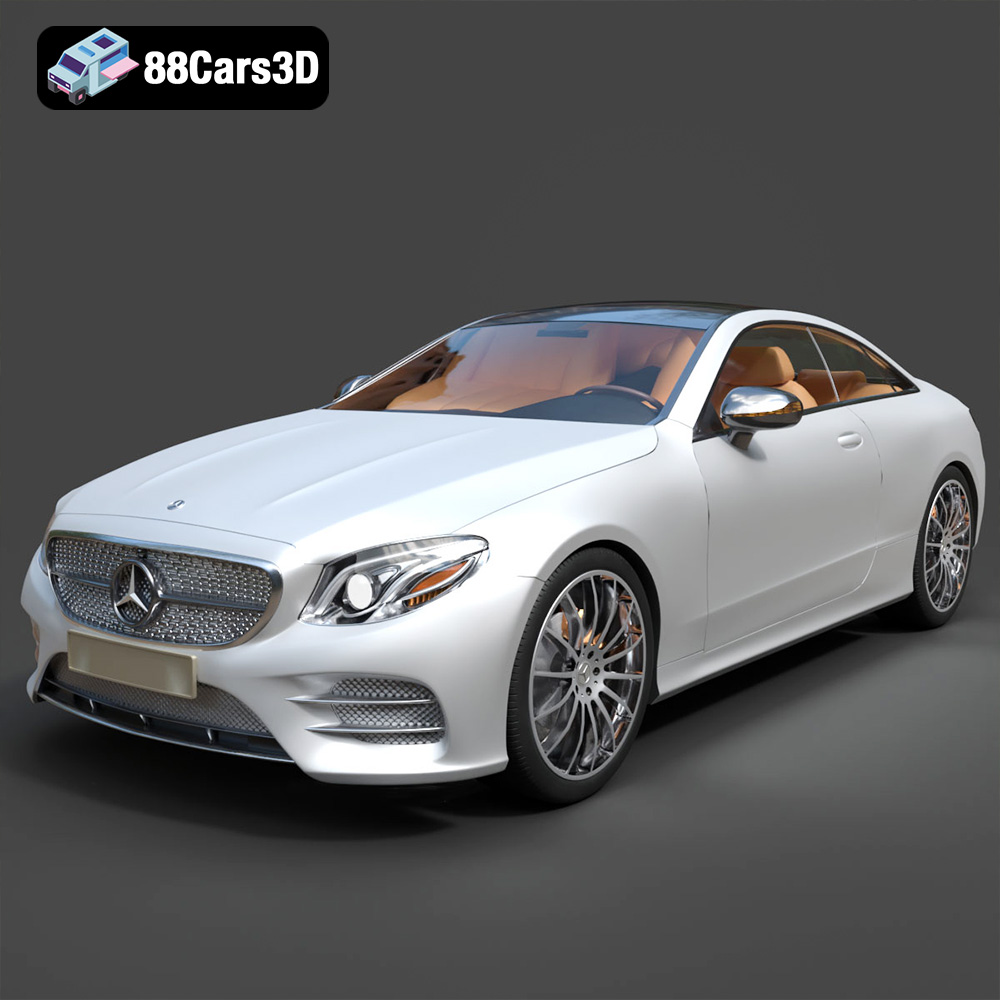
3D car models are widely used in automotive rendering to create stunningly realistic images and animations for marketing, advertising, and design visualization. Achieving photorealism requires careful attention to detail in several key areas.
Realistic materials are essential for creating believable automotive renderings. This involves accurately simulating the properties of different materials, such as paint, metal, glass, and plastic. Key considerations include:
Realistic lighting is just as important as realistic materials. The lighting setup can dramatically impact the overall look and feel of the rendering.
3D car models are a staple in the game development industry, used in everything from racing games to open-world environments. Integrating these models effectively into game engines like Unreal Engine and Unity requires careful attention to optimization and workflow.
Unreal Engine provides a robust pipeline for importing and setting up 3D car models. Here’s a typical workflow:
Unity provides a flexible framework for scripting vehicle behavior. Here’s a basic outline:
3D printing has opened up new possibilities for creating physical replicas of 3D car models. However, preparing a 3D car model for 3D printing requires specific considerations.
Successful 3D printing relies on a properly prepared model.
Choosing the right material and adjusting printing parameters is vital.
Let’s examine a few examples of how 3D car models are used in different industries.
A car manufacturer uses 3D car models to create photorealistic renderings for marketing materials, showcasing new models and features to potential customers. The renderings are used in brochures, websites, and advertising campaigns, providing a visually compelling way to present the vehicles.
A game developer uses 3D car models to create realistic vehicles for a racing game. The models are optimized for performance and integrated into the game engine, providing players with a fun and immersive driving experience. They might source models from 88cars3d.com to accelerate development.
An architectural firm uses 3D car models to populate architectural renderings, adding a sense of realism and scale to the visualizations. The cars help to convey the intended use of the space and create a more engaging and believable representation of the building.
3D car models are powerful assets that can be used in a wide range of applications, from automotive rendering and game development to 3D printing and architectural visualization. Understanding the different file formats, optimization techniques, and workflows is essential for achieving the best possible results. By mastering these concepts and utilizing resources like 88cars3d.com, you can unlock the full potential of 3D car models and create stunningly realistic and engaging experiences.

Price: $129.99

Price: $99.99

Price: $89.99