Get 50% OFF All Premium 3D & STL Models!

“`html
In the rapidly evolving world of 3D printing, one file format has consistently reigned supreme: the STL (Stereolithography) file. Despite the emergence of newer formats promising advanced capabilities, STL remains the workhorse for 3D printing enthusiasts, professionals, and hobbyists alike. This isn’t just due to historical inertia; STL’s enduring popularity stems from its simplicity, universality, and the vast ecosystem of software and hardware that supports it. In this comprehensive guide, we’ll delve into the technical details of the STL format, exploring its strengths, limitations, and why it continues to be the go-to choice for a wide range of 3D printing applications, including the creation of stunning printable car models available on platforms like 88cars3d.com. You’ll learn about STL file structure, mesh topology, slicing parameters, repair techniques, and how to optimize STL files for exceptional 3D printing results.
At its heart, the STL file format is remarkably simple. It represents the surface geometry of a 3D object as a collection of triangles. Each triangle is defined by three vertices (coordinates in 3D space) and a normal vector (a direction perpendicular to the triangle’s surface). While this simplicity is a major strength, it also imposes certain limitations. The STL format doesn’t store information about color, texture, material properties, or internal structure. It’s purely a geometric representation of the object’s surface.
STL files come in two flavors: ASCII and binary. ASCII STL files are human-readable, listing each triangle’s vertices and normal vectors in plain text. While easy to inspect and edit manually, they are significantly larger than their binary counterparts. Binary STL files encode the same information in a compact binary format, resulting in smaller file sizes and faster processing. Both formats are widely supported by 3D printing software.
The way triangles are arranged and connected in an STL file is crucial for print quality. A well-formed mesh has several key characteristics: it’s watertight (no holes or gaps), manifold (each edge is shared by exactly two triangles), and has consistent surface normals (all normals point outwards). Non-manifold geometry and holes can cause significant problems during slicing and printing, leading to errors or failed prints. Therefore, ensuring proper mesh topology is a critical step in preparing STL files for 3D printing.
The slicing process is the bridge between the 3D model represented in the STL file and the physical 3D printer. Slicing software takes the STL file as input and divides the model into a series of horizontal layers. For each layer, it generates toolpaths (instructions for the printer’s movement) to deposit material according to the layer’s shape. The slicing process is highly configurable, allowing users to control various parameters that affect print quality, speed, and material usage.
Several key slicing parameters directly influence the outcome of a 3D print. Layer height, for instance, determines the thickness of each layer. Lower layer heights result in smoother surfaces and finer details but increase print time. Infill density controls the amount of material used inside the object. Higher infill densities provide greater strength but also increase material consumption and print time. Print speed dictates how fast the printer moves while depositing material. Slower speeds generally improve print quality, while faster speeds reduce print time.
Different slicing software packages offer unique features and algorithms. Cura, for example, provides extensive support for various FDM printers and offers a wide range of customizable settings. PrusaSlicer is known for its advanced features like adaptive layer height, which automatically adjusts layer height based on the model’s geometry to optimize print quality and speed. Experimenting with different slicers and their specific features can significantly improve your 3D printing results. For example, when slicing printable car models from 88cars3d.com, PrusaSlicer’s adaptive layer height can be particularly useful for capturing the intricate details of the bodywork while maintaining reasonable print times.
Support structures are temporary scaffolding that supports overhanging features during 3D printing. Without supports, gravity would cause these features to collapse or deform during the printing process. Support structures are generated by the slicing software based on the model’s geometry and the chosen printing orientation. The design and placement of support structures are crucial for successful 3D printing, especially for complex models with significant overhangs.
Various types of support structures are available, each with its own advantages and disadvantages. Tree supports, for example, are branching structures that provide support with minimal material usage and are relatively easy to remove. Linear supports are simple vertical structures that are suitable for supporting flat overhangs. Choosing the right type of support structure depends on the model’s geometry, the printing material, and the desired surface finish.
Removing support structures can be a delicate process, as it can potentially damage the printed object. Sharp tools like pliers, knives, and chisels are commonly used for support removal. Applying heat from a heat gun can soften the supports, making them easier to remove. It’s important to remove supports carefully and gradually to avoid damaging the printed surface. Post-processing techniques like sanding can be used to smooth out any remaining support marks.
The choice of printing material and the corresponding printer settings have a profound impact on the quality and properties of the final 3D printed object. Different materials require different printing temperatures, speeds, and bed adhesion techniques. Understanding the characteristics of various materials and how they interact with your 3D printer is essential for achieving optimal results. This is particularly important when printing highly detailed models, such as those you might find on marketplaces like 88cars3d.com.
FDM (Fused Deposition Modeling) printing typically uses thermoplastics like PLA, ABS, and PETG. PLA is a biodegradable and easy-to-print material that’s suitable for general-purpose applications. ABS is more durable and heat-resistant but requires higher printing temperatures and a heated bed. PETG combines the strength of ABS with the ease of printing of PLA. Resin printing, on the other hand, uses liquid photopolymers that are cured by UV light. Resin printing offers higher resolution and finer details than FDM printing but is generally more expensive and requires more post-processing.
Regular printer calibration and maintenance are crucial for ensuring consistent and reliable 3D printing results. Calibration involves adjusting parameters like bed leveling, extruder temperature, and print speed to optimize print quality. Maintenance includes cleaning the print bed, lubricating moving parts, and replacing worn-out components. A well-maintained and calibrated printer will produce more accurate and consistent prints, reducing the risk of failures and improving the overall 3D printing experience.
Despite careful preparation and optimization, 3D printing can still encounter various challenges. Common issues include warping, bed adhesion problems, layer separation, and stringing. Understanding the causes of these issues and how to address them is essential for successful 3D printing. Let’s explore some frequent problems encountered during 3D printing with STL files and their solutions.
Warping occurs when the corners of a 3D printed object lift off the print bed. This is often caused by uneven cooling or insufficient bed adhesion. To prevent warping, ensure that the print bed is properly leveled and heated. Using a bed adhesion aid like hairspray, glue stick, or blue painter’s tape can also improve adhesion. Enclosing the printer can help maintain a consistent temperature and reduce warping.
Layer separation occurs when layers of a 3D printed object fail to adhere properly. This can be caused by insufficient extrusion temperature, low print speed, or a clogged nozzle. Increasing the extrusion temperature, slowing down the print speed, and cleaning the nozzle can help resolve layer separation issues. Stringing, on the other hand, occurs when thin strands of material are left between different parts of the printed object. This is often caused by excessive retraction distance or high printing temperature. Adjusting the retraction settings and lowering the printing temperature can reduce stringing.
Before slicing and printing an STL file, it’s often necessary to repair and optimize the mesh. Mesh repair involves fixing errors like holes, non-manifold edges, and flipped normals. Mesh optimization involves reducing the number of triangles in the mesh to improve performance and reduce file size without sacrificing significant detail. Several software tools are available for mesh repair and optimization, including Meshmixer, Netfabb, and Blender.
Holes in the mesh can be identified by visual inspection or by using mesh analysis tools. These tools can automatically detect and repair holes by adding new triangles to fill the gaps. Non-manifold edges can be identified by checking the edge count for each edge. A manifold edge is shared by exactly two triangles. Flipped normals can be identified by checking the direction of the normals. All normals should point outwards. Mesh repair tools can automatically flip normals to ensure consistent orientation.
Reducing the number of triangles in the mesh can significantly reduce file size and improve performance. This can be achieved by using mesh decimation algorithms, which selectively remove triangles while preserving the overall shape of the object. The level of decimation should be chosen carefully to balance file size and detail. For example, when downloading models from marketplaces such as 88cars3d.com, you may want to reduce the polygon count before printing to speed up slicing, depending on the capabilities of your computer.
The STL file format, despite its simplicity, remains the cornerstone of 3D printing due to its widespread support, versatility, and ease of use. By understanding the intricacies of STL file structure, mastering slicing techniques, and addressing common printing challenges, you can unlock the full potential of 3D printing and create stunning physical objects from digital designs. Remember to always check and repair your STL files before printing, optimize your printer settings for the chosen material, and experiment with different slicing parameters to achieve the desired results. Whether you’re printing intricate car models from 88cars3d.com or creating functional prototypes, a solid understanding of STL is essential for success. As a next step, experiment with different slicing parameters on a test print to see how they affect the outcome, and familiarize yourself with mesh repair tools to fix any errors in your STL files before printing. Happy printing!
“`

Texture: Yes | Material: Yes Download the ultra-high-detail BMW i7 (2023) 3D Model (4.14M Triangles). Features the illuminated kidney grille, split crystal headlights, fully modeled Theatre Screen interior, and monolithic luxury styling. Perfect for ArchViz, VFX, and cinematic rendering. Includes .blend, .fbx, .obj, .glb, .stl, and .max formats.
Price: $19.99
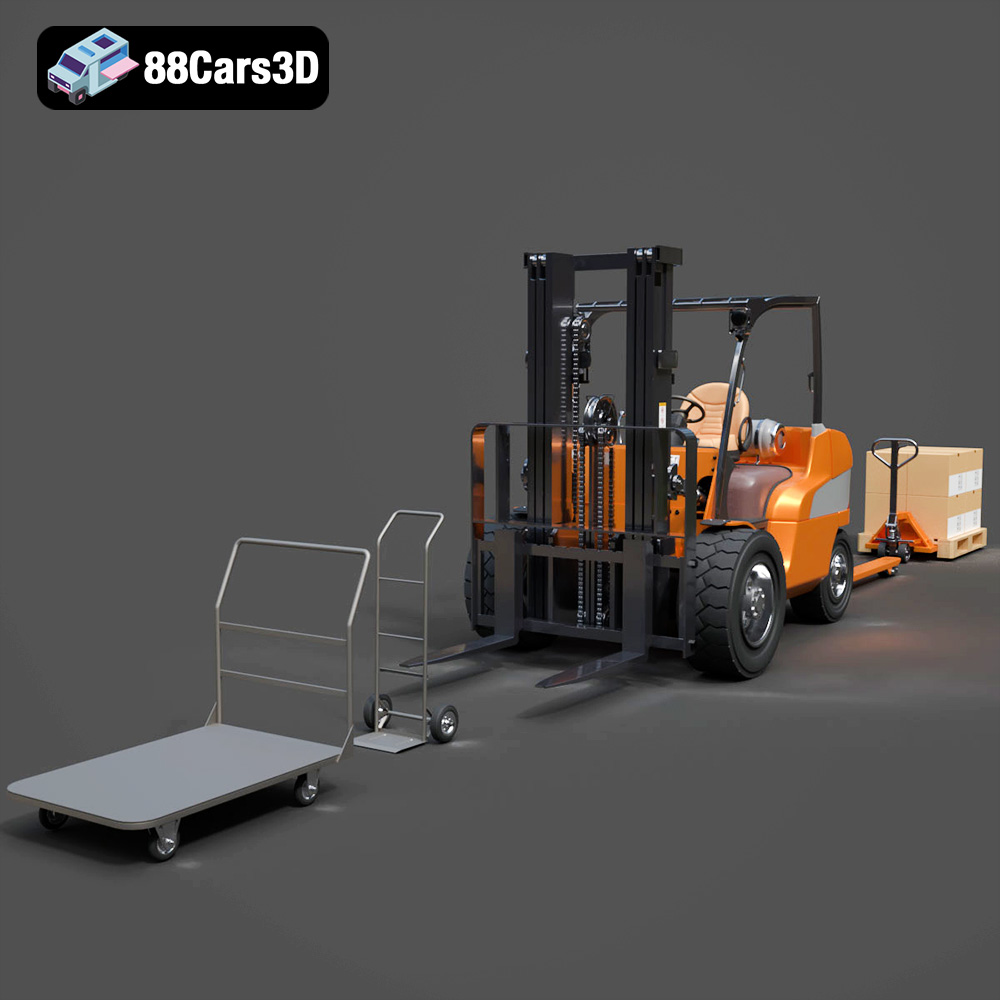
Texture: Yes | Material: Yes Download the highly detailed CAT Manual Loader & Warehouse Carts Kit 3D Model (2.4M Triangles). Features a macro-detailed hydraulic pallet jack, heavy-duty forks, and transport carts. Perfect for industrial ArchViz, factory rendering, and logistics simulations. Includes .blend, .fbx, .obj, .glb, .stl, and .max formats.
Price: $19.99

Texture: Yes | Material: Yes
Download the highly optimized Mazda CX-5 2014 3D Model (294k Triangles). Features the dynamic Kodo design language, signature grille, and a clean interior. Perfectly balanced for ArchViz, background traffic, and game development. Includes .blend, .fbx, .obj, .glb, .stl, and .max formats.
Price: $19.99
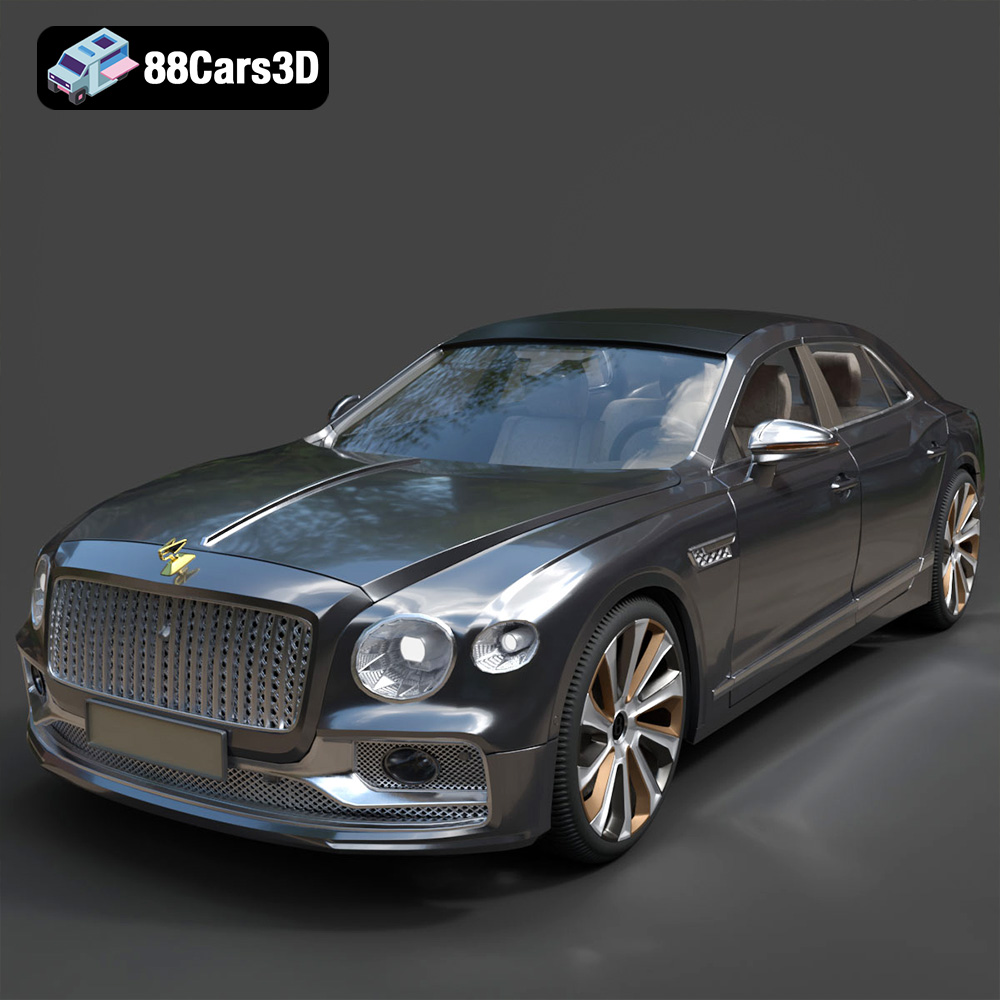
Texture: Yes | Material: Yes Download the ultra-high-detail Bentley Flying Spur Mulliner 2022 3D Model (2.94M Triangles). Features the bespoke Double Diamond grille, a fully modeled diamond-quilted interior, and exquisite luxury styling. Perfect for high-end ArchViz, VFX, and cinematic rendering. Includes .blend, .fbx, .obj, .glb, .stl, and .max formats.
Price: $19.90

Texture: Yes | Material: Yes | 3D Printable: Yes. Download the Ultimate Creators’ Showcase featuring 5 premium 3D models: Lamborghini Huracan, ZAV Concept Motorcycle, Sukhoi SU-26, Presidential Limousine, and Daewoo Damas. Optimized for 4K CGI rendering and 3D printing. Save massive with this exclusive multi-category bundle!
Price: $99.99

Texture: Yes | Material: Yes | 3D Printable: Yes. Download the Italian Thoroughbreds Bundle featuring 5 iconic 3D models: Lamborghini Huracán Performante, Ferrari 458 Italia, Lamborghini Urus, Diablo SV, and Maserati GT. Optimized for 4K rendering and 3D printing (STL included). Save 50% with this ultimate Italian vehicle collection.
Price: $199.99

Download the Elite Future Mobility Bundle featuring 4 highly optimized 3D models: Tesla Model S, Avatr 11, Li L9, and Zoox Robotaxi. Perfect for ArchViz, Smart City renders, and game dev. Optimized for Unreal Engine and Blender. Includes .fbx, .obj, and .max formats.
Price: $99

🚗 5 Iconic German Cars (BMW M4 G82, M5 CS, X3, 1 Series & Mercedes E-Class). ✅ Optimized for ArchViz: Ready for Corona & V-Ray. 💰 Save €71 with this limited-time collection! 🚀 Instant Download after purchase.
Price: $119

Download the Extreme Off-Road & Survival 3D Models Bundle! Includes the Brabus 800 Adventure, Dodge Ram Bigfoot, Spec Truck, and a Caravan. Save over €210 on this premium 4-in-1 off-grid vehicle pack for ArchViz and game development.
Price: $149.99

Download the Heavy Duty & Commercial Logistics 3D Models Bundle! Includes the Ford Sterling, Caterpillar CT680, Mercedes Citaro Bus, and Vito Van. Save over €130 on this massive, game-ready 4-in-1 industrial vehicle pack.
Price: $109.99

