Get 50% OFF All Premium 3D & STL Models!

“`html
The world of 3D printing offers unparalleled opportunities for automotive enthusiasts and model makers. Imagine holding a perfectly scaled replica of your dream car, meticulously crafted using additive manufacturing. This dream starts with converting a digital vehicle model into a printable STL file. This guide will walk you through the entire process, covering everything from selecting the right model to optimizing the STL file for successful 3D printing. Whether you are a seasoned 3D printing expert or just starting your journey, this comprehensive guide will provide the knowledge and skills needed to bring your automotive visions to life. We’ll explore various software options, delve into the intricacies of mesh repair, and share best practices for achieving high-quality 3D printed car models. Get ready to transform your digital designs into tangible realities!
The foundation of any successful 3D printed car model lies in choosing the right digital model and preparing it for conversion. This involves considering the model’s format, level of detail, and overall suitability for 3D printing. High-quality models available from resources like 88cars3d.com are pre-optimized for printing, but it’s still crucial to understand the underlying principles of model preparation.
Numerous 3D model formats exist, each with its own strengths and weaknesses. Common formats include OBJ, FBX, and STL. While OBJ and FBX files can contain color and texture information, STL files are primarily concerned with surface geometry, representing the model as a collection of triangles. For 3D printing, STL is the industry standard due to its simplicity and compatibility with slicing software. However, you might start with an OBJ or FBX file and convert it to STL later in the process. When downloading models from marketplaces such as 88cars3d.com, you’ll typically find STL files readily available.
The level of detail in your 3D model directly impacts the final print quality. A highly detailed model will capture intricate features but requires more processing power and may increase printing time. Conversely, a low-detail model will print faster but might lack the desired realism. Carefully examine the model’s mesh density and ensure that important features are adequately represented. For automotive models, pay attention to details like panel lines, grilles, and lights. Some models may contain non-manifold geometry (e.g., holes, self-intersecting faces) which will cause issues during slicing. This requires repair before converting to STL. Consider the scale of your intended print. A model that looks detailed at 1:10 scale may need more resolution for a 1:24 scale print to retain the same level of visual fidelity.
Several software options are available for converting and repairing 3D models. The choice depends on your budget, experience level, and the complexity of the model. Some popular choices include Meshmixer, Blender, Netfabb, and even some online converters. Each offers a unique set of tools for manipulating and optimizing your 3D model before exporting to STL.
Meshmixer, by Autodesk, is a free and powerful tool for 3D model manipulation. It excels at mesh repair, allowing you to fill holes, smooth surfaces, and reduce the polygon count. To repair a model in Meshmixer, import the model and use the “Edit” menu. The “Make Solid” tool can automatically fix many common mesh errors. Adjust the “Solid Type” to “Accurate” for the best results, but be aware that this can significantly increase the polygon count. You can then use the “Reduce” tool to optimize the model for printing without sacrificing too much detail. Target a reduction percentage that maintains the visual integrity of the model while minimizing file size. Remember to orient the model correctly on the print bed within Meshmixer before exporting.
Blender is a free and open-source 3D creation suite that offers a wide range of tools for modeling, sculpting, and mesh editing. While it has a steeper learning curve than Meshmixer, Blender provides more control over the repair process. To repair a model in Blender, use the “Edit Mode” to identify and correct non-manifold geometry. The “Merge by Distance” tool can remove duplicate vertices, and the “Fill” tool can close holes. The “Remesh” modifier can be used to create a more uniform mesh, which is beneficial for 3D printing. Pay attention to the model’s normals (the direction in which the faces are pointing). Inverted normals can cause printing issues. Use the “Recalculate Normals” function to ensure that all faces are oriented correctly. Blender is especially useful for manually correcting complex mesh issues that automatic repair tools struggle with.
The conversion process itself involves exporting your repaired and optimized model to the STL format. This process seems simple but requires attention to detail. The settings you choose during export can significantly impact the quality and size of the resulting STL file, which subsequently affects the final 3D print.
When exporting to STL, you’ll typically encounter settings related to resolution or deviation. These settings control the accuracy with which the curved surfaces of your model are represented by triangles. Higher resolution settings result in smoother surfaces but create larger files. Lower resolution settings produce smaller files but may introduce faceting or visible triangle edges. The optimal setting depends on the size and complexity of your model. A good starting point is a deviation of 0.01mm to 0.05mm. Experiment with different settings to find the best balance between detail and file size. If you notice visible facets in your printed model, increase the resolution and re-export the STL file. For example, in Meshmixer, the “Maximum Deviation” setting controls this. In Blender, the “Curve Resolution” setting in the export options affects the STL output.
The STL format comes in two flavors: binary and ASCII. Binary STL files are more compact and faster to process, making them the preferred choice for 3D printing. ASCII STL files are human-readable but significantly larger and slower to load. Unless you have a specific reason to use ASCII, always choose the binary format when exporting to STL. Almost all slicing software expects binary STL files. Using an ASCII file where a binary file is expected will cause errors.
Once you have a clean STL file, the next step is to prepare it for 3D printing using slicing software. Slicing software takes your 3D model and divides it into layers, generating the instructions that the 3D printer will follow. The slicing parameters you choose dramatically influence the print’s quality, strength, and speed.
Layer height is arguably the most important slicing parameter. It determines the thickness of each layer, directly affecting print resolution and printing time. Lower layer heights (e.g., 0.1mm or 0.05mm) produce smoother surfaces and finer details but significantly increase printing time. Higher layer heights (e.g., 0.2mm or 0.3mm) print faster but result in more visible layer lines. For car models, a layer height of 0.1mm to 0.15mm is often a good compromise between quality and speed. Print speed also impacts print quality. Slower speeds generally result in better adhesion and fewer errors, especially for intricate details. For PLA, a print speed of 40-60mm/s is a good starting point. For ABS, you might need to reduce the speed to 30-50mm/s to prevent warping. Experiment with different speeds to find the optimal setting for your printer and material.
Infill density determines the internal solidity of your 3D print. A higher infill density makes the print stronger but increases material usage and printing time. Lower infill densities print faster and use less material but may compromise structural integrity. For car models, an infill density of 15-25% is usually sufficient for most parts. For parts that need to withstand stress, such as axles or suspension components, consider increasing the infill density to 50% or higher. The infill pattern also affects the print’s strength and appearance. Common patterns include rectilinear, grid, and gyroid. Gyroid infill offers a good balance of strength and material efficiency, while rectilinear infill is faster to print. For aesthetic parts, consider using a concentric infill pattern for a visually appealing internal structure. In Cura, the “Infill Pattern” setting allows you to choose from various options.
Support structures are essential for printing overhangs and complex geometries. They provide a temporary foundation for the printer to build upon. Generating effective support structures and removing them cleanly are crucial skills for successful 3D printing, particularly when dealing with detailed car models.
Various support structure types are available in slicing software, each suited for different scenarios. Tree supports are efficient for complex overhangs and intricate details. Linear supports are simple and effective for basic overhangs. Hybrid supports combine different support types for optimal results. The choice of support type depends on the model’s geometry and the desired level of support. For car models with intricate body panels and complex curves, tree supports are often a good choice. In Cura, the “Support Structure” setting allows you to choose from “Normal,” “Tree,” and “Hybrid” options. Experiment with different settings to find the best balance between support strength and ease of removal.
Proper support placement is crucial for preventing print failures and ensuring clean removal. Avoid placing supports on visible surfaces whenever possible. Focus on supporting internal overhangs and hidden areas. Adjust the support density and overhang angle to optimize support strength and material usage. Too much support material can make removal difficult, while too little support can lead to print failures. The “Support Overhang Angle” setting in Cura controls the minimum angle at which supports are generated. A lower angle will result in more supports, while a higher angle will result in fewer supports. Start with a value of 60 degrees and adjust as needed. Also, reduce the support density where possible to save material and make removal easier. Platforms like 88cars3d.com offer print-ready STL files that often include pre-generated and optimized support structures.
The choice of material significantly impacts the final appearance, strength, and durability of your 3D printed car model. Common materials include PLA, PETG, ABS, and various resins. Each material has its own advantages and disadvantages, and the best choice depends on the intended application.
For FDM (Fused Deposition Modeling) printing, PLA, PETG, and ABS are the most popular filament options. PLA is easy to print, biodegradable, and produces good detail but is less heat-resistant and more brittle than other materials. PETG is stronger, more flexible, and more heat-resistant than PLA, making it a good all-around choice. ABS is strong, durable, and heat-resistant but requires a heated bed and enclosed printer to prevent warping. For car models, PLA is suitable for display models, while PETG or ABS are better choices for functional parts or models that will be exposed to heat. A good starting point for PLA is a nozzle temperature of 200-220°C and a bed temperature of 60°C. For PETG, use a nozzle temperature of 230-250°C and a bed temperature of 70-80°C. For ABS, use a nozzle temperature of 230-260°C and a bed temperature of 90-110°C.
For resin printing (SLA and DLP), various resin types are available, each with its own properties. Standard resin is affordable and produces high-resolution prints but is brittle. Tough resin is more impact-resistant and durable, making it suitable for functional parts. Flexible resin is pliable and can withstand bending without breaking. For car models, standard resin is suitable for display models, while tough resin is a better choice for parts that need to withstand stress. When working with resin, always wear gloves and eye protection to prevent skin contact. Ensure that your printer is properly calibrated and that you are using the correct exposure settings for your resin. Post-processing is also essential for resin prints. Rinse the prints in isopropyl alcohol to remove uncured resin, and then cure them under UV light to harden the material.
Post-processing is the final step in the 3D printing process, involving removing support structures, sanding surfaces, painting, and assembling the model. These techniques transform a raw 3D print into a polished and professional-looking masterpiece.
Carefully remove support structures using pliers, cutters, or a sharp knife. Be patient and avoid damaging the model. After removing the supports, sand the surfaces to smooth out any imperfections. Start with a coarse grit sandpaper (e.g., 120 grit) and gradually move to finer grits (e.g., 220, 400, 600 grit) to achieve a smooth finish. Wet sanding can help to reduce dust and improve the sanding process. For hard-to-reach areas, use small sanding sponges or files. Pay particular attention to layer lines and support scars. Proper sanding is crucial for achieving a smooth and professional-looking finish.
Once the model is sanded, it’s time to paint. Apply a primer coat to improve paint adhesion and create a uniform base. Use spray paint or an airbrush to apply the desired colors. Multiple thin coats are better than one thick coat, as they prevent runs and drips. Allow each coat to dry completely before applying the next. After painting, apply a clear coat to protect the paint and add a glossy or matte finish. For multi-part models, assemble the components using glue or screws. Ensure that all parts fit together properly and that the assembly is secure. Consider using a model kit adhesive for strong and durable bonds. The process can be time-consuming, but the final result of a perfectly painted and assembled model is well worth the effort.
Converting vehicle models into printable STL files requires a combination of technical knowledge, software skills, and attention to detail. By carefully selecting and preparing your model, choosing the right software, optimizing slicing parameters, and mastering post-processing techniques, you can create stunning 3D printed car models. Remember to experiment with different settings and materials to find the best approach for your specific project. Don’t be afraid to iterate and learn from your mistakes. The world of 3D printing is constantly evolving, and continuous learning is key to mastering the craft. Explore resources like 88cars3d.com for high-quality STL files and inspiration. Now, take your digital designs and bring them to life, one layer at a time. Happy printing!
“`
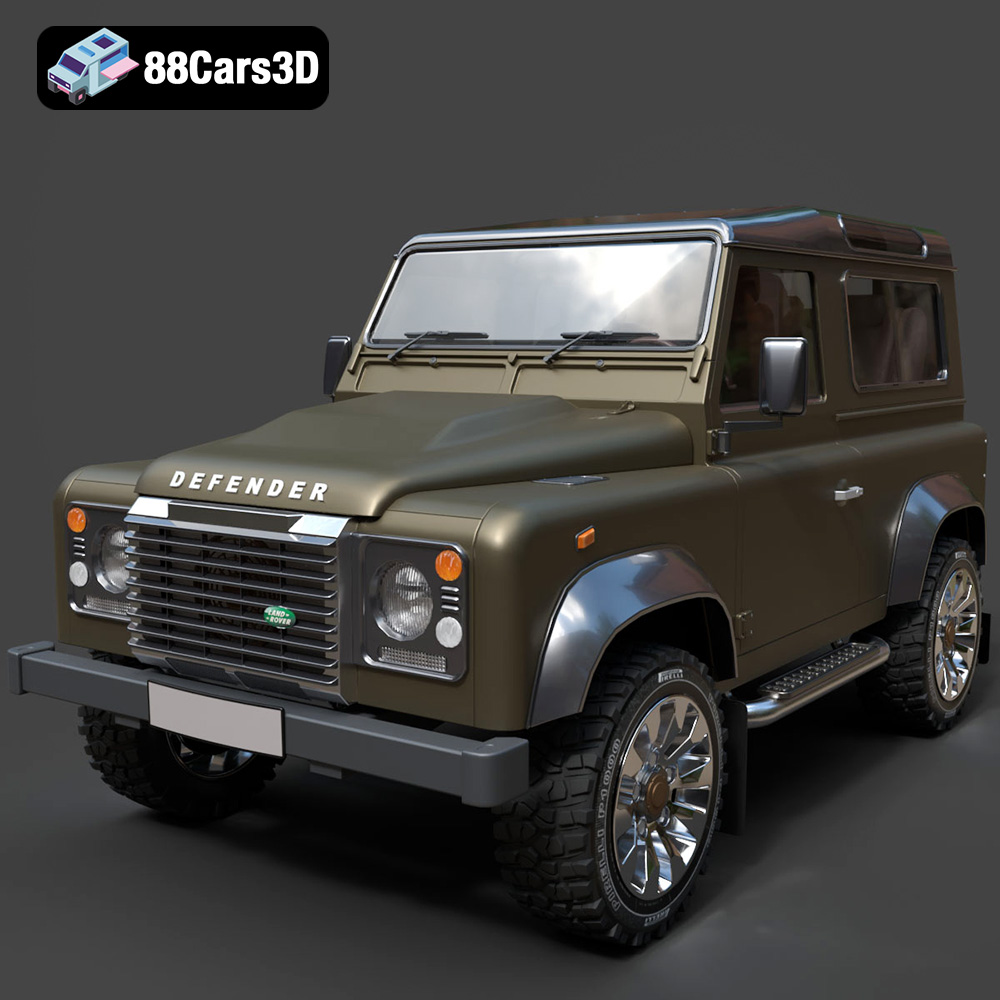
Texture: Yes
Material: Yes
Download the Land Rover Defender Works V8 3D Model featuring clean geometry, realistic detailing, and a fully modeled interior. Includes .blend, .fbx, .obj, .glb, .stl, .ply, .unreal, and .max formats for rendering, simulation, and game development.
Price: $19.99
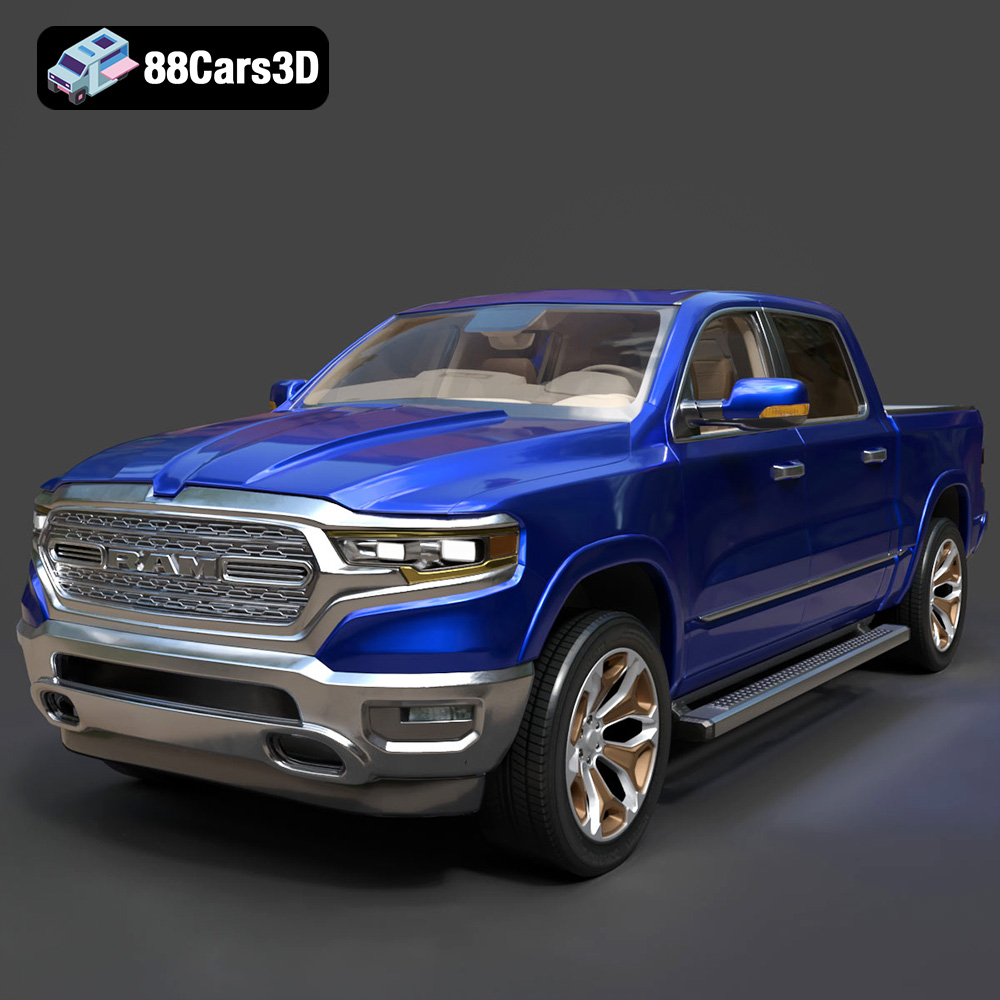
Texture: Yes
Material: Yes
Download the Dodge RAM 2019 3D Model featuring clean geometry, realistic detailing, and a fully modeled interior. Includes .blend, .fbx, .obj, .glb, .stl, .ply, .unreal, and .max formats for rendering, simulation, and game development.
Price: $19.99
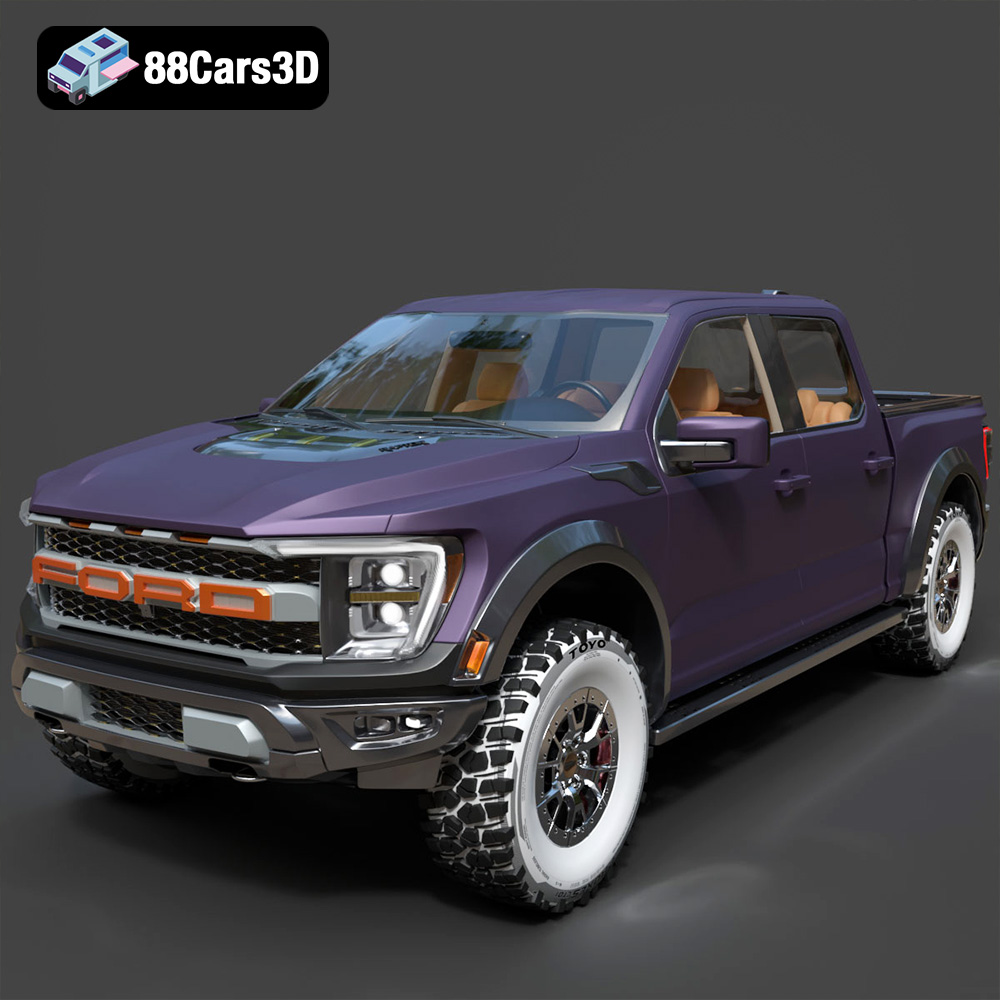
Texture: Yes | Material: Yes Download the ultra-high-detail Ford F-150 Raptor 2021 3D Model (8.73M Triangles). Features uncompromised widebody styling, fully modeled Fox Live Valve suspension, 37-inch tires, and interior. Perfect for premium VFX, cinematic rendering, and ArchViz. Includes .blend, .fbx, .obj, .glb, .stl, and .max formats.
Price: $29.99
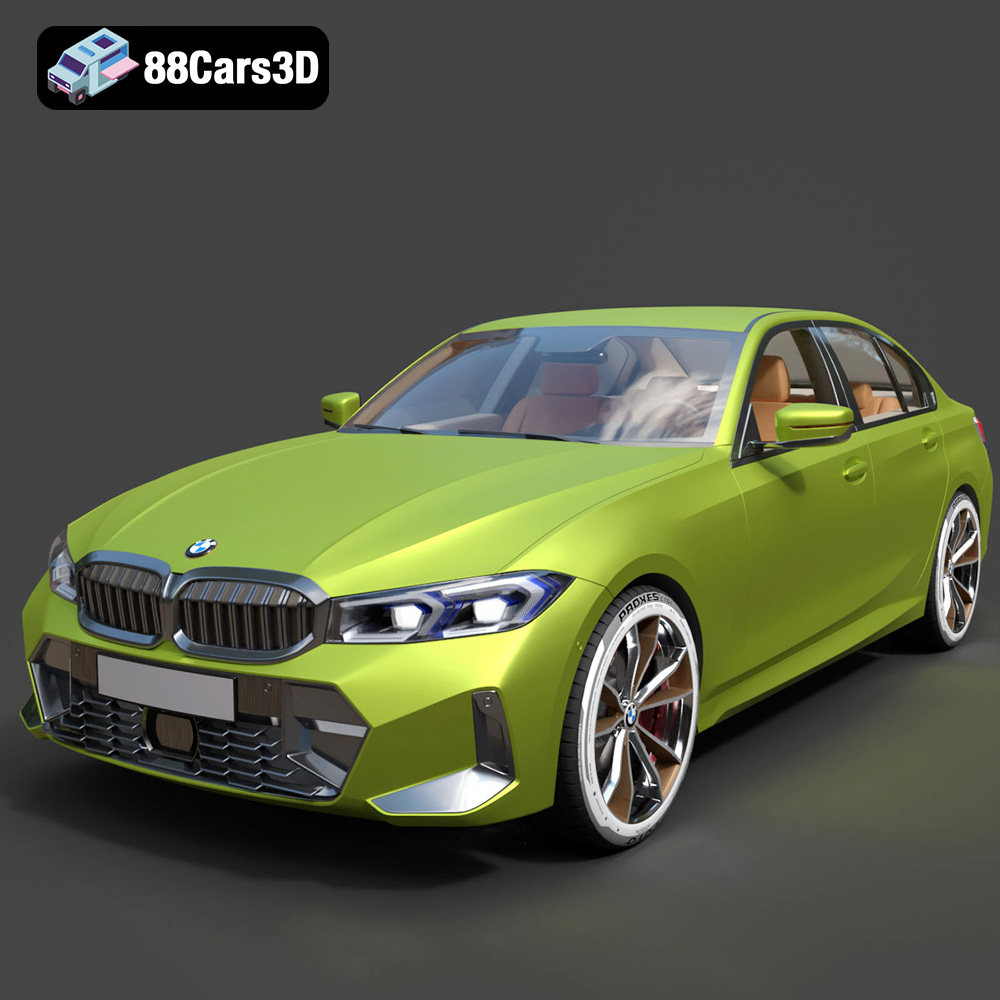
Texture: Yes | Material: Yes Download the ultra-high-detail BMW 3 Series Limousine (2022) 3D Model (4.16M Triangles). Features the modernized G20 LCI exterior, the all-new BMW Curved Display interior, and ultra-dense topology. Perfect for ArchViz, VFX, and cinematic rendering. Includes .blend, .fbx, .obj, .glb, .stl, and .max formats.
Price: $19.99
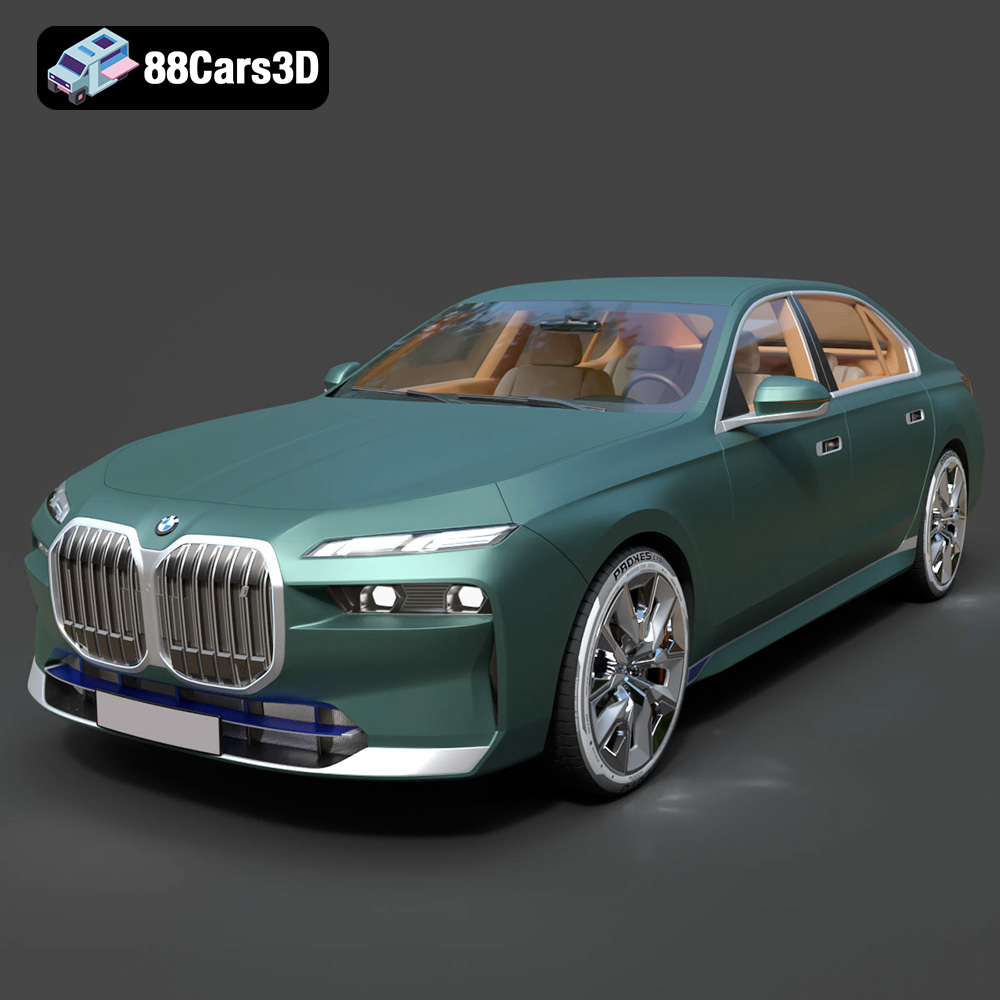
Texture: Yes | Material: Yes Download the ultra-high-detail BMW i7 (2023) 3D Model (4.14M Triangles). Features the illuminated kidney grille, split crystal headlights, fully modeled Theatre Screen interior, and monolithic luxury styling. Perfect for ArchViz, VFX, and cinematic rendering. Includes .blend, .fbx, .obj, .glb, .stl, and .max formats.
Price: $19.99
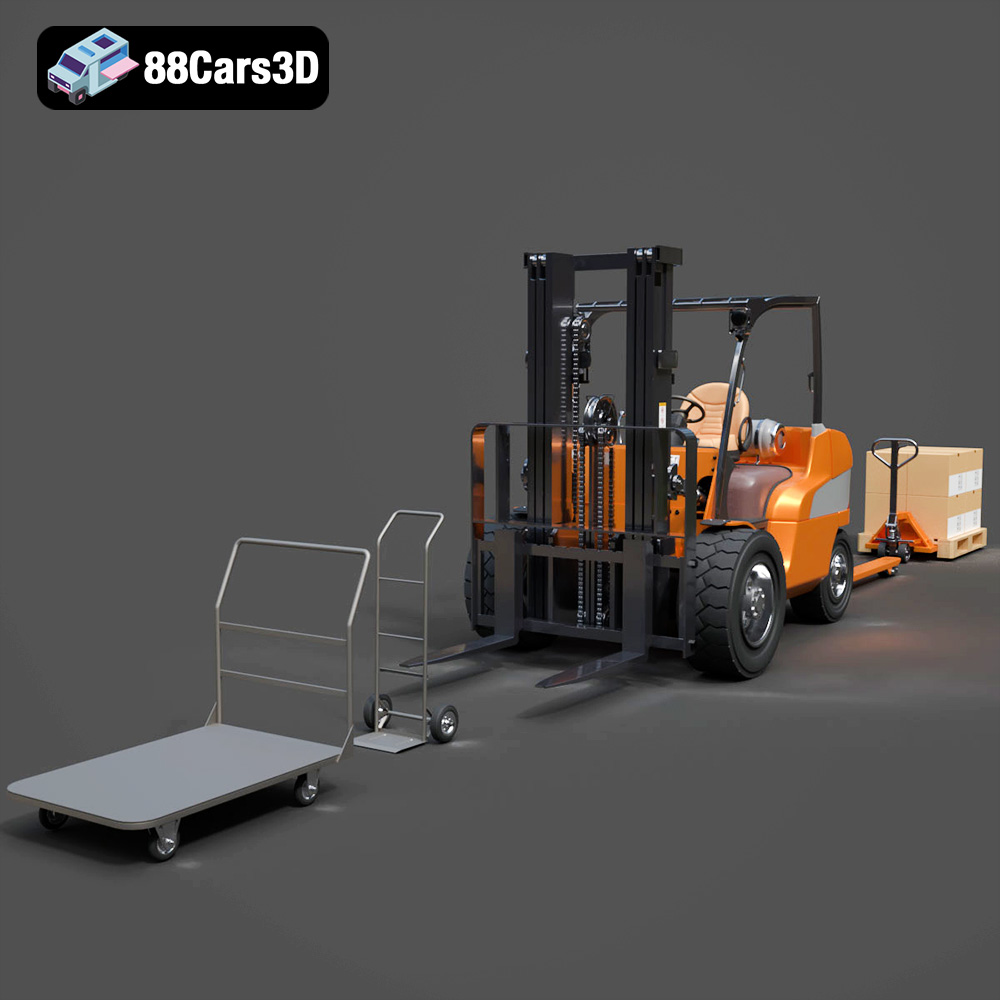
Texture: Yes | Material: Yes Download the highly detailed CAT Manual Loader & Warehouse Carts Kit 3D Model (2.4M Triangles). Features a macro-detailed hydraulic pallet jack, heavy-duty forks, and transport carts. Perfect for industrial ArchViz, factory rendering, and logistics simulations. Includes .blend, .fbx, .obj, .glb, .stl, and .max formats.
Price: $19.99

Texture: Yes | Material: Yes
Download the highly optimized Mazda CX-5 2014 3D Model (294k Triangles). Features the dynamic Kodo design language, signature grille, and a clean interior. Perfectly balanced for ArchViz, background traffic, and game development. Includes .blend, .fbx, .obj, .glb, .stl, and .max formats.
Price: $19.99
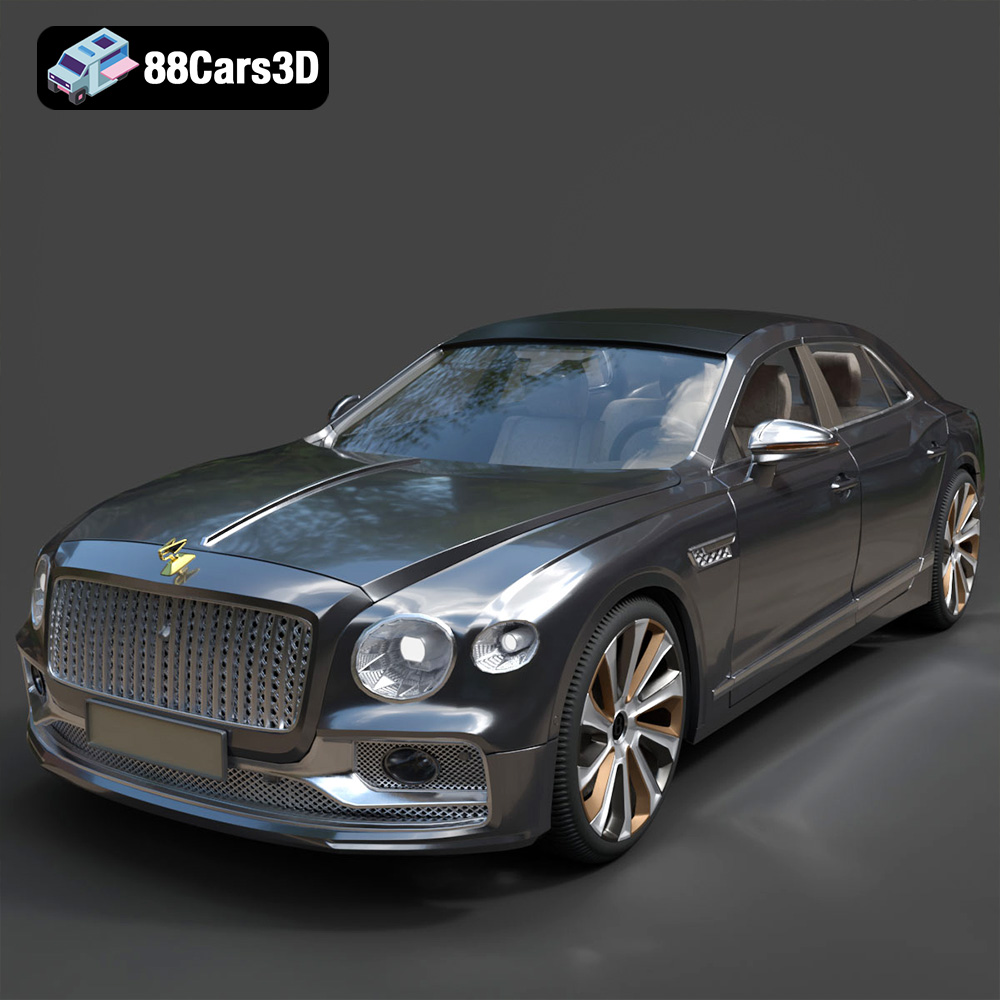
Texture: Yes | Material: Yes Download the ultra-high-detail Bentley Flying Spur Mulliner 2022 3D Model (2.94M Triangles). Features the bespoke Double Diamond grille, a fully modeled diamond-quilted interior, and exquisite luxury styling. Perfect for high-end ArchViz, VFX, and cinematic rendering. Includes .blend, .fbx, .obj, .glb, .stl, and .max formats.
Price: $19.90
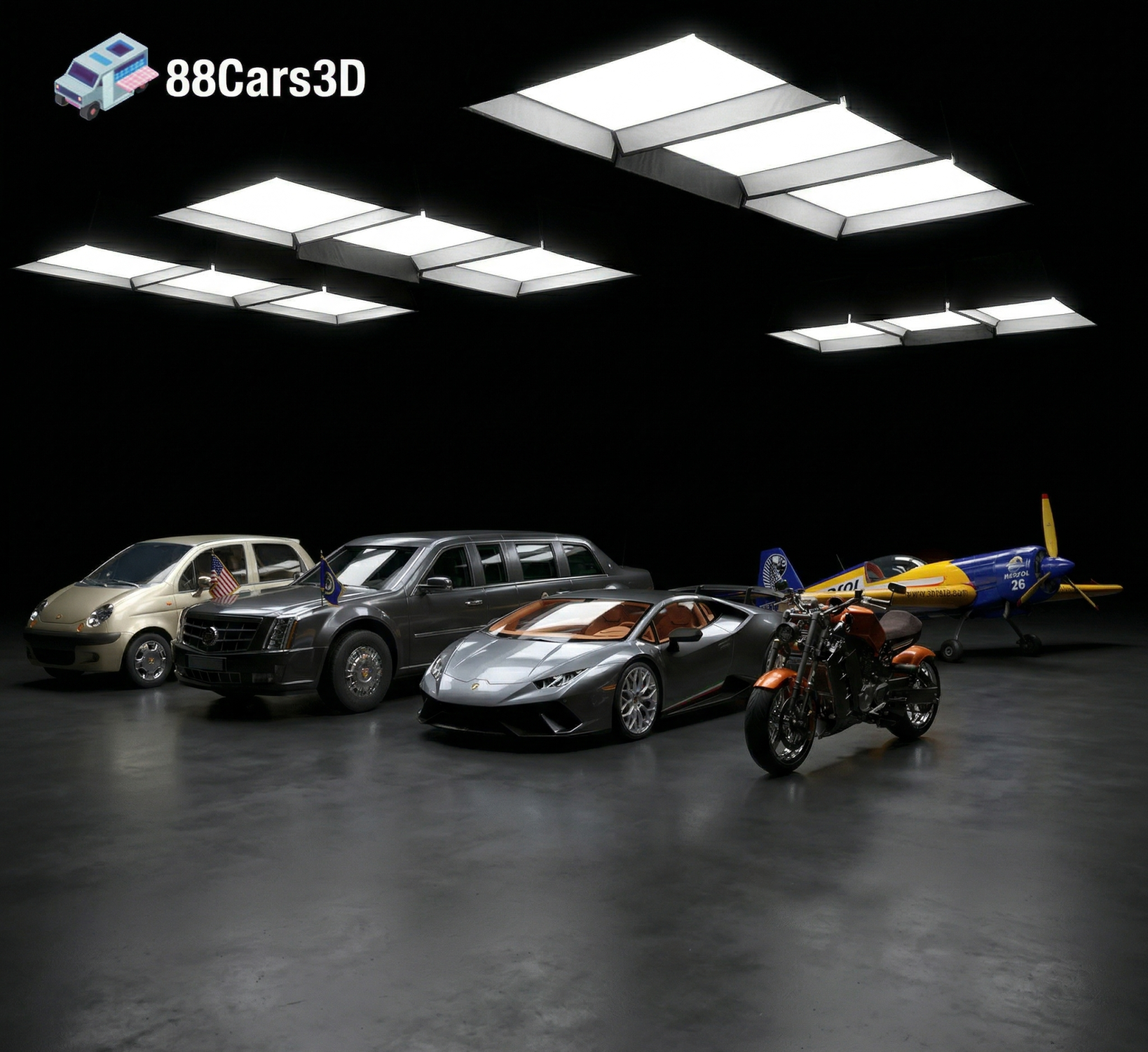
Texture: Yes | Material: Yes | 3D Printable: Yes. Download the Ultimate Creators’ Showcase featuring 5 premium 3D models: Lamborghini Huracan, ZAV Concept Motorcycle, Sukhoi SU-26, Presidential Limousine, and Daewoo Damas. Optimized for 4K CGI rendering and 3D printing. Save massive with this exclusive multi-category bundle!
Price: $99.99

Texture: Yes | Material: Yes | 3D Printable: Yes. Download the Italian Thoroughbreds Bundle featuring 5 iconic 3D models: Lamborghini Huracán Performante, Ferrari 458 Italia, Lamborghini Urus, Diablo SV, and Maserati GT. Optimized for 4K rendering and 3D printing (STL included). Save 50% with this ultimate Italian vehicle collection.
Price: $199.99

