Get 50% OFF All Premium 3D & STL Models!

“`html
The world of 3D printing has revolutionized model making, especially for automotive enthusiasts. No longer are you limited to mass-produced kits; with the right STL files and 3D printer settings, you can create incredibly detailed and realistic car models. This comprehensive guide will walk you through the entire process, from selecting the right STL files to post-processing techniques that will bring your miniature vehicles to life. Whether you’re a seasoned 3D printing expert or a beginner just starting, this article will equip you with the knowledge and skills to create stunning 3D printed car models. We’ll delve into the nuances of STL file preparation, slicing software parameters, support structures, material selection, and much more. By the end of this guide, you’ll be ready to transform digital designs into tangible masterpieces.
We’ll cover how to choose the right 3D printer (FDM vs Resin), understand the critical aspects of STL file format (including mesh topology and manifold requirements), master slicing techniques using popular software (Cura, PrusaSlicer), generate and remove support structures effectively, optimize print orientation and bed adhesion for success, choose the right materials like PLA, PETG, ABS or various Resins, and finally explore post-processing techniques like sanding, painting, and assembly to make your model truly shine.
The STL (Stereolithography) file format is the cornerstone of 3D printing. It represents the surface geometry of a 3D object using a collection of triangles. For printing realistic car models, understanding the nuances of STL files is crucial. A well-prepared STL file ensures a smoother, more detailed print, while a poorly prepared one can lead to errors, imperfections, or even a failed print. Platforms like 88cars3d.com offer print-ready STL files designed specifically for optimal 3D printing results.
Mesh topology refers to the structure of the triangles that make up the STL file. A dense mesh (high polygon count) results in a smoother surface and finer details, which are essential for capturing the intricate curves and features of a car model. However, a very high polygon count can also increase file size and processing time during slicing. A balance needs to be struck. Aim for a polygon count that captures the essential details without overwhelming your computer or printer. For car models, a polygon count in the range of 500,000 to 2 million triangles is often a good starting point. Check for non-manifold edges (edges shared by more than two triangles) as these will prevent the slicer from creating a proper solid object.
Manifold geometry is a critical requirement for 3D printing. It means that the surface of the 3D model must be closed and without any holes or self-intersections. STL files representing non-manifold geometry are prone to errors during slicing and printing. Before printing, always inspect and repair your STL files using software like Meshmixer, Netfabb, or online repair services. These tools can automatically detect and fix common issues such as holes, flipped normals, and overlapping triangles. For example, in Meshmixer, you can use the “Make Solid” function to convert a non-manifold mesh into a solid, printable object. Netfabb offers more advanced repair capabilities and is a preferred choice for professionals. Always double-check the repaired STL file to ensure the repairs haven’t introduced any new issues.
Selecting the appropriate 3D printer and material is fundamental to achieving realistic car models. The two primary 3D printing technologies are FDM (Fused Deposition Modeling) and Resin (Stereolithography, SLA, or DLP). Each has its strengths and weaknesses, and the best choice depends on the desired level of detail, size of the model, and budget.
FDM printers are popular due to their affordability and ease of use. They work by extruding melted plastic filament layer by layer. FDM printers are well-suited for larger car models where dimensional accuracy is important, but fine details are less critical. Common materials used in FDM printing include PLA, PETG, and ABS. PLA is biodegradable, easy to print with, and offers good strength. PETG is more durable and heat-resistant than PLA. ABS is a stronger, more heat-resistant plastic but requires a heated bed and enclosure to prevent warping. Resin printers, on the other hand, excel at producing incredibly detailed and smooth surfaces. They use liquid resin that is cured by UV light. Resin printing is ideal for smaller, intricate car models where surface finish and fine details are paramount. Resin prints can capture incredibly small details such as panel lines, rivets, and emblems that FDM printers struggle with. However, resin printers tend to be more expensive, and the resins themselves can be costly and require careful handling.
When choosing a material, consider factors such as strength, flexibility, heat resistance, and ease of post-processing. PLA is a good general-purpose material for FDM printing, but it is not very heat-resistant. PETG offers a good balance of strength, durability, and heat resistance. ABS is suitable for parts that will be exposed to high temperatures or require high strength. For resin printing, there are various types of resins available, each with specific properties. Standard resins are suitable for general-purpose printing, while tough resins are more durable and impact-resistant. Flexible resins can be used for parts that need to bend or flex. Castable resins are designed for investment casting. Consider the specific requirements of your car model and choose a material that meets those needs. For example, if you plan to paint your model, choose a material that adheres well to paint and is easy to sand.
Slicing software is used to convert the 3D model (STL file) into a series of layers that the 3D printer can understand and print. The slicer also allows you to adjust various print settings that affect the quality, strength, and speed of the print. Popular slicing software includes Cura, PrusaSlicer, Simplify3D, and Chitubox (for resin printing). Each slicer has its own strengths and weaknesses, but they all share common features.
Layer height is one of the most critical settings in the slicer. It determines the thickness of each layer and directly affects the surface finish and print time. Lower layer heights result in smoother surfaces but increase print time. Higher layer heights result in faster print times but can lead to visible layer lines. For realistic car models, a layer height of 0.1mm to 0.2mm is recommended for FDM printing. For resin printing, layer heights can be as low as 0.025mm. Infill refers to the internal structure of the 3D print. It affects the strength, weight, and print time of the model. For car models, an infill density of 15% to 25% is usually sufficient. You can also experiment with different infill patterns such as gyroid, honeycomb, or rectilinear to optimize strength and weight. Print speed also significantly impacts print quality. Slower print speeds generally result in better adhesion and smoother surfaces. For FDM printing, a print speed of 40mm/s to 60mm/s is a good starting point. Resin printing speeds are typically much slower, in the range of 30-60mm/minute lift speed depending on resin and printer.
Correct temperature settings are essential for successful 3D printing. For FDM printing, the nozzle temperature depends on the material being used. PLA typically prints at 200°C to 220°C, PETG at 230°C to 250°C, and ABS at 230°C to 260°C. The bed temperature also affects adhesion. PLA typically prints on a bed heated to 60°C, PETG to 70°C to 80°C, and ABS to 90°C to 110°C. Bed adhesion is crucial for preventing warping and ensuring that the print sticks to the build plate. You can use various techniques to improve bed adhesion, such as applying glue stick, painter’s tape, or using a specialized bed surface like PEI. Support structures are necessary for printing overhangs and complex geometries. The slicer automatically generates support structures that can be removed after printing. Experiment with different support settings, such as support density, support overhang angle, and support placement, to optimize support removal and minimize surface damage. When downloading models from marketplaces such as 88cars3d.com, check for pre-supported STL files, which simplify this process. For resin printing, temperature control is less critical, but ensuring that the resin is at the recommended temperature range is still important for optimal curing.
Support structures are temporary additions to your 3D print that provide a foundation for overhanging features. They are crucial for printing complex geometries, especially for car models with curved surfaces, spoilers, and intricate details. Understanding how to generate and remove support structures effectively is vital for achieving a clean and accurate final product.
There are various types of support structures available in slicing software, including linear supports, tree supports, and hybrid supports. Linear supports are the most basic type and are suitable for simple overhangs. Tree supports are more efficient in terms of material usage and are easier to remove, especially for complex geometries. Hybrid supports combine the benefits of both linear and tree supports. To optimize support generation, consider the following factors: Support density: Higher density provides better support but can be more difficult to remove. Support overhang angle: This setting determines the angle at which supports are generated. Higher angles require more supports. Support placement: You can manually place supports in specific areas where they are needed most. Experiment with different support settings to find the optimal balance between support strength and ease of removal. In Cura, you can use the “Support Placement” setting to choose between “Everywhere” (supports are generated under all overhangs) and “Touching Buildplate” (supports are only generated from the build plate). In PrusaSlicer, you can use the “Paint-on supports” feature to manually add or remove supports in specific areas.
Removing support structures without damaging the model requires patience and the right tools. Start by using pliers or nippers to carefully break away the bulk of the supports. For finer supports, use a hobby knife or scraper to gently remove them from the surface. Be careful not to scratch or gouge the model. For resin prints, you can soak the model in warm water to soften the supports and make them easier to remove. You can also use ultrasonic cleaners to further aid in the support removal process. After removing the supports, use sandpaper or a file to smooth out any remaining imperfections. Start with a coarse grit sandpaper and gradually move to finer grits to achieve a smooth surface. For delicate areas, use a polishing compound to restore the shine. If necessary, you can fill any small gaps or imperfections with filler or putty before sanding.
Post-processing is the final stage in the 3D printing process and involves refining the printed model to achieve a realistic and professional finish. This can include sanding, filling, priming, painting, and assembling multiple parts.
Sanding is used to smooth out layer lines and imperfections on the surface of the 3D print. Start with a coarse grit sandpaper (e.g., 220 grit) and gradually move to finer grits (e.g., 400, 600, 800, 1000 grit) to achieve a smooth surface. Wet sanding can help to reduce dust and improve the finish. Filling is used to fill any small gaps or imperfections in the model. Use a suitable filler or putty that is compatible with the material being used. Apply the filler in thin layers and allow it to dry completely before sanding. Priming is used to prepare the surface for painting. Primer provides a smooth, uniform surface for the paint to adhere to and helps to hide any remaining imperfections. Choose a primer that is compatible with the material being used and apply it in thin, even coats. Allow the primer to dry completely before painting.
Painting is the final step in the post-processing process and is where you can bring your car model to life. Choose paints that are suitable for the material being used and apply them in thin, even coats. Use masking tape to create clean lines and protect areas that you don’t want to paint. For realistic detailing, use fine brushes to paint small details such as panel lines, emblems, and lights. You can also use decals or transfers to add intricate details. After painting, apply a clear coat to protect the paint and add a glossy or matte finish. Apply the clear coat in thin, even coats and allow it to dry completely. Finally, assemble any separate parts of the car model using glue or fasteners. Be careful to align the parts correctly and avoid using too much glue.
Even with careful planning and execution, 3D printing can sometimes present challenges. Understanding common issues and how to troubleshoot them is essential for achieving successful prints.
Warping occurs when the corners or edges of the 3D print lift off the build plate. This is often caused by uneven cooling or poor bed adhesion. To prevent warping, ensure that the bed is properly leveled and heated to the recommended temperature. Use bed adhesion techniques such as glue stick, painter’s tape, or a specialized bed surface like PEI. Consider using an enclosure to maintain a consistent temperature around the print. Adhesion problems occur when the first layer of the print does not stick to the build plate. This can be caused by a dirty build plate, incorrect nozzle height, or insufficient bed temperature. Clean the build plate with isopropyl alcohol before each print. Adjust the nozzle height so that it is close enough to the bed to create a good first layer. Increase the bed temperature to improve adhesion. Layer separation occurs when the layers of the 3D print do not adhere properly to each other. This can be caused by insufficient nozzle temperature, poor cooling, or incorrect print speed. Increase the nozzle temperature to improve layer adhesion. Reduce the cooling fan speed to allow the layers to cool more slowly. Reduce the print speed to give the layers more time to bond together.
Stringing occurs when the printer extrudes small strings of plastic between different parts of the print. This is often caused by excessive retraction or incorrect nozzle temperature. Increase the retraction distance and speed to reduce stringing. Decrease the nozzle temperature to reduce the flow of plastic. Blobs occur when the printer deposits excess plastic at the start or end of a layer. This can be caused by incorrect retraction settings or inconsistent extrusion. Adjust the retraction settings to minimize blobs. Calibrate the extruder to ensure consistent extrusion. Inconsistent extrusion occurs when the printer does not extrude a consistent amount of plastic. This can be caused by a clogged nozzle, incorrect filament diameter, or a faulty extruder. Clean the nozzle to remove any clogs. Verify that the filament diameter is set correctly in the slicer. Check the extruder for any signs of wear or damage.
3D printing realistic car models from STL files is an exciting and rewarding process that combines technical expertise with artistic creativity. By understanding the nuances of STL files, choosing the right 3D printer and materials, mastering slicing software parameters, generating and removing support structures effectively, applying post-processing techniques meticulously, and troubleshooting common printing issues, you can create stunning 3D printed car models that capture the essence of automotive design. Remember to explore online resources, experiment with different settings, and don’t be afraid to learn from your mistakes. Platforms like 88cars3d.com are a great place to find high-quality STL files to start your 3D printing journey. The key is to be patient, persistent, and always strive for improvement. Happy printing, and may your 3D printed car models become a source of pride and inspiration!
Next steps involve calibrating your printer (performing PID tuning, E-steps calibration) to ensure accuracy. Also, consider exploring advanced techniques like vapor smoothing (for ABS) and resin coating (for FDM prints) to further enhance the realism of your models. Finally, network with other 3D printing enthusiasts to share knowledge and learn from their experiences. Join online forums, attend local maker events, and participate in 3D printing communities.
“`
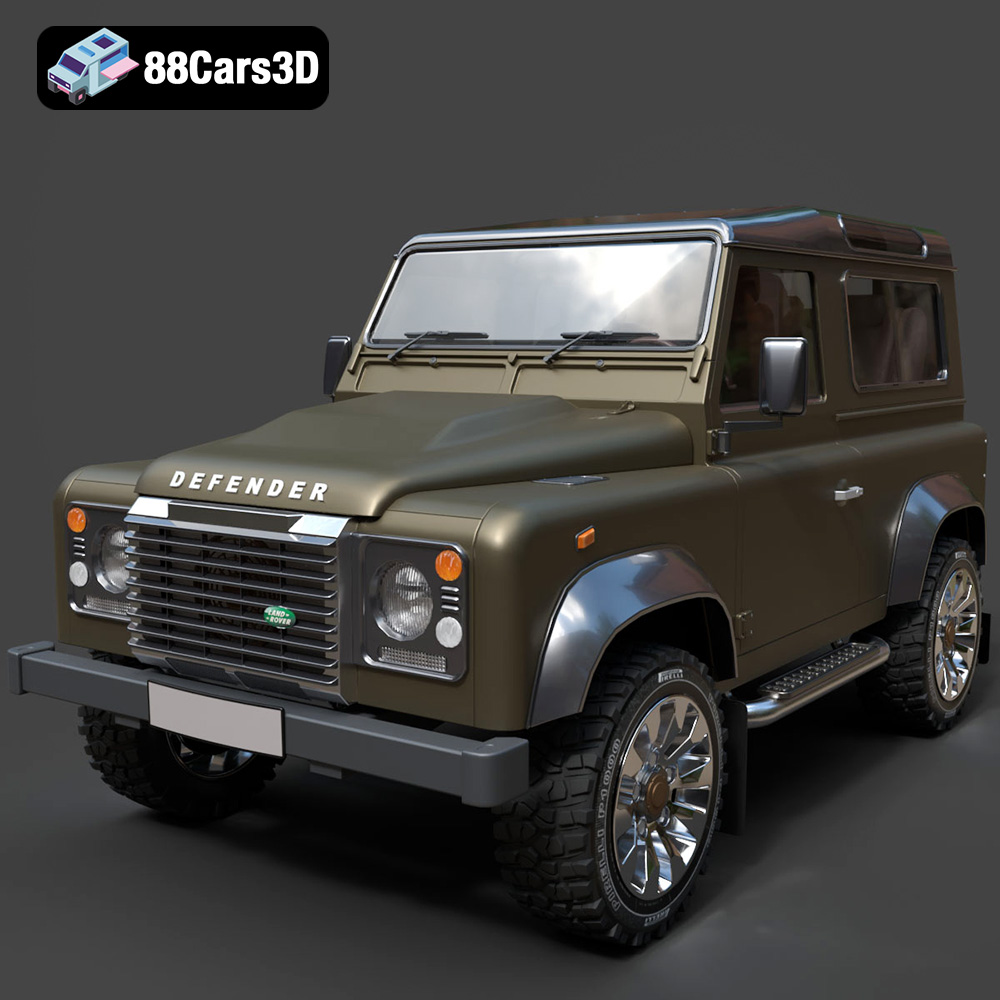
Texture: Yes
Material: Yes
Download the Land Rover Defender Works V8 3D Model featuring clean geometry, realistic detailing, and a fully modeled interior. Includes .blend, .fbx, .obj, .glb, .stl, .ply, .unreal, and .max formats for rendering, simulation, and game development.
Price: $19.99
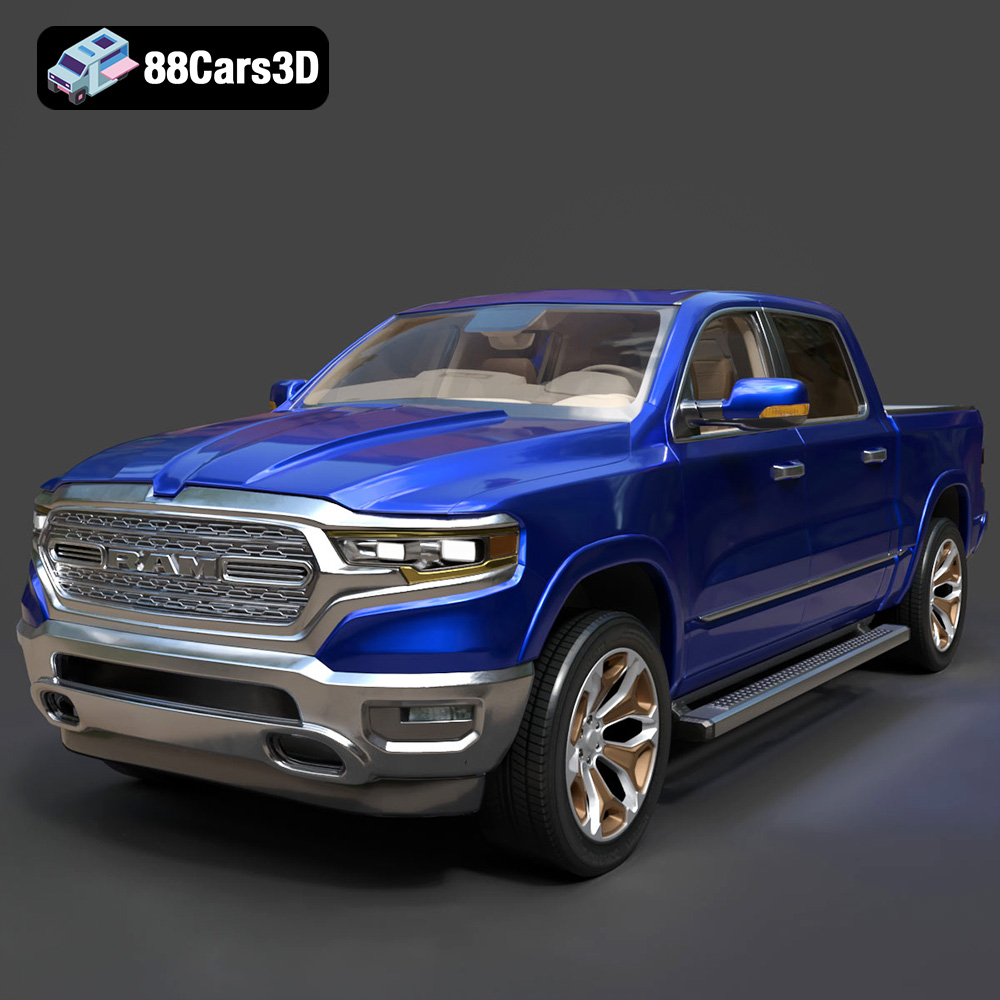
Texture: Yes
Material: Yes
Download the Dodge RAM 2019 3D Model featuring clean geometry, realistic detailing, and a fully modeled interior. Includes .blend, .fbx, .obj, .glb, .stl, .ply, .unreal, and .max formats for rendering, simulation, and game development.
Price: $19.99
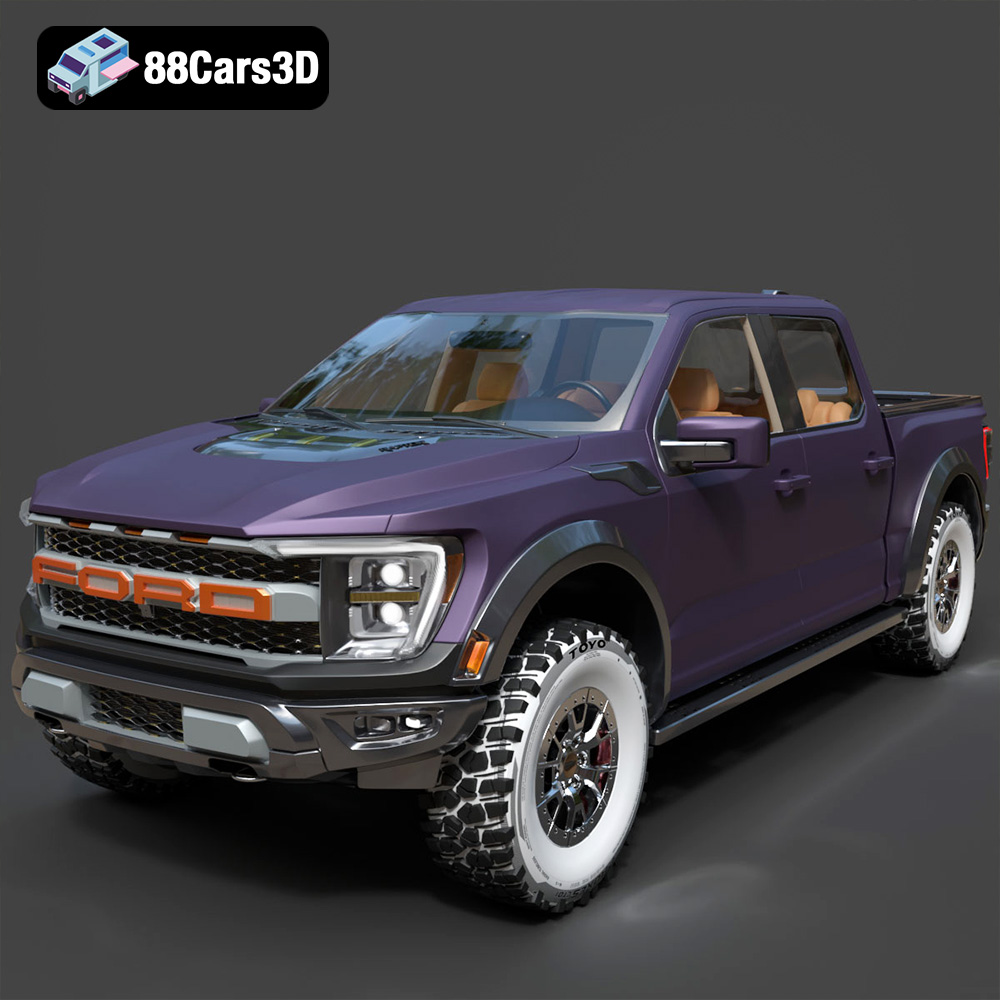
Texture: Yes | Material: Yes Download the ultra-high-detail Ford F-150 Raptor 2021 3D Model (8.73M Triangles). Features uncompromised widebody styling, fully modeled Fox Live Valve suspension, 37-inch tires, and interior. Perfect for premium VFX, cinematic rendering, and ArchViz. Includes .blend, .fbx, .obj, .glb, .stl, and .max formats.
Price: $29.99
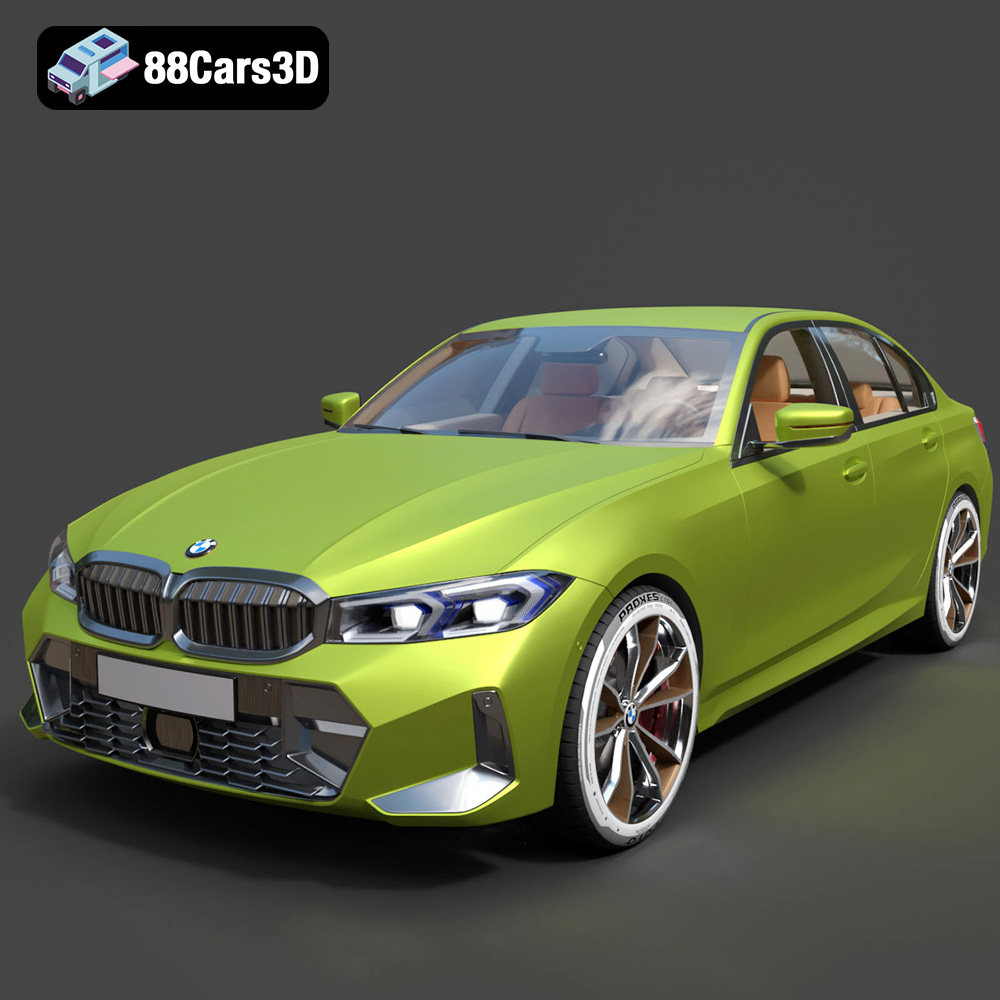
Texture: Yes | Material: Yes Download the ultra-high-detail BMW 3 Series Limousine (2022) 3D Model (4.16M Triangles). Features the modernized G20 LCI exterior, the all-new BMW Curved Display interior, and ultra-dense topology. Perfect for ArchViz, VFX, and cinematic rendering. Includes .blend, .fbx, .obj, .glb, .stl, and .max formats.
Price: $19.99
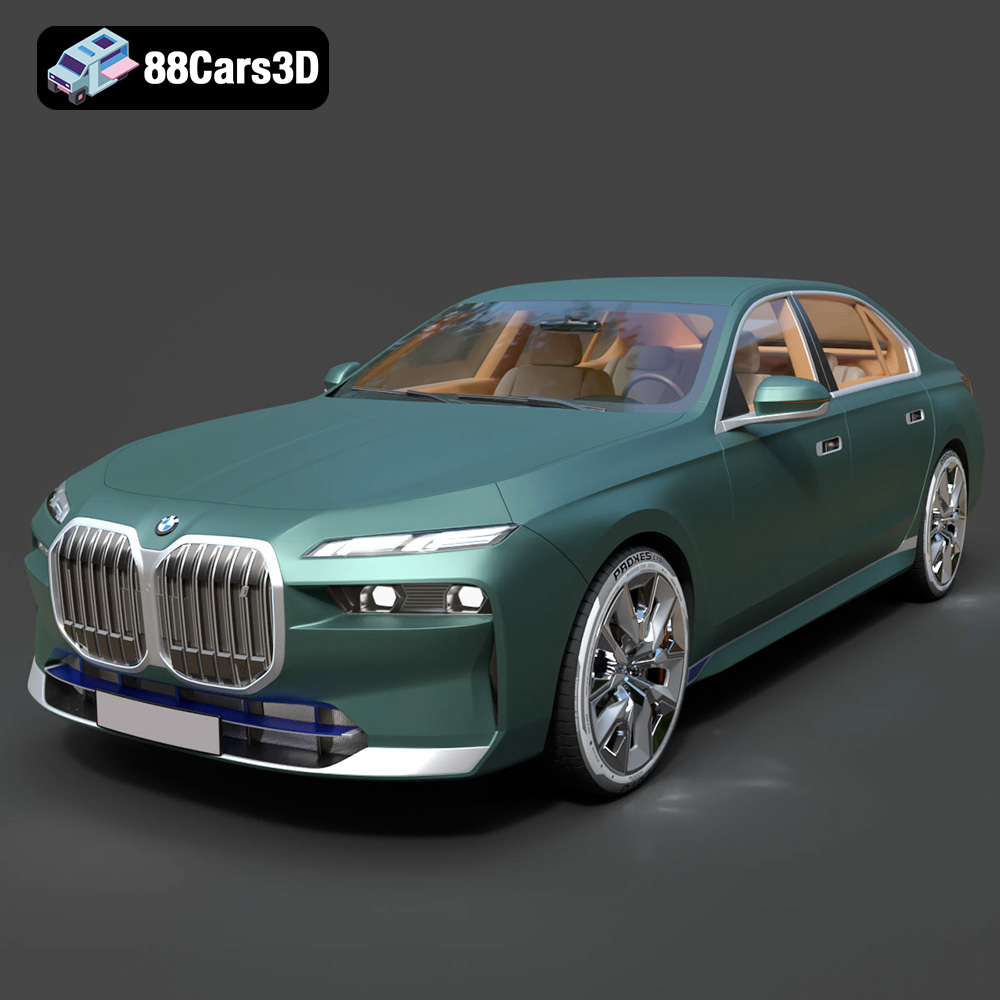
Texture: Yes | Material: Yes Download the ultra-high-detail BMW i7 (2023) 3D Model (4.14M Triangles). Features the illuminated kidney grille, split crystal headlights, fully modeled Theatre Screen interior, and monolithic luxury styling. Perfect for ArchViz, VFX, and cinematic rendering. Includes .blend, .fbx, .obj, .glb, .stl, and .max formats.
Price: $19.99
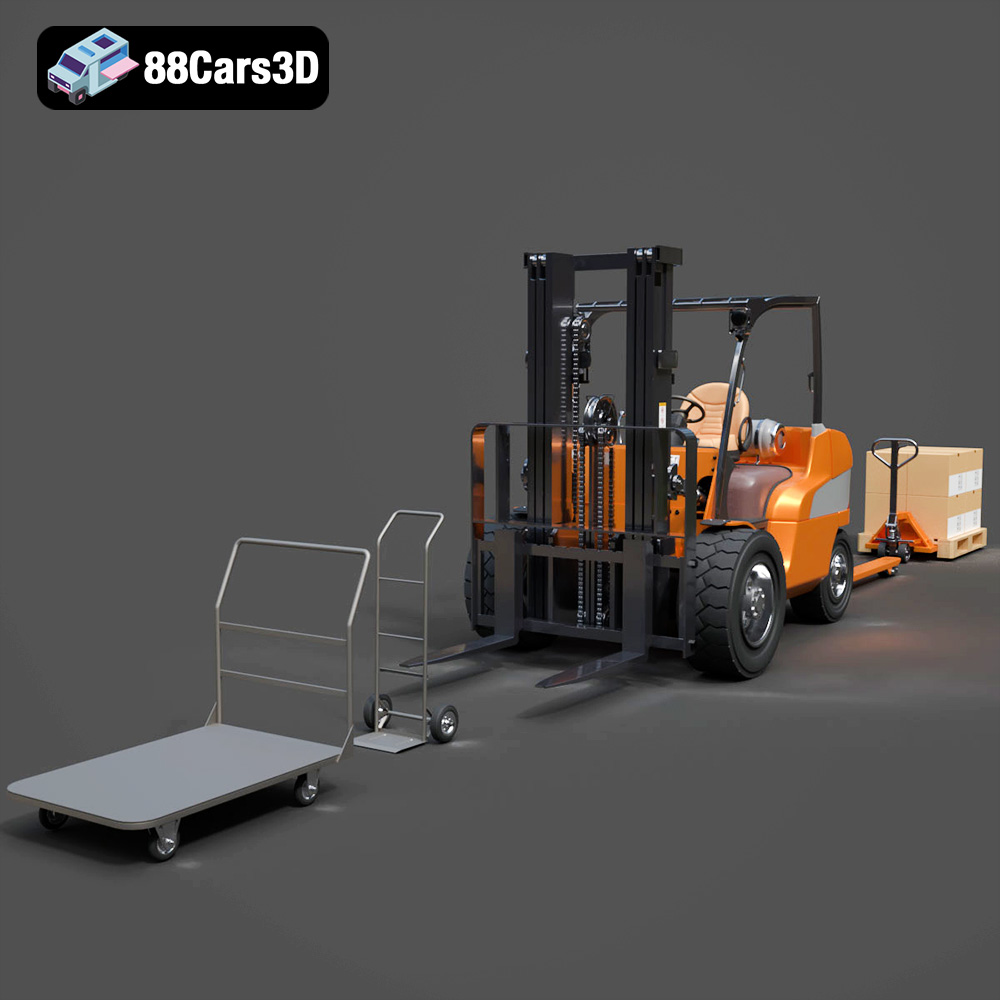
Texture: Yes | Material: Yes Download the highly detailed CAT Manual Loader & Warehouse Carts Kit 3D Model (2.4M Triangles). Features a macro-detailed hydraulic pallet jack, heavy-duty forks, and transport carts. Perfect for industrial ArchViz, factory rendering, and logistics simulations. Includes .blend, .fbx, .obj, .glb, .stl, and .max formats.
Price: $19.99

Texture: Yes | Material: Yes
Download the highly optimized Mazda CX-5 2014 3D Model (294k Triangles). Features the dynamic Kodo design language, signature grille, and a clean interior. Perfectly balanced for ArchViz, background traffic, and game development. Includes .blend, .fbx, .obj, .glb, .stl, and .max formats.
Price: $19.99
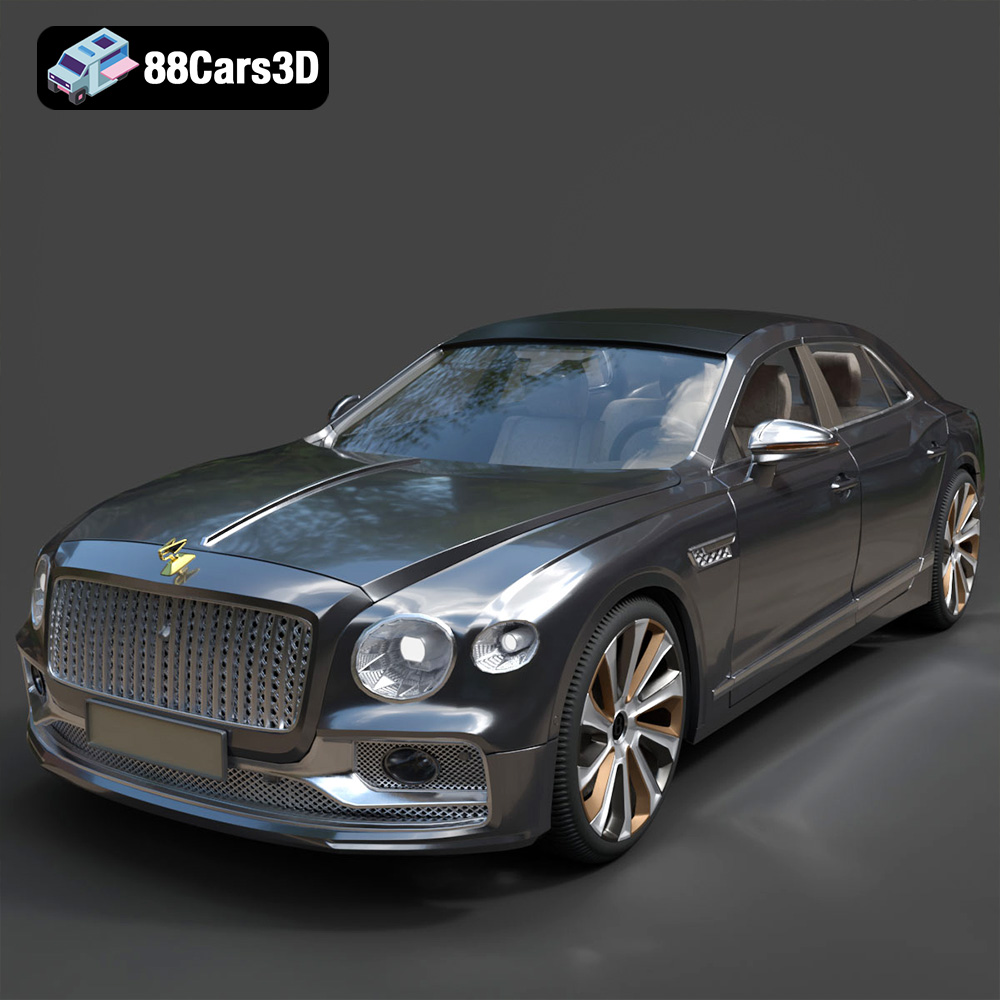
Texture: Yes | Material: Yes Download the ultra-high-detail Bentley Flying Spur Mulliner 2022 3D Model (2.94M Triangles). Features the bespoke Double Diamond grille, a fully modeled diamond-quilted interior, and exquisite luxury styling. Perfect for high-end ArchViz, VFX, and cinematic rendering. Includes .blend, .fbx, .obj, .glb, .stl, and .max formats.
Price: $19.90
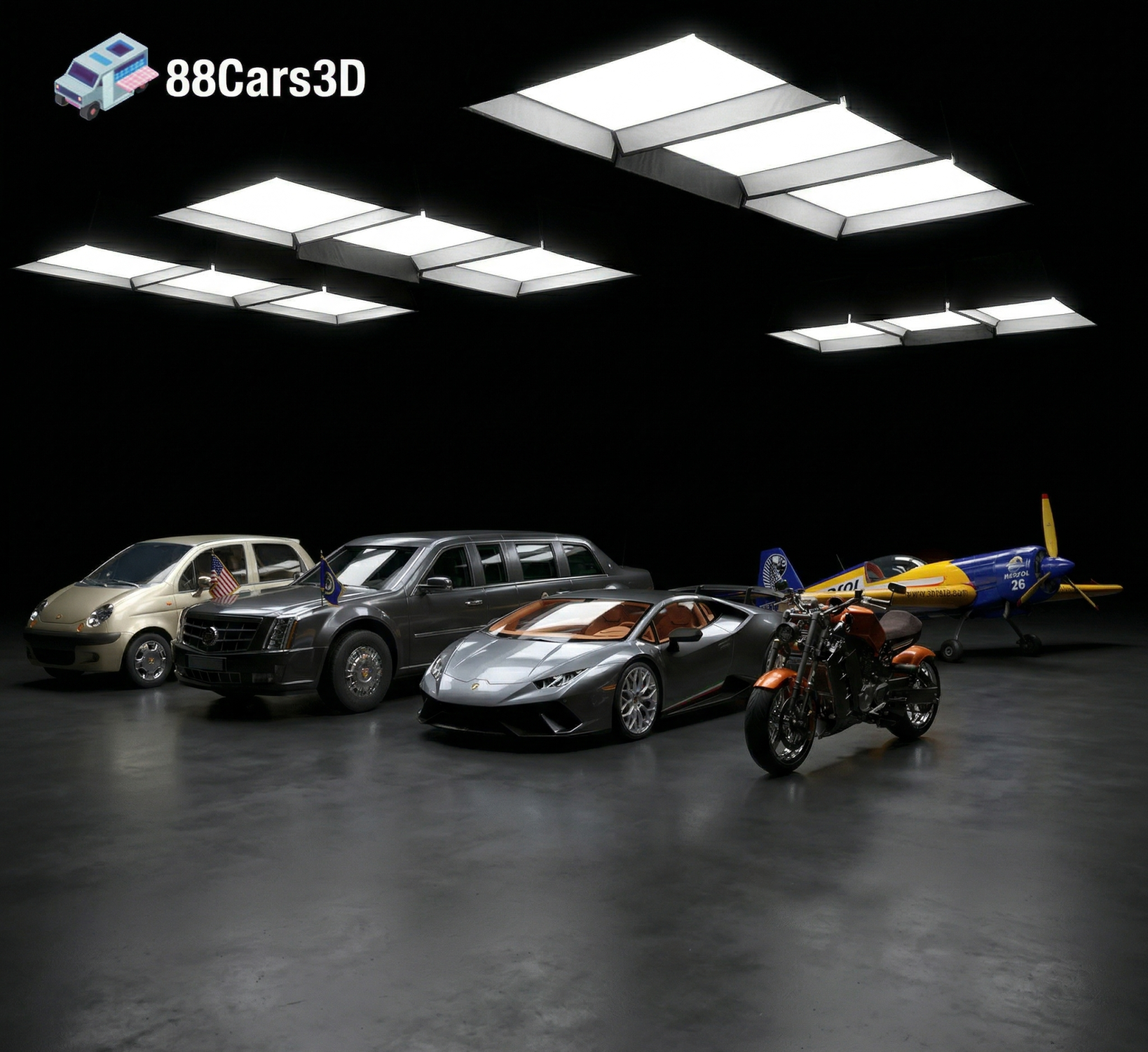
Texture: Yes | Material: Yes | 3D Printable: Yes. Download the Ultimate Creators’ Showcase featuring 5 premium 3D models: Lamborghini Huracan, ZAV Concept Motorcycle, Sukhoi SU-26, Presidential Limousine, and Daewoo Damas. Optimized for 4K CGI rendering and 3D printing. Save massive with this exclusive multi-category bundle!
Price: $99.99

Texture: Yes | Material: Yes | 3D Printable: Yes. Download the Italian Thoroughbreds Bundle featuring 5 iconic 3D models: Lamborghini Huracán Performante, Ferrari 458 Italia, Lamborghini Urus, Diablo SV, and Maserati GT. Optimized for 4K rendering and 3D printing (STL included). Save 50% with this ultimate Italian vehicle collection.
Price: $199.99

