Get 50% OFF All Premium 3D & STL Models!

In the vast landscape of automotive design, some vehicles transcend mere transport to become cultural touchstones. The Suzuki Super Carry 1000 Microvan is undeniably one such icon. This compact utilitarian workhorse, a staple of urban logistics and everyday life throughout the 1980s and 1990s, embodies an era of practical design, efficiency, and rugged simplicity. Its distinctive cabover silhouette, space-saving proportions, and no-nonsense functionality have cemented its place in the hearts of many, from bustling market vendors to adventurous road-trippers.
Capturing the essence of such a unique vehicle in the digital realm requires meticulous attention to detail and a deep understanding of its character. For 3D artists, game developers, architects, and visualization specialists, the ability to seamlessly integrate such a specific and recognizable model into their projects is invaluable. Whether you’re reconstructing a vibrant retro street scene, designing an indie game set in a developing market, or simply exploring the charm of a classic vehicle, a high-quality 3D model is paramount. This is precisely where the Suzuki Super Carry 1000 Microvan 3D Model from 88cars3d.com shines.
This isn’t just a static representation; it’s a meticulously crafted digital asset designed to meet the rigorous demands of modern 3D production pipelines. From its accurately proportioned exterior to its faithfully reproduced utilitarian interior, every aspect of this model is engineered for visual fidelity and versatility. It offers artists the opportunity to infuse their projects with a touch of authentic retro charm, leveraging a robust foundation that is ready for rendering, animation, game engine integration, and even physical reproduction through 3D printing.
When working with 3D car models or any complex digital assets, understanding the various file formats is crucial. Each format serves a specific purpose, offering different levels of compatibility, feature preservation, and optimization for distinct workflows. The Suzuki Super Carry 1000 Microvan 3D Model exemplifies this versatility by being offered in a comprehensive suite of formats, ensuring it seamlessly integrates into virtually any professional pipeline.
The .blend format is native to Blender, the powerful open-source 3D creation suite. When you receive a .blend file, you’re not just getting a model; you’re getting a complete Blender scene. This includes the mesh geometry, materials, textures, lighting setups, cameras, animation data, modifiers, and even scene properties. For artists primarily working in Blender, this format offers the most flexibility and control. You can dive deep into the model’s construction, easily modify its topology, adjust materials, or re-rig components, making it ideal for customization and advanced artistic endeavors. It ensures that the model retains all its intricate details and setup as intended by the creator, providing a perfect starting point for personalized projects.
The provision of these diverse formats with the Suzuki Super Carry 1000 Microvan 3D Model ensures that regardless of your software preference or project requirements, you have a solid, compatible foundation to build upon. This thoughtful approach to file distribution makes the asset incredibly valuable across the spectrum of 3D disciplines, from high-fidelity automotive rendering to rapid 3D printing.
The true value of a premium 3D model lies in its meticulous construction and adherence to real-world specifications. The Suzuki Super Carry 1000 Microvan 3D Model is a testament to this principle, delivering a high-detail digital recreation that faithfully captures the essence of this iconic vehicle.
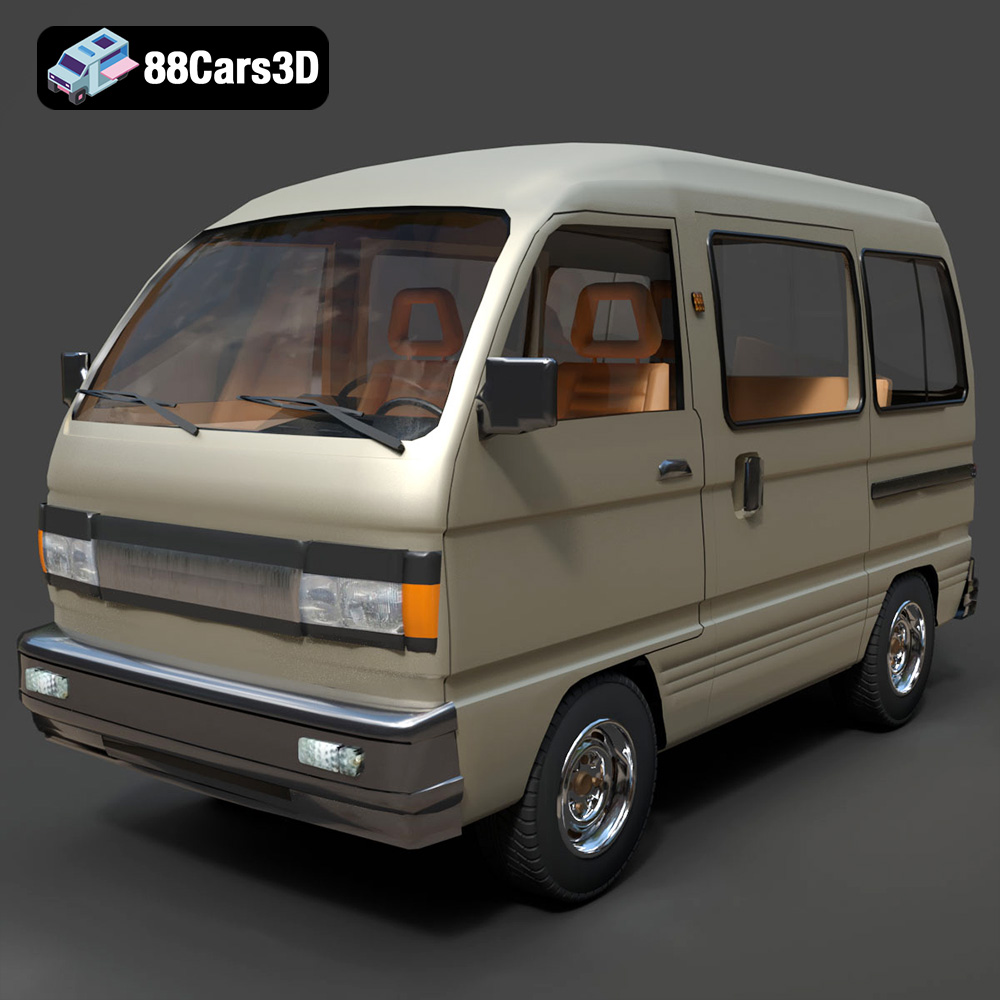
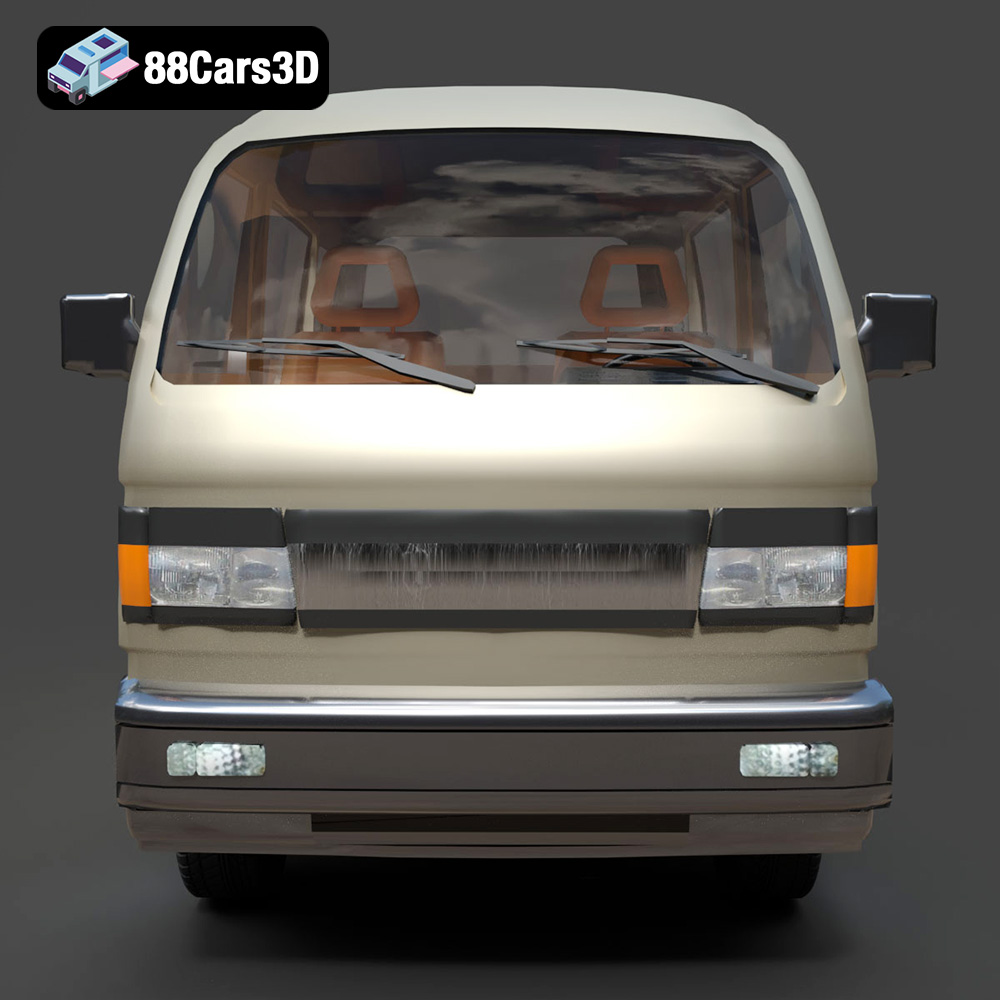
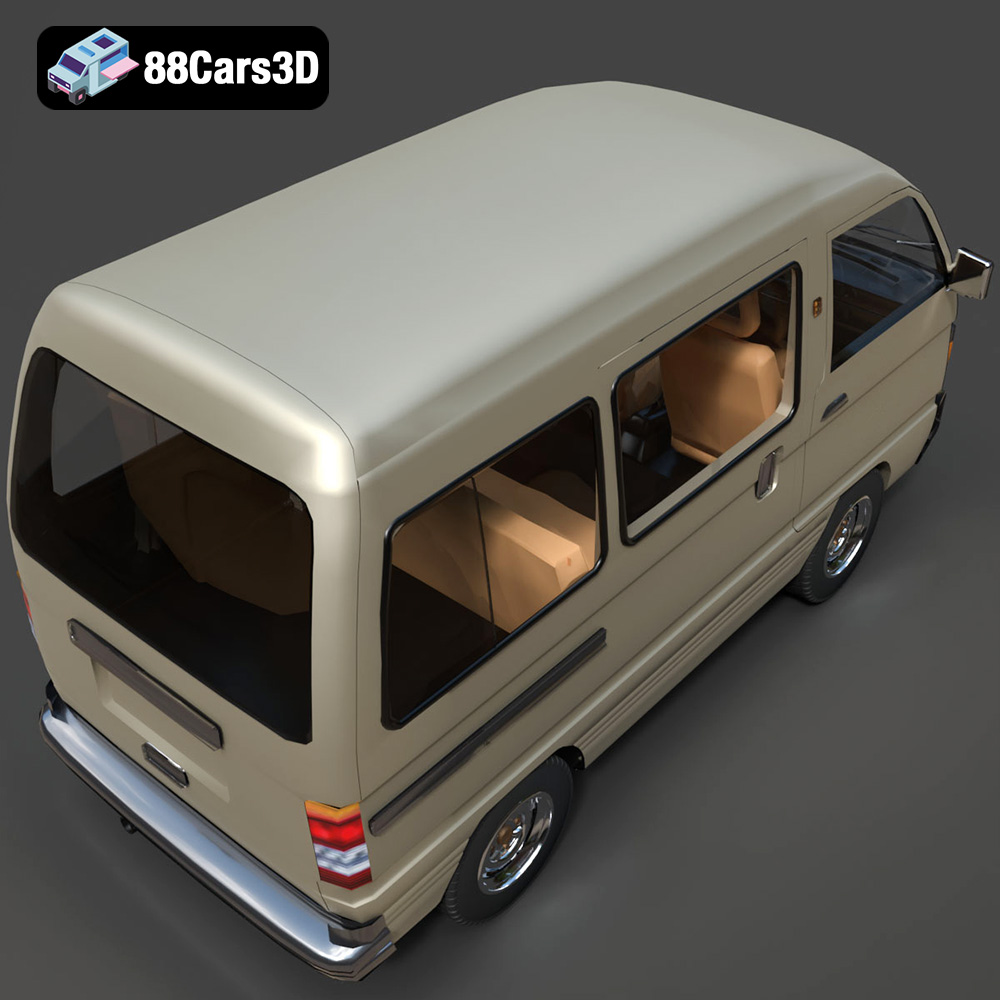
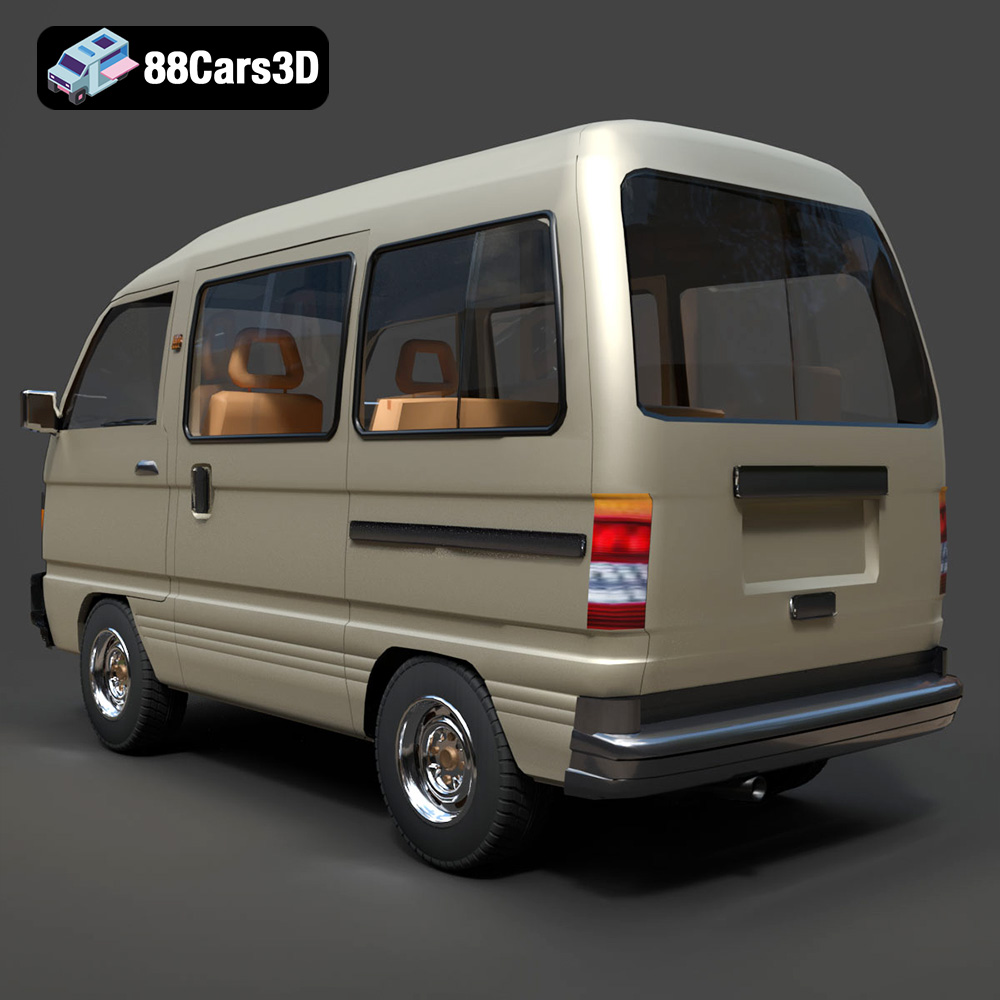
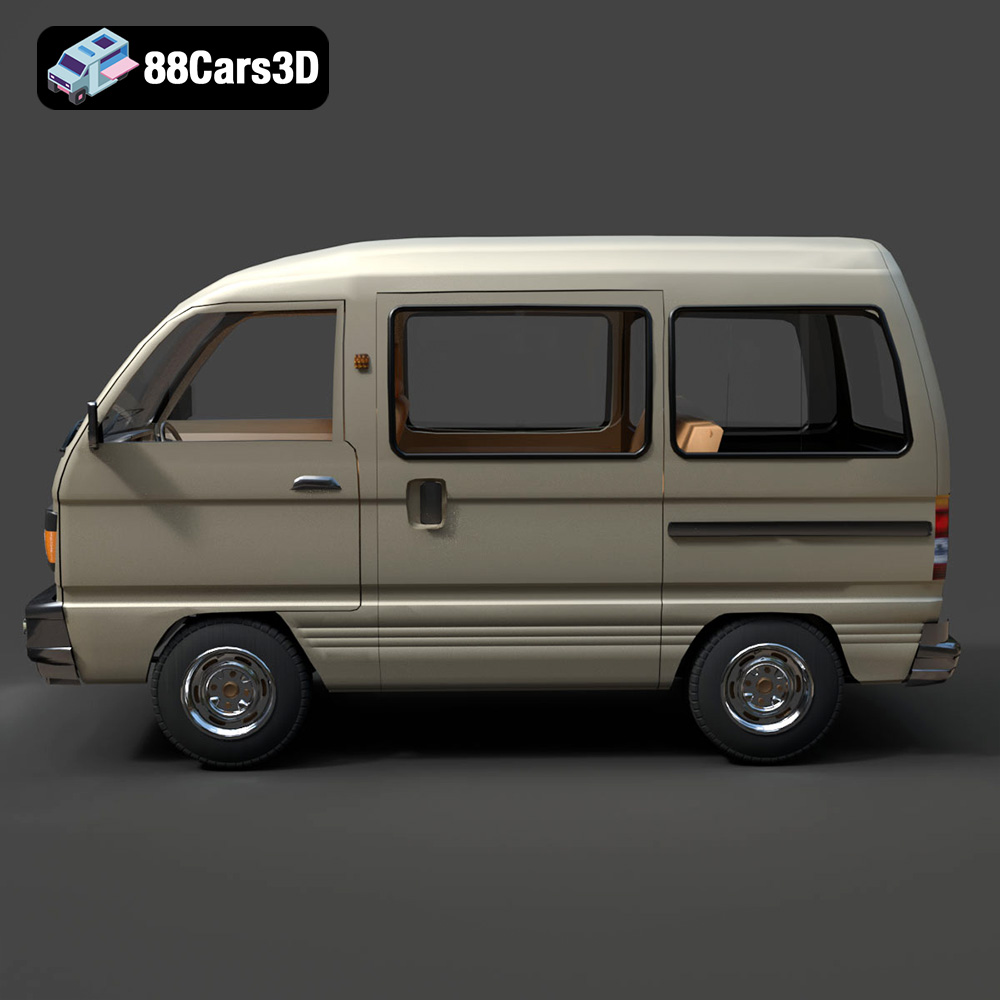
The exterior of the Super Carry is instantly recognizable, and this 3D model goes to great lengths to preserve its unique characteristics. The accurate 1980s/1990s compact microvan proportions, synonymous with the “kei-style” vehicles, are perfectly translated. The classic cabover design, with its flat front fascia and simple plastic grille, is rendered with precision. Key details like the rectangular headlight housings, period-correct taillights, and functional side mirrors contribute to an authentic visual experience. Furthermore, the dual sliding rear side doors and large rear tailgate are modeled to allow for realistic animation, adding another layer of utility for dynamic scenes. Even the utilitarian 12-inch steel wheel design, a hallmark of the Super Carry’s no-frills practicality, is accurately represented.
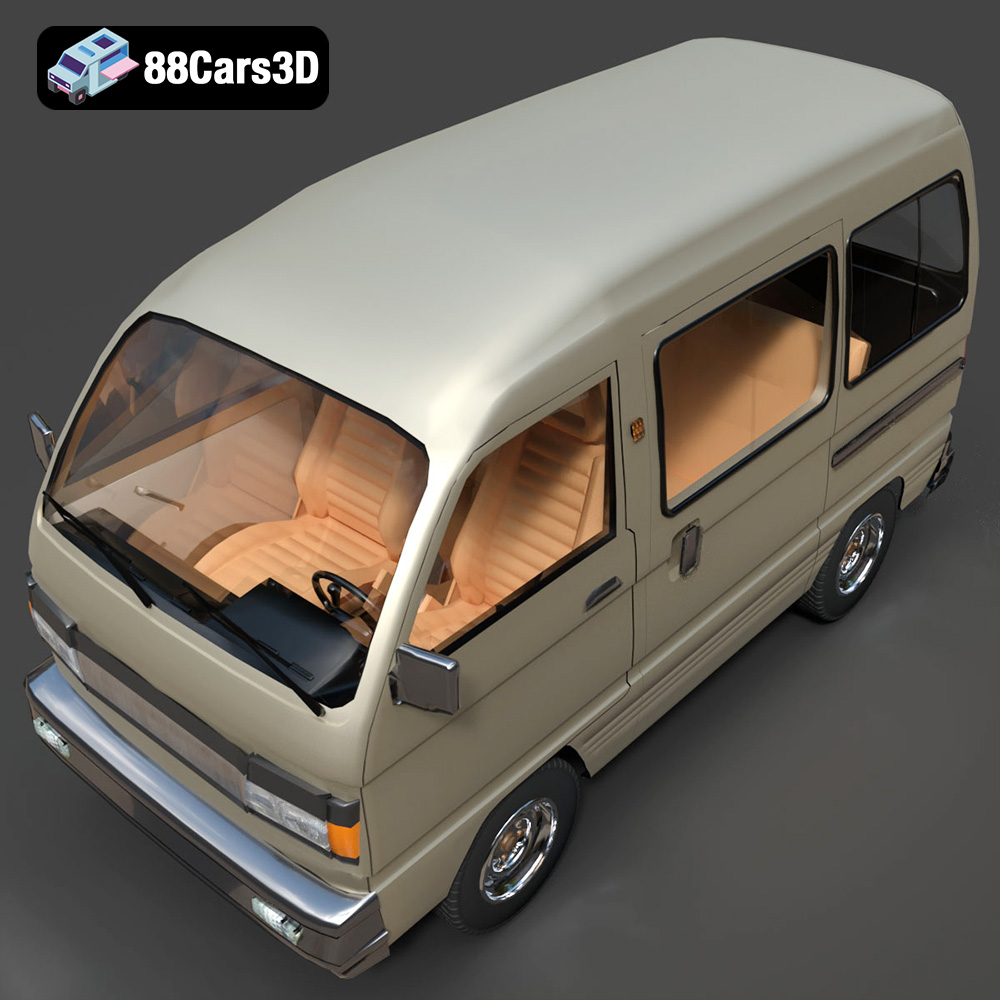
Beyond the facade, the interior of the Suzuki Super Carry 1000 Microvan 3D Model maintains the same level of detailed authenticity. The utilitarian front cabin, with seats authentically mounted over the front axle, immediately transports the viewer to the vehicle’s era. The spacious, flat-folding rear utility cargo area offers versatility, allowing for configurations that range from a pure cargo van to a multi-seat passenger layout. Artists will appreciate the retro, minimalist analog dashboard and the simple two-spoke steering wheel, which are optimized for interior close-up rendering. Basic cloth or vinyl upholstery representation with realistic seam lines and details like the manual gear shifter and utilitarian center console further enhance the model’s realism, making it suitable for even the most scrutinizing camera angles.
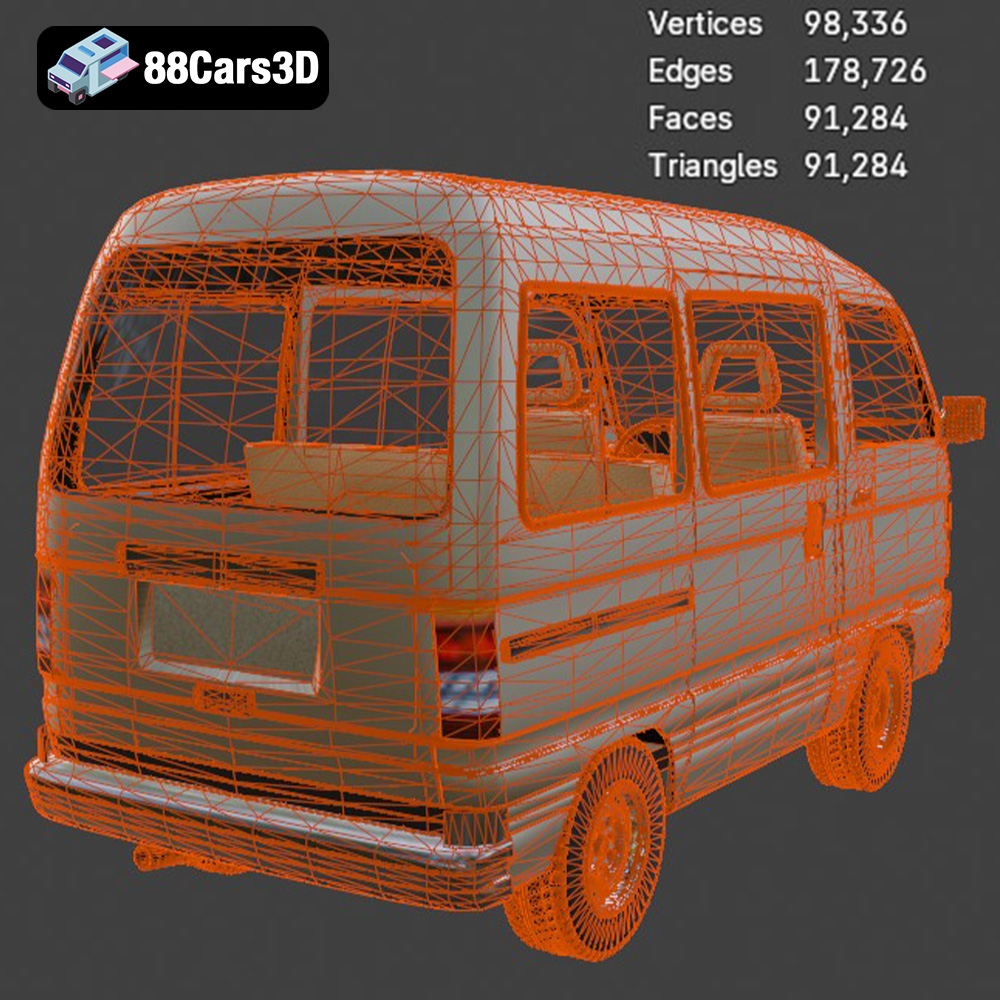
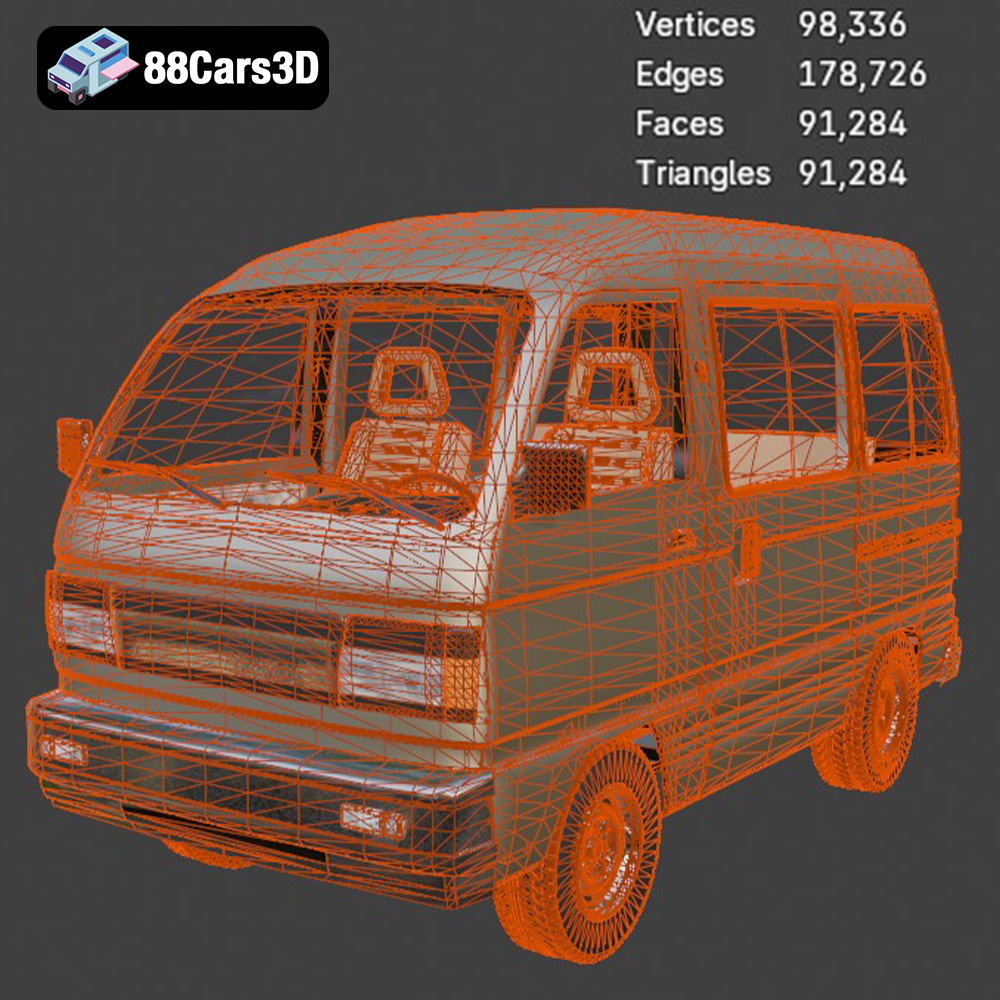
Technical specifications are crucial for professional workflows, and this model delivers. With a robust polycount of 965,800 polygons (faces/triangles) and approximately 985,400 vertices and 1,950,200 edges, it provides a high-poly, well-organized mesh structure that ensures maximum realism without being overly cumbersome. This density is perfect for high-resolution rendering and visualization. The model adheres to real-world scale accuracy, which is essential for integration into architectural visualizations or realistic game environments. Crucially, the model boasts a proper pivot setup for steering, wheel rotation, and the distinctive sliding door mechanisms. This pre-configured animation readiness significantly streamlines the animation process, saving artists valuable time when bringing the Super Carry to life in their scenes.
The versatility and technical quality of the Suzuki Super Carry 1000 Microvan 3D Model make it an indispensable asset across various professional domains. Its design is tailored to integrate smoothly into popular 3D software and real-time engines.
For professionals engaged in automotive rendering, advertising, or product visualization, the Suzuki Super Carry 1000 Microvan is an excellent candidate. In 3ds Max, utilizing the provided .max file, artists have full access to the model’s structure, allowing for complex material setups using V-Ray or Corona Renderer. The high-poly mesh ensures crisp reflections and accurate shadow casting, crucial for photorealistic results. Imagine this microvan parked on a rain-slicked street or illuminated by the golden hour, its surfaces reflecting the environment with stunning accuracy. Similarly, Blender users can leverage the native .blend file to tap into Eevee for real-time visualization or Cycles for path-traced rendering, creating captivating visuals for retro urban street scenes or commercial fleet presentations. The model’s clean topology and real-world scale facilitate seamless integration into complex scene assemblies.
Game developers constantly seek optimized yet detailed assets, and the Suzuki Super Carry fills a unique niche. With its Unreal Engine-ready format, this model is perfectly suited for historically set open-world games, indie simulators, or urban traffic vehicle packs. Its well-organized mesh and proper pivot setups mean less work on the developer’s end to prepare it for gameplay. Whether populating a bustling 1980s city street or serving as a player’s customizable vehicle, the Super Carry’s distinct character adds depth and realism to virtual worlds. The model’s robust topology, while high-poly, can be optimized further with LODs (Levels of Detail) within Unreal Engine to ensure smooth performance across various platforms, from high-end PCs to mobile AR applications.
The demand for immersive content is growing exponentially. The Suzuki Super Carry 1000 Microvan 3D Model, particularly with its .glb format, is ideal for AR/VR applications. Imagine an interactive virtual museum experience showcasing classic utilitarian vehicles, or an AR app that allows users to place and inspect the Super Carry in their physical environment. Its detailed interior, including the utilitarian front cabin and configurable rear cargo area, makes it perfect for interactive “camper conversion” configurations in VR, where users can virtually customize the van’s layout. The model’s real-world scale is critical here, providing a believable presence in augmented and virtual spaces, enhancing user engagement for educational, entertainment, or even logistics simulation purposes.
While digital visualization is powerful, the ability to translate a virtual model into a tangible object offers a unique dimension to creative projects. The Suzuki Super Carry 1000 Microvan 3D Model is not just for screens; it’s meticulously prepared for the fascinating world of 3D printing.
The inclusion of the .stl format, specifically optimized for 3D printing, transforms this digital asset into a blueprint for a physical collectible. For retro diecast hobbyists, automotive enthusiasts, or simply those who appreciate the tangible representation of classic vehicles, the ability to print their own Suzuki Super Carry is a compelling feature. The model’s manifold geometry ensures that it’s “watertight” and ready for slicing software, preventing common printing errors. Whether you’re aiming for a display-scale model to adorn a desk or a component for a larger diorama, the Super Carry provides a robust foundation for additive manufacturing. It allows for a deeper, tactile connection with the digital design.
To achieve the best possible physical reproduction, understanding recommended 3D print settings is key. For the Suzuki Super Carry 1000 Microvan 3D Model, the following guidelines are advised:
The beauty of 3D printing lies in its customization potential. Once printed, the Suzuki Super Carry model becomes a canvas. Enthusiasts can apply their chosen paint schemes – perhaps a classic post-office red, a retro pastel blue, or a commercial white with custom business branding on the flat side panels. Adding tiny aftermarket wheels or modifying the interior configuration with custom seats or cargo accessories further personalizes the physical model. This hands-on creative process extends the digital journey into the physical world, offering a unique collectible or prototype for display.
A truly professional 3D asset provides not just a high level of detail, but also the flexibility for artists to adapt it to their specific creative vision. The Suzuki Super Carry 1000 Microvan 3D Model excels in this regard, offering numerous customization options that allow it to seamlessly fit into diverse projects, from photo-realistic renderings to stylized game environments.
The Super Carry, in its heyday, was a chameleon of sorts – a humble work vehicle adorned in countless liveries. This 3D model allows you to recreate that versatility. You can easily change its exterior color to any hue imaginable, reflecting typical factory colors like Commercial White, Pastel Blue, Forest Green, or Bright Red. Beyond standard colors, the model’s flat side panels are an ideal canvas for adding custom decals, business branding, or intricate artwork. Imagine it as a vintage food truck, a local delivery van, or a bespoke camper conversion – the possibilities are endless. This adaptability makes it an incredibly useful asset for commercial visualizations, where bespoke branding is often a key requirement.
The interior of the Super Carry, known for its utilitarian flexibility, is also designed for customization. The model allows for modification of its interior configuration, letting you switch between an empty cargo van setup, perfect for showing off logistics capabilities or a minimalist aesthetic, versus a multi-seat passenger layout for family scenes or public transport scenarios. Artists can further enhance the interior with props and scene dressing – adding cargo boxes, tools, or personal effects to breathe life into the cabin. This granular control over the interior significantly boosts the model’s utility for a wide range of visualization and interactive projects.
Beyond the model itself, its presence within a scene is heavily influenced by lighting and environmental factors. The Suzuki Super Carry 1000 Microvan 3D Model is robust enough to react beautifully to diverse lighting conditions. You can adapt lighting to evoke specific moods – from the harsh sunlight of bustling urban streets to the soft, diffused light of a rainy alleyway, or the dramatic, moody glow of neon-lit night scenes. Placing the Super Carry in various environments – be it a retro service station, a dense city street, or a tranquil countryside road – further defines its character and narrative within your project. The model’s detailed surfaces and well-defined forms will interact realistically with light, ensuring that your renders and real-time scenes achieve the desired visual impact.
The Suzuki Super Carry 1000 Microvan stands as a testament to practical design and enduring charm. This comprehensive 3D model not only captures the vehicle’s iconic aesthetics but also provides a meticulously crafted, technically robust asset for a broad spectrum of digital and physical applications. From high-fidelity automotive rendering and immersive game development to detailed architectural visualization and tangible 3D prints, its versatility is unmatched.
Whether you’re an experienced 3D artist looking to populate your scenes with authentic retro vehicles, a game developer seeking unique game assets, or a hobbyist eager to 3D print a piece of automotive history, the Suzuki Super Carry 1000 Microvan 3D Model is an excellent choice. Its detailed exterior and interior, combined with its comprehensive technical specifications and multi-format compatibility, ensure a smooth workflow and stunning results across platforms like 3ds Max, Blender, and Unreal Engine.
Investing in high-quality 3D car models like the Suzuki Super Carry from 88cars3d.com significantly elevates the realism and professional polish of your projects. It saves invaluable time, offers unparalleled detail, and provides the flexibility needed to bring your most ambitious creative visions to life. Explore the potential of this iconic microvan and drive your next project forward with confidence.
The Suzuki Super Carry 1000 Microvan 3D Model is a high-detail digital recreation of the legendary compact utilitarian workhorse from the 1980s and 1990s. Known for its incredible space efficiency and rugged simplicity, the Super Carry (often associated with the SK410 generation) combines a classic cabover design with highly practical proportions, making it a global icon of urban logistics and everyday transport. This 3D model accurately represents the iconic boxy silhouette, flat front fascia, classic headlight housings, dual sliding side doors, rear liftgate, and tiny but functional 12-inch steel wheels. Built with dense, clean topology for premium visual fidelity and real-world scale accuracy, it is ideal for close-up rendering, retro urban environment visualization, animation, indie game development, and AR/VR classic vehicle showcases. Perfect for retro street scenes, developing-market architectural visualizations, commercial fleet renders, and quirky camper conversion projects.
$9.99
.automotive
.blend
.cabover
.fbx
.obj
.rendering
.stl
.suzuki
1000cc
3d printing
car-3d-model
game asset
high poly
kei-van
microvan
retro-van
super-carry
utility-vehicle