Get 50% OFF All Premium 3D & STL Models!

In the dynamic world of digital content creation, the pursuit of realism and versatility is relentless. From breathtaking automotive renders that blur the line between virtual and reality, to immersive game environments and precise engineering visualizations, the quality of your 3D assets is paramount. It’s not just about having a model; it’s about possessing a meticulously crafted digital twin that can adapt to a myriad of professional applications. Today, we delve into the intricate details that define a premium 3D vehicle asset, using the sophisticated BMW C 400 X 2018 3D Model as our illustrative benchmark.
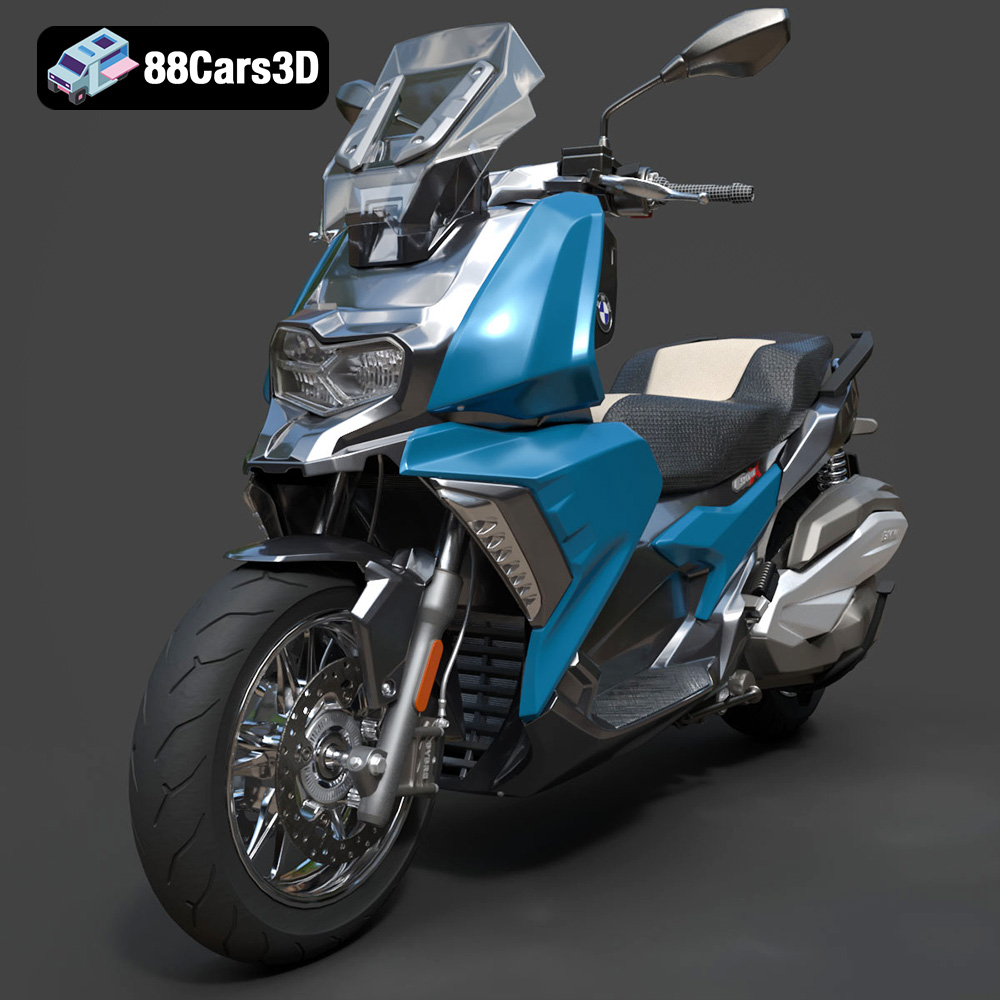
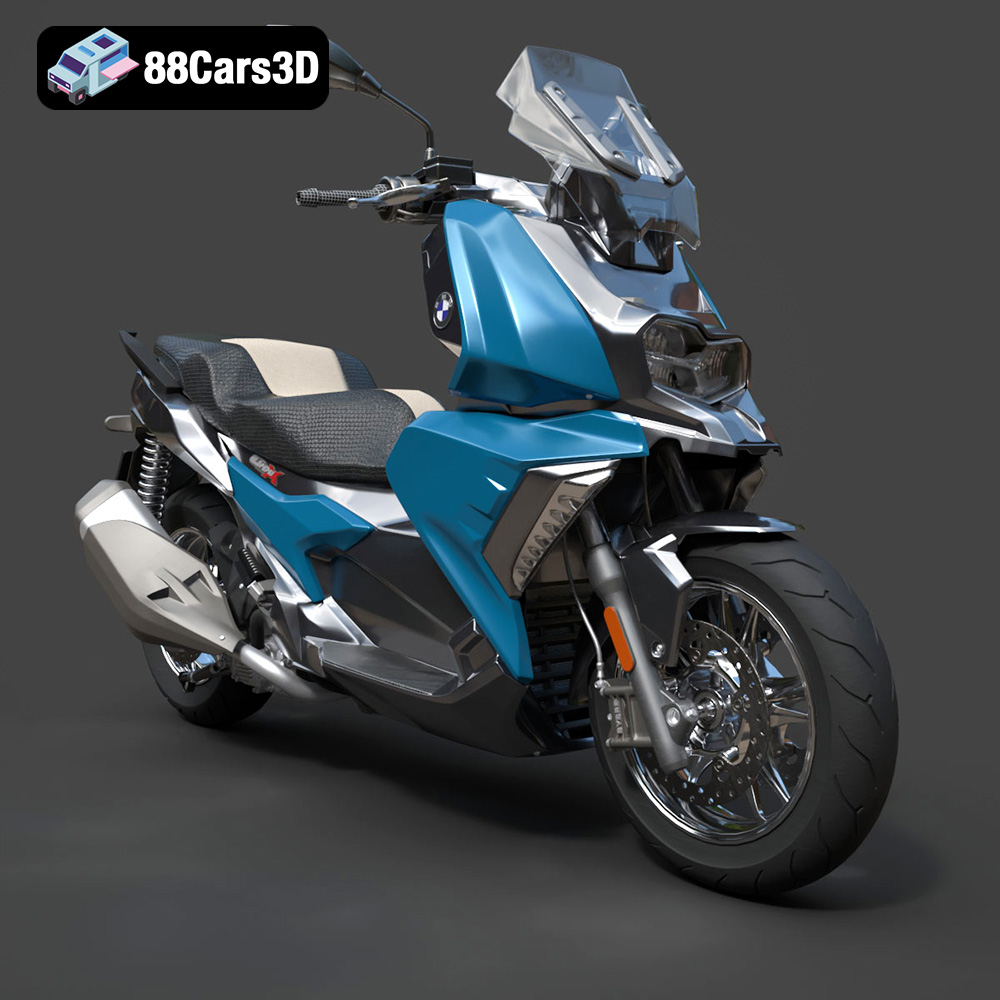
This particular model, available on 88cars3d.com, encapsulates the essence of what modern 3D artists, game developers, and engineers demand. It’s a high-detail digital recreation of BMW Motorrad’s premium midsize scooter, designed for urban mobility. Its accurate representation of the aggressive front fascia, asymmetrical headlight design, sculpted side panels, and detailed chassis makes it an invaluable asset for anyone looking to integrate a realistic, contemporary scooter into their projects. Whether you’re an architect visualizing a city street, a game developer populating an open-world environment, or a product designer showcasing customization options, the underlying technical excellence of such a model is what truly unlocks creative potential.
When acquiring a 3D model, especially one as detailed and versatile as the BMW C 400 X 2018 3D Model, understanding the various file formats it comes in is crucial. Each format serves a specific purpose, catering to different software ecosystems, project requirements, and downstream applications. A comprehensive asset pack, like those offered on 88cars3d.com, will typically include multiple formats to ensure maximum compatibility and workflow efficiency. Let’s explore the common formats provided with this model:
The .blend file format is Blender’s native file type. It’s a complete package, containing not just the mesh data but also materials, textures, lighting setups, camera positions, animations, modifiers, and even custom scripts. For artists working primarily within Blender, this is the most flexible and editable version of the model. You can dive deep into the scene, inspect every component, modify the topology, adjust materials precisely, and leverage Blender’s powerful Cycles or Eevee renderers. This format is ideal for users who want to fully customize the model or integrate it into complex Blender scenes with minimal friction.
The .fbx (Filmbox) format is perhaps the most widely supported 3D file format in the industry. Developed by Autodesk, it’s designed for efficient data exchange between various 3D applications like 3ds Max, Maya, Cinema 4D, and game engines such as Unreal Engine and Unity. FBX files can store a rich array of data, including geometry, materials, textures, skeletal animation, morph targets, and even camera data. Its robust nature makes it ideal for real-time pipelines and projects requiring animation, making it a go-to choice for game development or animated visualizations.
The .obj (Wavefront Object) format is a universal standard for 3D geometry. It’s renowned for its simplicity and wide compatibility, easily importable into almost any 3D software. OBJ files primarily store geometric data (vertices, normals, texture coordinates, and faces) and can reference external material (.mtl) and texture files. While it doesn’t support advanced features like animation or rigging, its stability and widespread acceptance make it excellent for cross-software compatibility, especially when the primary focus is on static mesh data for rendering or sculpting.
The .glb (GL Transmission Format Binary) is the binary version of the glTF format, specifically designed for efficient transmission and loading of 3D scenes and models by applications. It packages all model data—geometry, materials, textures, and even animations—into a single, self-contained file. This makes .glb incredibly popular for AR/VR applications, web-based 3D viewers, and other environments where fast loading and compact file sizes are critical. For showcasing the BMW C 400 X in an immersive virtual showroom or an interactive web experience, .glb is the format of choice.
The .stl (STereoLithography) format is the de facto standard for 3D printing. It represents a 3D model as a collection of unconnected triangles, defining only the surface geometry of the object. While it lacks color, texture, or material information, its simplicity makes it universally compatible with 3D printers and slicing software. For transforming the BMW C 400 X 2018 3D Model into a physical collectible or prototype, the .stl format is absolutely essential, offering manifold geometry suitable for physical manufacturing.
The .ply (Polygon File Format or Stanford Triangle Format) is another format for storing 3D data, particularly useful for scanned data and precision meshes. It can store various properties beyond just geometry, such as color, transparency, surface normals, and even confidence values for each vertex. While less common for general 3D model distribution, it’s highly valued in fields like reverse engineering, scientific visualization, and CAD/CAM, where accurate geometric data and additional attributes are paramount.
The .unreal format, or more broadly, assets specifically configured for Unreal Engine, implies that the model has been optimized, scaled, and potentially even pre-rigged or set up with basic materials within the Unreal Engine ecosystem. While not a standalone file extension in the same way as .fbx, “unreal” typically refers to an asset package or project file ready for direct import and use within Unreal Engine, often preserving engine-specific material setups and collision meshes. This significantly streamlines the workflow for game developers and real-time visualization artists.
The .max format is the native scene file for Autodesk 3ds Max. Similar to .blend for Blender, it contains all the information about the 3D scene, including geometry, materials, textures, lighting, cameras, animation, and any applied modifiers. For users entrenched in the 3ds Max ecosystem, this format offers the highest degree of editability and allows access to the original scene setup, crucial for complex animation projects, high-end rendering with V-Ray or Corona, and detailed scene construction.
Creating a truly exceptional 3D car model is a blend of artistic vision and rigorous technical execution. It goes far beyond simply capturing the visual likeness of a vehicle. It involves deep understanding of automotive design principles, meticulous attention to detail, and a keen awareness of how the model will be used across different professional pipelines. The BMW C 400 X 2018 3D Model exemplifies this synthesis, offering a robust foundation for any project.
Authenticity is the bedrock of a high-fidelity 3D car model. For the BMW C 400 X 2018, this means faithfully recreating its distinctive features: the aggressive front fascia, the unique asymmetrical headlight design, and the subtle curvatures of its sculpted side panels. Every vent, every panel gap, and every ergonomic curve must be precisely modeled to reflect the original vehicle. This level of detail is critical for product visualization, marketing materials, and any scenario where the digital asset needs to be indistinguishable from its real-world counterpart. Without this precision, the illusion of realism crumbles, diminishing the impact of the final output.
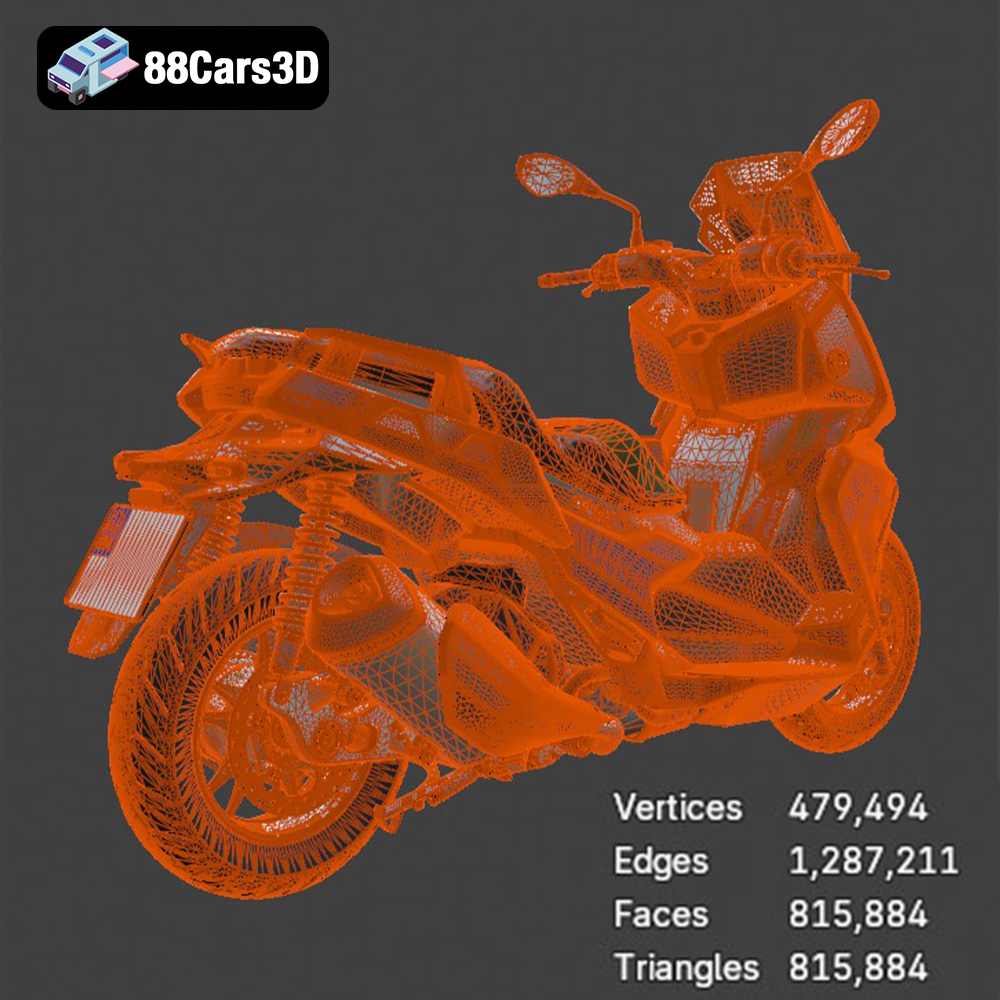
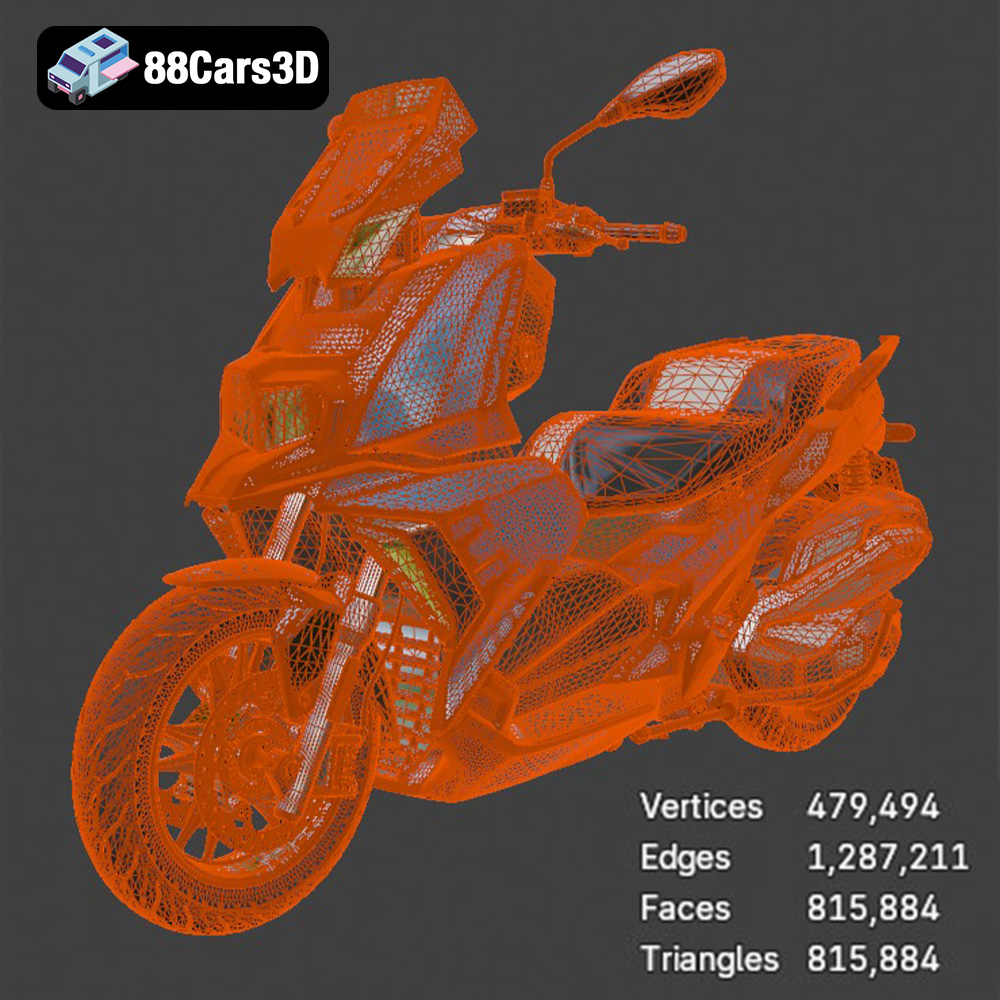
Beyond visual accuracy, the underlying mesh structure, or topology, is vital. A clean, well-organized mesh with efficient polygon flow is crucial for optimal performance, especially in real-time applications like game engines. The BMW C 400 X 2018 3D Model boasts optimized geometry that balances detail with polygon count, ensuring smooth subdivision for close-up renders while remaining efficient enough for interactive experiences. This intelligent topology also facilitates UV mapping, texturing, and rigging processes, saving valuable production time and ensuring predictable results across various software platforms.
Accuracy in real-world scale is often overlooked but incredibly important. A 3D model of a vehicle should always adhere to its actual dimensions. This is essential for architectural visualizations where the car needs to fit realistically into a scene, for simulations where physical accuracy is key, and for rendering scenarios where proper camera perspective and lighting depend on correct scale. The BMW C 400 X 2018 3D Model maintains real-world scale accuracy, making it a plug-and-play asset that integrates seamlessly into any scene without requiring manual adjustments or guesswork.
The true power of a meticulously crafted 3D car model lies in its adaptability across diverse professional pipelines. From high-impact marketing campaigns to complex interactive experiences, a well-engineered asset like the BMW C 400 X 2018 3D Model can serve multiple roles, significantly streamlining production and enhancing visual quality.
For automotive artists and visualization studios, 3ds Max remains a cornerstone, often paired with industry-leading renderers like V-Ray or Corona. A model such as the BMW C 400 X 2018, supplied in the native .max format, provides a significant head start. Artists can immediately begin setting up advanced material shaders for realistic paint, chrome, and rubber, integrate complex lighting environments (HDRI, physical lights), and compose cinematic camera angles. The clean mesh structure and proper pivot points for animation (like separate wheels and steering components) allow for sophisticated turntable animations or dynamic scene compositions, perfect for dealership visuals, promotional content, or urban mobility marketing.
In the realm of game development, efficiency and optimization are paramount. Models optimized for real-time engines, often provided in .fbx or even pre-configured as .unreal assets, are invaluable. The BMW C 400 X 2018 3D Model, with its optimized geometry and clean topology, is perfectly suited for integration into popular engines like Unreal Engine or Unity. Developers can import the model, apply game-ready PBR (Physically Based Rendering) materials, set up collision meshes, and implement physics for realistic vehicle handling. This makes it ideal for populating open-world city games, creating immersive driving simulations, or developing dedicated two-wheeler games, ensuring both visual fidelity and smooth gameplay performance.
Augmented Reality (AR) and Virtual Reality (VR) represent the cutting edge of immersive experiences. For these applications, optimized formats like .glb are crucial due to their compact size and efficiency. The BMW C 400 X 2018 3D Model can be easily deployed in AR/VR environments, allowing users to explore the scooter interactively, customize its features in real-time, or even place it virtually in their physical surroundings. This opens doors for virtual showrooms, interactive product demonstrations, and training simulations, offering a dynamic way for customers or trainees to engage with the vehicle.
A truly exceptional 3D asset provides more than just a static representation; it offers a canvas for creativity and a toolkit for diverse project requirements. The BMW C 400 X 2018 3D Model is a testament to this philosophy, delivering a comprehensive package that extends its utility far beyond basic rendering.
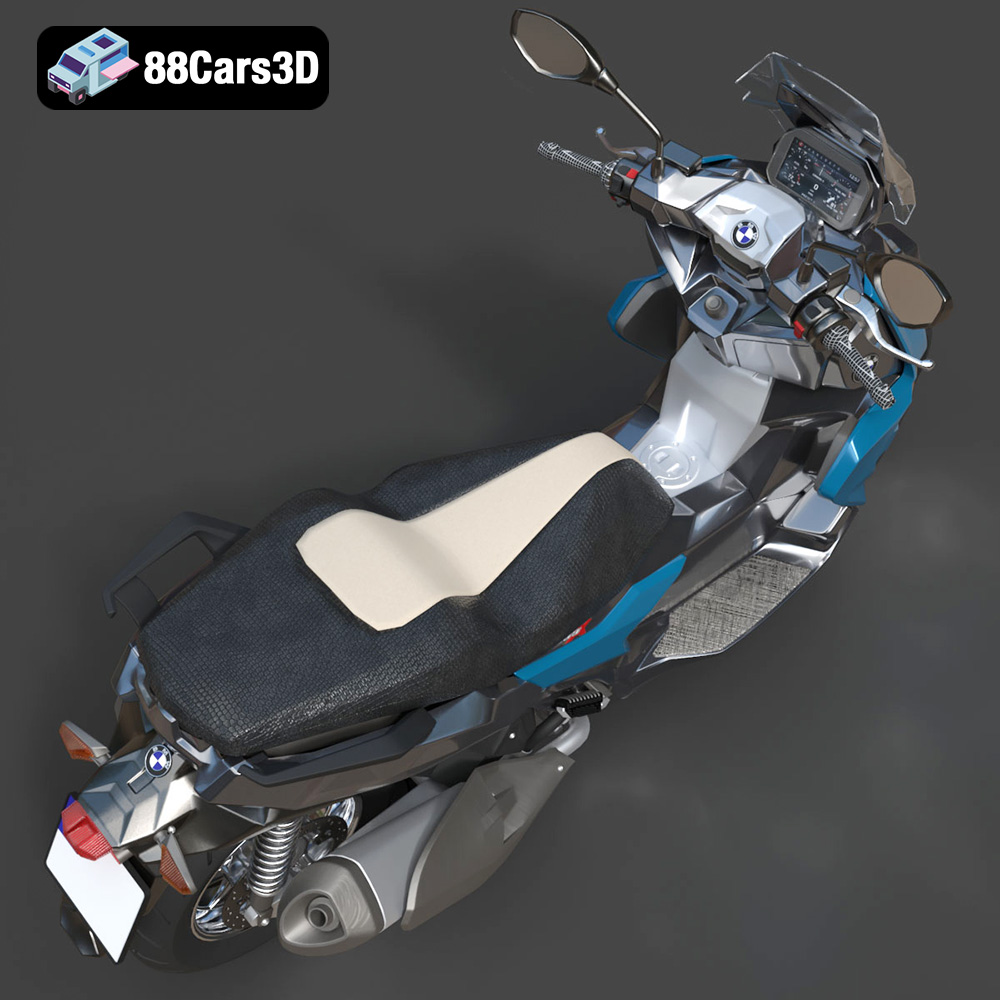
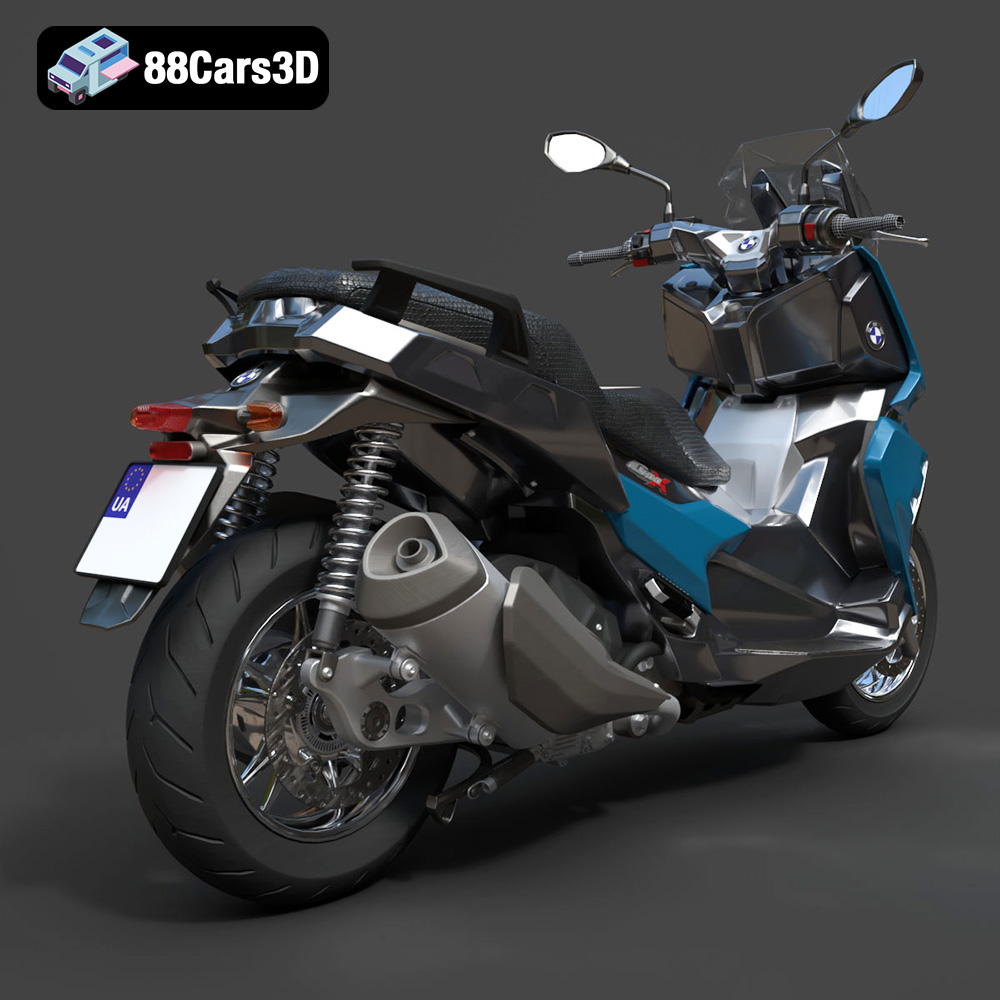
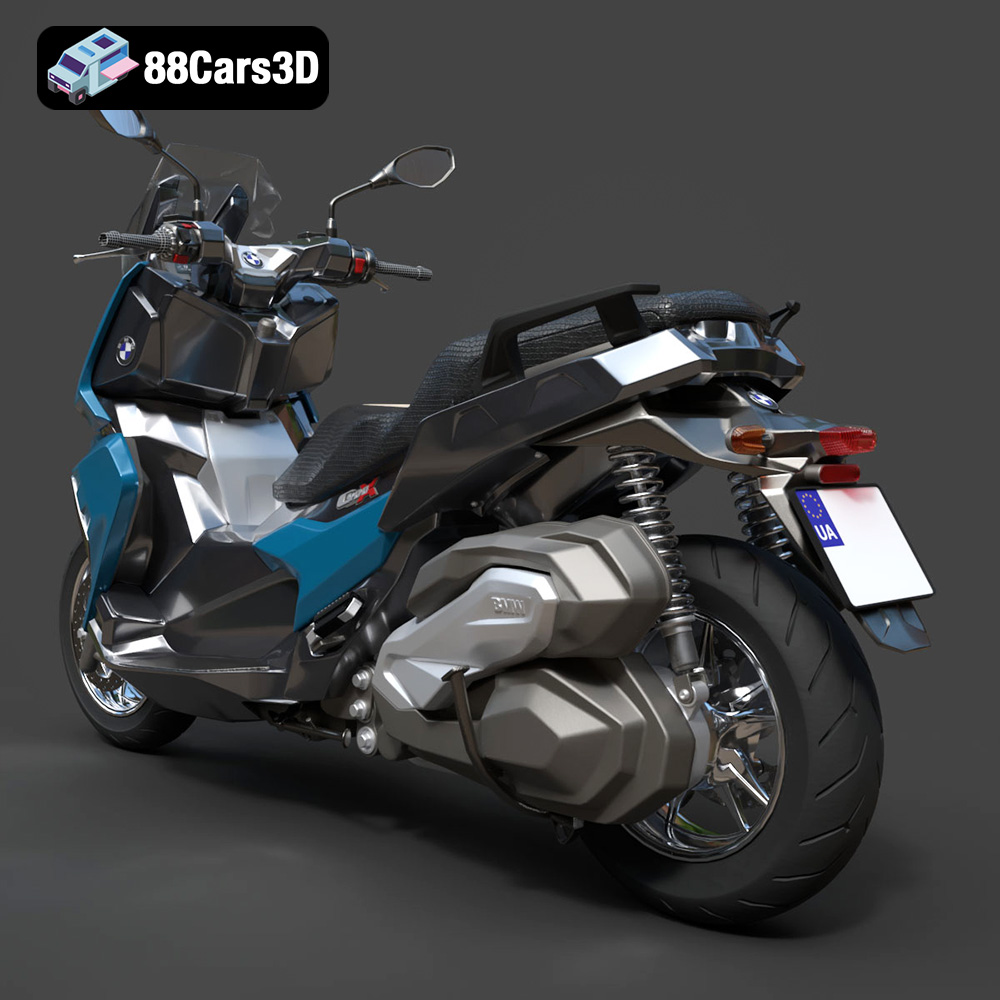
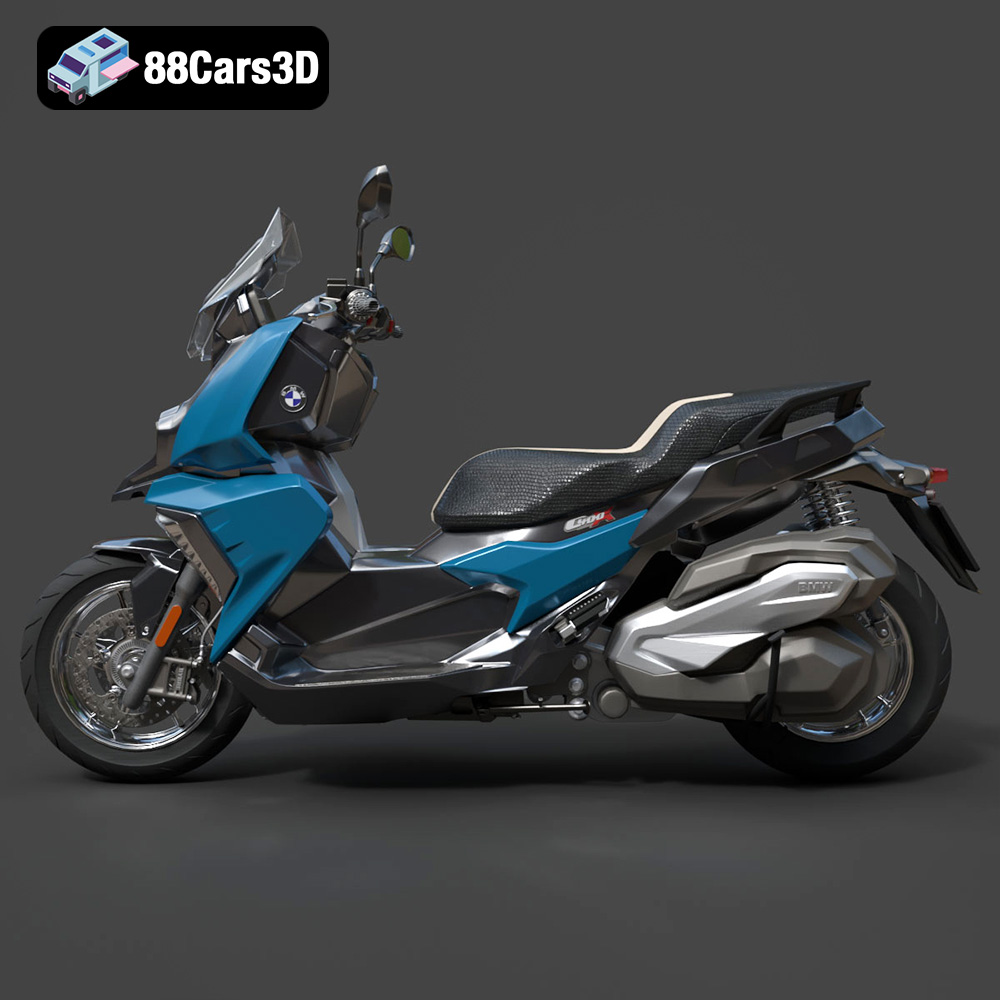
The product description highlights a meticulous recreation of both the exterior and the cockpit. From the accurate 2018 BMW C 400 X body proportions, distinctive front headlight assembly, and sculpted side fairings to the detailed exhaust system and front/rear disc brake geometry, no detail is overlooked. Inside, the digital instrument cluster layout, handlebar assembly with control switches, brake lever, throttle detailing, and contoured seat geometry all contribute to an authentic experience. This granular attention ensures that the model holds up even under extreme close-up shots, making it suitable for high-end visualizations where every component needs to be perfect.
For dynamic projects, animation readiness is paramount. The BMW C 400 X 2018 3D Model comes with separate wheels and steering components, along with proper pivot setup for steering and wheel rotation. This is a critical technical advantage, allowing animators to quickly set up realistic motion, whether it’s navigating through city streets or performing turns. The clean and well-organized mesh structure, combined with optimized polygon flow, ensures that rigging and animation processes are straightforward, reducing potential headaches and accelerating production timelines.
Flexibility is key for any professional asset. The BMW C 400 X 2018 3D Model offers significant customization potential. Artists can easily change the body color and accent trims to match specific branding or mood boards. The ability to add top cases or side storage accessories allows for functional variations, while modifying windshield height or adjusting wheel finishes offers subtle yet impactful aesthetic changes. Configuring lighting for specific scenes—be it a vibrant city night or a bright daytime commute—further enhances its adaptability, ensuring the model fits perfectly into any envisioned scenario.
One of the most exciting capabilities of a well-prepared 3D model is its potential to transcend the digital realm and manifest as a physical object through 3D printing. The BMW C 400 X 2018 3D Model is explicitly designed with this in mind, offering not just digital fidelity but also the promise of tangible collectibles and prototypes.
For 3D printing, the model’s availability in .stl and .ply formats is crucial. The .stl format is the industry standard for sending models to 3D printers, representing the surface geometry as a series of triangles. Its simplicity ensures compatibility with virtually all slicing software. The .ply format, while less common for general printing, can offer more precision for certain industrial or highly detailed resin prints, especially if color or material attributes (though not directly printed) are relevant to the source data or post-processing. The clean, manifold geometry of the BMW C 400 X model ensures that it is “print-ready,” minimizing issues like non-manifold edges or inverted normals that can plague lower-quality models.
The product description provides excellent guidance for 3D printing, recommending scales like 1:18, 1:12, 1:10, or 1:8. These scales allow for a good balance between detail and printability. Specific settings like layer height (0.08–0.16 mm), wall thickness (1.2–2.0 mm), and infill (15–25%) are provided to ensure structural integrity and detail preservation. Critically, it notes that supports are required for delicate features such as mirrors, the exhaust, and suspension details, and advises on print orientation (frame angled, wheels separately) for optimal results. This level of detail empowers users, even those new to 3D printing, to achieve successful physical prints.
Beyond simple printing, these specifications facilitate the creation of high-quality collectible scale scooter models and display miniatures. With careful post-processing—sanding, priming, applying gloss or matte finishes, and adding optional accent decals—users can produce stunning physical replicas that are true to the digital original. This capability is not just for hobbyists; it extends to designers creating physical prototypes, educators building instructional models, or marketers crafting unique promotional items, adding another layer of value to an already versatile digital asset.
In the fast-paced world of 3D production, time is money. Relying on high-quality, pre-made 3D models like the BMW C 400 X 2018 from reputable sources such as 88cars3d.com can be a game-changer for individuals and studios alike. The decision to invest in premium assets is a strategic one, offering substantial benefits over creating models from scratch or using low-quality alternatives.
Building a complex vehicle model from the ground up, with the level of detail and technical precision found in the BMW C 400 X 2018 3D Model, can take hundreds of hours for even an experienced artist. This translates directly into significant labor costs. By purchasing a high-quality, ready-to-use asset, studios can drastically cut down production time and reallocate resources to other critical aspects of a project, such as scene development, animation, or rendering. This efficiency is invaluable, particularly for projects with tight deadlines or budget constraints.
A major advantage of purchasing from a specialized marketplace like 88cars3d.com is the assurance of compatibility and the availability of technical support. Premium models are typically provided in multiple industry-standard formats, as seen with the BMW C 400 X 2018, ensuring seamless integration into various software pipelines. Furthermore, reputable vendors often offer support for any issues that may arise, guaranteeing a smoother workflow and peace of mind for the artist or developer. This eliminates the frustration of dealing with broken meshes, incorrect scales, or unusable file formats that often plague free or lower-quality assets.
88cars3d.com stands out as a marketplace dedicated to offering high-quality 3D car models. Their curated selection means that each product, including the BMW C 400 X 2018 3D Model, undergoes rigorous quality checks to ensure clean topology, accurate dimensions, and comprehensive file formats. This commitment to excellence empowers artists and developers to focus on their creative vision, confident that the foundational assets they are using are technically sound and professionally prepared. Investing in models from 88cars3d.com is investing in reliability, efficiency, and superior visual results for any automotive rendering, game development, or visualization project.
The journey through the intricacies of high-fidelity 3D car models reveals a fascinating intersection of art and engineering. From the meticulous detail required to capture automotive authenticity to the strategic importance of diverse file formats and optimized topology, every aspect contributes to the utility and impact of a digital asset. The BMW C 400 X 2018 3D Model serves as an exemplary case study, showcasing how a single, well-crafted asset can empower artists and developers across rendering, game development, AR/VR, simulation, and even 3D printing applications.
By providing a comprehensive suite of file formats—including .blend, .fbx, .obj, .glb, .stl, .ply, .unreal, and .max—this model ensures unparalleled compatibility and flexibility. Its technical advantages, such as real-world scale, clean mesh structure, and animation-ready components, make it an invaluable resource for any professional seeking efficiency and superior visual results. Whether you’re envisioning a stunning urban scene, crafting an immersive game world, or bringing a digital design to life as a physical collectible, the investment in a premium 3D model like the BMW C 400 X 2018 from 88cars3d.com is a clear path to driving success in your creative endeavors.
The BMW C 400 X 2018 3D Model is a high-detail digital recreation of the premium midsize scooter designed for urban mobility and everyday practicality. Combining BMW Motorrad’s engineering precision with modern scooter convenience, the C 400 X features sharp styling, compact proportions, and a comfortable riding position ideal for city commuting. This 3D model accurately represents the aggressive front fascia, asymmetrical headlight design, sculpted side panels, step-through frame layout, exposed rear suspension, exhaust system, and compact wheelbase proportions. Built with clean topology and real-world scale accuracy, it is ideal for rendering, animation, product visualization, game development, and AR/VR experiences.
$9.99
.2018scooter
.arvr
.blend
.bmw
.c400x
.fbx
.gameasset
.glb
.max
.motorcycle
.obj
.ply
.rendering
.scooter3dmodel
.simulation
.stl
.twowheeler
.unreal
.urbanscooter
.vehicle3dmodel