Get 50% OFF All Premium 3D & STL Models!

In the vibrant tapestry of automotive history, certain vehicles stand out not just for their engineering, but for the indelible mark they left on culture and daily life. The Ford Taunus (P6) 12M Station Wagon of 1967, affectionately known as the “Turnier,” is one such icon. Representing the quintessential European family car of its era, it combined practicality with a distinctive, charming aesthetic that harked back to an age of understated elegance. For 3D artists, game developers, automotive enthusiasts, and visualization professionals, recreating such a historical vehicle in exquisite detail presents both a challenge and an opportunity.
Today, the demand for high-fidelity 3D car models like the Ford Taunus (P6) 12M Station Wagon 1967 3D Model is soaring across industries. From crafting period-accurate cinematic scenes and historically rich video games to developing immersive AR/VR experiences and even producing detailed 3D prints for collectors, a meticulously crafted digital asset is indispensable. This particular model, available on 88cars3d.com, is a testament to the power of precision modeling, offering unparalleled detail that brings the golden era of 1960s automotive manufacturing to life.
This article delves into the technical intricacies, versatile applications, and professional workflows surrounding high-quality 3D car models, with a special focus on the Ford Taunus (P6) 12M Station Wagon 1967 3D Model. We’ll explore everything from file format selection and poly-count management to rendering techniques and the exciting realm of 3D printing, demonstrating how a single, well-crafted asset can serve a multitude of creative and technical purposes.
The utility of a 3D car model, such as the exquisite Ford Taunus (P6) 12M Station Wagon 1967 3D Model, is profoundly influenced by the file formats it supports. Each format is designed with specific use cases and software ecosystems in mind, making the selection crucial for seamless integration into various pipelines. Understanding these distinctions is paramount for any professional working with 3D assets.
The .blend format is the native file type for Blender, an incredibly powerful and popular open-source 3D creation suite. When you acquire a .blend file, you’re getting a fully editable Blender scene, often complete with materials, textures, lighting, camera setups, and even animation data. For users deeply integrated into the Blender ecosystem, this format offers the highest degree of flexibility for customization, rigging, and rendering within Blender itself. It’s ideal for artists who want to dissect the model’s construction, modify its topology, or reconfigure its materials using Blender’s node-based shader editor.
.fbx (Filmbox) is a proprietary file format owned by Autodesk, but it has become an undeniable industry standard for 3D data exchange, especially in game development. Its strength lies in its ability to store not just geometry, but also animation, cameras, lights, and materials in a single, portable file. For integrating the Ford Taunus into engines like Unreal Engine or Unity, .fbx is often the go-to choice. It maintains hierarchical relationships, making it excellent for animated components like the separate wheels, steering, and doors of our featured Taunus model. While highly versatile, material fidelity can sometimes vary between software applications, often requiring re-setup in the destination program.
The .obj (Wavefront Object) format is one of the oldest and most universally supported 3D file formats. It’s renowned for its simplicity and cross-software compatibility, making it an excellent choice for basic geometry transfer. An .obj file primarily stores vertex positions, UV coordinates, normals, and polygon faces, often accompanied by a separate .mtl (Material Template Library) file for basic material properties. While it doesn’t support animation or advanced rigging, its wide acceptance ensures that the Taunus model can be opened and worked with in virtually any 3D application, serving as a reliable fallback or a starting point for complex scene compositions.
.glb (GLB format for glTF) is quickly gaining traction as the preferred format for efficient transmission and loading of 3D scenes and models on the web and in real-time applications. It’s a binary version of the glTF (GL Transmission Format) standard, encapsulating geometry, materials, textures, and animations into a single file. This format is highly optimized for AR, VR, and browser-based display, offering a balance between detail and file size. For showcasing the Ford Taunus in an interactive web viewer or a mobile AR experience, .glb is the superior choice due to its runtime performance and ease of deployment.
.stl (STereoLithography) is the most common file format for 3D printing. It represents a 3D model as a collection of unconnected triangular facets, defining only the surface geometry of an object without color, texture, or other CAD attributes. Its simplicity makes it universally compatible with 3D printers and slicing software. The Ford Taunus (P6) 12M Station Wagon 1967 3D Model, being 3D printable, is often provided in .stl format or can be easily converted. This format is crucial for hobbyists and professionals looking to bring the digital classic car into the physical realm.
The .ply (Polygon File Format) format is designed to store graphical objects as a list of polygons. It supports a wider range of properties than .obj, including color, transparency, surface normals, and even data from 3D scanners. While less common for general asset exchange, .ply is particularly useful in scientific visualization, CAD, and applications requiring precise mesh data or point clouds. For niche historical studies or reverse engineering, the .ply version of the Taunus could offer valuable data.
The inclusion of a .unreal file (often referring to a specific asset package or a pipeline optimized for Unreal Engine, potentially an FBX imported and set up within the engine) signifies that the model is prepared for Unreal Engine’s real-time environment. This usually means the meshes, materials, and potentially even LODs (Levels of Detail) are configured for optimal performance and visual fidelity within the engine. This is a significant advantage for game developers or virtual production studios leveraging Unreal, as it streamlines the integration process, requiring less setup time for rendering and interactive use.
Similar to .blend for Blender, .max is the native project file format for Autodesk 3ds Max, a leading software for 3D modeling, animation, and rendering in professional visualization and design. A .max file contains the complete scene, including geometry, materials, textures, lighting, cameras, animations, and render settings. For studios and artists who rely on 3ds Max, having the Ford Taunus model in its native .max format ensures full editability, access to modifiers, and seamless integration with V-Ray, Corona, or other renderers commonly used within 3ds Max pipelines for high-end automotive rendering.
Choosing the right file format for the Ford Taunus (P6) 12M Station Wagon 1967 3D Model depends entirely on your project’s requirements. Whether you’re aiming for cinematic realism, interactive game experiences, web-based AR, or a tangible 3D print, the availability of these diverse formats ensures maximum flexibility and compatibility, making this asset truly versatile for any professional application.
Creating a truly exceptional 3D car model, especially one with historical significance like the Ford Taunus (P6) 12M Station Wagon 1967, is a blend of artistic vision and meticulous technical execution. It goes beyond simply replicating shape; it’s about capturing the soul of the vehicle, from its iconic design cues to its structural nuances. The Taunus model from 88cars3d.com exemplifies this dedication, offering a level of detail that meets the demanding standards of professional visualization.
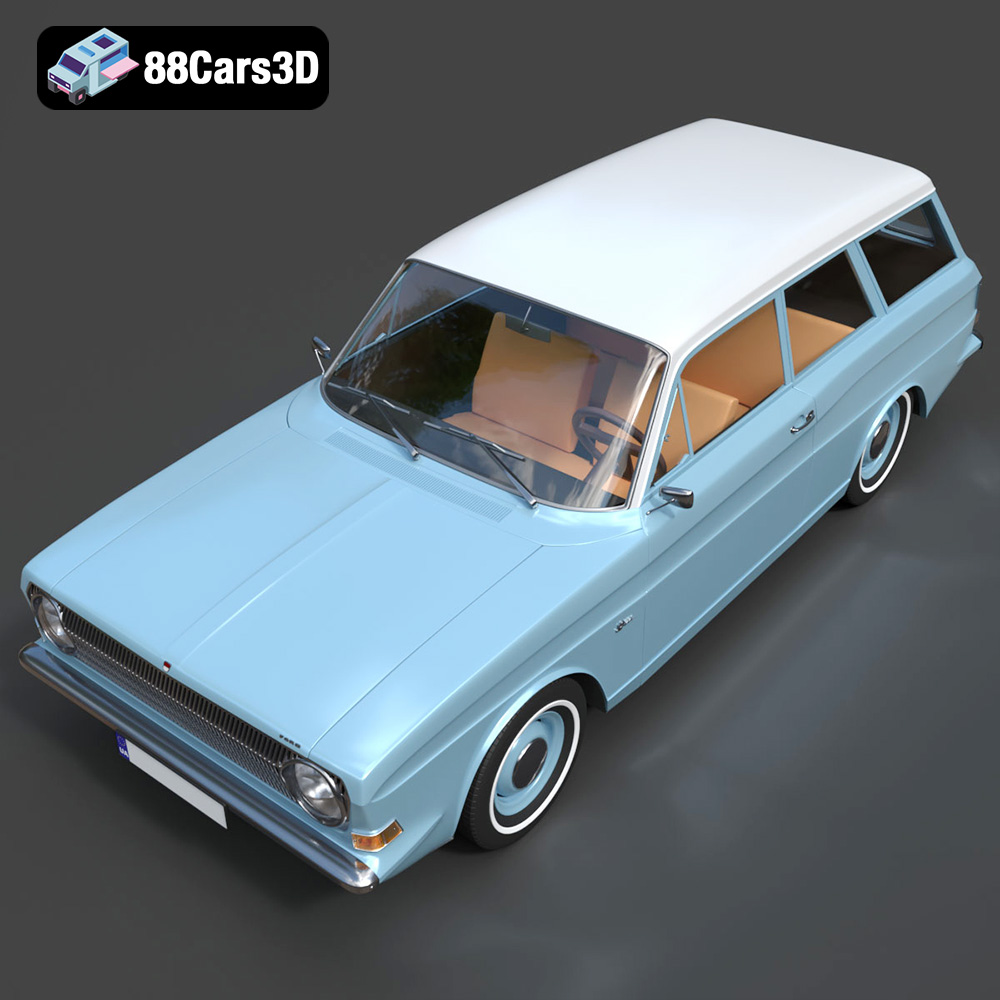
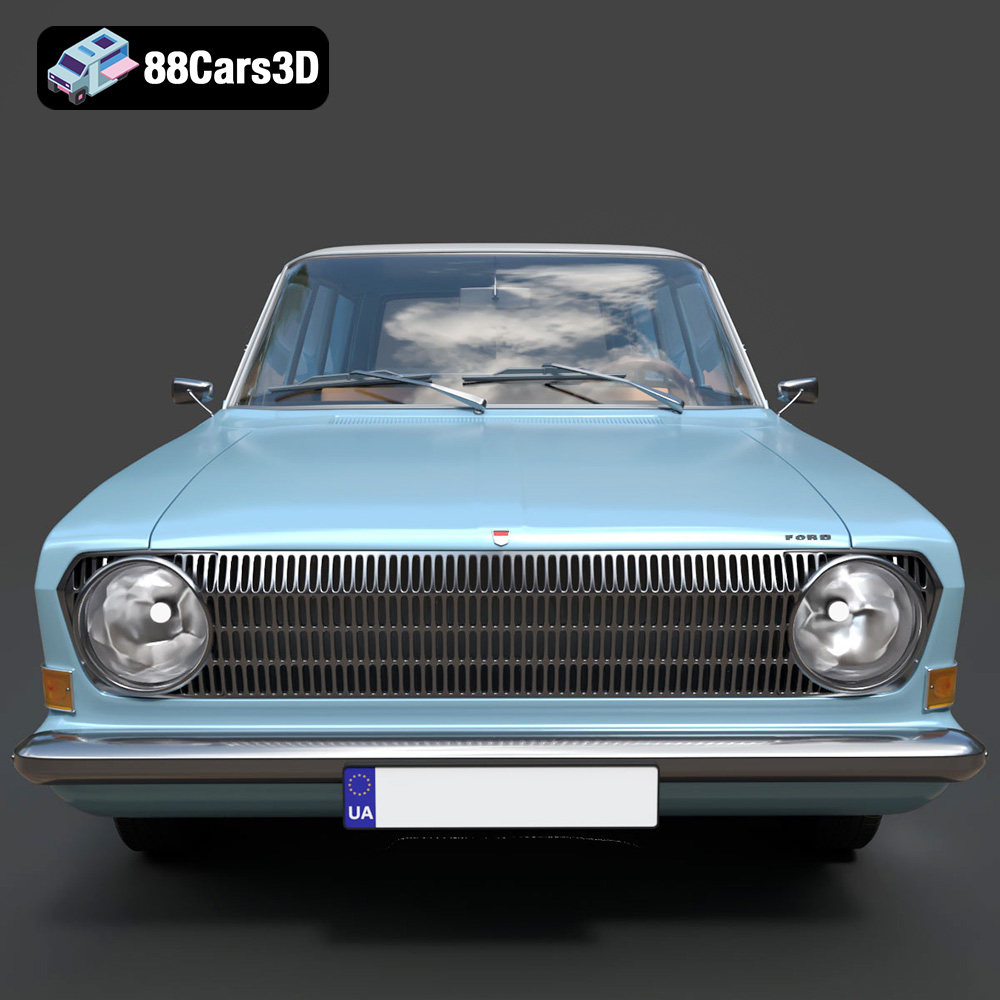
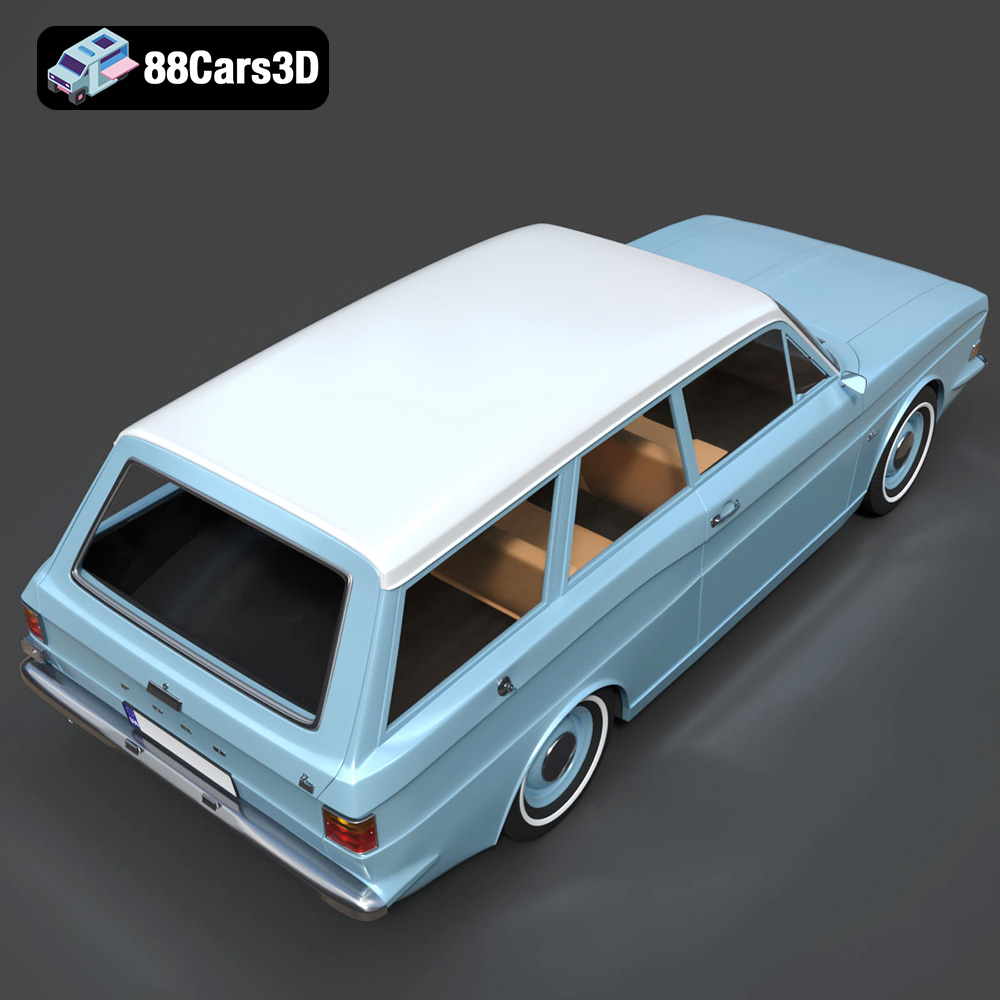
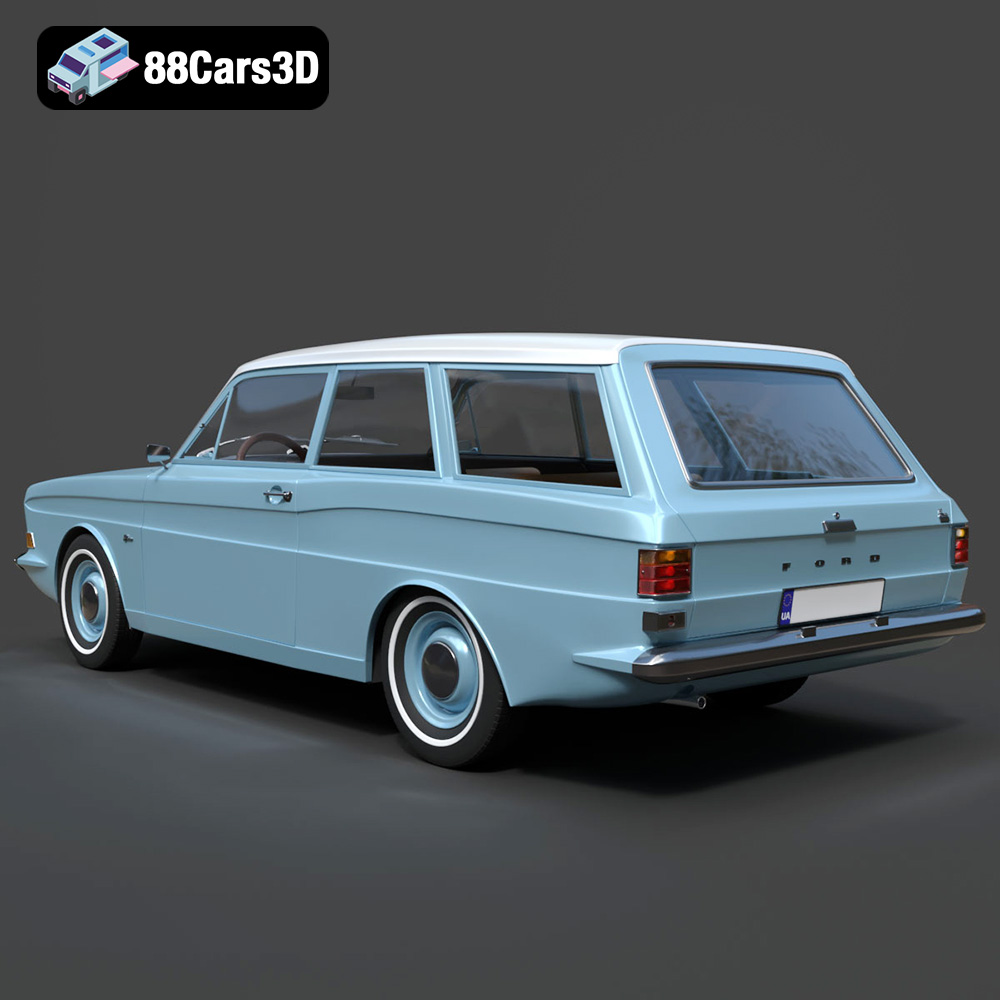
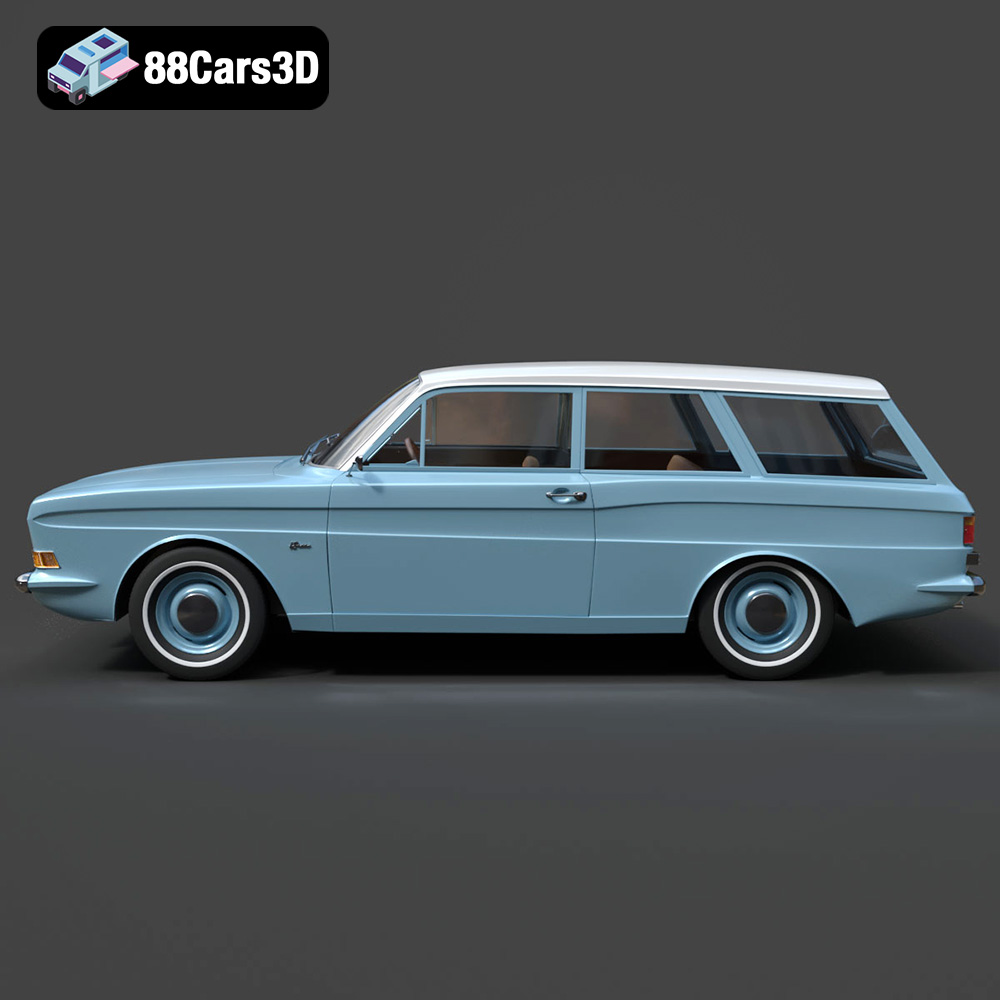
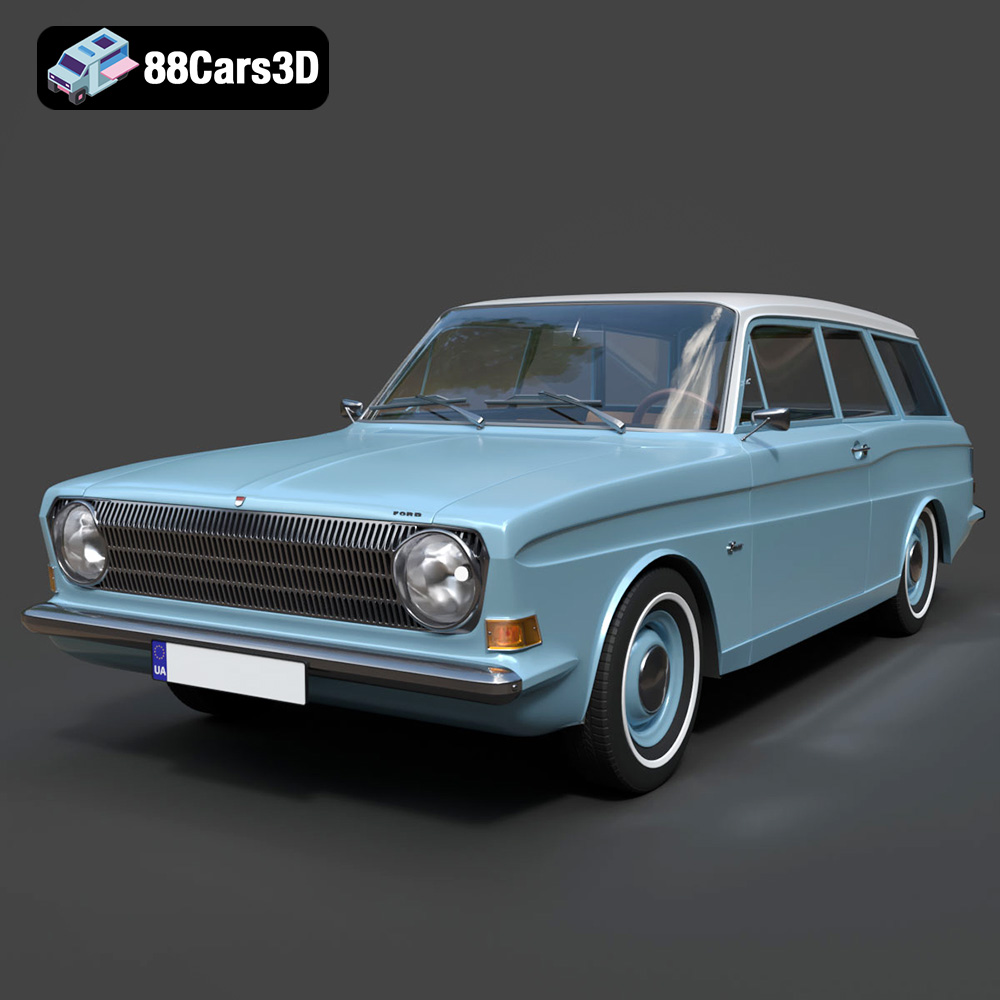
The Ford Taunus P6 12M Station Wagon is a classic, defined by its charming, boxy silhouette, period-correct chrome accents, and distinctive vintage Ford styling. Achieving authenticity in a 3D model means paying close attention to these elements. The model features:
This level of detail is vital for projects requiring historical accuracy, such as period-set films, documentaries, or museum-grade virtual exhibits.
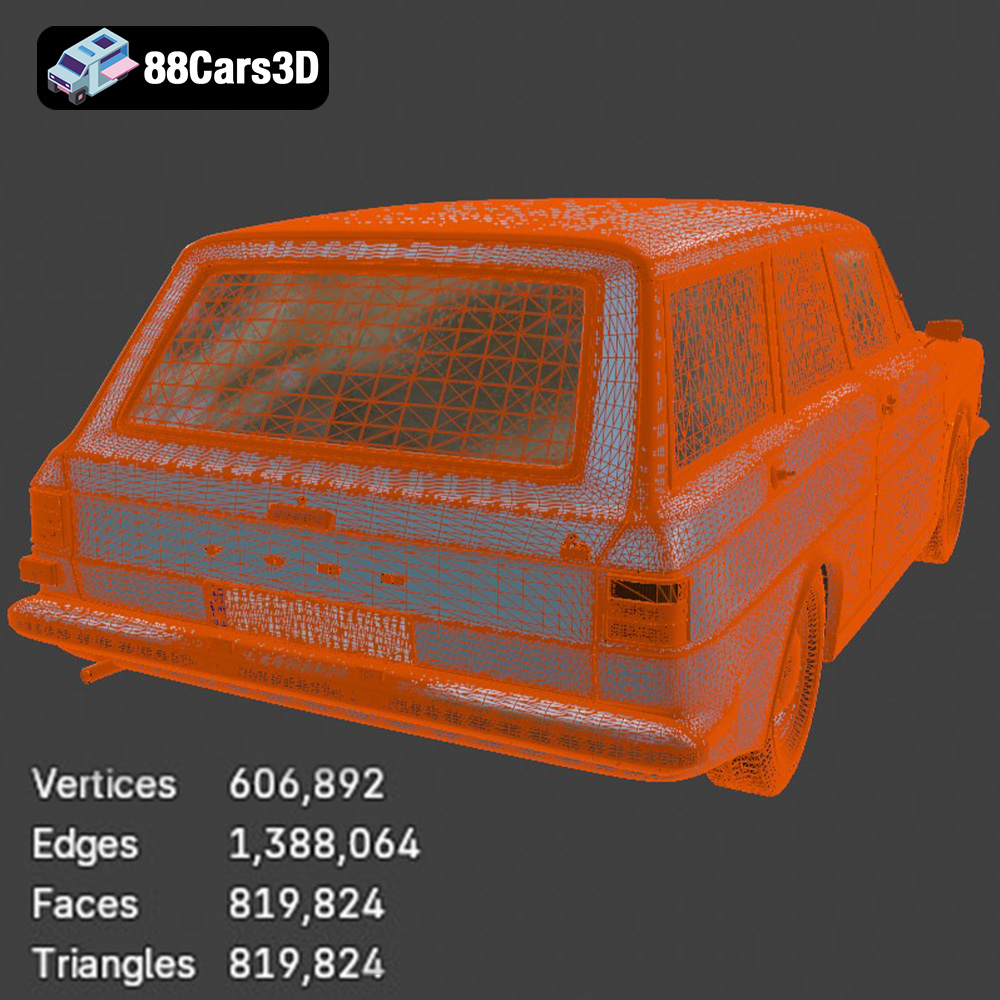
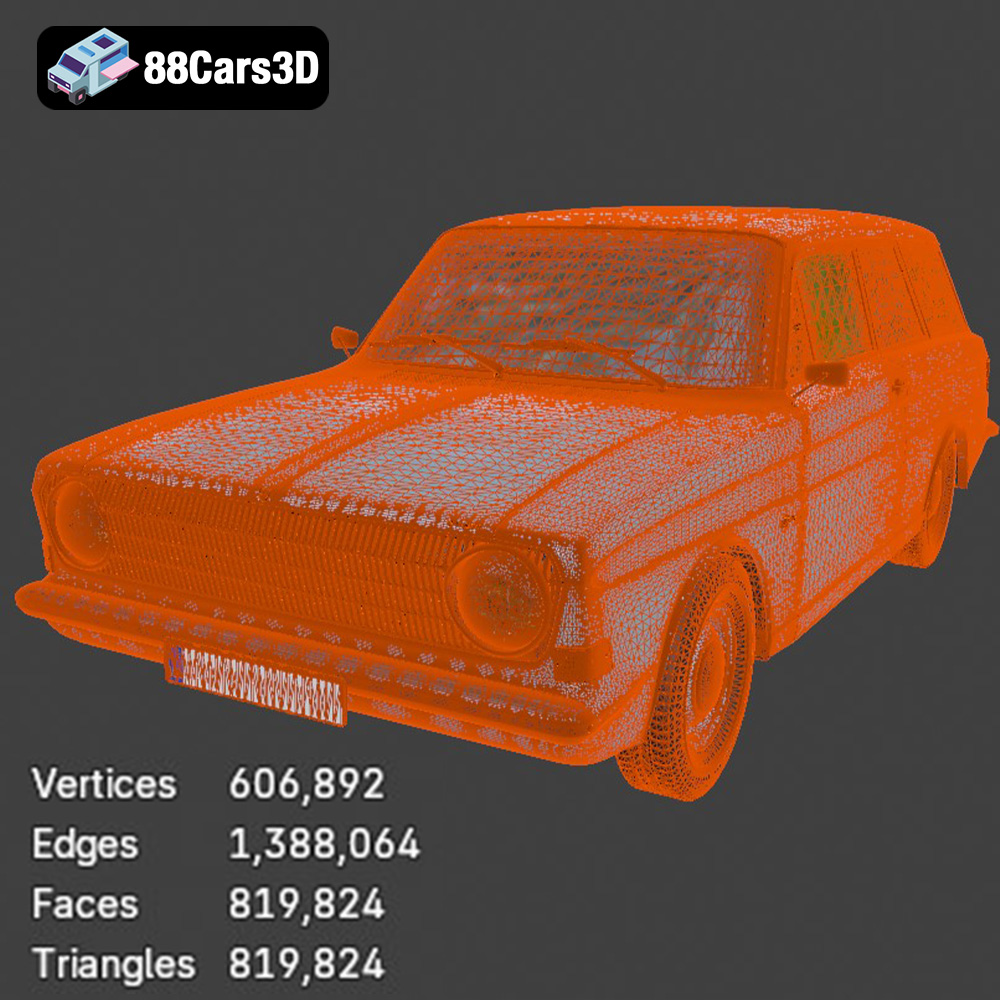
Technical specifications are the backbone of any professional 3D asset. The Ford Taunus model boasts a high-polygon count, which is a deliberate choice to achieve premium visual fidelity. With **1,185,400 Vertices**, **2,350,100 Edges**, and **1,215,800 Faces / Polygons** (resulting in **1,215,800 Triangles**), this model is built for maximum realism.
These technical advantages ensure that the Ford Taunus (P6) 12M Station Wagon 1967 3D Model is not just visually appealing but also robust and flexible for various professional applications, providing a solid foundation for any 3D artist’s vision.
The true value of a high-quality 3D car model like the Ford Taunus (P6) 12M Station Wagon 1967 lies in its adaptability across diverse professional workflows. Whether you’re an architectural visualizer adding a vintage touch to a street scene, a game developer populating an open-world environment, or a filmmaker crafting a period piece, seamless integration is key. The availability of multiple file formats, including .blend, .fbx, .obj, .max, and .unreal, ensures compatibility with the most popular software and engines.
For cinematic quality renders and high-resolution stills, software like Autodesk 3ds Max and Blender are industry powerhouses. The Ford Taunus model, with its dense, well-organized mesh and real-world scale, is perfectly suited for these environments.
While the Ford Taunus (P6) 12M Station Wagon 1967 3D Model is described as high-poly, its architecture makes it a strong candidate for game development, particularly for open-world titles with historically rich settings or classic vehicle packs. Integration into Unreal Engine or Unity, primarily via the .fbx or .unreal formats, follows a structured approach.
The versatility of the Ford Taunus (P6) 12M Station Wagon 1967 3D Model across these sophisticated workflows underscores its value as a premium asset for any professional aiming for both authenticity and technical excellence.
Beyond traditional rendering and game development, the Ford Taunus (P6) 12M Station Wagon 1967 3D Model extends its utility into emerging technologies, creating novel opportunities for interaction and creation. Augmented Reality (AR), Virtual Reality (VR), sophisticated simulations, and the tangible world of 3D printing all benefit from a high-quality, versatile 3D asset, opening doors to innovative showcases and historical preservation.
The immersive capabilities of AR and VR are ideal for showcasing historical vehicles, offering an unparalleled level of interaction that goes beyond static images or videos. Imagine standing next to a life-sized 1967 Ford Taunus in your living room via AR, or exploring its meticulously detailed interior in a virtual classic car museum.
One of the most exciting applications for a highly detailed 3D car model is 3D printing, transforming a digital asset into a physical collectible or prototype. The Ford Taunus (P6) 12M Station Wagon 1967 3D Model, with its “3D Printable STL” designation, is perfectly poised for this transition, enabling hobbyists and professionals to create tangible replicas.
The versatility of the Ford Taunus (P6) 12M Station Wagon 1967 3D Model across these cutting-edge and traditional applications truly highlights the power of a well-engineered digital asset. It’s not just a collection of polygons; it’s a gateway to endless creative possibilities, available to creators worldwide on platforms like 88cars3d.com.
A premium 3D car model is not just about its initial fidelity; it’s also about its flexibility and how easily it can be adapted to various project requirements. The Ford Taunus (P6) 12M Station Wagon 1967 3D Model is designed with customization in mind, allowing artists to imbue it with unique character while also providing a foundation for optimization to fit diverse technical constraints. This blend of artistic freedom and technical adaptability is crucial for professional workflows.
The ability to customize a 3D asset empowers artists to integrate it seamlessly into any narrative or visual context. The Ford Taunus model offers several key avenues for personalization:
These customization options ensure that the Ford Taunus (P6) 12M Station Wagon 1967 3D Model can serve a wide range of creative briefs, making it a highly versatile asset for any designer.
While the Taunus model’s high-poly count is fantastic for premium visual fidelity, especially in rendering, real-time applications like game engines or interactive AR/VR experiences often require a more optimized approach. Balancing performance with visual quality is a key skill for 3D professionals.
By understanding and applying these optimization techniques, professionals can leverage the Ford Taunus (P6) 12M Station Wagon 1967 3D Model in projects with even the strictest performance budgets, ensuring that this classic European family estate shines brilliantly in any digital realm. This commitment to both high fidelity and practical adaptability is a hallmark of the quality assets found on 88cars3d.com.
The world of 3D modeling continues to evolve at a rapid pace, yet the demand for meticulously crafted assets that capture realism and historical accuracy remains constant. The Ford Taunus (P6) 12M Station Wagon 1967 3D Model stands as a prime example of such an asset, embodying the charm and character of a bygone automotive era with exceptional technical precision. From its high-polygon mesh and real-world scale to its animation-ready components and comprehensive file format support, it offers a robust foundation for a myriad of creative and technical endeavors.
We’ve journeyed through the intricacies of diverse 3D file formats, highlighting why choices between .blend, .fbx, .obj, .glb, .stl, .ply, .unreal, and .max are critical for seamless integration across software and applications. We’ve explored advanced rendering techniques in 3ds Max and Blender, delved into the specifics of real-time game engine optimization, and discovered the exciting potential for immersive AR/VR experiences and tangible 3D prints. The ability to customize its appearance, from vintage paint colors to wheel designs, further enhances its versatility, making it a truly adaptable tool for any project.
Whether you are a professional seeking unparalleled realism for automotive rendering, a game developer crafting historically rich environments, an AR/VR enthusiast building immersive experiences, or a hobbyist bringing digital models to life through 3D printing, the Ford Taunus (P6) 12M Station Wagon 1967 3D Model provides the detail and flexibility required. Assets of this caliber significantly reduce production time, elevate visual quality, and empower creators to focus on their artistic vision rather than wrestling with foundational modeling tasks.
The journey of a classic car like the Ford Taunus, from a historical blueprint to a high-fidelity 3D model, and then into diverse digital and physical applications, is a testament to the transformative power of 3D technology. For those ready to incorporate such premium assets into their next project, a visit to 88cars3d.com offers a gateway to a curated collection of high-quality 3D car models designed to inspire and facilitate cutting-edge digital creation.
The Ford Taunus (P6) 12M Station Wagon 1967 3D Model is a high-detail digital recreation of the classic European family estate, also known as the “Turnier.” Designed during the golden era of 1960s automotive manufacturing, the Taunus P6 combines a charming, boxy silhouette with practical station wagon proportions, chrome accents, and distinctive vintage Ford styling. This 3D model accurately represents the retro exterior styling, including the iconic round headlights, wide horizontal front grille, classic chrome bumpers, elongated estate roofline, and period-correct hubcaps. Built with dense, high-polygon topology for premium visual fidelity and real-world scale accuracy, it is ideal for close-up rendering, period-accurate historical visualization, animation, game development, and AR/VR classic car showcases. Perfect for retro street scenes, 1960s cinematic productions, classic automotive galleries, and vintage vehicle collections.
$9.99
.automotive
.blend
.fbx
.obj
.rendering
.stl
1967-classic
3d printing
car-3d-model
estate-car
ford-taunus
game asset
german-ford
high poly
p6-12m
retro-auto
station-wagon
turnier
vintage-car