Get 50% OFF All Premium 3D & STL Models!

In the vibrant world of 3D content creation, where digital realism and historical accuracy converge, the demand for meticulously crafted automotive 3D models continues to accelerate. From breathtaking photorealistic renders in advertising campaigns to immersive virtual experiences and compelling game environments, a high-quality 3D vehicle asset is often the cornerstone of a successful project. These aren’t just mere digital representations; they are intricate tools, embodying the spirit and engineering of their real-world counterparts.
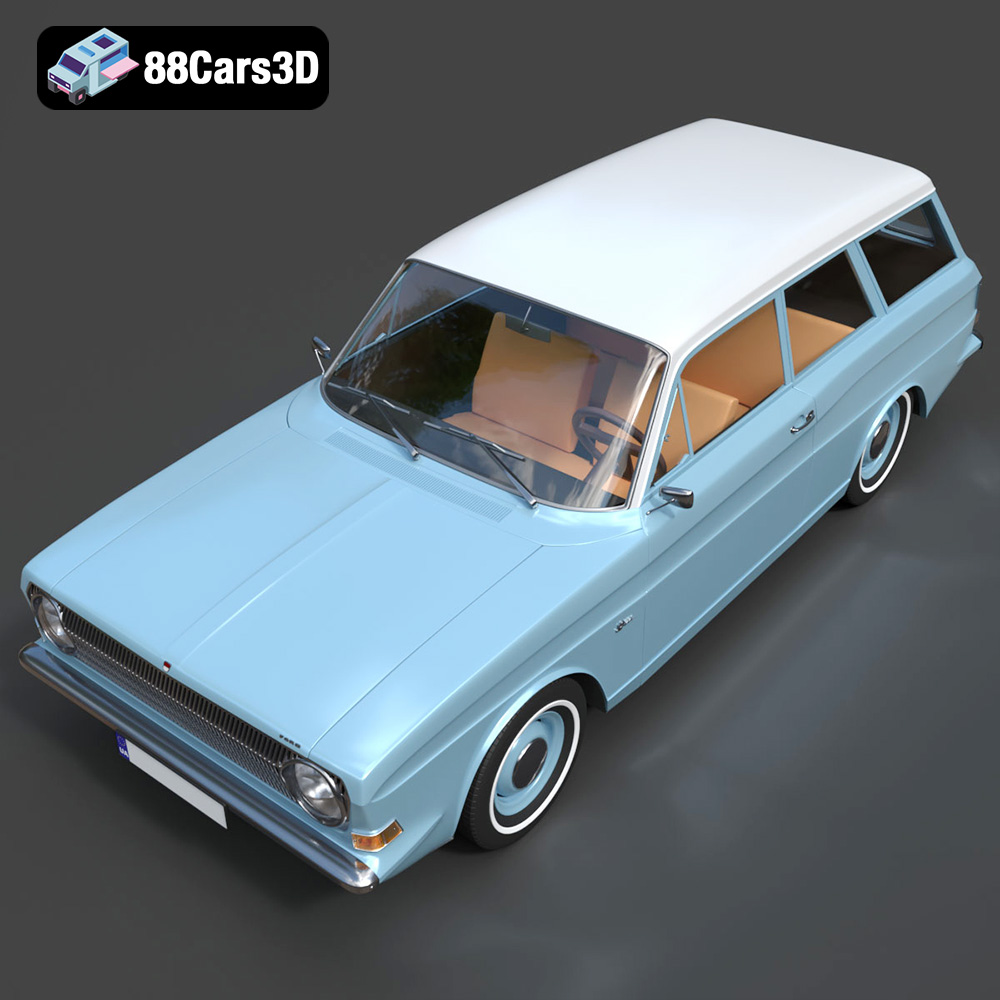
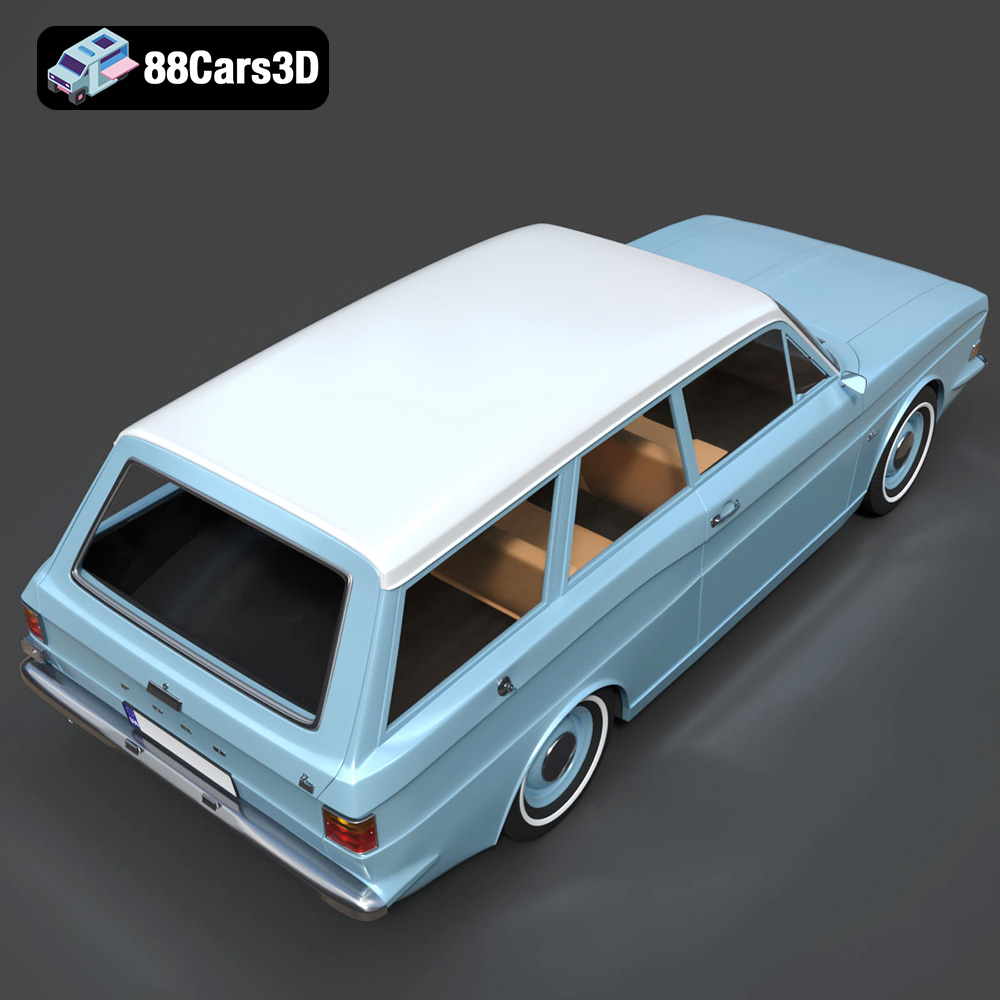
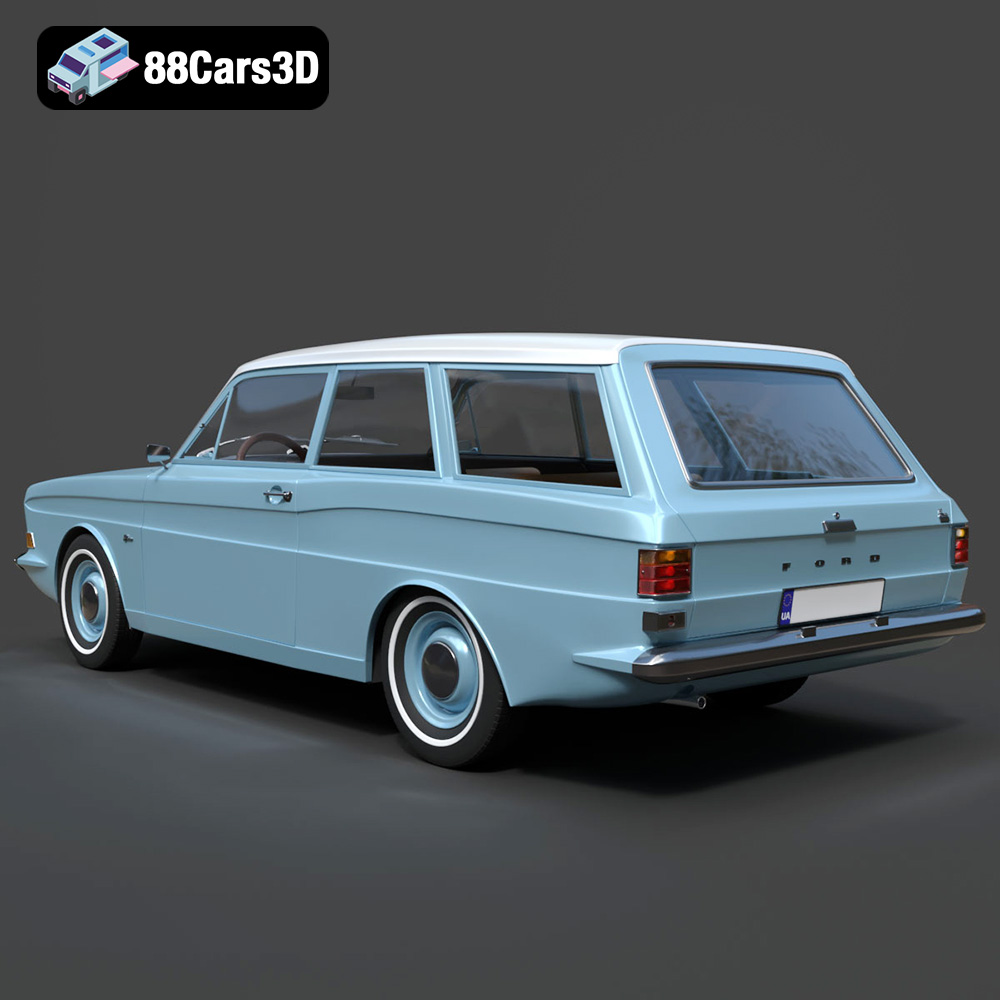
Today, we’re diving deep into the technical intricacies and creative potential offered by a prime example of such an asset: the Ford Taunus (P6) 12M Station Wagon 1967 3D Model. This highly detailed digital recreation, available on 88cars3d.com, is more than just a nod to a bygone era; it’s a versatile foundation for a multitude of professional applications, from architectural visualization to game development and even 3D printing. Understanding how models like this are built, delivered, and integrated into various workflows is key to unlocking their full potential.
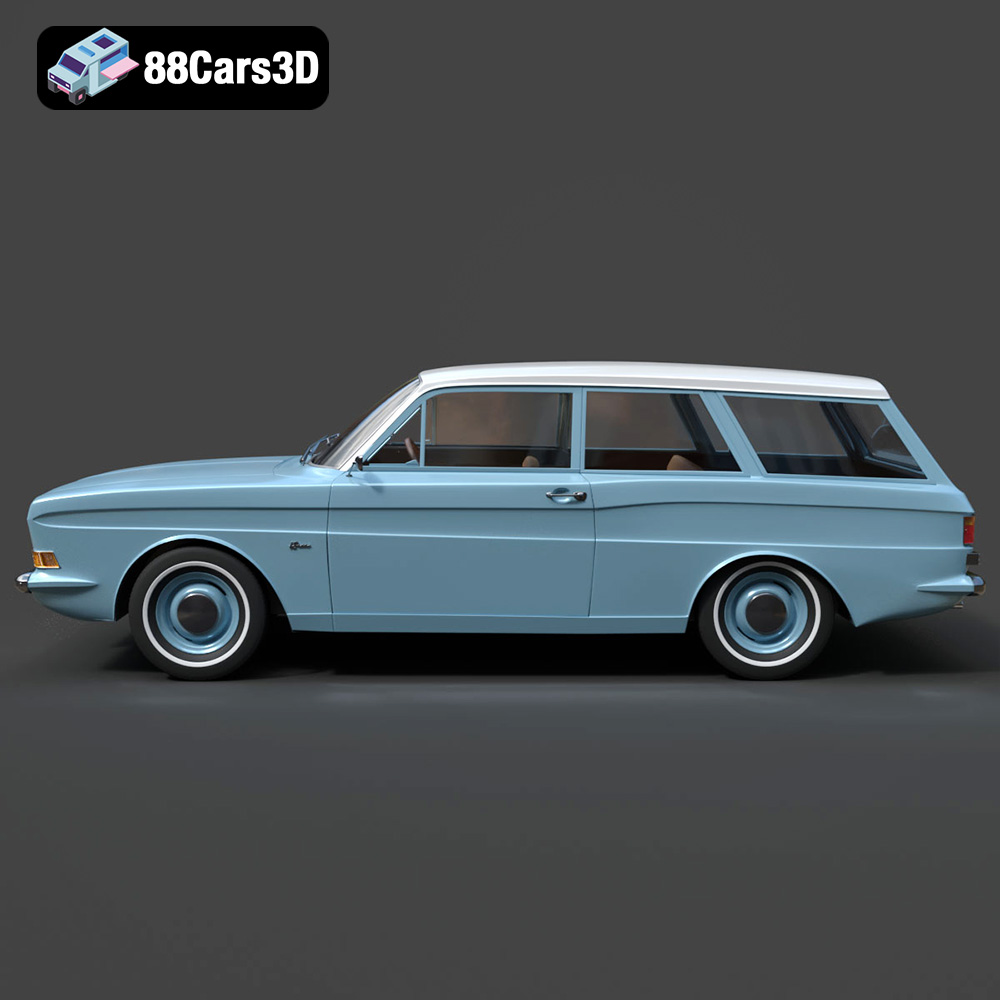
Classic cars hold a timeless charm, evoking nostalgia, celebrating design history, and showcasing engineering prowess. Translating this appeal into the digital realm requires exceptional skill and attention to detail, which is precisely what professional 3D car models offer. The Ford Taunus (P6) 12M Station Wagon 1967, a classic European family estate also known as the “Turnier,” is a perfect subject for digital preservation and creative reimagination. Its distinctive 1960s boxy silhouette, practical proportions, and iconic chrome accents make it instantly recognizable and visually captivating.
For artists and developers, the ability to accurately recreate historical vehicles like the Taunus P6 is invaluable. These 3D car models serve as digital time capsules, allowing us to place period-accurate vehicles in any scene, from a bustling 1960s street to a serene countryside drive. Achieving hyper-realism hinges on meticulous detailing: the subtle curve of a fender, the gleam of chrome, the texture of vintage upholstery, and the precise geometry of classic round headlights. When these elements are expertly modeled, they transform a digital scene into a believable, living environment, providing critical context and depth to visual narratives.
Beyond aesthetics, authentic detail drives storytelling. Imagine a cinematic production set in the late 1960s – a Ford Taunus (P6) 12M Station Wagon 1967 parked outside a home instantly grounds the audience in that specific period. For game developers creating historically accurate open-world environments, such 3D car models are essential for immersion. Even in AR/VR experiences, where users can interactively explore classic cars, the accuracy of every dial on the dashboard and every seam on the seating upholstery contributes to a truly engaging and believable experience. The availability of high-detail components, such as separate doors, wheels, and steering mechanisms, further enhances its utility for animation and dynamic scene creation, allowing for car doors to open, wheels to turn, and steering to articulate realistically.
The versatility of a 3D model is often defined by the file formats it supports. Professional 3D car models, like the Ford Taunus (P6) 12M Station Wagon 1967, are typically offered in multiple formats to ensure compatibility across a wide range of software and platforms. Each format serves a specific purpose, catering to different stages of the 3D pipeline – from initial modeling and texturing to real-time rendering, animation, and even physical fabrication.
The .blend format is Blender’s native file type. It encapsulates an entire Blender scene, including all 3D geometry, materials, textures, lighting, animation data, camera setups, and even user interface layouts. This makes it an ideal starting point for artists working within the Blender ecosystem, as it allows for full editability and customization. For the Ford Taunus model, having a .blend file means users can dive directly into the scene, modify topology, adjust materials, or re-rig components with ease, leveraging Blender’s powerful toolset for modeling, sculpting, and rendering with Cycles or Eevee.
.fbx (Filmbox) is a proprietary format developed by Autodesk, widely recognized as an industry-standard for 3D data exchange, particularly for animation and game development. It can store not only geometry and materials but also crucial elements like skeletons, animations, blend shapes, and camera data. This makes .fbx incredibly powerful for transferring animated automotive assets between software like 3ds Max, Maya, Blender, and game engines like Unreal and Unity. For a model like the Ford Taunus, the .fbx ensures that its separate animated components (wheels, doors) retain their pivot information and hierarchy, ready for integration into a real-time environment. Conversely, .obj (Wavefront OBJ) is a simpler, more universal format primarily focused on storing geometry (vertices, normals, texture coordinates, and faces) and material references. While it doesn’t support animation or complex scene data, its widespread compatibility makes it a safe bet for cross-software transfers where pure mesh data is paramount. Many 3D applications can import and export .obj files reliably, making it excellent for archival or as a fallback format.
.glb (GL Transmission Format Binary) is an increasingly popular format, especially for web-based 3D, AR (Augmented Reality), and VR (Virtual Reality) applications. It’s a binary container format that embeds all necessary assets (3D models, textures, animations) into a single file, making it highly efficient for transmission and loading. For showcasing the Ford Taunus in an interactive web viewer or an AR experience on a mobile device, .glb provides an optimized, compact solution. The .unreal format, or more accurately, assets prepared for Unreal Engine, are typically .fbx files that have been specifically optimized and structured to be imported and directly utilized within Unreal Engine’s workflow. This can include proper material assignments, collision meshes, LODs (Levels of Detail), and blueprint setups, ensuring the asset is engine-ready for real-time environments without extensive post-import processing.
.stl (Stereolithography) is the de facto standard format for 3D printing. It represents a 3D model as a series of connected triangles, describing only the surface geometry of an object without color, texture, or other attributes. For enthusiasts wanting to 3D print their own Ford Taunus (P6) 12M Station Wagon 1967 scale model, the .stl file is essential, providing a watertight, manifold mesh ready for slicing software. The .ply (Polygon File Format) is another format primarily used for storing 3D scanner data and meshes. It can store a variety of properties including color, transparency, and texture coordinates, in addition to geometry. While less common for general asset exchange, it’s a precision mesh format suitable for CAD, reverse engineering, or analytical applications where detailed surface data is critical.
Finally, the .max format is the native file type for Autodesk 3ds Max. Similar to .blend for Blender, a .max file contains a complete 3ds Max scene, including geometry, materials, lighting, animation, and render settings. 3ds Max is a powerhouse for architectural visualization, high-end rendering, and complex animation, especially in the automotive industry. Providing the Ford Taunus model as a .max file means professionals can directly access the original scene setup, allowing for advanced modifications, integration into larger scene builds, or leveraging 3ds Max’s robust rendering capabilities with engines like V-Ray or Corona. This comprehensive suite of file formats ensures that the Ford Taunus (P6) 12M Station Wagon 1967 3D Model is ready for virtually any professional application, demonstrating the commitment to versatility and usability from creators found on 88cars3d.com.
The true value of a premium 3D car model lies in its technical foundation. The Ford Taunus (P6) 12M Station Wagon 1967 3D Model is a testament to meticulous craftsmanship, built to meet the rigorous demands of professional production pipelines.
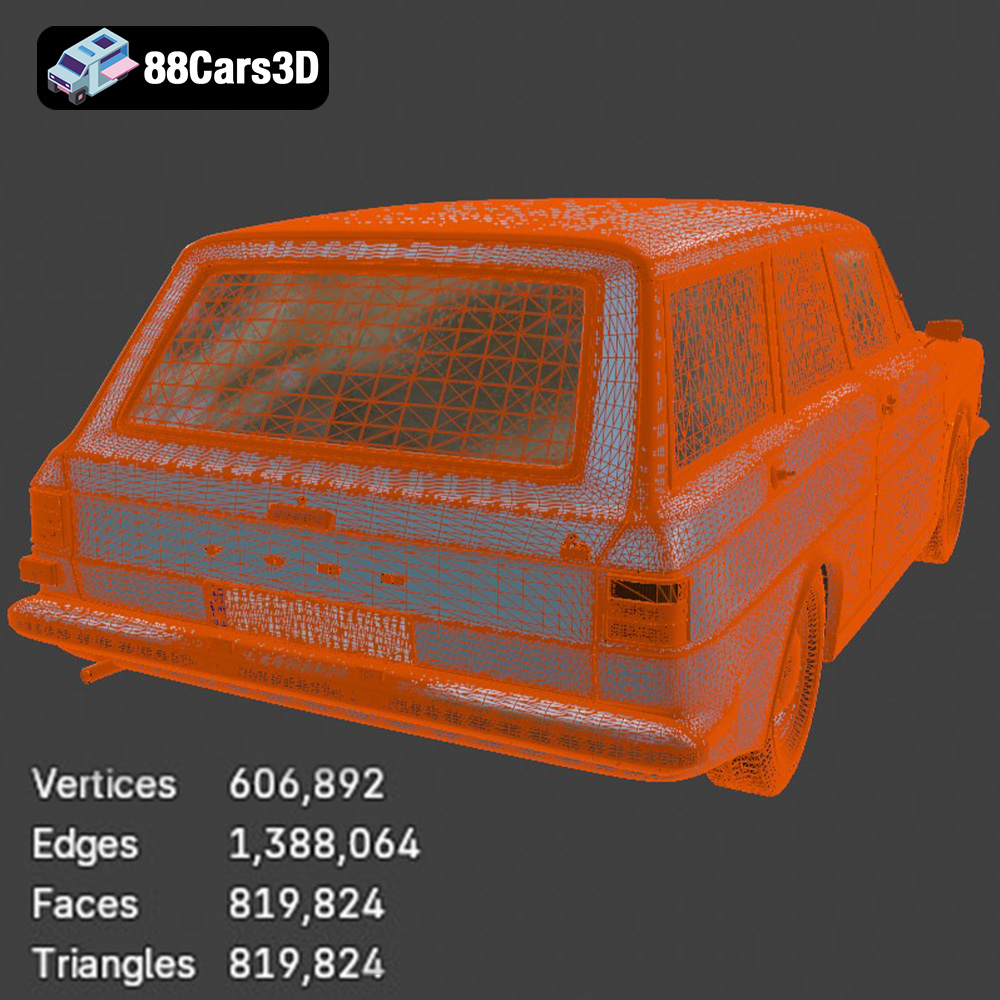
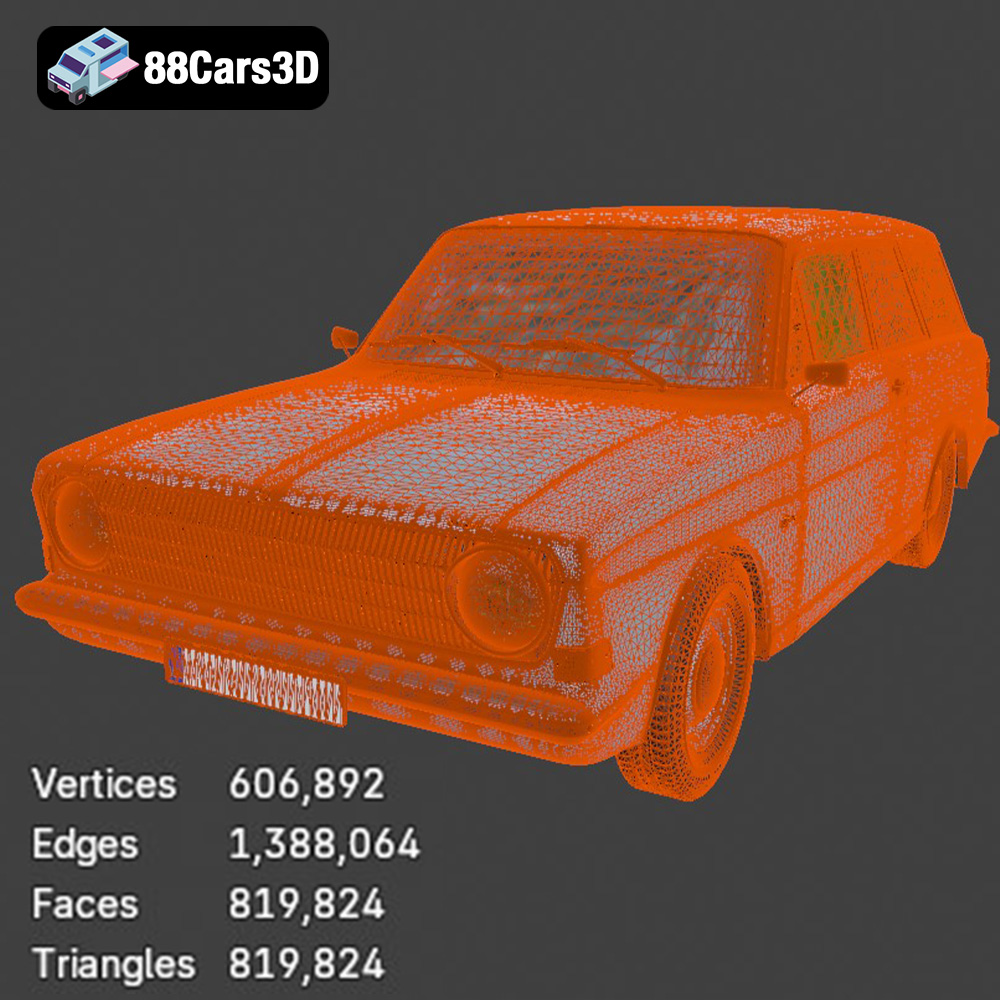
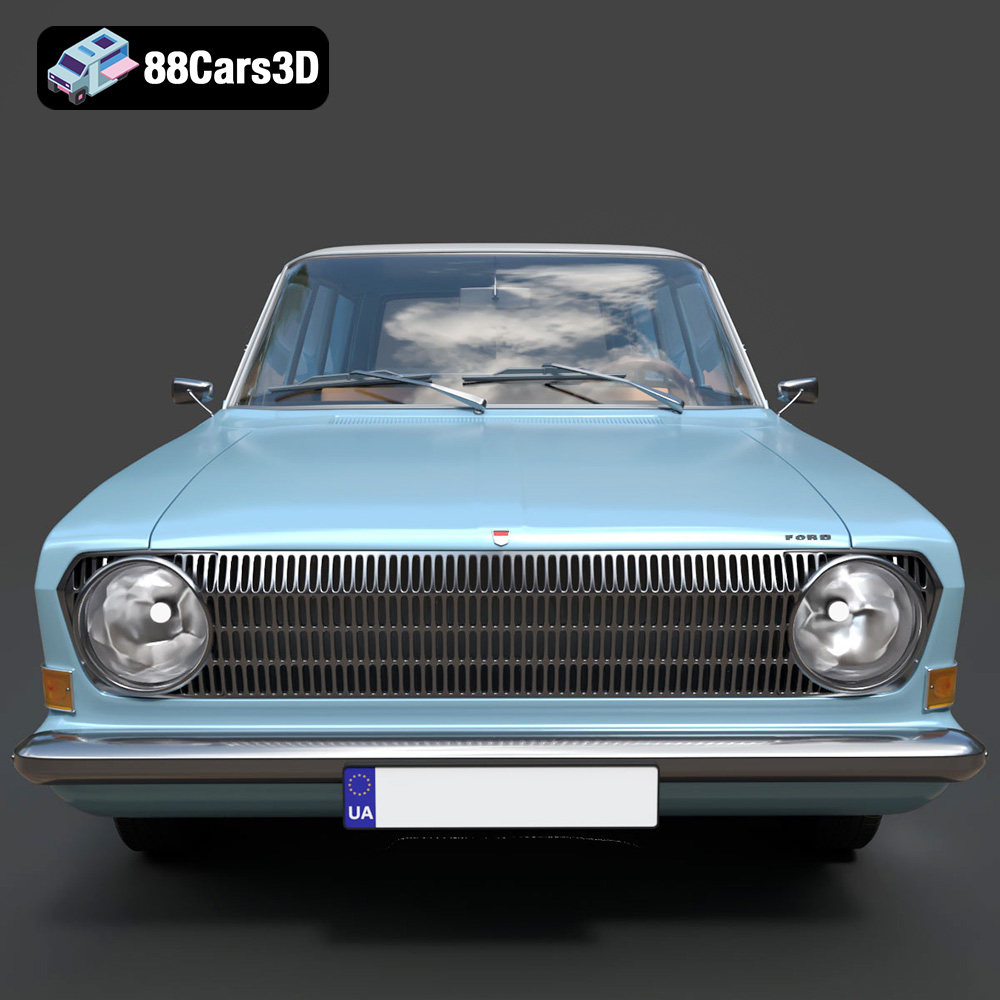
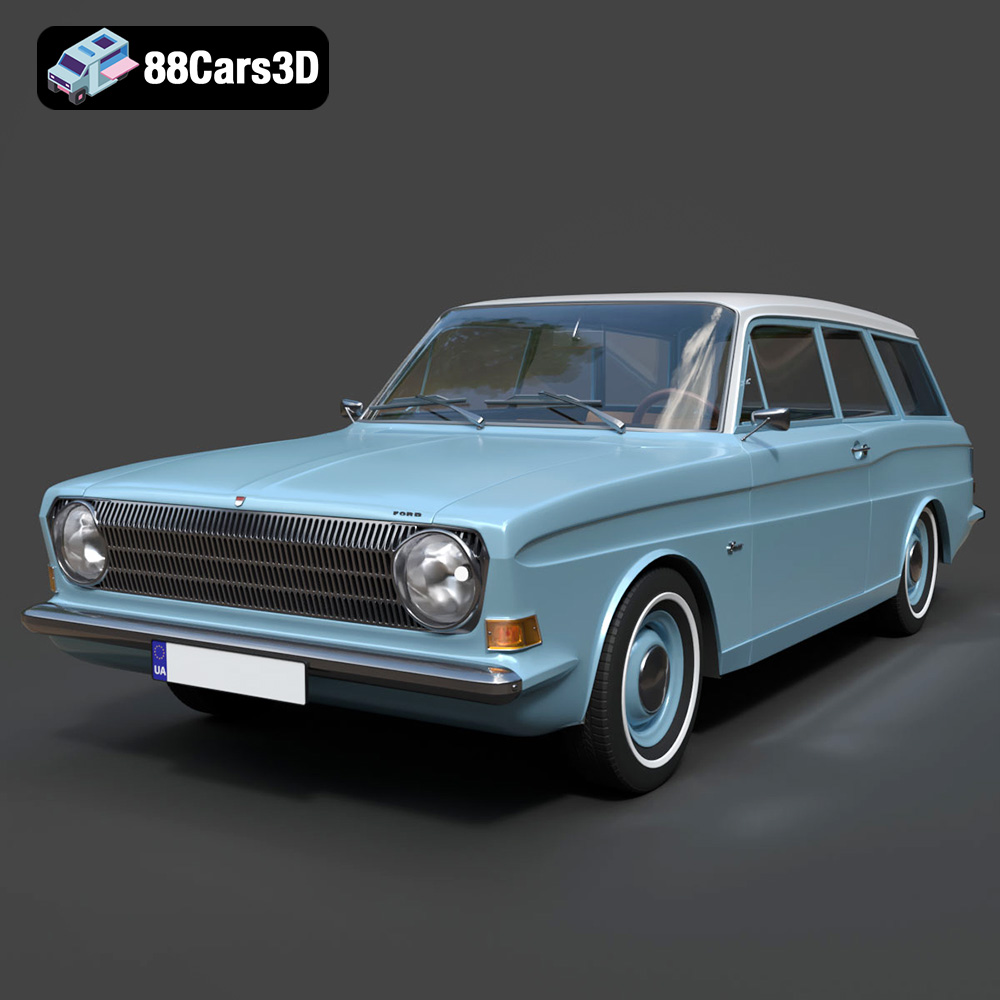
This model boasts a formidable technical specification: Vertices: 1,185,400, Edges: 2,350,100, Faces/Polygons: 1,215,800, and Triangles: 1,215,800. This high-polygon count signifies an incredibly dense mesh structure, which is crucial for achieving maximum realism, especially in close-up renders and detailed animations. Such a high poly count allows for smooth, accurate curvatures without visible faceting, making chrome surfaces shine convincingly and body panels reflect light naturally. Furthermore, the model is built with “real-world scale accuracy based on the original 1967 blueprints.” This is a non-negotiable for professional use, ensuring that the vehicle integrates seamlessly into architectural visualizations, accurately scales against human characters in game engines, and maintains true proportions for simulation and training applications. Every detail, from the distinctive horizontal grille with its round headlight enclosures to the highly detailed taillight clusters and authentic vintage wheel design with classic Ford hubcaps, is faithfully represented with this geometric fidelity.
The exterior alone isn’t enough; a truly professional 3D car model offers a detailed interior. The Ford Taunus model provides a “classic 1960s spacious family cabin layout with a large rear cargo area,” a “retro dashboard design with period-accurate analog dials,” and a “thin-rimmed classic steering wheel geometry.” Even “vintage seating upholstery with authentic seam detailing” is present, ensuring that the model holds up to interior close-up renders and virtual tours. Beyond static detail, the model is engineered for animation. Crucially, it features “separate wheels, steering components, and doors for animation,” coupled with “proper pivot setup for steering, wheel rotation, and tailgate hinges.” This means animators don’t need to spend valuable time dismantling the model and setting up pivots; it’s ready to animate straight out of the box, saving significant production time and effort.
While the model is described as “high-poly” for “maximum realism” and “high-resolution historical visualization,” its suitability extends to other applications with proper workflow considerations. For instance, game development often requires optimized, lower-poly models for real-time performance. The clean, well-organized mesh structure of the Taunus model means it’s an excellent candidate for retopology or controlled decimation, where the polygon count can be reduced while preserving critical detail through normal maps. Its compatibility with major 3D software platforms and engines, including its direct .unreal format, streamlines this process. For AR/VR, the .glb format offers a pre-optimized solution for interactive experiences, showcasing how this single asset can be adapted across a spectrum of technical demands, making it a truly versatile investment from 88cars3d.com.
Integrating a complex 3D car model like the Ford Taunus (P6) 12M Station Wagon 1967 into a professional workflow requires a strategic approach, leveraging specific software and techniques tailored to the final output.
For cinematic quality rendering, 3ds Max remains an industry stronghold, especially when paired with powerful renderers like V-Ray or Corona. The .max file provided for the Ford Taunus is a significant advantage here, allowing artists to immediately open a pre-setup scene. The workflow typically involves:
Integrating the Ford Taunus model into a game engine like Unreal Engine or Unity demands a different set of considerations, prioritizing performance while retaining visual fidelity. The .fbx and .unreal formats are paramount here.
The Ford Taunus (P6) 12M Station Wagon 1967 is also offered in .stl format, opening up avenues for physical creation through 3D printing. This caters to hobbyists, collectors, and designers looking for a tangible representation of the classic car.
The Ford Taunus (P6) 12M Station Wagon 1967 3D Model’s versatility lends itself to numerous creative and commercial applications, pushing the boundaries of digital and physical design.
Imagine a scene for a historical drama or a vintage-themed commercial. A director needs a classic European station wagon to anchor a shot set in 1967. Rather than sourcing, restoring, and transporting a real vehicle, a high-fidelity 3D model like the Ford Taunus offers unparalleled control and flexibility. VFX artists can seamlessly integrate the 3D car model into live-action footage, ensuring perfect lighting, reflections, and shadows that match the environment. The separate, animatable components mean the car can be shown driving, doors can open for characters, or the tailgate can be lifted to reveal period-appropriate props. This level of control dramatically reduces production costs and logistical challenges while achieving photorealistic results for film and TV backgrounds or vintage brand campaigns.
The burgeoning fields of Augmented Reality (AR) and Virtual Reality (VR) offer new ways to experience classic automobiles. With the Taunus model’s .glb format, developers can create interactive AR applications where users can “place” the 1967 Taunus in their driveway, walk around it, and inspect its details as if it were truly there. In VR, the model could populate an entire virtual classic car museum, allowing enthusiasts to step inside the meticulously recreated cabin, examine the retro dashboard, and even “drive” the car in a simulated environment. The optimized geometry and comprehensive material setup make it perfect for delivering rich, interactive experiences that bring automotive history to life.
The 3D printable .stl format transforms the digital model into a tangible object. This isn’t just for hobbyists; it has practical applications too. Automotive designers or restoration experts might use 3D prints for scale prototypes or to visualize modifications before committing to physical work. For collectors, owning a custom-painted, 3D printed Ford Taunus (P6) 12M Station Wagon 1967 at their preferred scale offers a unique, personalized collectible not available through traditional manufacturing. It bridges the gap between digital asset and physical artifact, demonstrating the breadth of possibilities offered by a well-prepared 3D model.
A high-quality 3D car model is not a static entity; it’s a dynamic asset that can be tailored and adapted to suit evolving project needs and technologies.
The included customization options for the Ford Taunus (P6) 12M Station Wagon 1967 are invaluable for artists seeking specific visual narratives. Changing the exterior color to a “Pastel Blue,” “Seafoam Green,” or “Muted Mustard” instantly alters the car’s personality and suitability for different scenes. Modifying wheel designs (from steel wheels to chrome hubcaps) allows for subtle variations in trim level or regional specifications. Adjusting interior materials from retro vinyl to fabric representations can evoke different levels of luxury or wear. Even configuring the tailgate or doors to be open or closed provides dynamic presentation options for still renders or animations. These customization points empower artists to craft truly unique and story-driven visuals without needing to remodel significant portions of the vehicle.
Investing in a high-quality, well-structured 3D car model like the Ford Taunus from 88cars3d.com is an investment in future-proofing. A clean, high-poly mesh with accurate real-world scale and properly set pivots means the asset can be easily adapted for future technologies. As rendering engines evolve, as real-time performance capabilities improve, or as new AR/VR platforms emerge, a robust base model can be re-textured, re-optimized, or re-rendered with minimal effort. Its comprehensive range of file formats further ensures compatibility with future software versions and unforeseen project demands, making it a reliable and versatile asset for years to come.
The Ford Taunus (P6) 12M Station Wagon 1967 3D Model stands as a prime example of a professional-grade automotive asset, meticulously crafted to serve a diverse range of industries. From its dense, high-polygon geometry ensuring hyper-realistic renders and animations, to its detailed interior and animation-ready components, every aspect of this model is designed for professional utility. The broad spectrum of included file formats—from .blend and .max for comprehensive editing, to .fbx and .unreal for game development, .glb for AR/VR, and .stl for 3D printing—underscores its unparalleled versatility and adaptability across virtually any 3D pipeline.
Whether you’re recreating period-accurate cinematics, building immersive open-world games, designing interactive AR experiences, or even fabricating physical scale models, this Ford Taunus model offers the technical foundation and aesthetic fidelity required. It’s a testament to how high-quality 3D car models can bridge the past and the future, enabling creators to bring timeless designs into cutting-edge digital and physical realms. For those seeking such premium assets, explore the extensive collection of 3D car models, including this exquisite Ford Taunus, available at 88cars3d.com.
The Ford Taunus (P6) 12M Station Wagon 1967 3D Model is a high-detail digital recreation of the classic European family estate, also known as the “Turnier.” Designed during the golden era of 1960s automotive manufacturing, the Taunus P6 combines a charming, boxy silhouette with practical station wagon proportions, chrome accents, and distinctive vintage Ford styling. This 3D model accurately represents the retro exterior styling, including the iconic round headlights, wide horizontal front grille, classic chrome bumpers, elongated estate roofline, and period-correct hubcaps. Built with dense, high-polygon topology for premium visual fidelity and real-world scale accuracy, it is ideal for close-up rendering, period-accurate historical visualization, animation, game development, and AR/VR classic car showcases.
$9.99
.automotive
.blend
.fbx
.obj
.rendering
.stl
1967-classic
3d printing
car-3d-model
estate-car
ford-taunus
game asset
german-ford
high poly
p6-12m
retro-auto
station-wagon
turnier
vintage-car