Get 50% OFF All Premium 3D & STL Models!

In the dynamic world of 3D visualization, the demand for highly detailed, industry-specific assets is ever-growing. From crafting immersive simulations for game development to producing photorealistic renders for marketing campaigns, the foundation of any compelling project lies in the quality of its foundational 3D models. Few assets embody the blend of technical precision and real-world applicability quite like robust industrial vehicles. Today, we’re diving deep into an exceptional example from 88cars3d.com: the Fuel Tank Trailer 3D Model.
This isn’t just another generic vehicle model; it’s a meticulously crafted digital recreation designed to meet the rigorous demands of professional workflows. Whether you’re an environmental artist building a sprawling logistics hub, a game developer populating an open-world trucking simulator, or an architectural visualizer depicting an industrial complex, this Fuel Tank Trailer 3D Model provides the authenticity and flexibility required to elevate your work. Its clean topology, real-world scale, and extensive detail make it a standout choice for anyone seeking high-quality 3D car models and industrial game assets for their projects.
When acquiring a 3D model, the file format isn’t just an arbitrary extension; it dictates how you can use the asset, its compatibility with different software, and its ultimate application. The Fuel Tank Trailer 3D Model from 88cars3d.com stands out by offering an impressive array of formats, each optimized for specific workflows. Understanding these formats is crucial for maximizing your creative potential and ensuring seamless integration into your pipelines.
The .blend format is native to Blender, a powerful and increasingly popular open-source 3D creation suite. When you receive a .blend file, you’re not just getting the mesh; you’re getting a fully editable Blender scene. This includes all materials, textures, lighting setups, camera positions, and even animation data if present. For artists deeply integrated into the Blender ecosystem, this offers unparalleled flexibility. You can easily modify the model, adjust its UVs, tweak shader networks, or integrate it directly into existing Blender projects without any loss of data or conversion artifacts. The Fuel Tank Trailer 3D Model in .blend format means you have direct access to its construction, making advanced customization a breeze.
.fbx (Filmbox) is arguably the most widely adopted proprietary 3D file format for exchanging models, animations, and scenes between different software applications. Developed by Autodesk, it excels at preserving complex data like hierarchies, skinning, blend shapes, and camera information. It’s the go-to format for transferring assets between applications like 3ds Max, Maya, Blender, Cinema 4D, and most importantly, into game engines like Unreal Engine and Unity. For a detailed 3D car model like the Fuel Tank Trailer, .fbx ensures that all components, including separate wheels and potential rigging, translate correctly, making it ideal for real-time pipelines and professional animation studios.
The .obj (Wavefront OBJ) format is a universal standard for exchanging geometric data. It’s a simpler format than .fbx, primarily focusing on vertex positions, UV coordinates, normals, and material group information. While it doesn’t store animation or rigging data, its widespread support across virtually every 3D application makes it a robust choice for cross-software compatibility. If you need to import the Fuel Tank Trailer into an application that might struggle with more complex formats, or if you simply need the pure mesh data for sculpting or retopology, .obj is an excellent, reliable option.
.glb (GLB format, an evolution of glTF) is quickly becoming the standard for 3D web content, augmented reality (AR), and virtual reality (VR). This format is designed for efficient transmission and loading of 3D scenes and models. It packages all necessary data—geometry, materials, textures, and even animations—into a single, self-contained file. This optimization makes it perfect for displaying the Fuel Tank Trailer in browser-based configurators, interactive AR applications, or lightweight VR experiences, offering excellent performance and visual fidelity across various platforms.
The .stl (Stereolithography) format is the undisputed king of 3D printing. It represents a 3D model as a series of connected triangles, describing only the surface geometry of the object. While it doesn’t contain color or texture information, its simplicity makes it ideal for direct translation to physical objects. The Fuel Tank Trailer 3D Model’s availability in .stl format means it’s ready for immediate preparation in a slicer software for manufacturing scale models or prototypes, ensuring manifold geometry suitable for additive manufacturing processes.
.ply (Polygon File Format or Stanford Triangle Format) is another format for storing 3D data, often used in scientific and engineering applications, especially for data acquired from 3D scanners. It can store a wider range of properties than .obj, including color, transparency, and range data, directly on the vertices or faces. While less common for typical asset exchange, its inclusion means the Fuel Tank Trailer model can be integrated into specialized pipelines requiring precise mesh information, such as CAD analysis or complex simulation environments.
The .unreal format, or more accurately, assets prepped for Unreal Engine, implies that the model is specifically optimized and often pre-configured for direct import and use within Unreal Engine. This could mean assets are packaged with appropriate materials, collision meshes, LODs (Levels of Detail), and pivot points set for immediate integration into real-time environments. For game developers and those creating high-fidelity interactive experiences with the Fuel Tank Trailer, this format significantly streamlines the workflow, reducing setup time and ensuring optimal performance within the engine.
The .max format is the native file type for Autodesk 3ds Max, a long-standing industry leader in 3D modeling, animation, and rendering for architectural visualization, design, and game development. A .max file contains a complete 3ds Max scene, including all geometry, modifiers, materials, textures, lighting, cameras, and animation data. For users working primarily in 3ds Max, this provides the highest level of editability and ensures that the Fuel Tank Trailer 3D Model can be seamlessly integrated into existing projects, leveraging 3ds Max’s powerful rendering capabilities like V-Ray or Corona for photorealistic automotive rendering.
The provision of such a comprehensive suite of file formats for the Fuel Tank Trailer 3D Model highlights 88cars3d.com’s commitment to versatility and professional-grade assets, enabling artists and developers to pick the perfect tool for their specific project needs.
Crafting high-quality 3D car models, especially industrial vehicles like the Fuel Tank Trailer, requires a meticulous balance of artistic flair and engineering precision. It’s not just about creating a visually appealing object; it’s about accurately representing real-world mechanics and aesthetics in a digital space, ensuring functionality across diverse applications from cinematic rendering to real-time simulations.
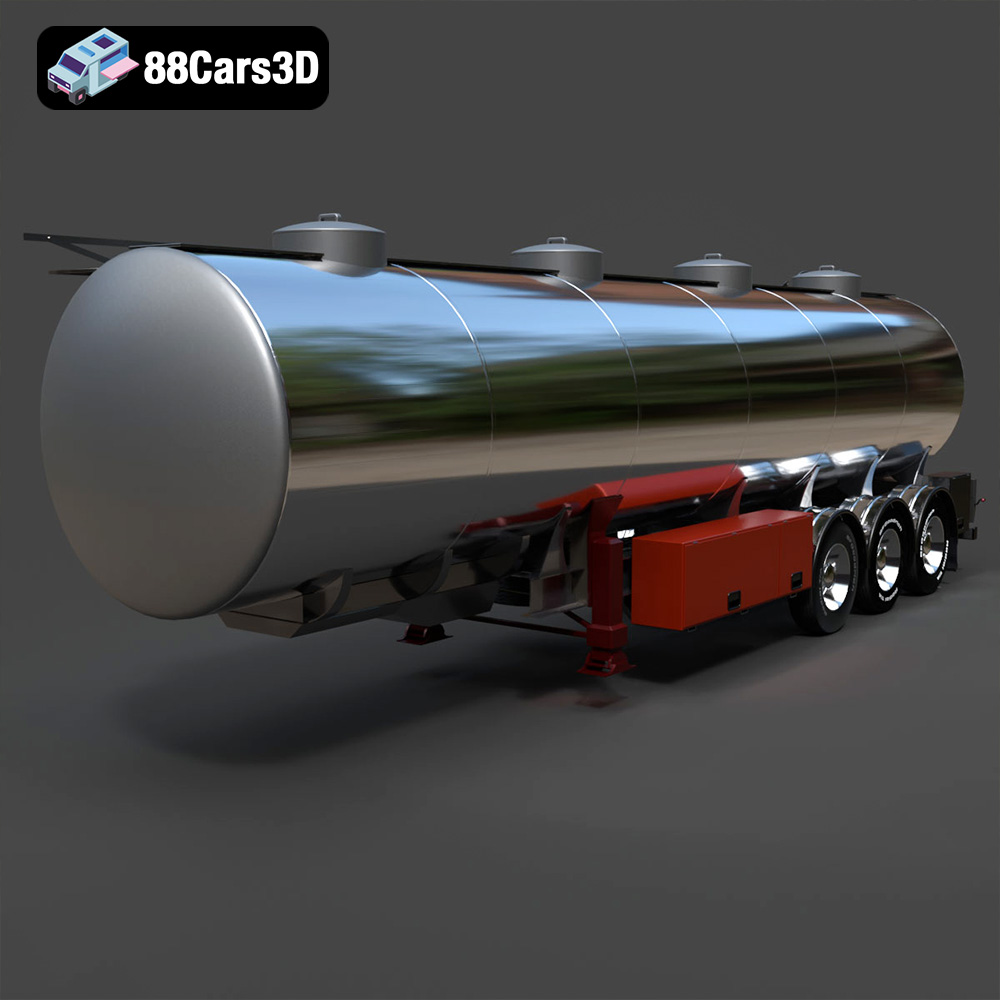
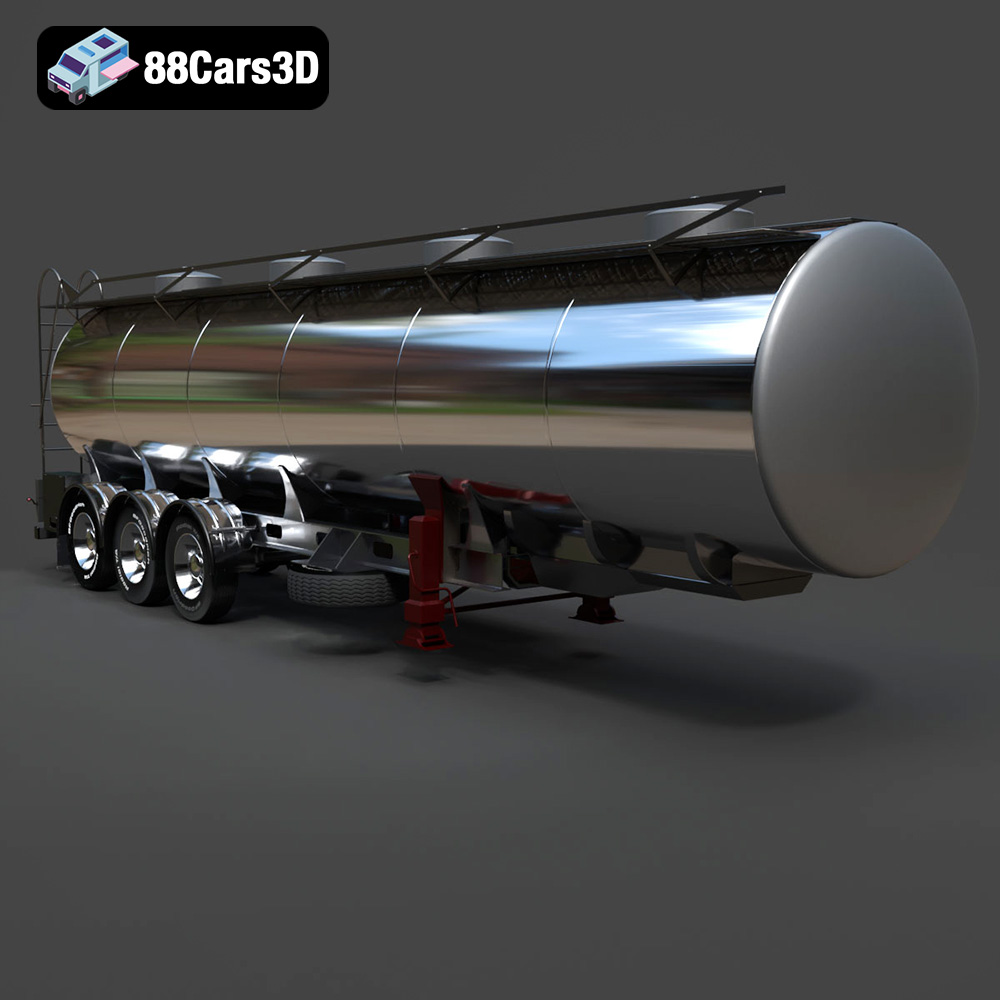
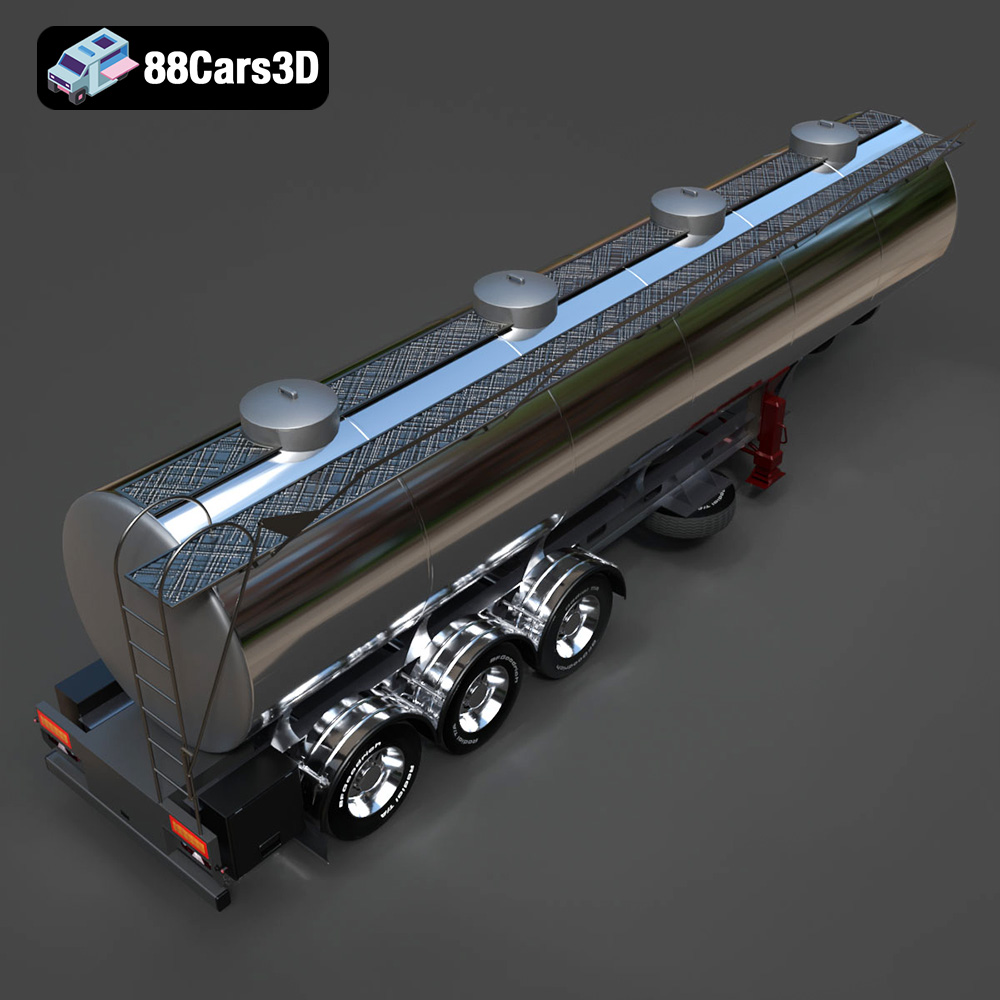
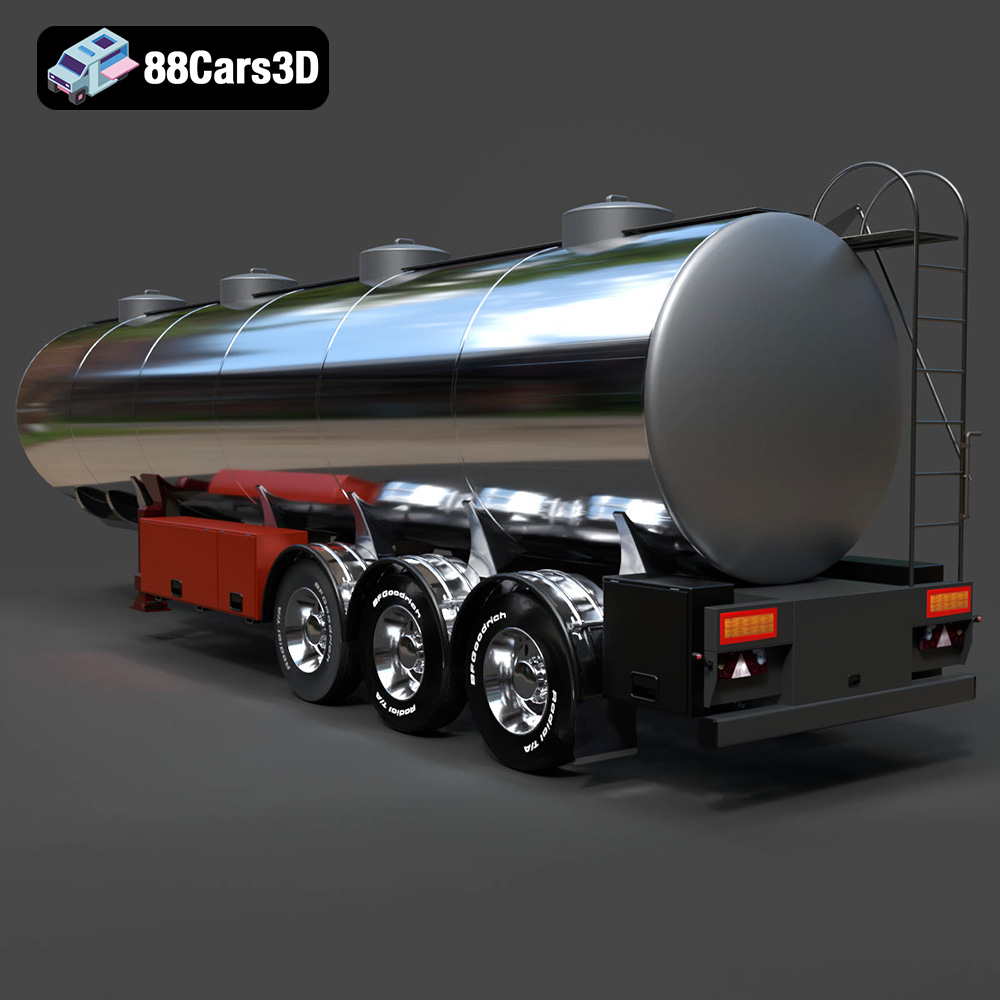
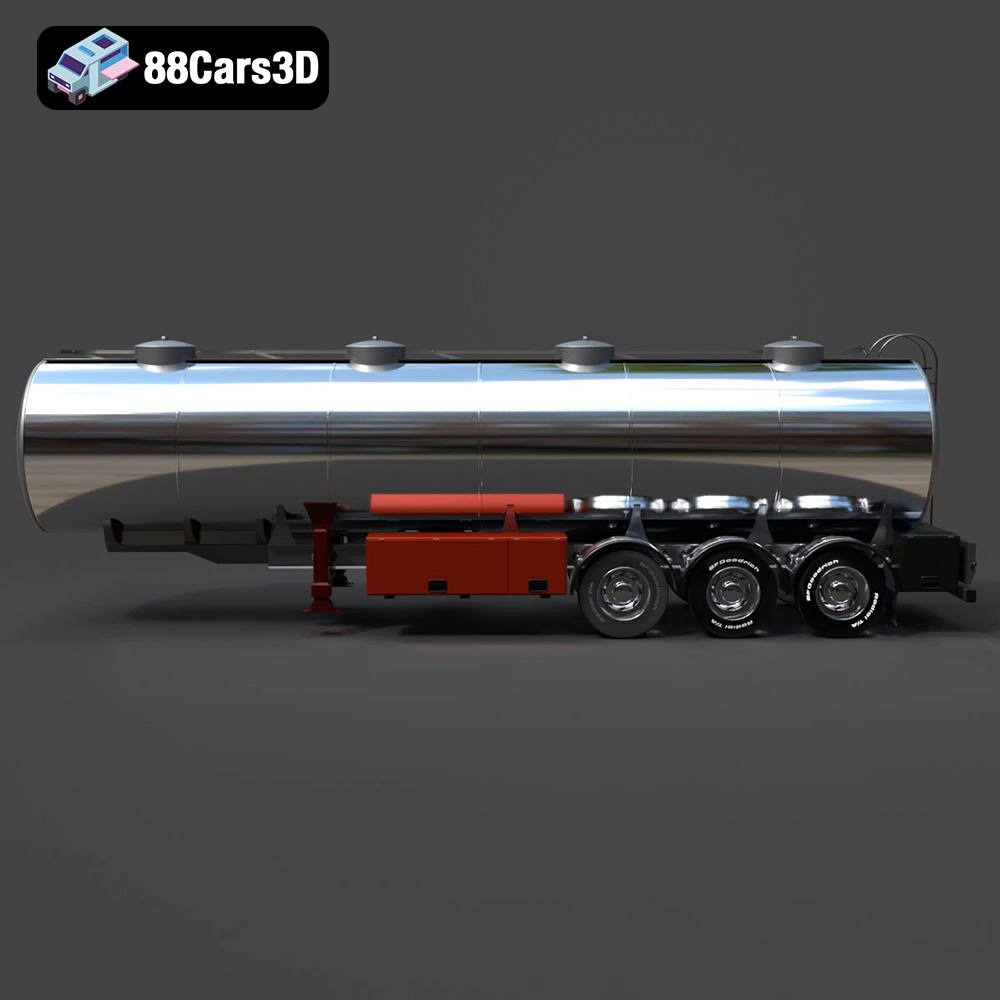
The essence of a great automotive 3D model lies in its authenticity. For the Fuel Tank Trailer 3D Model, this means accurately replicating its robust structure, from the elongated cylindrical tank body to the reinforced chassis frame. Details like the axle system with its suspension, the rear ladder access, safety railings, hose compartments, and fuel discharge valves are not merely decorative elements; they are critical components that define the trailer’s purpose and functionality. Capturing these elements with high fidelity ensures that the model can be convincingly used in scenarios demanding realism, such as industrial training simulations or complex logistics visualizations.
Every component is modeled with an eye towards industrial accuracy, reflecting how such a heavy-duty tanker trailer is constructed for transporting fuel and liquid petroleum products in the real world. This commitment to detail extends to smaller elements like mudguards, reflectors, and safety markings, all of which contribute to the model’s overall believability and utility in professional contexts.
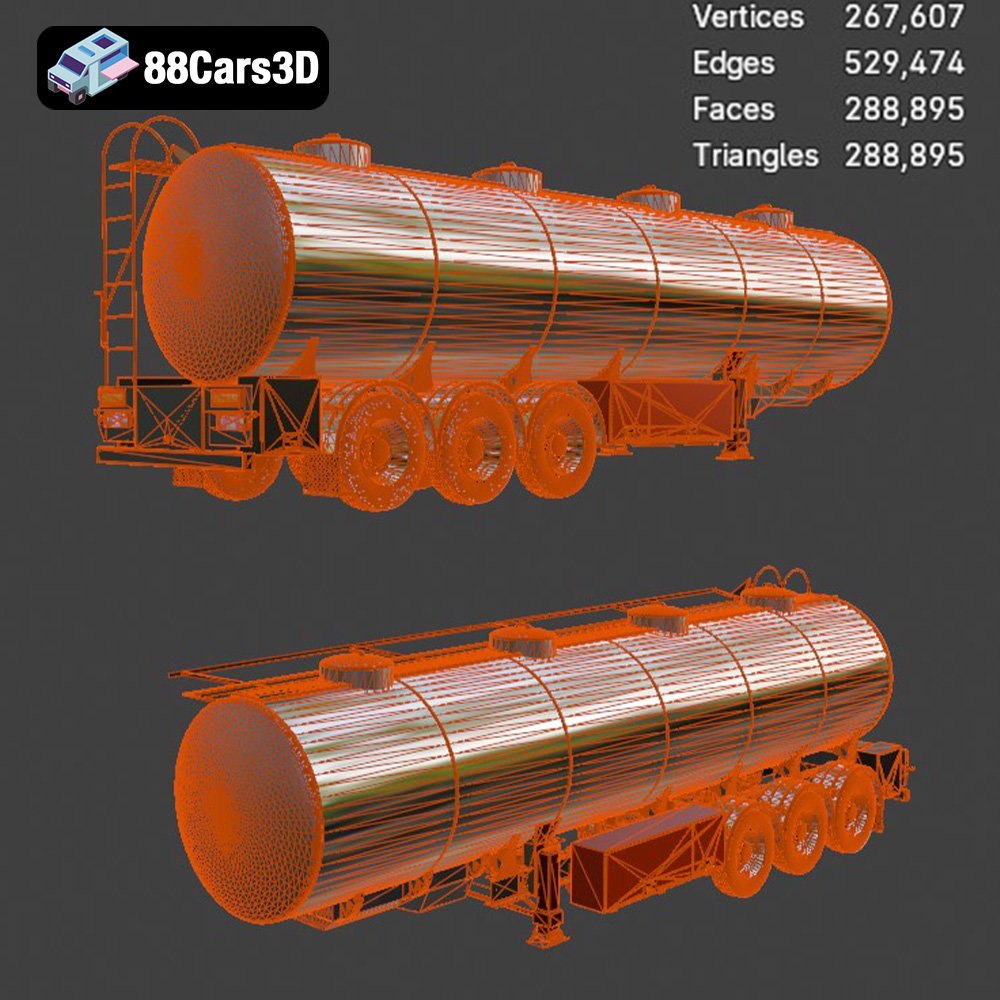
Beyond visual accuracy, the technical underpinnings of a 3D model are paramount. Clean topology, characterized by well-distributed quads (four-sided polygons), is essential. This ensures smooth deformations during animation, predictable subdivision for high-detail renders, and efficient performance in real-time engines. The Fuel Tank Trailer 3D Model boasts an optimized polygon flow, meaning its mesh structure is designed for both realism and efficiency. This is crucial for maintaining high frame rates in game development or VR environments while still achieving impressive visual fidelity in high-resolution automotive rendering.
Proper pivot setup for components like the separate wheels is another subtle but critical technical advantage. This allows for realistic rotation and animation without complex rigging, saving valuable time for animators and game developers. Such considerations underscore the model’s readiness for production environments, minimizing the need for extensive post-purchase cleanup or optimization.
Real-world scale accuracy is non-negotiable for professional 3D assets, particularly for vehicles. Whether the Fuel Tank Trailer is being integrated into an architectural visualization of a fuel depot or a vehicle simulation, maintaining accurate dimensions ensures it looks correct alongside other elements and behaves realistically within physics engines. The Fuel Tank Trailer 3D Model is engineered with real-world proportions, allowing for seamless integration into any scene without the need for manual scaling adjustments that can often introduce errors or inconsistencies.
This precision extends to the “internal tank segmentation” for multi-compartment versions and “reinforced mounting brackets,” providing an underlying structural authenticity that supports its use in highly technical applications like engineering visualization or detailed simulation, where the internal components might be visualized or analyzed.
The true value of a versatile 3D asset like the Fuel Tank Trailer 3D Model lies in its applicability across a spectrum of professional creative workflows. Its robust design and multiple file format offerings cater to diverse industries, from high-end visualization to interactive media.
For designers, marketers, and architectural visualizers, the Fuel Tank Trailer 3D Model is an ideal candidate for stunning automotive rendering. In applications like 3ds Max or Blender, paired with powerful renderers such as V-Ray, Corona, or Cycles, this model can be brought to life with photorealistic textures, materials, and lighting. Imagine showcasing the trailer in a sleek promotional video, highlighting its industrial accuracy against a scenic highway backdrop, or integrating it into a detailed visualization of a bustling logistics hub. Its clean mesh and real-world proportions ensure that it responds beautifully to complex lighting scenarios, yielding impressive results for petroleum marketing visuals, logistics presentations, and industrial advertising content. The attention to detail, from the discharge valves to the safety railings, ensures that close-up shots maintain visual integrity, crucial for high-impact visual storytelling.
The gaming industry demands assets that are both visually rich and performant. The Fuel Tank Trailer 3D Model is designed as an excellent game asset, optimized for real-time engines like Unreal Engine and Unity. Its optimized geometry and clean mesh structure mean it can be efficiently integrated without causing performance bottlenecks. Game developers can use it to populate open-world environments in truck simulators, create dynamic scenarios in logistics management games, or add realism to hazardous material transport systems. The separate wheels with proper pivot setup are particularly beneficial, enabling straightforward animation for movement and physics interactions. Its versatility makes it a valuable addition to any developer’s library of 3D car models, providing an authentic touch to virtual worlds.
Augmented Reality (AR) and Virtual Reality (VR) are transforming training, simulation, and interactive demonstrations. The Fuel Tank Trailer 3D Model is perfectly suited for these emerging platforms. With formats like .glb and .fbx, it can be seamlessly imported into AR/VR development environments. This allows for the creation of interactive fleet demonstrations, where potential clients can explore the trailer in a virtual showroom, or immersive industrial training simulations for drivers and maintenance personnel. Imagine a VR training module where users learn about fuel discharge procedures or safety protocols on a highly accurate digital twin of the trailer. Its real-world scale and detailed components provide a strong foundation for creating compelling, educational, and engaging experiences.
The utility of a high-quality 3D model extends far beyond digital screens. The ability to translate a virtual asset into a physical object opens up new avenues for prototyping, display, and even niche manufacturing. The Fuel Tank Trailer 3D Model, with its .stl export capability, is perfectly poised for the world of 3D printing.
For 3D printing, the .stl format is king, as it describes the surface geometry using a mesh of triangles. The Fuel Tank Trailer 3D Model’s clean topology and manifold geometry ensure that its .stl conversion is robust and ready for slicing software. This means fewer errors during print preparation and a higher likelihood of a successful physical output. Whether you’re planning to create a small desktop collectible or a larger scale model for display, having a solid .stl base is the first critical step towards physical manifestation.
The detailed structure, including the chassis, tank, and accessory components, translates well into physical parts, allowing for intricate miniature car models or industrial vehicle prototypes. This aspect particularly appeals to enthusiasts and professionals who appreciate tangible representations of complex machinery.
Successful 3D printing relies heavily on precise settings, and the Fuel Tank Trailer 3D Model comes with practical recommendations. For FDM (Fused Deposition Modeling) printers, recommended scales of 1:32, 1:24, 1:18, or 1:14 offer a good balance between detail and printability. A layer height of 0.12–0.20 mm ensures a smooth finish while maintaining reasonable print times. Wall thickness of 2–3 mm provides structural integrity, crucial for a model with many components. An infill percentage of 20–35% typically offers a good compromise between strength and material usage.
Supports are vital for complex overhangs and delicate parts like the rear ladder, safety railings, and valve assemblies. Thoughtful print orientation is also recommended: printing the tank horizontally reduces the need for extensive supports on its curved surface, while the chassis printed flat enhances stability. The wheels are best printed separately to capture their detail and allow for post-assembly articulation, contributing to a more realistic final model.
One of the most exciting aspects of 3D printing this Fuel Tank Trailer is the potential for customization. After printing, post-processing steps such as sanding, priming, and painting can transform raw plastic into a professional-grade scale model. Applying an industrial paint finish, perhaps with a glossy or weathered effect, can significantly enhance realism. The ability to add optional hazard decals, company logos, or reflective strips allows for personalized branding, creating unique display pieces or fleet prototypes.
Furthermore, the digital model’s inherent flexibility means that, even before printing, users could theoretically modify axle configurations (e.g., 2-axle or 3-axle versions) or adjust the weathering digitally, offering unparalleled control over the final physical product. This makes it an invaluable asset for hobbyists, educators, and industrial designers alike, looking to create bespoke models from high-quality 3D car models.
In a marketplace brimming with digital assets, discerning creators always seek a source that guarantees quality, versatility, and value. 88cars3d.com distinguishes itself by offering a curated selection of high-quality 3D car models and industrial assets, exemplified by the exceptional Fuel Tank Trailer 3D Model.
The foundation of any reputable asset store is the quality of its products. 88cars3d.com emphasizes technical excellence, ensuring that models like the Fuel Tank Trailer meet stringent professional standards. This means clean and well-organized mesh structures, real-world scale accuracy, proper pivot setups, and optimized polygon flow – all critical attributes for seamless integration into demanding pipelines. This commitment to quality minimizes the need for extensive post-purchase modifications, allowing artists and developers to focus on their creative tasks rather than fixing underlying technical issues. When you invest in a model from 88cars3d.com, you’re investing in reliability and performance.
From high-end cinematic automotive rendering to real-time game assets and functional 3D prints, the products available at 88cars3d.com are built with diverse applications in mind. The Fuel Tank Trailer 3D Model perfectly illustrates this versatility. Its detailed design makes it suitable for photorealistic visualizations, while its optimized geometry ensures smooth performance in game engines. Furthermore, its adaptability for AR/VR simulations and precise 3D printing capabilities mean it serves a broad spectrum of creative and technical needs. This multi-application readiness makes 88cars3d.com an invaluable resource for professionals across various industries, from automotive design and engineering to film and interactive entertainment.
One of the most significant advantages of sourcing your 3D assets from 88cars3d.com is the comprehensive array of file formats provided. As discussed earlier, the Fuel Tank Trailer 3D Model includes .blend, .fbx, .obj, .glb, .stl, .ply, .unreal, and .max. This extensive format support is a testament to the platform’s understanding of diverse professional requirements. Whether you’re working in Blender, 3ds Max, or directly within Unreal Engine, or preparing for web deployment or 3D printing, you’ll find an optimized format ready for your workflow. This eliminates the hassle of complex conversions and ensures maximum compatibility, solidifying 88cars3d.com as a premier destination for ready-to-use, versatile 3D models.
In the intricate landscape of 3D content creation, the difference between a good project and a great one often lies in the quality and versatility of its assets. The Fuel Tank Trailer 3D Model from 88cars3d.com exemplifies what a truly professional-grade asset should be: a meticulously detailed, technically sound, and incredibly versatile model ready for a multitude of applications. From enhancing the realism of your automotive rendering projects and populating immersive game environments with authentic game assets, to facilitating industrial simulations and producing intricate 3D-printed scale models, this tanker trailer delivers on all fronts.
Its comprehensive file format support ensures seamless integration into virtually any professional pipeline, saving valuable time and effort. By providing such a high-caliber model, 88cars3d.com empowers creators to focus on their vision, confident that their foundational assets are robust and reliable. Whether you’re an industry veteran or an aspiring artist, investing in quality 3D car models like this Fuel Tank Trailer will undoubtedly elevate your projects and bring your creative concepts to life with unparalleled precision and realism.
The Fuel Tank Trailer 3D Model is a high-detail digital recreation of a heavy-duty tanker trailer designed for transporting fuel and liquid petroleum products. Engineered for realism and industrial accuracy, this model reflects the structural integrity and cylindrical tank design commonly used in logistics, petroleum distribution, and hazardous material transport operations. This 3D model accurately represents the elongated cylindrical tank body, reinforced chassis frame, axle system, rear ladder access, safety railings, hose compartments, and fuel discharge valves. Designed with clean topology and real-world proportions, it is ideal for rendering, animation, simulation, game development, and AR/VR industrial visualization.
$9.99
.arvr
.blend
.fbx
.fueltanktrailer
.fueltransport
.gameasset
.glb
.industrialvehicle
.logisticsvehicle
.max
.obj
.petroleumtransport
.ply
.rendering
.simulation
.stl
.tankertrailer
.trucktrailer
.unreal