Get 50% OFF All Premium 3D & STL Models!

In the dynamic world of 3D visualization, simulation, and interactive media, the demand for exceptionally detailed and technically robust 3D models is ever-present. From the subtle glint of metal on a car in an automotive rendering to the weathered grime on a military vehicle in a cutting-edge game, realism hinges on precision. For professionals working in game development, cinematic animation, military simulation, or even advanced 3D printing, the quality of a foundational asset can make or break a project.
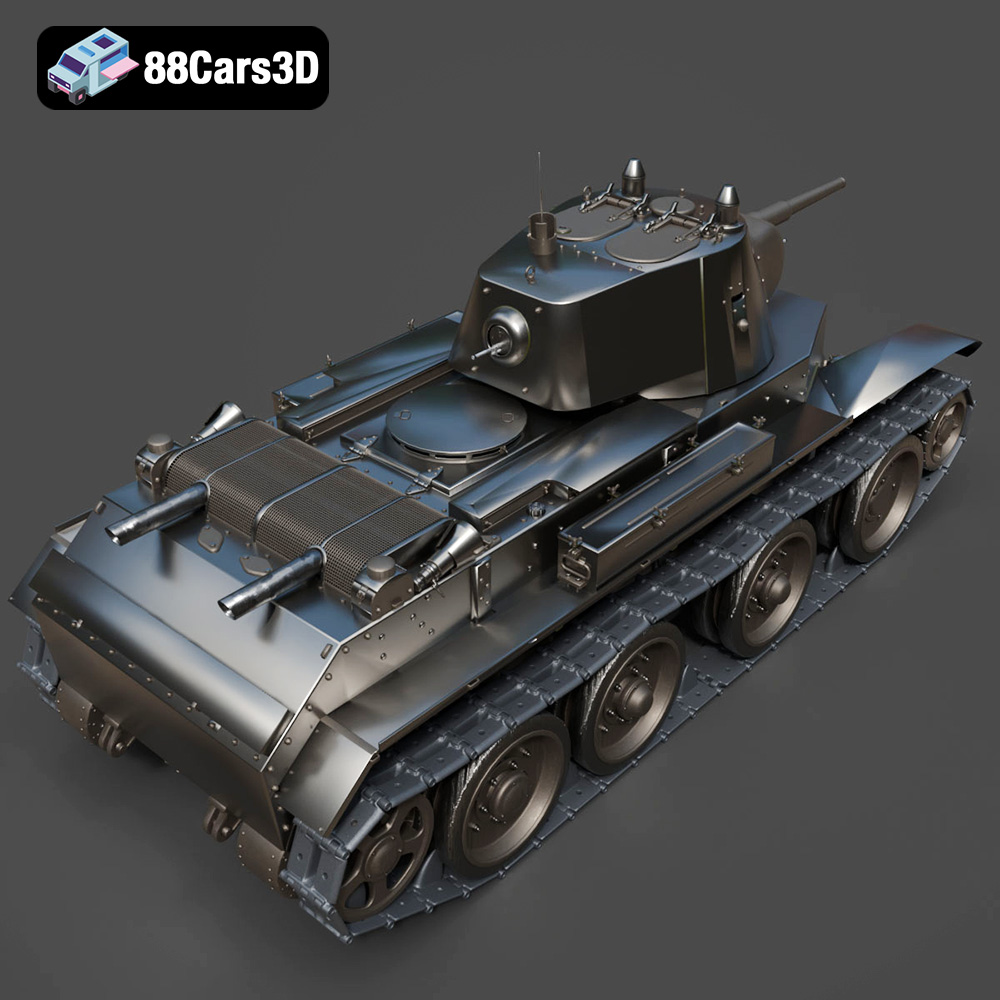
Today, we’re taking an in-depth look at a prime example of such an asset: the Heavy Armored Tank 3D Model. This formidable digital creation is a testament to the meticulous work required to bring complex machinery to life in the virtual realm. It’s not just a model; it’s a versatile tool designed for rigorous professional application, ready to dominate any digital battlefield or render pipeline. Whether you’re crafting an intense battlefield cinematic, developing a next-gen military strategy game, or producing highly accurate training simulations, understanding the technical underpinnings of models like this one is paramount.
The Heavy Armored Tank 3D Model stands out with its intricate continuous track systems, fully articulated turret, and impressive polygon count, all while maintaining a balanced topology suitable for a wide array of uses. Sourced from expert platforms like 88cars3d.com, such high-quality assets ensure that creators have the best tools at their disposal to achieve their vision without compromise.
The versatility of a 3D model often lies in its availability across various file formats, each serving distinct purposes and optimizing for different stages of a project pipeline. The Heavy Armored Tank 3D Model is provided in a comprehensive suite of formats, ensuring maximum compatibility and utility for professionals. Understanding what each format offers is critical for selecting the right tool for the job.
The .blend file format is Blender’s native project file. When you download the Heavy Armored Tank in this format, you’re getting a fully editable Blender scene. This means all the model’s components, materials, textures, rigging, and even lighting setups are preserved within a single file. For artists working within Blender, this offers unparalleled flexibility for further customization, animation, or integration into existing Blender projects. It’s ideal for those who want to tweak the model’s geometry, modify its material nodes, or add new elements using Blender’s robust toolset.
.fbx (Filmbox) is a proprietary file format owned by Autodesk and is widely considered an industry standard for exchanging 3D data between different software applications. Its strength lies in its ability to store not just geometry, but also materials, textures, animations, and even skeletal deformation information. For the Heavy Armored Tank, the .fbx format is perfect for exporting to real-time engines like Unreal Engine and Unity, or to other DCC (Digital Content Creation) software like Maya or 3ds Max. It’s an excellent choice when you need to move a model, complete with its functional components and initial setup, into a game development pipeline or a complex animation scene.
The .obj (Wavefront OBJ) format is one of the oldest and most universally supported 3D file formats. While it primarily stores geometric data (vertices, normals, texture coordinates, and faces), it can also reference external material files (.mtl) for basic shading information. The .obj version of the Heavy Armored Tank provides a clean mesh that can be imported into virtually any 3D software for modeling, sculpting, or rendering. It’s particularly useful for cross-software compatibility when complex animations or advanced material setups aren’t immediately required, offering a reliable foundation.
.glb (GL Transmission Format Binary) is the binary version of glTF, a royalty-free specification for the efficient transmission and loading of 3D scenes and models by applications. It’s often referred to as the “JPEG of 3D” due to its optimization for web, AR, and VR applications. A .glb file contains all the necessary data (geometry, materials, textures) embedded in a single file, making it incredibly easy to share and display in browser-based viewers or AR/VR environments. For showcasing the Heavy Armored Tank in an interactive web preview or an augmented reality app, .glb is the format of choice due to its compact size and quick loading capabilities.
The .stl (Stereolithography) format is the industry standard for 3D printing. It represents a 3D model as a collection of unconnected triangular facets, defining the surface geometry of the object. For the Heavy Armored Tank, the .stl file is what you would feed into your 3D slicer software. It’s a “dumb” format in that it carries no color, texture, or material information, focusing purely on the watertight mesh necessary for physical fabrication. This format ensures that modelers and hobbyists can bring the tank to life as a display-scale military model or for tabletop wargaming.
.ply (Polygon File Format or Stanford Triangle Format) is a file format for storing 3D data from 3D scanners. It supports various properties like color, transparency, normals, texture coordinates, and scalar values. While less common for general asset exchange, it’s a robust format for scientific applications, CAD, or when dealing with highly precise mesh data for analysis or reverse engineering. Its inclusion for the Heavy Armored Tank highlights the model’s potential for detailed studies or specialized simulations where mesh integrity and additional data attributes are crucial.
The .unreal file format denotes an asset specifically optimized and packaged for use within Unreal Engine. While often referring to an imported .fbx or custom asset package within the engine, its inclusion here signifies that the Heavy Armored Tank 3D Model is provided in a state ready for direct integration into an Unreal Engine project. This means pre-configured materials, proper scaling, pivot points, and potentially even collision meshes, saving developers significant time on setup and ensuring optimal performance within real-time environments.
Lastly, the .max file format is the native project file for Autodesk 3ds Max. Similar to .blend for Blender, it encapsulates the entire scene, including geometry, materials, lighting, cameras, and animation data. For professionals heavily invested in the 3ds Max ecosystem, this format provides full access to the original scene setup. It allows for complete modification, advanced rendering with V-Ray or Corona, and sophisticated animation workflows. It’s the ideal starting point for those requiring the full power of 3ds Max for their visualization or animation projects involving the Heavy Armored Tank.
The availability of the Heavy Armored Tank 3D Model in these diverse formats underscores its professional appeal, ensuring it can seamlessly integrate into nearly any 3D production pipeline. This foresight in asset packaging is what distinguishes high-quality providers like 88cars3d.com.
Creating a compelling 3D vehicle model, especially one as complex as a tank, involves a meticulous attention to detail and a profound understanding of mechanical design. The Heavy Armored Tank 3D Model is an exemplary case study in how to achieve both visual fidelity and functional integrity. Its design philosophy prioritizes realism, making it an invaluable asset for serious projects.
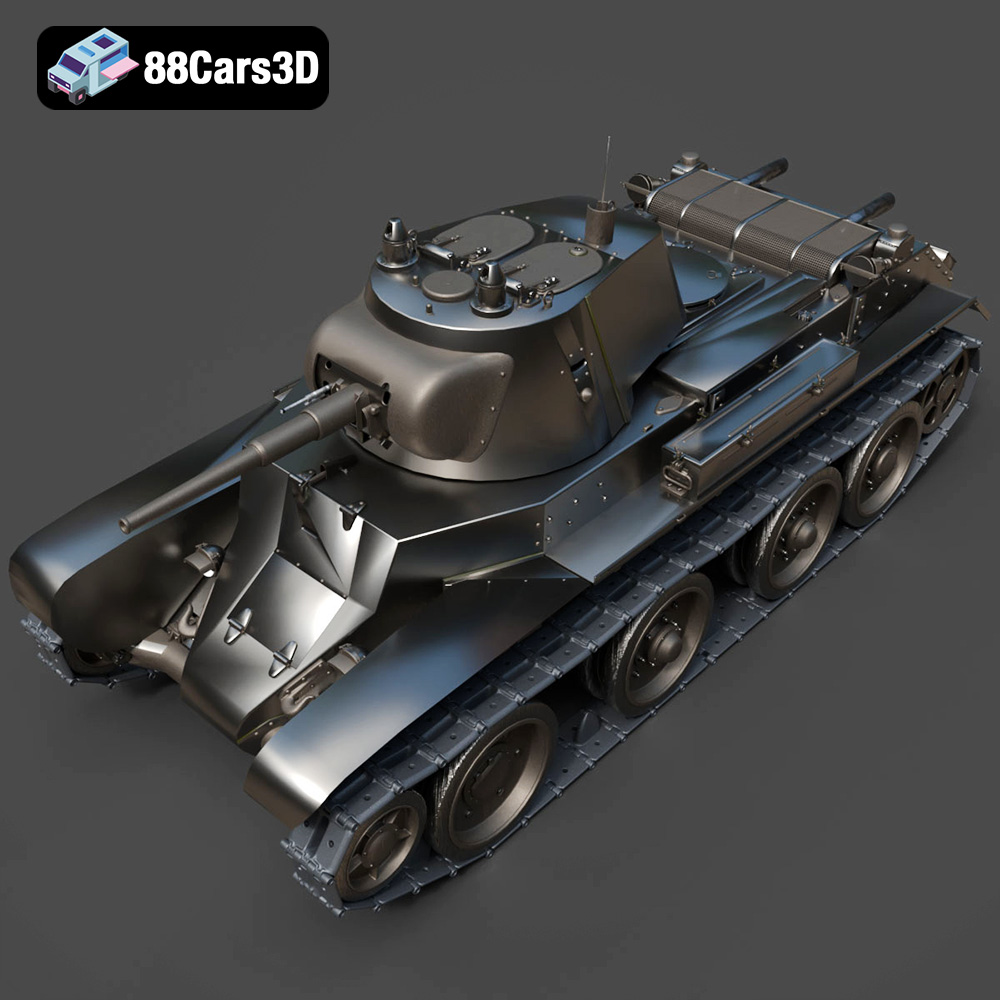
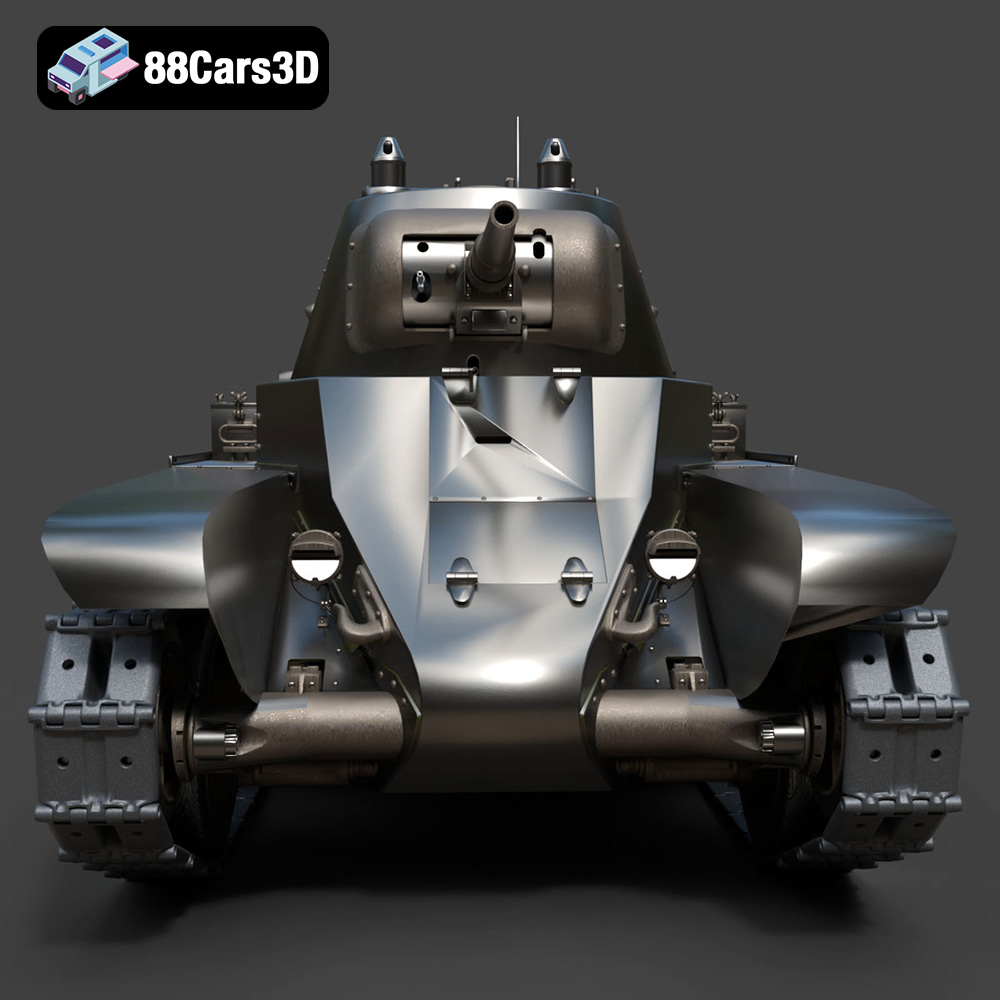
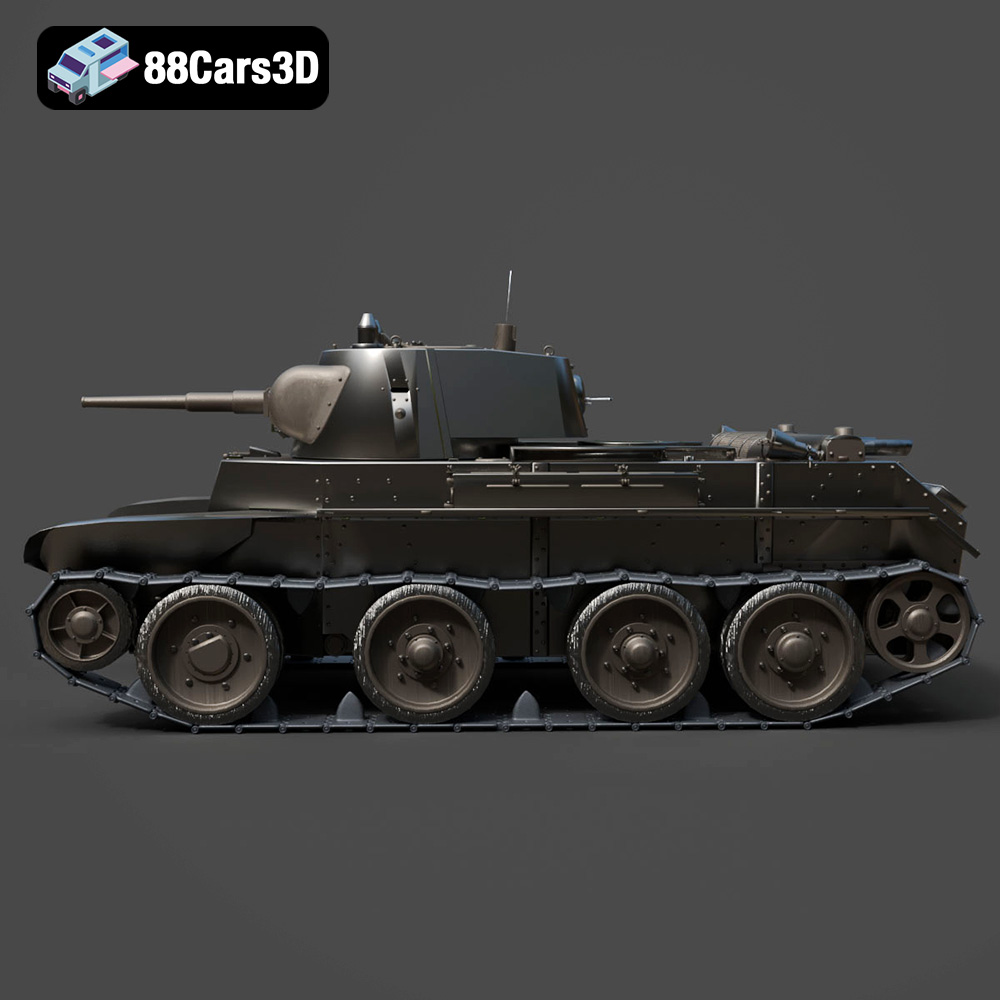
The core of this model’s appeal lies in its accurate representation of a formidable tracked combat vehicle. It boasts heavy plating, correctly proportioned hull geometry, and the iconic, commanding main gun barrel. Every curve and angle of the sloped armor is crafted to convey the raw power and tactical dominance inherent in modern or classic armored cavalry. Details such as exhaust grilles, tow cables, and reactive armor plating are not just superficial additions; they contribute to the overall authenticity, making the tank feel genuinely battle-ready and capable of withstanding the rigors of combat. This level of detail is crucial for military rendering and game assets where realism directly impacts immersion.
Perhaps the most technically challenging aspect of any tank model is its continuous track (caterpillar) system. The Heavy Armored Tank tackles this with individual links and drive sprockets, providing a level of intricacy that is rarely seen in off-the-shelf models. This isn’t just about static detail; it’s about providing the foundation for realistic animation and physics rigging, allowing for believable movement across various terrains. Similarly, the fully rotating turret assembly with its elevating main gun barrel is designed with proper pivot setups, ready for dynamic action. Furthermore, the inclusion of commander and gunner hatches, optical viewports, and heavy machine gun mounts not only enhances visual detail but also provides critical points for interaction in simulations or games, fostering an immersive “commander view” experience.
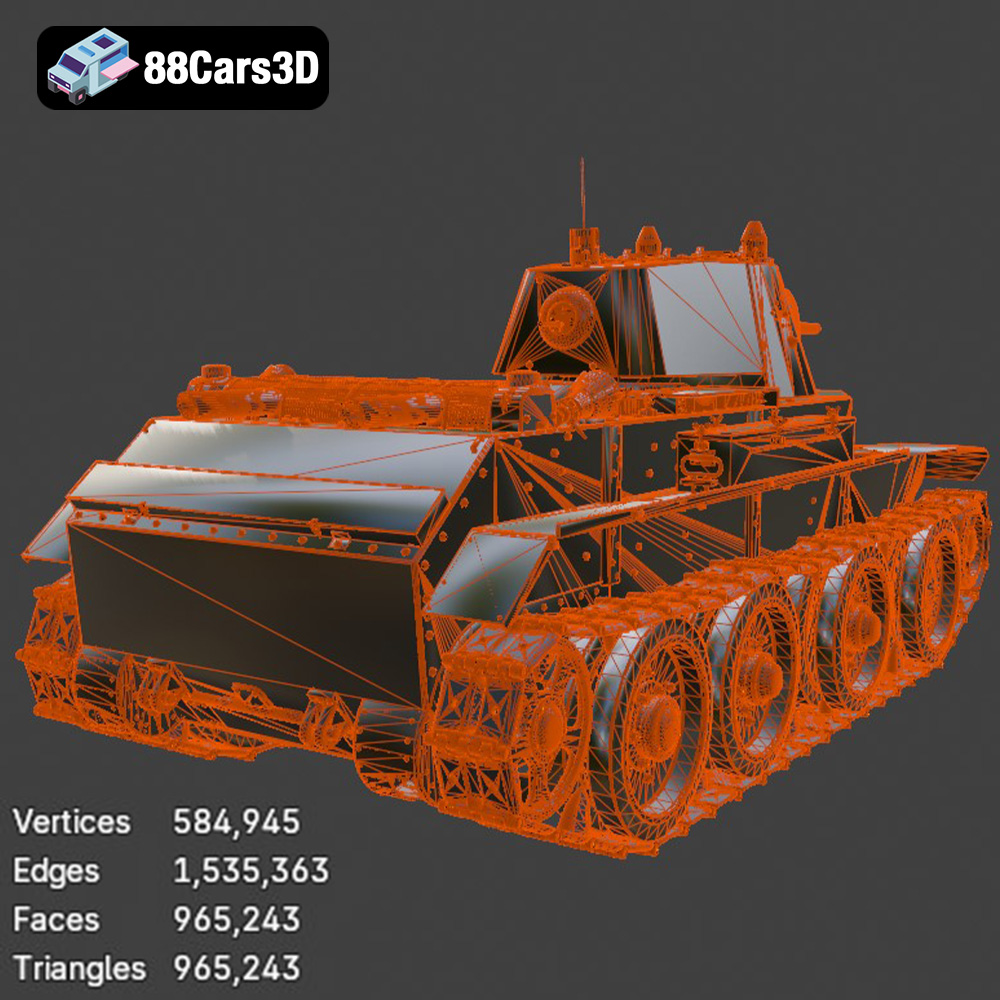
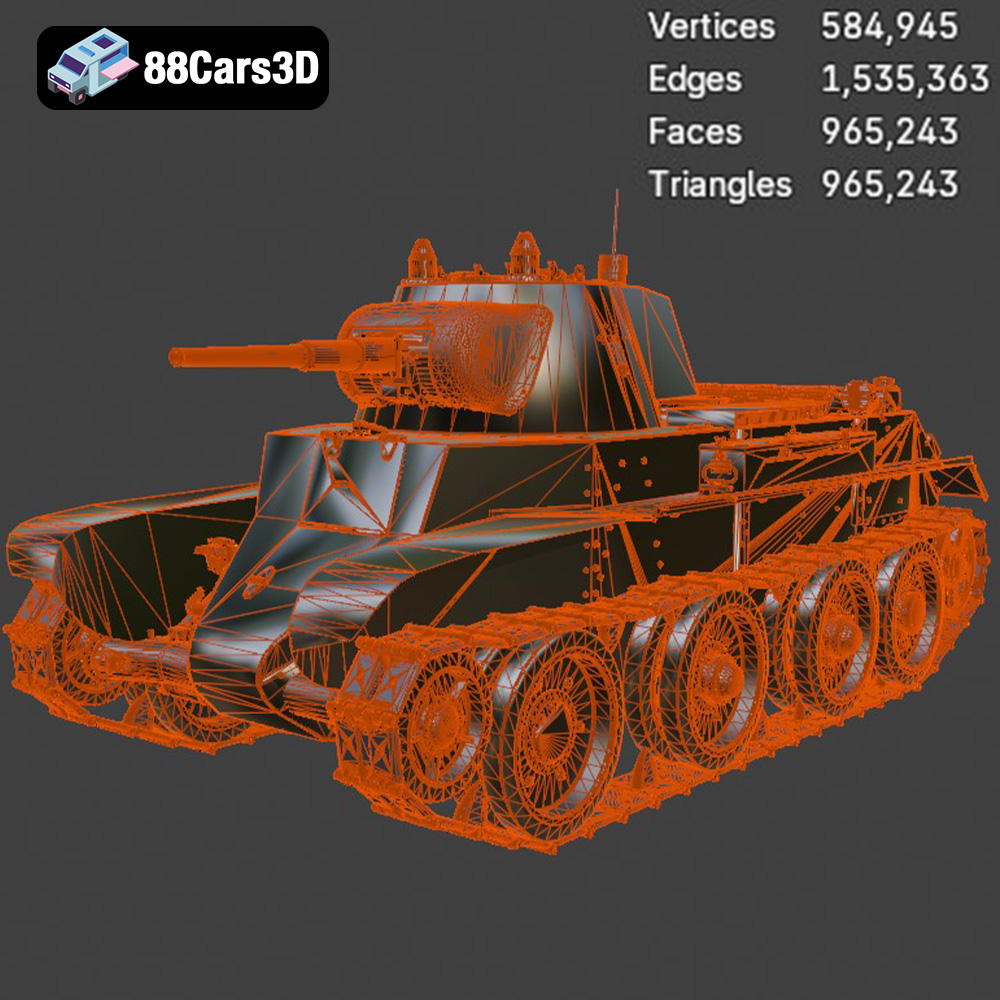
Achieving high detail without sacrificing performance is a delicate balancing act. The Heavy Armored Tank 3D Model strikes this balance beautifully. With a perfectly balanced topology of just under 1 million triangles (965,243 to be precise), it delivers incredible mechanical depth for the tracks and armor plating without bogging down rendering software or modern game engines. This optimized geometry ensures that while it serves as a fantastic visual for close-up rendering, it remains efficient enough to function as a high-end hero asset in current-gen PC/console shooters or complex military simulators. This blend of visual fidelity and technical efficiency is what makes it a premium choice for professional “game assets” and advanced visualizations.
The true measure of a high-quality 3D asset lies in its seamless integration into diverse professional pipelines. The Heavy Armored Tank 3D Model is engineered for such versatility, offering specific advantages across game development, cinematic rendering, and simulation projects.
For game developers, the Heavy Armored Tank is an ideal “hero” drivable vehicle for current-gen titles. Its balanced topology (965k triangles) means it provides exceptional visual detail without overburdening the game engine, making it suitable for both close-up player perspectives and broader battlefield scenes. Integrating it into engines like Unreal Engine or Unity involves leveraging its .fbx or .unreal formats. The separate turret, main gun, wheels, and tracks are crucial for realistic animation and physics rigging. Developers can easily set up complex IK (Inverse Kinematics) systems for track movement and physically-based destruction. For first-person “commander view” scenarios, the detailed exterior hatch geometry and commander’s cupola offer an immersive experience, even with an optimized interior cabin mapping. This model effectively serves as a foundation for building compelling gameplay mechanics around armored combat.
When it comes to cinematic rendering and visualization, the Heavy Armored Tank shines. Its high-detail geometry and accurate proportions make it perfect for dramatic warzone lighting setups, military history documentaries, and gritty battlefield dioramas. Artists using software like 3ds Max or Blender can leverage the respective .max and .blend files to access the full scene data, materials, and pivot setups. This allows for advanced material creation, intricate texture painting (e.g., adding mud-caked tracks, scorch marks, rusted exhausts), and complex lighting scenarios – from the stark glare of a desert sun to the ominous glow of a night firefight. The model’s inherent detail reduces the need for extensive post-processing to achieve photo-realism in “automotive rendering” (or in this case, military vehicle rendering) projects.
Beyond entertainment, the Heavy Armored Tank offers significant utility in military simulation and training software. Its real-world scale accuracy, based on standard Main Battle Tank (MBT) dimensions, combined with meticulous detailing of components like optical viewports and external communication antennas, makes it highly useful for tactical military training and combat vehicle identification. Instructors can use this model in virtual environments to teach crew roles, tactical maneuvers, or vehicle identification, leveraging its accurate pivot setups for barrel elevation and turret rotation to replicate real-world vehicle behavior. The .ply format, while less common, further underscores its suitability for precise data analysis within specialized simulation platforms.
The digital realm often extends into the physical, and for many enthusiasts and professionals, a 3D model’s printability is a significant advantage. The Heavy Armored Tank 3D Model is explicitly designed to be convertible to .stl format, opening up a world of possibilities for display-scale military modelers and tabletop wargaming enthusiasts. This transforms a digital asset into a tangible collectible, a miniature masterpiece of engineering.
Successfully 3D printing a complex model like a tank requires careful attention to print settings and preparation. The recommended scales (1:35, 1:48, 1:72) align with standard military modeling, ensuring compatibility with existing collections and diorama elements. The model’s high polygon count, while excellent for rendering, means that for printing, a low layer height (0.04–0.08 mm) is crucial, especially if using a resin printer. Resin printing is highly recommended to capture the intricate track links, delicate machine gun barrels, and other fine details that would be lost on FDM printers. Wall thickness (1.5–2.5 mm) and infill (20–40%) are specified to ensure structural integrity and prevent warping, particularly for the tank’s heavy hull.
3D printing is often just the first step. The true artistry comes in the post-processing. Supports will be required for overhanging features like the main gun barrel, external fuel tanks, and turret elements, which will need careful removal. The recommended print orientation—hull printed flat for structural integrity, turret and barrel separately—minimizes visible layer lines on critical surfaces. Once printed, the physical model becomes a canvas for further customization. Sanding, priming, and then applying a base coat (Olive Drab, Desert Sand, or Woodland Camo) are standard practice. The real magic happens with weathering: mud-caked tracks, scorch marks on the barrel, and rusted exhaust details can be painstakingly applied to create a truly battle-hardened appearance. This process allows modelers to imbue the physical Heavy Armored Tank with as much character as its digital counterpart, making it a standout piece in any collection or tabletop game.
In the world of 3D, raw poly counts tell only part of the story. It’s the intelligent distribution of those polygons, combined with proper technical setup, that defines a model’s true utility. The Heavy Armored Tank 3D Model exemplifies a perfectly balanced asset, offering high visual fidelity without compromising performance.
The technical specifications provided for the Heavy Armored Tank are crucial for professional integration:
A polygon count of roughly 965k triangles places this model squarely in the “mid-poly” to “high-poly” range, making it ideal for hero assets in modern real-time applications or detailed rendering. This level of detail is critical for capturing the nuances of intricate mechanical parts, such as the individual track links and the complex geometry of reactive armor plating. Unlike simplified game assets, this model doesn’t rely solely on normal maps to fake detail; much of the ruggedness is baked directly into the geometry, ensuring excellent visual quality even from extreme close-up perspectives. This balance means the model avoids being overly heavy for current-gen game engines while still providing impressive visual depth for 4K renders and cinematics. Such optimized “3D car models” (or military vehicles in this context) are highly sought after for their efficiency and quality.
Beyond polygon count, a truly professional 3D model must adhere to real-world dimensions and be functionally articulated. The Heavy Armored Tank boasts real-world scale accuracy, based on standard Main Battle Tank (MBT) dimensions. This ensures that when integrated into scenes alongside other assets or architectural models, it maintains believable proportions. Crucially, the model features a proper pivot setup for turret rotation, barrel elevation, and track/wheel movement. This isn’t a minor detail; it’s fundamental for animators and game developers. Correct pivot points mean that animations can be rigged quickly and realistically, whether it’s the slow, powerful traverse of the turret or the dynamic recoil of the main gun. This thoughtful design saves countless hours in the rigging and animation phases, making the Heavy Armored Tank a highly efficient “game asset” and a powerful tool for military visualization.
A premium 3D model provides more than just a static representation; it offers a foundation for boundless creative exploration. The Heavy Armored Tank 3D Model is designed with customization in mind, empowering artists and developers to tailor it to specific narratives, environments, and aesthetic requirements.
The first and most impactful layer of customization comes through texturing. The model is prepared to receive a wide array of camouflage liveries, allowing artists to instantly transform its appearance to fit different theaters of war or historical periods. Imagine applying a rugged Desert Storm camouflage for a scorching Middle Eastern battlefield, a Winter Splinter pattern for a snow-covered landscape, an Urban Digital for a city skirmish, or a Classic Olive Drab for a historical European setting. This flexibility ensures that the tank can seamlessly integrate into any scene or game environment. Beyond base colors, the opportunity to add intense weathering textures is crucial for realism. Mud-caked tracks, scorch marks on the barrel, rusted exhaust pipes, and dusty hull panels can tell a story of countless battles, adding a layer of authenticity that elevates “automotive rendering” (or in this case, military vehicle rendering) to cinematic quality.
The Heavy Armored Tank’s intelligent segmentation, with separate turret, main gun, wheels, and tracks, facilitates not just animation but also modular customization. Artists can swap external payloads, adding extra fuel drums, sandbags, or reactive armor blocks to alter the tank’s silhouette and tactical loadout, reflecting different mission profiles or historical upgrades. This modularity also extends to environmental integration. The model can be adapted to various lighting conditions for dramatic effect: the harsh, dusty glare of a bright desert engagement, the muted, tactical glow of a nighttime firefight, or the solemn light of a historical diorama. These creative choices allow for endless narrative possibilities, making the Heavy Armored Tank a truly versatile “3D car model” that can anchor complex scenes and rich storytelling.
In the demanding landscape of 3D content creation, high-quality assets are the bedrock of exceptional projects. The Heavy Armored Tank 3D Model stands as a prime example of an asset engineered for professional excellence. From its meticulously balanced topology of nearly one million triangles to its detailed continuous track system and fully articulated turret, every aspect is designed for both visual fidelity and practical application.
Whether your goal is to dominate the digital battlefield in a next-gen game, craft a compelling cinematic scene for a military documentary, or create an accurate simulation for training purposes, this model provides the robust foundation you need. Its availability in a wide array of file formats—including .blend, .fbx, .obj, .glb, .stl, .ply, .unreal, and .max—ensures seamless integration into virtually any professional workflow, from game development to advanced rendering and even 3D printing. The commitment to real-world scale, proper pivot setups, and the potential for extensive customization through texturing and modular components truly sets this asset apart.
For designers, developers, and artists seeking top-tier 3D car models or military vehicles, resources like 88cars3d.com are indispensable. The Heavy Armored Tank 3D Model embodies the quality and versatility that professionals demand, empowering them to bring their most ambitious visions to life with unparalleled detail and performance.
The Heavy Armored Tank 3D Model is a high-detail digital recreation of a formidable tracked combat vehicle. Designed to represent the raw power and tactical dominance of armored warfare, this model features heavy plating, a commanding main gun barrel, a fully articulated turret, and intricate continuous track (caterpillar) systems. This 3D model accurately captures the rugged, battle-ready aesthetic of modern or classic armored cavalry. It features detailed road wheels, drive sprockets, exhaust grilles, external storage compartments, and commander hatches. Built with an optimized, highly balanced topology (just under 1 million triangles), it provides fantastic visual fidelity for close-up rendering while remaining efficient enough to serve as a high-end hero asset in modern game engines or military simulators. Perfect for intense battlefield cinematic scenes, military strategy games, historical or modern combat simulations, and highly detailed diorama renders.
$9.99
.blend
.fbx
.mbt
.military
.obj
.rendering
.stl
.tank
3d printing
armored-vehicle
combat
game asset
main-battle-tank
mid-poly
military-3d-model
tracks
turret
war