Get 50% OFF All Premium 3D & STL Models!

In the rapidly evolving landscape of digital design, the demand for high-fidelity 3D assets is paramount. From breathtaking cinematic sequences and hyper-realistic architectural visualizations to immersive video games and cutting-edge augmented reality experiences, a meticulously crafted 3D model can be the cornerstone of a successful project. Automotive design, in particular, thrives on precision and realism, requiring digital vehicles that mirror their real-world counterparts in every minute detail.
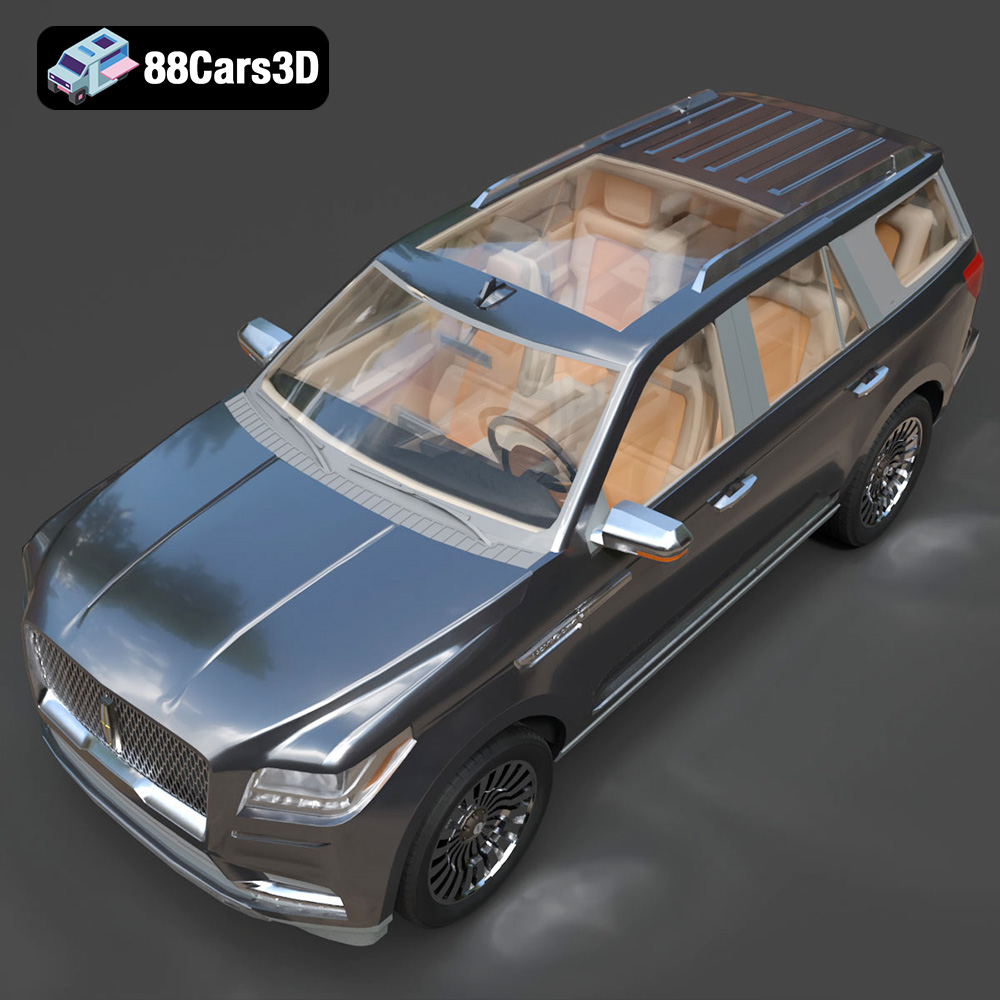
Today, we delve into the intricate world of professional 3D car models, exploring the technical depth, versatile applications, and robust workflows that define excellence in this field. We’ll examine how these digital assets empower creators across industries, enabling them to push boundaries and achieve stunning results. Among these exceptional assets, the Lincoln Navigator 2018 3D Model stands out as a prime example of a premium, high-detail digital recreation, perfectly suited for a multitude of professional endeavors. Its accurate representation of the full-size luxury SUV, known for its bold presence and refined design, offers an unparalleled starting point for any project demanding automotive sophistication.
The choice of a 3D model file format is a critical decision that influences compatibility, functionality, and the overall efficiency of a project. Each format is designed with specific use cases and technical considerations in mind, making it essential for professionals to understand their nuances. The Lincoln Navigator 2018 3D Model, for instance, comes equipped with a comprehensive suite of formats, ensuring maximum flexibility across various pipelines. Let’s break down these essential formats:
The .blend format is the native file type for Blender, a powerful and widely used open-source 3D creation suite. A .blend file typically contains an entire scene, including the 3D model geometry, materials, textures, lighting, animation data, camera setups, and even physics simulations. This format is ideal when Blender is the primary software in the workflow, offering full editability and seamless integration within the Blender ecosystem. For the Lincoln Navigator 2018, having a .blend file means artists can immediately dive into modifying materials, adjusting the mesh, or setting up custom animations with all scene components intact and ready for Cycles or Eevee rendering.
Autodesk’s .fbx (Filmbox) format has become an industry standard for exchanging 3D data between different software applications. Its strength lies in its ability to store not just geometry, but also complex data like animations, character rigs, materials, and camera information. The .fbx format is particularly ideal for real-time pipelines, making it a go-to for game engines like Unreal Engine and Unity. When working with the Lincoln Navigator 2018 3D Model, an .fbx file ensures that the model, its hierarchical structure (like separate wheels and steering components), and basic material assignments translate smoothly into these engines or other 3D software, minimizing data loss during conversion.
The .obj (Wavefront Object) format is one of the oldest and most widely supported 3D file formats. It primarily stores geometric data – vertices, normals, UV coordinates, and faces – and can reference external material (.mtl) files for basic color and texture information. While it lacks support for animations or advanced material properties, its universality makes it excellent for cross-software compatibility. If you need to import the Lincoln Navigator 2018 into a niche application or simply require the raw mesh data, .obj provides a reliable, widely compatible option that almost any 3D software can read.
.glb (GL Transmission Format Binary) is a relatively newer format that has gained significant traction, especially in augmented reality (AR), virtual reality (VR), and web-based 3D applications. It’s a self-contained, binary format that bundles 3D model data, textures, and animations into a single file, making it incredibly efficient for streaming and rapid loading. For interactive web experiences or mobile AR/VR apps featuring the Lincoln Navigator 2018, the .glb format offers optimized performance and ease of deployment, delivering high-quality visuals with minimal file size.
The .stl (STereoLithography) format is the undisputed standard for 3D printing. It represents a 3D object as a collection of unconnected triangular facets, defining only the surface geometry without color, texture, or material information. While this simple structure makes it lightweight and universally compatible with 3D printers, it’s crucial that the mesh is “manifold” (watertight) for successful printing. The Lincoln Navigator 2018’s availability in .stl format directly addresses the growing demand for physical prototypes, scale models, or collectible miniatures, allowing designers to convert digital assets into tangible objects with specific 3D print settings.
The .ply (Polygon File Format or Stanford Triangle Format) is a versatile format often used for storing 3D scanner data and is particularly common in scientific and engineering applications. It can store various properties beyond geometry, such as color, transparency, texture coordinates, and even confidence values for scanned data. While less common in general 3D art pipelines compared to .fbx or .obj, its ability to handle precise mesh data makes it valuable for applications requiring high-fidelity geometric analysis or integration with CAD software for the Lincoln Navigator 2018, particularly if any reverse engineering or detailed surface inspection is required.
The inclusion of an .unreal specific asset (often a pre-packaged Unreal Engine asset, or a highly optimized .fbx tailored for Unreal) signifies that the model is specifically prepared for integration into Unreal Engine. This often means optimized meshes, PBR-ready materials, proper collision setups, and sometimes even pre-configured blueprints or animation states. For game developers and real-time visualization artists using Unreal Engine, the Lincoln Navigator 2018 in this format streamlines the import process, ensuring optimal performance and visual fidelity within the engine’s powerful rendering pipeline.
The .max format is the native file type for Autodesk 3ds Max, a leading software for 3D modeling, animation, and rendering. Similar to .blend, a .max file contains the complete scene, including geometry, materials (V-Ray, Corona, Arnold), lighting, cameras, and animation data. Providing the Lincoln Navigator 2018 as a .max file means artists who rely on 3ds Max for high-end rendering or complex animation can access the model in its original authoring environment, allowing for full modification and utilization of 3ds Max’s extensive toolset.
The availability of such a wide array of formats for the Lincoln Navigator 2018 3D Model underscores its professional-grade design, offering unparalleled flexibility and compatibility for virtually any digital project.
Achieving photorealism in 3D car models goes far beyond simply replicating shapes. It involves a deep understanding of geometry, materials, and light interaction. A truly high-fidelity model, like the Lincoln Navigator 2018 3D Model from 88cars3d.com, is built on a foundation of technical excellence that ensures both visual accuracy and performance efficiency.
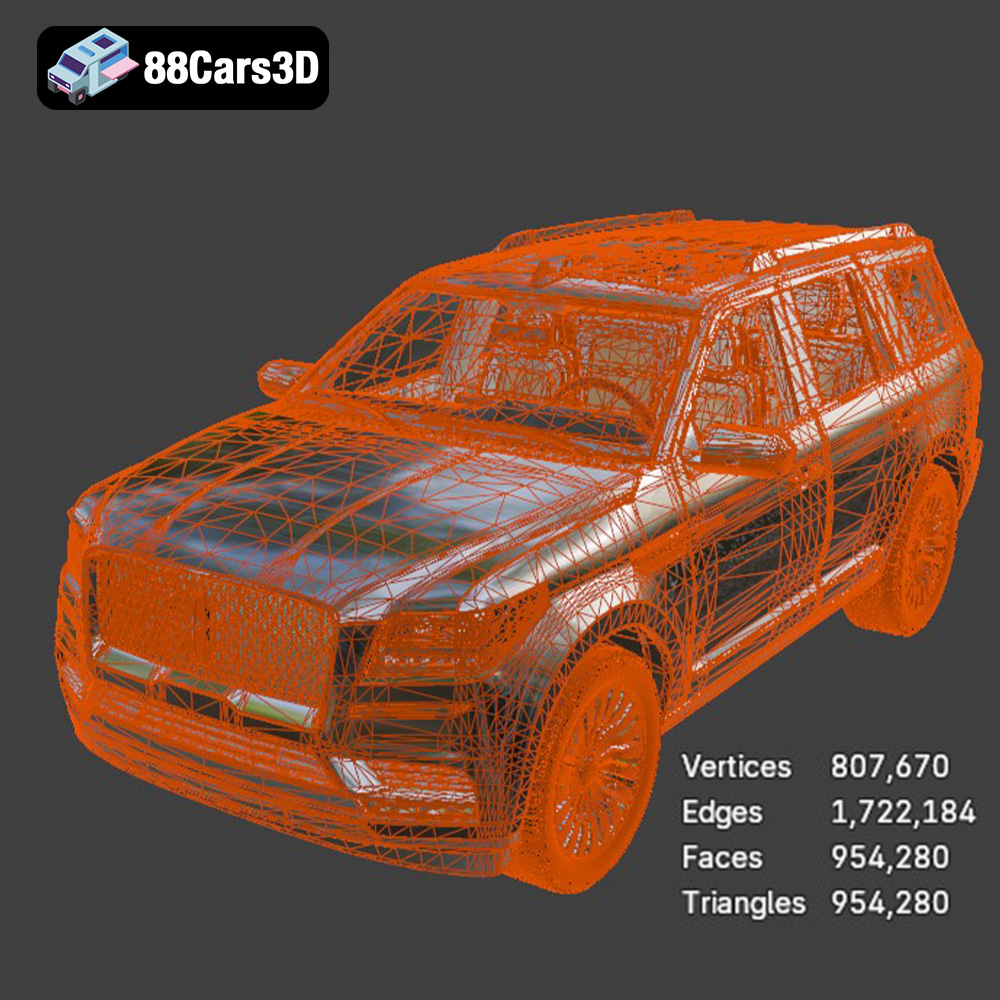
Clean topology refers to the organized flow of polygons (typically quadrilaterals) that define the surface of a 3D model. For complex organic shapes like a car body, good topology ensures smooth deformations during animation, predictable subdivision for higher detail, and efficient UV unwrapping. The Lincoln Navigator 2018 model boasts an “optimized polygon flow for performance and realism,” meaning its mesh is structured to balance visual detail with polygon count, preventing unnecessary geometric complexity that can bog down rendering or real-time engines.
Modern rendering relies heavily on Physically Based Rendering (PBR) workflows. This means materials are designed to react to light in a way that mimics real-world physics, resulting in highly convincing surfaces. For a luxury SUV like the Lincoln Navigator 2018, this translates to:
One of the “Technical Advantages” of the Lincoln Navigator 2018 3D Model is its “real-world scale accuracy.” This is not just a nice-to-have; it’s fundamental for integration into various projects:
The true value of a high-quality 3D car model, such as the Lincoln Navigator 2018 from 88cars3d.com, lies in its seamless integration into diverse professional workflows. Let’s explore how designers and artists utilize such assets in industry-standard software.
3ds Max remains a powerhouse for automotive rendering and visualization, especially when paired with renderers like V-Ray or Corona. The Lincoln Navigator 2018 3D Model’s inclusion of a .max file and “proper pivot setup for steering and wheel rotation” makes it an ideal candidate.
For game developers, performance and optimization are key. The Lincoln Navigator 2018’s “optimized geometry for real-time engines” and its availability in .blend, .fbx, and .unreal formats make it highly suitable.
Beyond digital rendering, the physical realization of 3D models opens new avenues, particularly for the Lincoln Navigator 2018 with its .stl format and detailed 3D printing guidelines.
The beauty of a meticulously crafted 3D asset lies in its adaptability. The Lincoln Navigator 2018 3D Model transcends single-use scenarios, proving its worth across a broad spectrum of industries and creative endeavors.
In the competitive automotive market, visual appeal is everything. High-quality 3D models provide an unparalleled advantage. For the Lincoln Navigator 2018, this means:
The immersion factor in games and simulations relies heavily on realistic assets. The Navigator 3D model brings authenticity to virtual environments.
The rise of augmented and virtual reality demands optimized 3D content that can perform efficiently on various devices.
The ability to transition a high-fidelity digital asset into a tangible object is a testament to the model’s design quality. The Lincoln Navigator 2018 3D Model’s provision of an .stl format and comprehensive 3D print settings unlocks a world of physical creation.
3D printing allows enthusiasts, designers, and marketers to produce physical scale models of the Navigator. This can range from small, intricate desktop displays to larger, more detailed prototypes.
Converting a digital model for successful 3D printing requires specific technical awareness, as detailed in the product description.
A high-quality 3D model isn’t just about detail; it’s also about efficiency. Whether destined for a static render or a dynamic game, performance optimization is a cornerstone of professional 3D asset creation.
While the Lincoln Navigator 2018 3D Model is described as “high-detail,” professional models are often built with performance in mind. This involves:
Textures are crucial for realism, but their efficiency is vital for performance. The “clean and well-organized mesh structure” of the Navigator model facilitates optimal UV mapping.
Proper setup of a 3D model allows for intuitive manipulation and animation.
The journey from concept to a fully realized 3D automotive model is a complex one, demanding technical prowess, artistic vision, and a deep understanding of diverse digital pipelines. High-quality 3D car models like the Lincoln Navigator 2018 3D Model exemplify the pinnacle of this craft, offering unparalleled detail, flexibility across multiple formats, and rigorous optimization for professional applications.
Whether you’re a game developer seeking realistic vehicles for an open-world environment, an architect integrating vehicles into a visualization, a marketing professional crafting compelling advertisements, or a hobbyist dreaming of 3D printing a collectible scale model, the right 3D asset can dramatically elevate your work. The Lincoln Navigator 2018 provides a robust, versatile foundation, ready to be dropped into 3ds Max for high-end rendering, Blender for creative modifications, or Unreal Engine for real-time interactivity.
Investing in such meticulously engineered assets saves valuable production time and ensures a consistently high standard of visual fidelity across all your projects. Explore the full potential of professional 3D car models and discover how premium assets can transform your creative workflow. For this exceptional Lincoln Navigator 2018 3D Model and a wide range of other high-quality digital vehicles, visit 88cars3d.com today and drive your projects forward.
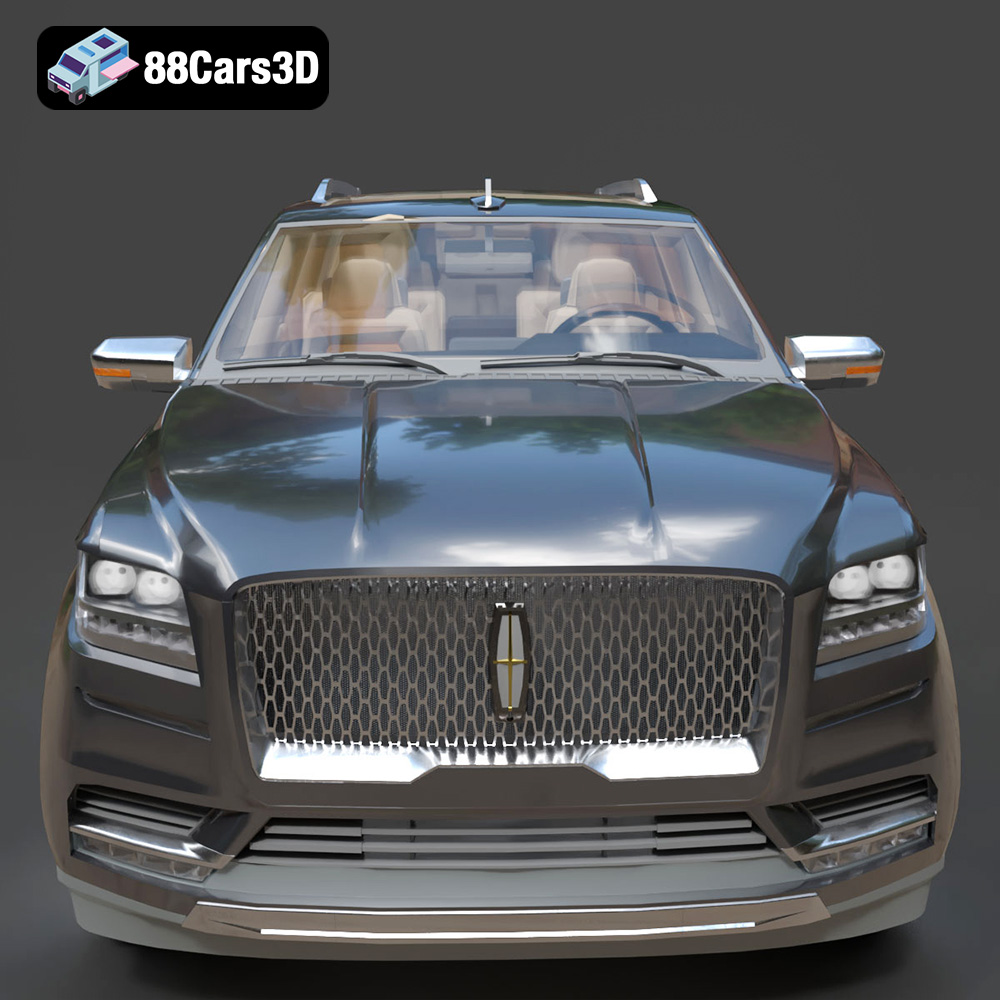
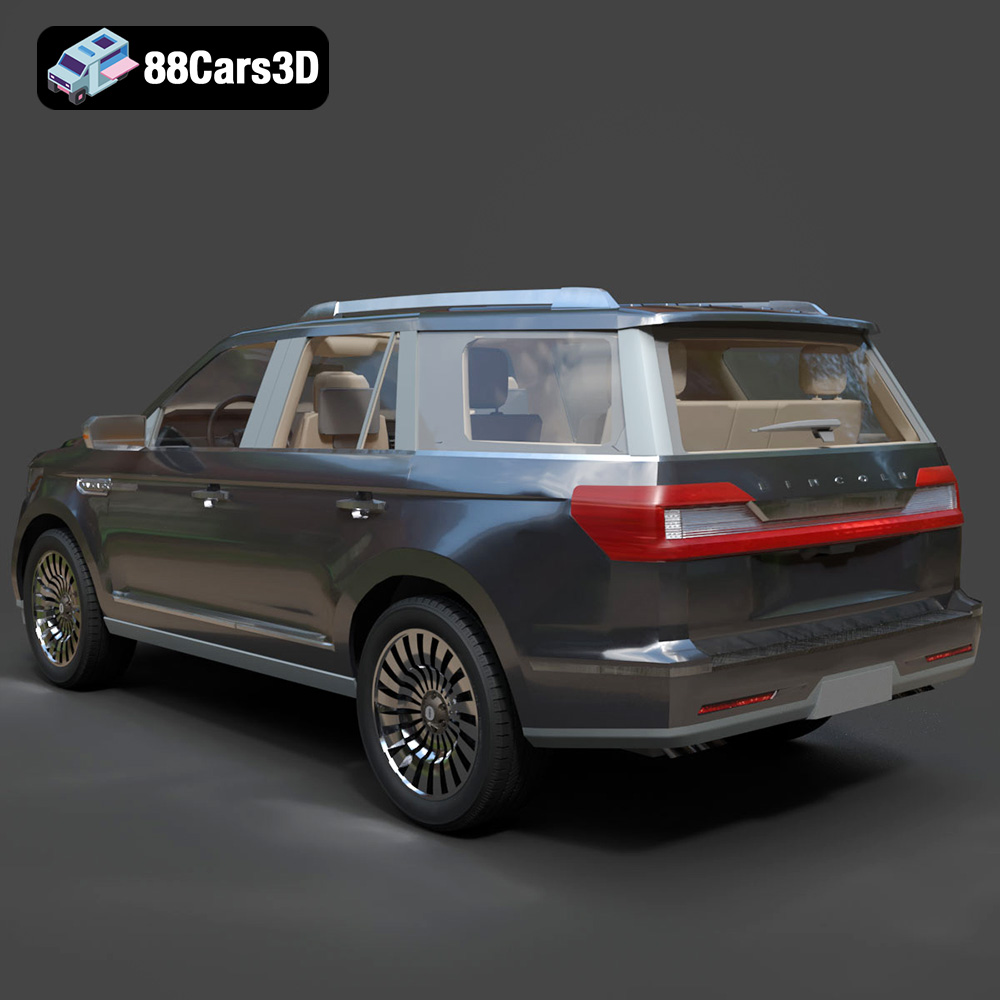
The Lincoln Navigator 2018 3D Model is a high-detail digital recreation of the full-size luxury SUV. It accurately captures the commanding front grille, signature LED lighting, sculpted body lines, and spacious cabin layout. Designed with clean topology, real-world scale, and optimized geometry, it’s ideal for rendering, animation, automotive visualization, game development, AR/VR experiences, and 3D printing. Includes .blend, .fbx, .obj, .glb, .stl, .ply, .unreal, and .max formats for comprehensive project integration.
$9.99
.2018suv
.americanSUV
.arvr
.automotive
.blend
.car3dmodel
.fbx
.gameasset
.glb
.lincoln
.luxurysuv
.max
.navigator
.obj
.ply
.rendering
.simulation
.stl
.unreal