Get 50% OFF All Premium 3D & STL Models!

The roar of a vintage engine, the gleam of polished chrome, the unmistakable lines of a legendary design – classic cars hold a special place in the hearts of enthusiasts and designers alike. Translating this passion into the digital domain requires not just artistic skill, but a deep understanding of technical precision. For professionals in automotive visualization, game development, AR/VR, and even 3D printing, access to high-quality 3D car models is paramount. These digital assets serve as the foundational building blocks for creating immersive experiences, breathtaking renders, and detailed simulations.
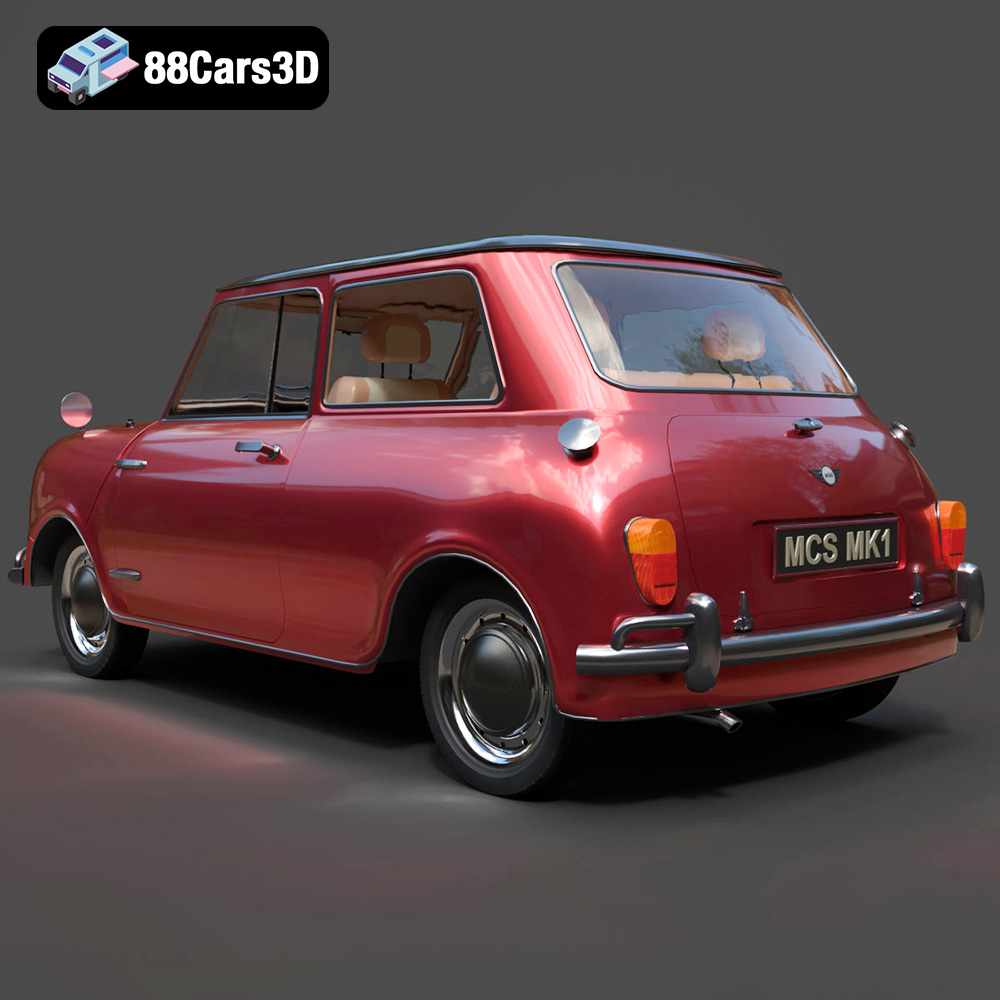
Today, we’re taking a closer look at a prime example of such craftsmanship: the Mini Cooper S MK1 3D Model. This iconic vehicle, a true symbol of 1960s British motoring heritage, is meticulously recreated as a versatile 3D asset, ready to be integrated into a myriad of projects. Whether you’re aiming to populate a retro city scene, develop a vintage racing simulator, or create a unique collectible, understanding the technical underpinnings and potential applications of such a model is crucial for maximizing its value in your creative pipeline.
When working with 3D car models, the file format you choose can significantly impact your workflow, compatibility, and the final output. Each format is designed with specific applications in mind, offering different advantages for various stages of development, from initial design to final deployment. The Mini Cooper S MK1 3D Model, available on 88cars3d.com, is a testament to versatility, offering a wide array of formats to suit virtually any project requirement. Let’s explore the technical nuances of these crucial file types:
The .blend format is the native file type for Blender, a powerful and widely used open-source 3D creation suite. A .blend file typically encapsulates the entire scene, including the 3D model itself (mesh data, UV maps), materials, textures, lighting, camera setups, animation data, and even physics simulations. This makes it an ideal choice for users who work primarily in Blender, offering full editability and access to all aspects of the model and its environment. For the Mini Cooper S MK1, the .blend file provides a ready-to-render scene, allowing for easy modifications to materials, animations, or even structural elements within the familiar Blender interface. It preserves all the intricate details and setup as envisioned by the model creator.
.fbx (Filmbox) is arguably the most common and versatile 3D file format for exchanging models between different software applications and game engines. Developed by Autodesk, it supports a wide range of 3D data, including mesh geometry, materials, textures, animation, and rigging. Its robustness makes it ideal for pipelines involving Unreal Engine, Unity, and other real-time applications. When importing the Mini Cooper S MK1 as an .fbx, developers can expect a well-structured asset with intact hierarchies, pivot points, and UVs, ready for setting up physics, collisions, and character interactions in game environments. It’s the go-to format for interoperability in complex production pipelines.
The .obj (Wavefront OBJ) format is a universal 3D geometry definition file, highly compatible across almost all 3D software packages. It primarily stores geometric data such as vertices, normals, UV coordinates, and faces. While it doesn’t typically embed material properties or animations directly within the file, it references external material library files (.mtl) and texture images. Its simplicity and widespread support make it an excellent choice for basic mesh exchange, especially when maximum compatibility is required without the complexities of advanced features. For the Mini Cooper S MK1, the .obj format ensures that the core mesh data is accessible to virtually any 3D artist, regardless of their preferred software.
.glb (GL Transmission Format Binary) is an increasingly popular file format, especially optimized for the web, augmented reality (AR), virtual reality (VR), and other real-time applications. It’s a binary version of the glTF format, designed to be compact and efficient for rapid loading. A .glb file packages all necessary assets, including geometry, materials, textures, and animations, into a single, self-contained file. This “all-in-one” approach simplifies deployment and reduces loading times, making it perfect for interactive web viewers or AR applications showcasing the Mini Cooper S MK1 directly on a smartphone or tablet.
The .stl (STereoLithography) format is the standard for 3D printing. It represents a 3D model as a series of connected triangles, describing only the surface geometry of an object without color, texture, or other CAD attributes. Its simplicity ensures that 3D printers can accurately interpret the mesh for physical fabrication. The Mini Cooper S MK1 3D Model, being 3D printable, would be converted to .stl, allowing enthusiasts to bring this classic car to life as a tangible collectible or scale model. Clean, manifold geometry is critical for .stl files to prevent printing errors.
.ply (Polygon File Format, or Stanford Triangle Format) is another popular format for storing 3D data. It can store a wider range of properties than .stl, including color, transparency, normals, texture coordinates, and even reliability information. It’s often used in CAD, scientific visualization, and 3D scanning applications where precise geometric and attribute data is crucial. While less common for general animation or game development than .fbx, it offers a robust solution for preserving detailed mesh information of the Mini Cooper S MK1 for specialized analytical or manufacturing processes.
The inclusion of a .unreal file directly signifies an asset pre-configured and optimized for Unreal Engine. This typically means the asset has been properly scaled, has collision meshes generated, LODs (Levels of Detail) potentially set up, and materials are often translated into Unreal’s shader system. For game developers or architectural visualizers working in Unreal Engine, this format offers a significant time-saving advantage, allowing for immediate integration of the Mini Cooper S MK1 without extensive manual setup and optimization. It represents an asset streamlined for peak performance within the engine.
Similar to .blend for Blender, the .max format is the native file type for Autodesk 3ds Max, another industry-leading software for 3D modeling, animation, and rendering. A .max file contains all scene information, including geometry, lights, cameras, materials, textures, and animation curves. For professionals using 3ds Max, this format provides full control over the Mini Cooper S MK1 model, enabling complex rigging, advanced rendering setups, and detailed architectural or automotive visualization projects. It ensures that all original scene attributes and modifications are preserved.
The Mini Cooper S MK1 isn’t just a car; it’s a piece of history, an engineering marvel, and a cultural icon. Recreating such a legendary vehicle in 3D demands meticulous attention to detail, ensuring that its character and unique design language are faithfully translated into the digital realm. The Mini Cooper S MK1 3D Model from 88cars3d.com embodies this principle, offering a high-fidelity representation that captures the essence of this automotive legend.
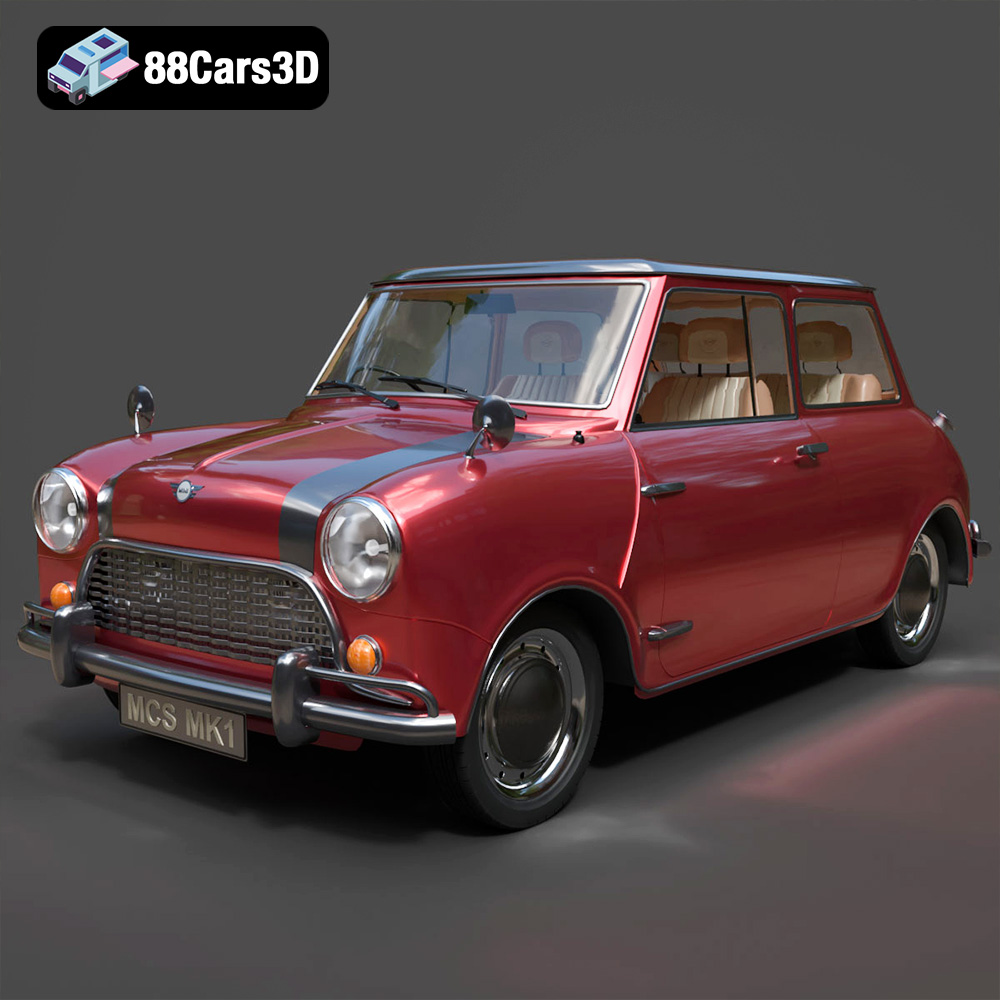
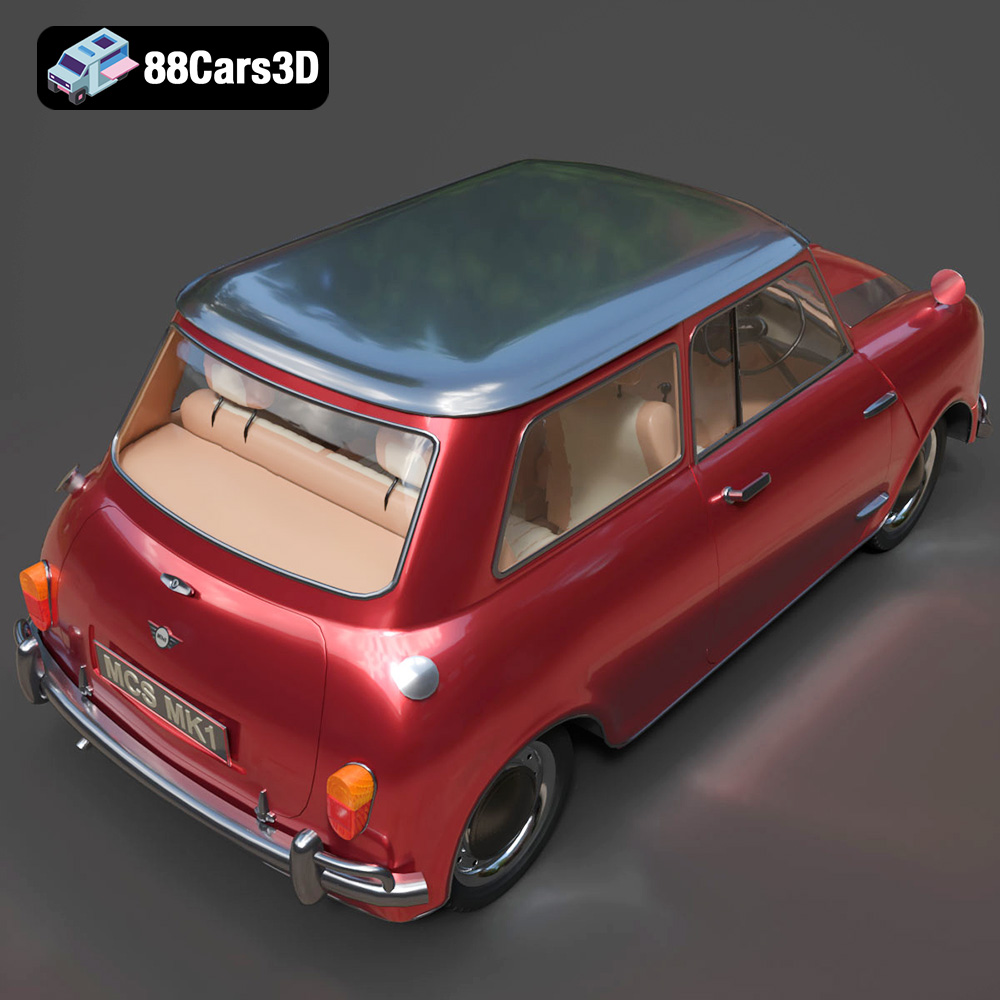
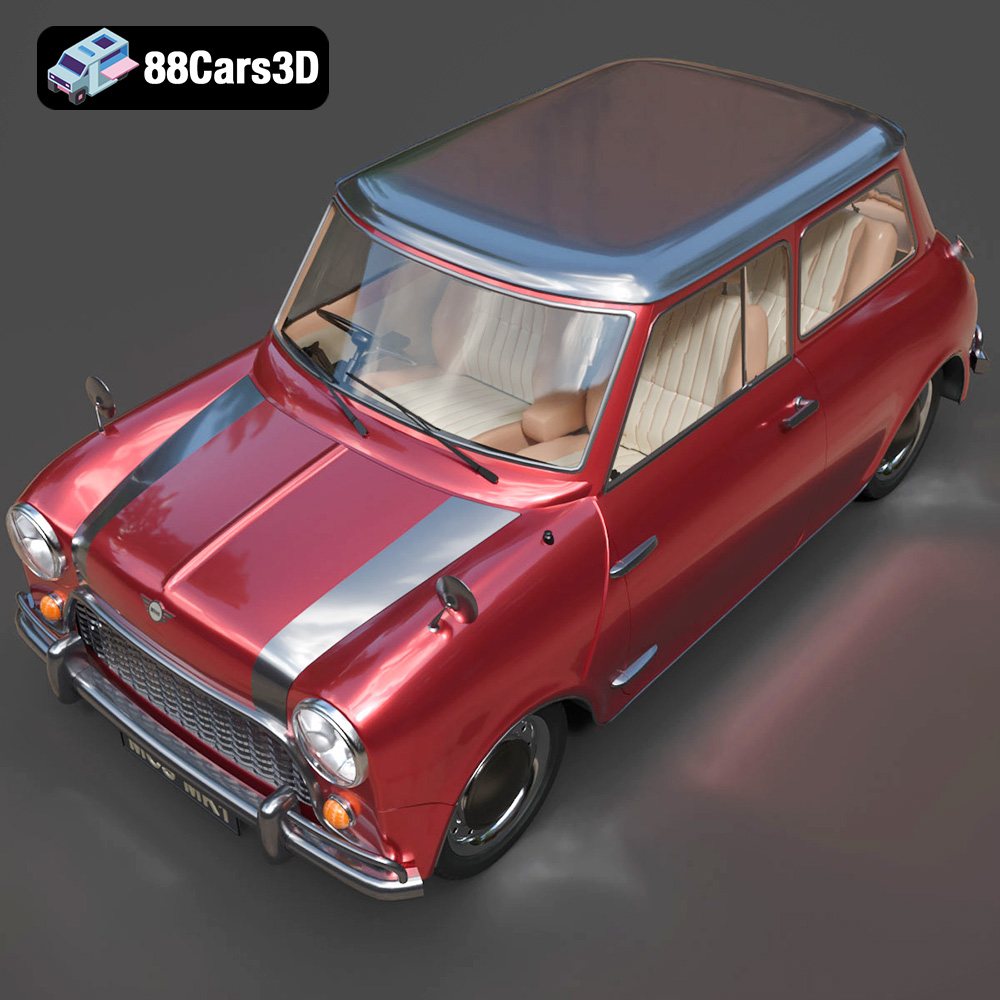
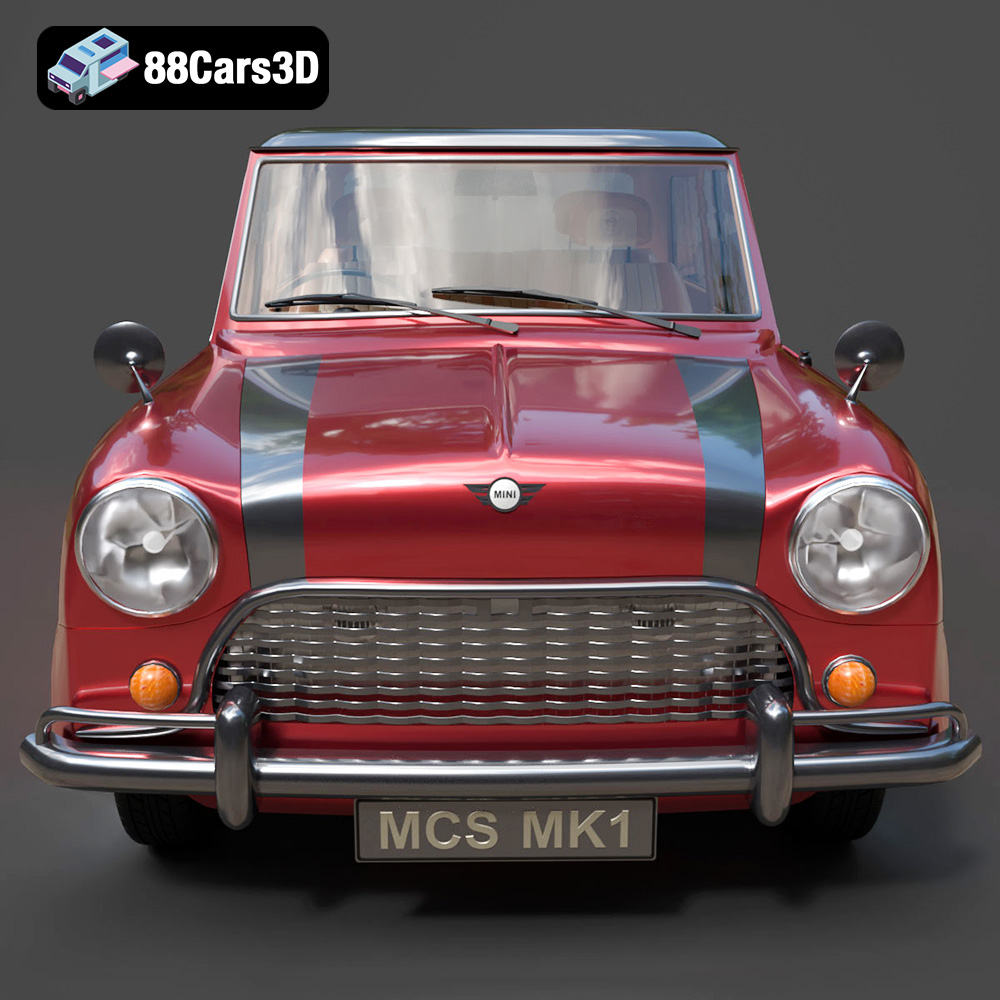
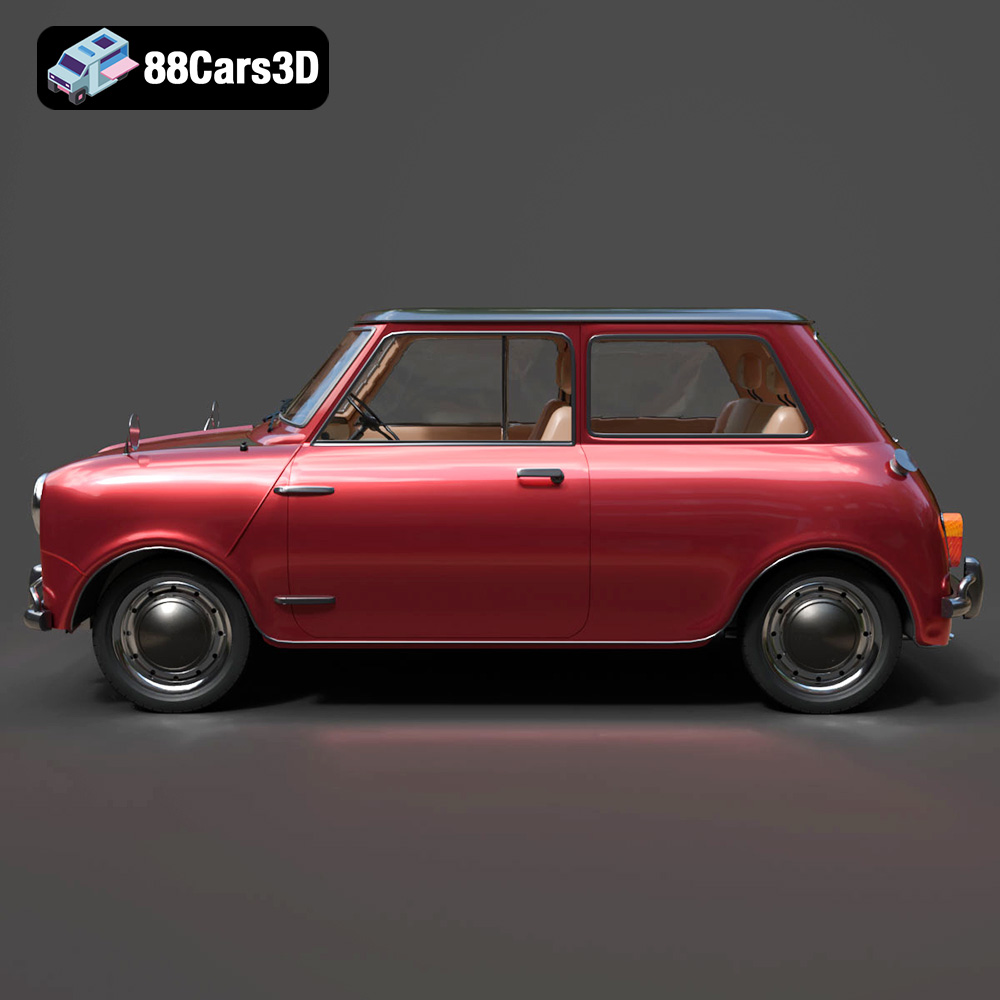
The exterior of the MK1 Cooper S is instantly recognizable, characterized by its compact, rounded silhouette, distinctive chrome accents, and spirited stance. This 3D model accurately reflects these elements. From the precise MK1 body proportions that define its agility to the classic circular headlights and compact grille design, every curve and angle has been considered. The detailed chrome front and rear bumpers add a touch of vintage elegance, while the optional racing stripe detailing allows for immediate customization to evoke its rally heritage. The vintage-style small alloy wheels are separate components, crucial for any animation involving realistic wheel rotation and steering. Transparent glass materials and mirror detailing enhance realism, ensuring the model stands up to close-up renders and immersive virtual experiences.
The interior of a classic car is often as important as its exterior in conveying character and authenticity. The Mini Cooper S MK1 3D Model does not disappoint, featuring a retro dashboard with a central speedometer—a signature element of early Minis. The classic steering wheel design, bucket seat geometry with period styling, and detailed gear shifter and pedal representations all contribute to an authentic vintage feel. This level of interior detail is vital for first-person perspectives in games, virtual reality showrooms, or cinematic sequences where the camera might linger inside the cabin. The optimized geometry ensures that while rich in detail, the interior remains efficient for real-time engines, preventing unnecessary polygon overhead while still delivering high-quality renders.
The versatility of a high-quality 3D car model, like the Mini Cooper S MK1, is truly showcased in its integration across diverse professional workflows. From high-end cinematic productions to interactive simulations, these assets streamline development and elevate visual fidelity. 88cars3d.com understands this need, providing models ready for immediate deployment.
For automotive artists and visualization specialists, the goal is often photorealism. Using software like 3ds Max or Blender, artists can leverage the detailed geometry and clean mesh structure of the Mini Cooper S MK1 3D Model to create stunning renders. In 3ds Max, designers can import the .max or .fbx file, apply advanced V-Ray or Corona Renderer materials, set up complex lighting scenarios (HDRI environments, physical lights), and animate camera movements to showcase the car in a heritage automotive visual or a retro promotional media piece. Similarly, Blender users can utilize the provided .blend file, harness the power of Cycles or Eevee render engines, and craft classic car marketing imagery or cinematic sequences that evoke nostalgia and sophistication. The real-world scale accuracy and proper pivot setup for steering and wheel rotation are invaluable for achieving believable animations, whether it’s a simple turntable render or a dynamic rally scene.
In game development, performance and visual quality must go hand-in-hand. The Mini Cooper S MK1 model, with its optimized polygon flow and engine-ready formats like .fbx and .unreal, is perfectly suited for vintage racing games, rally simulators, and open-world classic car environments. Game developers can import the .fbx into Unity or the .unreal file directly into Unreal Engine, where it can be quickly set up with physics, collision meshes, and interactive elements. The clean mesh structure and proper UV mapping (essential for texture application and light baking) mean less time spent on optimization and more on gameplay mechanics. Imagine a player navigating a winding track in a fully drivable, accurately rendered Mini Cooper S MK1, feeling the thrill of a classic rally experience, all thanks to a meticulously crafted game asset.
Augmented Reality (AR) and Virtual Reality (VR) are transforming how we interact with digital content. For creating immersive classic car showroom experiences or interactive museum exhibitions, 3D models are indispensable. The Mini Cooper S MK1 3D Model, particularly in the .glb format, is optimized for these platforms. Developers can deploy the .glb file to web-based AR/VR viewers or dedicated applications, allowing users to place a virtual Mini Cooper S MK1 in their living room, walk around it, and inspect its detailed interior. This level of interaction offers a unique way to engage audiences with automotive history, visualize vehicle customization options, or even for educational purposes in motorsport heritage projects.
The digital realm often extends into the physical. For collectors, hobbyists, or even automotive designers prototyping new ideas, 3D printing offers an exciting avenue to bring 3D car models to life. The Mini Cooper S MK1 3D Model is expressly designed to be 3D printable, opening up possibilities for creating bespoke scale models and collectibles.
Converting a high-detail 3D model for 3D printing requires specific considerations, and the Mini Cooper S MK1 is well-prepared for this transition. The inclusion of the .stl file format is crucial, as it’s the universal language for 3D printers. For successful printing, recommended scales (such as 1:32, 1:24, 1:18, or 1:12) are provided, allowing users to choose the right size for their display or project. Technical specifications for print settings, such as layer height (0.08–0.16 mm), wall thickness (1.2–2.0 mm), and infill (15–25%), guide users to achieve robust and detailed prints. Critical elements like mirrors, bumpers, and undercarriage details will require supports during printing to maintain their form, and printing the body angled for smooth curves, with wheels printed separately, ensures optimal surface finish and assembly. This attention to detail in the product description helps users achieve optimal results from their 3D printer, whether FDM or resin based.
The journey from a raw 3D print to a polished collectible involves skilled post-processing. After printing the Mini Cooper S MK1, the model can undergo sanding to smooth layer lines, followed by priming to prepare the surface for paint. Applying a gloss vintage paint finish, perhaps with optional racing decals, transforms the printed model into a display-worthy replica. The ability to customize aspects like body color, roof color contrast, and even add racing stripes or rally numbers, translates directly from the digital model to the physical output. This empowers creators to produce truly unique automotive collectibles, celebrating the Mini’s rich history in a tangible form. From a professional standpoint, this capability can be invaluable for creating rapid prototypes, presentation models, or limited-edition merchandise.
In any professional 3D production, the quality of your foundational assets directly impacts the final outcome. Investing in meticulously crafted 3D car models, like those found on 88cars3d.com, is an investment in efficiency, realism, and creative freedom. The Mini Cooper S MK1 3D Model exemplifies the characteristics of a premium asset designed for demanding applications.
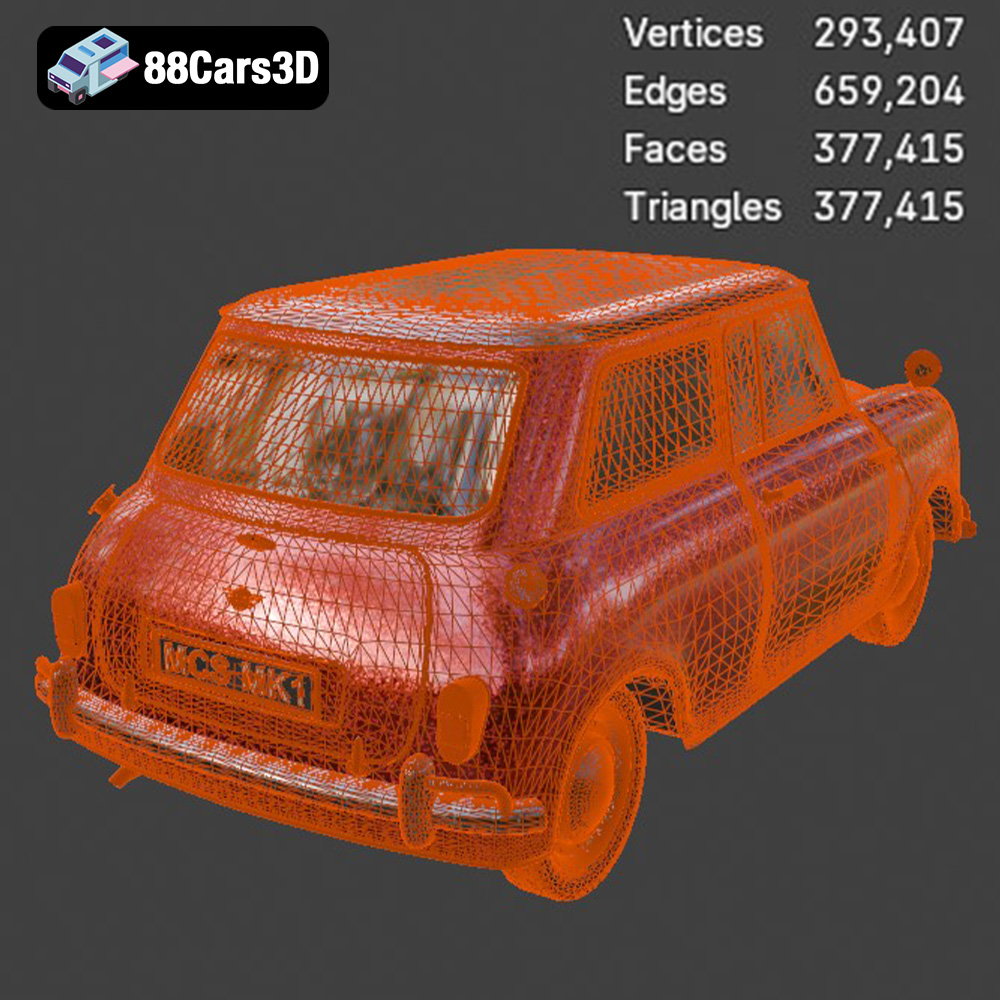
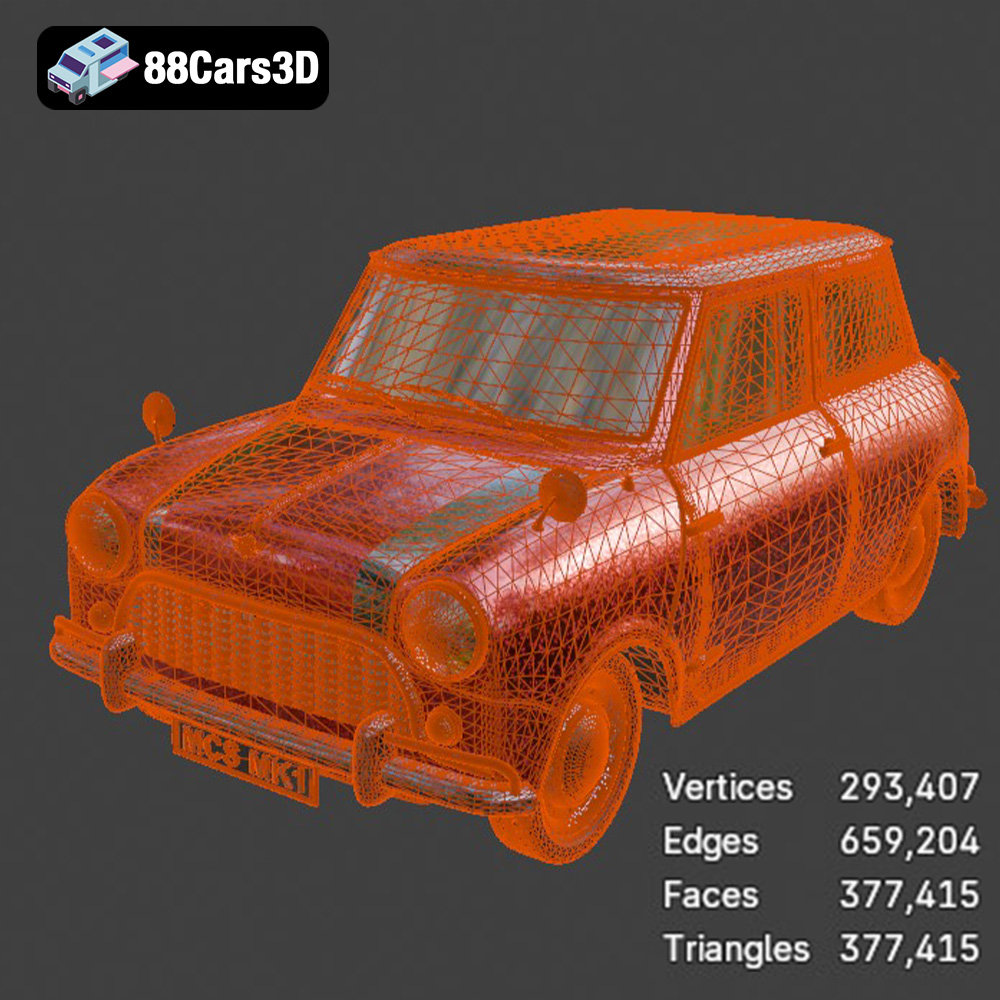
High-quality 3D models distinguish themselves through clean, well-organized mesh structures and optimized polygon flow. This technical advantage means fewer glitches, smoother deformations in animation, and better performance in real-time engines. For the Mini Cooper S MK1, this translates to an asset that can be rendered flawlessly from any angle without artifacts, or run efficiently within a game engine without bogging down frame rates. Proper UV mapping is another critical technical detail, ensuring textures are applied accurately and efficiently, minimizing stretching or distortion. While specific poly counts aren’t always explicitly listed, the description’s emphasis on “optimized geometry for real-time engines and high-quality renders” assures users of a balanced model that performs well across various scenarios. This optimization is crucial for achieving cinematic automotive rendering and responsive game assets.
A truly versatile 3D model offers more than just accurate representation; it provides a canvas for customization. The Mini Cooper S MK1 3D Model delivers on this, offering a range of customization options. Artists can easily change body and roof colors, apply racing stripes or rally numbers, modify wheel styles and tire setups, or even adjust the ride height for a rally or street stance. This adaptability is key for projects that require unique variants or specific visual storytelling. For instance, an advertising agency could quickly generate multiple color schemes for a marketing campaign, or a game studio could offer players a wide array of personalization choices for their classic Mini, all stemming from a single, well-structured base model. This flexibility enhances creative output and extends the lifecycle of the asset across multiple projects.
The world of 3D modeling continues to push the boundaries of visual fidelity and interactive experiences. At its core, the success of any digital project, be it a captivating automotive rendering, an immersive game, or a detailed AR/VR application, relies on the quality of its foundational assets. The Mini Cooper S MK1 3D Model stands out as an exceptional example of a meticulously crafted asset, designed to meet the rigorous demands of professional workflows.
From its accurate proportions and intricate detailing of both exterior and interior elements to its comprehensive suite of included file formats, this model offers unparalleled versatility. Whether you’re a seasoned 3D artist working in 3ds Max or Blender, a game developer optimizing for Unreal Engine, an AR/VR innovator deploying web-ready experiences, or a hobbyist bringing physical models to life through 3D printing, the Mini Cooper S MK1 provides a robust and reliable starting point. Its technical advantages, combined with extensive customization options, empower creators to achieve their artistic and technical goals with efficiency and excellence. For those seeking premium 3D car models that deliver on both authenticity and technical performance, 88cars3d.com offers a curated selection, with the Mini Cooper S MK1 3D Model being a shining example of what truly high-quality digital assets can bring to your next project.
The Mini Cooper S MK1 3D Model is a high-detail digital recreation of the legendary compact performance car that became an icon of 1960s British automotive design. Known for its lightweight construction, racing heritage, and distinctive compact proportions, the MK1 Cooper S gained worldwide recognition through rally victories and motorsport success. This 3D model accurately represents the classic rounded body shape, chrome bumpers, compact grille, circular headlights, racing stripe options, small-diameter wheels, and vintage interior layout. Designed with clean topology and real-world scale accuracy, it is ideal for rendering, animation, automotive visualization, game development, and AR/VR experiences.
$9.99