Get 50% OFF All Premium 3D & STL Models!

In the expansive and ever-evolving landscape of 3D design, the demand for high-quality, meticulously crafted assets remains constant. Whether you’re an architect visualizing a vibrant urban streetscape, a game developer populating an open-world environment, or a product designer creating immersive AR/VR experiences, the foundational elements of your digital worlds often determine the success of your project. At the heart of many such environments are vehicles – from sleek sports cars to rugged utility vehicles, and indeed, the humble yet iconic bicycle.
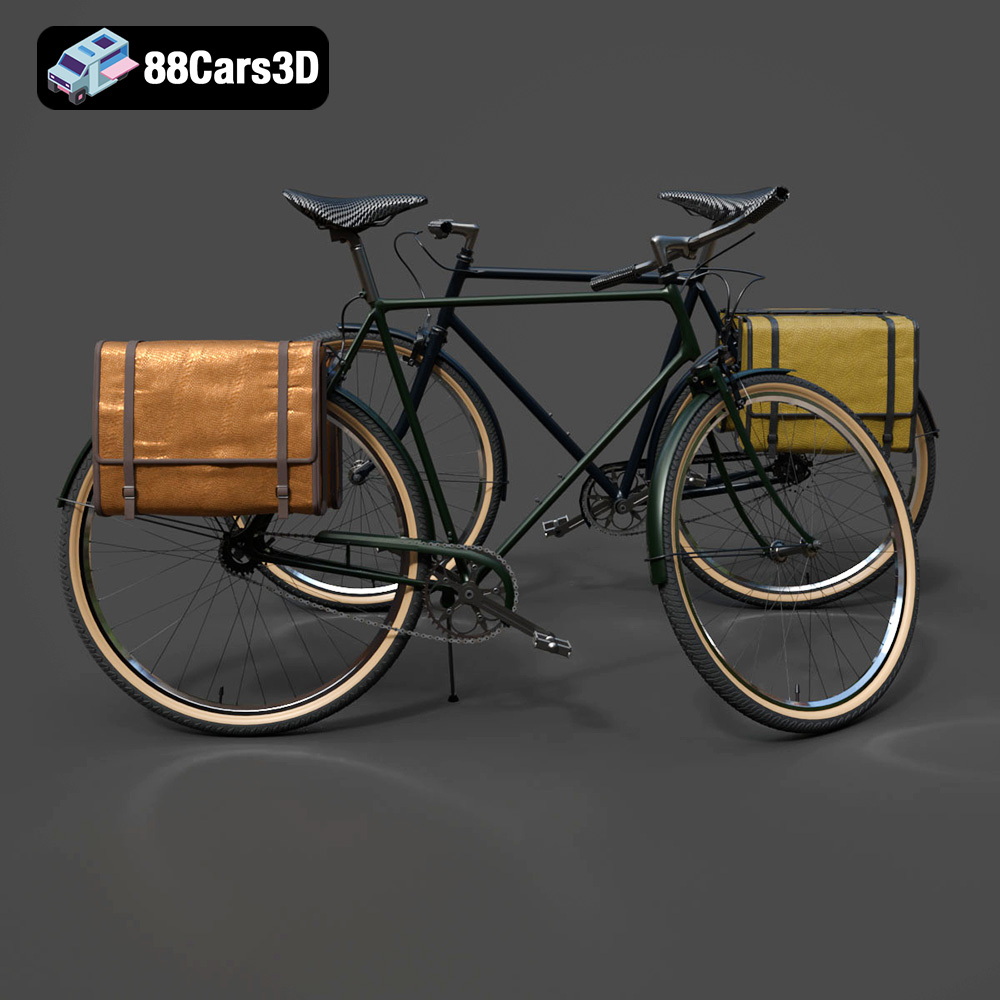
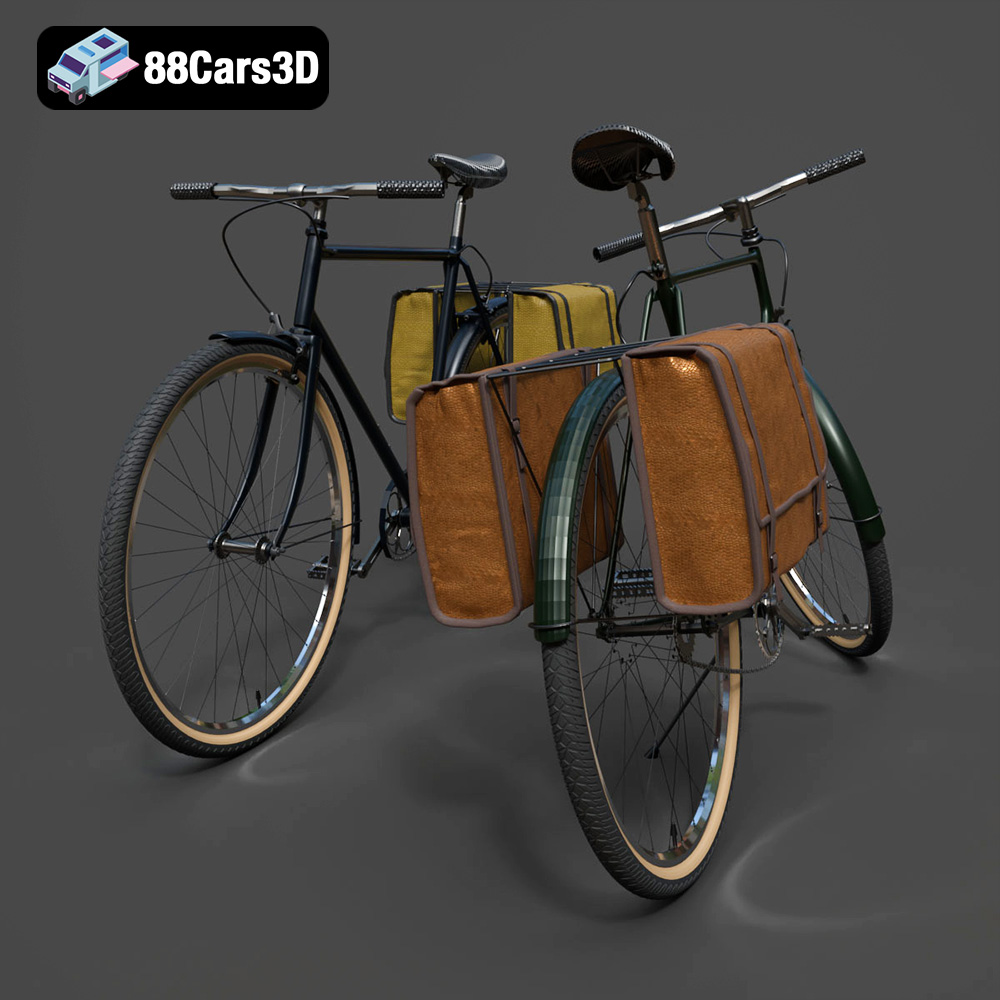
Today, we’re taking a deep dive into an exquisite example of digital craftsmanship that perfectly embodies both timeless aesthetic and modern utility: the Bicycle Classic 3D Model. This isn’t just any bicycle model; it’s a high-detail digital recreation inspired by classic European commuter designs, capturing the very essence of vintage charm and practicality. Available on 88cars3d.com, this model stands as a testament to the power of precision in 3D modeling, offering unparalleled versatility for a wide array of professional applications.
From its gracefully curved steel frame to its intricate spoked wheels and retro detailing, this model is poised to elevate any scene it graces. But beyond its visual appeal, its true value lies in its technical advantages and seamless integration into diverse workflows, making it an indispensable asset for creators looking for exceptional 3D car models and vehicle assets.
The choice of file format for a 3D model is far more than a mere technicality; it dictates compatibility, optimizes performance, and enables specific workflows across different software and applications. For a versatile asset like the Bicycle Classic 3D Model, understanding the nuances of its included file formats is crucial for maximizing its potential. 88cars3d.com ensures that its assets, including this exceptional bicycle, are delivered with a comprehensive suite of formats to cater to virtually any professional pipeline.
The .blend format is Blender’s native file type, offering a fully editable scene with all materials, textures, lighting, and animation data preserved. For users working within the Blender ecosystem, this is the ideal format. It allows for complete modification of the mesh, material adjustments, rigging, and animation directly within the familiar interface. Technical artists often prefer .blend files for their ability to easily inspect and modify the model’s construction, adapt it to specific project requirements, or create custom variations from the ground up, making the Bicycle Classic highly adaptable.
The .fbx (Filmbox) format is a proprietary file format developed by Autodesk, widely recognized as the industry standard for 3D data interchange, especially in animation and game development. Its strength lies in its ability to store not just mesh data, but also complex animation, rigging, skinning, and material assignments. This makes it ideal for transferring the Bicycle Classic 3D Model to game engines like Unreal Engine and Unity, or other DCC (Digital Content Creation) software like 3ds Max or Maya, while preserving its animation-ready features such as separate wheels and pedals. Its robustness ensures a smooth transition into real-time pipelines.
The .obj (Wavefront OBJ) format is one of the oldest and most widely supported 3D file formats. It is a universal format primarily used for transferring mesh geometry, UV data, and material references (via an accompanying .mtl file). While it doesn’t typically store animation or rigging data, its simplicity and widespread compatibility make it an excellent choice for cross-software model exchange. For basic rendering or visualization tasks where only the static mesh and textures are needed, the .obj version of the Bicycle Classic 3D Model ensures virtually any 3D software can import and display it correctly.
The .glb (GL Transmission Format Binary) format is a relatively newer standard designed for efficient transmission and loading of 3D scenes and models in web and AR/VR applications. It’s a binary version of glTF, bundling all textures, materials, and animation data into a single, self-contained file. This optimization makes the Bicycle Classic 3D Model perfect for immersive web experiences, virtual showrooms, or augmented reality apps, delivering performance without compromising visual quality.
The .stl (Stereolithography) format is the de facto standard for 3D printing. It represents a 3D model as a collection of interconnected triangles, defining the surface geometry of a solid object. For the Bicycle Classic 3D Model, the .stl file is essential for converting it into a physical object. Its “manifold geometry” ensures that the model is watertight and ready for slicing software, providing the necessary data for creating scale bicycle models or collectible miniatures with high accuracy. The inclusion of this format specifically caters to digital manufacturers and hobbyists.
The .ply (Polygon File Format) format is designed to store polygonal meshes, often including properties like color, transparency, and texture coordinates. While less common than .obj or .fbx for general interchange, .ply is frequently used in scientific, scanning, and CAD applications where precise mesh data and vertex properties are critical. It can store more complex vertex and face attributes than .obj, making it suitable for specialized analysis or high-fidelity reproduction of the Bicycle Classic’s intricate structure.
The .unreal format signifies that the asset is optimized and pre-configured for direct use within the Unreal Engine. This often means proper material setups, optimized UVs, collision meshes, and potentially LOD (Level of Detail) variations are already integrated. For game developers and real-time visualization artists, this format for the Bicycle Classic 3D Model represents a significant time-saver, allowing for immediate drag-and-drop integration into complex virtual environments without extensive re-configuration.
The .max format is the native file type for Autodesk 3ds Max, one of the leading software packages for 3D modeling, animation, and rendering. Similar to .blend, it preserves the entire scene, including modifiers, materials, lighting, cameras, and animation curves. For users of 3ds Max, having the Bicycle Classic 3D Model in .max format ensures complete editability, allowing for advanced rendering setups, complex animations, or seamless integration into existing 3ds Max projects, maintaining the integrity of all technical advantages.
This comprehensive array of formats underscores the versatility and professional-grade quality of the Bicycle Classic 3D Model, making it an invaluable asset from 88cars3d.com for any creative endeavor.
The allure of vintage design lies in its attention to detail, its organic curves, and its inherent sense of history. The Bicycle Classic 3D Model beautifully translates these qualities into a digital asset, making it a standout choice on 88cars3d.com for anyone seeking high-quality 3D car models or vehicle props. This model isn’t just a generic bike; it’s a character, ready to infuse authenticity into any digital scene.
The model’s design is a thoughtful homage to traditional vintage-style European commuter bicycles. This means more than just a stylistic choice; it represents a functional design philosophy. The accurate vintage bicycle proportions are crucial for believability, whether the model is a focal point in a lifestyle advertisement or a background element in a bustling city street. The detailed tubular steel frame, with its characteristic curves, offers not only visual appeal but also a solid topological foundation. The upright riding position implied by the frame and handlebar geometry speaks volumes about its intended use and era, making it perfect for period-themed projects.
Retro detailing, from the classic saddle seat to the curved handlebars, adds layers of authenticity. These aren’t just arbitrary shapes; they are carefully observed and recreated elements that contribute to the model’s overall narrative and visual richness. Such meticulous attention ensures that the Bicycle Classic 3D Model stands up to close-up renders and rigorous scrutiny.
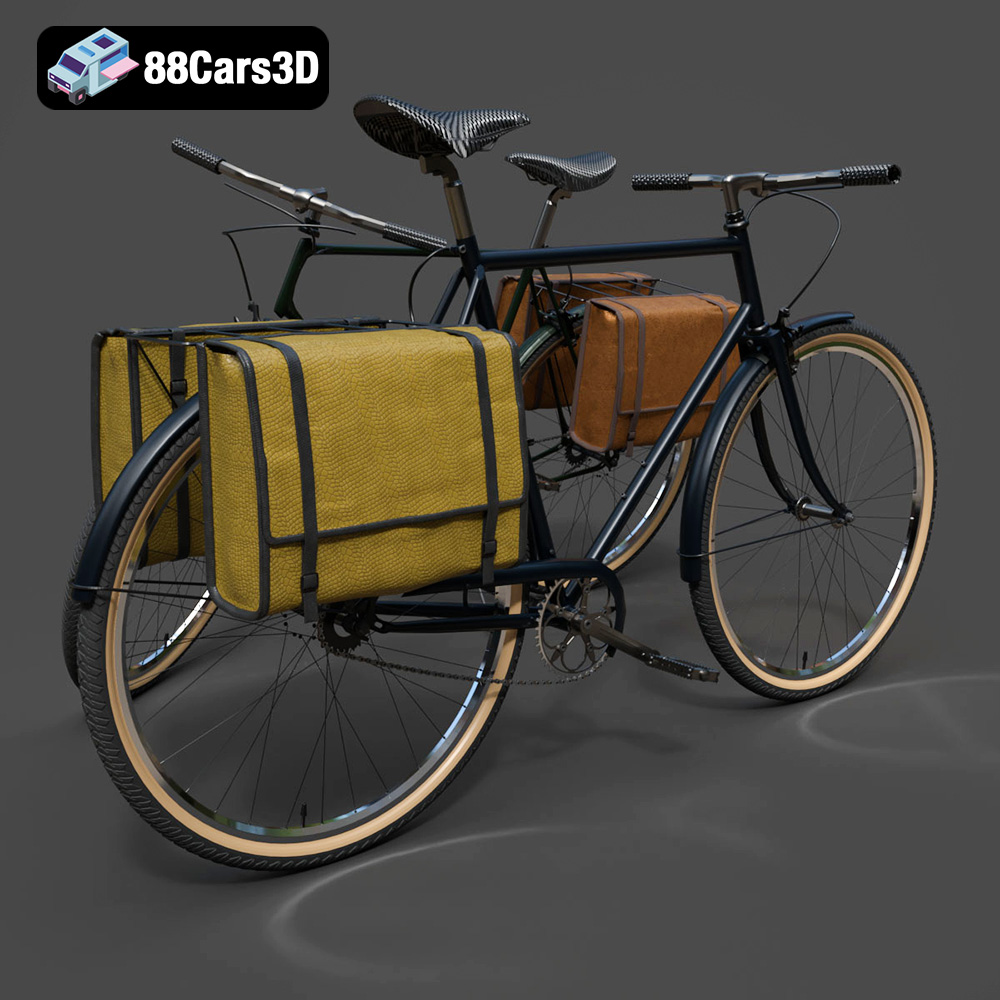
Beyond its exterior charm, the Bicycle Classic 3D Model boasts remarkable mechanical fidelity. This level of detail is vital for simulations, animations, and even game development where interaction might require a convincing representation of movement. The realistic spoked wheels with hub detailing are a prime example, crucial for both visual realism and proper rotation in animation. The inclusion of front and rear fenders, along with a rear luggage rack, elevates its utility and realism for urban scenes.
A particular highlight is the chain guard and drivetrain assembly, complete with a chain and crankset system. For those needing to animate the bicycle, the rear gear assembly (single-speed or multi-speed version) further enhances its mechanical realism. The fact that the brake assemblies and cable routing are modeled shows a commitment to completeness that few generic models offer. Crucially, the model features proper pivot setup for wheel rotation and pedal animation, ensuring a smooth and straightforward rigging process for animators. This makes the model production-ready straight out of the box.
The design choices of the Bicycle Classic 3D Model aren’t merely aesthetic; they are deeply functional, especially for animation and scene integration. The separate wheels and pedals for animation are a technical advantage, allowing animators to control individual components without complex rigging overhead. Coupled with the steering pivot properly aligned, this model is prepared for dynamic motion, from gentle turns to full pedal cycles. Its real-world scale accuracy means it drops seamlessly into any environment without needing scale adjustments, which is a common headache with less professional assets.
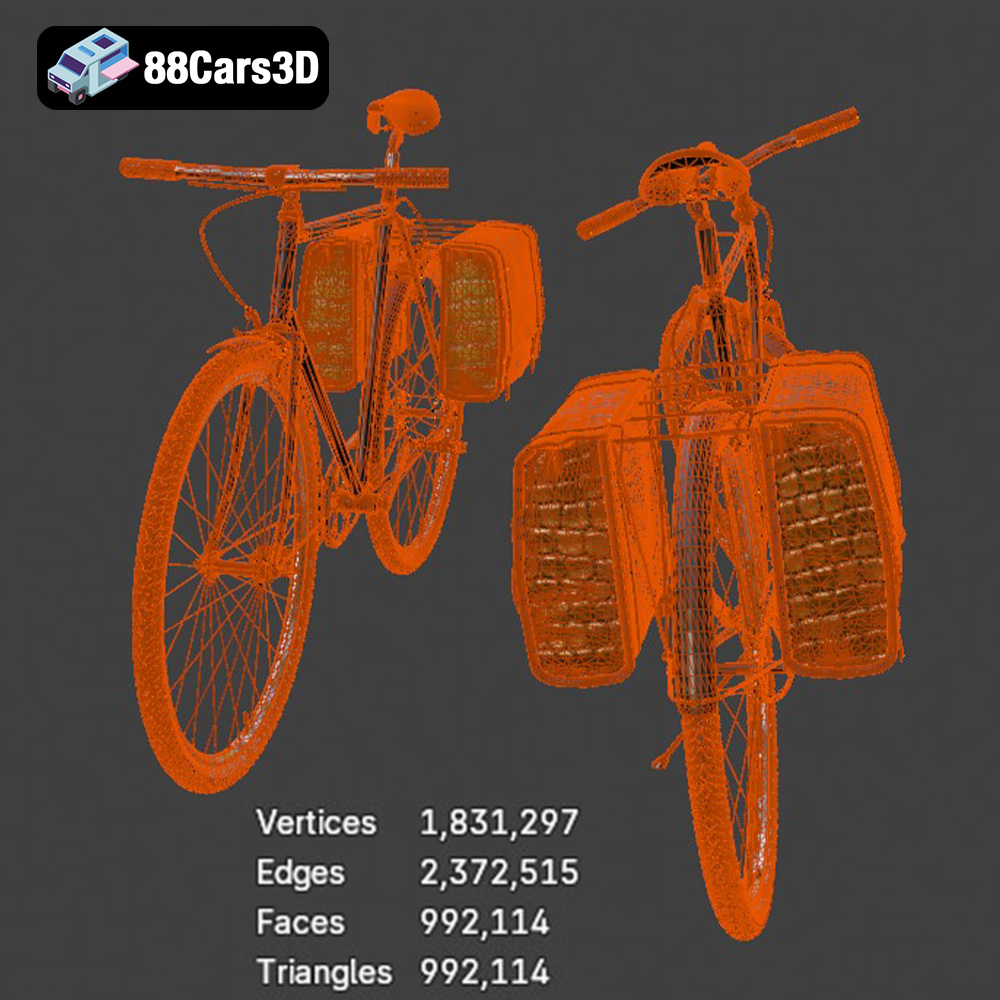
The clean and well-organized mesh structure, combined with optimized polygon flow, ensures excellent performance in real-time engines and efficient rendering in offline renderers. This model is not just visually appealing; it’s engineered for performance across its advertised applications: rendering, animation, urban visualization, game development, and AR/VR applications. Its suitability for city street scenes, park environments, lifestyle advertising, period-themed projects, and transportation simulations speaks volumes about its inherent versatility.
High-quality 3D models are the backbone of modern digital production, and the Bicycle Classic 3D Model exemplifies how a single asset can provide immense value across diverse professional workflows. Whether you’re working on intricate automotive rendering, developing immersive game environments, or crafting engaging AR/VR experiences, the technical prowess of models from 88cars3d.com ensures seamless integration and superior results.
For those in automotive rendering and architectural visualization, the Bicycle Classic 3D Model, despite not being a car, serves as an excellent prop that adds realism and context to street scenes, parking lots, or lifestyle vignettes featuring vehicles. In a 3ds Max workflow, the included .max file format is a game-changer. It provides an editable project, allowing artists to leverage Max’s powerful rendering capabilities (like V-Ray or Corona Renderer) to produce photorealistic images.
Artists can easily fine-tune materials, apply advanced shaders for realistic paint, chrome, and rubber, and set up complex lighting scenarios to highlight the model’s vintage charm. The clean and well-organized mesh structure simplifies UV unwrapping and texture application, while the real-world scale accuracy ensures it fits perfectly into existing environments without scaling issues. This precision allows for detailed close-ups and dramatic product visualization shots, enhancing the narrative of any scene, be it an urban street corner or a rustic countryside path.
In game development, performance and visual fidelity must strike a delicate balance. The Bicycle Classic 3D Model, optimized for real-time engines, is an ideal game asset. With formats like .fbx and .unreal included, integration into Unreal Engine or Unity is streamlined. The .fbx format ensures all necessary data, including potential skeletal animations (for interactive pedals/wheels), transfers cleanly.
The optimized polygon flow and optimized mesh for real-time engines are critical. Developers can implement Level of Detail (LOD) systems to ensure the bicycle renders efficiently at varying distances, maintaining a smooth frame rate in expansive open-world city games or casual environments. Proper pivot points for wheels and pedals drastically reduce setup time for interactive elements, allowing players to potentially ride or push the bicycle, bringing dynamic realism to the game world. This type of asset is invaluable for environmental props and adding depth to game scenarios.
Augmented Reality (AR) and Virtual Reality (VR) demand highly optimized assets to maintain interactivity and prevent motion sickness. The Bicycle Classic 3D Model, especially in its .glb format, is perfectly suited for these demanding applications. The .glb format bundles all necessary data into a single, efficient file, ideal for quick loading in virtual showrooms or interactive urban simulations. Its low file size and optimized mesh contribute directly to smoother experiences.
For virtual showroom experiences, the highly detailed vintage design adds a touch of class and realism. In AR applications, the bicycle can be placed in real-world environments, allowing users to interact with a high-fidelity virtual object seamlessly. The clean topology and accurate scale provided by 88cars3d.com ensure that the model looks convincing when viewed from any angle in a 3D immersive space, without visual artifacts or performance drops.
One of the most exciting aspects of digital assets is their potential to transcend the screen and manifest as physical objects. The Bicycle Classic 3D Model, explicitly noted as “3D Printable STL,” bridges this gap, offering a unique opportunity for physical miniatures, scale models, or collectible items. This capability extends the model’s utility significantly, moving it beyond purely digital applications.
The inclusion of the .stl format is paramount for 3D printing. This format simplifies the geometry into a tessellated surface, which is then interpreted by slicing software (e.g., Cura, PrusaSlicer, Chitubox) to generate toolpaths for the 3D printer. For a complex model like the bicycle, ensuring “manifold geometry” – a watertight mesh with no holes or intersecting faces – is critical for a successful print. The asset from 88cars3d.com provides this clean geometry, minimizing common printing errors.
The recommended scales – 1:18 / 1:12 / 1:10 / 1:8 – offer flexibility for various purposes, from tabletop models to larger display pieces. Smaller scales might require high-resolution resin printers (SLA/DLP) to capture the intricate spokes and mechanical details, while larger scales could be achievable on FDM printers with careful settings.
Achieving a high-quality 3D print of the Bicycle Classic requires careful consideration of several factors. Supports: Required for frame curves, pedals, and handlebar sections is a crucial directive. Overhanging parts of the bicycle, such as the curved frame, handlebars, and the delicate chain, would collapse during printing without proper support structures. Slicing software can generate these, but understanding where they’re needed can help optimize placement to minimize post-processing.
Print orientation: Frame angled; wheels printed separately is another expert recommendation. Printing the frame at an angle can reduce visible layer lines on critical surfaces and improve overall strength. Printing wheels separately allows for optimal detail on spokes and rims and simplifies assembly. Recommended settings like layer height: 0.08–0.16 mm and wall thickness: 1.2–2 mm are tailored for robustness and detail capture, while an infill: 15–25% provides a good balance of strength and material efficiency.
Finally, post-processing: sanding, primer, gloss or matte vintage paint finish is essential to elevate the raw print into a finished, display-worthy model. Sanding removes layer lines, primer ensures paint adhesion, and a carefully chosen vintage paint finish brings the classic bicycle to life, mirroring its digital aesthetic.
One of the true hallmarks of a professional 3D model is its adaptability. The Bicycle Classic 3D Model offers a wealth of customization options, allowing artists and designers to tailor it precisely to the demands of their project. This inherent versatility makes it an even more valuable asset, ensuring it can fit a multitude of scenarios without requiring extensive re-modeling from scratch.
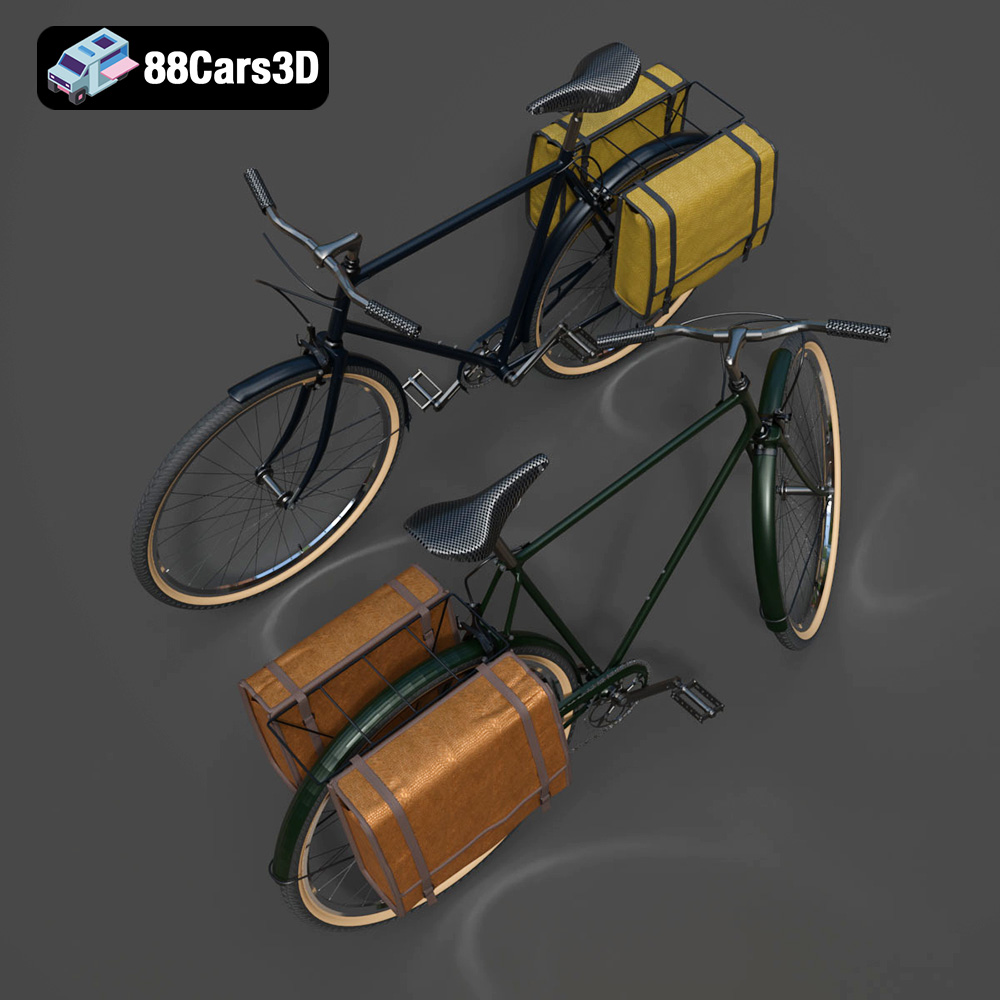
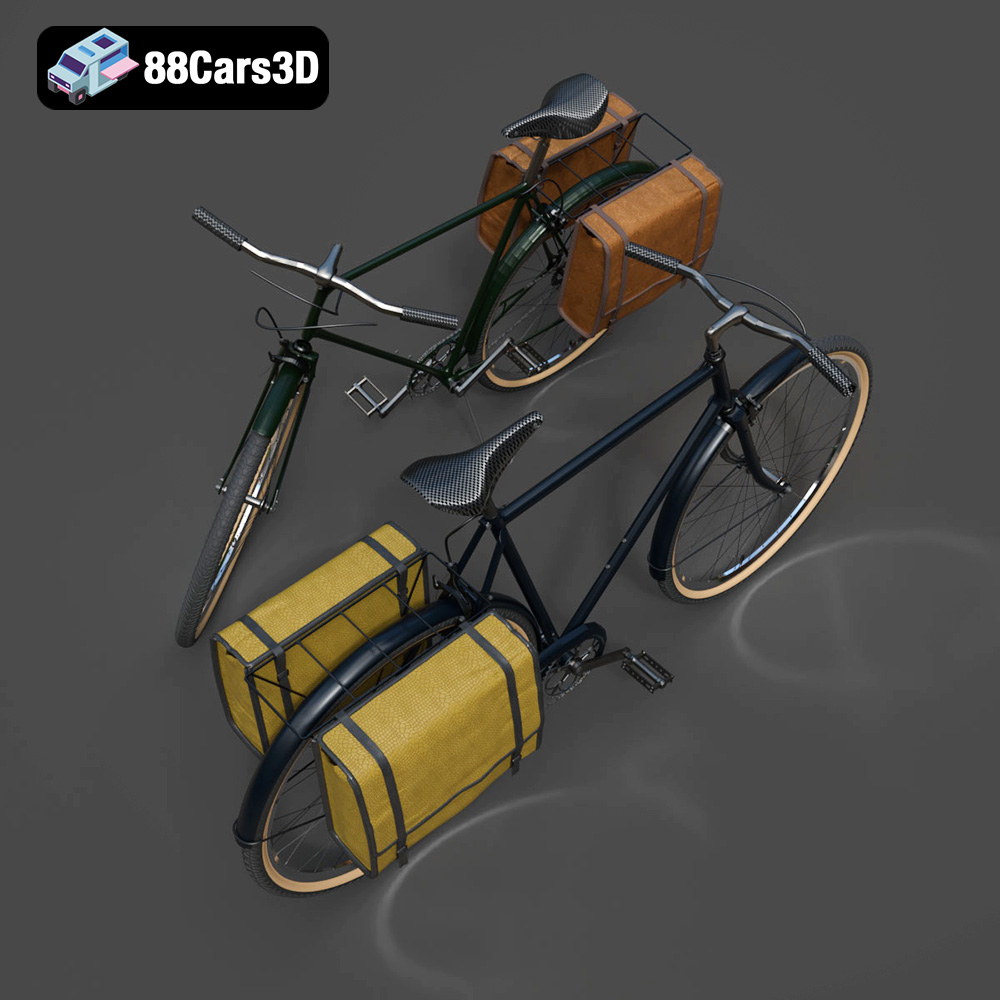
The foundation for customization often begins with materials and colors. The ability to change frame color and decal style means the bicycle can seamlessly transition from a vibrant, modern city bike to a weathered, antique piece. Imagine a sleek metallic blue for a contemporary render, or a faded emerald green with custom vintage decals for a period film scene. The model’s clean mesh structure and UV mapping simplify this process, allowing for easy material swaps and texture adjustments in any included software (e.g., .blend, .max, .fbx).
Furthermore, the suggestion to apply weathered or restored finish opens up even more creative possibilities. A weathered finish could portray years of use, rust, and grime, adding character and realism to a post-apocalyptic game environment or a grimy urban animation. Conversely, a restored finish could present a pristine, showroom-quality model for product advertising or a luxurious visualization project. These variations can dramatically alter the mood and narrative associated with the bicycle.
Beyond surface appearance, the Bicycle Classic 3D Model is designed to be augmented with additional components, enhancing its functionality and narrative presence. The option to add a basket or front cargo rack immediately transforms it from a simple commuter bike into a utility vehicle, perfect for carrying groceries in an urban scene or delivering flowers in a quaint village setting. This small addition can significantly impact the storytelling within a visual.
Similarly, the ability to modify handlebar type allows for subtle but impactful changes in ergonomics and style, from classic upright “Dutch” bars to more sporty drops or comfortable cruiser bars. Adding lighting accessories like a retro dynamo lamp or a modern LED headlight can update its functionality and visual appeal, making it suitable for night scenes or futuristic concepts. These customization options underscore the model’s versatility, allowing designers to imbue it with their unique creative vision without starting from scratch.
In the dynamic world of 3D content creation, the difference between a good project and a great one often lies in the quality and versatility of its assets. The Bicycle Classic 3D Model from 88cars3d.com stands out as an exceptional example of digital craftsmanship, blending timeless aesthetic appeal with robust technical advantages. It’s a model meticulously designed not just to look good, but to perform flawlessly across a myriad of professional applications.
From its accurate vintage proportions and intricate mechanical details that make it a superb asset for rendering, animation, and urban visualization, to its optimized mesh and diverse file formats that ensure seamless integration into game development and AR/VR applications, this model is a powerhouse. Its inclusion of a dedicated .stl format and detailed 3D printing recommendations further extends its utility, allowing creators to bridge the digital and physical realms with ease.
For studios and individual artists seeking high-quality 3D car models or vehicle props, the Bicycle Classic 3D Model is a testament to the value of professionally created content. Its comprehensive file format support, from editable .blend and .max files to real-time optimized .fbx and .unreal assets, guarantees compatibility with virtually any workflow. The ease of customization, from changing colors to adding accessories, ensures that this model can be tailored to perfectly fit any creative vision.
Investing in such a high-quality asset is an investment in efficiency, realism, and creative freedom. Explore the Bicycle Classic 3D Model and other exceptional vehicle assets today on 88cars3d.com, and elevate your next project with unparalleled detail and technical excellence.
The Bicycle Classic 3D Model is a high-detail digital recreation of a traditional vintage-style bicycle, inspired by timeless European commuter designs. Featuring a curved steel frame, upright riding position, slim road tires, and retro detailing, this model captures the charm and practicality of classic city bicycles. This 3D model accurately represents the step-through or diamond frame geometry, spoked wheels, chain-driven drivetrain, front and rear fenders, rear cargo rack, chain guard, classic saddle seat, and curved handlebars. Built with clean topology and real-world scale accuracy, it is ideal for rendering, animation, urban visualization, game development, and AR/VR applications.
$9.99
.arvr
.bicycle3dmodel
.bicycleclassic
.blend
.citybike
.classicbike
.fbx
.gameasset
.glb
.max
.obj
.ply
.rendering
.retrobike
.simulation
.stl
.unreal
.urbanvehicle
.vintagebicycle