Get 50% OFF All Premium 3D & STL Models!

There are few vehicles that command presence quite like the Chevrolet Chevelle SS 1969. A true titan of the muscle car era, its aggressive lines, potent V8 roar, and unmistakable street swagger have cemented its place in automotive history. For designers, animators, game developers, and collectors, recreating such an icon in the digital realm presents both a challenge and an immense opportunity. It’s about preserving heritage, pushing technical boundaries, and delivering unparalleled realism.
Today, we delve deep into the technical intricacies and creative potential offered by high-quality 3D car models, with a spotlight on an exceptional digital asset: the Chevrolet Chevelle SS 1969 3D Model. This isn’t just a static mesh; it’s a meticulously crafted digital blueprint, designed to be the cornerstone of diverse projects, from photorealistic automotive rendering to immersive game experiences and even tangible 3D prints. Whether you’re a seasoned professional or an aspiring enthusiast, understanding the nuances of such a model unlocks a new dimension of creative possibility.
The allure of a classic muscle car like the 1969 Chevelle SS transcends generations. Its robust design language and association with an era of raw power make it a perennial favorite. Translating this cultural significance into a 3D model requires precision, passion, and a profound understanding of the original vehicle’s aesthetic and engineering.
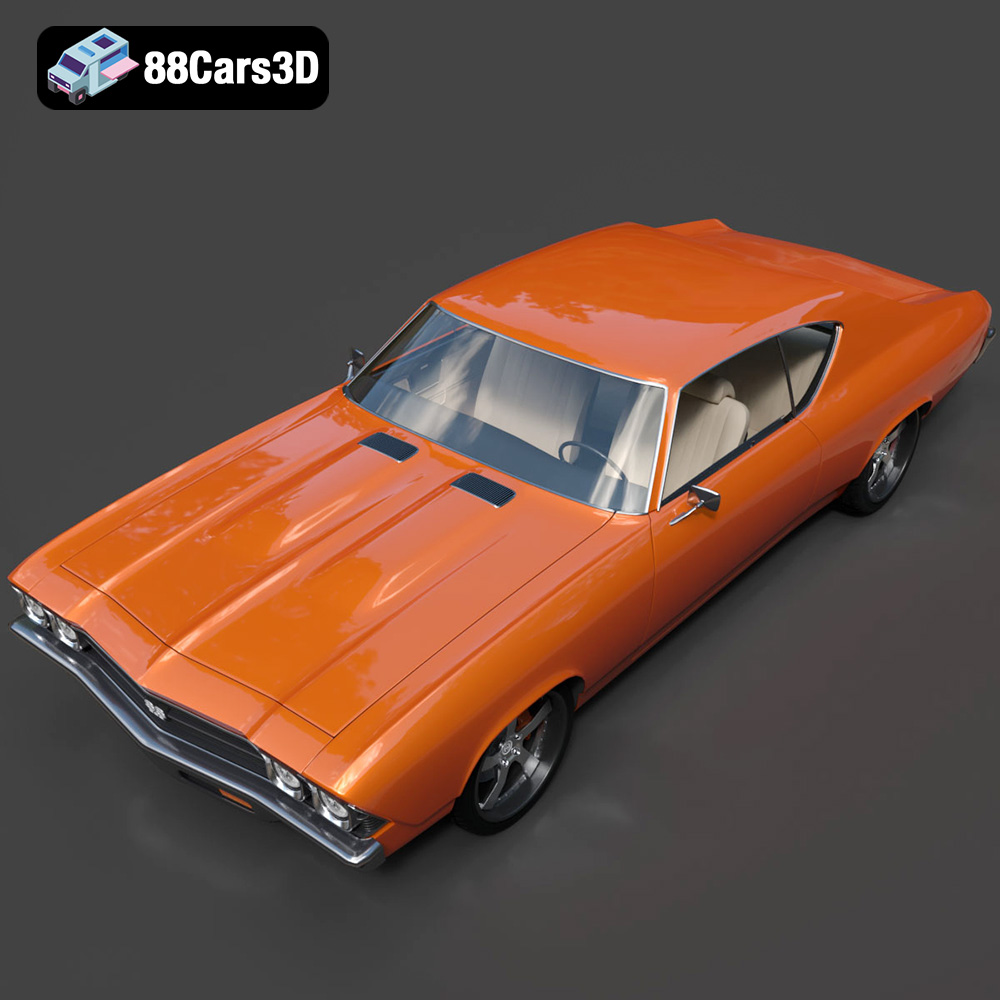
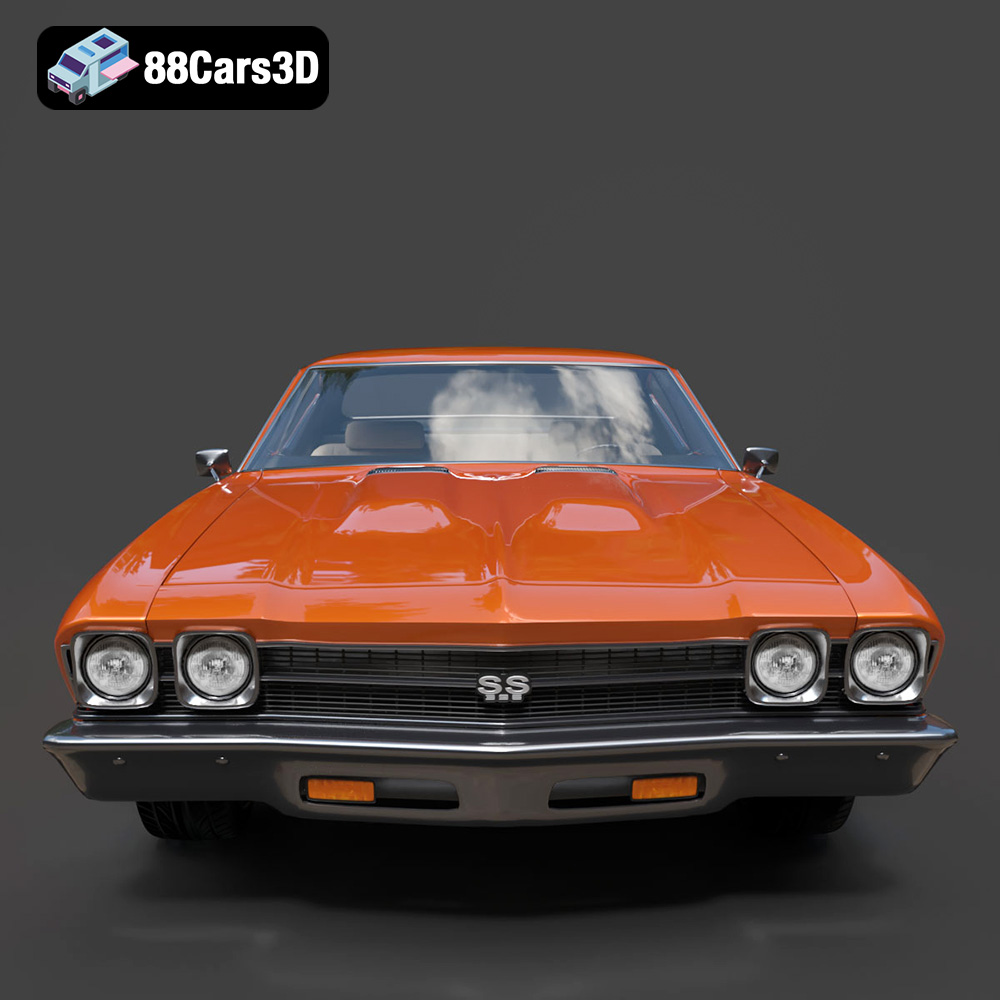
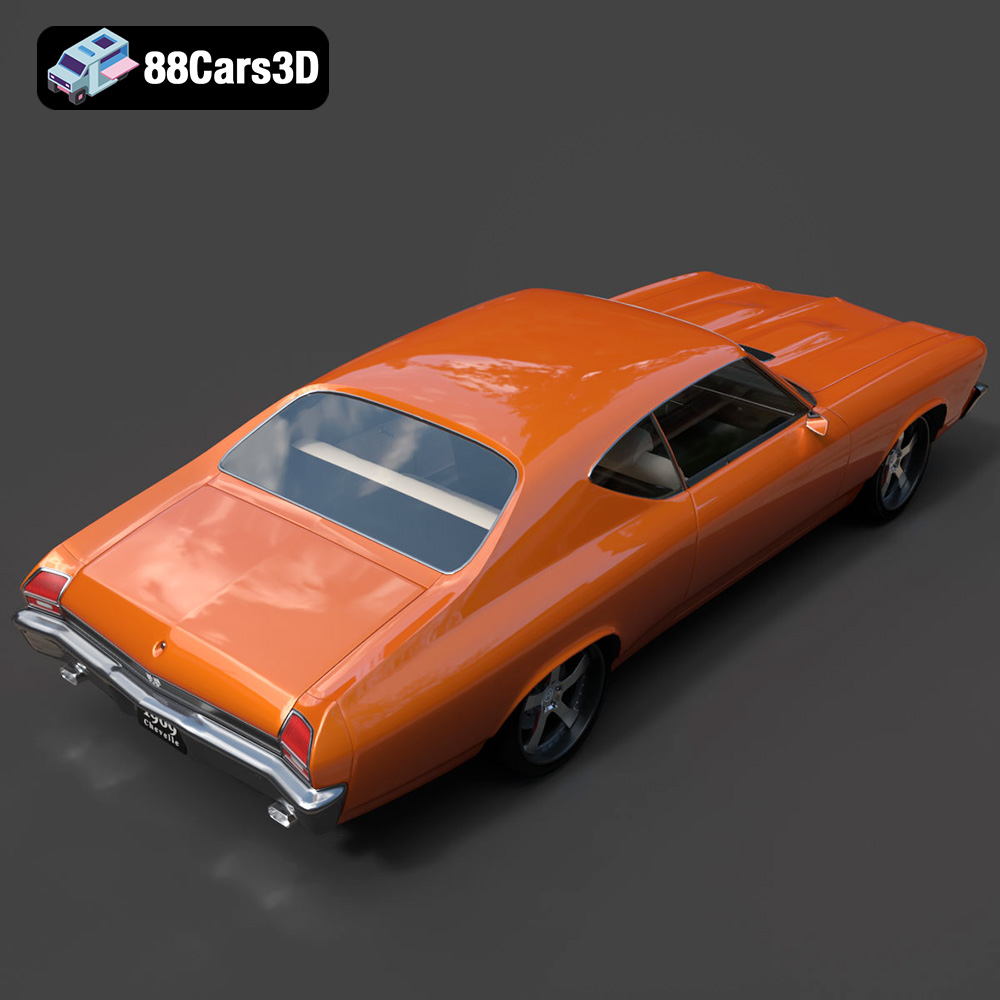
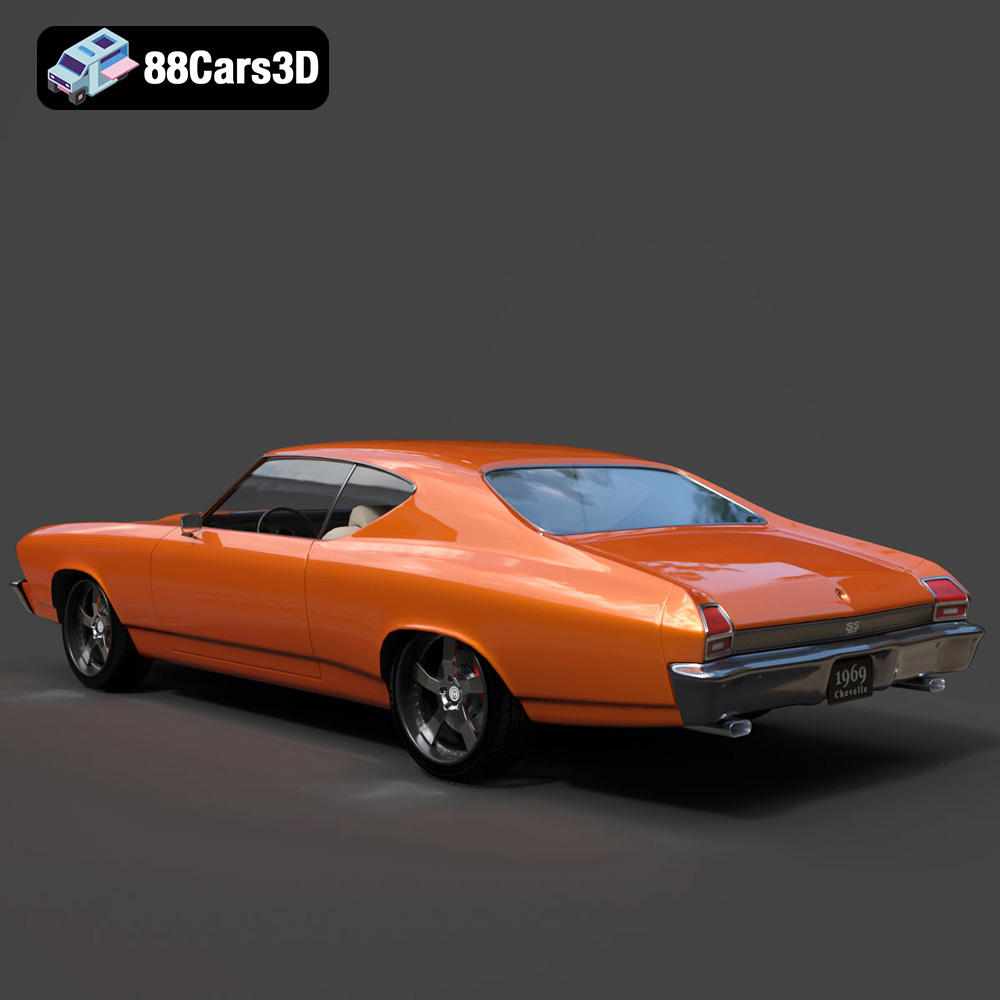
Creating a high-fidelity 3D model of an iconic vehicle like the Chevelle SS 1969 is a meticulous process. It begins with extensive research, often involving historical blueprints, archival photographs, and even direct measurements from physical cars. The goal is to capture not just the overall shape, but every subtle curve, every panel gap, and every piece of trim with absolute accuracy. The Chevrolet Chevelle SS 1969 3D Model excels in this regard, boasting “Accurate 1969 Chevelle SS body proportions,” a “Detailed dual headlight front grille,” and “Chrome front and rear bumpers” that mirror the original’s lustrous appeal. This level of detail ensures that whether the model is used in a cinematic render or a virtual showroom, it faithfully represents the vehicle’s historical authenticity.
High-quality 3D car models serve as a powerful bridge between automotive history and modern visualization techniques. They allow us to re-imagine these classics in contemporary contexts, or to recreate historical scenes with unprecedented realism. For automotive visualization, such models are invaluable for marketing vintage car shows, producing engaging advertisements, or even simulating restoration projects. For entertainment, they can star in period films, television series, or serve as the main attraction in racing games. The Chevrolet Chevelle SS 1969 3D Model is perfectly suited for “classic car showcases, drag racing scenes, retro urban environments, cinematic projects, and muscle car simulations,” providing a versatile asset for a multitude of creative visions.
The choice of file format is a critical technical decision in any 3D workflow, dictating compatibility, feature support, and optimization for specific applications. The Chevrolet Chevelle SS 1969 3D Model offers a comprehensive suite of formats, each tailored for different professional uses. Understanding these formats is essential for seamless integration and maximizing project efficiency.
The `.blend` format is native to Blender, a leading open-source 3D creation suite. When you receive a model in `.blend` format, you’re getting a fully editable Blender scene. This includes not just the mesh, but also materials, textures, lighting setups, cameras, animation data, and even modifiers. For the Chevrolet Chevelle SS 1969 3D Model, the `.blend` file would likely contain the optimized geometry, carefully configured PBR (Physically Based Rendering) materials for paint, chrome, glass, and tires, along with any scene organization like collections or layers. It’s the ideal starting point for artists who wish to deeply customize the model, create intricate animations, or integrate it into complex Blender-based environments.
`.fbx` (Filmbox) is a proprietary file format developed by Autodesk, widely recognized as the industry standard for 3D data exchange. Its strength lies in its ability to store a vast array of 3D data, including geometry, materials, textures, animations, rigging, and even camera and light information. This makes `.fbx` an ideal choice for pipelines involving multiple software packages, such as exporting from 3ds Max or Blender into game engines like Unreal Engine or Unity. For the Chevelle model, an `.fbx` export would typically contain the optimized mesh, UV maps, and references to texture files, ensuring smooth import and setup in real-time applications.
The `.obj` (Wavefront OBJ) format is one of the oldest and most universally supported 3D file formats. It’s a simple, human-readable text file that primarily defines geometry (vertices, normals, texture coordinates, and faces) and can reference an associated Material Template Library (`.mtl`) file for basic material properties and texture maps. While `.obj` doesn’t store animation or rigging data, its widespread compatibility makes it an excellent choice for static mesh exchange between virtually any 3D software. For the Chevrolet Chevelle SS 1969 3D Model, the `.obj` offers a robust, no-frills option for users who need a clean mesh for sculpting, retopology, or rendering in less common software packages.
`.glb` (GL Transmission Format Binary) is an increasingly popular format, especially for web-based 3D, Augmented Reality (AR), and Virtual Reality (VR) applications. It’s a single-file container for 3D models, scenes, and PBR materials, designed for efficient transmission and loading. `.glb` includes geometry, materials, textures (often embedded), and animation, all packed into one compact file. This format is perfect for showcasing the Chevelle SS in an interactive web viewer, integrating it into a mobile AR experience, or deploying it in a lightweight VR environment where performance and file size are critical.
`.stl` (Stereolithography) is the de facto standard file format for 3D printing. Unlike other formats that store material and texture information, `.stl` files represent only the surface geometry of a 3D object as a collection of unconnected triangular facets. It’s a raw mesh, devoid of color or texture data. When preparing the Chevrolet Chevelle SS 1969 3D Model for 3D printing, conversion to `.stl` is essential. The model’s “manifold geometry” (a watertight mesh without holes or self-intersecting faces) is crucial for successful `.stl` generation and subsequent printing.
The `.ply` (Polygon File Format) is another common format for storing 3D data, often used with 3D scanners. It supports the storage of geometry, color, and other attributes (like normals or transparency) per vertex or per face. While less common for general 3D model distribution than `.fbx` or `.obj`, `.ply` can be particularly useful for scientific data, CAD applications, or when a model’s vertex color information is important. For specialized analysis or integration with scan data, the Chevelle model’s `.ply` variant offers a precise representation of its geometric structure.
While `.unreal` is not a direct file extension for import, it signifies an asset that is truly “engine-ready” for Unreal Engine. This typically means the model has been rigorously optimized for Unreal’s rendering pipeline. This includes considerations for polygon count, efficient UV mapping for lightmaps and textures, proper material setup, and skeletal rigging for animation where applicable. The Chevrolet Chevelle SS 1969 3D Model provided as `.unreal` implies it has undergone this optimization, ensuring “Optimized geometry for real-time engines” and “Proper pivot setup for steering and wheel rotation” are pre-configured for drag-and-drop usability within Unreal Engine.
Similar to `.blend` for Blender, `.max` is the native file format for Autodesk 3ds Max. This format captures the entire 3ds Max scene, including geometry, materials, textures, lights, cameras, modifiers, animation, and any scene-specific settings. For professionals working primarily in 3ds Max, the `.max` file of the Chevelle SS offers the most flexibility for in-depth modifications, integration with powerful renderers like V-Ray or Corona, and leveraging Max’s robust animation and rigging tools. It provides the full project context as envisioned by the original modeler.
Achieving photorealistic quality in 3D car models is a testament to meticulous craftsmanship and a deep understanding of surface topology and material science. The Chevrolet Chevelle SS 1969 3D Model demonstrates this commitment to detail, from its exterior curves to its intricate interior components.
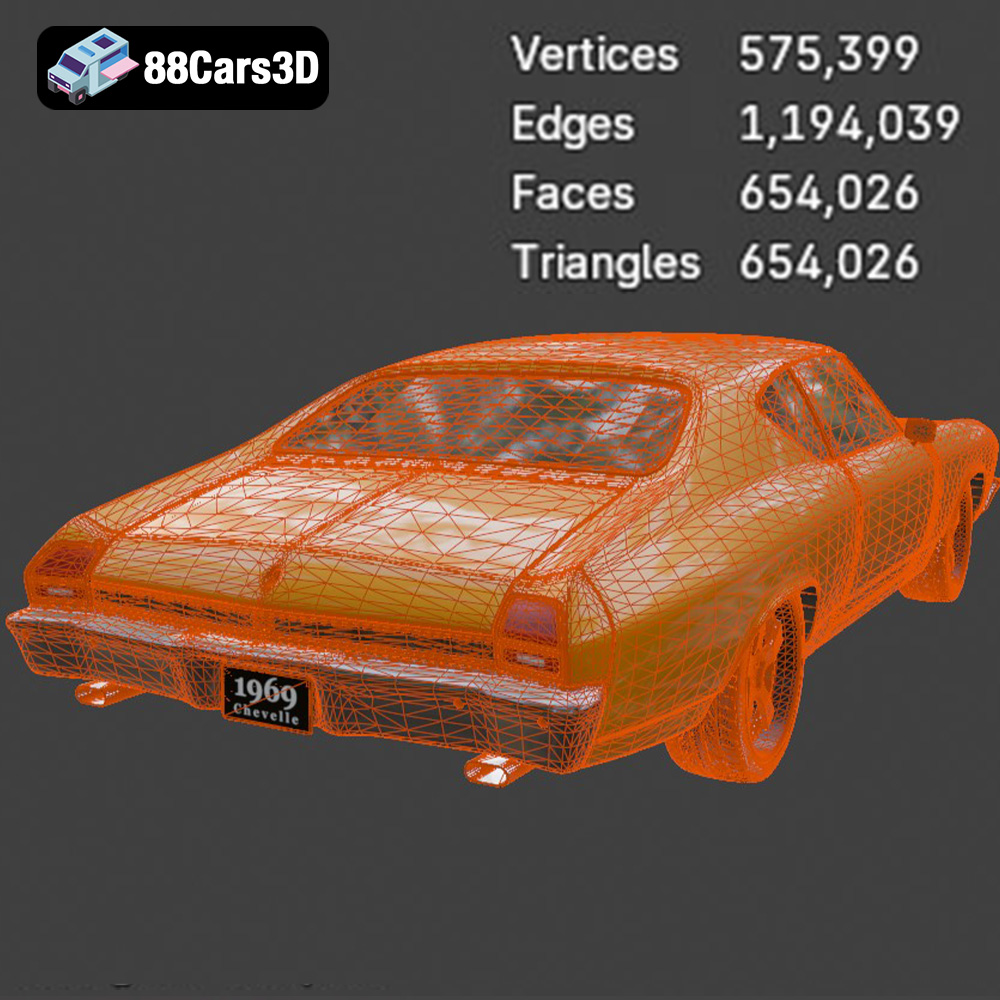
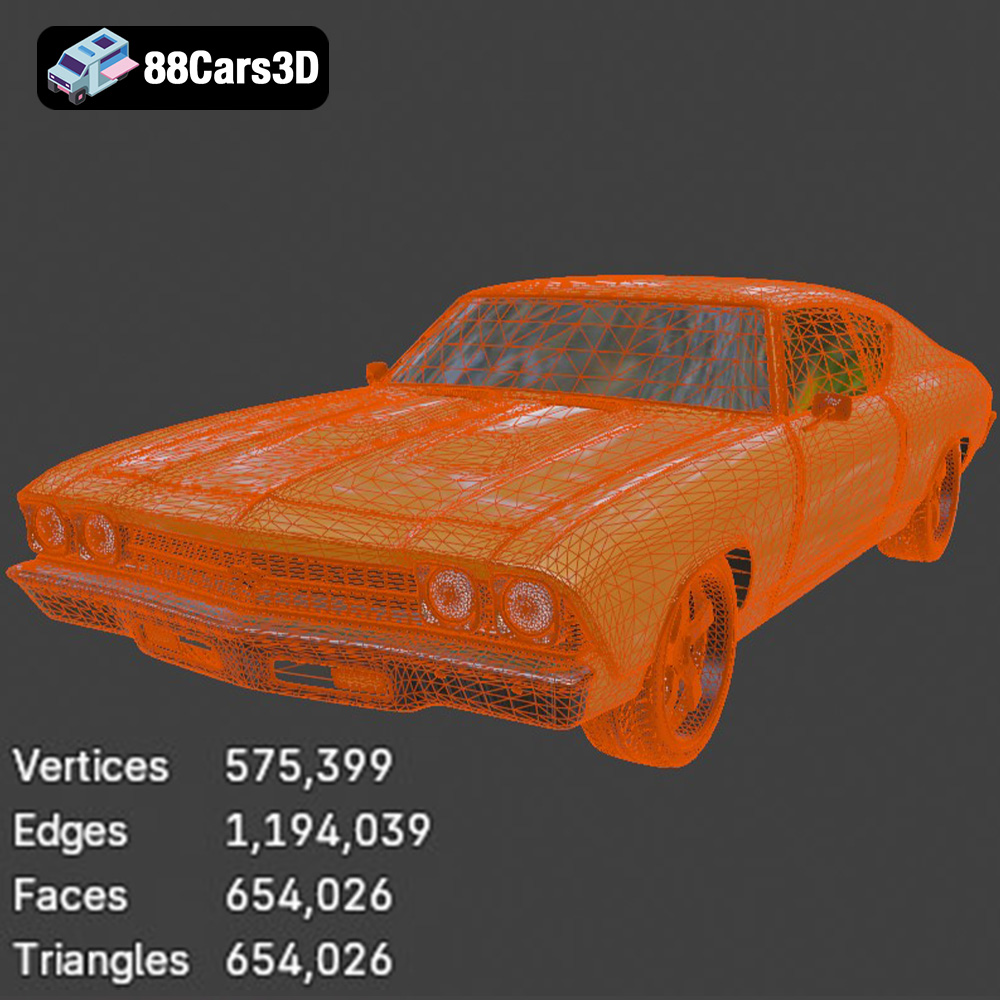
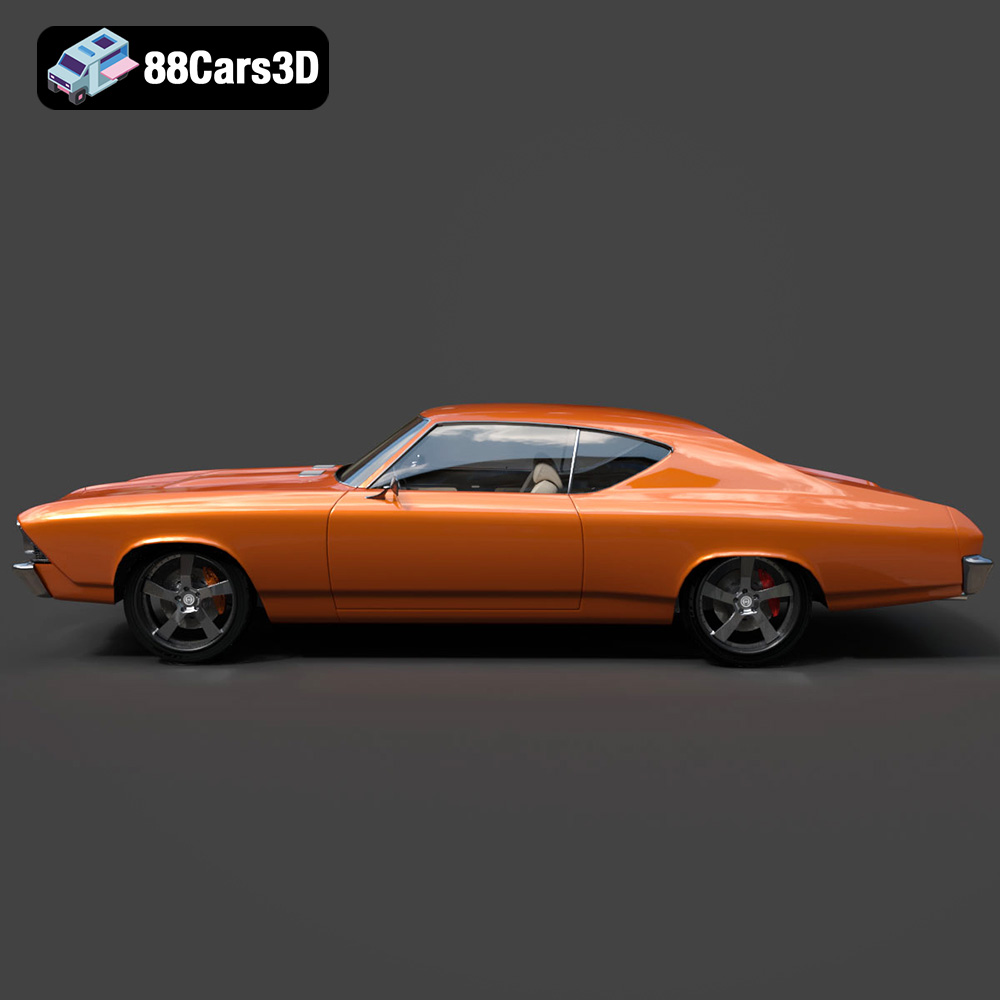
The exterior of any car model is its immediate impression, and for a classic like the Chevelle, accuracy is paramount. This model meticulously captures the “long hood and short deck proportions” and “muscular body lines” that define the 1969 SS. Technical advantages include “Clean and well-organized mesh structure” with “Optimized polygon flow for performance and realism.” This means the model likely uses quad-based topology, which is ideal for smooth subdivision and avoids artifacts when rendering close-ups or applying deformation. Real-world scale accuracy ensures that the model integrates seamlessly into scenes with other assets or into CAD software for precise engineering visualization. Critical details like “Sculpted hood with optional cowl induction styling,” “SS badging and trim detailing,” and “Classic muscle car wheels with tire tread detail” are all carefully implemented to enhance realism.
A truly immersive 3D car model doesn’t stop at the exterior. The interior plays a crucial role in creating a believable and engaging experience, especially for virtual tours or driving simulations. The Chevelle SS 1969 3D Model delivers on this front with a “Vintage dashboard with analog gauges,” a “Classic steering wheel design,” and “Bucket seat geometry with stitching detail.” These elements, coupled with a “Center console and gear shifter” and “Door panels and interior trim representation,” ensure that the interior feels as authentic as the exterior. For applications like AR/VR, where users can ‘sit’ inside the car, this level of interior detail is indispensable for fostering a sense of presence and realism.
The versatility of a high-quality 3D car model is defined by its ability to integrate into various professional pipelines. The Chevrolet Chevelle SS 1969 3D Model is engineered with this multi-purpose utility in mind, providing a robust foundation for diverse creative and technical endeavors.
For photorealistic automotive rendering, the Chevelle SS model from 88cars3d.com is a powerful asset. In workflows using software like 3ds Max or Blender, artists can leverage industry-leading renderers such as V-Ray, Corona, or Cycles. The model’s “Clean and well-organized mesh structure” and “Optimized polygon flow” ensure smooth results, even with high subdivision levels. Artists can set up sophisticated lighting environments, utilizing HDRI (High Dynamic Range Image) maps for realistic reflections and global illumination, or crafting intricate studio lighting rigs to highlight the car’s iconic contours. Customization options, such as changing the body color to “classic red, black, blue, metallic finishes” or adding “racing stripes or SS decals,” allow for tailored marketing visuals for classic car promotions or retro-themed advertisements. The separate wheels and steering components also allow for static renders with dynamic wheel positions, or even basic turntable animations showcasing the vehicle from all angles.
In the demanding world of game development, performance and visual fidelity must strike a delicate balance. The Chevrolet Chevelle SS 1969 3D Model is described as having “Optimized geometry for real-time engines,” making it suitable for titles ranging from open-world driving games to dedicated drag racing simulators. When integrating into engines like Unreal Engine or Unity, developers would typically employ Level of Detail (LOD) systems, creating simplified versions of the model that swap in at greater distances to maintain high frame rates. The “Proper pivot setup for steering and wheel rotation” is a critical technical advantage, facilitating straightforward rigging and animation for realistic vehicle dynamics. This attention to technical detail minimizes setup time for developers, allowing them to focus on gameplay and immersive environments.
Augmented Reality (AR) and Virtual Reality (VR) offer new frontiers for experiencing classic cars. The Chevelle SS model, particularly in `.glb` format, is an excellent candidate for these platforms. Imagine a virtual showroom where customers can walk around, inspect, and even customize their dream 1969 Chevelle, all from a web browser or a VR headset. The model’s detailed interior allows for “immersive classic car showrooms” and “interactive automotive exhibitions,” where users can open doors, explore the dashboard, or even change interior colors in real-time. This interactive potential makes the Chevelle model a valuable tool for marketing, educational content, or simply providing a unique interactive experience for enthusiasts.
Beyond digital visualization, the Chevrolet Chevelle SS 1969 3D Model offers the exciting possibility of tangible creation through 3D printing. This capability transforms a digital asset into a physical collectible, a prototype, or a unique display piece.
Converting a high-detail rendering model into a 3D printable file requires specific considerations. The primary step is ensuring the model’s geometry is “manifold,” meaning it’s a completely watertight mesh without any gaps or intersecting faces – a critical requirement for the `.stl` format. The product description emphasizes that the model is “Convertible to .stl format for collectible scale muscle car models and display miniatures.” The recommended scales of “1:32 / 1:24 / 1:18 / 1:12” offer flexibility, though smaller scales will test the limits of print resolution for fine details. “Wall thickness: 1.5–2.5 mm” is a crucial guideline, preventing structural weakness in printed parts.
Successful 3D printing of intricate models like a car requires careful calibration of print settings. “Layer height: 0.10–0.16 mm” suggests a balance between print speed and detail for FDM printers, while resin (SLA/DLP) printers could achieve even finer layers for exceptional surface quality, especially for smaller scales. “Infill: 15–25%” provides structural integrity without excessive material usage. Supports are almost always “Required for mirrors, bumper edges, and undercarriage details,” preventing overhangs from collapsing during printing. The “Print orientation: Body printed angled for smooth surface finish; wheels printed separately” is a professional tip that minimizes visible layer lines on prominent surfaces. After printing, a range of “Post-processing: sanding, primer, gloss muscle-car paint finish, optional chrome detailing” steps are necessary to achieve a showroom-quality miniature. This allows enthusiasts to create bespoke, hand-finished scale models that truly stand out, making the 88cars3d.com model a fantastic base for such projects.
The true value of a premium 3D asset lies not just in its initial quality, but in its adaptability and the possibilities it unlocks for customization and ongoing use. The Chevrolet Chevelle SS 1969 3D Model is designed with this long-term utility in mind.
The “Customization Options” for the Chevelle SS model are extensive, empowering artists and developers to tailor the vehicle to their exact project needs. Imagine being able to “Change body color” to any classic hue, from a vibrant Hugger Orange to a deep Fathom Green. Adding “racing stripes or SS decals” allows for period-accurate or customized branding. “Modify wheel style and tire type” can drastically alter the car’s character, transforming it from a pristine showroom piece to a hardened drag racer. Even subtle tweaks like “Adjust ride height or drag racing setup” can influence the visual narrative. Furthermore, the ability to “Configure lighting for sunset boulevard or garage scenes” enables artists to craft specific moods and atmospheres for their renders. This flexibility ensures the Chevelle model remains relevant across countless creative iterations.
Sourcing high-quality 3D car models is crucial for efficient and professional workflows. 88cars3d.com prides itself on providing assets like the Chevrolet Chevelle SS 1969 3D Model, which combines historical accuracy with technical excellence. The inclusion of multiple file formats – `.blend`, `.fbx`, `.obj`, `.glb`, `.stl`, `.ply`, `.unreal`, and `.max` – is a testament to this commitment, ensuring compatibility across a broad spectrum of software and applications. This meticulous attention to detail and professional-grade preparation saves countless hours for artists and developers, allowing them to focus on their creative vision rather than struggling with mesh cleanup or format conversions. When you purchase from 88cars3d.com, you’re investing in a reliable, versatile, and expertly crafted digital asset that will enhance your projects from concept to final output.
The Chevrolet Chevelle SS 1969 3D Model represents the pinnacle of digital automotive artistry and engineering. It’s a meticulously crafted asset that brings a legendary American muscle car to life in the digital realm, ready for any professional application. From stunning photorealistic renderings that capture the essence of its aggressive styling to optimized game assets that deliver exhilarating real-time experiences, and even precision 3D prints for tangible collectibles, this model provides an unparalleled foundation.
Its comprehensive file format support, attention to clean topology, real-world scale accuracy, and interior detail ensure seamless integration into diverse workflows, be it automotive visualization, game development, AR/VR experiences, or 3D printing projects. For those seeking to elevate their 3D automotive projects, this model from 88cars3d.com offers a robust, versatile, and high-fidelity solution that truly honors the iconic legacy of the 1969 Chevelle SS. Embrace the power of precision modeling and unleash your creative potential.
The Chevrolet Chevelle SS 1969 3D Model is a high-detail digital recreation of one of the most iconic American muscle cars of the late 1960s. Known for its aggressive styling, powerful V8 performance, and bold street presence, the 1969 Chevelle SS remains a symbol of classic muscle car heritage. This 3D model accurately represents the long hood and short deck proportions, signature dual headlight front fascia, SS badging, muscular body lines, chrome bumpers, detailed grille, performance wheels, and period-correct interior layout. Built with clean topology and real-world scale accuracy, it is ideal for rendering, animation, automotive visualization, game development, and AR/VR experiences. Perfect for classic car showcases, drag racing scenes, retro urban environments, cinematic projects, and muscle car simulations.
$9.99
.1969chevelle
.arvr
.automotive
.blend
.car3dmodel
.chevelle
.chevelless
.chevrolet
.classiccar
.fbx
.gameasset
.glb
.max
.musclecar
.obj
.ply
.rendering
.simulation
.stl
.unreal
.vintagecar