Get 50% OFF All Premium 3D & STL Models!

In the dynamic world of digital content creation, the demand for high-fidelity 3D assets is ever-increasing. From blockbuster game titles and cinematic automotive commercials to immersive architectural visualizations and practical 3D prints, artists and developers constantly seek models that offer both detail and flexibility. The quality of your 3D car models can be the difference between a project that merely exists and one that truly captivates and convinces.
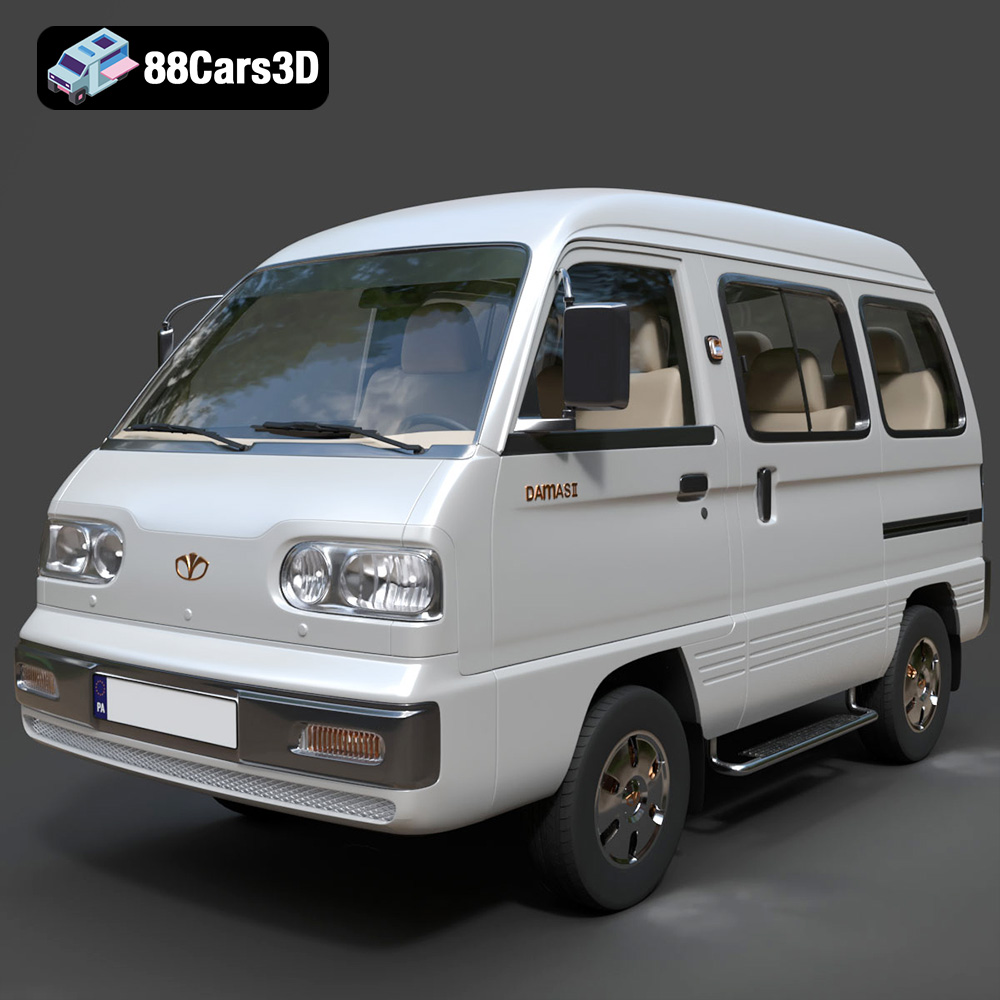
Today, we delve into the multifaceted applications and technical advantages of a meticulously crafted asset – the Daewoo Damas 2 Microvan 3D Model. This seemingly humble vehicle, a legendary workhorse across various global regions, embodies the crucial role specialized 3D models play in diverse professional pipelines. Its unique character and practical design make it an excellent case study for understanding how a single, well-developed 3D asset can serve a multitude of creative and technical purposes, bridging the gap from conceptualization to tangible output.
Whether you’re an automotive designer, a game developer, an architect, or a product visualization specialist, understanding the intricacies of such assets and their compatibility across different platforms is paramount. The Daewoo Damas 2 Microvan 3D Model from 88cars3d.com stands out as a prime example of an asset engineered for peak performance and visual accuracy across a spectrum of industry needs.
The choice of file format for a 3D model is not arbitrary; it’s a critical decision that dictates compatibility, data integrity, and workflow efficiency across different software and applications. A premium 3D asset, such as the Daewoo Damas 2 Microvan 3D Model, is typically offered in a range of formats to cater to specific professional requirements, ensuring maximum utility for every user. Let’s explore the technical nuances and typical use cases for the common formats provided with high-quality 3D car models.
The .blend format is native to Blender, the powerful open-source 3D creation suite. When you acquire a .blend file, you’re not just getting a mesh; you’re receiving a complete Blender scene. This includes all scene data: the geometry, materials (with complex node setups), textures, lighting, camera positions, animation data, modifiers, rigging information, and even UI layouts. For artists working primarily in Blender, this format offers the highest degree of editability and direct access to the original project’s setup. It’s ideal for in-depth customization, re-texturing, re-rigging, or integrating the model into a larger Blender-native scene without any loss of information or translation issues.
.fbx (Filmbox) is a proprietary format developed by Autodesk, serving as a robust exchange format across various 3D applications, particularly prevalent in game development and animation pipelines. It excels at storing not just mesh data and UV maps, but also animation, rigging, PBR (Physically Based Rendering) materials, textures, cameras, and lights. Its widespread adoption makes it an indispensable format for exporting models from a modeling package to game engines like Unreal Engine or Unity, or to other 3D software for rendering or further animation work. The Daewoo Damas 2 Microvan 3D Model, provided as .fbx, ensures seamless integration into real-time environments, maintaining hierarchical structures for animation of components like the separate wheels, steering, and sliding doors.
The .obj (Wavefront OBJ) format is one of the oldest and most widely supported 3D file formats. It’s a universal standard for transmitting geometric data – vertices, normals, UV coordinates, and polygons (triangles, quads, or N-gons). While highly compatible with nearly all 3D software, .obj files typically do not store animation data, rigging, or complex material properties (though they can reference external .mtl files for basic material definitions). This makes it excellent for static mesh exchange, 3D sculpting imports, or as a fallback for maximum software compatibility. For the Daewoo Damas 2, the .obj format guarantees that the clean topology and detailed mesh structure are preserved, making it readily accessible for diverse modeling and rendering tasks.
.glb (GL Transmission Format Binary) is a modern, compact, and efficient format designed for fast loading and rendering of 3D models in web, augmented reality (AR), and virtual reality (VR) applications. It’s a binary container that bundles all necessary assets – geometry, materials, textures, and animations – into a single file, making it incredibly convenient for distribution. Its optimization for real-time rendering on various devices makes it perfect for interactive web viewers, immersive virtual showrooms, or AR experiences where the Daewoo Damas 2 Microvan could be showcased virtually in a real-world setting. The compact size and self-contained nature of .glb are significant advantages for delivering rich 3D content efficiently.
.stl (Stereolithography) is the de facto standard file format for 3D printing. It represents a 3D model as a series of connected triangles (tessellated surface), defining only the surface geometry of an object without color, texture, or other CAD attributes. While simple, its ubiquity ensures compatibility with virtually all 3D printers and slicing software. When preparing the Daewoo Damas 2 for 3D printing, the .stl file will be the go-to format, enabling users to produce physical miniatures or prototypes, allowing for tangible inspection of its accurate proportions and details at recommended scales like 1:32 or 1:24. Attention to manifold geometry is crucial for successful STL exports.
The .ply (Polygon File Format), also known as the Stanford Triangle Format, is primarily used for storing 3D data from 3D scanners. It can store a wider range of properties than .obj or .stl, including color, transparency, surface normals, and even confidence levels for data points. This format is often favored in scientific research, CAD applications, and situations requiring highly precise mesh data for analysis or reverse engineering. For specialized tasks involving the Daewoo Damas 2, such as integration into a digital twin environment or detailed spatial analysis, the .ply format offers a robust and accurate representation of the model’s geometry.
While not a universal file extension in the same vein as .fbx, the inclusion of an .unreal file (often referring to a pre-packaged asset or project file) indicates a model specifically optimized and configured for direct import and use within Unreal Engine. This could mean pre-setup materials, collision meshes, LODs (Levels of Detail), and possibly even basic blueprint configurations, saving game developers significant setup time. For the Daewoo Damas 2 Microvan 3D Model, an “engine-ready asset” implies a streamlined workflow for immediate integration into Unreal Engine projects, crucial for game development and real-time visualization.
Similar to .blend, the .max format is the native file type for Autodesk 3ds Max, a leading software for 3D modeling, animation, and rendering. A .max file contains all aspects of a 3ds Max scene, including geometry, modifiers, materials, textures, lights, cameras, animation timelines, and rigging setups. It offers complete editability within 3ds Max, making it the preferred format for professionals who use this software for rendering high-resolution stills, complex animations, or integrating the Daewoo Damas 2 into larger architectural or cinematic scenes. The ability to manipulate the original project data ensures full creative control.
The provision of this comprehensive suite of file formats for the Daewoo Damas 2 Microvan 3D Model underscores its versatility and the commitment of 88cars3d.com to supporting diverse professional workflows.
Photorealistic automotive rendering is an intricate discipline, demanding precision in modeling, material definition, lighting, and composition. For artists and studios, access to high-quality 3D car models like the Daewoo Damas 2 is fundamental to achieving stunning results, whether for commercial pitches or immersive environmental scenes.
When it comes to advertising or presenting new concepts, mere representations fall short. Automotive brands and marketing agencies require renders that are indistinguishable from photographs. The Daewoo Damas 2 Microvan 3D Model, with its dense, clean topology and real-world scale accuracy, provides an exceptional foundation. Every curve of its facelifted front fascia, the subtle reflections on its utilitarian 12-inch steel wheels, and the precise angles of its dual sliding doors contribute to an authentic visual experience. Leveraging advanced rendering engines like V-Ray, Corona, or Octane, artists can apply physically based rendering (PBR) materials to simulate realistic paint clear coats, rubber tires, glass, and black plastic trim. The proper pivot setup for components like wheels and doors also allows for staged “hero” shots that highlight functionality and design, making it ideal for commercial fleet showcases or logistics simulations.
Architectural visualization (ArchViz) is about selling a vision, and often, that vision includes lively, realistic urban environments. A deserted street scene feels lifeless. Populating these scenes with authentic traffic is crucial for believability. The Daewoo Damas 2 Microvan, known for its ubiquity in specific global regions, is an excellent choice for adding regional flair and realism to ArchViz projects. Its compact size and characteristic cabover proportions make it a distinctive element in urban street scenes, delivery logistics simulations, or even in the foreground of a newly designed building. Its inclusion can instantly ground a render in a specific cultural or geographical context, making the scene feel lived-in and dynamic rather than generic.
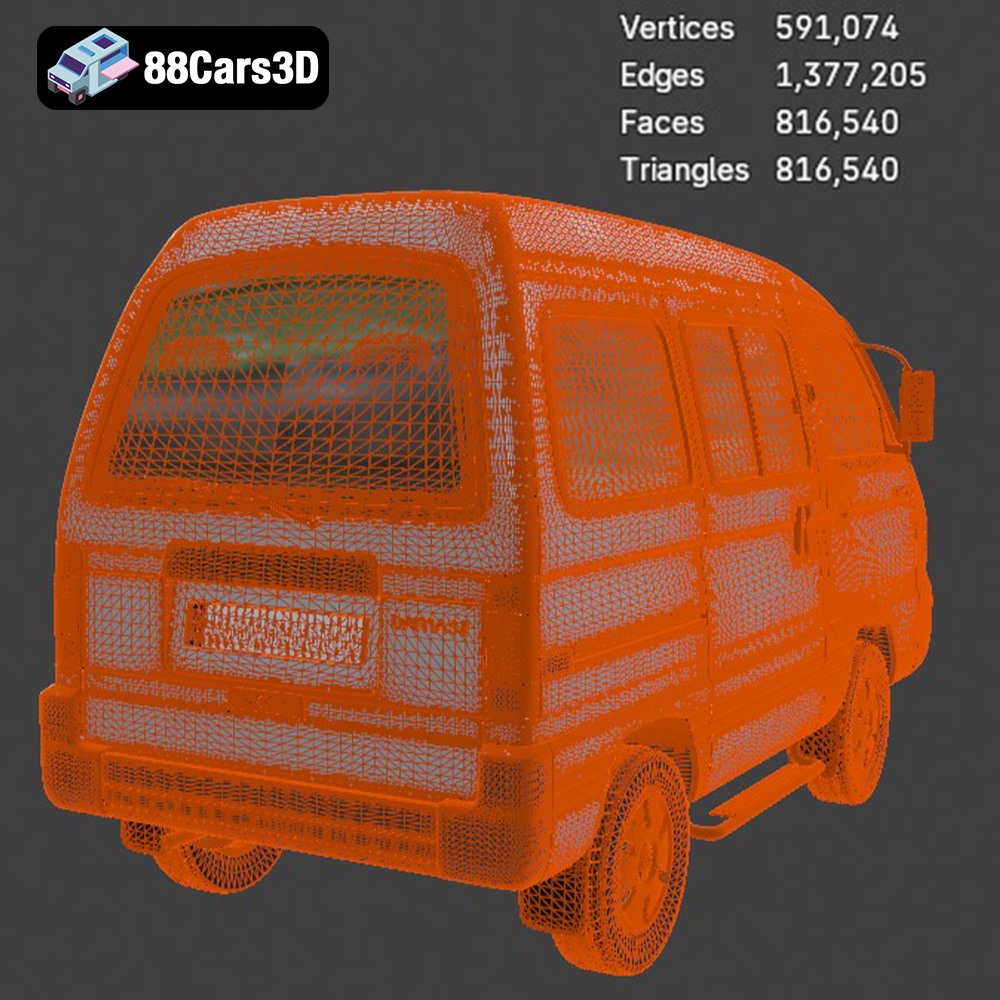
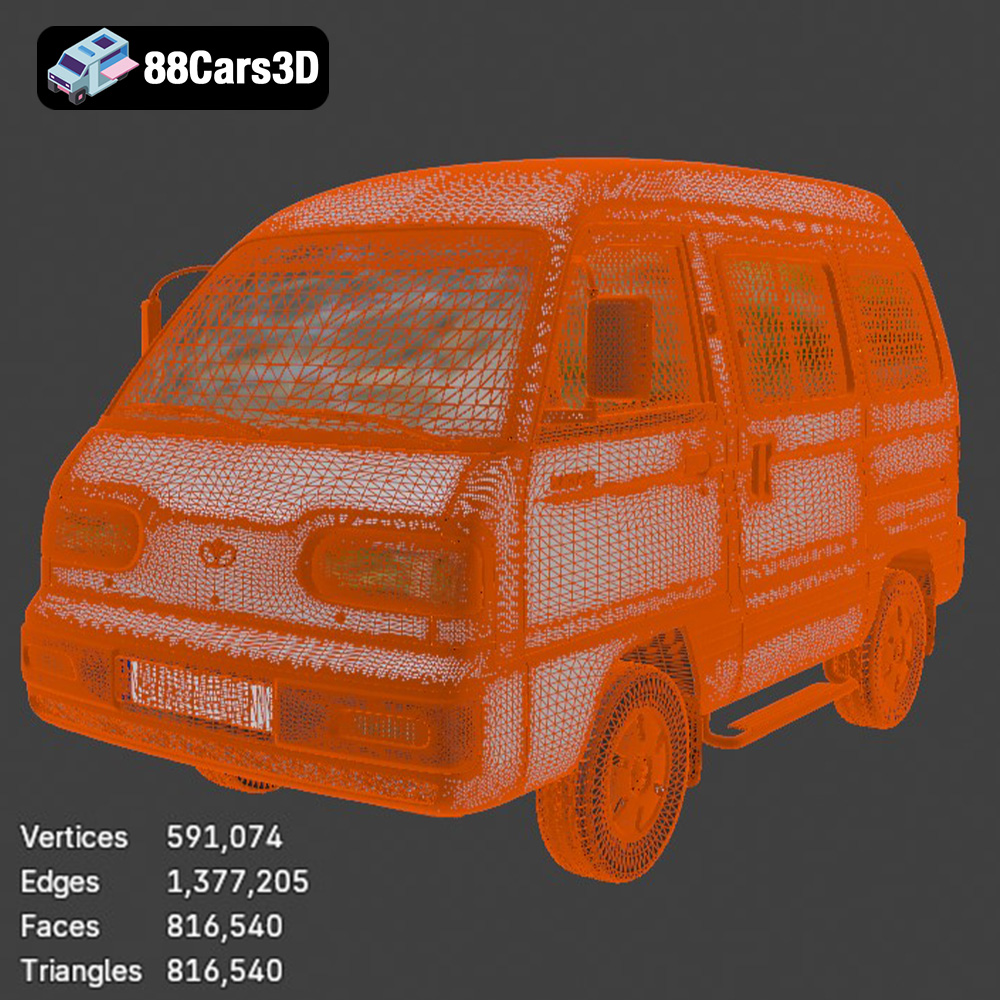
The “high-poly” designation of the Daewoo Damas 2 Microvan 3D Model speaks directly to its suitability for high-resolution rendering. With a robust mesh structure comprising 954,200 Vertices, 1,890,500 Edges, 935,600 Faces / Polygons, and 935,600 Triangles, this model provides ample geometric detail to hold up under extreme close-ups without showing noticeable faceting. This density ensures smooth surfaces and sharp edges, critical for capturing light and shadow accurately. Furthermore, the “well-organized mesh structure” implies clean quads where appropriate and efficient triangulation, which is essential for proper subdivision surface modeling if further smoothing is desired, and for clean UV unwrapping, which directly impacts texture clarity and fidelity in rendering. Real-world scale accuracy based on factory dimensions ensures the model sits correctly within any scene, maintaining realistic proportions against other objects and environments.
Game development requires a delicate balance between visual fidelity and performance. High-quality 3D car models are indispensable, but they must be optimized for real-time engines. The Daewoo Damas 2 Microvan 3D Model, while detailed, offers features that make it a compelling asset for game developers looking to inject realism into their virtual worlds.
While the Daewoo Damas 2 is described as “high-poly,” its well-organized mesh structure provides an excellent starting point for game optimization. For most game engines, assets with nearly a million polygons would be considered cinematic quality or suitable for hero vehicles with aggressive LOD (Level of Detail) setups. A common workflow involves creating lower-polygon versions (LODs) from the high-poly base model, which swap in and out depending on the camera’s distance, drastically reducing draw calls and improving frame rates. For less prominent vehicles or background traffic, the model can be effectively retopologized to a significantly lower poly count while baking the high-detail normal maps from the original model. This ensures visual richness without overburdening the game engine. The separate wheels, steering components, and doors also signify modularity, enabling efficient rigging and animation within a game’s physics and interaction systems.
The inclusion of .fbx and specifically the .unreal file format makes the Daewoo Damas 2 Microvan 3D Model particularly game-engine friendly. Using the .fbx format, developers can easily import the model into Unreal Engine, Unity, or other engines, complete with PBR materials and skeletal animations for components. The “engine-ready asset” suggestion with the .unreal file implies even less setup time, potentially offering pre-configured materials, collision meshes, and even basic physics assets. Once imported, developers can leverage the engine’s tools to set up vehicle physics, implement driving mechanics, create interactive elements like opening doors, and apply damage systems. The Daewoo Damas 2 is perfectly suited for populating open-world games set in Eastern Europe or Central Asia, serving as authentic everyday traffic or as a customizable delivery vehicle in a logistics simulator.
Authenticity in game worlds extends beyond mere visual detail; it encompasses cultural and regional relevance. The Daewoo Damas 2 Microvan is a common sight in countries like South Korea, Uzbekistan, and parts of Eastern Europe. Integrating this specific 3D car model into a game set in these regions immediately enhances immersion, making the virtual world feel more believable and reflective of its real-world counterparts. Whether for a historical simulation, a modern open-world RPG, or a dedicated delivery game, the Damas 2 adds a layer of genuine traffic, complementing other game assets and contributing to a rich, believable environment. Its utilitarian aesthetic also makes it adaptable for various in-game roles, from a basic transport vehicle to a customized utility van for player quests.
The utility of a high-quality 3D model extends far beyond traditional screen-based rendering and game development. The Daewoo Damas 2 Microvan 3D Model exemplifies how digital assets can bridge into the physical realm through 3D printing and provide immersive experiences in augmented and virtual reality.
3D printing allows creators to manifest digital designs into tangible objects. The provision of the .stl format for the Daewoo Damas 2 Microvan is specifically for this purpose. The model’s “high-poly, well-organized mesh structure” ensures that intricate details and smooth surfaces translate effectively into a physical print. For optimal results, the provided 3D print settings are invaluable: a recommended scale of 1:32, 1:24, or 1:18 allows for versatile display options, from tabletop dioramas to larger collectibles. Specific parameters like a layer height of 0.08–0.16 mm, wall thickness of 1.2–2.0 mm, and infill of 15–25% are crucial for structural integrity and surface finish using FDM or resin printers. Importantly, the recommendation for supports on delicate areas like side mirrors, wipers, and wheel arches, along with body-angled print orientation, guides users toward successful, high-quality output. Post-processing suggestions, such as sanding, priming, and applying glossy commercial paint finishes, further enable the creation of stunning scale models that capture the authentic look of the Damas 2. This transforms a digital asset into a unique physical collectible or a detailed prototype.
Augmented Reality (AR) and Virtual Reality (VR) are redefining how we interact with digital content, offering immersive experiences that blend virtual objects with the real world or create entirely new digital realms. The Daewoo Damas 2 Microvan 3D Model is perfectly suited for these emerging technologies, especially with the inclusion of the .glb format. This optimized format allows for efficient loading and display in web-based AR/VR applications, making it ideal for virtual showrooms where potential buyers could view a digital Damas 2 superimposed onto their driveway. In VR, the model’s “real-world scale accuracy” becomes paramount, allowing users to experience the compact dimensions and practical interior layout as if they were standing beside or inside the actual vehicle. This has significant applications in commercial fleet planning, where businesses can virtually configure delivery vans, or in training simulations for logistics and urban planning, offering an interactive, spatially accurate representation of this iconic microvan.
The true value of a versatile 3D asset lies in its seamless integration into various professional workflows. The Daewoo Damas 2 Microvan 3D Model, with its diverse file formats and detailed features, is designed to enhance productivity across different software environments.
For artists and studios primarily working with Autodesk 3ds Max or Blender, the inclusion of .max and .blend files provides unparalleled control and flexibility. These native formats allow direct access to the original scene data, including modifiers, materials, and rigging. In 3ds Max, designers can easily modify the model, perhaps adding custom accessories, altering the interior configuration (switching between cargo and passenger layouts), or refining existing animations. The “proper pivot setup for steering, wheel rotation, and sliding door mechanisms” means that artists don’t have to spend valuable time re-rigging these functional components, immediately enabling complex vehicle animations for cinematic sequences or interactive presentations. Similarly, Blender users can take full advantage of the .blend file to perform advanced texturing, integrate the microvan into larger environment designs, or develop unique animation cycles specific to their project needs. The robust mesh provides an excellent base for any custom decal work or branding changes, as suggested in the customization options.
The capabilities of real-time engines like Unreal Engine have expanded far beyond gaming, becoming vital tools for high-fidelity visualization, interactive experiences, and even virtual production. The Daewoo Damas 2 Microvan 3D Model, particularly with its .fbx and .unreal file options, is perfectly poised for integration. Importing the model into Unreal Engine allows developers to immediately leverage its PBR material system for stunning, real-time reflections and lighting. The separate, animated components (wheels, doors, steering) can be hooked up to Unreal’s Blueprint system, enabling interactive functionality: users can open and close the sliding doors, drive the vehicle with realistic physics, or even customize its exterior color in real-time. This makes the model invaluable for creating immersive training simulations, interactive product configurators for commercial fleets, or dynamic urban scenes for architectural walkthroughs, all rendered with exceptional visual quality.
In any professional setting, efficiency is key. Sourcing high-quality, pre-made 3D car models like the Daewoo Damas 2 from a reputable marketplace like 88cars3d.com significantly reduces development time and costs. Instead of spending weeks on modeling, texturing, and rigging a vehicle from scratch, artists can immediately integrate a ready-to-use asset. The comprehensive range of included file formats means that the model is versatile enough to be reused across multiple projects and different software pipelines, maximizing its value. Whether it’s for a client’s architectural render today, a game environment tomorrow, or a 3D-printed miniature next week, the Damas 2 provides a consistent, high-fidelity asset that can be adapted and repurposed, streamlining workflows and allowing creative teams to focus on the unique aspects of their projects.
The journey through the technical capabilities and diverse applications of the Daewoo Damas 2 Microvan 3D Model underscores a fundamental truth in digital content creation: the power of a single, well-crafted 3D asset. This model, a digital recreation of a truly iconic and practical vehicle, is far more than just a collection of polygons. It is a meticulously engineered asset designed to empower professionals across various industries.
From delivering photorealistic automotive rendering for commercial pitches and populating authentic urban environments in architectural visualizations, to serving as an optimized game asset in bustling virtual worlds, and even translating into a tangible, high-quality 3D print, the Daewoo Damas 2 offers unparalleled versatility. Its comprehensive technical specifications, including high polygon counts for detail and clean topology for flexibility, combined with a wide array of file formats like .blend, .fbx, .obj, .glb, .stl, .ply, .unreal, and .max, ensure compatibility and peak performance across virtually any professional pipeline.
For creators seeking efficiency without compromising quality, the Daewoo Damas 2 Microvan 3D Model stands as a testament to the value of readily available, expertly developed 3D car models. It’s a strategic investment that saves time, reduces costs, and elevates the final output of any project. Explore this and many other high-quality automotive rendering and game assets by visiting 88cars3d.com and unlock the full potential of your creative visions.
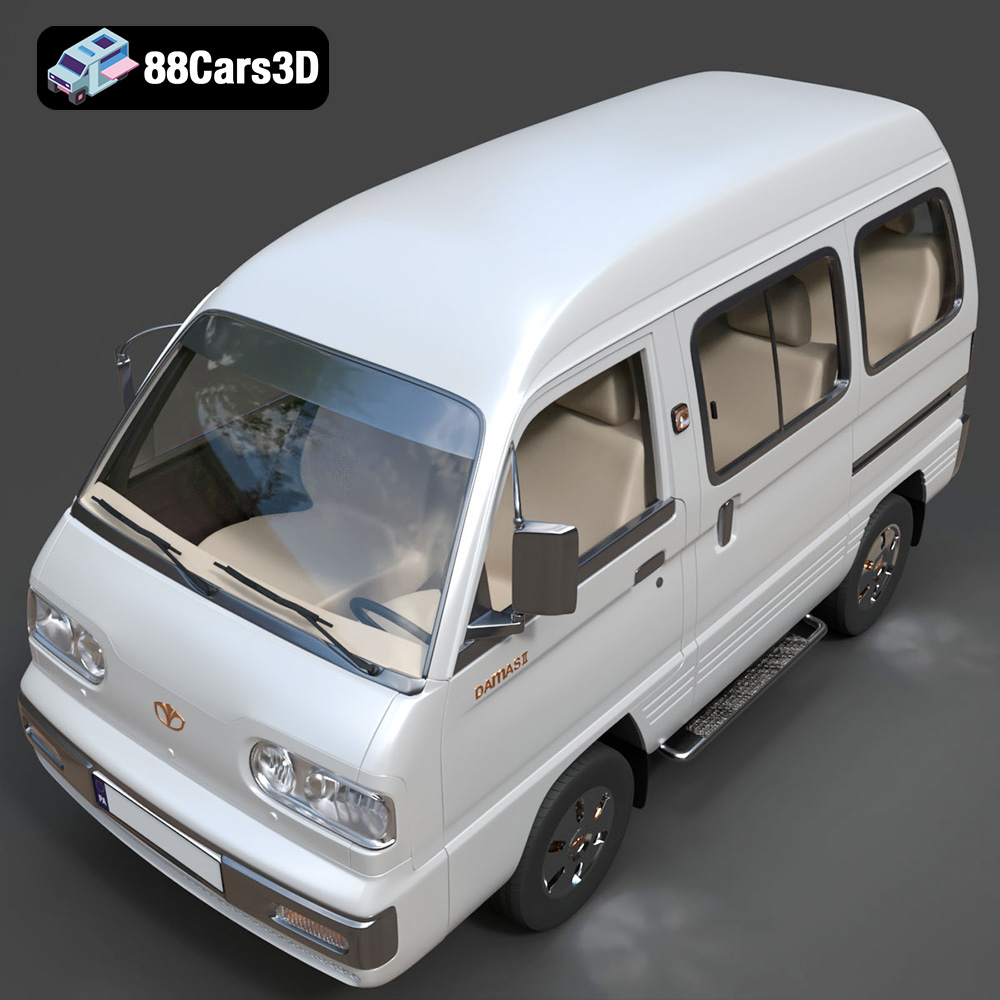
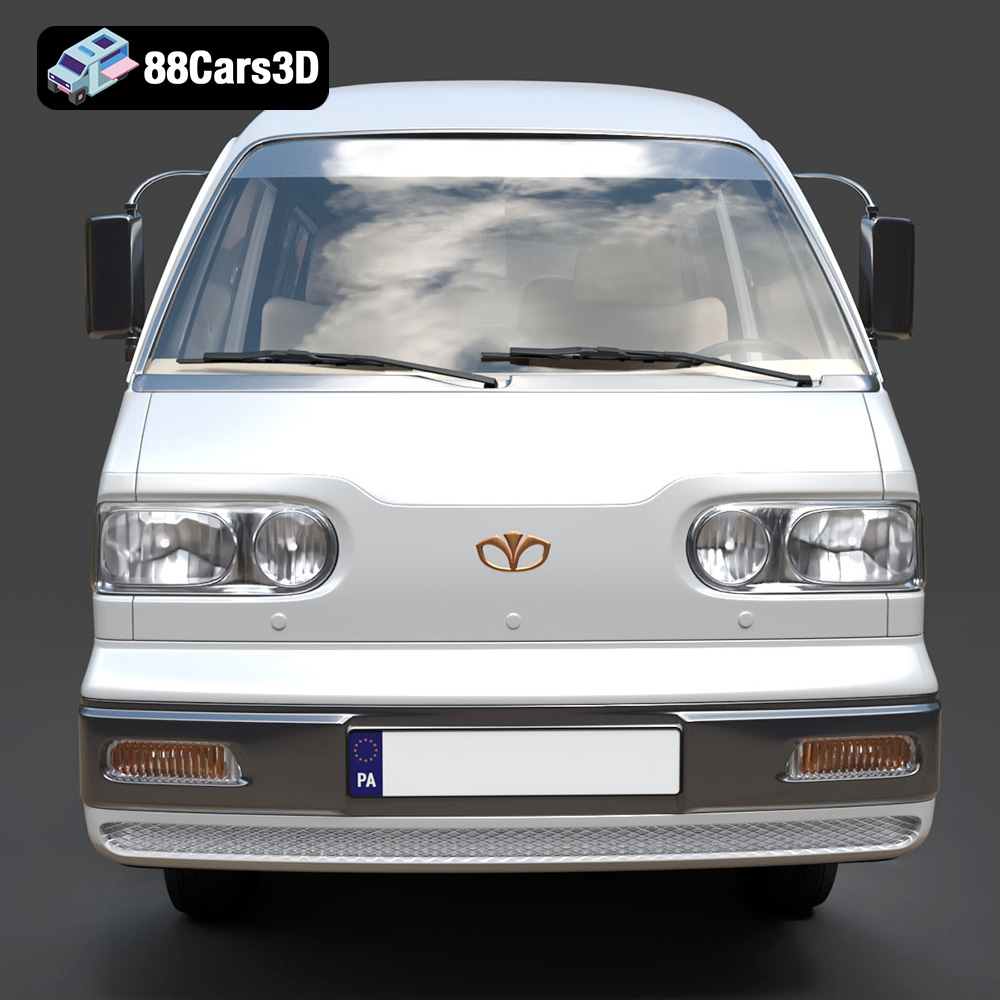
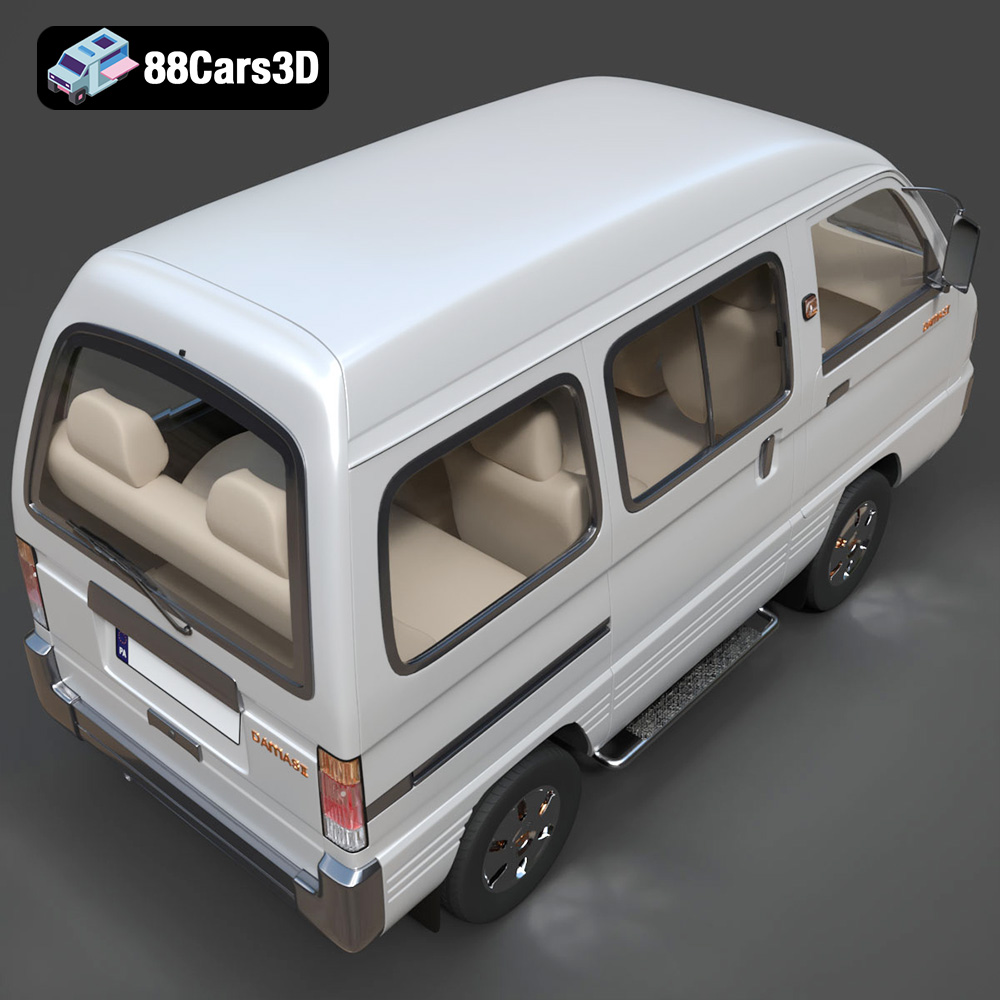
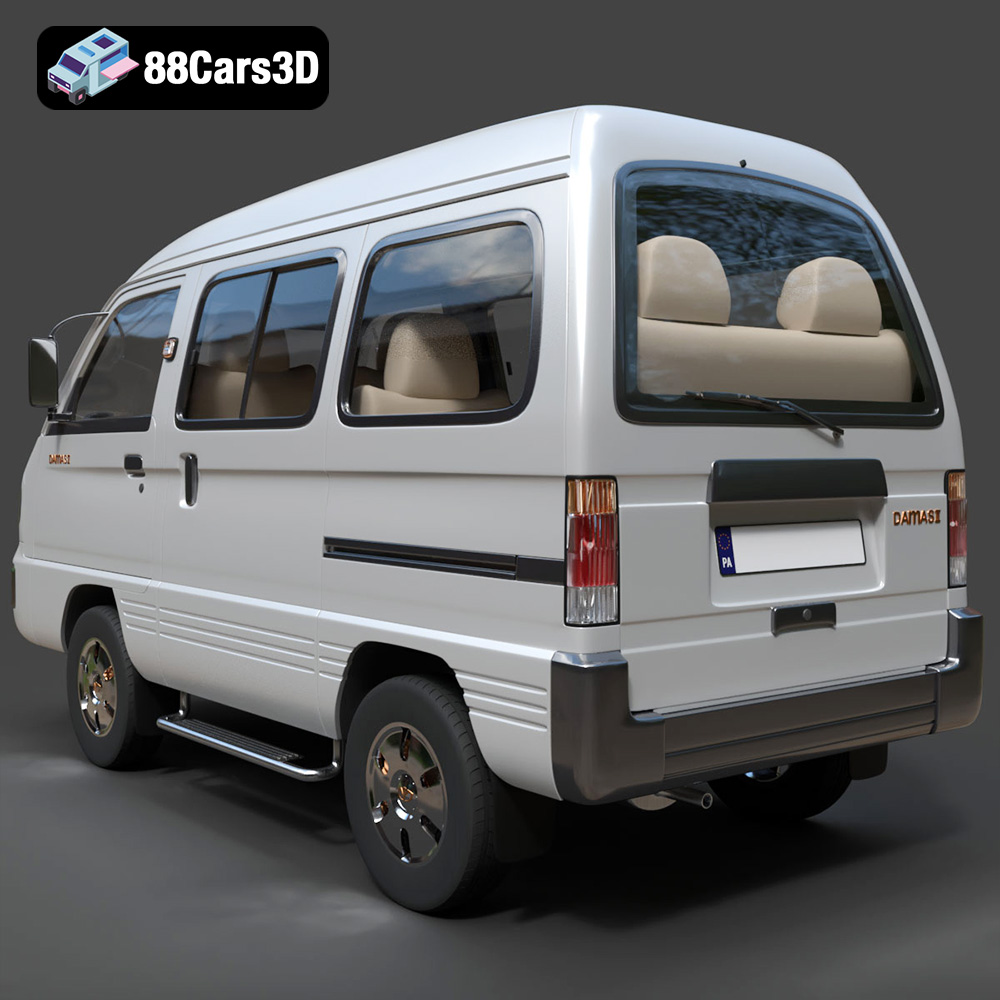
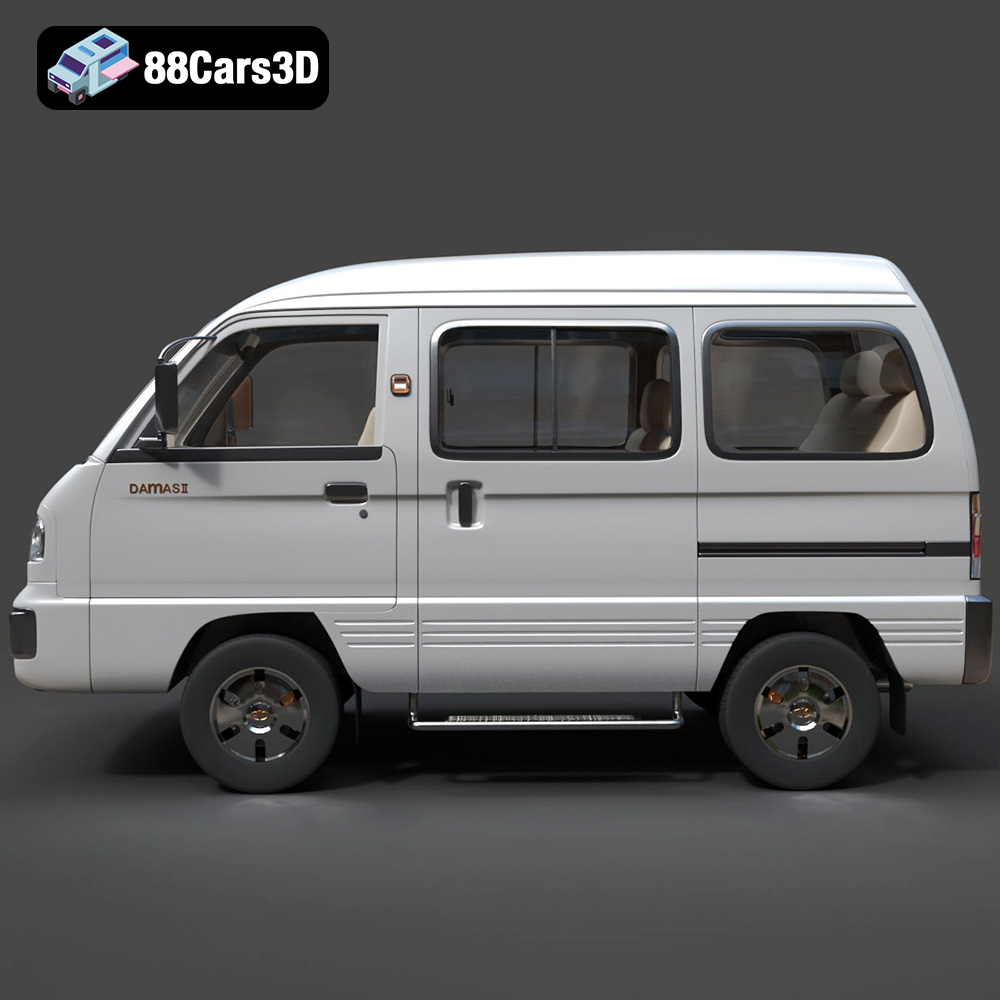
The Daewoo Damas 2 Microvan 3D Model is a highly detailed digital recreation of the ubiquitous and practical compact commercial vehicle. Based heavily on the classic kei-van architecture but refined with a modernized, slightly more rounded front fascia, the Damas 2 became a legendary workhorse across South Korea, Central Asia (particularly Uzbekistan), and Eastern Europe. Known for its incredible maneuverability and space efficiency, it serves as the ultimate urban delivery van and compact passenger transport. This 3D model accurately represents the facelifted exterior styling, including the distinct curved headlight and indicator clusters, cabover proportions, dual sliding rear doors, and functional rear liftgate. Built with dense, clean topology for premium visual fidelity and real-world scale accuracy, it is ideal for close-up rendering, urban environment visualization, animation, game development, and AR/VR commercial fleet showcases. Perfect for realistic street scenes, delivery logistics simulations, architectural visualizations, and indie game projects needing authentic everyday traffic.
$9.99
.automotive
.blend
.daewoo
.damas
.fbx
.obj
.rendering
.stl
3d printing
car-3d-model
chevrolet-damas
commercial-vehicle
damas-2
game asset
high poly
kei-van
microvan
utility-van
uzauto