Get 50% OFF All Premium 3D & STL Models!

The Ferrari 450 Italia 2013, a symbol of Italian automotive excellence, is now within reach as a detailed 3D printed model. This guide provides a comprehensive breakdown of how to successfully 3D print the Ferrari 450 Italia 2013 3D model, available at 88cars3d.com, covering everything from pre-print preparation to post-processing techniques. Whether you’re a seasoned 3D printing enthusiast or a newcomer eager to bring this iconic supercar to life, this guide will equip you with the knowledge and techniques to achieve stunning results.
Before diving into the specifics of 3D printing the Ferrari 450 Italia 2013, it’s crucial to understand the different file formats that are commonly used. Each format has its strengths and weaknesses, and choosing the right one can significantly impact the success of your print. Here’s a detailed overview of the file formats included with this 3D model and their relevance to 3D printing.
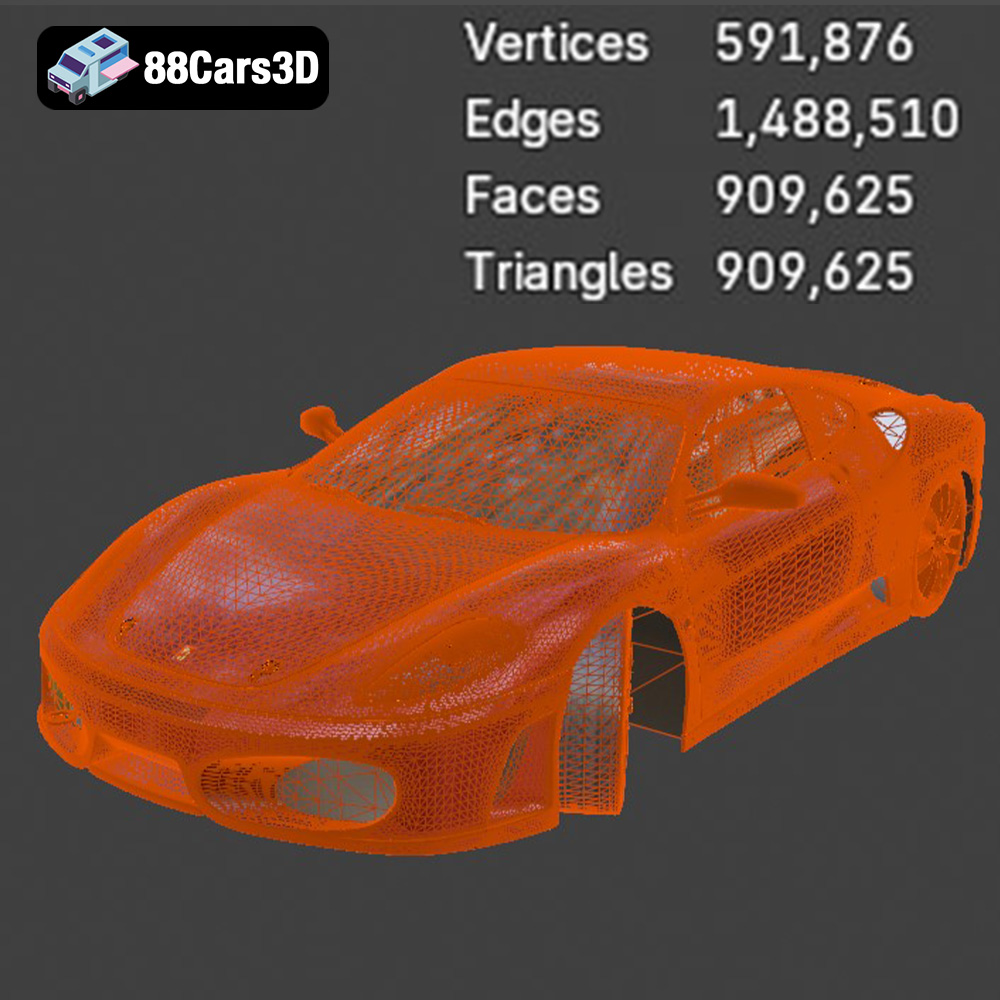
The .stl (stereolithography) format is the industry standard for 3D printing. It represents the surface geometry of a 3D object as a collection of triangles. This simplicity makes it universally compatible with slicing software and 3D printers. The Ferrari 450 Italia 2013 3D model, optimized for 3D printing, includes an STL file, ensuring immediate compatibility with your 3D printer. However, STL files only store the mesh data, lacking color or texture information. When working with STL files, pay close attention to the mesh quality. A higher triangle count results in a smoother surface but increases file size and processing time. Ensure your STL file is manifold (watertight) and free of errors before slicing.
The .obj (object) format is a more versatile format that supports color and texture information, in addition to the mesh geometry. While .stl is primarily for the shape, .obj can be used for colored 3D prints. Keep in mind that printing in multiple colors usually requires a specialized printer or a multi-material upgrade. If you’re aiming for a highly detailed, colored replica of the Ferrari 450 Italia 2013, exploring the .obj format might be worthwhile, although it adds complexity to the printing process.
The .ply (polygon) format, sometimes called the Stanford Polygon Format, is designed to store 3D data acquired from 3D scanners. It’s capable of capturing high levels of detail, including color and surface normals. While not as common as .stl, .ply can be useful for 3D printing if you need very precise reproduction of the original model’s geometry. Ensure your slicing software supports .ply files before proceeding.
The .blend format is the native file format for Blender, a popular open-source 3D modeling software. The Ferrari 450 Italia 2013 3D model includes a .blend file, allowing you to directly modify the model in Blender before exporting it for 3D printing. This offers unparalleled customization options, such as adjusting the model’s scale, adding details, or splitting it into smaller parts for easier printing.
The .fbx (Filmbox) format is commonly used for exchanging 3D data between different software applications. It supports mesh geometry, textures, materials, and animation data. While you might not directly 3D print an .fbx file, it can be useful for importing the model into slicing software that supports material properties, potentially influencing how the software generates printing parameters.
The .glb (GL Transmission Format Binary) format is designed for efficient delivery and loading of 3D models, particularly in web and mobile applications. It’s often used for augmented reality (AR) applications, allowing you to preview the Ferrari 450 Italia 2013 model in a real-world environment before committing to printing it. This can help you visualize the model’s size and scale in your intended display space.
Similar to .blend, the .max format is the native file format for Autodesk 3ds Max, a professional 3D modeling and animation software. Having the .max file allows for extensive modifications to the model, using industry-standard tools. This is extremely helpful for professional users who plan to highly customize the model.
For 3D printing the Ferrari 450 Italia 2013, the .stl format is the most straightforward and universally compatible choice. It focuses solely on the geometry required for printing. If you desire a colored print and your printer supports it, explore the .obj format. For extensive modifications, use the .blend or .max files. Always ensure your chosen slicing software supports the selected format.
Before loading the STL file into your 3D printer, several crucial steps must be taken to ensure a successful print. These include inspecting and repairing the model, choosing the right orientation, and selecting appropriate scaling.
Even models from reputable sources like 88cars3d.com can sometimes contain minor errors that can negatively affect the print. Use software like MeshMixer, Netfabb, or the built-in repair tools in your slicing software to check for non-manifold edges, holes, and self-intersections. Repairing these issues before printing can save significant time and material.
The orientation of the Ferrari 450 Italia 2013 on the print bed significantly impacts the print quality, the need for supports, and the overall print time. Printing the body at an angle, as suggested in the product description, often yields a smoother surface finish, particularly on curved surfaces like the roof and hood. Experiment with different orientations in your slicing software to minimize the need for supports on visible surfaces. Components like the side mirrors, rear diffuser, and spoiler edges will almost certainly require support structures. Carefully plan the placement and type of supports to minimize their impact on the final finish and ease their removal.
The Ferrari 450 Italia 2013 3D model can be scaled to various sizes depending on your preference and the capabilities of your 3D printer. The product description recommends scales like 1:32, 1:24, 1:18, and 1:14. Smaller scales like 1:32 are ideal for resin printing due to their ability to capture fine details, while larger scales like 1:14 are better suited for FDM printing. Consider the size of your printer’s build volume and the desired level of detail when selecting the scale.
The choice of material greatly impacts the final appearance, strength, and durability of your 3D printed Ferrari 450 Italia 2013. Different materials offer unique properties, making them suitable for various applications.
PLA (Polylactic Acid) is a popular thermoplastic known for its ease of printing, low odor, and biodegradability. It’s an excellent choice for beginners and for creating visually appealing models. PLA is ideal for printing the body and interior components of the Ferrari 450 Italia 2013. However, PLA is not very heat-resistant and can become brittle over time, so it might not be the best choice for parts that will be subjected to high temperatures or stress.
PETG (Polyethylene Terephthalate Glycol-modified) offers a good balance of strength, flexibility, and ease of printing. It’s more heat-resistant and durable than PLA, making it a better choice for parts that need to withstand some wear and tear. PETG can be used for the wheels and other components that might be subject to stress.
For smaller scales (1:32 or smaller) and highly detailed parts like the wheels, headlights, and interior trim, resin printing is highly recommended. Resin printers can achieve much finer layer resolutions than FDM printers, resulting in smoother surfaces and greater detail. However, resin printing requires more post-processing, including washing and curing, and resins can be more expensive and require more safety precautions.
Your slicing software is the bridge between the 3D model and your 3D printer. The right settings can dramatically impact the quality, strength, and printing time of your Ferrari 450 Italia 2013.
Layer height determines the vertical resolution of your print. Lower layer heights (e.g., 0.10mm to 0.16mm) result in smoother surfaces and finer details, but they also increase print time. Higher layer heights (e.g., 0.2mm to 0.3mm) print faster but can result in more visible layer lines. Experiment with different layer heights to find the best balance between quality and speed for your specific printer and material.
Infill density determines the amount of material used inside the model. Higher infill densities (e.g., 25% or more) make the model stronger but also increase print time and material usage. Lower infill densities (e.g., 15% or less) print faster and use less material but can make the model weaker. For the Ferrari 450 Italia 2013, an infill density of 15-25% is generally sufficient for most parts.
As mentioned earlier, supports are necessary for overhanging features like the side mirrors and rear diffuser. Experiment with different support types and densities to minimize their impact on the final surface finish and ease their removal. Consider using tree supports or light supports, which are easier to remove than traditional linear supports. Also, adjust the support density to minimize material usage while still providing adequate support.
Post-processing is the final stage in 3D printing, where you refine the printed parts to achieve the desired appearance and functionality.
Carefully remove the support structures using pliers, a hobby knife, or specialized support removal tools. Be patient and avoid damaging the model. Once the supports are removed, sand the surfaces to smooth out any imperfections and remove any remaining support marks. Start with coarse-grit sandpaper and gradually move to finer grits for a smooth finish.
Apply a primer to the model to create a smooth, uniform surface for painting. Choose a primer that is compatible with your chosen paint. Once the primer is dry, paint the model with your desired colors. Consider using automotive paints for a professional-looking finish. Apply multiple thin coats of paint rather than one thick coat to avoid runs and drips.
Assemble the different parts of the Ferrari 450 Italia 2013, such as the body, wheels, and interior components, using glue or other appropriate adhesives. Add any final details, such as racing decals or chrome accents, to complete the model.
Even with careful preparation and execution, 3D printing can sometimes present challenges. Here are some common issues and their solutions.
Warping occurs when the corners of the print lift off the print bed. This is often caused by poor bed adhesion or temperature fluctuations. To prevent warping, ensure your print bed is clean and level, use a heated bed, and apply an adhesive like glue stick or hairspray.
Stringing occurs when thin strands of filament are left between different parts of the print. This is often caused by excessive retraction or high printing temperatures. To prevent stringing, adjust the retraction settings in your slicing software and lower the printing temperature.
Layer separation occurs when the layers of the print do not adhere properly to each other. This can be caused by low printing temperatures, poor bed adhesion, or insufficient cooling. To prevent layer separation, increase the printing temperature, ensure good bed adhesion, and adjust the cooling settings.
By following these steps and troubleshooting tips, you can successfully 3D print a stunning replica of the Ferrari 450 Italia 2013.
3D printing the Ferrari 450 Italia 2013 3D model from 88cars3d.com is a rewarding project that combines technical skill with a passion for automotive design. By carefully considering material choices, printer settings, and post-processing techniques, you can create a detailed and impressive replica of this iconic supercar. Whether you’re a hobbyist, a collector, or a professional designer, the possibilities are endless. Embrace the challenge, experiment with different techniques, and enjoy the satisfaction of bringing this automotive masterpiece to life. The detailed STL files available at 88cars3d.com ensure a seamless printing experience, allowing you to focus on the artistry of creation.
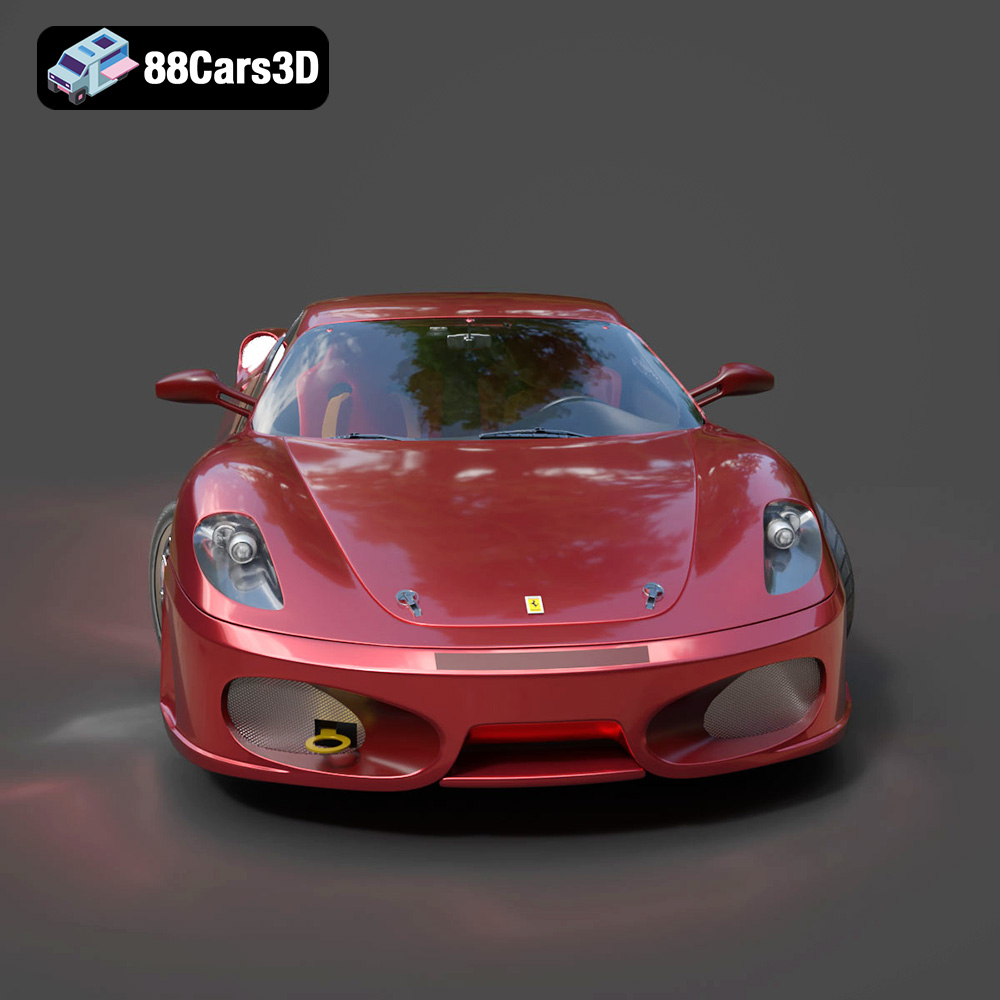
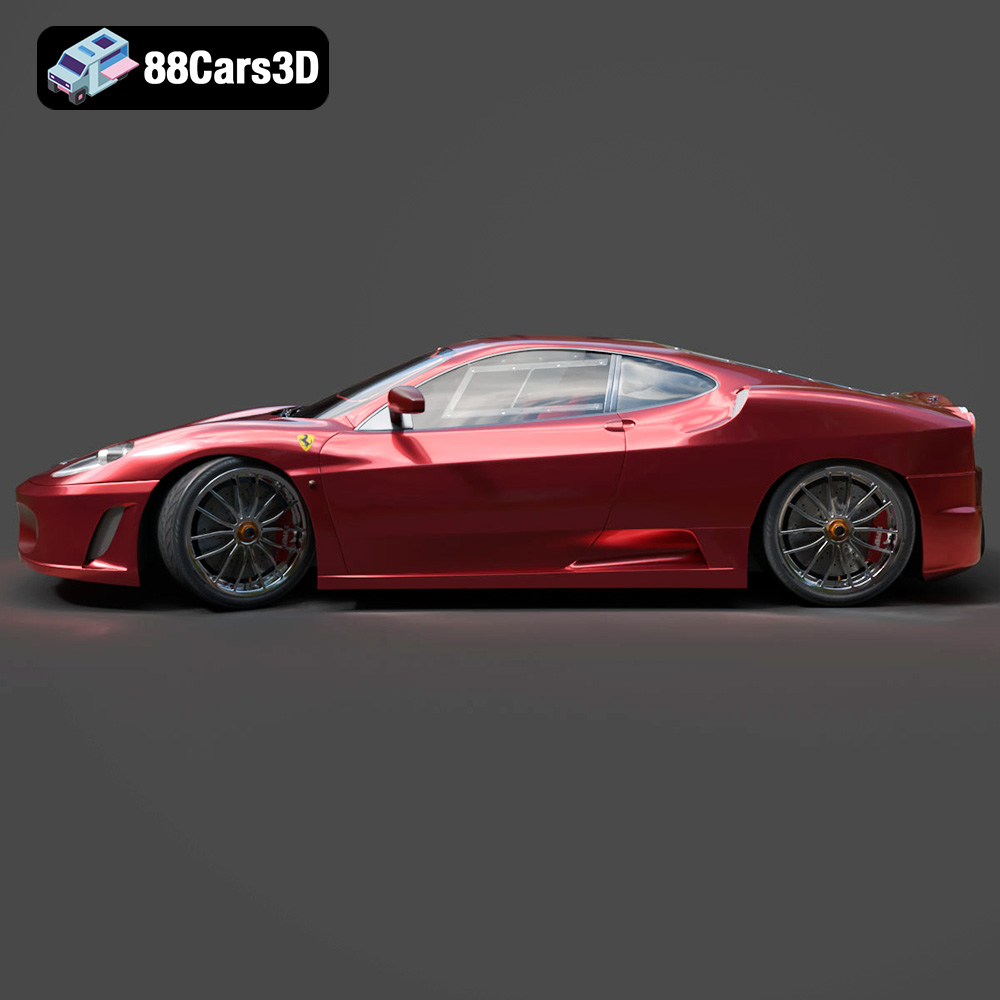
The Ferrari 450 Italia 2013 3D Model is a high-detail digital recreation of the iconic mid-engine Italian supercar engineered for performance, precision, and aerodynamic excellence. Known for its aggressive styling and track-inspired engineering, the 450 Italia delivers a perfect balance of speed, luxury, and driving dynamics.
$9.99
.450italia
.arvr
.automotive
.blend
.car3dmodel
.fbx
.ferrari
.gameasset
.glb
.italiansupercar
.max
.obj
.ply
.racingcar
.rendering
.simulation
.sportsCar
.stl
.supercar
.unreal