Get 50% OFF All Premium 3D & STL Models!

In the rapidly evolving world of 3D modeling, precision, detail, and versatility are paramount. Whether you’re crafting immersive game environments, producing photorealistic automotive rendering for marketing campaigns, developing cutting-edge AR/VR simulations, or even creating tangible 3D printed models, the quality of your base assets dictates the final output. The demand for industrial-grade 3D car models and heavy machinery assets has never been higher, driving innovation in how these complex digital objects are created, distributed, and utilized across various professional sectors.
At the heart of this digital transformation lies the need for models that are not just visually appealing but also technically robust and adaptable. This comprehensive guide delves into the intricacies of integrating premium 3D assets into diverse workflows, focusing on the exemplary Fuel Tank Trailer 3D Model available on 88cars3d.com. This asset stands as a testament to industrial accuracy and digital craftsmanship, offering a robust foundation for a myriad of projects, from logistics simulations to cinematic visualizations.
The choice of file format is a critical decision in any 3D workflow, directly impacting compatibility, feature support, and overall project efficiency. A high-quality asset like the Fuel Tank Trailer 3D Model from 88cars3d.com offers multiple formats, ensuring seamless integration into virtually any pipeline. Understanding the strengths of each is key to maximizing your creative and technical potential.
The .blend format is Blender’s native file type, encapsulating an entire scene, including geometry, materials, textures, animations, lights, cameras, and even custom scripts. When you acquire a .blend file, you’re not just getting a model; you’re getting a fully editable project, often with a well-organized scene hierarchy. This format is ideal for users working primarily in Blender who need to dissect, modify, or re-purpose every aspect of the asset. Technical advantages include direct access to modifier stacks, node-based materials, and any rigging or animation data embedded by the creator. It offers maximum flexibility for customization.
Autodesk’s .fbx (Filmbox) is arguably the most prevalent interchange format in the 3D industry. It excels at transferring data between different 3D software applications (like 3ds Max, Maya, Blender) and, crucially, into real-time game engines like Unreal Engine and Unity. FBX supports not only mesh data but also materials, textures, animations, and skeletal structures. Its robust nature makes it ideal for game assets, where performance and correct animation data transfer are vital. Developers often rely on .fbx for its comprehensive data support and widespread compatibility, making it a cornerstone for game development and animation pipelines.
The .obj (Wavefront Object) format is a universal standard, widely supported across almost all 3D software. It primarily stores geometric data – vertices, normals, UV coordinates, and faces – making it an excellent choice for basic mesh transfer. While it can reference external material files (.mtl) for basic color and texture information, it doesn’t typically embed complex PBR (Physically Based Rendering) materials, rigging, or animation data. Use .obj when you need a clean, fundamental mesh for sculpting, retopology, or when compatibility with less common software is a concern. Its simplicity ensures broad acceptance.
The .glb (GL Transmission Format Binary) format is quickly becoming the standard for 3D web content, augmented reality (AR), and virtual reality (VR) applications. It’s a binary version of the glTF format, packing all necessary data – geometry, materials, textures, and animations – into a single, compact file. This optimization makes .glb incredibly efficient for streaming and displaying 3D models directly in browsers or mobile AR/VR experiences, minimizing load times and maximizing performance. It’s the go-to format for interactive product showcases, metaverse assets, and browser-based industrial visualizations.
The .stl (Stereolithography) format is synonymous with 3D printing. It represents a 3D model as a collection of unconnected triangles, defining only the surface geometry of an object without color, texture, or material information. For models intended for physical output, like the Fuel Tank Trailer 3D Model’s 3D printable version, .stl is essential. It’s widely recognized by slicing software, which converts the digital model into machine-readable instructions for 3D printers. The Fuel Tank Trailer 3D Model, with its detailed yet manifold geometry, is perfectly suited for conversion to .stl for creating impressive scale models.
The .ply (Polygon File Format) is another popular format, often used for storing 3D scan data and point clouds. It supports various properties for each vertex (like color, normal, transparency) and face (color), making it more versatile than .stl for certain applications. While not as universally used for general 3D asset exchange as .fbx or .obj, .ply is valuable for applications requiring precision mesh data, such as reverse engineering, CAD integration, and scientific visualization where geometric integrity and additional vertex/face attributes are crucial.
The inclusion of .unreal implies an asset specifically packaged or optimized for Unreal Engine. While not a standalone file extension in the traditional sense, it signifies that the model is either provided as an Unreal Engine project file, a content pack, or meticulously prepared .fbx files that integrate seamlessly with the engine’s ecosystem. This means materials are often set up with Unreal’s PBR workflow, textures are optimized, and sometimes even basic blueprints or collision meshes are included, saving significant setup time for game developers and real-time visualization artists.
Finally, the .max format is the native file type for Autodesk 3ds Max. Similar to .blend for Blender, a .max file contains the complete 3ds Max scene, including all models, materials, lights, cameras, animations, and modifiers. For professionals working in 3ds Max, this format offers the highest degree of editability and ensures that all intricate details and scene setups created by the artist are preserved. It is ideal for users who need to fully integrate the model into a 3ds Max-centric pipeline for advanced rendering, animation, or architectural visualization projects.
Creating industrial 3D car models requires an uncompromising commitment to realism and technical accuracy. The Fuel Tank Trailer 3D Model exemplifies this dedication, offering a highly detailed digital recreation of a heavy-duty tanker trailer. Every element is designed to reflect real-world proportions and structural integrity, making it an invaluable asset for professionals.
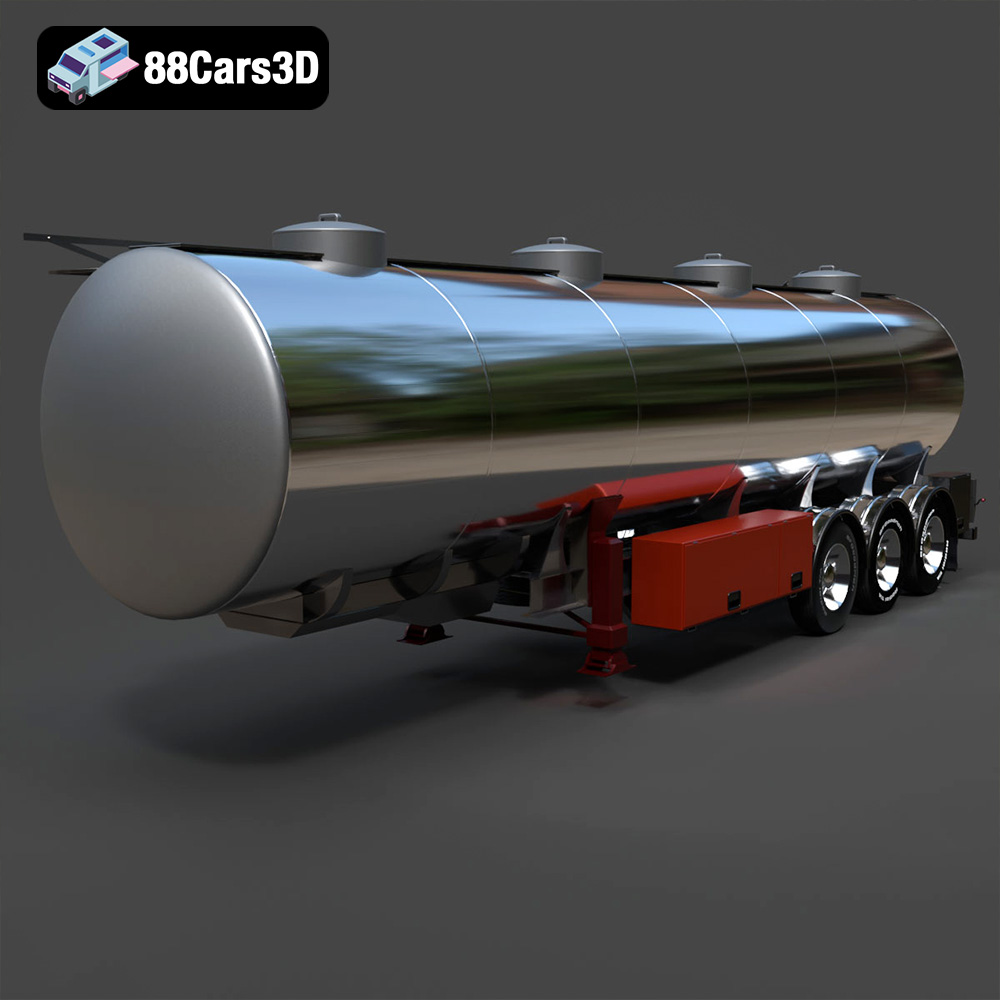
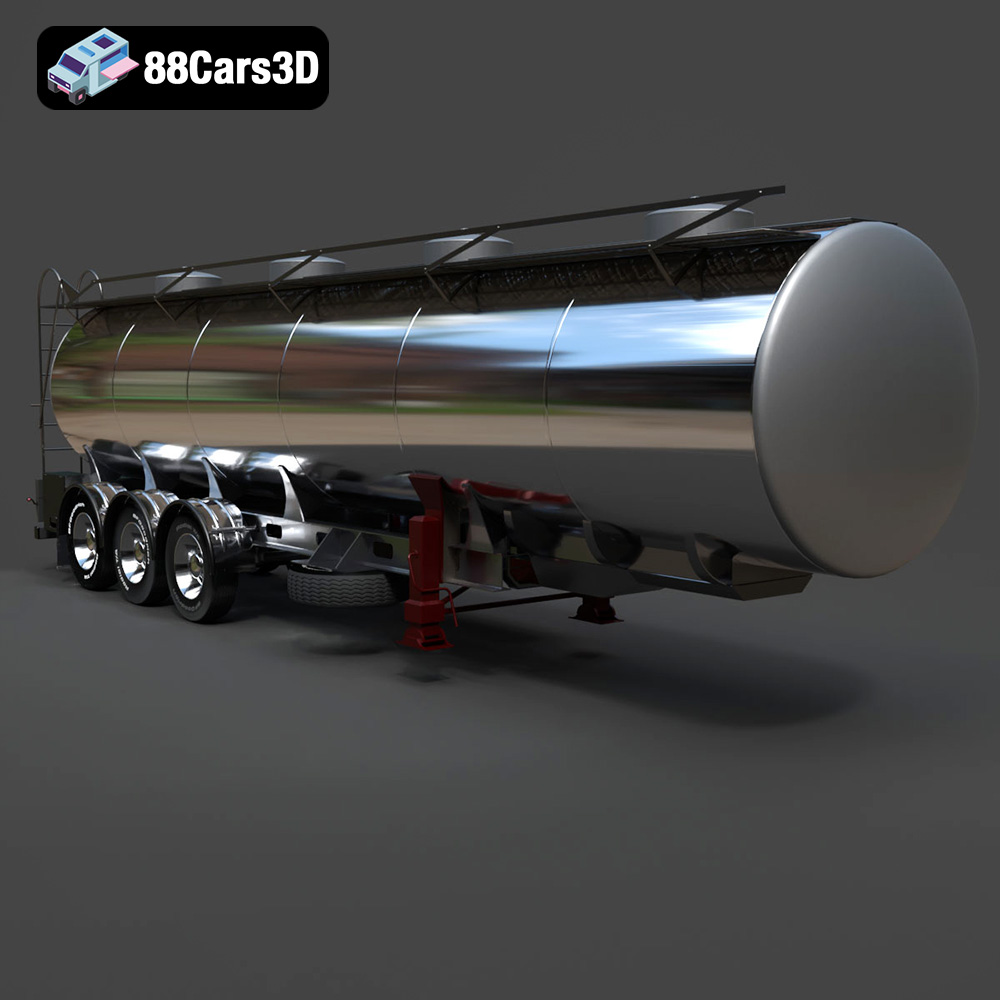
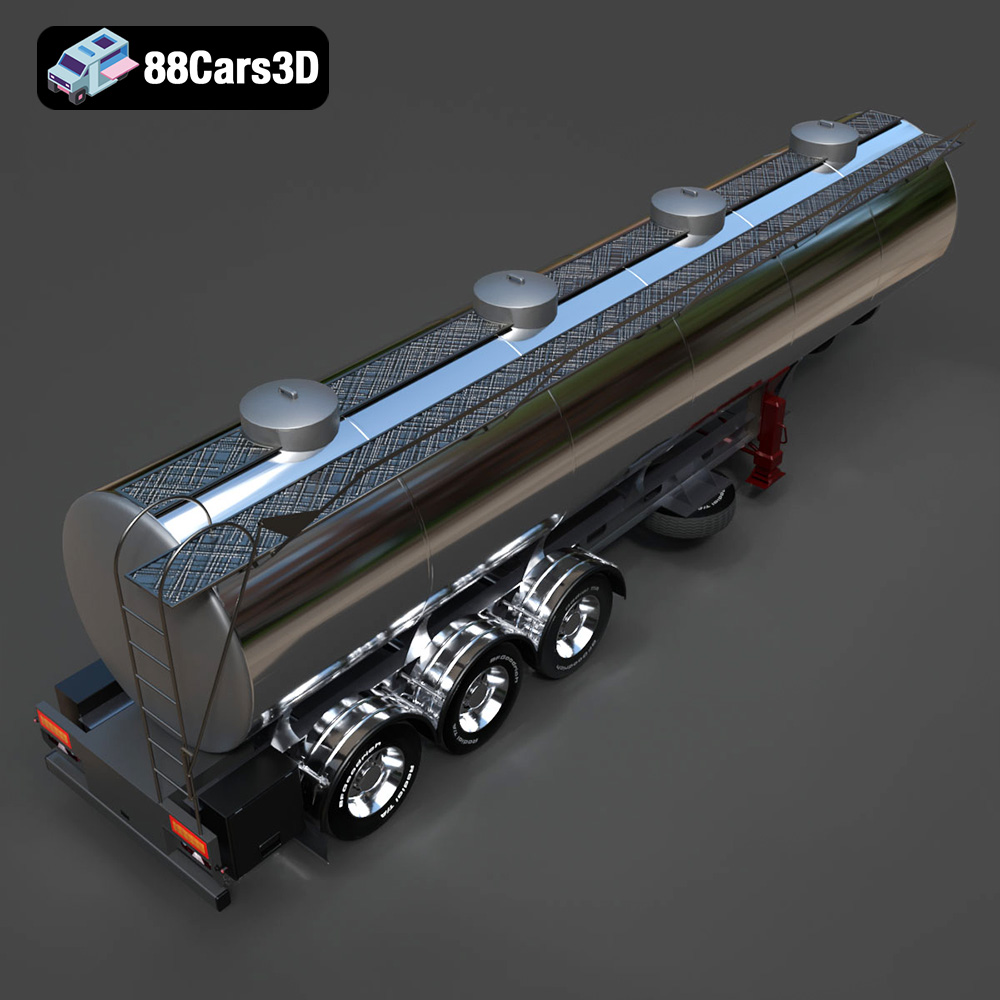
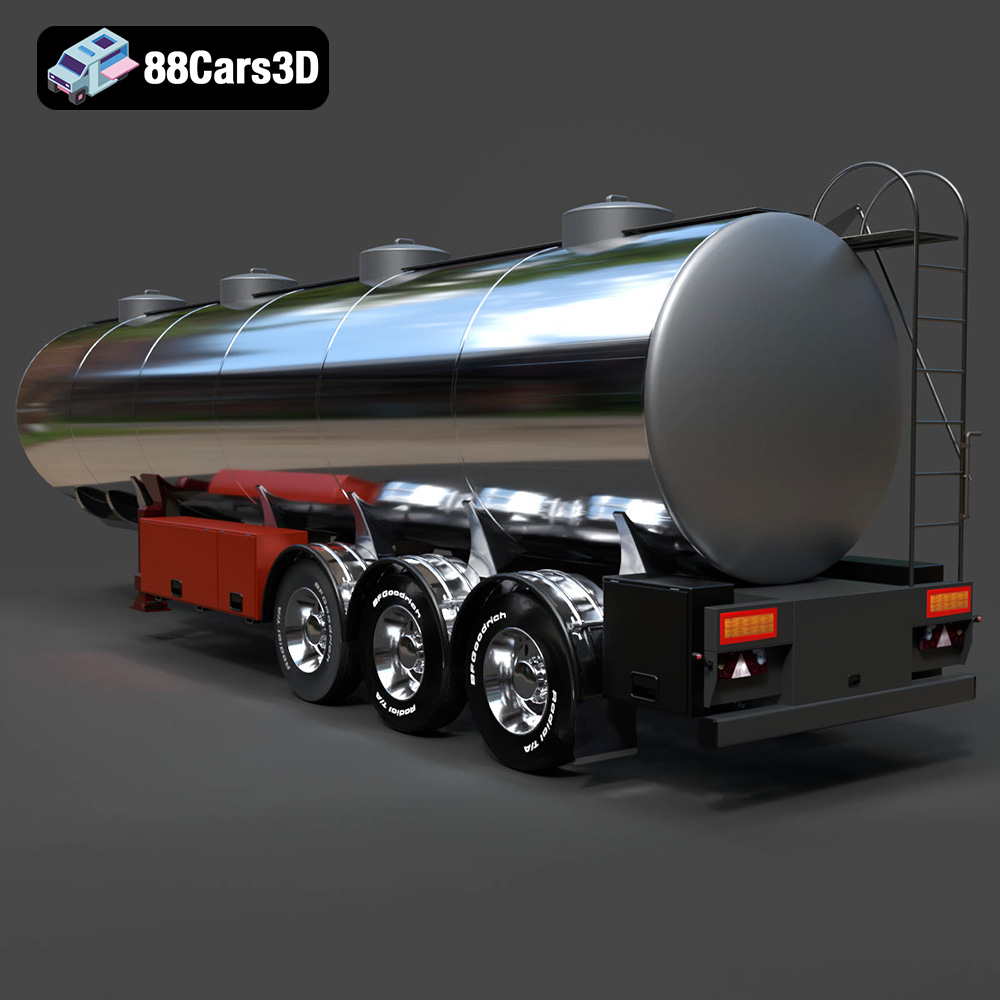
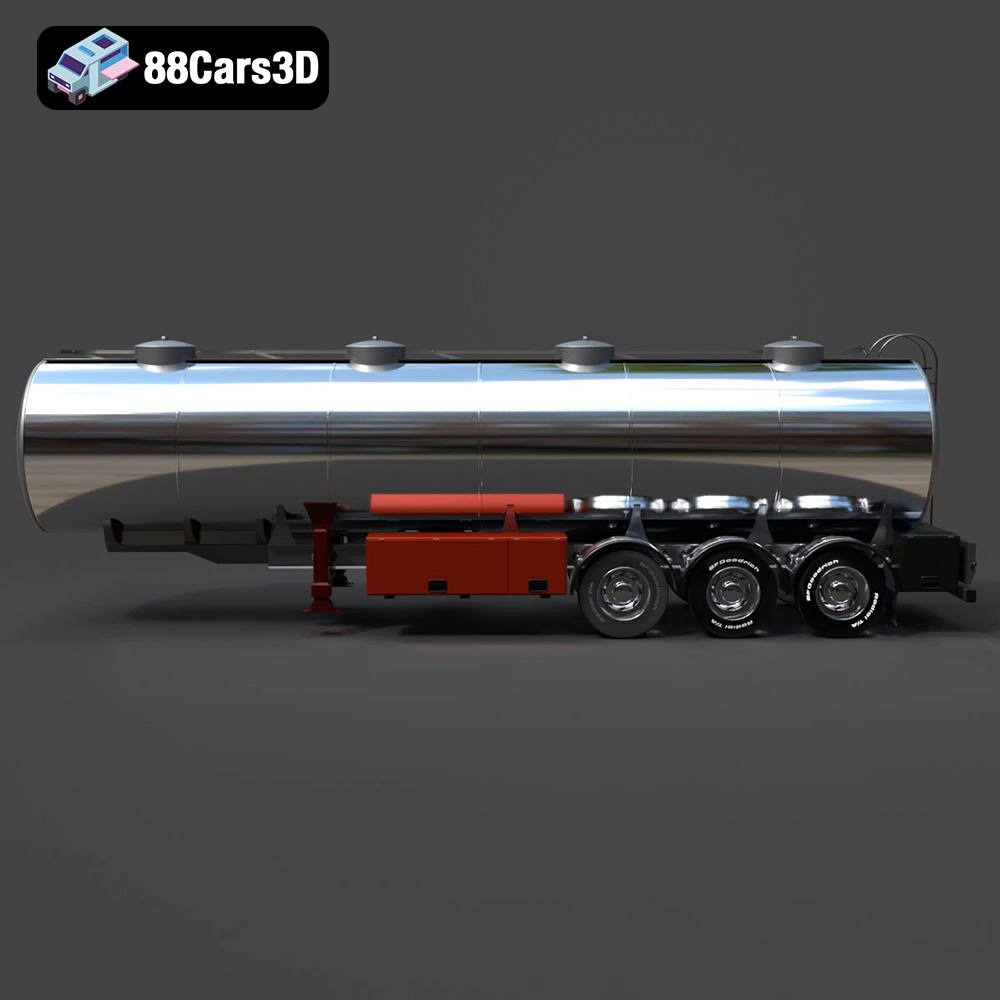
The external design of this 3D model is meticulously crafted to capture the essence of a real-world fuel transport vehicle. The accurate cylindrical tank body proportions immediately convey authenticity, crucial for any visualization or simulation. This is supported by a detailed chassis frame and support structure, providing the foundation for the entire assembly. A realistic axle configuration with suspension system ensures the model interacts credibly within dynamic scenes. Furthermore, critical operational components like modeled fuel discharge valves and piping system, a rear ladder and top safety railing, and hose storage compartments are all present. Details such as mudguards, reflectors, and safety markings add to the overall realism, while separate wheels allow for independent rotation and animation, essential for any dynamic scene or game environment.
While the focus is often on exterior fidelity, the structural integrity implied by the model’s design is equally important. The description mentions internal tank segmentation (for multi-compartment versions), suggesting a level of conceptual depth that supports accurate simulations of liquid dynamics or capacity visualizations. Reinforced mounting brackets and realistic connection points for tractor attachment ensure that the model behaves credibly when integrated into a larger truck combination. This attention to underlying structure makes the model suitable not just for static renders, but for complex engineering and logistics simulations as well.
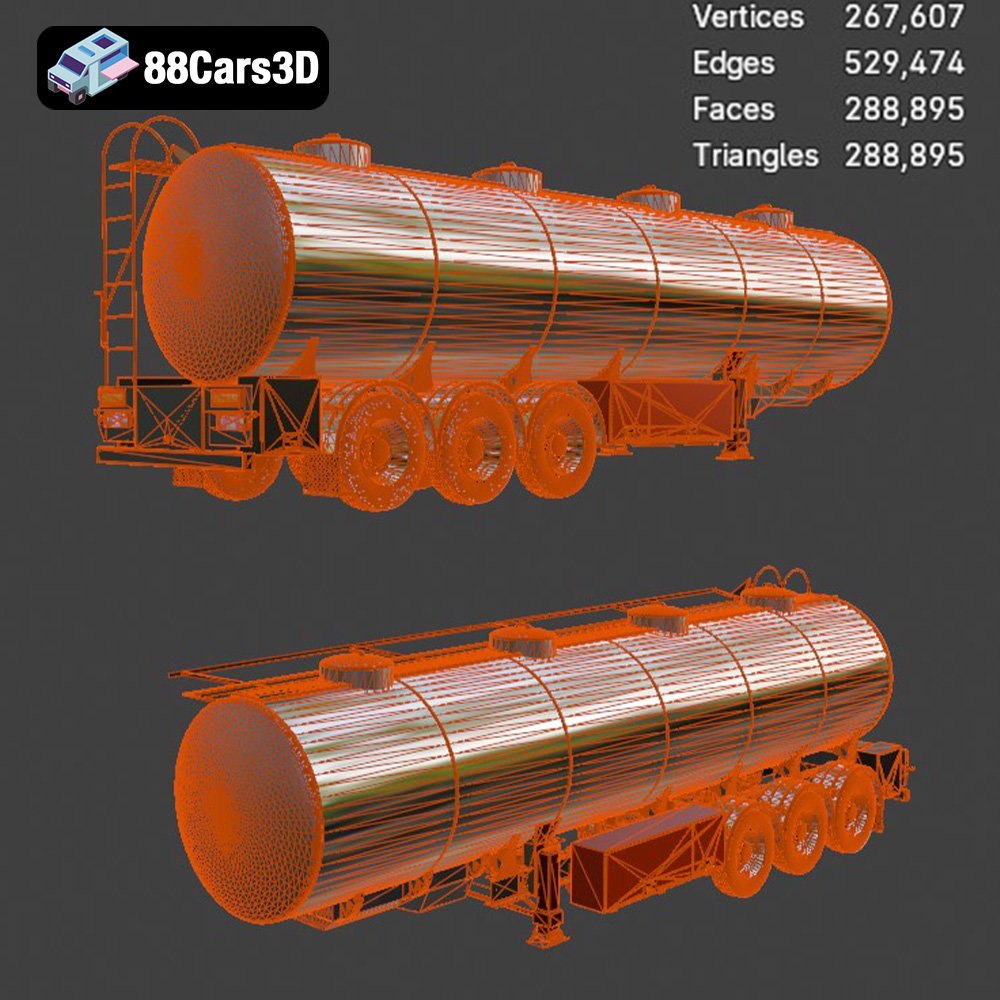
The true mark of a professional 3D asset lies in its technical foundation. This Fuel Tank Trailer model boasts a clean and well-organized mesh structure, which is paramount for smooth deformations, efficient UV unwrapping, and predictable rendering results. Real-world scale accuracy is maintained, ensuring the model fits seamlessly into any scene without needing scale adjustments, which can often lead to rendering artifacts. With proper pivot setup for wheel rotation, animation is straightforward and precise. The optimized polygon flow strikes a balance between visual fidelity and performance, crucial for real-time applications and ensuring high-quality renders without excessive computational overhead. Its broad compatibility with major 3D software platforms and engines further underscores its professional-grade design.
The versatility of the Fuel Tank Trailer 3D Model makes it an indispensable asset across various professional disciplines. Its robust design and multiple file formats ensure it integrates seamlessly into a wide range of production pipelines, from stunning visuals to interactive experiences.
For artists focused on automotive rendering, the Fuel Tank Trailer 3D Model provides an exceptional foundation. In software like 3ds Max or Blender, artists can leverage the model’s clean topology and real-world scale to create breathtaking visualizations. The workflow typically involves importing the .max or .blend file, or an .fbx, then setting up sophisticated lighting rigs using HDRI maps and artificial lights to mimic specific environments, such as industrial yards or highways at dusk. PBR (Physically Based Rendering) materials are applied and fine-tuned for realism, reflecting metallic surfaces, painted areas, and rubber tires accurately. High-resolution textures, often included or easily applied, further enhance surface details like grime, scratches, or reflective warning labels. The separation of wheels allows for intricate animation of movement or static display poses, making it ideal for petroleum marketing visuals, logistics presentations, and industrial advertising content. For those seeking premium 3D car models and industrial assets, 88cars3d.com offers ready-to-render solutions that significantly cut down production time.
The world of game development demands assets that are not only visually compelling but also highly optimized for real-time performance. The Fuel Tank Trailer 3D Model is perfectly suited for this. Game developers often prefer the .fbx or .unreal formats for direct import into engines like Unreal Engine or Unity. The workflow in Unreal Engine might involve importing the .fbx, automatically generating collision meshes, and setting up Level of Detail (LOD) groups to ensure optimal performance across different viewing distances. Materials are configured using Unreal’s robust PBR system, often utilizing material instances for easy color and texture variations. The model’s proper pivot setup for wheel rotation simplifies animation for truck simulators, open-world logistics games, and hazardous material transport systems. Developers can integrate the model into vehicle blueprints, allowing players to drive or interact with the trailer, adding depth and realism to the gameplay. This makes it an ideal choice for high-quality game assets.
Augmented Reality (AR) and Virtual Reality (VR) applications require lightweight yet visually rich models to deliver immersive experiences without performance bottlenecks. The .glb format, included with the Fuel Tank Trailer 3D Model, is a game-changer here. This optimized binary format is designed for efficient streaming and rendering in web-based AR/VR viewers and dedicated applications. Developers can import the .glb into platforms like A-Frame, Three.js, or Unity/Unreal (after converting or using specific plugins) for interactive fleet demonstrations and immersive industrial training simulations. For instance, a trainee could virtually inspect the fuel discharge valves, practice safety procedures, or even simulate coupling the trailer to a tractor. The model’s optimized geometry and real-world proportions contribute to a highly convincing and functional interactive environment, crucial for effective training and visualization.
The utility of a high-quality 3D model extends beyond digital screens. The Fuel Tank Trailer 3D Model is not only excellent for rendering and real-time applications but also serves as an outstanding base for 3D printing, enabling the creation of tangible scale models and display miniatures.
Converting a digital 3D model into a physical object via 3D printing requires careful preparation, primarily using the .stl format. The Fuel Tank Trailer 3D Model is designed with optimized geometry, ensuring manifold meshes necessary for successful 3D printing. The process involves exporting the model to .stl, then importing it into a slicing software. Here, the printer settings are crucial. The product description provides specific recommendations for the Fuel Tank Trailer 3D Model, including recommended scales (1:32 / 1:24 / 1:18 / 1:14), allowing for various miniature sizes. Layer height (0.12–0.20 mm), wall thickness (2–3 mm), and infill (20–35%) are specified to ensure structural integrity and detail preservation for FDM (Fused Deposition Modeling) printers. Supports are required for intricate parts like the ladder, railings, and valve assemblies to prevent drooping during printing. Recommended print orientation, with the tank horizontal and chassis flat, maximizes stability and minimizes support structures. Furthermore, wheels printed separately ensure enhanced detail and easier post-processing. After printing, post-processing such as sanding, primer, industrial paint finish, and optional hazard decals brings the miniature to life, matching its digital counterpart.
The ability to 3D print the Fuel Tank Trailer 3D Model opens up numerous practical applications. For enthusiasts and collectors, it allows for the creation of highly detailed scale tanker trailer models for display. Businesses can use these physical models for sales demonstrations, showcasing new logistics solutions in a tangible format. For educational purposes, 3D printed models can serve as hands-on teaching aids for engineering, transport logistics, or industrial safety courses. Furthermore, architects and urban planners might use these miniatures in physical models of industrial yards or infrastructure projects, providing a comprehensive view of how such vehicles interact with their environments. This dual digital-physical utility highlights the comprehensive value of meticulously crafted 3D car models from resources like 88cars3d.com.
A truly professional 3D asset offers not just visual fidelity but also the flexibility to be adapted for specific project requirements. The Fuel Tank Trailer 3D Model is designed with customization in mind, allowing artists and developers to tailor it to their unique visions.
The ability to easily modify the model’s appearance is invaluable for branding and specific aesthetic requirements. Users can change tank color and fuel branding to match corporate identities or simulate different types of liquids transported. Adding company logos or hazard markings personalizes the trailer, making it suitable for bespoke advertising campaigns or game assets. The model also allows for adjusting weathering for industrial or realistic scenes, from a pristine, factory-fresh look to a heavily used, road-worn appearance, enhancing its authenticity for various narrative contexts.
Beyond aesthetics, the structural design of the Fuel Tank Trailer 3D Model supports functional modifications. Professionals can modify axle configuration (2-axle / 3-axle versions) to represent different load capacities or regional transport regulations, providing greater flexibility for simulations and visualizations. The ability to add safety decals and reflective strips not only improves visual accuracy but also reinforces safety themes in industrial training modules. This adaptability ensures that the single base model can serve a wide array of specific project demands, proving its cost-effectiveness and utility.
The Fuel Tank Trailer 3D Model stands as a benchmark for high-quality industrial 3D assets. Its meticulous detail, technical accuracy, and multi-format compatibility make it an indispensable tool for professionals across rendering, game development, AR/VR, simulation, and 3D printing. From its accurately proportioned cylindrical tank to its optimized mesh and separate animateable wheels, every feature is crafted to elevate your projects.
Whether you are creating captivating automotive rendering, building immersive game assets, developing interactive training simulations, or producing precise physical scale models, this Fuel Tank Trailer provides a solid foundation. Its thoughtful design, coupled with a comprehensive suite of file formats including .blend, .fbx, .obj, .glb, .stl, .ply, .unreal, and .max, ensures seamless integration into any workflow. For those seeking to enhance their digital libraries with top-tier 3D car models and industrial vehicles, 88cars3d.com is your trusted source for assets that meet the highest standards of realism and technical performance. Invest in quality; empower your projects with the very best.
The Fuel Tank Trailer 3D Model is a high-detail digital recreation of a heavy-duty tanker trailer designed for transporting fuel and liquid petroleum products. Engineered for realism and industrial accuracy, this model reflects the structural integrity and cylindrical tank design commonly used in logistics, petroleum distribution, and hazardous material transport operations. This 3D model accurately represents the elongated cylindrical tank body, reinforced chassis frame, axle system, rear ladder access, safety railings, hose compartments, and fuel discharge valves. Designed with clean topology and real-world proportions, it is ideal for rendering, animation, simulation, game development, and AR/VR industrial visualization.
$9.99
.arvr
.blend
.fbx
.fueltanktrailer
.fueltransport
.gameasset
.glb
.industrialvehicle
.logisticsvehicle
.max
.obj
.petroleumtransport
.ply
.rendering
.simulation
.stl
.tankertrailer
.trucktrailer
.unreal