Get 50% OFF All Premium 3D & STL Models!

In the fast-paced world of digital media, from cinematic renders to immersive virtual realities, the demand for authentic and technically precise assets is paramount. Automotive design, in particular, thrives on realism and attention to detail, making high-quality 3D car models indispensable for professionals across various industries. Whether you’re an architect visualizing a new urban landscape, a game developer populating a virtual city, or a marketing agency crafting a compelling ad campaign, the right 3D vehicle can elevate your project from good to exceptional.
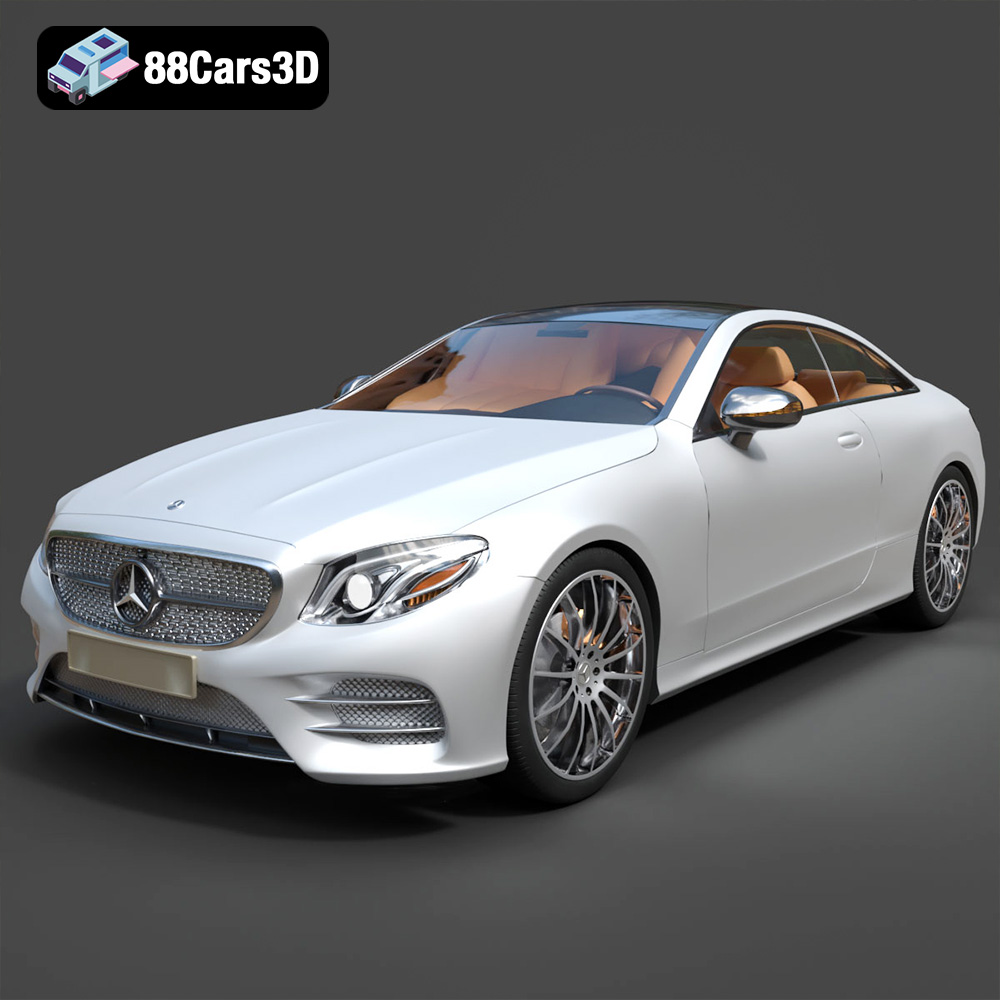
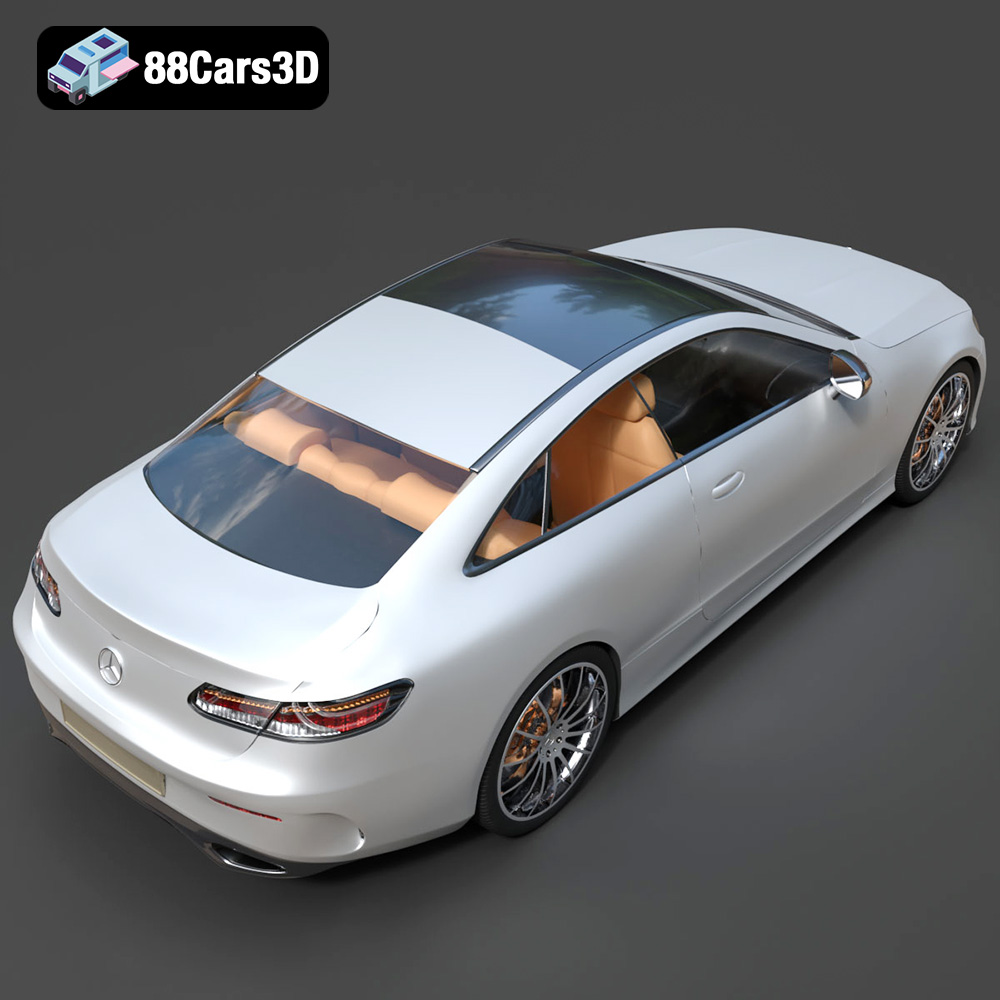
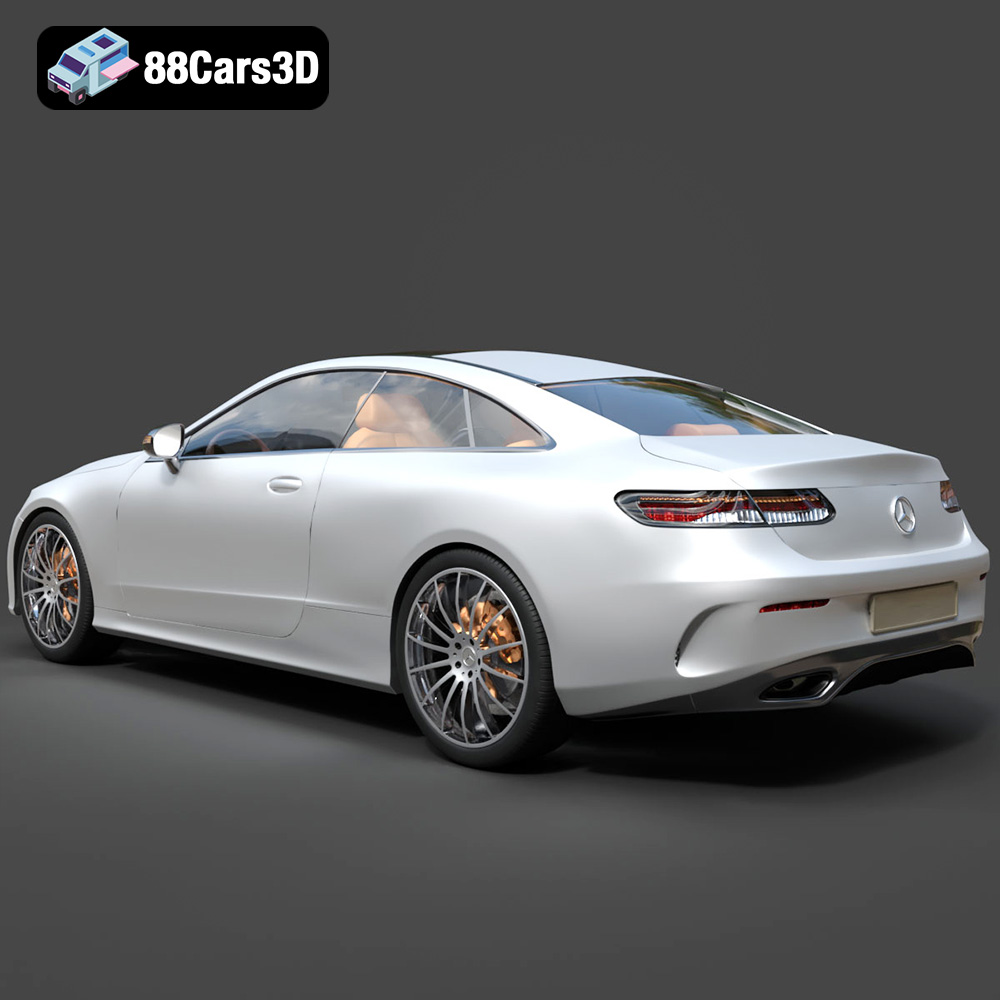
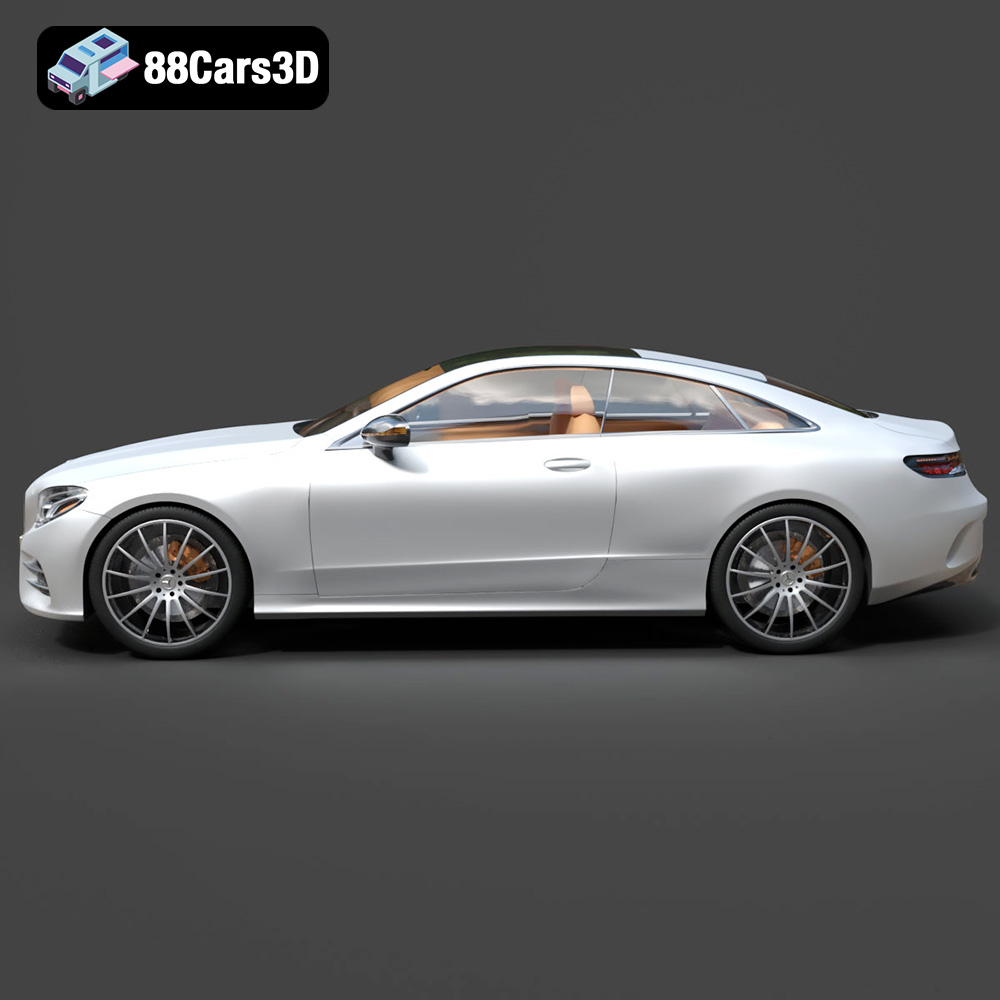
Today, we delve into the power of premium 3D assets by showcasing a standout example: the Mercedes-Benz E-Class C238 3D Model. This meticulously crafted digital recreation of the elegant two-door coupe offers a glimpse into the sophisticated world of 3D automotive design, providing an unparalleled foundation for a multitude of creative endeavors. From its sleek coupe proportions to its detailed cabin layout, this model encapsulates the essence of luxury, performance, and modern design, ready to be integrated into your next groundbreaking project.
The journey of an automobile from concept to reality is increasingly intertwined with digital processes. Before a single component is manufactured, every curve, every material, and every interaction is meticulously designed, simulated, and visualized in a 3D environment. This digital-first approach not only streamlines development but also allows for unprecedented levels of refinement and iteration. High-fidelity 3D car models are at the core of this revolution, enabling designers, engineers, and marketers to explore possibilities without physical constraints. The Mercedes-Benz E-Class C238 3D Model epitomizes this trend, offering a pre-built, production-ready asset that dramatically reduces development time and costs for external projects leveraging the iconic vehicle.
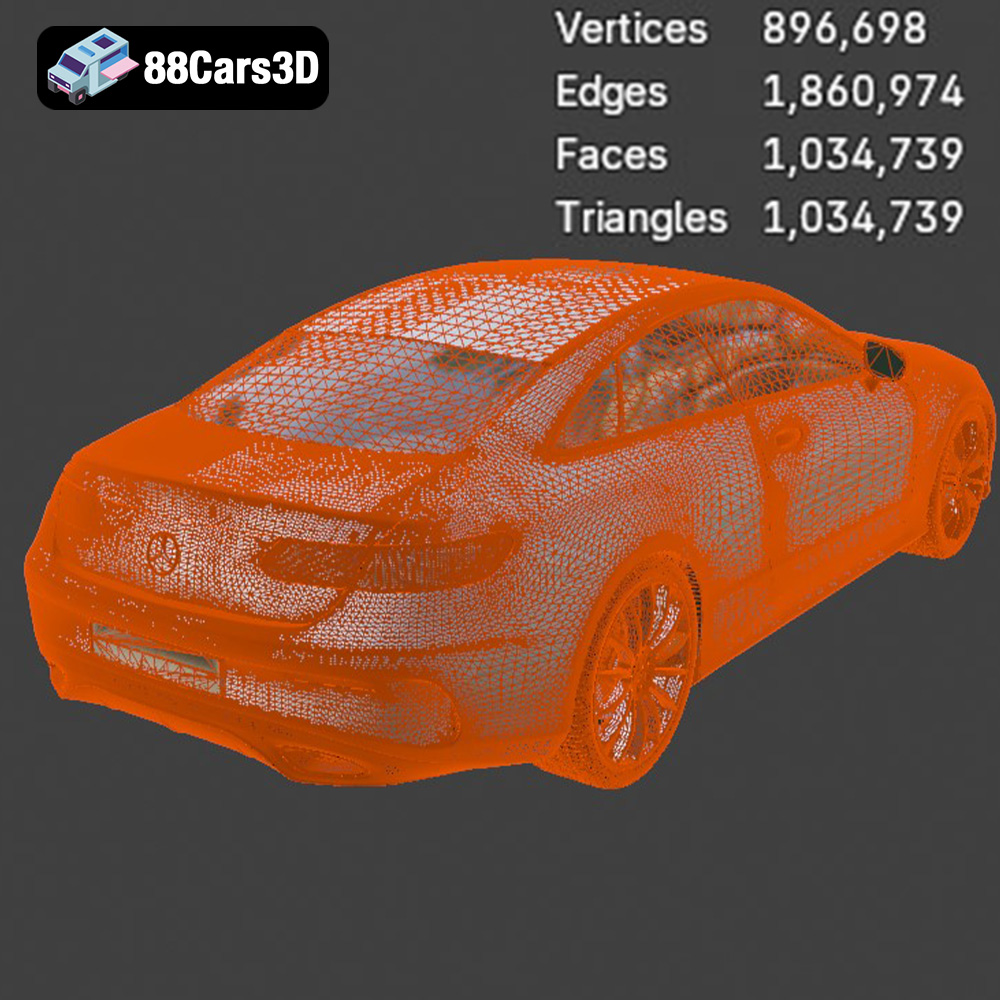
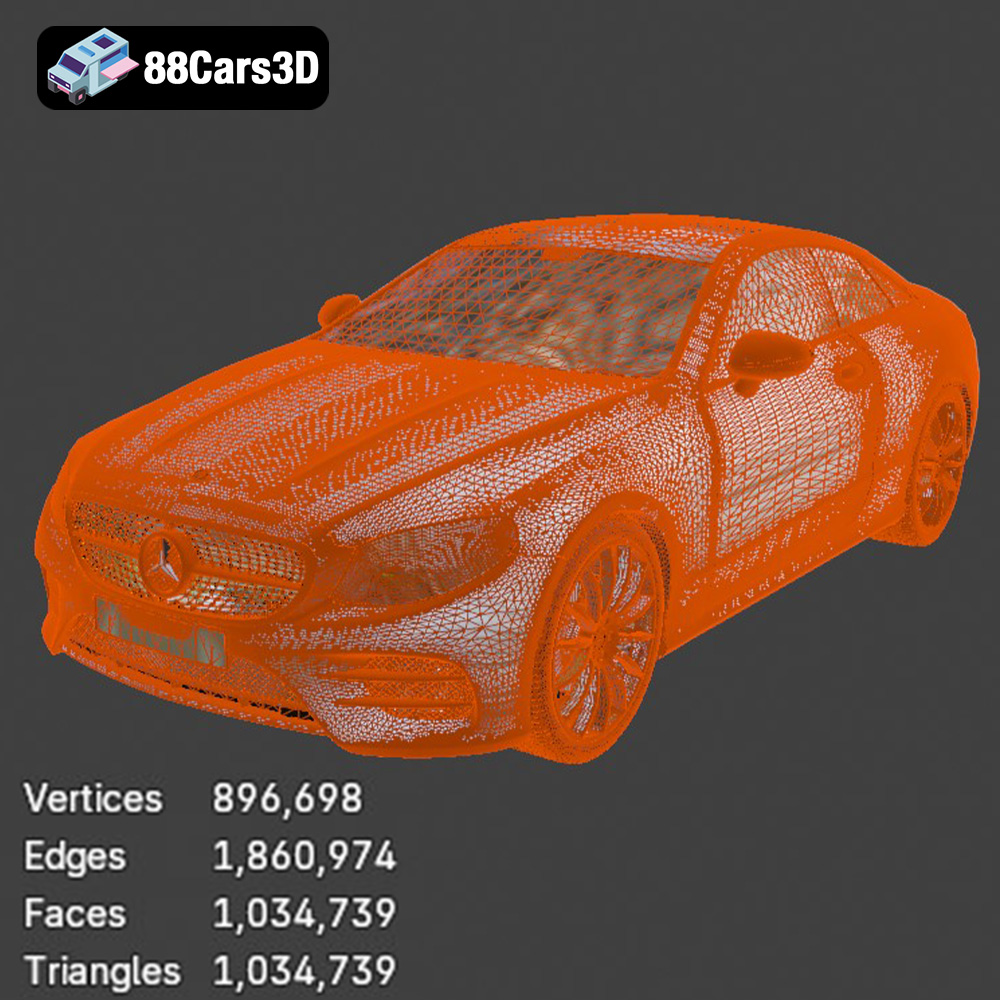
For any project aiming for realism, precision in 3D models is non-negotiable. This means accurate real-world scale, clean topology, correctly unwrapped UVs, and PBR-ready materials. Without these fundamental elements, even the most powerful rendering engines or real-time platforms will struggle to produce convincing results. The Mercedes-Benz E-Class C238 3D Model, available at 88cars3d.com, addresses these critical requirements head-on, offering a robust and versatile foundation for any professional application. Its attention to detail, from the signature front grille to the multi-spoke alloy wheels, ensures that every render or animation maintains visual integrity and an authentic presence.
When working with 3D models, especially highly detailed automotive assets like the Mercedes-Benz E-Class C238, selecting the correct file format is crucial for workflow efficiency, compatibility, and achieving optimal results. Each format serves a specific purpose, designed to cater to different software, engines, and end-use applications. Understanding these distinctions is fundamental for any 3D professional.
The .blend format is Blender’s native file type, offering a comprehensive package of all project data. This includes not just the mesh geometry, but also materials, textures, lighting, cameras, animations, physics simulations, and custom properties. For users primarily operating within the Blender ecosystem, a .blend file is the most convenient and powerful option. It allows for full editability of all aspects of the scene, making it ideal for customization, detailed animation setups, or further refinement of materials using Blender’s Cycles or Eevee renderers. The Mercedes-Benz E-Class C238 3D Model supplied in .blend format provides a complete, ready-to-render scene environment for Blender artists.
.fbx (Filmbox) is arguably the most widely adopted 3D exchange format, especially prevalent in game development and animation pipelines. Developed by Autodesk, it excels at preserving complex scene data, including geometry, materials, textures, bones, skinning, and animations, across different 3D applications like 3ds Max, Maya, and ZBrush, as well as game engines like Unreal Engine and Unity. When importing the Mercedes-Benz E-Class C238 into a real-time environment, .fbx is the go-to format for maintaining hierarchies, pivot points for wheels, and potential animation data. Its robust nature makes it ideal for transferring assets between disparate software environments with minimal loss of data.
The .obj (Wavefront OBJ) format is a universal standard primarily for exchanging pure geometric data. It stores vertex positions, UV coordinates, normals, and polygon faces. While it can reference external material (.mtl) files and texture maps, it doesn’t store animation or rigging data internally. Its simplicity makes it highly compatible across virtually all 3D software. For scenarios where only the raw mesh data of the Mercedes-Benz E-Class C238 is needed for sculpting, retopology, or basic rendering in an application that struggles with more complex formats, .obj is an excellent choice. It provides a clean, unadulterated mesh foundation.
.glb (GLB format, an evolution of glTF) is a relatively newer format rapidly gaining traction, particularly for web-based 3D, augmented reality (AR), and virtual reality (VR) applications. It’s a binary format that embeds all necessary data – geometry, materials, textures, animations – into a single file, making it incredibly efficient for delivery and rendering in real-time environments. Its optimization for lightweight, performant display makes the Mercedes-Benz E-Class C238 3D Model in .glb format perfect for interactive virtual showrooms on a website, AR configurators on a mobile device, or immersive VR experiences.
.stl (Stereolithography) is the most common file format for 3D printing. It represents a 3D model as a collection of unconnected triangles, forming the surface geometry of an object. Crucially, .stl files do not contain color, texture, or material information – only the shape. For successful 3D printing, the mesh must be “watertight,” meaning it has no holes or non-manifold geometry, ensuring a solid object. The Mercedes-Benz E-Class C238 3D Model, when converted to .stl, is optimized for physical production, allowing users to create collectible scale models or display miniatures with recommended settings for different scales and print parameters.
.ply (Polygon File Format or Stanford Triangle Format) is a versatile format for storing 3D data, particularly useful for high-resolution scan data, scientific visualization, and CAD. Unlike .stl, .ply can store a wider range of properties, including color, transparency, normals, texture coordinates, and confidence values, directly associated with vertices or faces. While less common for general asset exchange than .fbx or .obj, it’s a powerful format for precise mesh representation and analysis, offering a detailed representation of the C238’s geometry for specialized applications.
The .unreal format, typically referencing a UAsset file within an Unreal Engine project, signifies an asset that is fully configured and optimized for the engine. While not a direct import format like .fbx, having an asset pre-packaged for Unreal Engine (often as a uasset or part of an engine project) means it comes with PBR materials, collision meshes, LODs (Levels of Detail), and potentially even basic animation blueprints already set up. This dramatically accelerates integration of the Mercedes-Benz E-Class C238 into a demanding real-time environment, saving countless hours of manual setup for game developers and real-time visualization specialists.
The .max format is Autodesk 3ds Max’s native file format. Similar to Blender’s .blend, it stores the entire scene, including geometry, materials, textures, lighting, cameras, animation, and scene settings specific to 3ds Max. For professionals working within a 3ds Max pipeline, this format offers full creative control and access to all modifiers, render settings (e.g., V-Ray, Corona), and advanced animation tools. The Mercedes-Benz E-Class C238 3D Model in .max format ensures that all the intricate details, clean mesh structure, and proper pivot setups are readily available for advanced rendering and animation tasks within this powerful software.
By offering the Mercedes-Benz E-Class C238 in such a diverse array of formats, 88cars3d.com ensures maximum flexibility and compatibility, allowing professionals to choose the optimal file type for their specific workflow and project requirements.
Automotive rendering is an art form, blending technical mastery with aesthetic vision to create photorealistic images that evoke emotion and showcase design. The Mercedes-Benz E-Class C238 3D Model provides an exceptional canvas for this craft, with its detailed body lines, refined LED lighting, and premium interior craftsmanship. Leveraging a high-fidelity model is the first step toward breathtaking results.
For many automotive visualization studios, 3ds Max paired with renderers like V-Ray or Corona is the industry standard.
Upon importing the .max file of the E-Class C238, artists gain immediate access to a clean, well-organized mesh structure. The model’s “real-world scale accuracy” is critical here, ensuring correct light interaction and realistic proportions within the scene.
The core of realistic rendering lies in materials. For the C238, this means meticulously crafting shaders for the metallic paint, reflective glass, chrome accents, and soft leather interior. In V-Ray or Corona, PBR (Physically Based Rendering) workflows are essential. The body paint requires a multi-layered material with clear coat reflections, subtle metallic flakes, and a realistic falloff. Glass shaders demand accurate refraction and reflections, while interior elements like leather and wood trim benefit from detailed texture maps for albedo, roughness, and normal information. Given the model’s “optimized polygon flow,” artists can apply high-resolution textures without encountering stretching or distortion, especially on complex surfaces like the sculpted side panels.
Achieving photorealism is heavily dependent on lighting. HDRI (High Dynamic Range Image) environments are frequently used to simulate real-world lighting conditions, from a bright sunny day in a luxury showroom to a dramatic twilight cityscape. For the C238, artists can experiment with various environments to highlight its elegant contours. Beyond HDRIs, strategic use of photometric lights can emphasize details like the “realistic LED headlights and taillights,” or cast dramatic shadows that enhance the vehicle’s form. The “transparent glass materials and mirror detailing” provided in the model truly come alive under sophisticated lighting setups, reflecting their surroundings with convincing fidelity.
Blender has emerged as a formidable contender in automotive rendering, with its powerful Cycles ray-tracing engine and real-time Eevee renderer. The provided .blend file for the C238 offers a native starting point.
Blender’s node-based shader editor offers immense flexibility. Artists can recreate the complex automotive paint shaders, combining metallic flake effects, clear coats, and subsurface scattering for interior materials. The model’s “detailed front grille and emblem styling” and “alloy wheels with brake discs and calipers” benefit immensely from PBR material setups, ensuring that reflections and specularity behave realistically under various lighting conditions. Eevee, Blender’s real-time renderer, can be used for rapid prototyping and interactive visualization, allowing quick iteration on lighting and material choices before committing to a final Cycles render.
The C238 model’s “separate wheels and steering components for animation” are a huge advantage. This allows for realistic driving animations, camera fly-throughs, and dramatic turntable renders. In Blender, keyframe animation of rotations and positions can be set up easily. Pairing the animated car with dynamic camera movements and environmental effects creates engaging cinematic sequences, perfect for promotional renders or luxury automotive marketing. The “proper pivot setup for steering and wheel rotation” simplifies the rigging and animation process, making it accessible even for those new to automotive animation.
In game development and real-time simulations, performance is just as critical as visual quality. Game assets must be optimized, yet still deliver a compelling visual experience. The Mercedes-Benz E-Class C238 3D Model is designed with “optimized geometry for real-time engines and high-quality renders,” making it an ideal candidate for integration into Unreal Engine or Unity.
Unreal Engine is a powerhouse for realistic real-time environments. Importing the .fbx or leveraging the .unreal (UAsset) format of the C238 simplifies the integration process.
When importing the .fbx, it’s essential to ensure all meshes are correctly scaled and that pivots for the wheels and steering are maintained, facilitated by the model’s “proper pivot setup.” Unreal’s PBR material system allows artists to replicate the car’s paint, glass, and interior fabrics with high fidelity. The model’s “clean and well-organized mesh structure” ensures that UV mapping is straightforward, allowing for seamless application of texture maps. Developers can create instances of master materials for various car body colors or trim finishes, offering customization options within the engine.
For demanding game environments, optimization is key. This includes generating LODs (Levels of Detail) for the C238, where the mesh complexity is reduced as the car moves further from the camera. Collision meshes, often simplified versions of the main body, are vital for physics interactions. For driving simulators, setting up accurate physics assets and suspension systems with the C238’s individual components (like wheels and steering) ensures a realistic driving experience. The model’s optimized geometry contributes directly to achieving high frame rates without sacrificing visual appeal, making it suitable for “open-world city games, and premium vehicle systems.”
Unity shares many similar principles with Unreal Engine regarding asset integration. The .fbx format remains the most robust for importing the C238.
In Unity, developers can utilize its comprehensive physics system and C# scripting to create interactive vehicle experiences. The C238’s “separate wheels and steering components” allow for independent rotation and suspension articulation, critical for a believable driving simulation. Custom scripts can be developed to handle acceleration, braking, and steering, reacting to user input. The model’s detailed interior, including the “dashboard with dual-screen layout” and “sport steering wheel with multifunction controls,” can be made interactive, enhancing the user’s immersion in AR/VR applications or driving simulators.
The C238 is “perfect for virtual showrooms, interactive configurators, and immersive car presentations.” Using the .glb format, developers can create lightweight, interactive experiences for mobile AR or standalone VR headsets. Users could walk around the car, open doors, change colors (using the model’s “customization options”), and even sit inside the virtual cabin. The “optimized geometry for real-time engines” means these experiences can run smoothly on a wide range of devices, bringing the luxury of a Mercedes-Benz showroom to a user’s home.
Beyond digital screens, 3D printing offers a tangible connection to the world of 3D models. The Mercedes-Benz E-Class C238 3D Model is explicitly designed with 3D printing in mind, allowing enthusiasts and professionals to transform digital data into physical collectibles. The provided .stl format is the gateway to this exciting realm.
3D printing requires specific considerations that differ significantly from rendering or game development. The C238 model’s suitability for 3D printing is a testament to its robust underlying geometry.
For a model to be 3D printable, it must be a “watertight” solid object, meaning it has no holes, internal intersections, or non-manifold edges. The clean topology of the C238 ensures this foundational requirement is met. While the base .stl model from 88cars3d.com is designed for printing, users might perform additional checks in software like Meshmixer or Netfabb to ensure perfect manifold geometry, especially if they make significant modifications. This step is crucial for successful slicing and printing without errors.
The product description provides excellent guidance: “Recommended scale: 1:32 / 1:24 / 1:18 / 1:14.” Choosing the right scale impacts detail resolution and printing time. “Print orientation: Body printed angled for surface detail; wheels printed separately” is a critical tip. Printing the main body at an angle can minimize visible layer lines and improve the smoothness of curved surfaces. Support structures, as noted, are “Required for mirrors, spoiler edges, and front splitter,” preventing gravity from causing print failures on overhangs. These considerations are vital for achieving a high-quality physical model of the C238.
Once printed, the real artistry often begins with post-processing, transforming a raw print into a showroom-worthy miniature.
As per the recommendations, “sanding, primer, gloss automotive paint finish, optional chrome detailing” are key steps. FDM prints often require sanding to smooth layer lines, while resin prints may only need minimal cleanup. A good automotive primer provides a uniform surface for paint adhesion. Achieving a “gloss automotive paint finish” involves careful spraying, sometimes with multiple coats and clear coats, to replicate the depth and shine of a real car. Advanced hobbyists might use airbrushes for fine detail work and miniature chrome paints for emblems and trim, making their C238 collectible truly stand out.
Printing wheels separately allows for sharper detail and easier painting of tires and rims. Once painted, these components are assembled onto the main body. Enthusiasts might go further, adding small details like transparent plastic for windows, tiny decals for badges, or even crafting miniature interior elements. The “customization options” for the digital model, such as “Change body colors and trim finishes” or “Modify wheel designs,” translate directly to physical customization choices, allowing each printed C238 to be a unique creation.
The utility of a high-quality 3D car model like the Mercedes-Benz E-Class C238 extends far beyond traditional rendering and game development. Its robust design and versatile file formats open doors to innovative applications in augmented reality, virtual reality, architectural visualization, and even engineering simulations.
The automotive industry is rapidly embracing AR/VR to enhance customer engagement and streamline sales processes.
Imagine prospective buyers exploring the E-Class C238 in a fully immersive virtual showroom, changing paint colors, wheel styles, and interior trims with a mere gesture. The model’s “optimized geometry for real-time engines” and its availability in lightweight formats like .glb make it perfect for these interactive experiences. Car companies can deploy these virtual showrooms on their websites or in dealerships, offering a richer and more personalized experience than traditional brochures. This not only captivates customers but also provides valuable data on preferences.
With AR, customers can “place” the Mercedes-Benz E-Class C238 in their driveway using a smartphone or tablet. They can walk around it, view it from different angles, and get a realistic sense of its size and presence in a real-world context. This innovative application, facilitated by models optimized for AR platforms, offers an unparalleled level of convenience and engagement, allowing potential buyers to visualize their dream car in their personal environment. Such use cases underscore the evolving power of premium 3D car models as dynamic marketing tools.
Architectural visualization (ArchViz) benefits immensely from realistic contextual elements, and high-quality 3D car models are a prime example.
In ArchViz projects, the Mercedes-Benz E-Class C238 can populate luxury condominiums, commercial parking lots, or futuristic urban streetscapes. Its detailed design and “clean topology” ensure that even when viewed up close, it maintains realism, seamlessly blending into the scene. A well-placed luxury vehicle can convey the prestige and lifestyle associated with an architectural development, significantly impacting the overall perceived value. The model’s “real-world scale accuracy” is particularly important here, ensuring the car fits naturally within architectural plans and renders.
Beyond static renders, the C238 can be integrated into urban planning simulations to visualize traffic flow, analyze pedestrian interactions, or assess the impact of new infrastructure. While such simulations often use simplified models for performance, the high-fidelity C238 can be used for close-up shots or specific scenarios requiring detailed vehicle representation, enhancing the realism of the simulation. This application highlights the model’s versatility for “automotive visualization projects and engineering demonstrations.”
The digital landscape continues to expand, and with it, the need for exceptional 3D assets grows. The Mercedes-Benz E-Class C238 3D Model stands as a prime example of a premium asset that can empower professionals across diverse fields. Its meticulously crafted details, from the iconic styling to the sophisticated interior, coupled with technical advantages like clean topology, real-world scale, and optimized geometry, make it an invaluable resource.
Whether your project demands photorealistic automotive rendering for marketing, seamless integration into a high-performance game engine, the tactile satisfaction of a 3D-printed collectible, or the immersive experience of an AR/VR showroom, this model delivers. Its comprehensive range of file formats—including .blend, .fbx, .obj, .glb, .stl, .ply, .unreal, and .max—ensures compatibility and flexibility across virtually any professional workflow.
For creators seeking to elevate their projects with stunning accuracy and unmatched quality, investing in expertly crafted 3D car models like the Mercedes-Benz E-Class C238 is a strategic decision. It saves precious time, enhances visual fidelity, and provides a robust foundation for innovation. Explore this exceptional model and a wide array of other high-quality 3D car models at 88cars3d.com, and unlock the full potential of your next creative endeavor.
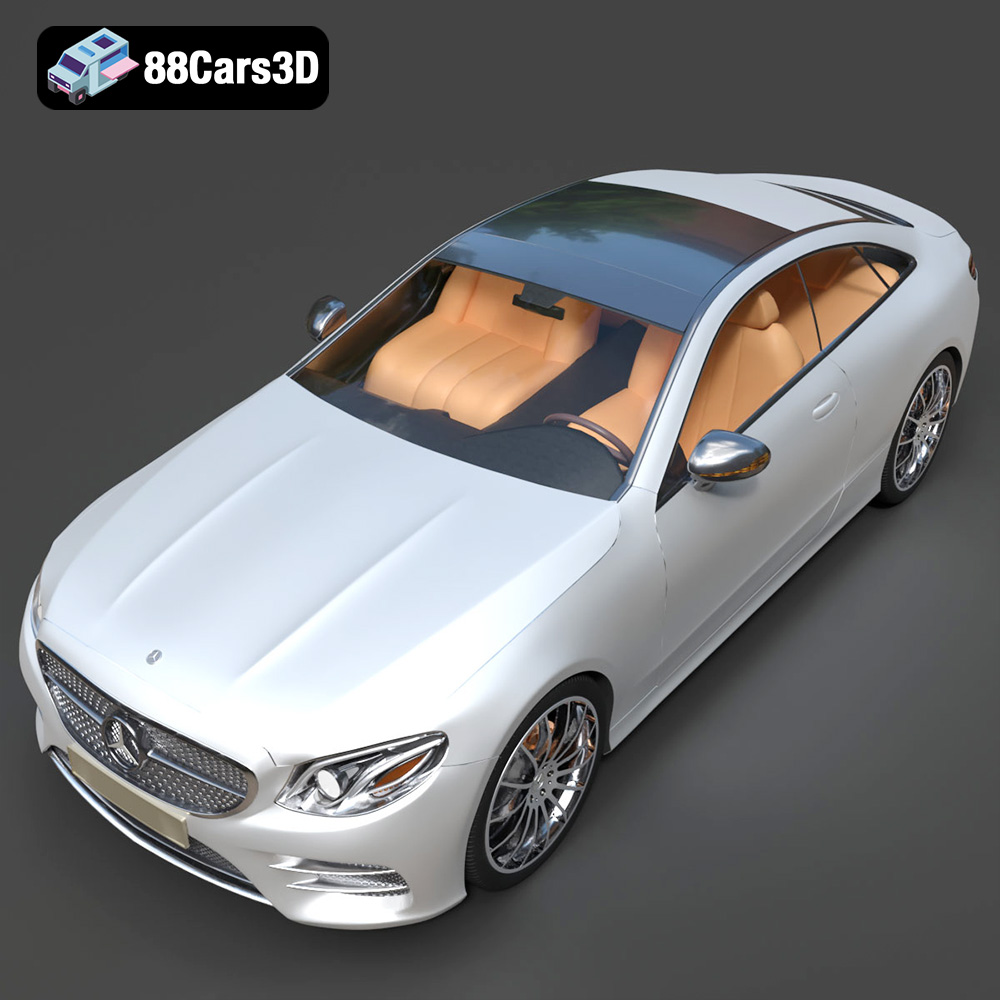
The Mercedes-Benz E-Class C238 3D Model is a high-detail digital recreation of the elegant two-door coupe variant of the E-Class lineup. Combining luxury, performance, and modern design language, the C238 generation features sleek coupe proportions, frameless doors, refined LED lighting, and premium interior craftsmanship. This 3D model accurately represents the sculpted body lines, signature front grille, aerodynamic front bumper, multi-spoke alloy wheels, LED headlamps and taillights, dual exhaust system, and detailed cabin layout. Designed with clean topology and real-world scale accuracy, it is ideal for rendering, animation, automotive visualization, game development, and AR/VR showroom applications.
$9.99
.arvr
.automotive
.blend
.c238
.car3dmodel
.eclass
.fbx
.gameasset
.glb
.luxurycoupe
.max
.mercedesbenz
.obj
.ply
.premiumcar
.rendering
.simulation
.stl
.unreal