Get 50% OFF All Premium 3D & STL Models!

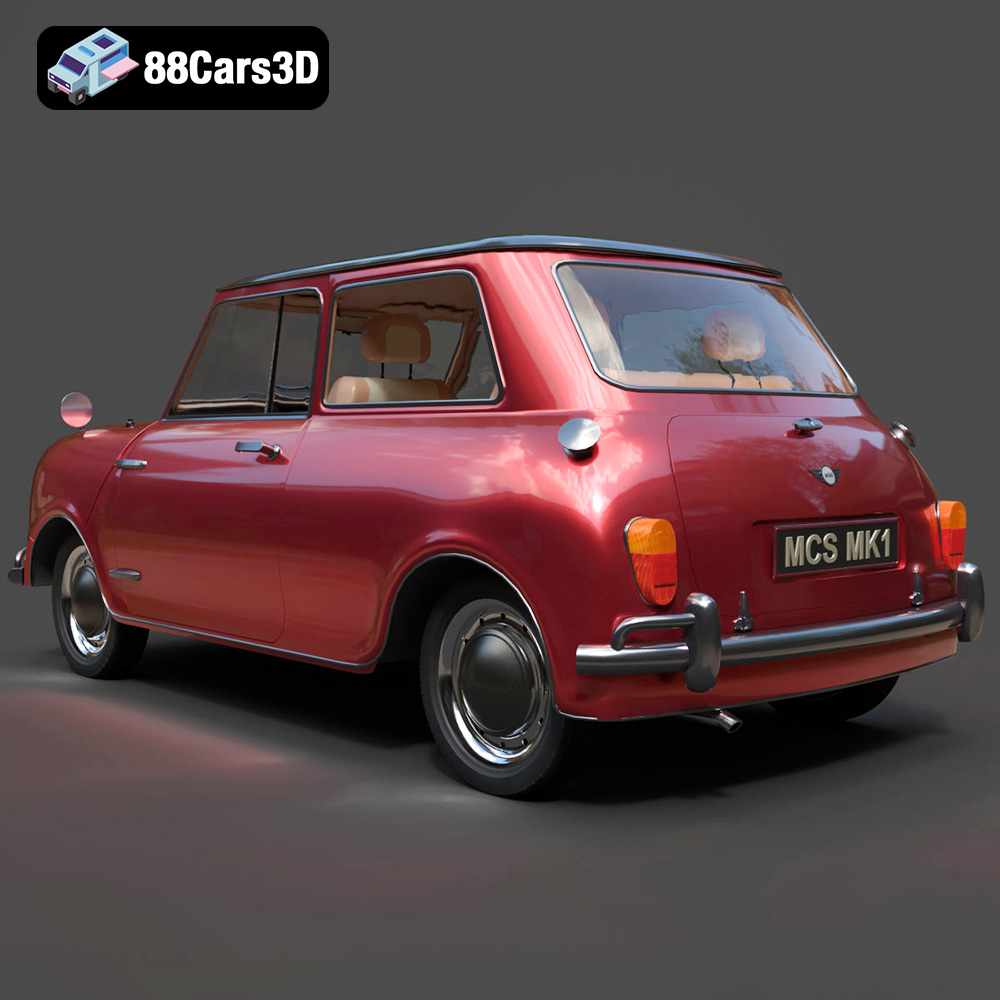
Few vehicles embody an era quite like the Mini Cooper S MK1. A compact powerhouse that defied expectations, it carved its name into history books through rally victories, iconic film appearances, and a distinctive charm that continues to captivate enthusiasts worldwide. This legendary status makes it a prime candidate for digital recreation, offering a gateway for designers, game developers, and visualization artists to harness its timeless appeal. Crafting a high-quality 3D car model of such an icon is not merely about replicating shapes; it’s about preserving heritage and delivering a versatile asset that can thrive across diverse creative pipelines. Whether for breathtaking automotive rendering, dynamic game environments, or immersive AR/VR experiences, a meticulously designed digital Mini Cooper S MK1 provides an unparalleled foundation.
At 88cars3d.com, we understand the demand for precision and flexibility in professional 3D assets. The Mini Cooper S MK1 3D Model exemplifies this commitment, offering a faithful digital rendition of this British legend. It’s built from the ground up to support everything from static renders that evoke nostalgia to fully interactive simulations. This article delves into the technical considerations and creative possibilities unlocked by such a specialized 3D model, exploring its utility in modern digital workflows and underscoring why meticulous detail is paramount in bringing automotive history to life in the virtual realm.
The versatility of a high-quality 3D asset like the Mini Cooper S MK1 3D Model is significantly enhanced by its availability in multiple file formats. Each format serves specific purposes, catering to different software, engines, and end-use applications. Understanding these distinctions is crucial for anyone working with 3D car models, as choosing the right format can streamline your workflow, preserve data integrity, and ensure optimal performance.
The .blend format is Blender’s native file type, offering a complete and fully editable scene. When you download a .blend file for the Mini Cooper S MK1, you gain access to the raw project data, including meshes, materials, textures, lighting, cameras, and even animation setups if present. This is invaluable for artists who use Blender as their primary DCC (Digital Content Creation) tool, allowing for deep customization, tweaking of shaders, reorganizing scene elements, and making extensive modifications without conversion losses. It’s the ultimate choice for those who need maximum flexibility and control over every aspect of the model.
.fbx (Filmbox) is arguably the most widely adopted format for 3D data exchange, especially within the game development and animation industries. It excels at preserving complex data such as geometry, materials, textures, animations, and even skeletal rigs. For integrating the Mini Cooper S MK1 into game engines like Unreal Engine or Unity, or moving it between different DCC applications like 3ds Max and Maya, .fbx is often the go-to. Its robust nature ensures that most of the original model’s properties are retained, making it ideal for real-time pipelines where animation and PBR (Physically Based Rendering) materials are critical.
The .obj (Wavefront Object) format is a universal standard known for its simplicity and wide compatibility across almost all 3D software. It primarily stores geometry (vertices, normals, UV coordinates) and can reference external material (.mtl) and texture files. While it doesn’t support animations or advanced scene data, its strength lies in providing a clean, fundamental mesh. This makes the Mini Cooper S MK1 .obj an excellent choice for straightforward static renders, 3D printing preparation (though .stl is often preferred for manifold checks), or as a fallback for software that might struggle with more complex formats. It’s the most reliable option for ensuring basic geometric data can be opened anywhere.
.glb (GL Transmission Format Binary) is the binary version of glTF, a royalty-free specification for the efficient transmission and loading of 3D scenes and models by applications. It’s increasingly popular for augmented reality (AR), virtual reality (VR), and web-based 3D viewers because it bundles geometry, materials, textures, and animation into a single, compact file. This optimization allows the Mini Cooper S MK1 .glb to load quickly and display beautifully in browsers and on mobile devices, making it perfect for interactive product showcases or lightweight AR experiences.
The .stl (Stereolithography) format is the de facto standard for 3D printing. It represents a 3D model as a series of connected triangles, defining only the surface geometry without color, texture, or material information. For 3D printing the Mini Cooper S MK1, an .stl file is essential as it’s what slicing software uses to generate toolpaths for the printer. It’s critical that .stl files are “manifold,” meaning they have no holes or non-watertight geometry, to ensure a successful print. The Mini Cooper S MK1 3D Model’s availability in .stl means it’s ready for physical manifestation.
.ply (Polygon File Format, or Stanford Triangle Format) is a versatile format for storing 3D data, particularly useful for scanned data, point clouds, and mesh models with additional properties like color per vertex, transparency, and normal vectors. While less common for everyday artistic exchange than .fbx or .obj, it finds applications in scientific visualization, CAD, and high-precision modeling where detailed mesh information and attributes are important. For specialized analysis or integration with specific engineering software, the Mini Cooper S MK1 .ply provides a robust data structure.
The .unreal designation often refers to assets that are specifically packaged or optimized for direct import into Unreal Engine projects. While usually an .fbx file is imported into Unreal and then processed, having a pre-configured .unreal asset can mean that the asset is already set up with appropriate material instances, collision meshes, LODs (Levels of Detail), and potentially even basic blueprints for immediate use. This drastically cuts down on setup time for game developers integrating the Mini Cooper S MK1 into an Unreal-based project, ensuring it’s engine-ready with minimal fuss.
Similar to .blend for Blender, the .max format is the native scene file for Autodesk 3ds Max. This format provides the complete 3ds Max project, including all geometry, modifiers, materials, textures, lighting, cameras, and animation curves. For professionals using 3ds Max for high-end automotive rendering, architectural visualization, or detailed animation sequences, the .max file of the Mini Cooper S MK1 offers the most comprehensive control. It allows for direct modification, integration into existing 3ds Max scenes, and leveraging the full power of the software’s rendering capabilities like V-Ray or Corona.
Creating a truly authentic 3D car model like the Mini Cooper S MK1 requires a blend of artistic vision and rigorous technical execution. It’s a process of digital sculpture, where every curve, panel gap, and component must be precisely replicated to capture the essence of the original vehicle.
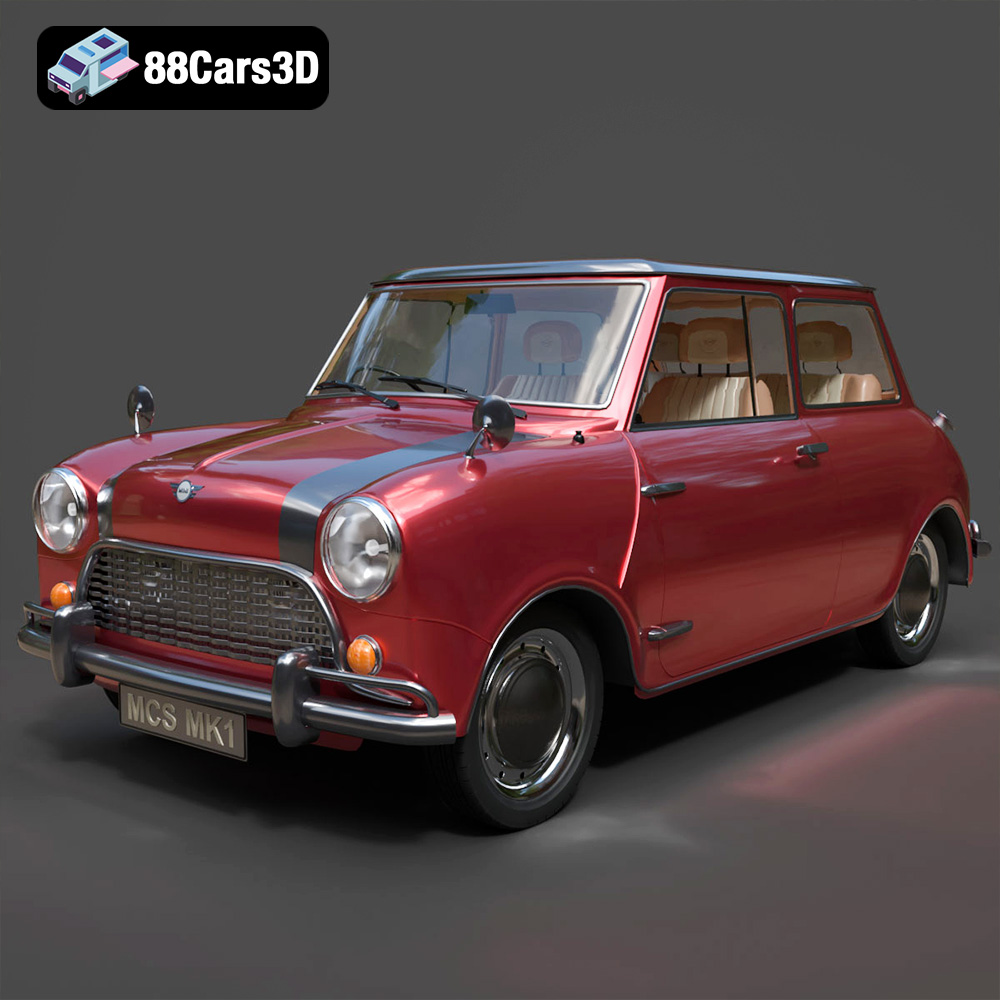
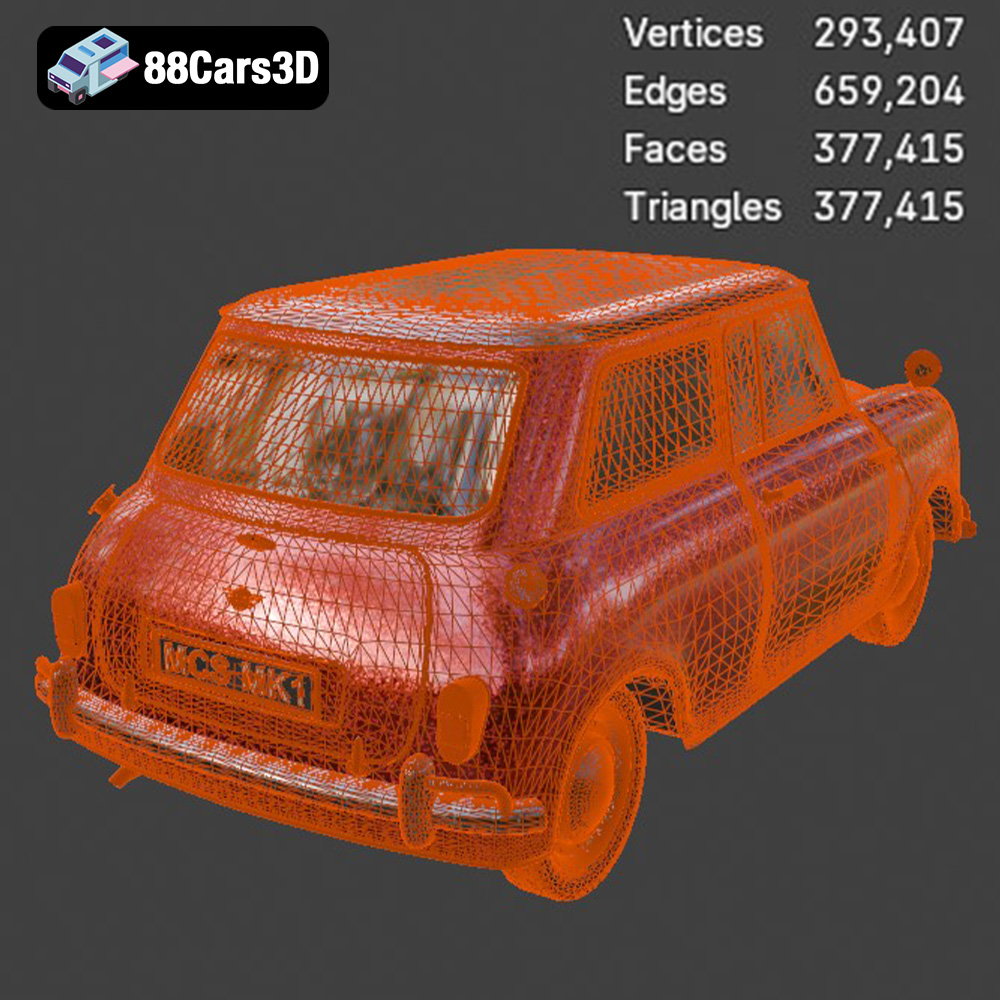
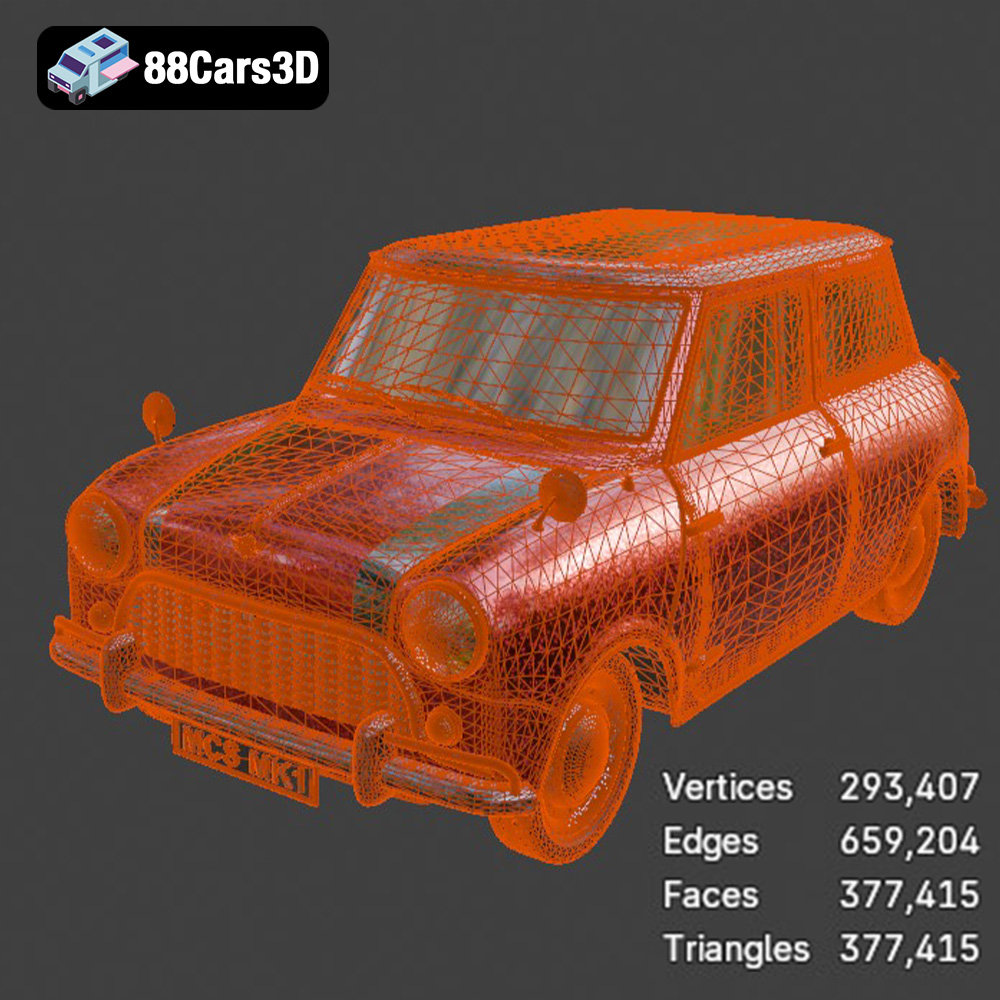
The foundation of any high-quality car model lies in its accuracy. For the Mini Cooper S MK1 3D Model, this means meticulous attention to its “accurate MK1 Cooper S body proportions” and “classic rounded compact silhouette.” Using real-world scale and reference blueprints, artists ensure that the digital model faithfully matches its physical counterpart. Beyond proportions, the mesh structure – its topology – is paramount. A “clean and well-organized mesh structure” with “optimized polygon flow” ensures that the model deforms correctly during animation, renders smoothly with appropriate edge loops for subdivisions, and performs efficiently in real-time applications. This attention to detail prevents common issues like pinching, artifacting, and overly dense geometry where it’s not needed, striking a balance between visual fidelity and performance.
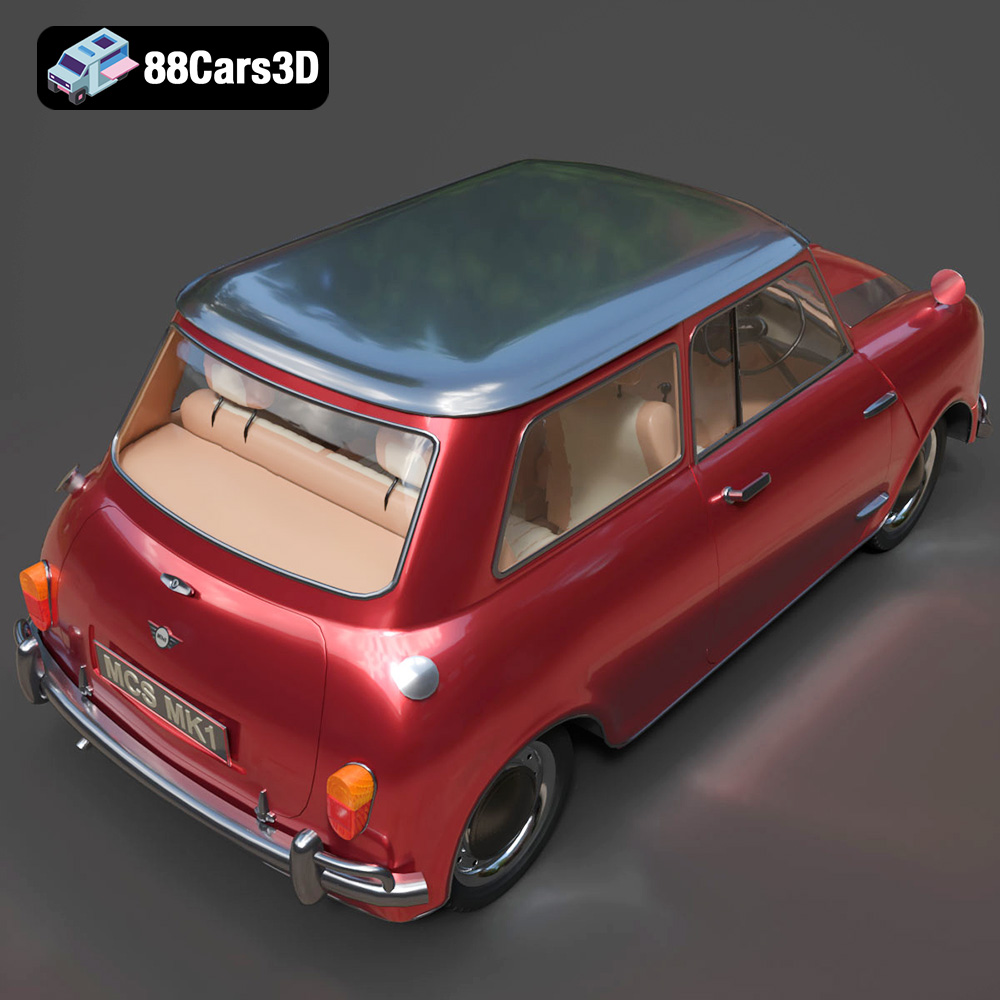
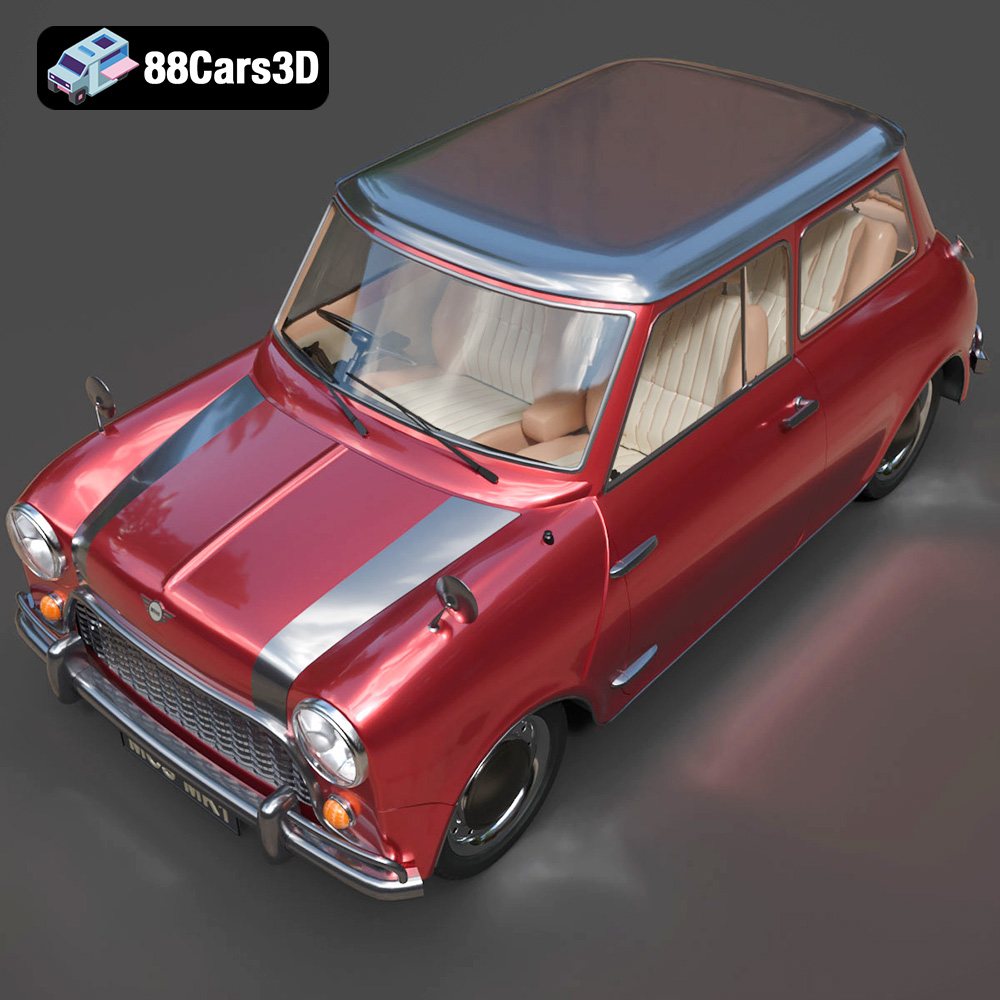
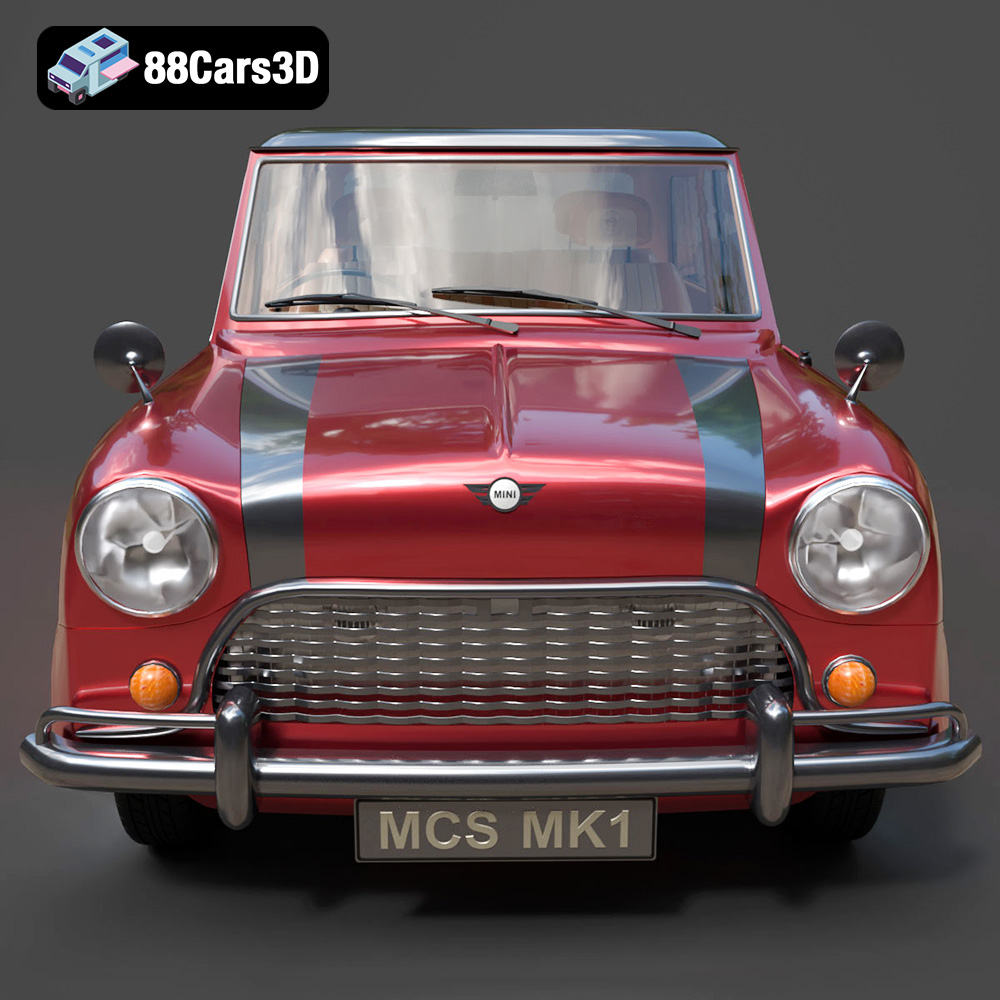
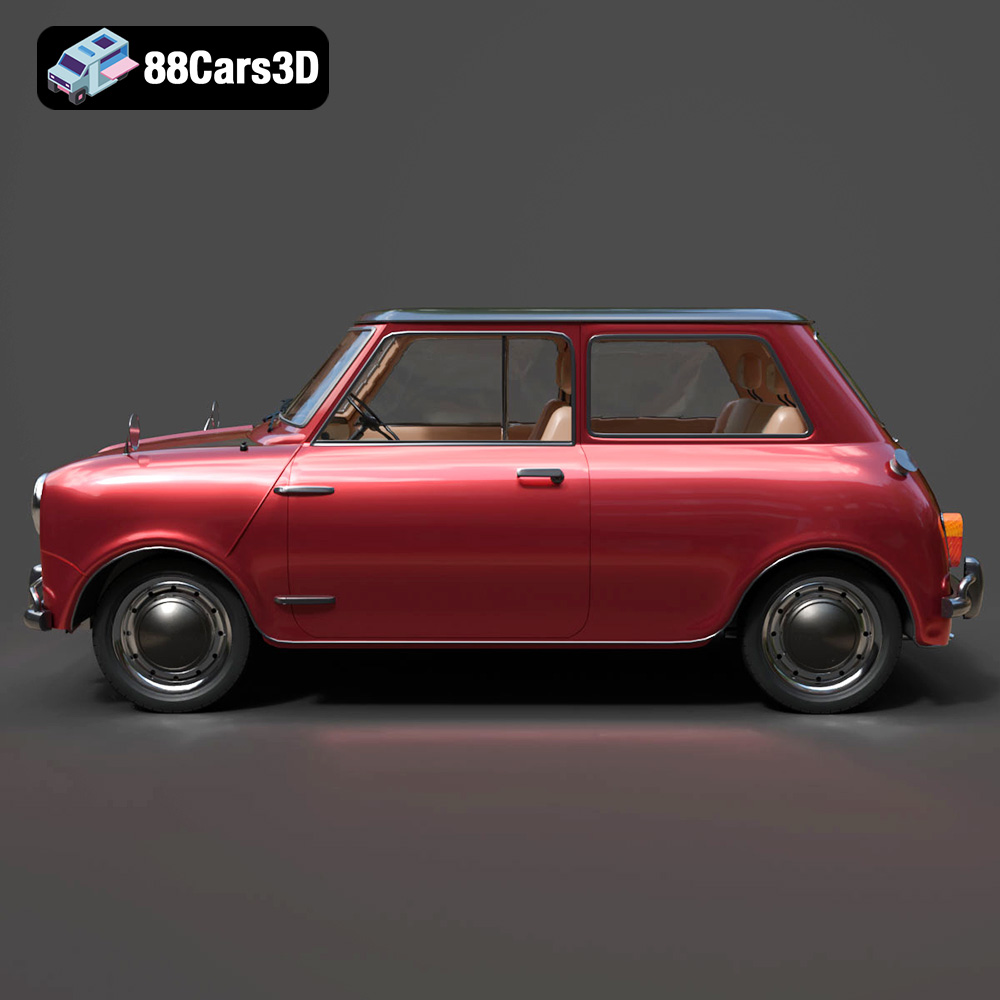
The charm of the Mini Cooper S MK1 is in its details. The model’s “detailed chrome front and rear bumpers,” “signature circular headlights and grille design,” and “vintage-style small alloy wheels” are critical elements that contribute to its authenticity. These features aren’t just modeled; they are often created as separate components, allowing for material customization and animation. Internally, the “retro dashboard with central speedometer,” “classic steering wheel design,” and “bucket seat geometry with period styling” transport the viewer directly into the 1960s. High-quality textures for materials like leather, fabric, and polished chrome further enhance this realism, ensuring that both exterior and interior elements hold up under close inspection and diverse lighting conditions.
A static model is only part of the story. For automotive rendering and game development, the model needs to be prepared for movement. The Mini Cooper S MK1 3D Model features “separate wheels and steering components for animation” and “proper pivot setup for steering and wheel rotation.” This pre-rigged structure saves countless hours for animators and developers. Furthermore, “optimized geometry for real-time engines and high-quality renders” implies that the model is designed with different levels of detail (LODs) in mind, allowing engines to swap between high-poly and low-poly versions depending on camera distance, ensuring smooth performance without sacrificing visual quality when viewed up close.
High-fidelity 3D car models are indispensable tools for visualization professionals. They allow for the creation of stunning imagery and cinematic sequences that are often indistinguishable from real-world photography, all without the logistical complexities and costs associated with physical vehicles.
For automotive brands or classic car dealerships, presenting vehicles with unparalleled realism is key to attracting buyers and enthusiasts. The Mini Cooper S MK1 3D Model is “ideal for classic car marketing, heritage automotive visuals, and retro promotional media.” Imagine a photorealistic render of the Mini, perfectly lit, showcased in a sophisticated studio environment or a period-correct street scene. Using software like 3ds Max with renderers such as V-Ray or Corona, artists can manipulate every aspect of the scene – from paint reflectivity to subtle dust on the tires – creating marketing materials that resonate deeply with the target audience. The “optional racing stripe detailing” and “customization options” like changing body and roof colors allow for a vast array of marketing variations from a single base model.
The realm of film, television, and advertising frequently leverages 3D models for special effects, background vehicles, or even as hero cars in animated shorts. The Mini Cooper S MK1, with its rich history, is perfect for “cinematic productions.” Imagine an animated sequence depicting a rally scene, where the digital Mini powers through a dirt track, its wheels kicking up realistic dust, all rendered with dynamic lighting and camera movements. The “separate wheels and steering components” allow animators to create realistic vehicle dynamics, while “transparent glass materials and mirror detailing” contribute to the overall believability. A professional workflow would involve importing the .fbx or .max file into a high-end animation package, setting up a complex lighting rig, simulating environmental effects, and then rendering out frames for post-production.
Beyond strictly automotive applications, 3D car models are crucial elements in architectural visualization. Placing a Mini Cooper S MK1 in a modern city street or a retro-themed garage visualization adds a layer of realism, scale, and storytelling to architectural renders. The model’s “real-world scale accuracy” ensures it fits seamlessly into these environments. Artists can integrate the .obj or .fbx version into their architectural scene, adjusting materials to match specific lighting conditions, whether it’s a sunny afternoon in London or a moody evening in a European alleyway. These subtle additions make architectural presentations more engaging and relatable, transforming static buildings into living spaces.
In the fast-paced world of game development and real-time interactive experiences, assets must not only look good but also perform exceptionally. The Mini Cooper S MK1 3D Model is specifically designed to meet these stringent demands.
The Mini Cooper S MK1 is a natural fit for “vintage racing games, rally simulators, and open-world classic car environments.” Game developers require models that are optimized for performance without sacrificing visual fidelity. This involves careful polygon budgeting, efficient UV mapping for texture atlases, and well-structured materials that leverage PBR shaders. The model’s “optimized geometry for real-time engines” is critical here, ensuring smooth frame rates even when multiple vehicles are on screen. Importing the .fbx or .unreal format directly into engines like Unreal Engine or Unity allows developers to quickly set up physics, collision meshes, and integrate the car into their game logic. The “proper pivot setup for steering and wheel rotation” is invaluable for realistic car physics and handling, allowing players to experience the Mini’s legendary agility.
To maintain high frame rates across various hardware, game engines employ Levels of Detail (LODs). A well-prepared 3D car model will include multiple versions of its mesh, each with a progressively lower polygon count. When the player’s camera is far from the Mini Cooper S MK1, the engine can switch to a lower LOD, significantly reducing the rendering burden. As the camera gets closer, higher detail LODs are used. Additionally, accurate collision meshes (often simplified geometry) are essential for realistic interactions with the environment and other vehicles. The technical advantages of this model imply that such optimizations have been considered, making it ready for production pipelines where performance is as crucial as visual quality.
For a developer using Unreal Engine, the workflow would typically involve importing the .fbx or the specific .unreal asset of the Mini Cooper S MK1. Once imported, the model’s materials would be converted to Unreal’s PBR material system, connecting diffuse, normal, roughness, metallic, and ambient occlusion textures. A skeletal mesh could be created if complex suspension animation is desired, though for a car, separate static meshes for wheels and steering, linked via blueprints, are often sufficient. Collision meshes would be automatically generated or custom-created for precise interaction. The “customization options” for body and roof color can be implemented via material instances, allowing for easy in-engine variations without modifying the core asset. This streamlined integration makes the Mini Cooper S MK1 3D Model a powerful asset for any real-time project.
The utility of a robust 3D car model extends far beyond traditional screen-based rendering and game development, venturing into the interactive realms of augmented and virtual reality, and even into the physical world through 3D printing.
The Mini Cooper S MK1 3D Model is “perfect for immersive classic car showroom experiences and interactive exhibitions.” Imagine an AR application where you can place a life-sized Mini Cooper S MK1 in your driveway, walking around it, opening doors, and even peering inside, all through your smartphone or tablet. The .glb format is particularly well-suited for these applications due to its optimized nature for web and mobile platforms. In VR, users could “sit” inside the virtual Mini, exploring its “retro dashboard with central speedometer” and “classic steering wheel design” in full 360-degree immersion. These experiences provide a powerful new way to interact with and appreciate classic automobiles, breaking down geographical barriers and offering unprecedented levels of detail.
Beyond entertainment, precise 3D models can serve serious educational and training purposes. The Mini Cooper S MK1 is “useful for automotive history visualization and motorsport heritage projects.” Driving schools could use a simulated environment to teach about classic car handling, or museums could create interactive displays that allow visitors to virtually dissect and understand the engineering of the MK1 Cooper S. The model’s accuracy, coupled with the ability to integrate it into simulation platforms, makes it a valuable asset for preserving and communicating automotive legacy in an engaging, interactive format. Researchers or students could even use the .ply format for detailed mesh analysis or comparison with physical scans.
One of the most exciting applications for a high-quality 3D car model is physical fabrication via 3D printing. The Mini Cooper S MK1 3D Model is “convertible to .stl format for collectible scale classic car models and display miniatures,” allowing enthusiasts to own a tangible piece of digital art. The provided 3D print settings are critical for success:
The availability of the Mini Cooper S MK1 in .stl format directly from 88cars3d.com streamlines this process, ensuring the model is manifold and ready for slicing software, enabling creators to quickly move from digital concept to physical collectible.
The true power of a versatile 3D car model lies in its adaptability. Professionals frequently need to customize assets to fit specific project requirements, and the Mini Cooper S MK1 3D Model offers ample opportunities for such modifications, alongside robust technical foundations.
The product description highlights several “customization options” that are crucial for artists and developers:
These options allow the Mini Cooper S MK1 to be reinterpreted for countless scenarios, making it an incredibly flexible asset for any project.
The underlying technical structure of the Mini Cooper S MK1 3D Model is what truly sets it apart for professional use:
These technical considerations underscore the value of investing in high-quality 3D car models from reputable sources like 88cars3d.com, ensuring that the assets you acquire are production-ready and built to professional standards.
The Mini Cooper S MK1 is more than just a car; it’s a cultural phenomenon, a symbol of ingenuity, and a testament to compact performance. Bringing such a legendary vehicle into the digital realm as a high-fidelity 3D car model opens up a universe of creative possibilities for professionals across various industries. From crafting breathtaking automotive rendering for marketing campaigns and cinematic sequences to populating dynamic game environments and creating immersive AR/VR experiences, this model stands as a versatile and robust foundation.
Its comprehensive technical attributes – including real-world scale, clean topology, pre-configured pivots for animation, and optimized geometry – ensure it integrates seamlessly into even the most demanding workflows. Furthermore, the availability in a wide array of formats, from the editable .blend and .max files to the industry-standard .fbx, web-optimized .glb, and print-ready .stl, guarantees compatibility and flexibility for any project. Whether you’re an artist aiming for photorealism, a game developer building a retro racing simulator, or an enthusiast looking to 3D print your own piece of automotive history, the Mini Cooper S MK1 3D Model offers an exceptional starting point.
This digital recreation is a powerful tool for anyone looking to harness the timeless appeal of the Mini Cooper S MK1. Its detailed exterior and interior features, coupled with thoughtful technical advantages, make it an invaluable asset for visualizing, animating, and interacting with this iconic vehicle. Discover the full potential of high-quality 3D car models and elevate your projects by exploring offerings like the Mini Cooper S MK1 3D Model, available now at 88cars3d.com.
The Mini Cooper S MK1 3D Model is a high-detail digital recreation of the legendary compact performance car that became an icon of 1960s British automotive design. Known for its lightweight construction, racing heritage, and distinctive compact proportions, the MK1 Cooper S gained worldwide recognition through rally victories and motorsport success. This 3D model accurately represents the classic rounded body shape, chrome bumpers, compact grille, circular headlights, racing stripe options, small-diameter wheels, and vintage interior layout. Designed with clean topology and real-world scale accuracy, it is ideal for rendering, animation, automotive visualization, game development, and AR/VR experiences. Perfect for classic city scenes, rally environments, retro-themed projects, cinematic productions, and vintage racing simulations.
$9.99