Get 50% OFF All Premium 3D & STL Models!

In the dynamic world of 3D design, the demand for high-fidelity, production-ready assets is ceaseless. From the gleaming chrome of an automotive visualization to the gritty asphalt of a real-time game environment, the quality of your 3D models dictates the success of your project. Few vehicles embody raw power and distinctive style as profoundly as a Harley-Davidson, and its digital rendition must carry that same weight. Today, we’re diving deep into an exceptional example of such craftsmanship: the Harley-Davidson FXDR 114 3D Model. This isn’t just a static mesh; it’s a meticulously crafted digital asset designed to elevate a wide array of creative endeavors, from cinematic renders to immersive virtual experiences, available on 88cars3d.com.
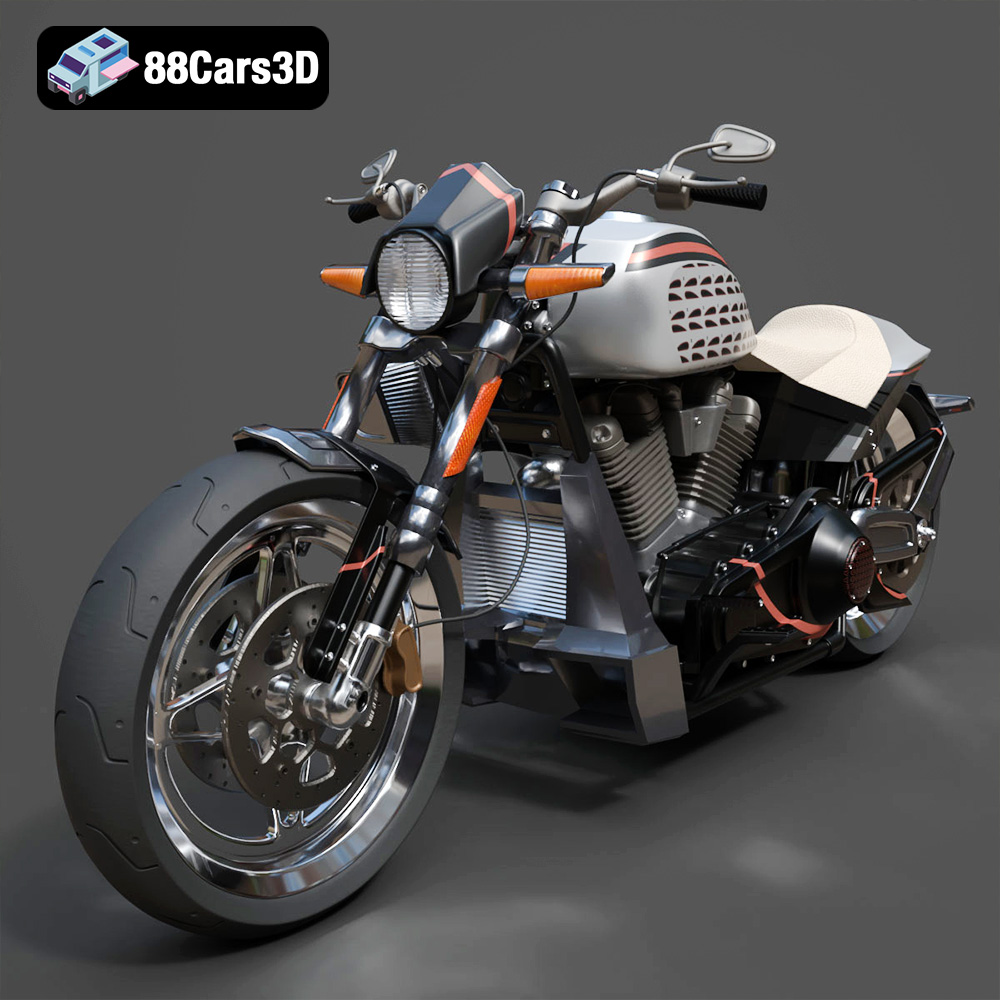
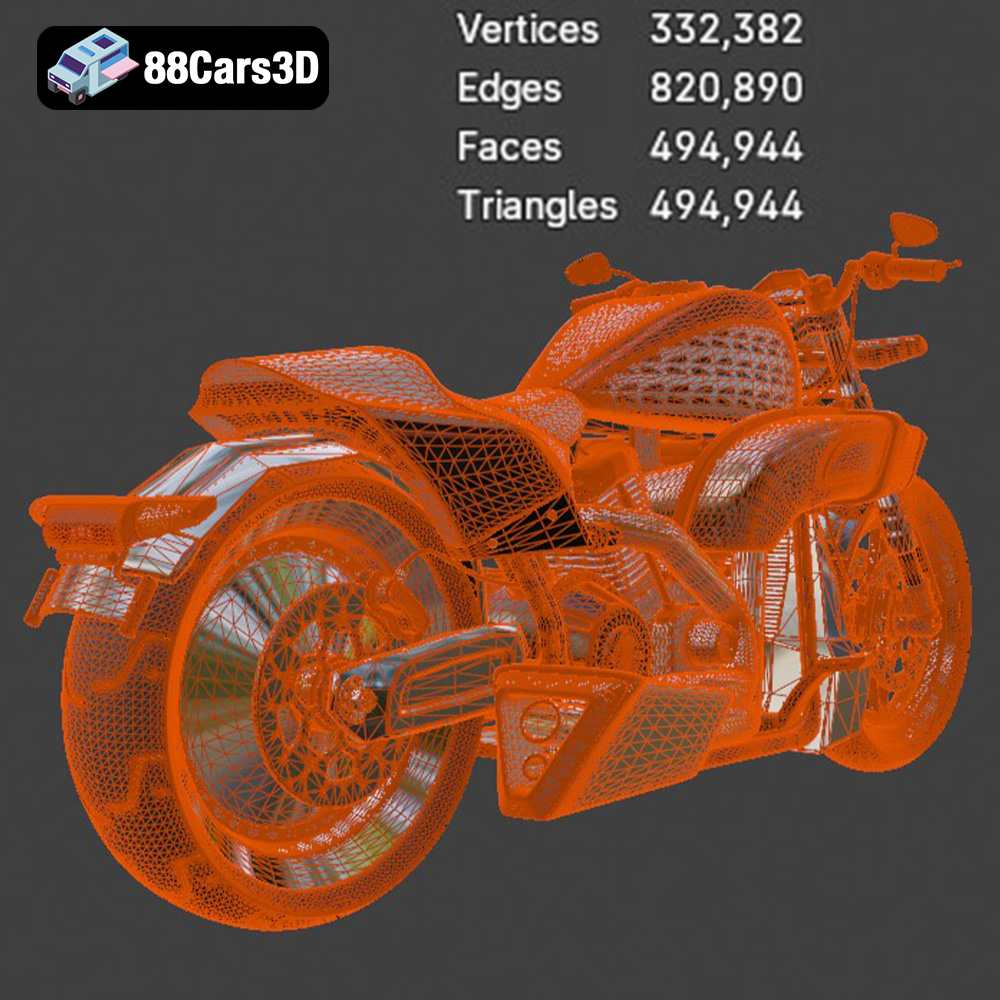
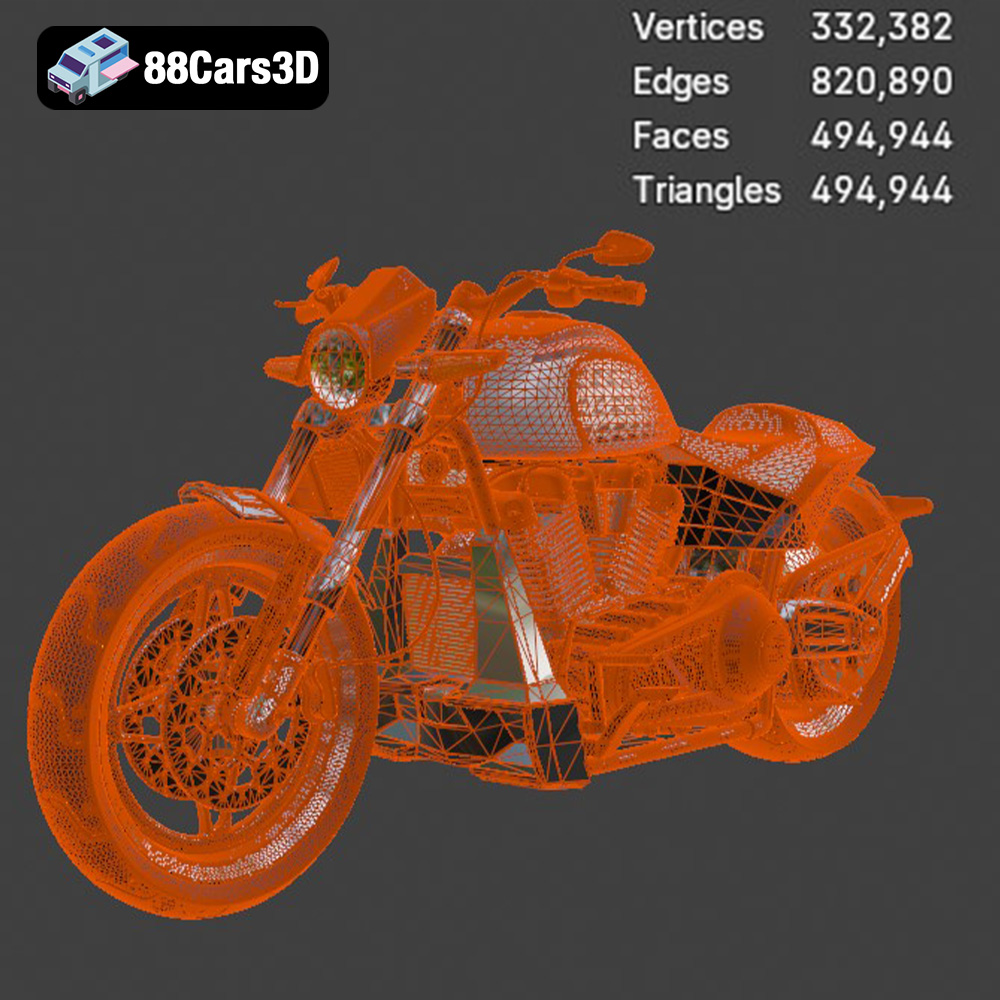
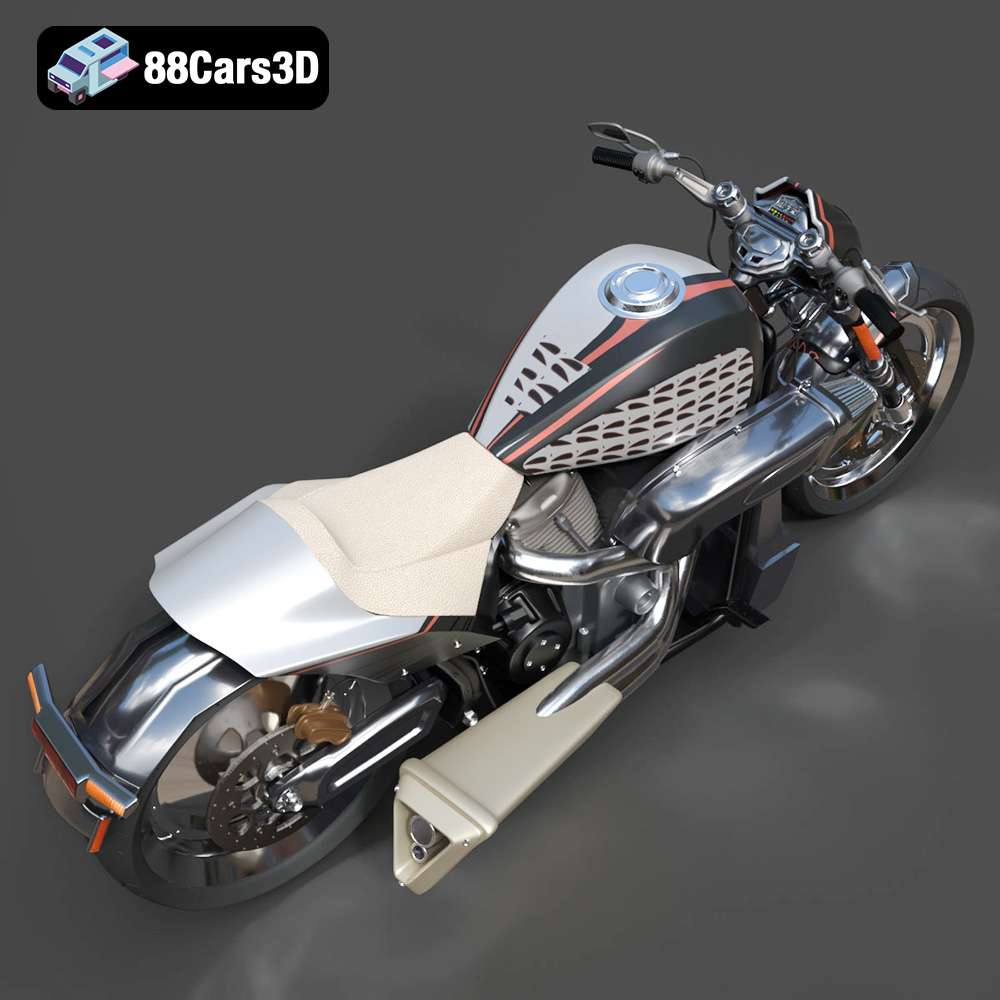
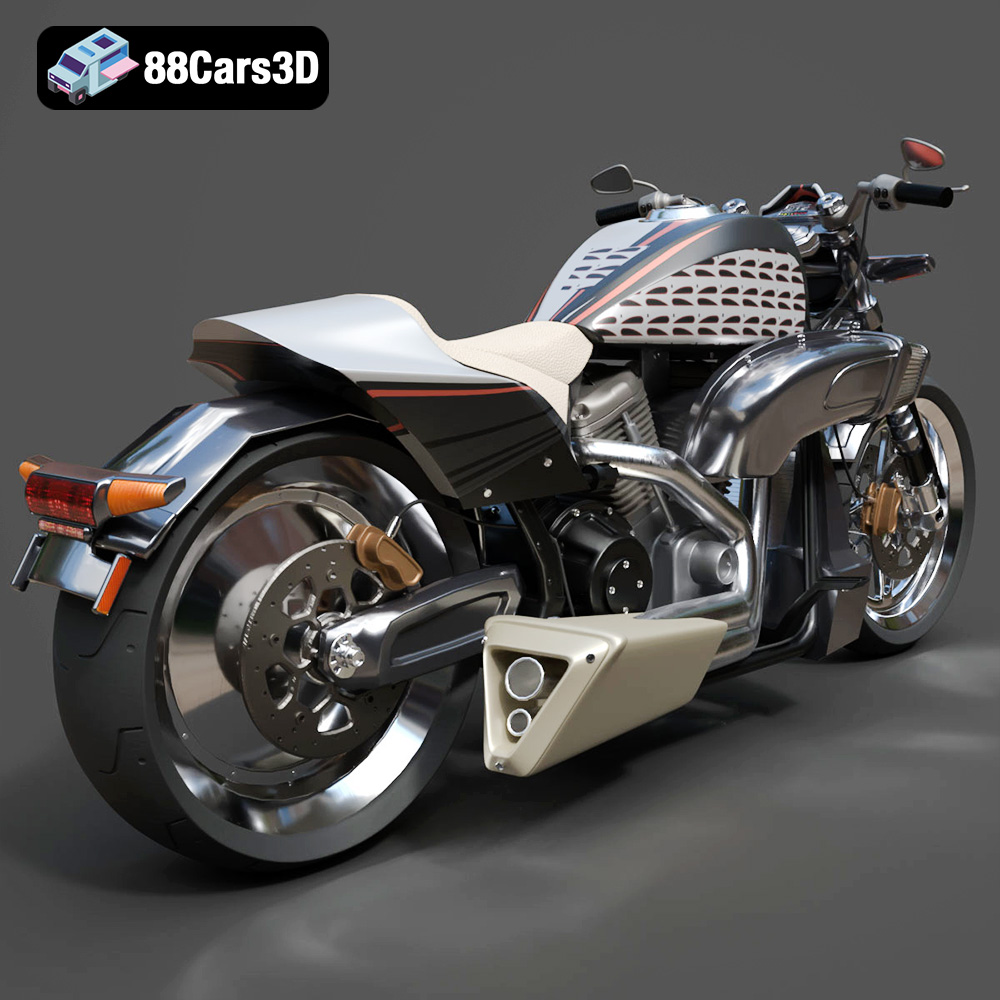
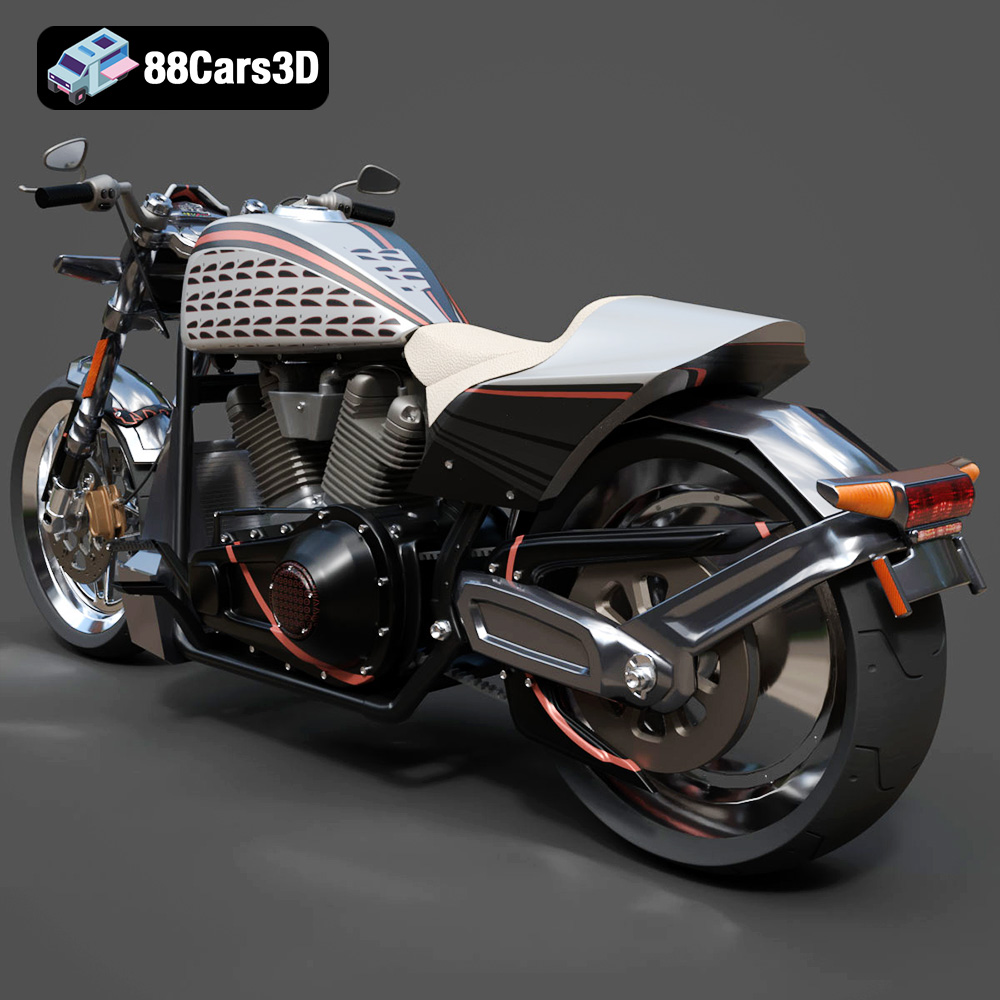
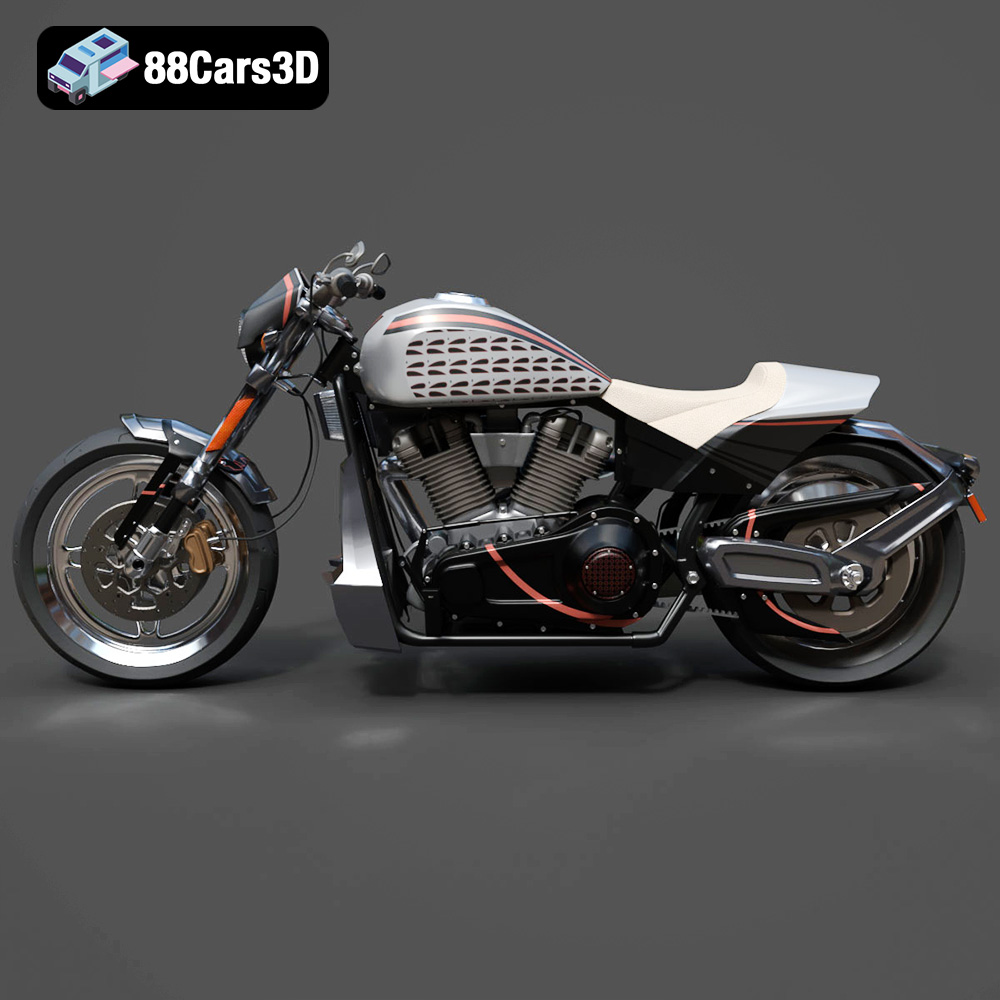
The FXDR 114 itself is a modern classic – a drag-inspired power cruiser boasting the massive torque of the Milwaukee-Eight 114 V-Twin engine, lightweight aluminum components, and an unmistakable aggressive stance. Replicating such an iconic machine in the digital realm requires a blend of artistic skill and technical precision. The Harley-Davidson FXDR 114 3D Model delivers on this promise, capturing every curve, component, and characteristic that defines the original. Its optimized mid-to-high polygon topology, sitting just under 500,000 triangles, strikes a perfect balance, offering premium visual fidelity for extreme close-up rendering while maintaining manageable performance for even the most demanding current-gen game engines as a hero asset. This comprehensive article will explore the technical nuances of this model, its versatile applications, and how it seamlessly integrates into professional 3D workflows, empowering artists and developers alike.
The versatility of any high-quality 3D model, such as the Harley-Davidson FXDR 114, is significantly enhanced by its availability in multiple file formats. Each format serves specific purposes, catering to different software environments, project requirements, and end-use cases. Understanding these formats is crucial for any professional working with 3D car models or game assets, ensuring smooth integration and optimal performance.
When you acquire a comprehensive 3D asset package, you often receive a suite of formats designed for various stages of a project.
* .blend (Blender): This is Blender’s native file format, offering a complete scene package. For artists and studios heavily invested in the Blender ecosystem, a `.blend` file is invaluable. It preserves all scene data, including meshes, materials (configured with Blender’s node-based shader editor), textures, lighting setups, cameras, animations, rigging, and even physics simulations. This full editability makes it perfect for those who want to dissect the model, learn from its construction, or extensively customize it within Blender’s powerful environment, ensuring the Harley-Davidson FXDR 114 can be seamlessly integrated into Blender-centric pipelines.
* .max (3ds Max): Similar to `.blend`, the `.max` format is native to Autodesk 3ds Max, a long-standing industry standard for architectural visualization, rendering, and game development. A `.max` file encapsulates the entire project, including modifier stacks, intricate material networks (often V-Ray or Corona specific), complex rigging, and animation data. Professionals relying on 3ds Max for their automotive rendering and animation projects will find this format essential for leveraging the model’s full potential and making detailed adjustments.
* .fbx (Filmbox): Developed by Autodesk, FBX has become the de facto industry standard for interoperability between various 3D software applications and game engines like Unreal Engine and Unity. Its strength lies in its ability to store not just geometry, but also animation data, skinning, camera information, and PBR (Physically Based Rendering) material assignments. For the Harley-Davidson FXDR 114, the `.fbx` format is ideal for real-time pipelines, ensuring that the model’s complex hierarchy, separated parts for animation (wheels, steering, suspension), and material references transfer accurately, providing a robust base for game assets.
* .obj (Wavefront Object): The `.obj` format is a classic, widely supported file type known for its simplicity and universal compatibility. It primarily stores geometric data (vertices, normals, UVs, and faces) and can reference external `.mtl` (material) files. While it doesn’t support animation or complex material networks as robustly as `.fbx`, its ubiquity makes it an excellent choice for static meshes and cross-software compatibility. If you need a clean mesh that can be opened in virtually any 3D application for modeling, sculpting, or straightforward rendering, `.obj` is a reliable workhorse.
Beyond the general-purpose formats, specialized options cater to niche but rapidly growing applications.
* .glb (GL Transmission Format Binary): GLB is the binary version of glTF, a royalty-free specification for the efficient transmission and loading of 3D scenes and models by applications. Optimized for web, AR (Augmented Reality), and VR (Virtual Reality) experiences, `.glb` files are self-contained, including textures and animations, making them incredibly lightweight and fast to load. For showcasing the Harley-Davidson FXDR 114 in an interactive web viewer, a virtual showroom, or an AR app, `.glb` is the format of choice, delivering a high-quality experience with minimal overhead.
* .stl (Stereolithography): The `.stl` format is synonymous with 3D printing. It represents a 3D model as a series of connected triangles, defining only the surface geometry without color, texture, or material information. For designers and hobbyists looking to bring the Harley-Davidson FXDR 114 into the physical world, an `.stl` file is essential. It must contain “manifold” geometry (a completely closed and watertight mesh) to print correctly, a characteristic often found in high-quality models prepared for this purpose.
* .ply (Polygon File Format): PLY is a polygon file format typically used for storing 3D data from 3D scanners. It can store a wide range of properties, including color, transparency, surface normals, texture coordinates, and confidence values. While less common for general asset distribution, it’s a precision mesh format suitable for CAD applications, scientific analysis, or if a highly accurate scanned version of the model were to be incorporated into a pipeline. For the FXDR 114, a PLY variant might be used for extremely precise measurements or reverse engineering.
* .unreal (Unreal Engine Asset): While `.unreal` is not a single generic file format you’d typically download from a marketplace like `.fbx` or `.obj`, its inclusion implies an asset specifically packaged and optimized for Unreal Engine. This could mean a pre-imported asset with proper materials, collision meshes, LODs (Levels of Detail), and possibly even a basic blueprint setup, ready to be dropped directly into an Unreal project. This signifies that the Harley-Davidson FXDR 114 3D Model is not just compatible, but truly engine-ready, saving significant setup time for game developers.
The inclusion of these diverse formats for the Harley-Davidson FXDR 114 highlights the model’s adaptability and value, ensuring it can seamlessly integrate into virtually any professional 3D workflow you might encounter.
Creating a convincing 3D model of a real-world vehicle, especially one with the intricate mechanical and stylistic elements of a Harley-Davidson, requires meticulous attention to detail. The Harley-Davidson FXDR 114 3D Model exemplifies this dedication, translating the bike’s aggressive persona into a highly accurate digital representation.
The success of any automotive 3D model hinges on its authenticity. The FXDR 114 is not just any motorcycle; it’s a statement. Its drag-strip attitude, from the forward-reaching air intake to the massive 240mm rear tire, is central to its identity. This 3D model meticulously reproduces:
* Accurate Chassis Geometry: The Softail chassis, the foundation of the FXDR 114, is precisely replicated, ensuring correct proportions and stance. This foundational accuracy is critical for believable renders and animations.
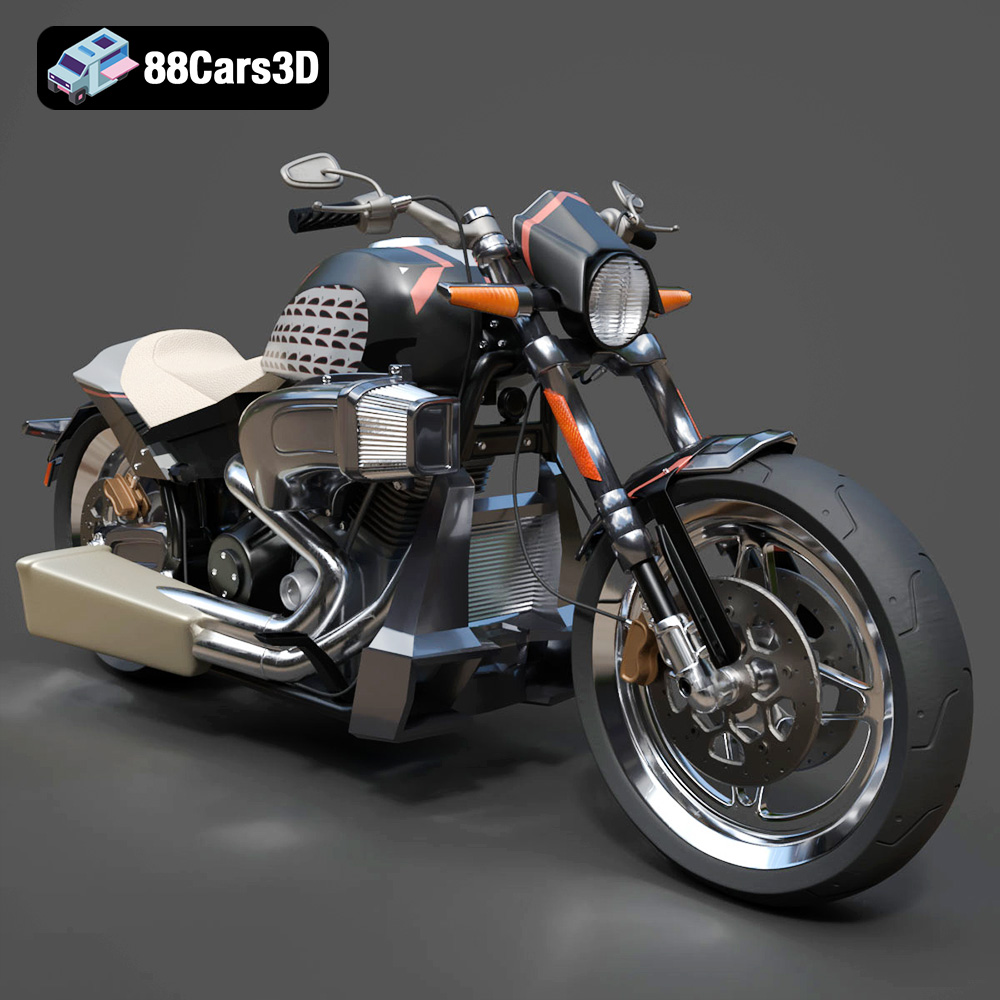
* The Milwaukee-Eight 114 V-Twin Engine: This powerhouse is the heart of the bike, and its digital counterpart is equally detailed. From the distinct cooling fins to the primary drive and the signature forward-facing air intake, every component is modeled with precision, vital for close-up shots and engine bay visualizations.
* Distinctive Features: The performance 2-into-1 exhaust system, lightweight cast-aluminum swingarm, and the sleek LED Daymaker headlight assembly are all faithfully recreated. These elements are not just present but are geometrically accurate, making the model instantly recognizable and visually compelling. The clipped, drag-style tail section also adds to its unique character, perfectly translated into the 3D model.
A common challenge in 3D modeling is balancing visual fidelity with performance. A model can be too low-poly for detailed renders or too high-poly for real-time applications. The Harley-Davidson FXDR 114 3D Model expertly navigates this, boasting an optimized mid-to-high polygon topology.
* Balanced Polygon Count: With 332,382 vertices, 820,890 edges, and 494,944 faces/triangles, the model sits at an ideal sweet spot. This polygon count provides ample detail for extreme close-up rendering, allowing for crisp reflections and smooth curves without visible faceting. Yet, it remains efficient enough to function as a “hero” drivable vehicle in modern current-gen game engines. This “perfectly balanced topology” means artists don’t have to compromise significantly on visual quality or performance, a rare feat in off-the-shelf 3D car models.
* Animation-Ready Structure: Critical for any dynamic project, the model features separate meshes for wheels, steering components, and suspension. This intelligent segmentation allows for realistic animation of steering, wheel rotation, and even suspension travel, making it perfect for cinematic sequences or interactive simulations. Proper pivot setup for these components, including the kickstand, further simplifies the rigging and animation process.
The rider’s perspective is crucial, especially in gaming or virtual reality. The FXDR 114 3D Model addresses this with a carefully detailed cockpit and rider interface.
* Authentic Rider Elements: The deep, drag-style solo saddle geometry, forward-reaching aluminum clip-on style handlebars, and authentic forward foot control and peg placements are all accurately modeled. These details are not just for show; they create a believable environment for a virtual rider.
* First-Person POV Optimization: The minimalist digital riser gauge cluster, while simple, is carefully crafted. Combined with the overall cockpit detail, the geometry is optimized for immersive first-person POV in gaming or VR, allowing players or users to truly feel present on the bike. This level of detail extends the model’s utility beyond external renders to fully interactive experiences.
The true value of a premium 3D asset like the Harley-Davidson FXDR 114 3D Model lies in its seamless integration into diverse professional pipelines. Whether your goal is photorealistic visualization, high-performance game development, or cutting-edge interactive experiences, this model provides a robust foundation.
For advertising, marketing, or design reviews, photorealism is paramount. The FXDR 114 model, with its high detail and accurate geometry, is a prime candidate for stunning renders.
* Studio Lighting and Material Setup: In environments like 3ds Max (with V-Ray or Corona Renderer) or Blender (with Cycles), the model shines. Artists can import the .max or .blend files, which often come with pre-configured materials, and then fine-tune them using PBR workflows. Applying realistic shaders for paint, chrome, rubber, and leather, coupled with sophisticated studio lighting setups, transforms the digital bike into a hyper-real masterpiece. Imagine the FXDR 114 bathed in dramatic light, showcasing its metallic flake paint and the subtle reflections on its engine components – an ideal scenario for a lifestyle brand campaign or product reveal.
* Dynamic Scene Integration: Beyond studio shots, the model excels in environmental renders. Placing it in gritty urban street scenes, open roads, or even conceptual landscapes allows for compelling storytelling. Its accurate real-world scale ensures it fits naturally within architectural visualizations or alongside other vehicles, lending authenticity to any scene. These high-resolution renders are perfect for print media, online galleries, and cinematic sequences.
Modern game engines like Unreal Engine 5 and Unity HDRP demand assets that are both visually rich and performant. The Harley-Davidson FXDR 114 3D Model is specifically designed to meet these requirements.
* Optimized for Real-Time Performance: The “just under 500k triangles” topology is a strategic choice. For a hero vehicle in current-gen games, this offers exceptional detail for close-up views and first-person perspectives without becoming a performance bottleneck. Game developers can import the .fbx or .unreal files, which are often pre-optimized for engine compatibility.
* Engine-Ready Features: The separated components (wheels, steering, suspension) are crucial for implementing realistic physics and animation in game engines. Developers can easily attach wheel colliders, implement suspension joints, and create vehicle blueprints (e.g., in Unreal Engine) to make the FXDR 114 a fully drivable, interactive asset. This dramatically reduces development time, allowing teams to focus on gameplay rather than asset preparation. Furthermore, the model is suitable for generating LODs (Levels of Detail) to maintain performance at varying distances, and for integrating robust collision meshes for realistic interactions within the game world. This makes it an excellent choice for open-world titles, racing games, or even simulation environments.
Augmented and Virtual Reality platforms are transforming how we interact with digital content. The FXDR 114 3D Model is perfectly poised for these emerging applications.
* Immersive Product Showcases: Using the .glb format, developers can create stunning virtual motorcycle showrooms where potential buyers can explore the FXDR 114 in full 3D, inspecting every detail. This is ideal for automotive visualization, allowing customers to walk around the bike, change colors, or view animated components as if they were physically present.
* Interactive Configurators: The model’s modularity lends itself well to interactive configurators. In a VR environment, users could virtually “sit” on the bike, swap out exhaust pipes, change paint finishes, or even customize the handlebars in real-time. The optimized geometry ensures smooth performance in these demanding real-time environments, providing a rich, engaging experience that transcends traditional product imagery.
By providing such a versatile and technically sound base, 88cars3d.com ensures that creative professionals have the tools they need to bring their visions to life, regardless of the platform or medium.
The utility of a high-quality 3D model extends far beyond digital screens. For enthusiasts, collectors, and prototyping purposes, the ability to convert a digital asset into a physical object via 3D printing is a significant advantage. The Harley-Davidson FXDR 114 3D Model, with its detailed geometry and `.stl` file format inclusion, is perfectly suited for this transition.
The `.stl` format is the cornerstone of 3D printing. It describes the surface geometry of a 3D object using a mesh of triangles. For a model like the FXDR 114, ensuring the `.stl` is “manifold” (watertight, with no gaps or intersecting geometry) is crucial for a successful print. This model is engineered with clean, ready-to-print geometry, making it accessible for personal fabrication or professional prototyping.
* Recommended Scales: The product suggests recommended scales of 1:12, 1:10, and 1:8. These scales are carefully chosen to balance detail retention with manageable print size. Printing at 1:12 provides a substantial display piece, while 1:8 allows for even finer features to come through, creating a truly impressive scale model. Hobbyists often appreciate these flexible scaling options to fit their display preferences or material budgets.
* Optimized Layer Height and Resolution: For a model with such intricate details, the recommended layer height of 0.04–0.08 mm is critical. This tight tolerance, especially when using resin printing (SLA/DLP), ensures that fine elements like the engine cooling fins, wheel spokes, and delicate handlebar controls are accurately reproduced. Resin printing is highly recommended over FDM for this model due to its ability to capture these minute features with superior precision and surface finish.
Successful 3D printing involves more than just hitting print; it requires careful consideration of settings and post-processing.
* Structural Integrity and Infill: A wall thickness of 1.2–2.0 mm provides robust structural integrity for the printed model, preventing fragile parts from breaking easily. An infill of 20–30% offers a good balance between material usage and strength, ensuring the model isn’t overly heavy but also not flimsy.
* Strategic Supports and Orientation: Given the complex geometry of a motorcycle, supports are essential during printing. The product correctly identifies key areas requiring support, such as the forward air intake, handlebars, exhaust pipes, and kickstand. Furthermore, a recommended print orientation, like angling the frame for structural integrity and printing wheels and exhaust separately, minimizes visible support marks and optimizes print quality. This foresight in design saves users considerable trial and error.
* Bringing it to Life with Post-Processing: Once printed, the physical model truly comes alive with post-processing. Sanding smooths layer lines, and a primer coat prepares the surface for painting. The suggestions for classic Harley-Davidson finishes – Vivid Black, Industrial Gray Denim for the tank, and bronze/matte metallic accents for the engine and exhaust – guide users towards creating a truly authentic display piece. This attention to post-processing advice elevates the digital model to a tangible, collectible work of art.
A truly professional 3D asset provides not just a high-quality base model, but also the flexibility for artists and developers to tailor it to their specific needs. The Harley-Davidson FXDR 114 3D Model offers excellent customization potential, making it a versatile tool for various creative projects.
The core of visual customization lies in material and texture work. The FXDR 114 model is designed with PBR (Physically Based Rendering) workflows in mind, allowing for realistic material properties across different renderers and engines.
* Color Customization: The ability to easily change fuel tank and tail cowl colors (e.g., Vivid Black, Rawhide Denim, Black Denim) is crucial for branding or artistic choice. This means artists can quickly adapt the bike to match a client’s aesthetic, a specific game level’s palette, or a particular lifestyle campaign. This modularity in material assignments saves considerable time compared to models with baked-in colors.
* Detailed Textures and Maps: While the model boasts a high poly count for detail, the option to add custom baked normal maps allows for even more intricate surfacing without increasing polygon density. This technique, common in game development, can simulate fine engine casing details, subtle panel gaps, or unique wear patterns, pushing the visual fidelity further while maintaining performance. This flexibility means the model can scale from mid-poly game asset to ultra-realistic rendering hero with smart texture application.
The environment in which a 3D car model is placed profoundly impacts its perceived mood and story. The FXDR 114 is ready to adapt to any narrative.
* Dynamic Lighting Setups: Artists can adapt lighting for a wide range of atmospheres. Imagine the bike under the neon glow of a cyberpunk street, reflecting vibrant synthetic lights, or positioned in the harsh, clear light of a canyon carving run, highlighting its aggressive lines against a natural backdrop. The model’s robust geometry and PBR-ready materials will react realistically to various lighting conditions, enhancing the overall visual impact.
* Modular Component Swaps: The suggestion to swap the massive 2-into-1 exhaust for custom aftermarket pipes highlights the model’s component-based construction. This allows for personalization, reflecting the real-world culture of motorcycle customization. Developers can create multiple versions of the bike within a game or visualization, adding depth and variety to their content without having to model entirely new vehicles. This level of modularity makes the Harley-Davidson FXDR 114 3D Model an incredibly valuable asset for projects requiring dynamic customization options.
In the fast-paced world of 3D modeling and visualization, time is a precious commodity. Sourcing high-quality, pre-optimized 3D car models like the Harley-Davidson FXDR 114 3D Model from reputable marketplaces is often a strategic decision that saves countless hours of development and ensures a professional outcome.
When you invest in an asset like this, you’re not just buying a mesh; you’re acquiring a meticulously engineered piece of digital art ready for immediate deployment. From the exacting detail of the Milwaukee-Eight 114 V-Twin engine to the animation-ready separated components, every aspect has been considered for maximum utility across rendering, game development, AR/VR, and even 3D printing applications. The comprehensive suite of file formats – .blend, .fbx, .obj, .glb, .stl, .ply, .unreal, and .max – guarantees seamless compatibility with virtually any software or engine in your workflow.
Whether you’re crafting an immersive open-world game, developing a cutting-edge automotive configurator, producing photorealistic marketing renders, or bringing a detailed scale model to life on your 3D printer, the Harley-Davidson FXDR 114 3D Model offers the technical specifications and artistic fidelity required. It stands as a testament to the power of well-crafted digital assets in streamlining complex projects and elevating the quality of your final output. Explore this exceptional model and other high-quality 3D car models at 88cars3d.com, where precision meets performance.
The Harley-Davidson FXDR 114 3D Model is a high-detail digital recreation of the aggressive, drag-inspired power cruiser. Built to represent raw, unapologetic muscle, the FXDR 114 combines the massive torque of the Milwaukee-Eight 114 V-Twin engine with weight-saving aluminum components, a clipped tail, and a massive 240mm rear tire. This 3D model accurately captures the drag-strip attitude of the original bike, featuring the signature forward-reaching air intake, 2-into-1 tuned exhaust, lightweight cast aluminum swingarm, and the sleek LED Daymaker headlamp surround. Built with an optimized mid-to-high polygon topology (just under 500k triangles), it strikes a fantastic balance between premium visual fidelity for close-up rendering and manageable performance for modern current-gen game engines as a hero asset. Perfect for gritty urban street-racing scenes, biker lifestyle campaigns, modern open-world video games, and automotive visualization.
$9.99
.blend
.fbx
.obj
.rendering
.stl
car-3d-model
drag-bike
fxdr
fxdr-114
game asset
harley-davidson
mid-poly
milwaukee-eight
motorcycle-3d-model
power-cruiser
softail
VR/AR